


Latest by
-
 Taiwan's Drone Defense System Fails to Detect New Chinese Drones Taiwan's drone defense system, established to protect key military facilities such as air bases, has been found inadequate in detecting or disrupting new Chinese drones.According to a recent report from Taiwan's Audit Office, cited by the South China Morning Post on August 16, the government has invested NT$35.5 billion (approximately US$1.57 billion) in a fixed drone defense system that has revealed several vulnerabilities.Developed by Taiwan's National Chung-Shan Institute of Science and Technology (NCSIST), the system has been unable to detect or jam drones operating on the 5.1 gigahertz (GHz) frequency, which China began using in 2023.Additionally, some frequencies of China's BeiDou satellite navigation system are not included in the jamming targets. This raises concerns about Taiwan's ability to respond effectively if the Chinese military employs BeiDou for drone operations.There are also limitations in responding to drones controlled via fiber optic cables or those utilizing artificial intelligence (AI) for autonomous flight. The current system primarily disrupts communications between drones and their operators, making it less effective against these newer drone technologies.Project timelines have also faced setbacks. Delays in construction and issues with procuring key components have pushed back the installation and testing of some systems by 6 to 12 months compared to initial plans. The Audit Office has warned that this could create gaps in the defense of critical military facilities.The Taiwan Ministry of National Defense acknowledged that new drone technologies have rapidly emerged since the project began. NCSIST stated that it has already developed technology to jam the 5.1 GHz frequency and plans to enhance the system's capabilities. They are also working on next-generation equipment to counter fiber optic and AI-controlled drones.This is not the first issue with Taiwan's drone defense systems. A separate project to introduce 26 fixed drone defense systems, valued at NT$9.88 billion (approximately US$430 million), was terminated last month after the equipment failed to pass performance tests three times.* This article has been translated by AI. 2026-08-16 11:24:00
 -
Enjoy Coffee at Deoksugung Palace's Seokjojeon This Fall A program offering coffee at Deoksugung Palace's Seokjojeon will take place this fall.The Cultural Heritage Administration and the National Heritage Promotion Agency announced on August 16 that the 'Deoksugung Night Seokjojeon' will run from September 9 to October 18. The program will be held three times a day from Wednesday to Sunday.'Deoksugung Night Seokjojeon' allows visitors to explore the interior of the modern stone building, Seokjojeon, which is not accessible during regular night tours, and enjoy performances and experiences. The program includes guided tours of the Seokjojeon, a café experience on the terrace, and a creative musical that tells stories from the Korean Empire period.Participants will move to Seokjojeon under the guidance of a court lady and listen to a professional guide's explanation while touring the interior. Afterward, they will enjoy 'gabae' (coffee) and refreshments on the second-floor terrace, accompanied by classical music, while taking in the night view of Deoksugung, reminiscent of what Emperor Gojong enjoyed.Additionally, starting in the second half of this year, attendees will have the opportunity to watch a new musical titled 'A Night at Seokjojeon,' set against the backdrop of the Korean Empire royal family.Participants will be selected through a lottery system. Applications can be submitted via Ticketlink from 2 PM on August 19 to 11:59 PM on August 25, with each account allowed to apply once.The winners will be announced at 5 PM on August 27. Successful applicants can reserve up to two tickets from 2 PM on August 28 to August 31. The participation fee is 35,000 won per person. Reservations for remaining seats on a first-come, first-served basis, as well as phone reservations for those aged 65 and older, people with disabilities, and holders of national merit certificates, will begin at 2 PM on September 2.For more details, please visit the websites of the Cultural Heritage Administration and the National Heritage Promotion Agency.* This article has been translated by AI. 2026-08-16 11:20:00
-
Design Miami to Showcase Global Works in Seoul Next Month A global design fair that combines artistry, rarity, and practicality will take place in Seoul next month. Following its focus on promoting Korean designers abroad last year, Design Miami Seoul is set to attract international galleries this year.The Seoul Design Foundation unveiled the highlights of 'Design Miami Seoul 2026,' scheduled from September 1 to 6 at the Dongdaemun Design Plaza (DDP).This year's Design Miami will kick off in Seoul before moving to Paris in October and Miami in December.A notable change this year is the introduction of a 'Gallery Program.' Renowned design galleries will participate directly, showcasing their works and engaging with collectors.Six galleries from around the world will take part. The Charles Burnand Gallery from London will present works made from various materials, including bronze, copper, wood, and ceramics. Jan Waterston will showcase pieces that blur the lines between furniture and sculpture, including bronze furniture handcrafted by Baghuhei. Other participating galleries and designers include Alex Turco, Side Gallery, Stack by Studio Moto, and InGallery.The 'In Situ' program, which debuted last year, will expand its scope this year, broadening its reach from Korea to Asia. Approximately 36 emerging and established designers from various fields, including lighting, furniture, ceramics, and sculptural design, will participate. Notable domestic designers include Kwon Jung-mo, Lee Kyu-hong, and Cheon Woo-seon, while international contributors include Taiwan's Design Surfing and Japan's Yuki Nara.A new 'Partner Program' will showcase collaborations between companies and designers. Samsung Electronics will present a series that combines works by Korean artists with custom frames for Samsung OLED TVs, exploring how technology and creativity can communicate as a visual language.Official partner furniture brand Alosso will display reinterpretations of its sofas by various designers using diverse materials and techniques. The Theo Yang Studio will reinterpret traditional Hanok architecture within the context of modern Seoul. Scandinavian design brands such as Densque, Ayantu, the Loewe Foundation, and Range Rover will also participate as partners.The foundation stated, "Since this exhibition coincides with 'Frieze Seoul' and 'KIAF,' we anticipate a synergistic effect that will impress art enthusiasts worldwide with the artistic power of Seoul."* This article has been translated by AI. 2026-08-16 11:16:00
-
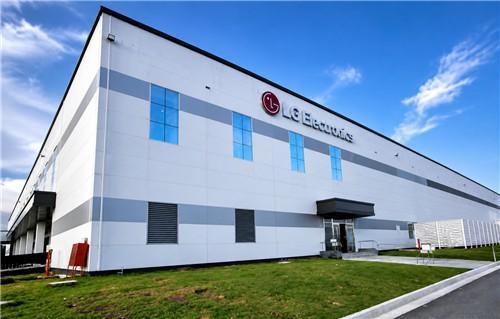 LG Electronics opens second Brazil plant to press Global South push SEOUL, August 16 (AJP) - LG Electronics has begun production at a new home-appliance plant in Brazil, deepening its drive into the Global South as the South Korean group leans on emerging markets to offset softening demand in the developed world. The factory in Parana state started operations on Thursday, the company said Sunday, becoming its second production base in Brazil after the Manaus plant established in the Amazonas state in 1996. The site can turn out about 600,000 refrigerators a year. The plant runs on a smart-factory system built around artificial intelligence and industrial robots, using vision-AI inspection and digital-twin technology to detect faults on the line before they arise, while multi-joint robots cut manufacturing costs and improve worker safety. The refrigerators are tailored to Brazilian homes, carrying a dual-voltage function suited to a grid that runs at 127 volts in some regions and 220 volts in others, along with sterilization and rapid-cooling features aimed at the country's hot, humid climate and home-party culture. LG plans to use Parana as an export hub reaching Argentina, Uruguay and other South American markets. "Building on the expanded capacity from the new Parana plant, we will secure stable supply and offer locally tailored appliances to raise our standing in Brazil and across Latin America," said Baek Seung-tae, head of LG's HS division. AJP Takeaways • LG Electronics has brought its second Brazilian plant online, shifting refrigerators for the region from imports to local assembly and shortening its supply lines into Latin America. • The Parana site anchors a "Global South" strategy — premium goods for developed markets, volume-zone products for emerging ones — after revenue across India, Brazil and Saudi Arabia rose more than 20 percent last year. • For Korea's flagship appliance maker, the plant is as much a hedge against saturated Western demand as a beachhead for exports to Argentina, Uruguay and beyond. 2026-08-16 10:37:47
 -
Indonesia's Flores Island Earthquake Death Toll Rises to 47 Amid Landslides The death toll from the 7.7 magnitude earthquake near Flores Island, Indonesia, has risen to 47. Landslides and communication disruptions have delayed rescue efforts, raising the possibility of more casualties.According to the National Disaster Management Agency (BNPB) on August 16, at least 50 people were injured in the earthquake that struck the previous day. The death toll increased by nine during the search for buried victims, up from 38 reported earlier.A total of 157 homes were severely damaged, and 189 others were affected. Public facilities, including 87 schools, 18 medical facilities, and six government buildings, also sustained damage. Approximately 2,000 residents have sought refuge in temporary shelters.Rescue operations in mountainous areas affected by landslides are facing challenges. Some remote villages have been buried or isolated, and sections of major roads across Flores Island have been blocked. Power outages and communication failures have further delayed the assessment of the damage.The earthquake struck at 5:58 a.m. local time on August 15, with the Indonesian Meteorology, Climatology, and Geophysics Agency (BMKG) reporting a depth of 15 kilometers. At least 235 aftershocks followed, with the strongest measuring 6.2.A tsunami also occurred in coastal areas. In the Ngada region, waves reached a height of 1.6 meters, inundating the village with mud and debris, and some fishing boats were pushed ashore. Waves of 0.5 to 0.9 meters were observed in parts of Ende and Nusa Tenggara.The meteorological agency lifted the tsunami warning about three hours after it was issued.In 1992, a 7.7 magnitude earthquake and tsunami in Flores Island resulted in approximately 2,500 deaths.* This article has been translated by AI. 2026-08-16 10:36:00
-
U.S. Military Focus on Iran Raises Concerns Among Allies as China Increases Pressure in Asia As the United States concentrates its military and diplomatic resources on the Iran war, China is intensifying its military pressure in Asia. Concerns are growing among U.S. allies about whether the U.S. can effectively counter China and protect its partners in times of crisis.The New York Times reported on August 15 that the Iran war is depleting U.S. military strength, leading to a growing skepticism among Asian nations regarding America's commitment to defense as the Trump administration seeks to improve relations with China.Recent clashes between China and the Philippines in the South China Sea exemplify these tensions. On July 20, a Chinese coast guard officer injured a Philippine Navy sailor with a baton at the Second Thomas Shoal. Three days later, Chinese coast guard forces fired water cannons at a Philippine vessel near Scarborough Shoal.China continues to showcase its military capabilities, having tested a submarine-launched ballistic missile (SLBM) capable of carrying nuclear warheads in the Pacific on July 6.In contrast, the U.S. is facing increased pressure on its key weapon stockpiles due to the prolonged Iran war. The U.S. has extensively used air defense missiles, such as the Patriot system, to counter Iranian missile and drone attacks, leading to a rapid depletion of long-range precision strike capabilities.Trump's administration is also contributing to ally unease with its Asia policy. The U.S. is moving to close some consulates, including those in Nagoya, Japan, and Medan, Indonesia, while urging allies to increase their defense spending and take on greater security roles.Trump's efforts to improve relations with China add to the uncertainty. After a summit with Chinese President Xi Jinping in May, he referred to the U.S. and China as 'G2,' suggesting that China is a peer competitor to the U.S.The New York Times noted that these changes are prompting some Asian countries to seek friendly relations with China rather than relying solely on the U.S. for security, especially since China is the largest trading partner for many regional nations, while the U.S. has not provided a clear economic alternative.Mira Rapp-Hooper, a fellow at the Brookings Institution who previously worked on East Asia policy at the National Security Council, explained that Southeast Asian nations do not want to be caught in a U.S.-China conflict but also recognize the need for U.S. involvement to counterbalance China.She pointed out that the perception of the U.S. losing credibility as a counterweight to China is deepening concerns among Asian partner nations.* This article has been translated by AI. 2026-08-16 09:40:00
-
 Gartner sees one in five firms pulling back on AI by 2028 as costs mount SEOUL, August 16 (AJP) - South Korean companies racing to embed artificial intelligence across their operations face a mounting threat that has little to do with the technology itself: the bill. By 2028, about one in five organizations worldwide will scale back or abandon AI in parts of their operations and return to conventional software development, unable to rein in runaway costs, according to research from Gartner. The retreat is expected to concentrate in areas where the return fails to justify the spend. The reversal marks a sharp turn from the early land-grab era, when leading developers dangled free or heavily discounted access to win market share. As the large language model market consolidates around a handful of dominant suppliers, flat monthly subscriptions are giving way to pay-as-you-go pricing, handing pricing power to vendors and leaving customers unable to forecast their final tab. The strain is already visible at the world's largest firms. Microsoft in May halted Claude Code licenses for thousands of internal staff and shifted them to its own GitHub Copilot, while Uber Technologies burned through its entire 2026 AI budget in about four months after urging some 5,000 engineers to lean on AI coding tools, later capping monthly spending at about $1,500 per person. A McKinsey survey of 75 companies in May found that 93 percent had blown past their AI budgets. Agentic AI, which chains together multiple reasoning steps, drives the steepest overruns. Such systems can consume up to 30 times more tokens than a standard chatbot on the same task, and a failed output that forces the model to reprocess everything from scratch can push consumption as high as 50 times, with most of the cost accruing not in the first attempt but in the grind of revisions. Gartner has urged firms to adopt "AI FinOps," a discipline for tracking spending and performance in real time, and warns that the divide between companies that master cost control and those that cannot could widen across entire industries. AJP Takeaways • Gartner forecasts that by 2028 about one in five organizations worldwide will scale back or abandon AI in parts of their operations and revert to conventional software development because of uncontrolled costs. • Uber Technologies exhausted its entire 2026 AI budget in about four months in 2026 and capped engineer spending at about $1,500 a month, while Microsoft dropped Claude Code for its own GitHub Copilot in May 2026 to contain expenses. • A McKinsey & Company survey of 75 companies conducted in May 2026 found that 93 percent of respondents had exceeded their AI budgets, underscoring how token-based pricing is reshaping enterprise AI economics. 2026-08-16 09:39:13
 -
KLPGA and KPGA Support Youth Golf Aspirations with Special Programs The Korea Ladies Professional Golf Association (KLPGA) and the Korea Professional Golf Association (KPGA) have taken proactive steps to support the dreams and career exploration of young golfers.KLPGA successfully concluded the 'Dream Wings Class' in collaboration with Mediheal, SBS Golf, and World Vision on August 13 at the Montvert Country Club in Pocheon, Gyeonggi Province.'Dream with Buddy' is a donation program initiated in 2015 by KLPGA tour players, SBS, and Mediheal. Participating players contribute a set amount for each birdie made, which is then supplemented by Mediheal's donations and delivered to World Vision at the end of each year. This fund supports initiatives like the 'Dream Wings Club' project aimed at helping youth.The Dream Wings Class took place during the first round of the KLPGA Tour Mediheal-Hankook Ilbo Championship. Twenty-four students aspiring to careers in culture, arts, and sports participated, enhancing their understanding of the sports field. They learned golf rules and etiquette from Choi Hye-yong, coach of the Mediheal Golf Team, and explored various courses, including the Dream with Buddy hole, as part of their career exploration.KLPGA also contributes to society by donating charity funds to Good Neighbors and the Korean Red Cross, in addition to the Dream with Buddy program. Players are expected to engage in volunteer activities at the end of the year.Similarly, KPGA held a meaningful event to support the growth of young players. From August 11 to 13, KPGA hosted the '2026 KPGA Youth Golf Camp' at Oak Valley Country Club in Wonju, Gangwon Province.This year's camp, now in its third iteration, featured 20 KPGA tour players and 60 youth golfers from elementary, middle, and high schools. The camp was designed for young players to interact directly with professionals competing on the tour, gaining technical advice as well as insights into the mindset and attitude required of a player.On the first day, participants engaged in orientation, sports science assessments, and team challenges to foster camaraderie. Starting on the second day, they began actual rounds, teaming up with tour professionals to learn course strategies and game management up close. A talk concert held after the rounds provided a valuable opportunity for participants to ask professionals questions they had always wondered about.Notably, the event featured prominent players, including this season's first-half winners Choi Chan, Moon Dong-hyun, Oh Seung-taek, and Lee Sang-yeop, as well as past Genesis Award winners Moon Kyung-jun and Lee Tae-hee, who added prestige to the gathering.The KPGA Youth Golf Camp aims to expand the base of youth golf in South Korea and is supported by the Ministry of Culture, Sports and Tourism and the Korea Sports Promotion Foundation. KPGA plans to continue developing programs to foster the next generation of golfers.* This article has been translated by AI. 2026-08-16 09:04:20
-
KB Insurance Implements Fair Trade Compliance Program to Strengthen Internal Controls KB Insurance announced on August 16 that it is implementing a Fair Trade Compliance Program (CP) to enhance its internal control system. The company held a launch ceremony for the CP on August 13 at its headquarters in Yeoksam-dong, Gangnam, Seoul. The CP is an internal compliance system that provides employees with guidelines on fair trade practices and aims to prevent violations of related laws. KB Insurance plans to apply the CP across all business areas, including product development and sales, subcontracting and outsourcing management, and inter-company transactions. This initiative aims to proactively manage risks related to fair trade by integrating it with the existing internal control system. The company will also enhance its fair trade risk assessment framework. It will verify the fairness of insurance terms and advertising in advance and will conduct ongoing checks in high-risk areas, such as managing agency commissions and compliance with subcontracting laws for IT and claims adjustment outsourcing. The CEO has granted the compliance manager, reporting directly to him, independent authority for investigations and corrections. A commitment to practice the CP has also been made by all employees. A KB Insurance representative stated, “By combining our existing internal control capabilities with the Fair Trade Compliance Program, we aim to enhance risk management effectiveness and establish a culture of fair competition.”* This article has been translated by AI. 2026-08-16 09:04:10
-
21 Buyers Withdraw from Magok 17 Complex Amid Controversy Over Loan Limit Twenty-one buyers have reportedly withdrawn from the Magok M Valley 17 land lease housing complex in Seoul, which is set to open at the end of this month. Winners of the lottery are expressing difficulties in securing financing due to the application of a loan limit exemption, but it remains unclear how many of those who withdrew did so specifically because of loan issues.The Seoul Housing and Communities Corporation (SH) stated on August 14 that it has identified approximately 21 contract cancellations. Including these withdrawals, the total number of individuals who have exited the contract process, including disqualifications, is around 71.The core of the controversy revolves around the 'loan limit exemption' applied to land lease housing. This exemption is designed to protect the priority repayment amount for tenants in the event of a foreclosure, by excluding that amount from the loan limit.The Magok 17 complex, located in the Magok district of Gangseo-gu, Seoul, is a land lease housing project where the land is publicly owned, and buyers only purchase the building. The selling price for a 59-square-meter unit ranges from approximately 290 million to 340 million won, making it significantly cheaper than typical apartments, hence the nickname 'half-price apartments.'Prospective residents argue that the 55 million won loan limit exemption places a relatively heavy burden on them, given the lower selling price. They particularly question the fairness of applying the same exemption, which is intended to protect tenants, to a project with a five-year residency requirement.Currently, under the loan-to-value (LTV) ratio of 60%, the 55 million won exemption reduces the actual loan amount available for a 59-square-meter unit to approximately 120 million to 150 million won, requiring winners to provide around 170 million to 190 million won in personal funds.The government introduced financial support measures in 2022, including a maximum LTV of 80% and a loan limit of up to 500 million won for the shared public sale program. The Magok 17 complex had a pre-reservation process in September 2023, but due to tightened household debt management, the current applicants are subject to a 60% LTV and the loan limit exemption. Winners argue that it is inequitable for loan conditions to vary based on the application date, even for the same complex and unit type.Prospective residents are demanding at least the exemption be removed. They contend that since land lease housing has a lower selling price, applying the same 55 million won exemption as for regular housing contradicts the purpose of the system.In general, mortgage loans can sometimes be obtained without deducting small tenant security deposits when using mortgage credit guarantees. However, the loans available to applicants of the Magok 17 complex do not include such guarantees, resulting in the application of the 55 million won exemption.An SH official stated, 'Because land lease housing has a lower selling price, the burden of the loan limit exemption may feel relatively heavier than for other housing types. We believe that the exemption from the loan limit is necessary for public sale housing, which has a five-year residency requirement and a ten-year resale restriction.' The official added that they are continuously urging the Ministry of Land to relax loan conditions for applicants.In contrast, the Ministry of Land and Transport maintains that it is difficult to make exceptions to the loan limit exemption. A ministry official stated, 'The loan limit exemption is legally applicable to everyone, so there cannot be exceptions.' The official further explained, 'All housing, including land lease housing, is subject to the loan limits in place at the time, and since land lease housing is not handled by commercial banks, funding must align with the products created by government policy.'* This article has been translated by AI. 2026-08-16 09:04:00