


Latest by
-
 Majority Support Introduction of Written and Essay Format in College Entrance Exam More than half of the public participation committee members support the introduction of written and essay evaluations in the College Scholastic Ability Test (CSAT). However, after a two-day in-depth discussion, the proportion of support slightly decreased, while opposition increased. Concerns about grading fairness and the expansion of private education have been raised, indicating that a concrete roadmap and adequate preparation are necessary for implementing the system.The National Education Commission held its 10th meeting on September 17 at the Government Seoul Building, where it reported the results of the public participation committee's deliberation on college entrance exam systems to prepare for future society. The commission conducted deliberative discussions with 180 participants, including students, parents, educators, and general citizens, from August 29 to 30, and analyzed changes in opinions through surveys conducted before and after the discussions.According to the commission's report, 55.5% of the participants indicated that the introduction of written and essay evaluations is 'necessary' (very necessary + necessary) after the discussions. In contrast, 41.7% responded that it is 'not necessary' (not at all necessary + not necessary).There were notable differences in responses based on age and profession. Support for the introduction increased among high school students and university stakeholders, while the necessity decreased among middle-aged individuals (ages 40-60) and parents of elementary, middle, and high school students. Particularly, the rise in opposition among parents and educators, who are directly affected, is noteworthy.A significant feature of this survey is the change in public opinion before and after the deliberation process. Prior to the discussions, support for the introduction of written and essay evaluations was at 58.3%, but it dropped to 55.5% after intense discussions, a decrease of 2.8 percentage points. Conversely, the percentage of those who deemed it unnecessary rose from 37.8% before the discussions to 41.7% afterward, an increase of 3.9 percentage points.This shift in opinion suggests that while there is agreement on the need for the system, the practical barriers to reliable grading and implementation became more apparent during the discussions.Participants identified 'concerns about grading fairness' (48.3%) as the primary worry regarding the introduction of written and essay evaluations. This was followed by 'concerns about the expansion of private education' (13.9%) and 'concerns that preparation through school education would be difficult' (13.9%).Among the 75 committee members who opposed the introduction, 40 (22.2%) called for a cautious approach, suggesting 'partial introduction,' 'less than 40% of questions in this format,' or 'introduction after the 2037 academic year.'Support for expanding written and essay questions in high school internal assessments (midterm and final exams) also saw a slight decrease after the discussions. The percentage of those who deemed it 'necessary' dropped from 76.1% before the discussions to 72.8% afterward, a decrease of 3.3 percentage points, while those who found it 'unnecessary' increased from 21.7% to 22.8%, an increase of 1.1 percentage points.Committee members identified the most critical preparations needed for the successful implementation of written and essay evaluations in high school internal assessments as 'establishing a response system for appeals to schools and education offices' (4.69 out of 5) and 'providing grading criteria and systematizing the appeal process' (4.65).For the CSAT, they highlighted 'disclosure of grading criteria and establishment of an appeal process' (4.59) and 'developing questions that align with the school curriculum' (4.55) as key tasks, emphasizing that building a fair and transparent evaluation system is a prerequisite.Chairman Cha Jeong-in of the National Education Commission stated, 'We will do our best to listen to the public's opinions through various deliberative processes on the college entrance exam system, which is of great social interest, and to create policies based on social consensus.'Meanwhile, the National Education Commission plans to continue public discussions on specific issues based on these deliberation results and analyze the outcomes of on-site discussions and online feedback to report to the main committee in October.* This article has been translated by AI. 2026-09-17 13:44:00
 -
Kim Young-shin Sends Integrity Letter to Small Businesses for Chuseok Kim Young-shin, head of the Small and Medium Business Technology Information Promotion Agency, sent an 'Integrity Letter' to small businesses in light of the Chuseok holiday.The agency announced on September 17 that it will promote the 'Integrity During the Holiday' campaign until the 28th.The campaign includes sending integrity letters, a no-gift exchange initiative, operating a reporting center for improper requests, and ensuring compliance with the code of conduct for employees.In the integrity letter, Kim emphasized the agency's commitment to meeting customer expectations for the highest levels of integrity and fairness.Additionally, the agency was the first domestic R&D institution to obtain the international standard ISO 37001 (Anti-Bribery Management System) certification in 2017 and has maintained this certification over the past decade, demonstrating its commitment to ethical management.* This article has been translated by AI. 2026-09-17 13:44:00
-
South Korea's Foreign Ministry Addresses Discrepancies Over Hormuz Deployment The South Korean Foreign Ministry clarified on September 17 that discrepancies between the government and ruling party regarding the deployment to the Hormuz Strait are due to the absence of a concrete government proposal.During a session of the National Assembly's Foreign Affairs and Unification Committee, Deputy Minister Park Yoon-joo stated, "We will hold consultations with the ruling party and engage in a deliberative process in the future."Park emphasized the need to find a balance by considering various issues, including the safety of navigation in the strait and national interests. He added, "Once we move past this stage, we will communicate with the ruling party and provide thorough reports to the National Assembly to reach a consensus."Amidst this, Minister of Foreign Affairs Park Jin departed for the United States for a diplomatic meeting, prompting questions from lawmaker Kim Dae-sik of the People Power Party about whether the minister left without prior coordination with the ruling party regarding the Hormuz deployment. Park Yoon-joo responded, "Minister Park is going to discuss not only the Hormuz issue but also a wide range of current affairs with U.S. Secretary of State Marco Rubio."Meanwhile, during the committee meeting, lawmakers from the ruling Democratic Party directed criticism at Deputy Minister Park and Second Deputy Minister Kim Jin-ah regarding the Hormuz deployment. 2026-09-17 13:40:00
-
 Won emerges as standout Q3 gainer as KOSPI rally takes back seat SEOUL, Sept. 17 (AJP) — The South Korean won emerged as a standout winner against the U.S. dollar in the third quarter to date, reversing its trend and place with the KOSPI that dominated the first half. The dollar stood at 1,359.4 won on Sept. 15, leaving the Korean currency 4.8 percent stronger than the end-July level of 1,424.0 won and 8.6 percent stronger than its first-half average of 1,486.79 won, showed the Bank of Korea (BOK) third-quarter market report Thursday. The dollar shot back up to 1,380.7 won by 1 p.m. Thursday following the Federal Reserve's overnight rate hike, which widened the gap between the U.S. and Korean benchmark rates to 1 percentage point at the upper end. The won's strength through Sept. 15 was notable against a 0.3 percent decline in the dollar index against a basket of six major currencies. The Japanese yen gained 1.9 percent against the dollar, the Taiwan dollar 1.4 percent and the Indonesian rupiah 1.8 percent over the same period. The BOK attributed the won's advance to improved domestic foreign exchange supply and demand, helped by a widening current-account surplus and expectations for solid economic growth despite continued geopolitical uncertainty in the Middle East. Volatility also eased sharply. The won-dollar rate's average daily fluctuation fell to 0.31 percent in August from 0.53 percent in July and 0.50 percent in June. The average daily trading range narrowed to 4.4 won from 8.0 won in July. Foreign investor flows also improved overall in August, although the underlying picture differed sharply between stocks and bonds. Net foreign investment in South Korean securities recorded an outflow of $4.50 billion in August on a settlement basis, narrowing from $21.65 billion in July and $30.72 billion in June. Stock investment swung to a modest $40 million inflow from a $20.70 billion outflow in July, while bond outflows widened to $4.53 billion from $960 million a month earlier. The BOK attributed the heavier bond outflow to rising market rates and worsening incentives for short-term arbitrage trades. On a trading-date basis, meanwhile, foreign stock outflows widened to $8.66 billion in August from $5.46 billion in July. Foreign exchange trading became more active even as day-to-day volatility declined. Average daily interbank foreign exchange trading increased to $57.23 billion in August from $54.55 billion in July, led by stronger spot-market activity. Spot transactions rose to $25.31 billion a day from $21.89 billion, while foreign exchange swaps declined to $25.36 billion from $26.83 billion. The picture for securities also reversed entering the second half, with bond yields rising sharply while the pace of equity gains moderated. South Korea's 10-year government bond yield climbed 34 basis points from end-July to 4.60 percent as of Sept. 15, outpacing increases of 27 basis points in the corresponding U.S. Treasury yield and 23 basis points in Japan's 10-year government bond yield. The KOSPI, which had driven South Korean asset gains in the first half, was up just 0.5 percent from end-July through Sept. 15. By comparison, the U.S. S&P 500 gained 1.3 percent, while Taiwan's TAIEX rose 5.5 percent. South Korean banks' overseas borrowing conditions remained broadly favorable despite some rise in funding spreads. The country's five-year credit default swap premium edged down to 22 basis points in August from 23 basis points in July. Short-term overseas borrowing spreads rose to 26 basis points from 17 basis points, while medium- to long-term spreads increased to 45 basis points from 41 basis points. AJP Takeaways - The won strengthened 4.8 percent against the dollar from end-July through Sept. 15, outpacing gains in the Japanese yen, Taiwan dollar and Indonesian rupiah over the same period. - The dollar-won rate rebounded to 1,380.7 won by 1 p.m. Thursday from 1,359.4 won on Sept. 15 following the Federal Reserve's overnight rate hike. - The KOSPI gained just 0.5 percent from end-July through Sept. 15, compared with the won's 4.8 percent advance, while South Korea's 10-year government bond yield rose 34 basis points. - Foreign securities outflows narrowed to $4.50 billion in August from $21.65 billion in July, while average daily foreign exchange volatility fell and interbank trading volume increased. 2026-09-17 13:36:14
 -
Shin Jang-sik: 'No Negotiations with the Democratic Party' Amid Truth Dispute with Kim Min-seok In response to claims by Kim Min-seok, leader of the Democratic Party, that discussions for a progressive alliance are underway, Shin Jang-sik, leader of the Innovation Party, has firmly refuted these assertions. The debate over the so-called 'progressive alliance' has escalated into a dispute over the truth.During a Supreme Council meeting held at the National Assembly, Shin emphasized, "The Democratic Party has not conducted any negotiations aside from a phone call on the afternoon of the 16th with Secretary-General Jeong Chun-sang, asking to meet once."Shin pointed out, "Today (the 17th), Kim claimed on the Democratic Party's official YouTube channel that an agreement was reached to ease the requirements for negotiation groups to 15 seats. Why is he making statements that are not factual? This seems to be interpreted as a strategic card to navigate his own crisis," he stated.Kim Jun-hyung, the floor leader, also remarked, "There was no proposal for discussions, yet the number 15 has emerged. This figure lacks any basis in principle or legitimacy," adding that "the proposal to ease the negotiation group requirement to 10 seats has already been suggested within the Democratic Party."Conversely, Kim Min-seok stated on the Democratic Party's official YouTube channel that discussions on easing the negotiation group criteria, among other issues, have been ongoing with the Innovation Party. He noted, "We have already met with the Innovation Party. I instructed the members of the grand integration promotion team, which is focused on discussing a progressive alliance, to continue outreach." He also mentioned that discussions are taking place regarding issues raised by progressive parties, including the easing of negotiation group requirements.When proposing to lower the current requirement from 20 seats to 15, Kim indicated that there was a consensus with progressive parties, but the Innovation Party immediately countered, stating, "Our party's position is to ease it to 10 seats."* This article has been translated by AI. 2026-09-17 13:32:00
-
Defense Ministry: Drone Demonstration Failures Part of Technology Development Process The Defense Ministry stated that the recent drone technology demonstration, where some civilian drones crashed, is part of the "process for developing better technology." The ministry emphasized its commitment to continuously provide opportunities by opening military training grounds.During a regular briefing on September 17, Defense Ministry spokesperson Jeong Bit-na explained the results of the '2026 Defense Drone Technology Exhibition' held the previous day, noting that "out of 17 demonstrations, 11 were successful, particularly all drones operated by the Defense Ministry and military succeeded."Regarding the failures of some civilian products, she suggested that "civilian companies primarily use civilian frequencies, so it is presumed that frequency interference occurred on-site." However, she added that since the event was intended for practical verification of civilian technology, "the military training ground was opened, and no separate investigation into the causes will be conducted."The event, held on September 16 at the Seungjin Training Center in Pocheon, Gyeonggi Province, was chaired by the Defense Minister and attended by over 1,500 participants, including civilian and military experts, key military commanders, and overseas defense industry representatives. This was the first event of its kind this year aimed at testing and verifying civilian drone technology in a real military environment, but some drones developed by Korea Aerospace Industries (KAI), LIG, and Ned Solutions crashed shortly after takeoff or failed to operate normally during the demonstration.The Defense Ministry underscored that such failures are common in the process of developing new technologies and reiterated its intention to continue supporting the verification and advancement of civilian defense technologies.* This article has been translated by AI. 2026-09-17 13:32:00
-
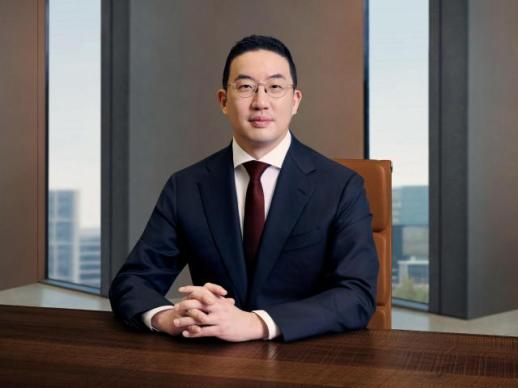 LG chiefs gather to sharpen AI strategy SEOUL, September 17 (AJP) - LG Group Chairman Koo Kwang-mo and executives from major affiliates gathered to review the conglomerate's investment strategy as artificial intelligence reshapes industries and technology, the group said Thursday. About 40 executives from LG Electronics, LG Display, LG Innotek, LG Chem, LG Energy Solution and LG Uplus attended the eight-hour meeting held Wednesday at the LG Academy in Icheon, south of Seoul. Executives reviewed existing investments and future strategies in areas including AI factories, physical AI, semiconductor materials and substrates, and AI transformation, or AX. "AI is no longer an area we can address selectively, but a key pillar that will determine our future competitiveness," Koo said, calling on executives to move quickly in areas the group sees as critical to its AI strategy. LG has been holding quarterly executive meetings focused on different strategic themes this year, including AX in March, research and development in June and investment strategy this month. AJP Takeaways - Koo Kwang-mo and about 40 LG executives held an eight-hour strategy meeting. - AI factories, physical AI, semiconductors and AX were among the key investment areas reviewed. - Koo described AI as a key pillar of LG's future competitiveness. 2026-09-17 13:29:36
 -
 Korean dictionary data to join 600-language BabelNet network SEOUL, September 17 (AJP) - South Korea's National Institute of Korean Language is teaming up with Italian AI language technology company Babelscape to connect Korean-language resources with BabelNet, a multilingual network covering about 600 languages. The institute, under the Ministry of Culture, Sports and Tourism, said Wednesday it signed an agreement with Babelscape to expand the development and use of AI-based language resources. BabelNet is a large multilingual dictionary and semantic network that connects words and concepts across languages. It incorporates resources including WordNet, Wikipedia and Wikidata and is used in multilingual language processing and AI research. The two organizations will work to link Korean-language resources developed by the institute with BabelNet and explore further cooperation in AI-based language data. The institute has already begun a project this year to integrate entries from its Urimalsaem Korean dictionary into BabelNet. BabelNet was created by Roberto Navigli, a professor at Sapienza University of Rome and co-founder of Babelscape, who attended the signing alongside Babelscape CEO Francesco Maria Tucci. Institute President Lee Kwan-kyu said the partnership would help broaden the use of Korean-language resources in the global AI ecosystem. AJP Takeaways - Urimalsaem dictionary data will be linked with BabelNet. - BabelNet connects words and concepts across about 600 languages. - The integration project began this year. 2026-09-17 13:27:29
 -
Naver Cloud CEO Kim Yoo-won: AI Hacking Requires Global Cooperation "It's about collaboration. We need to share our capabilities, train together, and fill in each other's gaps," said Kim Yoo-won, CEO of Naver Cloud, emphasizing the importance of cooperation in cybersecurity during the AI era. As cyberattacks become faster due to AI, he stressed that businesses, governments, and nations must share their strengths.On September 17, Kim spoke at a cyber forum hosted by the National Intelligence Service (NIS) under the theme 'Connected World, Shared Security,' where he highlighted Naver Cloud's security collaboration efforts.Naver Cloud has participated in the international cyber defense exercise 'Locked Shields' for two consecutive years, collaborating with national agencies such as the NIS, the Presidential Security Service, the National Police Agency, and the military, as well as domestic private security firms. Kim noted, "What may be difficult alone can be managed together."The company is also involved in private sector collaborations, participating as a team in the hacking competition 'DEF CON,' which includes hackers from around the world. Additionally, Naver Cloud is part of the 'Open Secure AI Alliance' formed by NVIDIA in July, which comprises over 120 companies sharing AI security technologies and vulnerabilities.To enhance South Korea's security capabilities, Kim mentioned the initiative for a security-specialized AI foundation model. This project aims to create a model that understands the unique security context of South Korea's environment and industries, which general AI may find challenging to grasp.Kim emphasized, "The security-specialized foundation model is not just a technology for one company; it is infrastructure for national competitiveness." He explained the need for a security model that comprehends industries directly linked to national competitiveness, such as semiconductors, finance, energy, defense, and aerospace.Naver Cloud is also participating in this initiative. Kim identified the company's role as connecting diverse capabilities into a single platform and ecosystem. He also expressed plans to expand the security-specialized foundation model beyond South Korea to the global market.He concluded by stating, "I believe that if we collaborate across borders, we can respond to any threat more effectively," and pledged to fulfill his role at the center of this collaboration as a representative AI security company in South Korea.* This article has been translated by AI. 2026-09-17 13:20:10
-
Korean Language Agency Partners with Babelscape for Global Language Resource Expansion The National Institute of the Korean Language (NIKL), led by Director Lee Kwan-kyu, is collaborating with the Italian artificial intelligence language technology company Babelscape to globalize Korean language resources.On September 16, NIKL announced that it has signed a memorandum of understanding with Babelscape to expand and utilize AI-based language resources. This agreement aims to connect the Korean language resources developed by NIKL with Babelscape's multilingual language resource, BabelNet, to promote the expansion and utilization of AI language resources.BabelNet is a large multilingual dictionary and semantic network that connects words and concepts in approximately 600 languages based on their meanings. It integrates various language and knowledge resources, including WordNet, Wikipedia, and Wikidata.Currently developed and managed by Babelscape, BabelNet can distinguish polysemy and link identical or related concepts across languages, making it useful for multilingual language processing and AI research.Through this agreement, both organizations will collaborate on expanding multilingual conceptual networks by linking NIKL's Korean language resources with BabelNet, as well as exploring mutual cooperation for the expansion and utilization of AI-based language resources.NIKL is already working on a project to integrate its Korean dictionary information, known as 'Uri Mal Saem,' with BabelNet, and this agreement is expected to lead to concrete outcomes in their collaboration.The signing ceremony was attended by Babelscape's CEO Francesco Maria Tucci and Chief Research Officer Professor Roberto Navigli, who visited NIKL in person.Professor Navigli, a specialist in AI language processing and a professor at Sapienza University of Rome, leads the Natural Language Processing research group and has conducted research on multilingual natural language understanding and lexical semantics, creating BabelNet.Director Lee Kwan-kyu stated, "This agreement marks a significant starting point for connecting NIKL's credible Korean language resources with a global multilingual language resource. We will work closely with Babelscape to ensure that the Korean language occupies a prominent place in the global AI language resource ecosystem as a central part of Hallyu culture."* This article has been translated by AI. 2026-09-17 13:20:00