


Latest by
-
 Trump Secretly Transferred on Military Plane Amid Iran Assassination Threat President Donald Trump secretly transferred to a military aircraft while leaving Turkey last month, leaving Air Force One as a decoy amid an assassination threat from Iran.According to the Wall Street Journal on August 11, Israel provided intelligence indicating that Iran could target either President Trump or Air Force One, including the possibility of an attack using surface-to-air missiles.No missile launches occurred, and the reliability of the intelligence has not been specifically confirmed. However, U.S. security officials deemed the situation serious enough to alter the president's travel plans. The WSJ noted, "This is the first time such a deception operation has occurred during Trump's presidency."The operation took place on July 8 at Ankara Airport. President Trump boarded Air Force One in front of the press but secretly exited through a catering vehicle attached to the opposite entrance. He then transferred to a waiting U.S. Air Force C-32A nearby and headed to the UK.The military aircraft flew with its tracking device turned off. Instead of the usual call sign 'Air Force One,' it used the standard military call sign 'Reach 18' to conceal its actual flight path.Meanwhile, the existing Air Force One carrying White House staff and reporters continued to the UK. Passengers believed the president was on the same flight, effectively making Air Force One a decoy.After arriving at the U.S. Air Force base in Mildenhall, UK, Trump transferred back to the original Air Force One and later appeared before cameras to encourage U.S. troops.Trump later acknowledged the secret transfer, explaining it was a precautionary measure based on the assessments of the Secret Service and military officials.* This article has been translated by AI. 2026-08-12 13:32:00
 -
Labor Minister Kim Young-hoon Reviews Yellow Envelope Law Regulations 김영훈 고용노동부 장관이 노란봉투법(개정 노동조합법)의 사용자성 판단과 노동쟁의 범위를 구체화하기 위해 시행령·시행규칙 등 하위법령 마련을 검토하고 있다고 밝혔다. 메가특구 연구개발(R&D) 인력에 대한 주 52시간제 예외 적용에는 신중하게 접근해야 한다는 기존 입장을 재확인했다. 김 장관은 12일 국회 기후에너지환경노동위원회 전체회의에서 나경원 국민의힘 의원이 노란봉투법의 사용자성과 쟁의 대상이 불명확하다고 지적하자 "시행령이나 시행규칙 등 어떤 방법이 있을지 다각도로 검토하고 있다"고 말했다. 김 장관은 "업무보고 때는 지침으로 하겠다고 보고드렸는데 전날 국무회의에서 대통령이 재차 지시했다"며 "업무 지침으로 충분히 모호성을 해소할 수 있을 것으로 생각했지만 지침보다는 구체적인 제도화를 검토하라고 지시했다"고 설명했다. 노란봉투법은 노동조합 및 노동관계조정법 2·3조 개정안을 일컫는다. 원청의 사용자성 인정 범위와 노동쟁의 대상 확대 등을 두고 노동계와 경영계 간 입장이 엇갈려왔다. 이재명 대통령도 전날 국무회의에서 노동쟁의 대상이 지나치게 넓어질 수 있다는 우려와 관련해 보다 구체적인 기준을 마련할 필요가 있다는 취지로 주문했다. 이에 노동부는 당초 지침을 통해 세부 기준을 제시하려던 방침에서 나아가 시행령이나 시행규칙 등 제도화 방안까지 검토하기로 했다. 나 의원은 "노란봉투법 자체가 모호한 규정으로 돼 있고 사용자성 부분도 명확히 해야 한다"며 "법에 구체적인 위임 규정이 없는데 하위법령으로 했다가 위헌성 논란을 가져올 수 있다"고 지적했다. 김 장관은 영업이익의 일정 비율을 성과급으로 지급하는 이른바 '영업이익 N% 성과급'이 노동쟁의·교섭 대상에 해당하는지에 대해서도 기준을 마련하겠다고 밝혔다. 그는 "영업이익의 몇 퍼센트(%)를 세금도 내기 전에 먼저 분배하는 문제"라며 "어떤 기준으로 쟁의·교섭 대상이 되는지 조만간 발표하겠다"고 말했다. 노동부는 이달 중 관련 지침을 마련할 예정이다. 메가특구 R&D 인력의 주 52시간제 특례에 대해서는 신중한 입장을 유지했다. 김 장관은 메가특구에서 연구직에 주 52시간제 예외를 적용할 것이냐는 질의에 "아직 정부에서 정해진 바는 없다"고 선을 그었다. 이어 주 52시간제 적용 대상에서 일정 연구인력을 제외하는 이른바 '화이트칼라 이그젬션' 등에 대해서도 "주 52시간제 예외는 신중하게 접근해야 한다"며 "기업 생산성과 노동기본권을 어떻게 조화할 수 있을지 고민하겠다"고 말했다. 정부는 반도체·피지컬AI·AI데이터센터 등 3대 메가프로젝트를 뒷받침하기 위한 메가특구특별법의 연내 제정을 추진하고 있다. 정부 내에서는 반도체 R&D 인력 등에 대한 근로시간 규제 완화 방안이 논의되고 있지만 노동계는 장시간 노동으로 이어질 수 있다며 반발하고 있다. 김 장관은 "메가특구가 반드시 성공해야 한다는 데는 이견이 없다"며 "노동자도 보호하고 기업의 생산성도 올릴 수 있는 해법을 고민하겠다"고 강조했다. 그러면서 "노동계와 지속적으로 소통하는 한편 기업과도 충분히 소통해 기업의 요구가 무엇인지 잘 헤아리겠다"며 "궁극적으로 나라 발전에 도움이 될 수 있도록 함께 고민하겠다"고 말했다.* This article has been translated by AI. 2026-08-12 13:28:10
-
HLB Panajin to Present PNA Technology at U.S. Oligonucleotide and Peptide Conference HLB Panajin will introduce its proprietary peptide nucleic acid (PNA) technology at the upcoming Oligonucleotides & Peptides Xchange–San Francisco 2026 conference in the United States.The company announced on August 12 that it will deliver the opening keynote address at the event, scheduled for September in San Francisco.The presentation is titled "The Overlooked Oligo: Why PNA Deserves a Closer Look in Your Pipeline." HLB Panajin plans to highlight the technical strengths of PNA and its potential applications in drug development.This conference will gather experts and decision-makers from global pharmaceutical and biotech companies to discuss the latest technologies and business collaboration opportunities in the fields of oligonucleotides and peptide therapeutics.During the presentation, HLB Panajin will showcase the differentiated technical advantages of PNA compared to traditional oligonucleotides, as well as its applications in various fields, including cell and gene therapies (CGT), and outline its potential as a drug development platform.This presentation has been organized in collaboration with ChemGenes, HLB Panajin's U.S. PNA distribution partner. The company aims to expand its collaborations with local research institutions and pharmaceutical and biotech companies, strengthening its global PNA business.Jang In-geun, CEO of HLB Panajin, stated, "PNA is a material with significant potential for various drug development fields due to its high binding affinity and stability. Through this presentation, we aim to raise awareness of PNA's competitiveness among global researchers and pharmaceutical and biotech companies, and to expand research and development collaborations and business opportunities."Meanwhile, HLB Panajin supplies PNA-based research and diagnostic materials and reagents to over 50 countries worldwide, including the United States, Europe, Asia, the Middle East, and Oceania.* This article has been translated by AI. 2026-08-12 13:28:00
-
Minister Kim Jung-kwan Discusses Exceptions to 52-Hour Workweek in Mega Special Zones Minister of Trade, Industry and Energy Kim Jung-kwan stated on August 12 that discussions are ongoing regarding various forms of labor systems, including the white-collar exemption from the 52-hour workweek.During a meeting of the National Assembly's Trade, Industry, Energy, and Small and Medium Enterprises Committee, Kim responded to a question from Democratic Party lawmaker Kim Won-ii about whether the special law for mega special zones would include exceptions for working hours. He noted, "Labor hours and environments have changed as industrial conditions have evolved."He emphasized that the government, labor, and industry are currently engaged in close discussions. Kim also acknowledged that there are differing views with the Ministry of Employment and Labor regarding the application of the 52-hour workweek exemption. In response to a question from People Power Party lawmaker Seo Ji-young about Employment Minister Kim Young-hoon's statement that the exemption is not possible, he said, "From the Minister of Labor's perspective, that may be a valid viewpoint."Kim reiterated his belief that the system should not undermine the aspirations and determination of those who work hard to achieve success. He also mentioned that discussions regarding the relaxation of the 52-hour workweek regulation were raised during a public-private joint meeting chaired by President Lee Jae-myung. Previously, on August 10, the government held a second public-private joint inspection meeting at the Blue House with representatives from companies involved in mega projects, including Samsung Electronics and SK Hynix. 2026-08-12 13:28:00
-
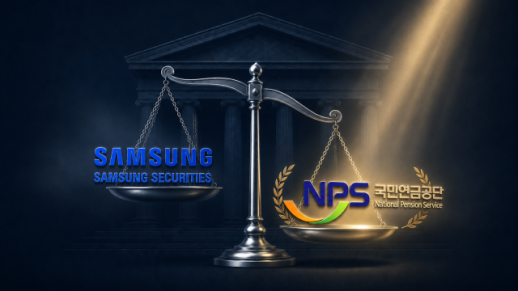 Samsung Securities liable for phantom-share losses, top court rules SEOUL, August 12 (AJP) - South Korea's Supreme Court ruled Wednesday that Samsung Securities was vicariously liable for employee negligence behind its 2018 "phantom-share" debacle, broadening the legal basis for compensation while leaving a 1.87 billion won ($1.3 million) award to the National Pension Service unchanged. A four-justice panel of the Supreme Court, with Justice Oh Kyeong-mi as the justice in charge, rejected appeals from both sides and upheld a lower court ruling that partially favored the National Pension Service, or NPS. The court said employees responsible for processing the dividend could have foreseen that shares mistakenly credited to staff accounts might be offered and sold through the market. It therefore found a sufficient causal link between the employees' negligence and the NPS's losses, holding Samsung Securities vicariously liable under the Civil Act. That marked a departure from the lower courts, which held the brokerage directly liable for deficiencies in its systems and internal controls but rejected the NPS's separate claim of employer liability. The Supreme Court said that part of the lower court's reasoning was incorrect but concluded that recognizing the additional basis for liability would not alter the damages or the company's share of responsibility. The accident occurred on April 6, 2018, when a Samsung Securities employee mistakenly processed a cash dividend of 1,000 won per share as a distribution of 1,000 shares per share to 2,018 members of the company's employee stock ownership association. The error credited 2.81 billion nonexistent shares, worth about 112 trillion won at the previous day's closing price and more than 30 times the brokerage's outstanding shares, to employee accounts. Twenty-two employees submitted orders to sell 12.08 million shares over a 31-minute period, with trades for 5.01 million shares offered by 16 employees ultimately executed. The wave of selling pushed Samsung Securities shares down as much as 11.68 percent to 35,150 won from the previous close of 39,800 won. The NPS, which held about 11.23 million Samsung Securities shares before the accident, sold roughly 940,000 shares that day and 3.57 million shares through Sept. 28. The pension agency sued Samsung Securities in 2019, seeking about 29.9 billion won for losses it said resulted from the price collapse. The Seoul Central District Court ruled in August 2024 that Samsung Securities had failed to establish adequate procedures and risk controls for dividend processing and had been too slow to notify employees and block sell orders after discovering the error. Relying on an expert assessment, the court limited recoverable losses to about 1.66 million shares sold between the accident and April 10, finding that the incident's direct effect on the share price had dissipated by the following trading day. It calculated losses of about 3.86 billion won by comparing the estimated price that would have prevailed without the accident with the prices at which the NPS sold its shares. The court then limited Samsung Securities' responsibility to 50 percent, citing the combination of an unintended processing error and individual wrongdoing by employees who sold the shares. After deducting gains the NPS made by purchasing shares at depressed prices on the day of the accident, the compensation was set at 1.87 billion won plus interest. The Seoul High Court upheld the award in January, prompting both sides to take the case to the Supreme Court. The Financial Services Commission separately suspended Samsung Securities from taking on new equity-trading clients for six months and imposed a 144 million won fine in 2018 over failures in internal controls, emergency planning and the safe processing of electronic transactions. ___________________________________________________________________________________ AJP Takeaways The Supreme Court upheld a 1.87 billion won compensation award to the NPS over Samsung Securities' 2018 phantom-share accident. Unlike the lower courts, the top court recognized the brokerage's vicarious liability for its dividend-processing employees' negligence. Compensation covered losses from the first three trading days after the accident, with Samsung Securities' responsibility limited to 50 percent. 2026-08-12 13:25:44
 -
Nvidia Develops 1 Trillion Parameter AI Model to Compete with China Nvidia is developing a massive open artificial intelligence (AI) model with over 1 trillion parameters. This initiative aims to catch up with Chinese companies in the open AI market while expanding its AI model ecosystem to boost demand for its graphics processing units (GPUs).According to IT media outlet The Information on August 11, the largest model in Nvidia's next-generation series, 'NemoTron4,' is expected to have at least 1 trillion parameters, targeting performance that can compete with the world's leading open AI models.NemoTron4 is approximately twice the size of the previously largest model, 'NemoTron3 Ultra,' which was unveiled in June. The number of parameters is a key indicator of the size of an AI model.However, in terms of size, Chinese companies still lead the market. Moonshot AI's 'Kimi K3' boasts 2.8 trillion parameters, Alibaba's 'Q1 3.8-Max' has 2.4 trillion parameters, and DeepSeek's 'V4-Pro' is reported to have 1.6 trillion parameters.Having a high number of parameters does not necessarily guarantee superior performance. Nvidia is enhancing its technology to achieve high performance with smaller models while also increasing the size of its models.On the same day, Nvidia unveiled a lightweight model, 'NemoTron3.5 Lightning,' which has 30 billion parameters. This model utilizes 'distillation' technology to transfer the capabilities learned by larger models to smaller ones, allowing for high performance with fewer computing resources. It can be used for coding, security checks, and AI program applications.Nvidia has significantly increased its investment in developing its own AI models. It is securing large-scale computing resources by renting AI servers from cloud companies that purchase its AI chips. As of late April, the multi-year cloud service contract amount reached $30 billion (approximately 42 trillion won).The company is also expanding collaborations with external AI firms. It is sharing AI training data and technology through the 'NemoTron Alliance,' which includes Reflection AI, Cursor, Thinking Machines Lab, and Mistral AI. Naver Cloud joined the alliance in June.As Nvidia's own AI model performance improves, the likelihood of competing with major clients like OpenAI and Nvidia-invested startups also increases.Nevertheless, Nvidia anticipates that as the number of open AI models grows, the demand for GPUs necessary for training and operation will also rise. The company aims to expand its influence beyond AI semiconductor sales to include models and software, thereby growing its AI ecosystem centered around its platform.Details regarding the specifications and release schedule for NemoTron4 have not yet been finalized. The final training is still underway, and it is expected to be completed by late fall at the earliest.* This article has been translated by AI. 2026-08-12 13:20:00
-
JW Pharmaceutical Shares Surge 15% Following Successful Phase 3 Gout Drug Trial JW Pharmaceutical is experiencing a surge of over 15% in its stock price following the announcement of positive results from a multinational Phase 3 clinical trial for its gout treatment candidate.As of 1:07 PM on August 12, the Korea Exchange reported that JW Pharmaceutical's shares rose by 4,100 won (15.62%) to 30,350 won. At one point during the trading session, the stock reached 31,650 won.On the previous day, JW Pharmaceutical confirmed the efficacy of its gout treatment candidate, efapiminurad, at the primary development dose of 6 mg in the Phase 3 trial. The company plans to submit a New Drug Application (NDA) aiming for domestic approval in 2027.The trial involved 612 gout patients across 52 institutions in five Asian countries and regions, including South Korea, Taiwan, Thailand, Malaysia, and Singapore. The treatment response rate for the 6 mg efapiminurad group was 50.0%, surpassing the 38.3% response rate of the standard treatment group receiving 40 mg febuxostat.Efapiminurad is an oral gout treatment candidate that selectively inhibits the human urate transporter 1 (hURAT1), reducing uric acid reabsorption in the kidneys and promoting its excretion.However, the 9 mg dosing group did not meet the statistical non-inferiority criteria compared to the 80 mg febuxostat group for the primary efficacy endpoint.Based on the clinical results, JW Pharmaceutical will further review the direction for pursuing high-dose approvals.* This article has been translated by AI. 2026-08-12 13:12:10
-
Hancom's Agentic OS Integrated into Firefighting Robots, Expanding into Physical AI Market Hancom is expanding its business into the physical artificial intelligence (AI) market by integrating its self-developed Agentic operating system (OS) into firefighting robots.On August 12, Hancom announced that its subsidiary, Hancom Life Care, has signed a five-year exclusive sales and technology development agreement with French robotics company Shark Robotics for the domestic market.The exclusive sales agreement covers the large firefighting and rescue robot 'Colossus' and the fire door blocking robot 'Rhino Protect.' For the next five years, Shark Robotics will not be able to sell these products through other distributors in South Korea.Hancom Life Care has also secured domestic sales rights for other robot products from Shark Robotics. This agreement marks a significant expansion for Hancom Life Care, which has previously supplied personal protective equipment and other firefighting and safety products, into the realm of robotics.Notably, the Colossus and Rhino Protect will be equipped with Hancom's Agentic OS. This operating system goes beyond utilizing individual AIs, integrating and managing multiple AI agents within a single framework. The two companies aim to collaborate on technology integration of the Agentic OS into the two robots by December 31.Once the Agentic OS is applied to the robots, they will be able to analyze information collected on-site in real-time, organizing data on hazardous areas and entry routes to relay to command systems. The goal is to reduce the time firefighters spend verifying and assessing data collected by the robots, thereby enhancing on-site response capabilities.Hancom is developing software, interfaces, and integrated modules related to the Agentic OS and holds rights to this technology. Shark Robotics will provide technical documentation, specifications, interface information, and technical support for the robots.Hancom plans to expand its business scope from its AX business, which has focused on corporate office environments, to include the operation and management of industrial robots as an AI platform company.Kim Yeon-soo, CEO of Hancom, stated, “Hancom is declaring its transition to an Agentic OS company and is poised to become an AX partner for domestic and international businesses. We expect that Hancom's Agentic OS will not only innovate work environments but also serve as an AI platform responsible for the operation and management of intelligent hardware, including robots.”* This article has been translated by AI. 2026-08-12 12:56:10
-
SK HYPER CEO Seok-geun Jeong: Customers Will Demand Tokens Beyond Data "In the future, customers will demand 'tokens' beyond data. If we have the infrastructure to create these tokens and the technology to optimize them, the Artificial Intelligence Data Center (AIDC) will not only be a new business but also a new growth engine for the telecommunications industry," said Seok-geun Jeong, CEO of SK HYPER and head of SKT AI CIC and the AIDC Integration Promotion Team, during a briefing at the company newsroom on August 12.He explained that the role of telecommunications companies, which have traditionally provided data based on their networks, will expand in the AI era to include offering computing resources and tokens based on AIDC.To this end, SK Group is elevating the AIDC business to a core initiative at the group level. The AI CIC at SK Telecom is designing the business direction, while the newly established SK HYPER is responsible for developing and investing in the AIDC business. The AIDC Integration Promotion Team will consolidate related capabilities within the group to accelerate business execution. Jeong emphasized, "It is important for each of the three organizations to perform their roles smoothly." Jeong pointed to the growing importance of infrastructure in AI competition as a key reason for expanding the AIDC business. He noted that as algorithms and data for creating AI models rapidly standardize, the ability to secure sufficient power and servers has become a competitive differentiator.He explained that AIDC, which aggregates large-scale Graphics Processing Units (GPUs) in one location, requires more power and computing resources than traditional data centers. While existing data centers focused on Central Processing Units (CPUs) and storage, AIDC will incorporate large-scale GPUs. Given the high power consumption of GPUs and the performance benefits of clustering multiple GPUs, securing large-scale infrastructure is crucial.Jeong also forecasted that AIDC could evolve into a new national infrastructure, similar to how the construction of highways and high-speed internet spurred growth in related industries. He stated, "When highways and the internet were established, not only did they have construction and economic growth effects, but they also fostered the development of industries such as automotive, oil refining, gaming, search, and telecommunications. I believe that once AI data centers are built, there will be significant economic ripple effects both upstream and downstream." He added, "Our goal is to make South Korea an 'Asia AI Infrastructure Hub,' and it is essential for AI CIC, SK HYPER, and the AIDC Integration Promotion Team to perform their respective roles effectively."* This article has been translated by AI. 2026-08-12 12:52:00
-
Cosmax Shares Surge Over 14% Following Record Q2 Earnings Cosmax has seen its shares rise over 14% during trading today, following the announcement of record earnings for the second quarter of this year and subsequent upgrades to target stock prices by analysts.As of 12:39 PM on the Korea Exchange, Cosmax's stock was trading at 241,000 won, up 31,000 won (14.76%) from the previous trading day.On August 11, Cosmax reported that its consolidated operating profit for the second quarter reached 73.7 billion won, a 21.3% increase compared to the same period last year. Revenue for the same period rose 27.5% to 794.9 billion won, while net profit surged 129.0% to 50 billion won. Both revenue and operating profit marked the highest quarterly figures in the company's history.For the first half of the year, cumulative revenue totaled 1.4769 trillion won, up 21.8% year-on-year, with operating profit increasing by 13.0% to 126.8 billion won. Growth from key overseas subsidiaries in countries such as China, the United States, and Southeast Asia contributed significantly to these results.Analysts predict that the growth trend will continue in the second half of the year. NH Investment & Securities raised its target price for Cosmax from 260,000 won to 300,000 won.Jung Ji-yoon, an analyst at NH Investment & Securities, stated, "Export growth rates remain high in July and August, and the factors that previously pressured margins for standalone subsidiaries are easing. The strong growth of our subsidiaries in China and the United States also supports positive expectations for third-quarter results."She added, "The valuation merits are also high, and we recommend buying." Following the upgrades in target prices, several securities firms have adjusted their forecasts. LS Securities set a target price of 350,000 won, while Kyobo Securities set it at 310,000 won. Korea Investment & Securities and Hyundai Motor Securities both set their target prices at 300,000 won, SK Securities at 290,000 won, and Eugene Investment & Shinhan Investment Securities at 280,000 won. Yuanta Securities adjusted its target price to 273,000 won, and Hanwha Investment & Samsung Securities set it at 270,000 won.* This article has been translated by AI. 2026-08-12 12:52:00