


Latest by
-
 Defense Ministry: Drone Demonstration Failures Part of Technology Development Process The Defense Ministry stated that the recent drone technology demonstration, where some civilian drones crashed, is part of the "process for developing better technology." The ministry emphasized its commitment to continuously provide opportunities by opening military training grounds.During a regular briefing on September 17, Defense Ministry spokesperson Jeong Bit-na explained the results of the '2026 Defense Drone Technology Exhibition' held the previous day, noting that "out of 17 demonstrations, 11 were successful, particularly all drones operated by the Defense Ministry and military succeeded."Regarding the failures of some civilian products, she suggested that "civilian companies primarily use civilian frequencies, so it is presumed that frequency interference occurred on-site." However, she added that since the event was intended for practical verification of civilian technology, "the military training ground was opened, and no separate investigation into the causes will be conducted."The event, held on September 16 at the Seungjin Training Center in Pocheon, Gyeonggi Province, was chaired by the Defense Minister and attended by over 1,500 participants, including civilian and military experts, key military commanders, and overseas defense industry representatives. This was the first event of its kind this year aimed at testing and verifying civilian drone technology in a real military environment, but some drones developed by Korea Aerospace Industries (KAI), LIG, and Ned Solutions crashed shortly after takeoff or failed to operate normally during the demonstration.The Defense Ministry underscored that such failures are common in the process of developing new technologies and reiterated its intention to continue supporting the verification and advancement of civilian defense technologies.* This article has been translated by AI. 2026-09-17 13:32:00
 -
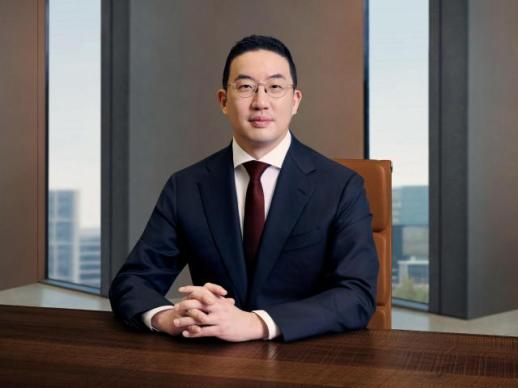 LG chiefs gather to sharpen AI strategy SEOUL, September 17 (AJP) - LG Group Chairman Koo Kwang-mo and executives from major affiliates gathered to review the conglomerate's investment strategy as artificial intelligence reshapes industries and technology, the group said Thursday. About 40 executives from LG Electronics, LG Display, LG Innotek, LG Chem, LG Energy Solution and LG Uplus attended the eight-hour meeting held Wednesday at the LG Academy in Icheon, south of Seoul. Executives reviewed existing investments and future strategies in areas including AI factories, physical AI, semiconductor materials and substrates, and AI transformation, or AX. "AI is no longer an area we can address selectively, but a key pillar that will determine our future competitiveness," Koo said, calling on executives to move quickly in areas the group sees as critical to its AI strategy. LG has been holding quarterly executive meetings focused on different strategic themes this year, including AX in March, research and development in June and investment strategy this month. AJP Takeaways - Koo Kwang-mo and about 40 LG executives held an eight-hour strategy meeting. - AI factories, physical AI, semiconductors and AX were among the key investment areas reviewed. - Koo described AI as a key pillar of LG's future competitiveness. 2026-09-17 13:29:36
 -
 Korean dictionary data to join 600-language BabelNet network SEOUL, September 17 (AJP) - South Korea's National Institute of Korean Language is teaming up with Italian AI language technology company Babelscape to connect Korean-language resources with BabelNet, a multilingual network covering about 600 languages. The institute, under the Ministry of Culture, Sports and Tourism, said Wednesday it signed an agreement with Babelscape to expand the development and use of AI-based language resources. BabelNet is a large multilingual dictionary and semantic network that connects words and concepts across languages. It incorporates resources including WordNet, Wikipedia and Wikidata and is used in multilingual language processing and AI research. The two organizations will work to link Korean-language resources developed by the institute with BabelNet and explore further cooperation in AI-based language data. The institute has already begun a project this year to integrate entries from its Urimalsaem Korean dictionary into BabelNet. BabelNet was created by Roberto Navigli, a professor at Sapienza University of Rome and co-founder of Babelscape, who attended the signing alongside Babelscape CEO Francesco Maria Tucci. Institute President Lee Kwan-kyu said the partnership would help broaden the use of Korean-language resources in the global AI ecosystem. AJP Takeaways - Urimalsaem dictionary data will be linked with BabelNet. - BabelNet connects words and concepts across about 600 languages. - The integration project began this year. 2026-09-17 13:27:29
 -
Naver Cloud CEO Kim Yoo-won: AI Hacking Requires Global Cooperation "It's about collaboration. We need to share our capabilities, train together, and fill in each other's gaps," said Kim Yoo-won, CEO of Naver Cloud, emphasizing the importance of cooperation in cybersecurity during the AI era. As cyberattacks become faster due to AI, he stressed that businesses, governments, and nations must share their strengths.On September 17, Kim spoke at a cyber forum hosted by the National Intelligence Service (NIS) under the theme 'Connected World, Shared Security,' where he highlighted Naver Cloud's security collaboration efforts.Naver Cloud has participated in the international cyber defense exercise 'Locked Shields' for two consecutive years, collaborating with national agencies such as the NIS, the Presidential Security Service, the National Police Agency, and the military, as well as domestic private security firms. Kim noted, "What may be difficult alone can be managed together."The company is also involved in private sector collaborations, participating as a team in the hacking competition 'DEF CON,' which includes hackers from around the world. Additionally, Naver Cloud is part of the 'Open Secure AI Alliance' formed by NVIDIA in July, which comprises over 120 companies sharing AI security technologies and vulnerabilities.To enhance South Korea's security capabilities, Kim mentioned the initiative for a security-specialized AI foundation model. This project aims to create a model that understands the unique security context of South Korea's environment and industries, which general AI may find challenging to grasp.Kim emphasized, "The security-specialized foundation model is not just a technology for one company; it is infrastructure for national competitiveness." He explained the need for a security model that comprehends industries directly linked to national competitiveness, such as semiconductors, finance, energy, defense, and aerospace.Naver Cloud is also participating in this initiative. Kim identified the company's role as connecting diverse capabilities into a single platform and ecosystem. He also expressed plans to expand the security-specialized foundation model beyond South Korea to the global market.He concluded by stating, "I believe that if we collaborate across borders, we can respond to any threat more effectively," and pledged to fulfill his role at the center of this collaboration as a representative AI security company in South Korea.* This article has been translated by AI. 2026-09-17 13:20:10
-
Korean Language Agency Partners with Babelscape for Global Language Resource Expansion The National Institute of the Korean Language (NIKL), led by Director Lee Kwan-kyu, is collaborating with the Italian artificial intelligence language technology company Babelscape to globalize Korean language resources.On September 16, NIKL announced that it has signed a memorandum of understanding with Babelscape to expand and utilize AI-based language resources. This agreement aims to connect the Korean language resources developed by NIKL with Babelscape's multilingual language resource, BabelNet, to promote the expansion and utilization of AI language resources.BabelNet is a large multilingual dictionary and semantic network that connects words and concepts in approximately 600 languages based on their meanings. It integrates various language and knowledge resources, including WordNet, Wikipedia, and Wikidata.Currently developed and managed by Babelscape, BabelNet can distinguish polysemy and link identical or related concepts across languages, making it useful for multilingual language processing and AI research.Through this agreement, both organizations will collaborate on expanding multilingual conceptual networks by linking NIKL's Korean language resources with BabelNet, as well as exploring mutual cooperation for the expansion and utilization of AI-based language resources.NIKL is already working on a project to integrate its Korean dictionary information, known as 'Uri Mal Saem,' with BabelNet, and this agreement is expected to lead to concrete outcomes in their collaboration.The signing ceremony was attended by Babelscape's CEO Francesco Maria Tucci and Chief Research Officer Professor Roberto Navigli, who visited NIKL in person.Professor Navigli, a specialist in AI language processing and a professor at Sapienza University of Rome, leads the Natural Language Processing research group and has conducted research on multilingual natural language understanding and lexical semantics, creating BabelNet.Director Lee Kwan-kyu stated, "This agreement marks a significant starting point for connecting NIKL's credible Korean language resources with a global multilingual language resource. We will work closely with Babelscape to ensure that the Korean language occupies a prominent place in the global AI language resource ecosystem as a central part of Hallyu culture."* This article has been translated by AI. 2026-09-17 13:20:00
-
HD Hyundai to Advance 376.2 Billion Won in Material Payments to Partners Ahead of Chuseok HD Hyundai will advance 376.2 billion won in material payments to its partners ahead of the Chuseok holiday.According to industry sources on September 17, HD Hyundai Heavy Industries will pay approximately 139.4 billion won, HD Hyundai Samho about 86.5 billion won, HD Hyundai Electric around 71.1 billion won, the refining sector including HD Hyundai Oilbank about 38.8 billion won, HD Hyundai Marine Engines approximately 26.6 billion won, and HD Hyundai Marine Solutions about 13.8 billion won. Payments will be made up to 12 days earlier than originally scheduled for each company.HD Hyundai has a tradition of making early payments to partners before the Lunar New Year and Chuseok holidays. Earlier this year, the company advanced 580 billion won in material payments to partners for the Lunar New Year. This initiative is expected to help partners manage increased cash flow needs for travel expenses and bonuses during the holiday season.An HD Hyundai official stated, "We are implementing various support policies for the mutual growth of our partners," adding, "We hope this early payment will contribute to creating a stable business environment and ensuring liquidity."Meanwhile, on September 10, five subsidiaries of HD Hyundai signed a 'Joint Agreement for Win-Win Cooperation' with first, second, and third-tier partners, agreeing to make all payments in cash or cash-equivalent methods. This aims to establish fair trading practices while enhancing the competitiveness of partners through various support in finance, productivity, safety, and technology, thereby expanding the benefits of mutual cooperation across the supply chain.* This article has been translated by AI. 2026-09-17 13:20:00
-
KOTRA Supports Expansion of Shipbuilding and Shipping Exports in Southeast Region The Korea Trade-Investment Promotion Agency (KOTRA) held the 'International Shipbuilding and Marine Export Consultation Conference (SGEMP 2026)' on September 17 at the Changwon Convention Center (CECO) to support the expansion of exports in the shipbuilding and shipping sectors, which are key industries in the Southeast region. This event was jointly organized with Gyeongsangnam-do and seven cities and counties in the province, in line with the regional growth engine policy announced by the government last month. Forty overseas buyers from 12 countries, including Gumi, ASEAN, and China, participated alongside 42 local shipbuilding and marine equipment manufacturers to engage in one-on-one business-to-business (B2B) consultations. Participating companies conducted over 300 consultations. Overseas buyers expressed significant interest in eco-friendly fuel supply systems for liquefied natural gas (LNG) vessels, dual-fuel engine components, smart equipment based on digital twin technology, and materials for ship repair and modification (MRO). They also participated in the 'Smart & Green Energy Shipbuilding and Marine Conference' held over two days starting September 16 to expand their global networks. With the International Maritime Organization (IMO) tightening environmental regulations, the demand for new eco-friendly and smart vessels, as well as the repair and modification of existing ships, is increasing, leading to expanded export opportunities for Korean shipbuilding materials. As of 2021, Gyeongsangnam-do accounted for 46.3% of domestic shipbuilding production, making it the largest shipbuilding and marine cluster in the country, with a recent trend of strong orders for high-value vessels. Kim Kwan-mook, KOTRA's Vice President and Head of the Economic Security and Trade Cooperation Division, stated, "As the global shipbuilding and marine industry transitions to eco-friendly and smart technologies, there is a growing demand for collaboration with overseas companies on Korean shipbuilding materials. We will do our best to enhance export performance in strategic industries by collaborating with local governments and specialized institutions." 2026-09-17 13:00:20
-
Chung Dong-young: No NSC Meeting Today; Humanitarian Aid to North Korea Should Be Separate from Ideology South Korea's Minister of Unification Chung Dong-young announced on September 17 that the National Security Council (NSC) meeting, which was expected to discuss contributions to the Hormuz Strait, did not take place. During a session of the National Assembly's Foreign Affairs and Unification Committee, Chung responded to a question from An Cheol-soo, a member of the People Power Party, about whether the NSC had convened that morning, stating, "It did not meet." He also confirmed that there were no plans to hold an NSC meeting before the scheduled talks between Foreign Minister Park Jin and U.S. Secretary of State Marco Rubio on September 18. Despite expectations that the government would hold an NSC meeting to finalize contributions to the Hormuz Strait ahead of the U.S.-South Korea foreign ministers' meeting, it appears that a definitive government policy has yet to be established. The government is expected to review the situation comprehensively, considering discussions between South Korea and the U.S. as well as the dynamics in the Middle East. Chung also addressed concerns raised by opposition lawmakers regarding the provision of medical equipment to a hospital in Gangdong District, Pyongyang, asserting that humanitarian aid should be assessed separately from political circumstances. People Power Party member Park Chung-kwon cited North Korea's recent joint strike drill involving ballistic missiles and questioned the appropriateness of the government's plan to provide approximately 10 billion won worth of 166 types of medical equipment under such conditions. Park specifically noted that Gangdong District is home to military facilities, including the Second Economic Committee, which oversees North Korea's weapons research and production, arguing that the medical equipment could potentially support those involved in the military industry. In response, Chung clarified, "We are not supporting the Second Economic Committee but rather providing aid to the hospital in Gangdong District." He emphasized that the existence of military facilities in the area should be considered separately from humanitarian support for the hospital utilized by local residents. The Gangdong District hospital is the first to be completed under North Korea's '20x10 Local Development Policy,' and the Ministry of Unification describes the support as a humanitarian initiative aimed at benefiting the local population. The Ministry is preparing to provide 166 essential medical equipment items needed for diagnosis, surgery, and treatment. In May, the Ministry received approval for an exemption from sanctions from the UN Security Council's North Korea Sanctions Committee for the relevant equipment. Funding is expected to come from the inter-Korean cooperation fund's health and medical cooperation budget. However, it has not been confirmed whether the medical equipment has already been delivered to North Korea or if a support schedule has been finalized. The Ministry has explained that it is prepared to commence the project immediately if North Korea accepts the aid, having resolved issues related to sanctions and funding in a 'ready-to-go' manner. The Ministry of Unification also addressed criticisms regarding the appropriateness of pursuing aid amid North Korea's provocations and hostile stance toward South Korea, stating that it maintains the principle of consistently pursuing humanitarian projects regardless of political and military situations. Additionally, during the Foreign Affairs Committee's report, the Ministry announced plans to promote the removal of hostility between the two Koreas, enhance civilian exchanges, restore communication channels, and reinstate the September 19 military agreement based on the 'Three Major Blueprints for Peaceful Coexistence on the Korean Peninsula.' The Ministry aims to leverage the U.S. reduction of joint military exercises as an opportunity to restart U.S.-North Korea dialogue, positioning the government as a 'facilitator' to connect the momentum for dialogue to multilateral discussions aimed at establishing a peace regime on the Korean Peninsula. Throughout the policy implementation process, the Ministry plans to gather opinions from civil society and academia while promoting public discourse and intergovernmental consultations. 2026-09-17 12:36:00
-
Unmanned Ground Vehicles Transform Military Logistics at Hanwha Aerospace "Let’s create premium products with dedication and spirit." During a visit to Hanwha Aerospace's Changwon Plant 2 in Gyeongnam on September 14, assembly work was bustling under this motto. Contrary to expectations of noise in a factory producing heavy military equipment, the interior was surprisingly comfortable. While the outside temperature hovered around 30 degrees Celsius, the indoor air was cool.The desert-colored equipment scattered throughout the factory showcased the export status of South Korea's defense industry reaching the Middle East. A Hanwha Aerospace official explained, "There is high demand for anti-aircraft weapons, and we receive visits from Middle Eastern countries about once a month."The atmosphere in the production area shifted during the equipment demonstration. Representative vehicles such as the Tigon, Cheonmu, and K21 infantry fighting vehicle roared to life. Among them, a relatively smaller unmanned ground vehicle (UGV) caught attention. The Themis, Arion Smet, and Grunt moved according to remote control, illustrating how unmanned systems are taking over the roles previously performed by soldiers.At the center of the demonstration was the multipurpose unmanned vehicle Arion Smet. Its design resembled a four-wheeled all-terrain vehicle (ATV), but its mission extends beyond mere transportation. It serves as an unmanned support vehicle for infantry units, transporting supplies and evacuating the wounded while also providing combat support when necessary.According to Hanwha Aerospace, the third-generation Arion Smet being introduced to the military has a payload capacity of approximately 450 kg. This means it can carry ammunition and supplies that soldiers would otherwise have to transport themselves. In a situation where troop numbers are decreasing, its key role is to reduce the personnel involved in logistics and transportation, allowing soldiers to focus on combat missions.The operational method is also designed to alleviate soldiers' burdens. It features an automatic following function that allows it to trail behind a leading soldier and can autonomously transport supplies to designated locations. This reduces the burden on the operator, who would otherwise have to control the vehicle throughout its route. Utilizing it for transporting ammunition and supplies in mountainous terrain or evacuating the wounded during combat can help minimize troop fatigue and exposure to danger.The design for off-road movement is also notable. The Arion Smet is equipped with airless tires, which Hanwha Aerospace claims reduce the risk of punctures from gunfire and enhance traction on rough terrain compared to traditional air-filled tires. It can handle inclines of up to 60% and can maneuver in tight spaces, which is essential for supporting infantry in mountainous and unpaved areas.Another distinguishing feature is that it is not limited to transport duties. It is equipped with AI-based remote fire control capabilities, allowing it to support combat missions. During the demonstration, the vehicle was seen tracking targets even while in motion. Hanwha Aerospace explained that the AI can automatically track targets in a 360-degree radius. This means that an unmanned vehicle that transports supplies can also support soldiers in combat situations.The Themis, which was also showcased, is distinguished from the Arion Smet by its tracked design. It has a structure that allows mission equipment to be mounted between its left and right tracks, and its modular design makes it easy to change equipment based on mission requirements. If the same chassis can accommodate different equipment, it can expand operational capabilities to meet the needs of the unit.The concept of unmanned vehicles taking on soldiers' tasks is becoming a reality in military adoption. On September 17, Hanwha Aerospace unveiled its production system establishment and operational plans for the Arion Smet, along with a roadmap for unmanned ground systems in defense. The Arion Smet signed a mass production contract with the Defense Acquisition Program Administration on September 4 and is set to be supplied to the Army and Marine Corps infantry units sequentially starting next year.The Changwon Plant 2, which will handle mass production, was established in 1984 and spans approximately 60,000 pyeong, producing everything from K200 and K21 mobility equipment to Cheonmu and Cheongung II launchers. This marks the beginning of mass production for the military's first multipurpose unmanned vehicle at a facility that previously focused on traditional weapon systems.A supply chain to support operations after military adoption has also been established. Hanwha Aerospace has formed a cooperative system with over 40 partner companies supplying structures, batteries, navigation devices, LiDAR, and remote control components. The company reports that the domestic production rate of the Arion Smet is over 98%. By sourcing major components domestically, it aims to respond quickly to subsequent military support and maintenance needs.The value of unmanned systems in responding to reduced troop numbers cannot be measured solely by how many soldiers can be replaced by a single vehicle. It is significant in conserving the stamina of soldiers transporting ammunition, reducing the number of personnel entering dangerous areas, and enabling a limited number of troops to carry out more missions.The UGVs in motion at the Changwon plant illustrate the starting point of this transformation. The next goal presented by Hanwha Aerospace is to change the combat methods of artillery and mechanized units, beginning with small vehicles that follow soldiers and carry supplies. 2026-09-17 12:28:00
-
Samsung Hospital Unveils Humanoid Surgical Assistant Robot "Hand me the scissors." The humanoid robot standing next to the operating table began to move in response to the medical staff's voice command. After scanning the tray with surgical tools using its camera, the robot picked up the scissors. It took less than two seconds for the robot to start moving after the doctor's command was given.On September 16, at the Samsung Life Insurance building in Gangnam, Seoul, Samsung Medical Center publicly unveiled its humanoid surgical assistant robot, which is currently under development, in a setting that closely resembles an actual operating room.The event showcased various scenarios, including three robots performing surgical tasks via remote control, a surgeon assisted by two robots, and participants trying out a multi-jointed robotic hand that moves like a human hand.In a simulated gallbladder removal surgery involving one surgeon and three robots, goat liver was used instead of a real patient or live animal. A large screen displayed the organ's tissue and the robot's movements in real-time, captured by a laparoscopic camera.The robot assisted in pulling the surgical site to ensure visibility and helped confirm the location of the gallbladder duct and blood vessels relative to surrounding tissues. It then demonstrated the critical steps of the gallbladder removal procedure, including securing the duct and blood vessels with clips before cutting. The robot effectively performed the role of a surgical assistant by handing tools to the medical staff, holding the endoscopic camera, and applying consistent force to tissues, thereby minimizing interruptions in the surgical flow and allowing the medical team to focus on essential tasks.◆ South Korea's Robot Collaboration is Leading the World… Key Technologies Include RCM, Visual Servoing, and Voice RecognitionSamsung Medical Center highlighted the collaboration between medical staff and multiple humanoid robots as a distinguishing feature of this demonstration. They explained that both remotely operated robots and AI-controlled surgical assistant robots were utilized together.Professor Jeong Yong-ki, the lead researcher and an otolaryngology specialist, assessed South Korea's robotic technology as being "world-class," noting that the country has a favorable environment for advancing related research due to the presence of skilled medical professionals, robotics companies, and AI researchers.The humanoid robot demonstrated clear differences from existing surgical robots like the da Vinci system. While da Vinci is a specialized robot designed for surgical procedures, the humanoid robot used in this research focuses on versatility and scalability, capable of performing various tasks depending on the tools and control methods attached to its arms.Professor Jeong stated, "Using multiple fingers on a multi-jointed robotic hand will allow for more stable handling in situations where tools are difficult to grasp or overlap with each other."The roles of the surgical robots can be categorized into three main functions: 'OR-Scrub' for preparing and delivering surgical instruments, 'OR-Scope' for holding the endoscope and pulling tissues to ensure visibility, and 'OR-TeleOp' for directly moving surgical instruments under the surgeon's remote control. Professor Jeong explained that in the future, operating rooms may feature a setup where surgeons work alongside multiple robots.The core technologies of the robots include 'RCM (Remote Center of Motion)' for maintaining consistent instrument insertion points, 'Visual Servoing' for automatically correcting movements by tracking targets with a camera, and 'Voice Recognition (AI)' for translating the surgeon's verbal commands into actions.According to Samsung Medical Center, laboratory evaluations showed that both voice command recognition and action success rates exceeded the target of 95%. The success rate for handling five types of surgical tools was 100%, and the delivery success rate was 98.7%. The time taken to start actions after command recognition was within two seconds, with a final goal of achieving this within one second.Safety features are also in place, including emergency stop voice commands and dedicated pedals and buttons. In the event of an emergency stop, the robot immediately halts and retracts, allowing medical staff to push it away as its joint power is released. However, discussions regarding liability for robot malfunctions in medical disputes have yet to take place. Professor Jeong remarked, "This is an important issue, but the technology is not yet mature enough for discussion."Addressing variables that arise during actual surgeries, such as bleeding, surgery delays, and anatomical differences among patients, remains a challenge for the future. High-difficulty procedures like incisions and suturing are still in the research phase.◆ Clinical Trials Planned for 2029… Aiming to Address Medical Workforce Shortages in Rural and Nighttime Emergency SituationsSamsung Medical Center plans to conduct its first clinical trials in 2029, targeting gallbladder and pituitary tumor surgeries across four hospitals. The plan is to gradually expand the scope of application, starting with lower-risk auxiliary tasks such as maintaining endoscopic visibility and adjusting positions during laparoscopic surgeries.Regarding the timeline for applying the technology to actual patient surgeries, they stated, "The timing will vary depending on the roles assigned to the robots." The hospital believes it may be possible to consider clinical applications for roles such as holding the endoscope and adjusting its position during surgery.The ultimate goal outlined by Samsung Medical Center is to alleviate the shortage of medical personnel. By assigning repetitive tasks to robots, medical staff can concentrate on critical surgical procedures, thereby filling gaps in rural and nighttime emergency situations where personnel are scarce. Professor Jeong stated, "We aim to provide a certain level of surgical assistance even in areas with a shortage of staff, such as rural hospitals or nighttime emergency surgeries."Recently, Elon Musk, CEO of Tesla, claimed that "robots will surpass human doctors within three years," a statement that some experts believe is not entirely unfounded. A joint research team from Johns Hopkins University and Stanford University previously demonstrated autonomous surgery using the da Vinci robot on excised pig gallbladders, as reported in Science Robotics. However, there are concerns about the gap between such experiments and actual clinical applications, as they do not involve live animals.This project began after Samsung Medical Center was selected as the lead institution for Korea's ARPA-H in July of last year. It will be conducted over 54 months, concluding in December 2029, with a total government-supported research and development budget of approximately 13.835 billion won.Samsung Medical Center is responsible for defining clinical requirements and overseeing the demonstration. Rainbow Robotics is developing the robot's main body, while AIDIN Robotics is responsible for the gripper and robotic hand development. Sungkyunkwan University and Seoul National University are involved in AI software development, and the National Cancer Center and Jeonbuk National University Hospital are tasked with data collection and demonstration. 2026-09-17 12:08:00