


Latest by
-
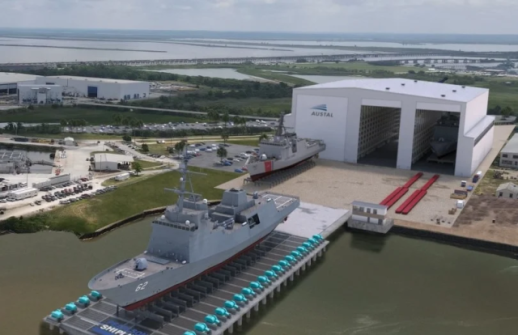 Hanwha bids $1.2 billion for Austal USA to boost US shipbuilding SEOUL, August 11 (AJP) - Hanwha Group is seeking to acquire the U.S. operations of Australian shipbuilder and defense contractor Austal, stepping up efforts to expand its shipbuilding and defense presence in the United States. Hanwha has proposed acquiring 100 percent of the businesses and operating assets of Austal USA at an enterprise value of between $1.05 billion and $1.2 billion on a cash-free, debt-free basis. The move comes after Hanwha built a 19.9 percent stake in Austal Ltd., the Australian-listed parent company, and would give the Korean conglomerate direct control of another major U.S. shipbuilding base alongside its existing Philly Shipyard. According to industry sources Tuesday, Hanwha Defense USA submitted a nonbinding and conditional proposal to acquire Austal's U.S. operations. The proposal does not involve the acquisition of Austal as a whole. Its businesses in Australia, the Philippines and Vietnam would remain outside the transaction. The final purchase price would be determined following due diligence, negotiations on definitive agreements and regulatory reviews. Hanwha is expected to conduct due diligence for about four weeks. The proposal is subject to a series of U.S. regulatory approvals, including reviews by the Committee on Foreign Investment in the United States (CFIUS), the Defense Counterintelligence and Security Agency and antitrust clearance under the Hart-Scott-Rodino Act. Hanwha also plans to consult with key U.S. government customers, including the Department of Defense, Navy and Coast Guard, before submitting a more definitive proposal. If completed, the deal would give Hanwha two major U.S. shipbuilding hubs: Philly Shipyard on the East Coast and Austal USA's yard in Mobile, Alabama. Austal USA builds vessels for the Pentagon, U.S. Navy and Coast Guard and has produced Littoral Combat Ships, Expeditionary Fast Transport vessels, Coast Guard cutters and other auxiliary ships. It also participates in the production of modules for U.S. nuclear-powered submarines. The company would therefore provide Hanwha with a stronger foothold as it seeks to enter the U.S. Navy's newbuild and maintenance, repair and overhaul markets and expand cooperation between Austal USA and Philly Shipyard. Hanwha's pursuit of Austal dates back several years. In 2024, Hanwha initially sought to acquire Austal in its entirety but abandoned the plan amid regulatory hurdles involving national security reviews in the United States and Australia. It shifted its strategy in 2025 to gradually building a stake in the Australian parent company. Hanwha first acquired a 9.9 percent stake in Austal in 2025 and later received approval from the Australian government in December that year to raise its holding to 19.9 percent. The latest proposal marks a further refinement of that strategy, focusing specifically on Austal USA, a key production base for U.S. naval vessels, while excluding Austal's operations in Australia and other markets. "We have made a nonbinding preliminary proposal to acquire Austal's U.S. business," a Hanwha Defense USA official said. "Any transaction will be determined based on the results of due diligence." "Hanwha's top priority is to make a meaningful contribution to the revitalization of the U.S. shipbuilding industry," the official added. "We are exploring a range of opportunities to expand our business in the United States." AJP Takeaways △ Hanwha has offered up to $1.2 billion to acquire Austal USA. △ The deal would add a second major U.S. shipbuilding base alongside Philly Shipyard. △ Hanwha is targeting deeper access to U.S. Navy, Coast Guard and defense programs. 2026-08-11 16:59:43
 -
 MainBiz Calls for Tax Benefits for SMEs to Maintain Employment The Korea Management Innovation Small Business Association (MainBiz) has requested increased tax support for small and medium-sized enterprises (SMEs) to help maintain employment.On August 11, the SME Ombudsman held a regulatory improvement meeting with MainBiz at the Gwanghwamun Building in Jongno, Seoul. The meeting was attended by Choi Seung-jae, the SME Ombudsman, Kim Myung-jin, president of MainBiz, and other executives and representatives from member companies.Kwon Jong-soon, a director at MainBiz, stated, "If the benefits are insufficient, companies will ultimately choose to reduce their workforce when management becomes difficult." He proposed increasing the corporate and income tax deduction rates for SMEs that maintain employment to 20% and 30%, respectively, and extending the application period until the end of 2028.The government currently allows SMEs that adjust wages to maintain employment to deduct a portion of the reduced total wage and the increase in hourly wages from their corporate and income taxes. This program is set to end at the end of this year.Choi Seung-jae noted, "Given that the government recently announced the 2026 tax reform plan, which includes ending this program, it may not be easy to continue it. However, it is essential to first verify whether the program has achieved its original objectives." He suggested conducting a survey among MainBiz member companies to gather relevant data.MainBiz also requested an expansion of the support targets for regional SME development funds. Currently, local governments operate SME development funds to support startups, business stability, and region-specific industries, but the criteria for support and preference vary by municipality, leading to instances where MainBiz companies are excluded.The Ombudsman reported that he has conveyed requests for regulatory improvements to 15 metropolitan governments, including Seoul, and has received positive responses from Incheon and Gyeonggi. He stated that after the 2027 SME development fund operation plans are released by local governments, they will reassess whether management innovation-type SMEs are included in the support targets and whether the conditions for additional points and preferences are adequate.Choi emphasized, "Even if immediate answers to these issues are challenging, accumulating evidence from the field can reopen discussions. We will continue to collaborate with relevant departments to ensure that the suggestions made today lead to tangible improvements that SMEs can feel."* This article has been translated by AI. 2026-08-11 16:56:00
 -
NCSOFT Reports Strong User Retention for Lineage Classic After 140 Days NCSOFT has expressed optimism about the long-term success of its game, Lineage Classic, as user metrics remain strong even after its launch.During a conference call on August 11, NCSOFT co-CEO Park Byung-moo stated, "The MMORPG market typically sees a surge in user acquisition initially, followed by a sharp decline. However, Lineage Classic has maintained a very solid monthly active user count (MAU) even 140 days post-launch."He added, "Conversations with the development and business teams indicate that we are actually at the beginning of Lineage Classic's life cycle. We expect it to follow a trajectory similar to Lineage M." 2026-08-11 16:56:00
-
Concerns Raised Over Reassessment of Historic Metal Typefaces by Cultural Heritage Agency The reassessment of the 'Jeongdogaja,' a metal typeface potentially predating the world's oldest known metal type, the Jikji, by 138 years, is set to be decided on August 13. However, it has come to light that some experts involved in the 2017 review of the Jeongdogaja's designation as a treasure are still part of the Cultural Heritage Committee's movable cultural heritage division. This raises questions about whether individuals who participated in the previous review should also be involved in the reassessment of the same artifact.Current regulations of the Cultural Heritage Committee stipulate that members or experts who have directly participated in a case should be excluded from investigation, review, and decision-making processes. Given that an audit revealed significant omissions and incorrect statistical applications during the 2017 review, the eligibility of those involved in that process must be scrutinized if the reassessment proceeds.The Jeongdogaja is believed to have been used to print the treasure No. 758, 'Nammyo Cheonhwa Sang Song Jeongdogaja,' created in 1239. If this claim is scientifically verified, it would predate the Jikji, printed in 1377, by 138 years. While the Jikji exists only in printed form, the Jeongdogaja is a physical metal type, which has garnered significant academic interest.The application for the Jeongdogaja's designation as a treasure was rejected during the 2017 Cultural Heritage Committee review. The reasons cited included doubts about its use as a printing type and insufficient verification of its provenance and ownership history.Audit Reveals Issues in 2017 Review ProcessThe controversy reignited last year when the results of an audit were made public during a national assembly inspection. It was revealed that key results from typesetting experiments were not properly communicated during the 2017 review, and there were issues with the statistical analysis.The designation investigation report at the time recorded that the sizes of the printed versions of 'Sok Myeong Yeok' and 'Seok Bo Sang Jeol' were reduced by 0.3 to 0.5 cm and 0.8 cm, respectively, compared to the original prints. However, the review secretary reported that there was no size difference for 'Sok Myeong Yeok,' and the 0.8 cm shrinkage noted in 'Seok Bo Sang Jeol' was not communicated to the committee members.Problems were also identified in the statistical analysis. If the advice from the National Statistical Office had been properly applied, the conclusion should have indicated that typesetting was possible, but the actual review concluded it was not feasible.This means that the decision on whether to designate the Jeongdogaja as a treasure was made without the committee members receiving objective data that could have influenced the outcome. Following the audit's findings, the Cultural Heritage Administration has indicated the need to reassess the authenticity of the Jeongdogaja and has been considering the possibility of a reassessment.Concerns Over Fairness in Reassessment ProcessThe key issue is who will conduct the investigation and make the judgment if a reassessment is decided. The movable cultural heritage division of the Cultural Heritage Committee, established in May, is responsible for artifacts like the Jeongdogaja.Among the experts in this division, two are known to have participated in the 2017 review of the Jeongdogaja. One has been appointed seven times consecutively and has served for over 14 years, while the other has been appointed six times consecutively for about 12 years.While long-term appointments do not violate current laws, the involvement of individuals who previously participated in the review of the same artifact raises concerns. Current presidential regulations state that members or experts who have directly engaged with a case should be excluded from investigation, review, and decision-making.Legally, the question arises whether the 2026 reassessment falls under the same 'case' as the 2017 review. If deemed the same case, those who were directly involved in the previous review would be subject to exclusion under the regulations.Even if the Cultural Heritage Administration views this process as a separate new case from the 2017 review, the same regulations allow parties to request the exclusion of specific members or experts if they believe a fair investigation and review cannot be expected.Potential Legal Implications from 2017 Review ErrorsThe issues identified in the 2017 review process extend beyond procedural fairness. Depending on how the documentation and reporting were conducted, there could be criminal implications.If the official responsible for the review had the authority to prepare official review materials or reports and knowingly recorded different information from the actual measurements, it could lead to charges of falsifying official documents.It is crucial to distinguish between simple errors in judgment and the act of misrepresenting objective facts. If the actual measurements indicated a shrinkage of 0.3 to 0.5 cm, but the official document stated 'no difference,' this is different from a mere difference of professional opinion.Conversely, the evaluation of statistical results regarding the feasibility of typesetting involves professional judgment. This aspect requires investigation into who applied which analytical methods and on what basis conclusions were altered.Abuse of authority is also a potential concern. If the review secretary used their official authority to direct or supervise in a way that led to a specific review conclusion, it could raise issues of abuse of power under criminal law.Thus, the focus of the investigation into the 2017 review should not only be on the miscommunication of data but also on who prepared or reported incorrect information, what directives were exchanged during the process, and whether other review participants were aware of these issues.Long-Term Committee Members Raise Questions About Reassessment IntegrityThe issue of long-term appointments is again coming under scrutiny in light of the reassessment. In 2019, the government amended the Cultural Heritage Committee regulations to limit the number of consecutive terms for members to two, aiming to enhance the fairness of committee operations.However, in 2023, the regulations were revised again, removing the limit on consecutive terms. While the two-term limit applied to 'members,' it did not extend to experts, meaning the long-term appointments of the current experts cannot be deemed a violation of regulations.The crux of the issue is not the number of terms served but whether it is appropriate for the same individuals who have long been involved in the investigation of a specific artifact to reassess that same artifact.While there is a need for experienced experts to maintain professionalism, having individuals who were directly involved in past reviews reassess the same issues presents a different challenge. This is why the government has established separate provisions for exclusion, avoidance, and recusal.Concerns About Trust in Cultural Heritage AdministrationThe recent reassignment of Hwang, the director of the Cultural Heritage Administration who served as the review secretary for the Jeongdogaja in 2017, has also drawn attention. Hwang was transferred to the Intangible Heritage Division in Jeonju in January and returned to the headquarters in Daejeon as the director of the Natural Heritage Division on August 7, just six days before the expected decision on the Jeongdogaja reassessment.While the Natural Heritage Division is not directly responsible for the movable cultural heritage division that reviews the Jeongdogaja, the Cultural Heritage Administration has stated that this personnel change is unrelated to the Jeongdogaja issue.Thus, the timing of the reassignment alone cannot definitively link it to the reassessment. What needs to be clarified is Hwang's actual role in this review process.It is essential to determine whether Hwang provided the 2017 review materials for this process, discussed the direction of the Jeongdogaja review with responsible officials, or consulted with committee members or experts on related matters. Given the audit's findings regarding the reporting process, the Cultural Heritage Administration must clarify Hwang's level of involvement in this reassessment.Trust in the Reassessment ProcessIf the Cultural Heritage Administration decides on the reassessment of the Jeongdogaja on August 13, the first step must be to clarify the composition of the review committee. It is crucial to identify which current members and experts participated in the 2017 review and what roles they played in that investigation and judgment.It must also be established whether these individuals will be excluded from the current investigation and review. If they determine that this is not the same case and therefore not subject to exclusion, they need to provide the rationale for that decision and whether there are any grounds for avoidance or recusal.Additionally, the roles of individuals from the Cultural Heritage Administration who were involved in the 2017 review, including Hwang, should be disclosed. If this reassessment is a process to reconsider issues stemming from the previous review, it is essential to distance those who contributed to the previous problems from the current judgment.Trust in the outcome will be difficult to achieve if those making the decisions are intertwined with the past review. This is especially true given the audit's findings that key data was omitted and statistical results were not accurately reflected during the 2017 review.As the Cultural Heritage Administration prepares for the reassessment, the first priority must be to clarify who will be involved in the review process.* This article has been translated by AI. 2026-08-11 16:52:10
-
Debate Erupts Over Tax Reforms for Non-Resident Homeowners Concerns and criticisms regarding the government's real estate tax reform plan were voiced during a full meeting of the National Assembly's Land, Infrastructure and Transport Committee. Lawmakers from both the ruling and opposition parties expressed worries that increased taxes on non-resident homeowners could harm genuine homebuyers and destabilize the rental market. On August 11, the committee meeting featured questions directed at Minister of Land, Infrastructure and Transport Kim Yun-deok and First Vice Minister Kim I-tak regarding the tax reform plan and the government's response to the housing market. The main issue was the proposed tax increase for non-resident homeowners. The government aims to strengthen tax burdens on these homeowners to establish a housing market order focused on actual residents. However, concerns were raised that even unavoidable circumstances such as work, education, health issues, or caring for parents could fall under this regulation. Democratic Party lawmaker Kang Deuk-gu stated, "There are opinions that we need to reconsider the sunset provision for non-resident homeowners who have become so due to unavoidable reasons like work or education. We need to carefully consider policies to prevent harm to these individuals." The potential instability in the rental market was also highlighted. Kang noted, "If we regulate non-resident homeowners, they will either have to live in the property or sell it. This could force tenants to vacate, raising concerns about rent increases." The opposition party strongly criticized the government's policies. People Power Party lawmaker Kang Dae-sik pointed out, "Looking at the cumulative change rate of housing sales in the metropolitan area during the first year of the current administration compared to the Roh Moo-hyun administration, the increase rate is the highest under this government." He added that rental prices in Seoul continue to rise to record levels. Kang also criticized the real estate policies of the Lee Jae-myung administration, stating, "If I were to give a grade, it would be an F. There is a saying that taxes encourage people to sell their homes while loans discourage them from buying." People Power Party lawmaker Kim Mi-ae raised concerns about the possibility of landlords passing on the tax burden to tenants. She remarked, "While the government aims for market stabilization and a focus on actual residents, landlords are likely to reflect the increased tax burden in rental prices or convert leases from jeonse to monthly rent." She emphasized, "Ultimately, the most vulnerable, the tenants, will bear the brunt of this. The impact on the rental market should have been thoroughly analyzed before announcing the tax reform plan." The issue of tax equity for couples owning a single home was also discussed. People Power Party lawmaker Kim Eun-hye questioned, "Couples living together in one home are now facing tax burdens similar to those of multiple homeowners. The president has encouraged marriage, but shouldn't this tax approach be improved?" Kim added, "Is it reasonable for one part of the government to promote marriage while another part encourages separation or divorce? We need to consider adjustments to the system." Minister Kim Yun-deok indicated that there is room for adjustments to minimize market shock. He stated, "It is important to work to reduce market shock through phased implementation and to continue monitoring public opinion." First Vice Minister Kim I-tak also responded, "Since we are in the legislative notice period, I believe adjustments can be made." Questions regarding supply policies also arose. Democratic Party lawmaker Kim Nam-kun criticized the supply policies of Seoul Mayor Oh Se-hoon, stating, "The current housing and rental crisis stems from the supply policies during Oh's four-year term." Kim pointed out, "While Mayor Oh denies a significant drop in housing supply, even based on permit standards, it is only 62% of the target. There is widespread criticism that the so-called rapid integrated planning is neither rapid nor integrated, merely a name."* This article has been translated by AI. 2026-08-11 16:52:10
-
Record Power Demand Amid Heat Wave Raises Pressure for Electricity Rate Hike As extreme heat drives total power demand to record levels, the financial burden related to power systems is expected to increase due to climate change. Analysts suggest that the 'climate adaptation costs' associated with investments in power grids and energy storage systems (ESS) may lead to pressure for higher electricity rates amid ongoing financial challenges for Korea Electric Power Corporation (KEPCO).According to the Korea Power Exchange, total demand, including both market and external demand, reached 104.4 gigawatts (GW) on August 7 at 3 p.m., surpassing the previous record of 104.2 GW set on August 25 last year. On the same day, market demand peaked at 95.3 GW, resulting in a supply reserve of 8.3 GW and a supply reserve ratio of 8.7%.Despite this surge in demand, the likelihood of immediate power supply issues remains low. The Korea Power Exchange forecasts this week's power demand to range between 92.9 and 96.7 GW, with reserves expected to be between 10.3 and 14.4 GW, indicating no anticipated disruptions in supply.However, the intensifying extreme weather events due to climate change are raising concerns. Heat waves increase cooling demand while reducing the cooling efficiency of power generation facilities, and droughts can further impact the availability of cooling water.The frequency and intensity of compound disasters, such as heavy rain and heat waves, are also on the rise. A study commissioned by Greenpeace and conducted by a research team led by Professor Kim Hyung-jun of KAIST analyzed summer weather patterns from 1991 to 2020 and the last four years (2021-2024). The median intensity index for compound disasters increased from 0.55 to 1.65, a threefold rise. The number of extreme compound disaster days, which fall within the top 1% historically, has increased from an average of 1.1 days to 5.2 days per year, a 4.8-fold increase.Professor Kim Hyung-jun stated, "Heat waves increase power demand while decreasing the cooling efficiency of power generation, and droughts affect the availability of cooling water. As climate change increases variability, it will also impact power supply stability."With the expansion of renewable energy, the importance of predicting weather variables is growing. Since solar and wind power generation varies with weather conditions, investments in power grids, ESS, and reserve resources are necessary to mitigate volatility. The Korea Power Exchange incorporates weather changes into hourly demand forecasts, but sudden changes, such as unexpected cloud cover, can lead to temporary forecasting errors.These 'climate adaptation costs' could further burden KEPCO's financial normalization efforts. Despite returning to profitability, KEPCO has struggled to improve its financial structure. As of the end of the first quarter, KEPCO's debt stood at 206 trillion won, with cumulative operating losses since 2021 reaching approximately 34 trillion won. According to financial information provider FnGuide, KEPCO's consensus operating profit for the second quarter, set to be announced on August 12, is projected to be 1.9642 trillion won, an 8% decrease from the same period last year. The company faces the challenge of addressing its accumulated financial burdens while simultaneously investing in new projects, such as expanding the power grid.Professor Park Jong-bae of Konkuk University’s Department of Electrical and Electronic Engineering noted, "If extreme heat becomes commonplace, power demand will increase, necessitating additional investments in power grids, generation facilities, and reserves. This implies higher investment and operational costs, which ultimately means consumers will bear the increased costs through higher electricity rates."* This article has been translated by AI. 2026-08-11 16:52:10
-
Heat Wave and Economic Pressures Continue to Burden Small Business Owners While exports and macroeconomic indicators have improved, small business owners continue to feel the strain of a challenging economy. Even with a recovery in consumer sentiment, high inflation, labor costs, and rent are preventing actual sales increases from translating into improved profitability. Experts predict that food prices will remain high in the second half of the year due to the impact of heat waves and extreme weather on agricultural production.According to the Small Business Market Promotion Agency, the Business Sentiment Index (BSI) for small businesses in June fell by 4.3 points to 63.6. A BSI above 100 indicates that many small business owners feel the economy is improving, while a score below 100 reflects a negative perception of economic conditions. Although macroeconomic recovery is underway, analysts suggest it will take considerable time for this trend to reach local markets and small businesses.Factors that could drive prices higher in the second half of the year include high exchange rates and extreme weather. If the won-dollar exchange rate remains elevated, the prices of imported food and raw materials are likely to rise. Sectors with a high proportion of raw materials, such as the restaurant and food industries, could see immediate cost increases due to rising exchange rates. Imported livestock products, including beef and pork, as well as coffee beans and various processed food ingredients, are particularly sensitive to exchange rate fluctuations.In 2022, the won-dollar exchange rate surged to around 1,400 won, contributing to rising prices for imported livestock and increasing cost pressures on the restaurant industry.Extreme weather also poses a risk. Both domestically and globally, heat waves, droughts, and heavy rainfall are affecting the production and supply of key agricultural products. Certain crops, such as coffee and cocoa, are particularly vulnerable to weather conditions, which can significantly impact yields. Staple crops like wheat and rice may also see price pressures if production declines.Higher temperatures can reduce livestock feed intake and growth rates, weaken immunity, and increase the likelihood of disease and mortality. A decline in productivity or a reduction in the number of animals raised can lead to decreased market supply, potentially driving up prices at the source.During the record heat wave in 2018, for instance, the price of broiler chickens at the source rose by 27% compared to the previous month due to increased mortality and growth delays, while pig mortality increased by 57.8% year-on-year. The price of eggs also rose by 115 won compared to the previous month due to a drop in laying rates. This indicates that heat waves can have far-reaching effects, impacting not only farm productivity but also grocery prices and cost burdens for restaurants.High interest rates are also a burden for small business owners. The Bank of Korea maintained its interest rate freeze in the first half of the year but raised the benchmark rate by 0.25 percentage points on July 16. There are concerns that further rate hikes may occur in the second half of the year, increasing financial costs for small business owners.Small businesses, which often rely heavily on loans, face significant changes in monthly financial costs based on interest rates. With already high fixed and variable costs for raw materials, labor, and rent, any increase in financial costs will reduce actual profits, even if sales remain stable. This is particularly critical for small businesses with volatile sales, as rising interest burdens could determine their ability to continue operations.Lee Eun-hee, an emeritus professor of consumer studies at Inha University, stated, "The price increases due to the heat wave are likely to extend beyond August, potentially affecting prices for two to three months or more. For small business owners who have relied on inexpensive imports, high exchange rates and poor local yields will be particularly damaging."* This article has been translated by AI. 2026-08-11 16:52:00
-
Extreme Heat Hits Small Businesses with Rising Costs This year's extreme heat is significantly impacting small business owners. Rising ingredient prices, increased cooling costs, and higher delivery fees, combined with a decrease in foot traffic, are creating a challenging environment. If extreme heat continues to occur annually, the financial struggles for small businesses are expected to worsen. According to the Korea Agro-Fisheries & Food Trade Corporation (aT) on August 10, the retail price of cabbage reached 3,509 won per head, a 28% increase from the previous month, while cucumbers sold for 7,977 won for ten, marking a 38% rise. Prices for perilla leaves (50g) and lettuce (100g) also surged by 41% and 31%, respectively, reaching 987 won and 1,230 won. Watermelons increased by 11% to 22,189 won each over the past month. The extreme heat is cited as a primary cause of rising prices for agricultural and livestock products. The newly established heat wave warning system, which issues alerts when the perceived temperature exceeds 38 degrees Celsius, was first activated in Pohang and Gyeongsan on July 12 and was extended to all of Seoul on August 4, marking the first time such a warning was issued citywide. The number of tropical nights this year has also reached a record high of 14.2 days nationwide. As raw material prices soar due to the heat, the outlook for the restaurant industry has become increasingly bleak. A survey conducted by the Ministry of Agriculture, Food and Rural Affairs and aT shows that the food ingredient outlook index for the restaurant industry has risen from 123.86 in the first quarter to 130.22 in the third quarter. However, the third-quarter business outlook index stands at 84.08, significantly below the baseline of 100. The cumulative rise in prices has placed an even greater burden on small business owners than the indicators suggest. According to a report from the Korea Rural Economic Institute (KREI) on last year's restaurant management conditions, 41.4% of businesses reported significant difficulties due to rising ingredient costs. Monthly spending on ingredients has exceeded 4 million won and continues to rise each year. Hong, who operates a pork belly restaurant in Yangcheon District, Seoul, stated, "The price of a box of lettuce has more than doubled, but we can't remove side vegetables from the menu due to the price increase. With foot traffic down because of the heat, our operating profit has halved compared to last year." Cafes, which typically see a surge in business from June to August as consumers seek cool beverages, are not experiencing the expected seasonal benefits. Normally, this period would yield 2 to 3 times the usual profits, but rising ingredient costs and decreased foot traffic have left them with little to no profit. Additionally, the price of disposable plastic products, which surged after the Middle East conflict, has not decreased. Cooling costs are another significant challenge for small business owners, as the use of air conditioning and other cooling devices has increased due to the heat. Kim, who runs a cafe in Seo-gu, Incheon, reported, "Last month, our cooling costs alone exceeded 600,000 won for our small 10-pyeong cafe. When the heat wave warning is in effect, there are hardly any people on the street, but we can't stop cooling the cafe either, which puts us in a difficult position." The heat is also driving up delivery costs. In a system similar to ride-hailing, delivery costs increase as the heat intensifies. Small business owners report that delivery fees have risen by 10% to 20% compared to before the heat wave. Jin Hyun-jeong, an economics professor at Chung-Ang University, noted, "The restaurant industry's outlook is already poor, and the cost increases due to the heat have made the situation even more challenging. The drought accompanying the heat could also affect ingredient prices during the fall harvest, making the situation appear more serious than expected." Lee Jeong-hee, president of the Small Business Policy Association and a professor at Chung-Ang University, added, "When extreme heat occurs as it has this year, foot traffic decreases, leading to a contraction in domestic consumption. It seems likely that extreme heat will continue to recur annually, and the government needs to consider new policies to alleviate the burden of raw material costs on small business owners." 2026-08-11 16:52:00
-
Hanwha Increases Stake in KAI Amid Stock Fluctuations Hanwha Group's acquisition of management rights in Korea Aerospace Industries (KAI) is becoming more tangible. Over the past month, Hanwha invested 500 billion won to increase its stake to over 15% as KAI's stock price experienced significant fluctuations.According to the Financial Supervisory Service's electronic disclosure system on August 11, Hanwha Systems purchased 3,363,353 shares of KAI from July 8 to August 10 for approximately 499.85 billion won, raising its stake from 1.53% to 4.98%. Prior to this, Hanwha Systems held 1,487,530 shares of KAI.This stock acquisition coincided with a substantial correction in KAI's stock price, benefiting Hanwha. On July 8, Hanwha Systems' board of directors decided to buy KAI shares up to a limit of 500 billion won by the end of the year. At that time, the board planned to secure 3,121,098 shares based on KAI's closing price of 160,200 won, raising its stake to 4.73%.During the actual purchase process, shares were acquired at lower prices. According to the disclosure, from July 27 to August 10, Hanwha Systems bought 1,217,053 shares of KAI at an average price of 147,543 won over seven business days. The total purchase amount was about 179.5 billion won. If the initial estimate of 160,200 won per share had been applied, approximately 194.9 billion won would have been needed, resulting in a savings of about 15.4 billion won due to the stock price decline.As a result, Hanwha Systems is estimated to have secured over 240,000 additional shares than initially expected, achieving a cost-saving effect of around 39 billion won during this period.A group official stated, "The purchase amount was predetermined, and we executed a large-scale acquisition based on price advantages during the process."With a 15.89% stake in KAI, Hanwha Group will now enter the corporate merger notification process. Currently, Hanwha Aerospace holds 9.90%, Hanwha Systems 4.98%, and Hanwha Aerospace USA 1.01%, making Hanwha the second-largest shareholder after the Korea Export-Import Bank.Under current fair trade laws, companies acquiring more than 15% of another listed company's shares must file for corporate merger notification. The notification process must begin within 30 days of surpassing the stake threshold.Industry analysts believe that the corporate merger review is likely to proceed relatively smoothly, as Hanwha and KAI operate in different areas within the aerospace and defense industry rather than directly competing in the same finished aircraft market. Hanwha focuses on aircraft engines and radar and avionics, while KAI specializes in the development and production of finished aircraft such as the KF-21 and FA-50.However, the corporate merger review does not immediately imply KAI's integration into Hanwha's group. This procedure follows Hanwha surpassing the 15% threshold for corporate merger notification as the second-largest shareholder. An industry source noted, "For KAI to become part of Hanwha, the company must secure the position of the largest shareholder and undergo another corporate merger review," adding, "As management rights participation becomes clearer, both companies need to consider how they can create synergies together."* This article has been translated by AI. 2026-08-11 16:48:10
-
Korea Development Bank Faces 58 Billion Won Financial Scandal Over Fraud Allegations The Korea Development Bank is facing a financial scandal involving fraud allegations related to corporate financing, amounting to approximately 58.3 billion won.On August 10, the bank announced that the incident was discovered during a police search and seizure process on July 22.The total amount involved is 58,347,799,000 won, which does not account for collateral value, meaning the final figure may change. The bank has deployed security services related to the collateral and plans to execute its rights once the reasons for the loss of benefits are confirmed.A bank official stated, "The loans in question are normal loans with no delinquencies from the client," adding, "The determination of fraud will be made based on the results of the ongoing investigation."* This article has been translated by AI. 2026-08-11 16:48:00