


Latest by
-
 100 days to go for 2027 CSAT Students study at Etoos 247 Academy's Daechi branch in Gangnam-gu, Seoul, 100 days before the 2027 College Scholastic Ability Test (CSAT), August 11, 2026. 2026-08-11 17:45:37
 -
 100 days to go for 2027 CSAT Students study at Etoos 247 Academy's Daechi branch in Gangnam-gu, Seoul, 100 days before the 2027 College Scholastic Ability Test (CSAT), August 11, 2026. 2026-08-11 17:44:00
 -
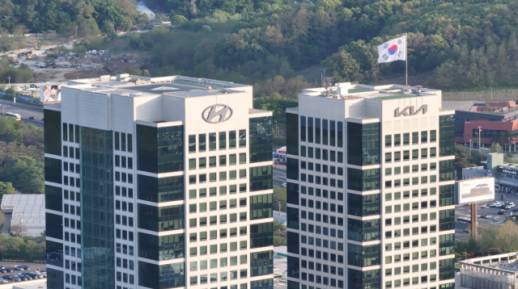 Unionized workers at Hyundai Motor set to resume partial strikes this week SEOUL, August 11 (AJP) - Unionized workers at Hyundai Motor will resume partial strikes this week after wage negotiations failed to narrow differences last month. The workers, who had just returned from their summer holiday, decided Tuesday to stage additional rounds of partial strikes from Wednesday through early next week, halting production for four hours each on Wednesday and Thursday before extending the stoppage to six hours each on Friday and next Tuesday. If carried out as planned, the additional strikes would result in 40 hours of lost production, bringing the cumulative stoppage from this year's wage dispute to about 100 hours. The automaker's union has been ratcheting up pressure in recent weeks. In July, it staged three rounds of partial strikes over nine days, starting with two-hour walkouts per shift from July 13 to 15 before extending them to four hours per shift. The automaker estimated that last month's strikes resulted in production losses of more than 42,000 vehicles. The company's domestic output in July fell 22 percent from the previous month to 137,449 vehicles, while domestic sales dropped 14.4 percent from a year earlier to 48,113 units. But the union left room for negotiations, saying it would suspend any scheduled strike once wage talks with management resume, possibly as early as Aug. 18. The union is seeking a 149,600 won increase in monthly base pay, a performance bonus equal to 30 percent of the company's net profit from the previous year, and an increase in regular bonuses to 800 percent from 750 percent. It is also demanding a prior labor agreement before any legal changes to the retirement age as well as the rehiring of workers who were fired. Both sides have gone back and forth between talks and strikes since last month without narrowing differences on major issues after the union rejected an offer from the company that included an 89,000 won increase in monthly base pay, a performance bonus worth 350 percent of base pay plus 10 million won, and 15 treasury shares per employee. Amid the union's new strike plans, Hyundai Motor's shares closed down 1.23 percent at 403,000 won for the day. AJP Takeaways: - Hyundai Motor's union will resume partial strikes from Aug. 12 after summer break, escalating stoppages to as long as six hours per shift on Aug. 14 and 18. - If all planned walkouts go ahead, this week's strikes would add 40 hours of lost production time and bring cumulative disruption from this year's wage talks to about 100 hours. - Hyundai Motor estimated July's earlier partial strikes caused production losses of more than 42,000 vehicles, while domestic output fell 22 percent from the previous month. 2026-08-11 17:42:38
 -
 Korea, Uzbekistan put AI minerals atop business agenda for C5 summit SEOUL, August 11 (AJP) - Artificial intelligence, from the critical minerals needed to build its infrastructure to the data centers and digital technologies that power it, is emerging as the centerpiece of the business agenda for Uzbek President Shavkat Mirziyoyev's visit to South Korea next month. Mirziyoyev is expected to bring a roughly 200-strong business delegation to Seoul during his first state visit to South Korea in nearly five years, coinciding with the inaugural Korea-Central Asia Summit on Sept. 16-17. The groundwork was laid in Seoul on Tuesday, when senior Uzbek officials and executives from major Korean companies met to identify projects that could be advanced during the summit. “Uzbekistan aims to join the ranks of upper-middle-income countries by 2030 and attract more foreign investment by improving its investment environment,” Deputy Prime Minister Jamshid Khodjaev said at a Korea-Uzbekistan business roundtable at Lotte Hotel Seoul. “We hope Korean companies will take part in Uzbekistan’s development.” Khodjaev identified infrastructure, critical minerals, automobiles and digital development as priority areas for bilateral cooperation, placing AI and the infrastructure supporting it high on the agenda. “Uzbekistan has established plans for AI and digital development,” he said, adding that Tashkent was seeking Korean participation in data centers, green technologies and renewable energy projects. The push reflects Uzbekistan's effort to pair its natural resources and growing domestic market with Korean capital and technology as it seeks to move up the industrial value chain. The high-level roundtable brought together officials from both governments and representatives from Hyundai Motor Group, Korea Electric Power Corp., GS E&C, LX International, SK Nexilis and Lotte Hotels & Resorts. The Uzbek Embassy said the meeting was organized as part of preparations for Mirziyoyev's visit and aimed at generating concrete projects before the leaders meet. Khodjaev also proposed expanding cooperation in healthcare, including hospital construction and pharmaceutical industry clusters. South Korean Trade Minister Yeo Han-koo said the talks could provide a foundation for broader economic diplomacy with Central Asia. “Uzbekistan is a key cooperation partner for Korea, and we are producing tangible results together,” Yeo said. “I hope today’s discussions will deepen our understanding of bilateral trade, investment, supply chains and economic cooperation and serve as a meaningful foundation for the successful Korea-Central Asia summit.” Moon Ji-sung, deputy minister for international economic affairs at South Korea's Finance Ministry, said the two economies could complement each other. “If Uzbekistan’s abundant potential is combined with Korea’s technology and financial capabilities, the economies of both countries can make a new leap forward,” Moon said. Officials and companies discussed prospective projects spanning industry, energy, critical minerals, AI, healthcare and logistics, with the aim of turning some of them into concrete investment and cooperation deals before the September summit. The Sept. 16-17 gathering will be South Korea's first summit with all five Central Asian countries — Kazakhstan, Kyrgyzstan, Tajikistan, Turkmenistan and Uzbekistan — collectively known as the C5. AJP Takeaways: South Korea and Uzbekistan are putting AI, critical minerals and data centers at the center of their economic agenda ahead of the inaugural Korea-Central Asia Summit in Seoul on Sept. 16-17. Uzbek President Shavkat Mirziyoyev is expected to bring about 200 business leaders to South Korea, as the two countries seek concrete deals in infrastructure, renewable energy, digital technology, healthcare and supply chains. Uzbekistan wants Korean technology, capital and investment to support its industrial transformation, while Seoul sees the partnership as a gateway to deeper economic cooperation with the five Central Asian countries, or C5. 2026-08-11 17:41:41
 -
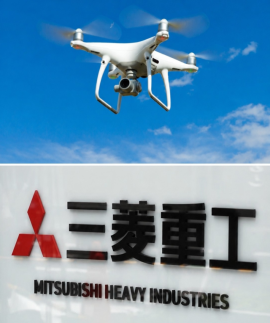 Military AI sovereignty emerges as Asia's new defense front SEOUL, August 11 (AJP) - The next contest for military power is no longer simply about who has the best weapons or even the most powerful artificial intelligence. It is increasingly about who controls the AI when the shooting starts. The United States has demonstrated the advantage of combining its AI software edge with military might. Japan, China and South Korea are now pursuing different strategies to ensure that critical military capabilities do not become dependent on technology controlled elsewhere. That is turning military AI sovereignty into a new layer of national defense. For East Asia’s manufacturing powers, the shift is particularly important. China, Japan and South Korea possess formidable manufacturing capabilities, increasingly enhanced by AI, giving them strategic leverage in an increasingly volatile geopolitical environment. But as weapons become more dependent on software, manufacturing strength alone may no longer be enough. The United States currently holds the strongest advantage in frontier AI. Palantir Technologies' Maven Smart System, which brings together information from satellites, drones, radar and other sensors, supported thousands of U.S. strikes against Iran, according to Reuters. In March, the Pentagon moved to designate Maven as a formal "program of record," effectively establishing it as a long-term military command-and-control capability rather than an experimental project. The Pentagon has since gone further. In May, it announced agreements with eight U.S. technology companies, including OpenAI, Google, Microsoft, Nvidia, SpaceX, Amazon Web Services, Oracle and Reflection, to deploy frontier AI capabilities directly on classified military networks. The Pentagon said more than 1.3 million personnel had already used its GenAI.mil platform within five months, generating tens of millions of prompts and deploying hundreds of thousands of AI agents. It is also deliberately using multiple providers, saying its architecture is designed to prevent vendor lock-in. The issue is becoming increasingly important as commercial AI moves closer to military decision-making. Reliance on a single provider could leave critical military capabilities dependent on one company's technology, while the ability to switch between models gives governments greater control over the systems they deploy. The commercial stakes are rising just as quickly. Global Market Insights estimates that the global market for AI and analytics in military and defense applications will expand from $11.53 billion in 2025 to $35.78 billion by 2034, representing annual growth of 13.4 percent. North America accounted for 37.7 percent of the market in 2024, while Asia-Pacific is expected to be the fastest-growing region through 2034, with annual growth of 15.1 percent. The figures reflect how AI is spreading beyond intelligence analysis into command and control, autonomous weapons, cyber defense and logistics. But while the United States is home to most of the world's leading frontier AI developers, its Asian allies and rivals are increasingly confronting a different question: how much of a country's military AI can safely depend on technology developed elsewhere? Japan: use foreign AI, retain domestic control Japan provided the latest answer this week. Tokyo is considering using advanced U.S. AI models across multiple defense systems while entrusting its most sensitive command-and-control functions to a Japanese-developed system, according to Japanese media reports. A leading candidate is Fugu, developed by Tokyo-based Sakana AI. Unlike a conventional model, Fugu acts as an orchestrator capable of selecting and coordinating several specialized AI models depending on the task. Sakana describes the technology as a way to achieve frontier-level performance without becoming dependent on a single model provider. The move follows a broader Japanese effort to test American military AI. Japan has been considering Palantir's technology for Self-Defense Forces command-and-control operations, and Palantir's system was reportedly used during the U.S.-Japan Keen Edge command-post exercise earlier this year. But Tokyo appears to be drawing a firm line around its most sensitive systems. Although Sakana AI has previously used Chinese open-source models in developing Fugu, Chinese models are expected to be excluded from versions supplied for defense use. Developers involved in the military project would also be limited to Japanese nationals, while data centers handling sensitive defense information would be located inside Japan. The strategy effectively combines American AI capability with Japanese control. Tokyo can use foreign models where they offer superior performance while retaining domestic authority over the system that decides which models are used and how their outputs enter military decision-making. China: learn abroad, deploy at home China is pursuing a different model — learning from foreign AI while attempting to move military applications onto its own systems. A Reuters review published late last month found that researchers linked to the People's Liberation Army have used outputs from leading U.S. AI models, including those developed by OpenAI and Anthropic, to train smaller Chinese models through a process known as model distillation. In one case, researchers linked to PLA Unit 96941, which is involved in intelligence and cyber operations, used OpenAI's GPT-3.5 to process software code and then used the results to train a domestic model capable of operating within Chinese networks. Researchers at China's National University of Defense Technology have similarly used distillation to develop smaller image-processing models suitable for drones, allowing them to analyze imagery and assist navigation even when communications are disrupted. Other research has examined lightweight AI for target recognition in maritime operations involving drones, surface vessels and unmanned underwater vehicles. The approach illustrates Beijing's broader objective: extract useful capabilities from frontier foreign models while reducing dependence on them in actual military operations. China has also accelerated military adoption of domestic systems, including models derived from DeepSeek, for battlefield decision support, autonomous systems and target recognition. The commercial gap could narrow as well. Global Market Insights projects China's military and defense AI and analytics market to reach $4.53 billion by 2034, with China expected to remain the largest market in the rapidly growing Asia-Pacific region. South Korea: manufacturing strength, weaker AI layer South Korea, meanwhile, is increasingly embracing the same language of technological sovereignty. Its traditional strength lies in manufacturing. The country's defense industry has built capabilities in aircraft, armored vehicles, missiles and other hardware, while its broader manufacturing and ICT infrastructure provide a strong base for physical AI. But its military AI capabilities remain less developed. In July, Naver, Naver Cloud and Korea Aerospace Industries agreed to jointly develop a defense-specific sovereign AI foundation model based on domestic technology. The project is intended eventually to extend beyond language models into physical AI, including unmanned aircraft, AI pilots and future manned-unmanned combat systems. Naver said the effort was designed to minimize security risks and reduce reliance on foreign technology in defense and national security. It follows a separate agreement in May between the Defense Ministry and SK Telecom to develop and test a military-specific AI model based on Korea's government-backed sovereign AI foundation model project. Seoul has also begun testing AI closer to actual military operations. During the 2025 Freedom Shield exercise with the United States, the Defense Ministry tested its Defense Generative AI, or GeDAI, including services designed to answer questions about wartime mobilization and Marine Corps doctrine. More recently, the military has turned to AI for unmanned warfare. In June, the Defense Ministry announced plans to introduce about 60,000 drones by 2029, including around 11,000 this year, while moving to acquire AI-based drone swarms and loitering munitions. Defense Minister Ahn Gyu-back also said military drones would use domestically produced components instead of Chinese parts because of security concerns. Yet South Korea still faces a considerable gap with the United States. A September 2025 report by Kim Ji-won, a researcher at the Korea Information Society Development Institute, cited an assessment that South Korea's defense AI technology was about 4.1 years behind leading countries such as the United States. The report estimated that South Korea had about 2,664 defense AI specialists, equivalent to only 9 percent of the U.S. level, while limited access to classified military data was identified as another major obstacle to domestic AI development. That weakness could become more significant as the defense AI market shifts increasingly toward software. While hardware accounted for 40.6 percent of the global military AI and analytics market in 2024, software is forecast to be its fastest-growing segment, expanding at an annual rate of 15.7 percent, according to Global Market Insights. Machine learning and deep learning already accounted for 45.8 percent of the market by technology, followed by computer vision at 24.2 percent. That presents a particular challenge for South Korea, whose defense industry has traditionally been stronger in manufacturing aircraft, armored vehicles, missiles and other hardware than in military software and algorithms. The KISDI report identified manufacturing and ICT infrastructure as strengths but cited software capabilities, specialist manpower and military data access among the country's structural weaknesses. Kim warned that Korea's existing strengths alone may not be enough as competition accelerates. "If Korea fails to confront its internal weaknesses in technology and talent and the rapidly changing external environment, it also risks rapidly falling behind in global competition," Kim said. The three Asian countries are approaching the same strategic problem in different ways. As AI moves deeper into command and control, autonomous systems, intelligence and battlefield decision-making, control over the software and models behind those weapons is becoming increasingly important. For the United States, access to the world's leading AI developers remains a major strategic advantage. For its Asian allies and rivals, the challenge is how to benefit from frontier technology without allowing dependence on foreign AI to become a new military vulnerability. As Kim put it, "Defense AI is no longer science fiction but a reality, and achieving a successful defense AI transformation is no longer an option but a necessity." AJP Takeaways △ The U.S. leads military AI integration, using systems such as Palantir’s Maven and deploying frontier AI directly on classified networks. △ Japan is pursuing a hybrid model, using advanced U.S. AI while keeping sensitive command-and-control functions under domestic control. △ China is using U.S. AI outputs to train domestic military models while expanding homegrown systems for drones, targeting and battlefield decisions. △ South Korea is building sovereign defense AI but still faces gaps in software, manpower and military data access compared with the U.S. 2026-08-11 17:41:37
 -
 Hanwha Targets Austal USA and KAI for Expansion in Defense and Aerospace Hanwha Group, led by Vice Chairman Kim Dong-kwan, is rapidly expanding its territory in the defense, maritime, and aerospace sectors. The company is pursuing the acquisition of Austal USA, a shipbuilder for the U.S. Navy, while also increasing its stake in Korea Aerospace Industries (KAI) to over 15%, signaling an interest in gaining control.According to industry sources, Hanwha has made a non-binding conditional offer to acquire the business and operational organization of Austal USA, with the proposed acquisition price estimated between $1.05 billion and $1.2 billion.This acquisition proposal aims to enhance the competitiveness of the MASGA project. Austal USA has delivered 34 vessels to the U.S. Navy and has been involved in the construction of Littoral Combat Ships (LCS) and Expeditionary Fast Transport (EPF) vessels. In 2022, it also produced modules for nuclear-powered submarines and continues to manufacture various vessels for the U.S. Coast Guard, including towing, rescue, and landing craft.The scope of the acquisition is limited to Austal USA's shipyards in the United States and does not include its publicly traded shares in Australia or key shipbuilding operations in Australia and Asia. The Austal board will review the proposal and has granted Hanwha a four-week due diligence period to negotiate specific acquisition terms. However, the deal is still subject to U.S. government approval and formal contract signing.Hanwha Group's acquisition of KAI's management rights is also within reach. The day before, Hanwha Systems announced it had secured a 4.98% stake in KAI, bringing the group's total stake above 15%. Hanwha will soon initiate the merger notification process. Under fair trade laws, acquiring more than 15% of a listed company requires a merger notification within 30 days. The Fair Trade Commission will review the potential impact on market competition and may require a reduction in stake if issues arise. However, industry experts believe Hanwha is likely to pass the review since it is not the largest shareholder of KAI and the core businesses of both companies do not overlap significantly.KAI is considered a key piece in Hanwha Group's aerospace puzzle. While Hanwha Aerospace handles aircraft engines and Hanwha Systems manages radar and avionics equipment, the group currently lacks the capability to design and produce complete aircraft. Securing management rights in KAI would enable the establishment of a comprehensive aerospace defense value chain, connecting engines and avionics to complete aircraft.Significant investments in the space sector are also anticipated. Vice Chairman Kim Dong-kwan announced last month at a national report meeting on advanced industrial development in the Yeongnam region that Hanwha plans to invest 55 trillion won in aerospace and artificial intelligence (AI) by 2040. Hanwha Aerospace is set to invest approximately 23 trillion won in the development and production of launch vehicles and testing infrastructure, while Hanwha Systems plans to allocate around 20 trillion won for low Earth orbit satellites, space AI data centers, and satellite communication networks.In July, during a presentation of the AI space power strategy in Jinju, Gyeongnam, Kim stated, "South Korea should no longer view space and aviation as separate industries. When space and aviation, AI and defense are interconnected, we can truly leap forward as a leading AI space power."* This article has been translated by AI. 2026-08-11 17:40:00
 -
First Test Voyage on Arctic Route: Will U.S. Negotiations Conclude Successfully? The South Korean government is in the final stages of preparations for the country's first test voyage on the Arctic route, aiming to depart from Busan on the 22nd. Progress has been made in negotiations with the U.S. and other relevant countries regarding sanctions related to navigation in the Russian Arctic Sea Route (NSR), allowing the government to proceed with the planned test voyage.According to industry sources on the 11th, the Ministry of Oceans and Fisheries is currently discussing potential sanctions issues that may arise during the Arctic route test voyage with the U.S. and other stakeholders. A ministry official stated, "We are in discussions with relevant countries regarding sanctions issues that may occur during navigation in Russia, and we expect a positive conclusion. While we cannot disclose the details of diplomatic discussions, we have shared relevant information with the shipping company, and we are preparing for departure on the 22nd as planned."The container ship Mombasa, which will be used for the test voyage, is currently undergoing modifications to meet the safety standards for polar navigation, known as the Polar Code, and is completing certification procedures at Busan. Previously, Panstar acquired the 2,758 TEU Mombasa from HMM to participate in the government’s test voyage.The shipping company conducting the test voyage has completed the request for navigation permission from Russia for the Northeast Passage. Since the Northeast Passage runs along the Russian coast, it requires navigation permission and weather and icebreaking support from Russia. The shipping company has proceeded with the necessary procedures with Russian authorities, while the government continues discussions with the U.S. and other relevant countries to minimize the risks of sanctions during the voyage.Industry experts have identified the risk of sanctions against Russia as the biggest challenge for the test voyage. Since the government announced the test voyage plan in April, there have been ongoing concerns that ensuring compliance with the international sanctions framework is the most critical task, alongside selecting a shipping company and securing cargo.Even if the government supports the operating costs, analysts have pointed out that the structure makes it difficult for private shipping companies to participate easily. In fact, Panstar is the only company participating in this test voyage. As Panstar primarily focuses on international passenger ferries and cruise operations, its exposure to the impacts of sanctions against Russia is relatively lower compared to larger shipping companies that heavily depend on global routes or the U.S. market.The economic viability of the Arctic route remains a significant issue to address. The route from Busan to Rotterdam offers a 30% shorter sailing distance compared to the Suez Canal, but seasonal navigation restrictions, high insurance costs, and expenses related to polar navigation equipment and personnel are seen as burdens. Additionally, limited intermediate ports make it challenging to achieve the transshipment and cargo loading efficiency typical of regular container routes. In fact, the world's largest container shipping company, Maersk, stated after a test voyage in 2018 that it does not view the Arctic route as a commercial alternative to existing east-west routes.Experts agree that the sustainability of a business model following this test voyage is more important than the departure itself. As the government promotes the Arctic route as a national agenda, the first voyage holds significant symbolic value, but future success will depend on economic viability, cargo acquisition, and management of international sanctions risks to transition to a privately operated regular route.One industry expert noted, "While this test voyage is a significant project, there is a concern that policy initiatives are advancing without verifying commercial viability. More important than the first voyage is creating a market where private shipping companies can independently assess the viability of participation." 2026-08-11 17:36:00
-
Journalist Han Myung-kyu Releases First Poetry Collection 'The Weight of a Person is Measured by Scent' What can measure the weight of a person? It could be their title, the length of their life experiences, or the magnitude of their achievements in the world. However, these factors do not fully explain a person's true weight. Ultimately, what endures are the memories and emotional imprints they leave behind, or, one might say, the 'scent' they exude. Han Myung-kyu, vice president of JTV Jeonju Broadcasting, has published his first poetry collection, 'The Weight of a Person is Measured by Scent' (Shin-A Publishing). The title reflects the thoughts of someone who has deeply contemplated a person's life.Han Myung-kyu is described by various titles: journalist, administrator, entrepreneur, and broadcasting executive. Born in Jeong-eup, North Jeolla Province, he graduated from Jeonju High School and the Law School of Jeonbuk National University, later studying at the Graduate School of Journalism at Korea University. After serving as a visiting scholar at UC Berkeley in the United States, he began his career as a newspaper reporter. He recorded the flow of the times and people's lives while serving as the editor-in-chief of the Maeil Business Newspaper and led the founding of the World Korean Business Convention. He later served as the vice governor for political affairs in North Jeolla Province, overseeing the local economy and the Saemangeum project, and spent seven years as vice president of the Lao Korao Group, meeting people and markets in a foreign land. After returning to Korea, he became the CEO of JTV Jeonju Broadcasting. His life has traversed journalism, administration, business, and broadcasting. Looking back, this poetry collection did not suddenly begin at a certain point in that long journey; rather, it is the culmination of countless people and landscapes he has seen, heard, and experienced over time, finally flowing into sentences.What is intriguing about his background is not just the glamour of his titles. While working as vice president of a company in Laos, he also operated a gallery café in his hometown of Jeonju, showcasing Laotian art. In broadcasting management, he demonstrated remarkable leadership by significantly growing JTV, gaining national attention. A journalist observes and records the world, while a manager makes choices and takes responsibility for outcomes. Han Myung-kyu has experienced both roles throughout his life. Thus, reading his poetry is not merely following a poet's reflections; it is akin to peering into the inner world of a person who has navigated reality with the eyes of a newspaper reporter and the hands of a manager.The poetry collection is divided into four sections: 'Peeling the Shell', 'Things That Came and Went', 'Standing Firmly', and 'Rewriting Myself'. It includes 95 poems and two song lyrics, accompanied by photographs taken by the author, creating a 'reading poetry collection' as well as a 'visual poetry collection'. The songs 'Did You Forget?' and 'Recollection', created in collaboration with composer Kim Jeong-ho, can also be listened to via QR codes. The format blends poetry, photography, and music, but what stands out more than the format is the depth of life contained within.In the preface, Han Myung-kyu writes, “Poetry feels like a late-arriving guest.” He suggests that the poetry he had long postponed, believing it was not the right time, has finally been welcomed. He describes writing poetry as a reunion with the dreams of his youth, a way to embrace the time he has lived, and a quiet means of expressing gratitude, regret, and longing that he had not previously conveyed. This clarifies the nature of this poetry collection. It is not a book to showcase newfound literary talent but rather a careful unveiling of the stories that a person has kept in their heart over many years.Thus, his poetry exhibits a restraint that seems to peel away the layers of life. Rather than explaining life with grand rhetoric, he draws meaning from the small landscapes of daily life, observing people, time, and nature without hastily reaching conclusions. At times sharp, at times lyrical, his work is infused with wit and satire. Above all, it is simple and honest, yet the perspective on life remains positive. A close acquaintance who read the collection remarked, “It shows sharp insights into life while maintaining a sense of ease, being lyrical yet restrained, with wit and satire, and a positive, honest demeanor.” This comment reflects the lingering impact of the collection, as readers express a desire to savor it slowly after initially rushing through.Poet Heo Yeon also noted in his foreword that Han Myung-kyu's poetry embodies “the aesthetics of realization and transcendence.” He described the collection as filled with aphorisms that provoke nods of agreement, infused with humor and insight into the fundamental values and beauty of life. The wisdom gained from a long life differs from the knowledge of youth. One learns what is truly important and realizes how much lighter what once seemed significant becomes in the face of time. Han Myung-kyu's poetry embodies this sense of time. It acknowledges the weight of life without being crushed by it, maintaining warmth toward humanity while observing the world with a discerning eye.One acquaintance shared that reading this collection was like “swiftly traversing the panorama of the past 40 years and being deeply moved.” This statement holds significant meaning in understanding Han Myung-kyu's poetry. While his poems do not record specific events or experiences, they are imbued with the time spent as a newspaper reporter navigating the world, as an editor handling countless sentences, as an administrator contemplating the future of the region, and as a business leader encountering unfamiliar cultures and people in Laos. The emotions he could not express in articles or quantify as a business leader are now articulated in the language of poetry.The language of a journalist differs from that of a poet. A reporter must convey facts clearly, while a poet does not need to explain everything. Instead, a poet leaves space behind each line for the reader to bring their own experiences to complete the meaning. Han Myung-kyu has spent his life working with words. As a reporter and editor, he recorded numerous issues and assessed the value of language, and as a broadcasting executive, he experienced the power of words and images on people. As a poet, he chooses to be more economical with words. This restraint comes from having seen much and the ease that comes from meeting many people.The title of the poetry collection, 'The Weight of a Person is Measured by Scent', can also be understood in this context. A person's weight cannot be measured solely by the numbers of their career. What matters more is how they have lived, and how they are remembered by others, rather than the heights they have reached. Scent is invisible but lingers. So too do people. Some become clearer after they have left, and it may take time to realize their true essence. The 'scent' the poet refers to may well be the traces of a person's life left behind after the passage of time.In this sense, this first poetry collection represents not just another achievement for Han Myung-kyu, who has a wealth of experience, but a new way of looking at his life. If the accomplishments of his youth were about moving forward into the world, the poetry that has come in the latter part of his life is about returning inward. As suggested by the title of the final section, 'Rewriting Myself', it is not about erasing the past but embracing all that time and rewriting it in a new language. The time spent as a newspaper reporter, as an editor, as a vice governor and corporate vice president, the seven years in Laos, and the time in his hometown of Jeonju, as well as his time managing JTV, are all encapsulated within.One acquaintance remarked that the publication of this poetry collection is a “great achievement in life.” This sentiment underscores the significance of a first poetry collection becoming another major accomplishment for someone who has already achieved much in society, illustrating how the meaning of success changes as one moves into the later stages of life. It is a shift from proving something to others to sharing what has long been held within oneself, which may represent a deeper achievement in life.'The Weight of a Person is Measured by Scent' thus marks a late literary debut for a journalist and a quiet reckoning of the time a person has lived. The 95 poems reflect the traces of someone who has tirelessly pursued the world and now pauses to reflect on themselves. The book's format, enhanced by photographs and songs, ultimately aims to capture moments of life rather than letting them slip away.If poetry is a late-arriving guest, it may have been quietly walking alongside Han Myung-kyu for a long time. Even during his time as a newspaper reporter observing the world, as a businessman navigating unfamiliar markets, and as a manager contemplating the fate of an organization, poetry likely resided quietly within him. He has now opened the door to welcome it.And the title of his first poetry collection conveys a profound message: the true weight of a person cannot be measured solely by the titles on their business cards or the achievements left in the world. Ultimately, what remains of a person is the scent of the life they have lived.That he has captured this scent in a book may be the most beautiful achievement Han Myung-kyu has gained in the latter part of his life.* This article has been translated by AI. 2026-08-11 17:36:00
-
 Korea's won, bonds buck global trend after stocks dominate H1 SEOUL, August 11 (AJP) - The KOSPI and chip stocks sucked up capital and attention in the first half, but as the second half gets under way, it is the Korean won and bonds that are bucking the global trend and gaining ground. Whether that strength can last is less certain. Their divergence from U.S. markets rests partly on short-covering in bonds and expectations of corporate dollar conversions supporting the won — forces that could prove temporary. The U.S. 10-year Treasury yield rose from 4.562 percent on July 10 to 4.713 percent on Aug. 10, an increase of 15.1 basis points. Over the same period, the equivalent yield rose 4.7 basis points in Japan and just 2.0 basis points in Korea. The currency move was even more striking. USD/KRW fell 5.8 percent over the period, while USD/JPY declined 2.0 percent, meaning the won appreciated nearly three times as much against the dollar as the yen did. That marks a sharp reversal from the first half, when the greenback gained 7.7 percent against the won, more than double its 3.5 percent advance against the yen. The rise in U.S. Treasury yields reflected mounting concerns over inflation, oil prices, the fiscal deficit and debt supply. The 30-year Treasury yield climbed to around 5.25 percent on Aug. 10, near its highest level in 19 years. Korea did not escape those pressures. But a sharp reversal in domestic positioning prevented them from feeding fully into Korean government bond yields. After the Bank of Korea raised its base rate from 2.50 percent to 2.75 percent on July 16, foreign investors initially positioned for further tightening. They subsequently reversed course, making net purchases of 137,410 three-year bond futures contracts over 12 consecutive sessions from July 23 through Aug. 7. The three-year Korean government bond yield fell from 3.959 percent to 3.669 percent during that period even as U.S. Treasury yields headed higher. The move points largely to short-covering rather than a fresh wave of long-term bond buying, leaving the market vulnerable once investors finish unwinding positions built around expectations of additional BOK tightening. Korea’s phased inclusion in the FTSE World Government Bond Index, which began in April, has provided a more durable source of demand and helped cushion the bond market. But foreign net investment in Korean bonds slowed to 0.8 trillion won in July from 4.5 trillion won in June, suggesting WGBI-related demand alone cannot explain the recent resilience. BOK research also indicates that much of the overseas passive money tracking bond indexes is currency-hedged, weakening the direct link between WGBI inflows and won appreciation. The currency has instead drawn support from Korea’s swelling export income. The country posted a record $49.73 billion current-account surplus in June, lifting the first-half surplus to $191 billion. Exporter dollar sales have been reinforced by expectations that part of the $26.5 billion raised through SK hynix’s U.S. American depositary receipt offering will eventually be converted into won to finance investment at home. No specific SK hynix conversion has been confirmed. But expectations of additional dollar supply were strong enough to help offset $4.6 billion of Korean retail purchases of U.S. stocks in July and 8.8 trillion won of foreign selling in Korean equities. The mystery is that money has been flowing out through overseas stock purchases and foreign equity selling, yet the won has strengthened sharply. The next complication comes from the BOK. Senior Deputy Governor Ryoo Sang-dai said Tuesday that another rate increase was likely unless an extraordinary shock intervened, arguing that stronger domestic demand would generate gradual but persistent inflation pressure. The remarks were explicitly his personal view. Ryoo is also due to retire on Aug. 20, before the BOK’s Aug. 27 policy meeting, meaning he will not vote on the next decision and limiting the remarks' direct policy weight. Markets nevertheless took notice without treating them as a new shock. The three-year Korean government bond yield closed 3.6 basis points higher at 3.812 percent but remained below its intraday high of 3.831 percent, suggesting Ryoo largely confirmed expectations already embedded in the market. Pressure was greater at the long end. The 10-year yield gained 6.2 basis points to close near its session high at 4.303 percent as higher U.S. yields and oil prices exerted greater pressure, steepening the Korean yield curve. The won strengthened as far as 1,412.24 per dollar before giving back some gains to trade around 1,417 late Tuesday. For Korea’s bond and currency markets, the question is now whether a move born partly from positioning and expectations can turn into something more durable. U.S. inflation and oil prices will test the global side of that divergence, while the BOK’s Aug. 27 meeting will test the domestic side. ___________________________________________________________________________________ AJP Takeaways • South Korea’s market momentum shifted from KOSPI and semiconductor stocks in the first half to the Korean won and government bonds in early second-half trading. • From July 10 through Aug. 10, Korea’s 10-year government bond yield rose just 2.0 basis points, compared with increases of 15.1 basis points in U.S. Treasuries and 4.7 basis points in Japan, while the won appreciated nearly three times as much as the yen. • Korean government bonds were supported by foreign short-covering in three-year futures and phased FTSE World Government Bond Index inclusion, although weaker July bond inflows suggest that support may fade as positions normalize. • The won drew strength from Korea’s record $49.73 billion June current-account surplus, exporter dollar sales and expected conversions of SK hynix’s $26.5 billion ADR proceeds, rather than mainly from currency-hedged WGBI inflows. • Ryoo Sang-dai reinforced expectations of another BOK rate increase, but his Aug. 20 retirement and the limited three-year yield reaction reduced the remarks’ direct market impact, leaving U.S. inflation, oil prices and the Aug. 27 BOK meeting as the next tests. 2026-08-11 17:29:33
 -
Korea Exchange Faces Setbacks in Extended Trading Plans The Korea Exchange's ambitious plans to extend trading hours are facing significant setbacks. The introduction of a pre-market has been postponed until the end of next year, and the launch of ETF trading in the aftermarket next month is now in jeopardy. This development diverges sharply from the original goal of establishing a 24-hour trading system by the end of 2027 to enhance competitiveness with global exchanges.According to financial industry sources on August 11, the Korea Exchange convened asset management firms on August 10 to gauge their interest in participating in aftermarket ETF trading. However, all firms reportedly expressed their intention to abstain. The exchange had previously sought to confirm demand for aftermarket ETF trading in March, July, and again in August, but the latest feedback indicates a lack of interest.Concerns regarding aftermarket ETF trading first emerged during a meeting of asset management executives on July 28, which focused on single-stock leveraged ETFs amid rising market volatility. Industry experts voiced that the timing for aftermarket ETF trading might be premature. Conversely, the Korea Exchange had anticipated that if larger asset managers showed interest, others would likely follow suit to maintain competitiveness. Initially, some firms had indicated a willingness to participate, but growing concerns over market volatility have shifted the landscape.Additionally, the decision by the Korea Exchange not to provide real-time indicative net asset values (iNAV) for ETFs traded in the aftermarket has added to the apprehension. Managing the disparity between the underlying asset value and market price is crucial for ETFs, and with limited trading of underlying assets after regular hours, determining fair prices becomes challenging. If the exchange does not provide iNAV, liquidity providers will need to independently calculate fair values and submit bids. The asset management sector has expressed worries that a widening gap between ETF prices and actual values during low liquidity periods could increase investor protection risks.The Korea Exchange finds itself in a difficult position. Its competitor, Nextrade, plans to expand its trading offerings to include ETFs by the end of the year. If the aftermarket ETF trading fails in September, the exchange risks losing the opportunity to dominate after-hours trading in ETF products.The challenges do not end there. Earlier this year, the Korea Exchange had announced plans to implement a 12-hour trading system starting June 29, with a pre-market from 7 to 8 a.m. and an aftermarket from 4 to 8 p.m. However, due to opposition from the securities industry labor union and concerns from the sector, the implementation was postponed to September 14, and in June, the pre-market launch was pushed back to the end of next year.Industry insiders are now questioning the feasibility of the vision presented by Jeong Eun-bo, chairman of the Korea Exchange, for a 24-hour trading system by the end of 2027. With the pre-market delayed until next year, there are doubts about whether the original timeline for achieving a 24-hour trading system can still be met. The initiative to extend trading hours, aimed at enhancing global competitiveness, appears to be stalling due to insufficient preparation and consensus among market participants.* This article has been translated by AI. 2026-08-11 17:24:10