


Latest by
-
 Heavy Rainfall Expected in Beijing as Typhoon Dolphin Approaches Beijing is bracing for heavy rainfall starting the evening of August 11 due to the influence of Typhoon Dolphin, which is expected to bring significant downpours.The Beijing Meteorological Bureau forecasts strong rain across the city from the evening of August 11 until the afternoon of August 13. The typhoon, moving northward, is bringing warm, humid air that will collide with cold air from northern China, resulting in heavy rainfall.Accumulated rainfall is expected to exceed 100mm over six hours and 150mm over 24 hours. Particularly intense rain is anticipated from early morning to night on August 12.In specific areas such as Fangshan, Daxing, Tongzhou, Mentougou, and the Economic and Technological Development Zone, rainfall could exceed 150mm over six hours and 200mm over 24 hours, prompting the issuance of a red alert for heavy rain, the highest warning level. Given that Beijing's average annual rainfall is 528mm, some areas may receive one-third of that amount in just one day.As of 9 a.m. on August 11, the Beijing city government activated a Level 2 flood response, the second-highest level in China's four-tier flood response system, and began flood prevention efforts.Authorities will implement a 24-hour emergency work system to monitor rainfall, water levels, and disaster situations, and will take safety measures, including evacuating residents from high-risk areas. Rescue personnel and disaster relief supplies will be deployed as needed.Starting August 12, businesses and institutions are encouraged to adopt flexible work arrangements, and school closures will be considered based on weather conditions. Construction work may be halted, and road traffic controls will be implemented as necessary.Earlier, Typhoon Dolphin made landfall on the coast of Zhejiang Province at 5:30 p.m. on August 9 and has since moved inland, bringing heavy rain to central and northern China.Chinese media, citing meteorological authorities, reported that from 8 a.m. on August 11, Henan Province could see 250-300mm of rain over the next 24 hours, with some areas potentially experiencing hourly rainfall exceeding 80mm.Typhoon Dolphin made landfall on August 9 at 5:30 p.m. The highest recorded rainfall as of August 8 was in Sanmen, Zhejiang Province, with 970.3mm, while the highest hourly rainfall was recorded in Taixing, Jiangsu Province, at 119.4mm.In the Xujiahui area of Shanghai, continuous rain fell for 40 hours until 4 p.m. the previous day, accumulating 397.6mm over 48 hours. This led to flooding in various parts of Shanghai, causing road and housing inundation, and prompting the closure of parks and tourist sites.The typhoon has also disrupted transportation networks, affecting air, rail, and maritime travel. On the previous day, 943 flights were canceled at two major airports in Shanghai.As of now, there have been no official reports of casualties or property damage due to the typhoon in China.* This article has been translated by AI. 2026-08-11 15:32:10
 -
Yoon Duk-kun: Accelerating Construction of New Towns to Boost Housing Supply Yoon Duk-kun, the Minister of Land, Infrastructure and Transport, announced plans to accelerate the construction timelines for major housing districts, including new towns, and to expand housing supply in urban areas. This initiative comes as housing prices and rental rates continue to rise in Seoul and the surrounding metropolitan area, with the government prioritizing supply expansion as a key task for the second half of the year.During a report to the National Assembly's Land, Infrastructure and Transport Committee on August 11, Yoon stated, "We will create a South Korea where everyone can live without worrying about housing." He added that the ministry would expand the conversion of non-residential land to residential use and identify new candidates for public housing complex projects in urban areas.The Ministry of Land, Infrastructure and Transport is pursuing measures to shorten the construction timelines for major public housing sites, including new towns, by 1 to 2 years. The ministry aims to expedite urban supply through intergovernmental cooperation in areas like Gwacheon and Taereung, and is also reviewing support for relocation and streamlining procedures for construction projects.Additionally, the conversion of long-vacant commercial and office spaces to residential use will be expanded. The ministry plans to announce new candidates for urban complex projects in Seoul in the second half of this year and will also seek additional housing supply candidates, including school sites in urban areas.Reforms at the Korea Land and Housing Corporation (LH) will also be a key part of the supply policy. The ministry is considering options for LH to directly supply housing or lease land for industrial use instead of selling developed land to the private sector, with plans to establish a reform plan for LH by next month to ensure efficient and sustainable operations.The housing market remains unstable, particularly in the metropolitan area. According to the ministry's report, the change in apartment sale prices in Seoul in June was 1.21%, significantly higher than the national average of 0.40%. The change in rental prices for apartments in Seoul also recorded 1.37%.Transactions are heavily concentrated in Seoul, with approximately 8,000 apartment sales recorded in June, 1.3 times the 10-year average of 6,100. In contrast, regional markets continue to face unsold inventory issues, diverging from trends in the metropolitan area.Supply indicators are also a concern. The cumulative number of permits and construction starts in the metropolitan area from January to June this year is similar to the same period last year but falls short of long-term averages. The volume of completed constructions has dropped significantly, down 52.4% compared to last year and 45.9% compared to long-term averages, reflecting the impact of previous declines in construction starts.Yoon emphasized, "We will expedite the construction of major districts, including new towns, and expand housing supply in urban areas through relocation support for redevelopment projects." He also stated that affordable public rental housing will be provided in prime urban locations, and conditions for young people to access public housing will be improved.Measures to stabilize the rental market will also be implemented. The ministry plans to manage tenants' deposits through a rental stabilization fund, allowing landlords to earn monthly income through a trust program, which will be launched in the second half of the year. A one-stop support system for victims of rental fraud will also be established in line with the implementation of a minimum guarantee system for victim support.Railway service reforms are also set to accelerate. The ministry aims to complete the integration of Korail and SR ahead of schedule by next month. This month, a unified app will be developed to allow simultaneous booking of KTX and SRT tickets, with plans for full integration of high-speed rail operations starting next month. Yoon stated, "We will complete the integration of Korail and SR by next month."Efforts to prevent illegal and unethical practices have been highlighted as a major task. The ministry plans to focus on issues such as real estate agent cartels, corruption in redevelopment associations, violations of residency requirements, speculative practices for compensation, and fragmented development. Measures will also be taken to enhance penalties for electronic voting manipulation in redevelopment projects and to expand joint inspections, along with collaboration with the Real Estate Supervisory Agency.Construction safety and worker protection will be strengthened. The ministry will review safety management systems before demolition work, mandate video recording of key construction processes, and enhance accountability at all stages of construction. A real-time monitoring system linking construction contract information and payment data will be established to prevent illegal subcontracting and payment delays.Yoon concluded by stating, "We will create advanced corporate cities to connect corporate investment with regional growth and expedite the second relocation of public institutions," emphasizing the importance of balanced development. This report comes ahead of the announcement of new supply measures, highlighting the ministry's comprehensive approach to addressing market instability, LH reforms, railway integration, and enhanced construction safety, making the speed of policy implementation in the second half of the year crucial. 2026-08-11 15:32:00
-
South Korea Establishes Dedicated Organization for Nuclear Submarine Program 정부가 핵추진잠수함 사업을 체계적으로 추진하기 위해 국방부와 방위사업청에 전담조직을 설치하고 관련 인력 38명을 증원한다. 배우자 유산·사산휴가와 단기 육아휴직 시행에 필요한 세부 절차를 마련하고 가상자산사업자의 대주주 신고 의무도 구체화한다. 정부는 11일 정부세종청사에서 이재명 대통령 주재로 열린 제35회 국무회의에서 이 같은 내용이 담긴 대통령령안 19건과 일반안건 3건을 심의·의결했다. 국방부와 그 소속기관 직제 개정안은 국방부에 '핵추진잠수함정책기획단'을 한시 조직으로 설치하는 내용을 담았다. 기획단은 핵추진잠수함 관련 정책을 종합적으로 수립하고 관계 부처 간 업무를 조율하는 역할을 맡는다. 기획단 운영을 위해 고위공무원단 1명을 포함한 21명을 증원한다. 이 가운데 외교부와 산업통상부, 기후에너지환경부, 방위사업청, 원자력안전위원회 소속 인력 각 1명이 참여한다. 잠수함 개발뿐 아니라 원자력 안전과 산업 기반, 대외 협력까지 포괄하는 범정부 추진 체계를 갖추려는 취지다. 방위사업청도 기존 미래전력사업본부 산하 한국형잠수함사업단의 명칭을 '핵추진잠수함사업단'으로 변경한다. 기존 조직의 틀은 유지하면서 핵추진잠수함 국산화 계획과 개발 분야 방위력개선사업, 조달집행계획 수립 등의 업무를 추가로 맡긴다. 방사청 사업단에는 5급 7명과 6급 6명, 7급 4명 등 17명이 증원된다. 국방부 기획단과 방사청 사업단의 핵추진잠수함 전담 인력을 합하면 38명이다. 두 조직의 존속 기한은 2029년 8월 14일까지다. 국방부는 이와 별도로 국방정보본부와 국방방첩본부, 국방보안지원단의 업무를 효율적으로 지도·감독하기 위해 정보보안정책관과 4개 담당관을 신설한다. 이를 위해 25명을 증원하고 급증하는 감사 수요에 대응할 인력 1명도 추가한다. 일·가정 양립을 뒷받침하는 제도도 구체화한다. 남녀고용평등법 시행령 개정안은 배우자 출산휴가를 배우자 출산전후 휴가로 확대하고 배우자 유산·사산휴가의 청구 방법과 고지 절차를 규정했다. 자녀의 방학이나 질병 등을 이유로 1주 또는 2주 동안 사용할 수 있는 단기 육아휴직의 신청·철회·종료 절차도 마련한다. 유산이나 조산 위험이 있는 임신부를 돌보기 위해 남성 근로자가 육아휴직을 사용할 수 있도록 관련 규정을 정비한다. 고용보험법 시행령 개정안에는 배우자 유산·사산휴가를 사용한 근로자를 급여 지원 대상에 추가하고 출산전후휴가 급여의 신청 기간과 상·하한액 등에 관련 제도 변경 사항을 반영하는 내용이 담겼다. 의료 분야에서는 보건의료인이 충분한 주의 의무를 다했는데도 불가항력적으로 발생한 산모의 중증장애를 의료사고 보상 대상에 포함한다. 국립대학병원과 국립대학치과병원의 정관 변경 인가 등 관리 업무를 교육부에서 보건복지부로 이관하는 시행령 개정안도 심의했다. 가상자산사업자에 대한 관리·감독도 강화한다. 특정금융정보법 시행령 개정안은 가상자산사업자가 신고해야 하는 대주주의 범위와 신고 사항을 구체화했다. 대주주 등이 건전한 재무 상태나 사회적 신용을 갖추지 못한 경우 사업자 신고를 받아들이지 않을 수 있도록 불수리 요건도 정비했다. 가상자산 이전 거래 때 사업자가 확인하고 전송해야 하는 정보의 범위도 확대한다. 가상자산사업자의 실질적인 지배구조와 재무건전성을 신고 단계부터 들여다보겠다는 취지다. 정부는 공정거래위원회 조직 개편과 국민인공지능서비스혁신추진단 운영을 위해 일반예비비 134억5900만원을 지출하는 안건도 심의했다. 공정위 조사·심의 인력 237명 증원에 따른 외부 청사 임차료와 공사비 등에 90억1800만원을 지원하고, 국민인공지능서비스혁신추진단의 인건비와 사무실 임차료 등으로 44억4000만원을 투입한다. 국무회의에서는 중동전쟁 관련 비상국정운영 및 대응 현황을 비롯해 3대 메가 프로젝트 제2차 민관합동 점검회의 결과, 범정부 자살예방 대책, 대통령 세종집무실 건립 및 국가상징구역 조성 계획도 보고됐다. 국민 인공지능(AI) 서비스 혁신과 2026 여수세계섬박람회 준비 상황에 대한 범정부 협조 사항도 논의됐다.* This article has been translated by AI. 2026-08-11 15:28:10
-
Shinsegae Reports 122% Increase in Q2 Operating Profit Driven by Department Store Growth Shinsegae has achieved its highest-ever operating profit for the first half of the year, driven by robust growth in its department stores and improved profitability across its subsidiaries. The department store sales, particularly in luxury goods, saw double-digit growth, while the duty-free shops, Shinsegae International, and Shinsegae Casa also returned to profitability, contributing to the overall performance improvement.On August 11, Shinsegae reported that its consolidated total sales for the second quarter reached 3.1414 trillion won, an 8.5% increase compared to the same period last year. Operating profit surged to 167.1 billion won, marking a 121.9% rise. Cumulatively, the operating profit for the first half of the year reached 365 billion won, a 75.7% increase from the previous year, surpassing the previous record of 351 billion won set in the first half of 2022.The department store segment was the primary driver of this performance. In the second quarter, total sales for department stores rose to 2.017 trillion won, a 15.5% increase, while operating profit climbed to 108.8 billion won, up 53.5%. Luxury sales increased by 35%, with fashion, living, and food categories also seeing growth of 10.1%, 16.6%, and 13.7%, respectively.Additionally, the proportion of new customers in the first half was 27.7%, with those under 30 accounting for 45%. The opening of differentiated stores such as House of Shinsegae in Cheongdam, the Daegu Shinsegae women's fashion specialty store, and the South City sports specialty store has been credited with attracting new customers.Foreign sales also experienced rapid growth. In the first half, foreign sales at Shinsegae Department Store reached 580 billion won, a 120% increase compared to the same period last year.Looking ahead, Shinsegae plans to launch several new stores in the second half, including a luxury designer clothing specialty store at Daegu Shinsegae, a women's fashion specialty store at Hanam, and a hyperground at Cheonan-Asan.Subsidiaries also improved their profitability. Shinsegae International reported second-quarter sales of 291.6 billion won, a 15.1% increase, with operating profit turning positive at 7 billion won, recovering from a loss of 7.1 billion won last year. The cosmetics division achieved record quarterly sales of 129.5 billion won.Shinsegae DF, which operates duty-free shops, saw sales decline by 10.3% to 542.6 billion won, but operating profit reached 33.3 billion won, a turnaround from a loss of 1.5 billion won last year.Shinsegae Central reported sales of 108.7 billion won and operating profit of 14.9 billion won, reflecting increases of 12.8% and 52.0%, respectively. Shinsegae Casa also saw a 104.5% increase in sales to 119.2 billion won, with operating profit turning positive at 2.4 billion won, aided by the acquisition of the JAJU brand.Shinsegae Live Shopping recorded an 8.2% increase in sales to 86.8 billion won, but operating profit fell by 15.4% to 5.2 billion won due to investment costs.A Shinsegae official stated, "Strategic investments and improvements in management structure aimed at creating future customers have resulted in positive operating results across all businesses in the first half. We will continue to create a momentum for significant growth through management efficiency and specialization in the second half."Meanwhile, to enhance shareholder value, Shinsegae will implement a quarterly dividend for the second quarter. The dividend record date is set for August 31, with a payout of 1,300 won per common share.* This article has been translated by AI. 2026-08-11 15:28:00
-
Effectiveness of Government Incentives Diminishes as Investors Shift Back to U.S. Markets The government has introduced various policies to redirect foreign investment funds to the domestic stock market, but their effectiveness is waning. As the tax benefits for domestic market return accounts (RIA) are gradually reduced and the domestic stock market experiences a sharp decline, individual investors are once again turning to the U.S. stock market.According to the Korea Securities Depository, the net purchase amount of U.S. stocks by domestic investors from August 1 to 10 reached $716.48 million, surpassing the net purchase amount of $632.95 million for the entire month of June. This year, net purchases of U.S. stocks by domestic investors have continued monthly, except for April and May, with a significant surge in July, reaching $4.64241 billion.The widening gap in returns between domestic and international stock markets is cited as a direct reason for this trend. While the domestic stock market has recently faced sharp declines and high volatility, the U.S. market has performed relatively well, leading investors to prioritize returns over tax benefits. If higher returns can be expected from U.S. stocks despite the taxes, there is little incentive to shift funds back to the domestic market.Evidence of the diminishing effectiveness of RIA policies is also apparent. According to the Korea Financial Investment Association, the RIA balance at the end of last month was 21.292 trillion won, a decrease of 5.268 trillion won from the previous month. This marks the first monthly decline since the RIA was launched in March. Monthly net inflows increased from 4.14 trillion won in March to 9.249 trillion won in April and 12.450 trillion won in May, but plummeted to 721 billion won in June and turned negative in July.The issue is that the tax incentives for RIAs are set to weaken further. The RIA, which offers capital gains tax reductions for investments in domestic stocks after selling overseas stocks, initially had a 100% deduction rate, which was lowered to 80% in June and July, and will be reduced to 50% from this month until the end of the year. As the most robust tax benefits are gradually diminished, the incentive to redirect funds to the domestic stock market is inevitably weakened.Similar controversies have arisen regarding the ISA reform plan. The government has proposed the establishment of a 'productive finance ISA' for investments in domestic stocks while abolishing the carryover of existing ISA contribution limits and limiting the contract period to a maximum of five years. However, there has been significant backlash from investors who prefer domestic-listed overseas index ETFs, leading President Lee Jae-myung to order a comprehensive review of the reform plan.Industry experts point out that the government has repeatedly created new systems to retain domestic investment funds while reducing existing benefits, only to revise them in response to backlash. They argue that there are limitations to changing the flow of investor funds through adjustments to tax benefits or investment restrictions rather than enhancing the competitiveness of the domestic capital market.The policy on leveraged products can also be viewed in this context. The government introduced single-stock leveraged products to enhance the competitiveness of the domestic leveraged product market and absorb diverse investment demand. However, citing market overheating and loss risks, the launch of new single-stock leveraged products has been temporarily suspended, and the minimum deposit requirement has been raised from 10 million won to 30 million won, tightening regulations.Ultimately, experts argue that what is needed to expand domestic investment is not a patchwork approach that complicates overseas investment or adjusts existing benefits. Instead, there is a need to enhance the fundamental investment appeal of domestic companies through growth potential, shareholder returns, and market stability.A financial investment industry official stated, "If the domestic stock market offers more attractive returns than the U.S. market, individual investors' funds will naturally return without the need for tax incentives. It is essential to strengthen the fundamental competitiveness."* This article has been translated by AI. 2026-08-11 15:20:00
-
Government Takes Action to Support Traditional Markets Amid Ongoing Heatwave Although the extreme heat has eased, the government is accelerating measures to support traditional markets vulnerable to high temperatures.According to the Korea Meteorological Administration on August 11, while the intense heat has subsided, hot weather is expected to continue for the time being. Most regions across the country are forecasted to experience a maximum perceived temperature of over 33 degrees Celsius until next week, with nighttime temperatures remaining high.The prolonged heatwave is exacerbating challenges for traditional markets. Due to their aging infrastructure and open layouts, both merchants and customers are at a heightened risk of heat-related illnesses.The lack of cooling and rest facilities further increases these risks. According to the National Statistical Portal, as of 2024, only 405 out of 1,403 traditional markets nationwide (28.9%) have cooling facilities, and only 691 markets (49.3%) operate separate customer rest areas.The Ministry of SMEs and Startups is focusing on measures to reduce heat damage in traditional markets. They are supporting the installation of cooling fog systems and portable air conditioners in individual stores and common areas. In collaboration with local governments, they are also operating water trucks near markets and providing ice water-sharing refrigerators in public walkways.Inspections of these facilities are being intensified. Noh Yong-seok, the acting minister of SMEs and Startups, visited the Sachang Market in Cheongju, North Chungcheong Province, on the afternoon of August 11 to check the operation of cooling fog systems and the status of customer heat relief areas. He distributed heat illness prevention kits to market vendors and urged elderly merchants, who are particularly vulnerable to the heat, to stay hydrated and take breaks.Based on the results of the site inspection, the ministry plans to enhance support to prevent heat-related illnesses in traditional markets and create a safer operating environment.Noh stated, "In the face of unprecedented heat, we must thoroughly check the risks of heat-related illnesses in traditional markets and the fire hazards associated with increased use of cooling devices to ensure that both merchants and customers can safely and comfortably use the markets." He added, "We will significantly expand the cooling fog systems and portable cooling devices to mitigate the heat."The National Assembly is also taking legislative action to improve the environment of traditional markets vulnerable to heat and enhance the safety of merchants and customers. Recently, Democratic Party lawmaker Jeon Eun-soo introduced a partial amendment to the Special Act on the Promotion of Traditional Markets and Shopping Streets. The amendment defines traditional market cooling and heating facilities as "climate disaster response facilities" and includes them as eligible for support under commercial infrastructure modernization projects. Currently, cooling and heating facilities are excluded from the list of modernization project support. 2026-08-11 15:20:00
-
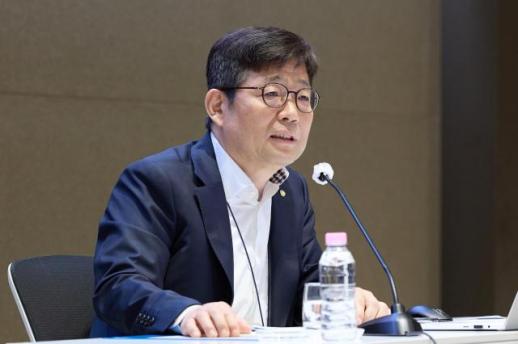 Outgoing BOK deputy argues for tightening bias SEOUL, August 11 (AJP) - The Bank of Korea should retain tightening bias as a surge in export income feeds into domestic demand and intensifies inflation and housing pressures, its outgoing deputy said Tuesday. Senior Deputy Governor Ryoo Sang-dai said further rate lifting remained necessary, although the timing and pace of additional moves should be determined by incoming data. “We need to maintain the rate-hike stance, while deciding the timing and pace of further increases based on the data,” Ryoo told reporters. The presentation stated that the assessment represented Ryoo’s personal views rather than the BOK’s official position, limiting the extent to which it can be treated as formal guidance for the central bank’s next policy decision. The remarks nevertheless amount to a parting assessment from a sitting member of the seven-member Monetary Policy Board, with Ryoo’s three-year term set to expire on Aug. 20. The BOK raised its benchmark rate by 25 basis points to 2.75 percent in July, its first increase since November 2022, after holding it steady in April and May amid uncertainty generated by the Middle East conflict. Ryoo said the calculus shifted as higher oil prices lifted inflation while the semiconductor boom strengthened economic growth faster than expected. Recent second-quarter gross domestic product and July inflation data confirmed that the combination of solid growth and above-target price pressures remained intact, he said. The current tightening cycle differs from Korea’s previous four rate-hike periods since 2000 because an improvement in the terms of trade has produced an unusually large expansion in nominal income and the current account, according to Ryoo. Korea posted a current-account surplus of $191 billion in the first half, already 1.6 times the $123.1 billion recorded for all of last year. The BOK’s May forecast placed the full-year surplus at about $250 billion, while nominal GDP expanded 17.1 percent from a year earlier in the first quarter. Ryoo said the resulting income windfall was likely to spread gradually from exporters into consumption and investment, strengthening domestic demand even as higher interest rates weighed on borrowers. That transmission makes the inflation outlook more complicated. Oil prices are raising costs both directly and through supply chains, while the semiconductor boom is lifting wages and feeding demand for domestic services, Ryoo said. The increase in headline inflation may be smaller than the surge that followed Russia’s invasion of Ukraine, but it could prove more persistent as supply-side pressure is reinforced by stronger demand. Financial stability provides another reason to retain a tightening stance. Expectations of further housing gains and instability in rental markets have kept home prices rising rapidly in Seoul and parts of the surrounding capital region, while higher asset prices have encouraged renewed household borrowing. Seoul’s price-to-income ratio stood at 17 in the first quarter, compared with a nationwide ratio of seven, highlighting the affordability gap between the capital and the rest of the country. BOK model estimates showed that a 25-basis-point rate increase could lower household debt growth by 0.16 percentage point and housing-price growth by 0.27 percentage point. Ryoo acknowledged that further increases could raise debt-servicing burdens, particularly for vulnerable borrowers, although strong income growth should cushion the effect at the aggregate level. Monetary policy alone, however, would not be sufficient to contain housing risks, he said. Interest-rate decisions need to be aligned with macroprudential measures, housing supply and tax policies and efforts to ease Korea’s concentration of population and economic activity in the Seoul metropolitan area. Selective fiscal and financial support should meanwhile address the widening burden across industries and income groups, while the BOK’s lending programs could strengthen the transmission of monetary policy to targeted sectors. Ryoo also called for continued reform of Korea’s foreign-exchange market, saying its depth had failed to keep pace with the rapid growth in residents’ overseas investment and the expansion of domestic capital markets. The BOK should continue efforts including round-the-clock foreign-exchange trading and offshore won settlement, he said, while policymakers should use Korea’s AI-driven income gains to finance productivity-enhancing investment and prepare for longer-term structural change. ________________________________________________________________________________ AJP Takeaways Deputy Governor Ryoo Sang-dai, whose tenure ends next week, said the BOK should retain its rate-hike stance, with the timing and pace of further moves determined by incoming data. Korea’s semiconductor boom has generated record external surpluses and income growth, but the gains are increasingly feeding domestic demand and inflation. A 25-basis-point increase is estimated to reduce household debt growth by 0.16 percentage point and housing-price growth by 0.27 percentage point. 2026-08-11 15:17:44
 -
KB Kookmin Bank to Provide $100 Million in Support for Emergency Medical Institutions Outside Capital Area KB Kookmin Bank will provide a total of 100 billion won in policy financing support for emergency medical institutions located outside the capital area.The bank announced on August 11 that it has been selected as the financial institution for the '2026 Emergency Medical Institution Loan Program' organized by the Ministry of Health and Welfare, with loans set to be available starting August 13.This initiative aims to alleviate the financial burden on medical institutions in non-capital areas and regions with weak emergency medical services, ensuring a stable foundation for local emergency care.The funds will be used for improving emergency room facilities, paying medical staff salaries, and refinancing existing loans from other financial institutions to stabilize operations.Eligible institutions include regional emergency medical centers, local emergency medical centers, and other emergency medical institutions designated by the Ministry of Health and Welfare located outside the capital area.The loan limits are set at a maximum of 4 billion won for regional emergency medical centers, 2 billion won for local emergency medical centers, and 1 billion won for other emergency medical institutions.The interest rate is fixed at 2% per year, while institutions in areas with weak emergency medical services will benefit from a reduced rate of 1% per year. The repayment period consists of a five-year grace period followed by ten years of installment payments.A representative from KB Kookmin Bank stated, "We will continue to provide prompt financial support to ensure that emergency medical institutions can deliver stable medical services and will expand financial assistance that effectively contributes to the stability of the local healthcare system."* This article has been translated by AI. 2026-08-11 15:12:00
-
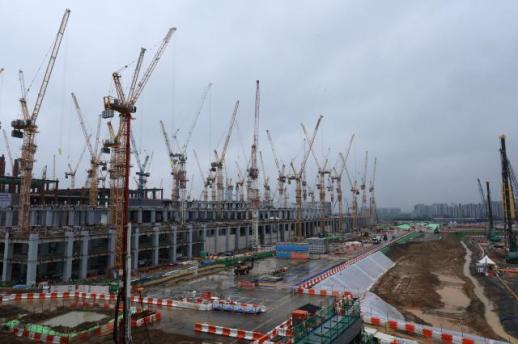 Chip surge drives Korea's record early-August exports SEOUL, August 11 (AJP) - South Korea's exports jumped 45.3 percent from a year earlier to $21.29 billion in the first 10 days of August, the highest for any Aug. 1-10 period, customs data showed Tuesday. The figure surpassed the previous early-August record of $15.6 billion set in 2022. Both periods contained seven working days, with average daily exports also rising 45.3 percent to $3.04 billion. Semiconductor exports soared 155.4 percent to $9.95 billion, marking a record for the early-August period. Chips accounted for 46.8 percent of total exports, up 20.1 percentage points from a year earlier, according to the Korea Customs Service. Exports excluding semiconductors rose about 5.4 percent to $11.33 billion, according to an AJP calculation based on preliminary customs data. The latest figures extend a broader export rally fueled by global investment in artificial-intelligence infrastructure, which has lifted demand for memory chips and data-center equipment. Petroleum-product exports rose 65.3 percent to $2.00 billion, while computer peripherals surged 139.5 percent to $587 million. The gains were partly offset by an 80.9 percent plunge in passenger-car exports and declines of 58.2 percent in ships and 36.3 percent in automobile parts. Shipments to China more than doubled to $6.75 billion, rising 134.8 percent from a year earlier. Exports to Vietnam increased 45.4 percent to $2.39 billion, while those to the European Union climbed 57.2 percent to $1.50 billion. Exports to the United States edged down 0.2 percent to $2.05 billion, contrasting with the sharp gains recorded in most other major markets. China, Vietnam and the United States together accounted for 52.5 percent of South Korea's outbound shipments. Imports rose 23.1 percent to $19.49 billion. Semiconductor imports climbed 90.8 percent and chipmaking-equipment imports gained 77.3 percent, while lower crude-oil and gas purchases pulled total energy imports down 13.8 percent. South Korea posted a trade surplus of $1.80 billion, reversing a $1.18 billion deficit in the same period last year. The customs agency cautioned that the preliminary figures cover a short period and may be affected by shipment schedules. AJP Takeaways South Korea's exports jumped 45.3 percent to a record $21.29 billion in the first 10 days of August. Semiconductor exports surged 155.4 percent to $9.95 billion and accounted for 46.8 percent of total exports. Exports excluding semiconductors rose by about 5.4 percent to $11.33 billion. Exports to China rose 134.8 percent to $6.75 billion, while shipments to the United States slipped 0.2 percent to $2.05 billion. 2026-08-11 15:09:31
 -
Hankook Tire Reports 58.1% Increase in Q2 Operating Profit Hankook Tire & Technology reported significant revenue growth driven by strong sales of high-value tires. The company's operating profit increased by 58.1% compared to the same period last year.On August 11, Hankook Tire announced that its consolidated revenue for the second quarter reached 5.68 trillion won, with an operating profit of 559 billion won. This marks increases of 5.8% and 58.1%, respectively, from the previous year.Revenue from the tire segment rose to 2.81 trillion won, an 11.8% increase year-on-year, while operating profit in this segment grew by 39.5% to 483.2 billion won.Thanks to a strategy focused on premium and electrification products, sales of high-value items, including tires with a diameter of 18 inches or more and electric vehicle-specific tires, reached record levels for a single quarter.In the second quarter, high-inch tires accounted for 49.5% of sales in the passenger car and light truck tire segment. The share of electric vehicle-specific tires in new car tire sales also rose to 31.8%, nearing the annual targets of 51% for high-inch tires and 33% for electric vehicle tires.Regionally, growth in key markets such as Europe and China was driven by increased supply of original equipment (OE) tires and rising demand for replacement tires (RE). In China, the replacement cycle for electric vehicle tires has begun, further boosting sales.Hankook Tire's subsidiary, Hankook Systems, reported revenue of 2.87 trillion won and an operating profit of 103.7 billion won during the same period, returning to profitability.Looking ahead, Hankook Tire plans to expand its global production and supply capabilities through the expansion of its factories in Tennessee, USA, and Hungary, Europe. The company aims to increase the supply of new car tires, particularly in the U.S. and Europe, and accelerate its global market penetration. 2026-08-11 15:08:10