


Latest by
-
 Conflict Resurfaces at Hanmi Group Amid Management Disputes and Corporate Card Allegations Conflicts between the owner family and major shareholders of Hanmi Group are intensifying once again. A court's decision to place a provisional seizure on shares held by Im Joo-hyun, vice chair of Hanmi Science, has reignited the management dispute, compounded by allegations regarding the corporate card usage by Song Young-sook, chair of Hanmi Group, and controversies over internal data leaks. Since the passing of the late founder Im Sung-ki in 2020, the management conflict among siblings and between parents and children that emerged in early 2024 has yet to be resolved after three years.◆ Shin Dong-guk's Share Expansion Reignites Management DisputeThe Seoul Central District Court approved a provisional seizure request for shares of Hanmi Science filed by Shin Dong-guk, chairman of Hanyang Precision, on July 29. The amount in question is approximately 10 billion won, with Shin's side claiming that Im violated the obligation to jointly exercise voting rights as stipulated in a so-called 'four-party alliance' agreement. They argue that Im's shares were sold in the market during a transaction with the EquityFirst fund, preventing him from exercising voting rights at shareholder meetings over the past two years.A provisional seizure is a temporary measure prior to a main lawsuit. While responsibility has not been definitively established, the recent increase in Shin's shareholding, who is the largest individual shareholder of Hanmi Science, has led many in the industry to interpret this as a sign of a fracture within the four-party alliance. There is growing concern that the dispute over the group's governance structure may reignite.Meanwhile, Song Young-sook, Im Joo-hyun, and Killington LLC have filed a lawsuit against Shin for 60 billion won in damages, claiming that the cancellation of a senior care business initiative last year was a violation of the agreement to jointly exercise voting rights. The first-instance ruling is scheduled for October 1, and this decision is expected to be another variable in the management power dynamics.◆ Allegations of Misuse of Corporate Cards and Internal Data LeaksThe controversy surrounding corporate card usage is also escalating. Kim Tae-ho, former CEO of Cure Therapeutics, held a press conference at the Koreana Hotel in Seoul, demanding a company-wide investigation into the corporate card usage of Song Young-sook and Im Joo-hyun. He is the individual who recently tipped off the media about allegations regarding the use of corporate cards and company assets by Song's family.The documents disclosed by Kim include payment records of approximately 68 million won at an anti-aging hospital in Gangnam and about 1.4 million won at a dental clinic. He stated, "The disclosed records are just a fraction of the total," and called for audits and reports to the audit committee and board of directors across all affiliates.In response, Hanmi Group clarified that the costs for Song's knee joint treatment fall under welfare benefits that the company can provide. They also refuted claims regarding department store purchases as expenses for gifts for employees and key clients, and stated that overseas usage was incurred during business trips. They argued that the materials used in the reports lacked completeness, as they did not include records of reimbursements or cancellations.The group warned that "various unverified materials are being circulated in the market with the intent to defame specific major shareholders," which could constitute defamation.On the same day, Kim denied any connections with specific factions, including Shin Dong-guk. He asserted, "I am not working for Shin. The records of corporate card usage were voluntarily provided by current and former employees who care about Hanmi."◆ Hanmi's Performance at Record High, Yet Governance Concerns PersistHanmi Group's business performance has steadily improved over the past few years. Hanmi Science surpassed 1.35 trillion won in revenue last year. In the first half of this year, it recorded 721.6 billion won in revenue and 92.7 billion won in operating profit. Hanmi Pharmaceutical also achieved its highest-ever performance last year, with 1.5475 trillion won in revenue and 257.8 billion won in operating profit. Additionally, there is significant market anticipation for the launch of the country's first GLP-1 obesity drug in the second half of this year.However, with ongoing management disputes, allegations of corporate card misuse, provisional seizures, and large-scale lawsuits, there are concerns in the industry about how much the warmth of improved performance can offset governance instability. The market anticipates that the conflict over the group's management rights will reach another turning point with the first-instance ruling on the damages lawsuit in October.A Hanmi Group official stated, "Hanmi Science and Hanmi Pharmaceutical have already established a solid professional management system and are achieving record results every quarter," emphasizing that the business is growing steadily, separate from the owner disputes. He added, "If there are areas that need improvement in organizational operations, we should transparently address and enhance them," noting that Hanmi has been working on improving internal regulations since last year.* This article has been translated by AI. 2026-08-07 16:52:00
 -
 SK hynix clears nearly $40 bn fab budget despite glut worries SEOUL, August 07 (AJP) -SK hynix is pressing ahead with a 54.3 trillion won ($38 billion) expansion of its memory production empire even as its shares have more than halved from their June highs amid oversupply and peak concerns, committing capital equivalent to about 45 percent of its shareholders' equity to new fabs in Yongin and Cheongju. The world's leading supplier of high-bandwidth memory said Friday that its board approved 35.2 trillion won for construction of its second fab, or Y2, at the Yongin semiconductor cluster and another 19.1 trillion won for the M17 fab in Cheongju. The two projects amount to roughly 45 percent of SK hynix's shareholders' equity of 120.7 trillion won. The Yongin investment alone represents 29.19 percent. The scale of the bet stands in sharp contrast to the market's recent retreat from the chipmaker. SK hynix closed Friday at 1,422,000 won, down about 17 percent from a week earlier and 52.4 percent from its record 2,987,000 won reached on June 25. The selloff has come despite unprecedented earnings from the AI memory boom. SK hynix reported a record operating profit of 60.54 trillion won in the second quarter, up 557.2 percent from a year earlier, while first-half operating profit approached 100 trillion won. The 54.3 trillion won earmarked for the two new fabs alone is equivalent to almost 90 percent of its entire second-quarter operating profit. SK hynix nevertheless appears unwilling to slow its capacity race. "In the AI era, technological competitiveness alone is not enough, and the ability to supply the volume customers need when they need it is itself competitiveness," the company said. The company said the investment followed a detailed review of customers' long-term demand as AI infrastructure drives consumption of HBM and other advanced memory. Yongin Y2 will be the second of four fabs planned at the semiconductor cluster south of Seoul and will become a major production base for next-generation DRAM, including HBM. The facility will have a total floor area of about 1.13 million square meters. Construction is scheduled to begin in July next year, with its first clean room opening in June 2029. Investment will be carried out through October 2031 and includes a support building and an integrated research and development center for testing and analyzing new products. SK hynix is already building Y1, the first Yongin fab, with its first clean room scheduled to open in February next year. The company has sharply accelerated the broader project, aiming to complete all four Yongin fabs by 2033, 12 years earlier than its previous 2045 target. Power and water infrastructure needed through the operation of Y2 is already about 99 percent complete. The 19.1 trillion won M17 project in Cheongju will expand SK hynix's NAND production base. Construction is scheduled to start in February next year, with its first clean room opening in December 2028. Investment will run through April 2031. Cheongju already houses the company's M11, M12 and M15 NAND fabs, giving SK hynix existing land, electricity and water infrastructure that could shorten construction and improve production efficiency. The projects are part of the investment strategy unveiled in June under which SK hynix plans to pour 600 trillion won into the Yongin semiconductor cluster and another 100 trillion won into expanding its Cheongju production base. The company plans to secure the physical production infrastructure first and then phase in clean-room expansion and equipment according to actual demand. At the same time, the cash windfall is beginning to reach shareholders. SK hynix separately declared a quarterly cash dividend of 375 won per common share, totaling 273.3 billion won, with Aug. 31 set as the record date. More significantly, the company said it is actively reviewing additional shareholder-return measures and plans to finalize and announce them during the third quarter, bringing forward an earlier pledge to unveil a new shareholder-return policy by year-end. With cash holdings swollen by record first-half earnings, market attention is now turning to whether SK hynix will pair its enormous capacity push with a larger-than-expected return of capital to shareholders bruised by the stock's 52 percent retreat from its peak. AJP Takeaways SK hynix approved 54.3 trillion won ($38 billion) for new fabs in Yongin and Cheongju, pressing ahead with capacity expansion despite growing memory glut concerns. The spending equals about 45 percent of shareholders’ equity, underscoring the scale of its bet on sustained AI-driven memory demand. Yongin Y2 will focus on next-generation DRAM including HBM, while Cheongju M17 will expand NAND production capacity. The investment comes even as SK hynix shares have fallen more than 52 percent from their June 25 peak and 17 percent over the past week. Record earnings are giving SK hynix room to invest aggressively while also preparing additional shareholder-return measures in the third quarter. 2026-08-07 16:51:32
 -
Retail Investors Favor AI Semiconductors While Foreign Investors Shift to Defense and Bio As volatility increases in the domestic stock market, the investment strategies of individual and foreign investors are diverging significantly. Individual investors continue to focus on artificial intelligence (AI) semiconductors, while foreign investors are turning their attention to the defense, bio, and automotive sectors. Institutional investors are selectively investing in power infrastructure and construction.According to the Korea Exchange, from August 3 to August 7, the top stocks purchased by individual investors were SK Hynix and Samsung Electronics. During this period, individuals net bought 4.44 trillion won worth of SK Hynix and 3.84 trillion won worth of Samsung Electronics. Other notable purchases included Samsung Electro-Mechanics (636.7 billion won), SK Square (229.8 billion won), Samsung Electronics Preferred (203.4 billion won), and Hanmi Semiconductor (82.5 billion won).The buying trend among individual investors reflects expectations for the expansion of the AI industry and growth in the high-bandwidth memory (HBM) market. Despite recent market volatility, funds have concentrated in the high-growth semiconductor sector.Institutional investors have opted for a more diversified approach. The top net purchases by institutions included Samsung Electro-Mechanics (253.6 billion won), Hanwha Solutions (102.2 billion won), LG Energy Solution (100.8 billion won), APL (98.2 billion won), Hyosung Heavy Industries (90 billion won), and GS Construction (85.5 billion won). There has been notable interest in semiconductors, secondary batteries, power infrastructure, and construction sectors.Foreign investors have taken a markedly different investment approach. They net bought Samsung C&T (111.3 billion won), Celltrion (83.8 billion won), Samsung Biologics (79.2 billion won), Hanwha Aerospace (72.5 billion won), Kia (67.7 billion won), and SK (64.3 billion won). Instead of AI semiconductors, they have restructured their portfolios around bio, defense, and automotive sectors.Notably, defense stocks like Hanwha Aerospace and bio stocks such as Samsung Biologics and Celltrion have maintained a strong performance even amid increased market volatility. Analysts in the securities industry suggest that the overall upward trend across sectors is concluding, giving way to a phase of differentiation based on performance and growth potential.An industry insider stated, "Expectations for AI semiconductors remain valid, but in the short term, sector rotation is occurring simultaneously. Individuals are focusing on semiconductors, while foreigners are diversifying their investments towards defense and bio sectors."* This article has been translated by AI. 2026-08-07 16:48:00
-
 Homeplus reopens 67 stores after 25-day shutdown SEOUL, August 07 (AJP) - Shelves stood about 30 percent stocked, by the company's own count, when 67 Homeplus stores reopened across South Korea on Friday, 25 days after the country's second-largest hypermarket chain ran out of cash to keep them running. A court in Seoul will decide within four weeks whether the company survives. Homeplus called Friday's reopening a soft opening rather than a return to normal trading at the 67 big-box stores, which combine a full supermarket with floors of clothing and household goods. Checkout systems, deliveries and stock control are being tested in live conditions through Aug. 12, and the stores are scheduled to open fully on Aug. 13. The company said the rest of its goods would arrive before then. The Seoul Bankruptcy Court has set Sept. 4 as the deadline for creditors to approve a rehabilitation plan under South Korea's court-supervised restructuring process, and the law permits no further extension. A meeting of creditors to vote on the plan is expected between late this month and early September. The stores reopened on borrowed money. Meritz Financial Group, the company's largest creditor, transferred a 200 billion won loan, about $141 million at Friday's exchange rate, this week. The court had terminated the rehabilitation on July 3 after Homeplus failed to raise that amount on its own, and every store shut on July 13. The company appealed on July 20, the final day available, after its owner MBK Partners and the firm's chairman, Kim Byung-ju, guaranteed the Meritz loan in full. The court reversed itself the next day. Members of the Korean Mart Labor Union's Homeplus branch appeared at the National Assembly press briefing room on Friday alongside lawmakers from the Democratic Party of Korea, the Rebuilding Korea Party, the Progressive Party and the Social Democratic Party, and asked the public to shop at the reopened stores. "Homeplus, which was on the verge of liquidation because of the irresponsible greed of speculative capital, reopened its doors today," they said. The phrase pointed at MBK Partners, the private equity firm that has owned Homeplus since 2015. The company, now fighting for its survival, spent most of its 28 years as a fixture of South Korean life. Samsung C&T opened the first Homeplus in Daegu on Sept. 4, 1997, months before the Asian financial crisis forced Samsung to hand control to Britain's Tesco. The chain grew into one half of a duopoly with Emart, absorbing the former Carrefour stores in 2008 after both Carrefour and Walmart gave up on the market, until Tesco's accounting scandal pushed it to sell Homeplus to MBK for 7.2 trillion won, about $6.4 billion at the time and the largest buyout in South Korean history. Homeplus has said 2.7 trillion won of that price was borrowed against its own shares. The debt came due just as Coupang's overnight grocery delivery, launched nationwide in 2019 and supercharged by the pandemic, redrew how South Koreans shop. Hypermarkets' share of retail sales fell from 15.1 percent in 2021 to 9.8 percent last year, while online purchases accounted for more than 60 percent of total retail sales by March this year. Homeplus filed for rehabilitation in March last year, suspended 37 of its 104 hypermarkets in May, and sold its convenience-supermarket chain in June. The plan before creditors is to rebuild the company as a smaller entity. Homeplus intends to cut multi-story stores down to single floors of about 3,300 square meters and stock them with food, household essentials and its own private-label goods, a format the company has compared to the American chain Trader Joe's. Homeplus said traffic to its membership app reached 100,000 visitors after it announced the reopening date, above the level of a year earlier. Should creditors reject the plan, or fail to vote by Sept. 4, Homeplus enters bankruptcy proceedings regardless of how much money sits in its accounts. 2026-08-07 16:44:06
 -
Coway Reports 4.3% Increase in Q2 Operating Profit Coway announced on August 7 that its consolidated revenue for the second quarter reached 1.44 trillion won, a 14.6% increase compared to the same period last year. Operating profit rose to 253.2 billion won, up 4.3% year-on-year.For the first half of the year, Coway's cumulative revenue was 2.77 trillion won, reflecting a 13.9% increase from the previous year, while operating profit grew by 11.1% to 504.1 billion won.In the second quarter, Coway's domestic business revenue achieved 786.8 billion won, a 7.7% growth compared to the same period last year. Strong sales growth in key product lines, including five types of ice water purifiers and the BEREX bed and massage chair, contributed to a net increase of 242,000 rental accounts, a 51.6% rise year-on-year.Notably, the BEREX brand has entered the sleep technology market with its R-Series stretching motion bed and M-Series massage mattress. New rental categories, such as wall-mounted air conditioners, food waste disposers, and personal low-frequency stimulators, have also received positive market responses.Coway's overseas subsidiaries reported second-quarter revenue of 587.5 billion won, a 24.2% increase from the previous year. Quarterly revenue by major subsidiaries included: Malaysia at 434.5 billion won (up 22.2% year-on-year), the United States at 66.9 billion won (up 15.2%), Thailand at 66.0 billion won (up 53.9%), and Indonesia at 13.3 billion won (up 12.2%), indicating consistent high sales growth across all product lines.Kim Soon-tae, Coway's Chief Financial Officer, stated, "We demonstrated strong growth in the second quarter based on steady sales increases and account expansion both domestically and internationally. In the second half, we will focus on strengthening our leadership in the premium market and diversifying our product portfolio to sustain visible performance improvements."* This article has been translated by AI. 2026-08-07 16:40:00
-
Hana Bank Halts Online Mortgage Loans Amid Lending Restrictions Hana Bank has announced the suspension of new online mortgage loans. This decision comes as a response to ongoing increases in lending despite government regulations on household loan limits.According to financial industry sources, Hana Bank will temporarily halt the processing of new online mortgage loans starting today.Additionally, beginning August 11, the limit for overdraft accounts will be capped at 50 million won. However, the existing credit loan limit of 100 million won per borrower will remain unchanged. The bank will also temporarily stop processing new variable-rate mortgage loans, both online and in-person, starting August 12.A bank official stated, "This is aimed at efficiently managing household loans and maintaining a stable financial supply focused on actual demand." Previously, in June, Hana Bank limited household credit loans to a total of 100 million won per borrower and suspended new subscriptions to mortgage insurance (MCI, MCG) starting July 1.As demand for household loans remains high, banks have recently been competing to tighten lending practices.KB Kookmin Bank reduced its mortgage loan limit from 600 million won to 300 million won and has recently raised interest rates. Other banks have also taken measures such as halting loan applications, reducing preferential rates, and restricting mortgage insurance subscriptions. This year, the increase in household loans among the five major banks has exceeded the annual target submitted to the Financial Supervisory Service by over 1 trillion won. 2026-08-07 16:40:00
-
SK Hynix to Invest 54 Trillion Won in New Semiconductor Facilities SK Hynix will invest a total of 54 trillion won in new semiconductor production facilities in Yongin and Cheongju to meet the surging demand for memory in the age of artificial intelligence (AI). The company anticipates a structural increase in demand for next-generation DRAM, including high-bandwidth memory (HBM), and enterprise SSDs, prompting proactive measures to secure large-scale production capacity.On August 7, SK Hynix announced during a board meeting that it has approved investments of 35.2 trillion won for the DRAM production plant (Y2) in the Yongin semiconductor cluster and 19.1 trillion won for the NAND flash production plant (M17) in Cheongju. The total investment amounts to 54.3 trillion won.This investment follows the company's mid- to long-term investment strategy announced in June. SK Hynix plans to invest a total of 600 trillion won in the Yongin semiconductor cluster and 100 trillion won to expand its Cheongju production base, with construction of the Yongin Fab 1 (Y1) currently underway. This decision marks the beginning of subsequent production facility construction in both Yongin and Cheongju.Y2 will be the second production facility among four planned in Yongin, covering a total area of 341,000 pyeong and designed as a next-generation DRAM production base. Construction is set to begin in July 2024, with the first cleanroom expected to open in June 2029, producing next-generation AI memory, including HBM. The ongoing construction of Y1 aims to open its first cleanroom by February 2024.SK Hynix has previously stated its goal to complete all four fabs in the Yongin semiconductor cluster by 2033, advancing the original completion date from 2045 by 12 years. The decision to invest in Y2 is a key step in this early completion strategy, with investment execution planned to occur sequentially by October 2031.The Y2 investment includes costs for not only the production facility but also an integrated research and development center, employee support housing, water treatment facilities, and power substations. The infrastructure for the first phase of power and water supply necessary for Y2's operation is currently about 99% complete, providing a solid foundation for timely factory construction.In Cheongju, the new M17 fab is being developed to respond to the rapidly increasing NAND demand in the AI era. M17 will cover an area of 206,000 pyeong and is scheduled to begin construction in February 2024, with the first cleanroom expected to open in December 2028. The investment period extends until April 2031.Cheongju was chosen as a new production hub due to its synergy with existing facilities. The region already hosts operational NAND production plants M11, M12, and M15, and significant infrastructure, including power and water supply, is already in place, allowing for the fastest possible expansion of production capacity.The company's large-scale investment is driven by confidence in the structural growth of the AI market. According to market research firm Omdia, the global DRAM and NAND markets are projected to grow at an average annual rate of 19% from last year through 2030. As generative AI expands into AI inference services, demand for HBM, server DRAM, and enterprise SSDs is also rapidly increasing. The demand for KV cache storage used in AI inference processes, as well as the spread of agentic AI and physical AI, is expected to further broaden the application of NAND.SK Hynix believes that in the AI era, not only technological capability but also the ability to supply the required quantities at the right time will be key competitive advantages. Therefore, while proceeding with fab construction as planned, the company aims to enhance investment efficiency by gradually expanding cleanroom construction and equipment installation in line with customer demand.The company expects that this investment will secure a foundation for future growth while enhancing the competitiveness of the domestic semiconductor ecosystem and revitalizing the local economy. The simultaneous large-scale investments in Yongin and Cheongju are anticipated to create opportunities for the growth of partner companies, generate employment, and stimulate local businesses, contributing to sustainable national economic growth.A SK Hynix official stated, "This investment is a strategic decision to seize opportunities in line with the rapid growth of the AI market. We aim to establish ourselves as a key partner contributing to the stability of the global AI semiconductor supply chain through proactive production capacity acquisition."* This article has been translated by AI. 2026-08-07 16:32:20
-
High Oil Prices and Exchange Rates Lead to Jin Air's 2nd Quarter Operating Loss of 73.1 Billion Won Jin Air reported a revenue of 360.3 billion won for the second quarter of this year, a 17.7% increase compared to the same period last year.However, the airline recorded an operating loss of 73.1 billion won, which is 30.8 billion won larger than the loss of 42.3 billion won from the previous year.The net loss for the second quarter also increased to 67.5 billion won, compared to a loss of 15.7 billion won in the same quarter last year.For the first half of the year, cumulative revenue reached 783.3 billion won, marking an 8.2% increase from the same period last year, the highest revenue recorded to date.The cumulative loss for the first half was 15.5 billion won, a shift from a profit of 16 billion won in the same period last year.A Jin Air official commented on the second quarter results, stating, "We responded to external uncertainties through flexible route operations and cost efficiency, but we could not withstand the increase in operating costs due to high oil prices, leading to a larger loss." The official added, "In the second half, we expect profitability to improve with increased passenger demand during the peak season and stabilization of oil prices and exchange rates."The official further stated, "We will strengthen our cost competitiveness through route diversification focused on preferred destinations like Japan and China, and the introduction of high-efficiency new aircraft. Additionally, we will ensure a solid foundation for sustainable growth by preparing for the seamless launch of our integrated low-cost carrier."* This article has been translated by AI. 2026-08-07 16:32:00
-
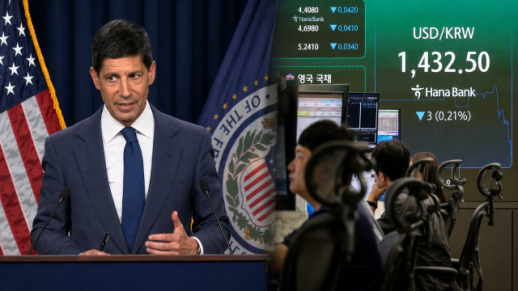 US jobs test puts BOK August pause in focus SEOUL, August 07 (AJP) - Seoul's capital markets have slipped into a summer lull, leaving Friday's U.S. employment report as the most immediate test of whether the Bank of Korea can pause this month after restarting its tightening cycle in July. A sharp slowdown in U.S. hiring would weaken the case for another Federal Reserve rate increase, take pressure off the dollar and give the BOK more room to stay put. Resilient employment and wages could do the opposite, reviving expectations for back-to-back rate increases in Korea. The U.S. Labor Department is due to release its July employment report at 9:30 p.m. Korea time, with economists polled by Reuters expecting nonfarm payrolls to rise by 80,000 after a 57,000 increase in June. Unemployment is forecast to remain at 4.2 percent and annual wage growth at 3.5 percent. Estimates for payroll gains range widely from 10,000 to 140,000, while revisions to May and June could prove nearly as important as the July headline. Recent indicators have pointed to softer hiring without offering the Federal Reserve much relief on inflation. ADP reported a weaker-than-expected 44,000 increase in private payrolls in July, while the Institute for Supply Management's services employment index slipped into contraction. Its prices gauge, however, climbed sharply, confronting policymakers with slower hiring but little corresponding easing in price pressures. The Fed held its benchmark rate at 3.50 percent to 3.75 percent on July 29, but three of its 12 voting members favored a quarter-point increase. Markets on Friday were pricing roughly a 54 percent chance of a September hike. Higher oil prices and U.S. Treasury yields have further complicated the outlook. That means a modest payroll slowdown alone may not kill expectations for further tightening if unemployment stays low and wages remain firm. For Korea, the U.S. jobs report matters chiefly through what it does to interest rates and the won. A stronger-than-expected U.S. employment report in June quickly lifted expectations for Fed tightening, pressured the Korean currency and pushed up domestic long-term yields, illustrating how rapidly an American labor-market surprise can spill into Seoul. The BOK now faces a finer balance after raising its base rate by 25 basis points to 2.75 percent on July 16, its first increase in more than three years. Korean government bond yields nevertheless fell on the day of the decision, with the three-year yield dropping to 3.848 percent and the 10-year to 4.297 percent, suggesting investors did not expect rate increases to follow automatically at every meeting. The argument for an August pause gained ground this week after headline consumer inflation slowed to 2.8 percent in July from 3.2 percent in June. But core inflation accelerated to 2.6 percent, keeping the central bank wary of declaring its renewed tightening campaign finished. Growth gives the BOK room to move again if necessary. Second-quarter gross domestic product expanded 0.6 percent from the previous quarter and 3.7 percent from a year earlier, supported by the semiconductor boom and improving domestic demand. That leaves Friday's U.S. jobs report as an important external swing factor. A weak reading would likely pull down expectations for a September Fed hike, U.S. short-term yields and the dollar. A stronger won would in turn ease imported inflation pressure and give the BOK greater latitude to leave its rate at 2.75 percent on Aug. 27. A strong payroll figure accompanied by resilient wages or lower unemployment could reverse that chain, pushing up the dollar and U.S. yields and renewing pressure on the won just as Korea's core inflation and economic growth remain firm. For Korean markets, the crucial number is therefore not simply whether payrolls beat or miss the 80,000 consensus. It is whether the combination of hiring, unemployment, wages and revisions materially changes the Fed's September path — and how quickly that repricing reaches the won and Korean government bonds. The won closed daytime trading at 1,416.1 per dollar on Friday, strengthening 7.7 won from the previous session to its strongest level in about 10 months as dollar-selling pressure prevailed ahead of the U.S. report. The three-year Korean government bond yield was trading around 3.76 percent and the 10-year yield near 4.22 percent at around 3:30 p.m., with expectations for an August BOK pause anchoring the short end while higher oil prices and U.S. Treasury yields kept greater pressure on longer maturities. ___________________________________________________________________________________ AJP takeaways U.S. July jobs data could shape the Bank of Korea's August rate decision by changing expectations for the Federal Reserve's September policy move. A weaker U.S. employment report would strengthen the case for a BOK pause at 2.75 percent by easing U.S. yields, weakening the dollar and reducing pressure on the Korean won. A strong U.S. payroll and wage reading could revive expectations for another Korean rate hike as higher U.S. rates and a stronger dollar increase inflation and currency pressure in Seoul. South Korea's inflation picture remains mixed: headline CPI slowed to 2.8 percent in July, but core inflation accelerated to 2.6 percent. The won and Korean government bond yields are the key transmission channels linking U.S. employment data and Fed expectations to the BOK's Aug. 27 policy decision. 2026-08-07 16:25:11
 -
Kolon Industries Reports 118% Increase in Q2 Operating Profit Kolon Industries announced on August 7 that its preliminary consolidated results for the second quarter showed sales of 1.3565 trillion won and an operating profit of 98.7 billion won. Both sales and operating profit increased by 7.8% and 118%, respectively, compared to the same period last year.Despite rising raw material costs and increased external volatility, the company achieved solid growth due to expanded sales of key materials, increased chemical product sales, and steady growth across various fashion brands.The company also continued its growth trend compared to the previous quarter. Kolon Industries reported a 9.6% increase in sales and a 59.5% increase in operating profit from the previous quarter, driven by an operational efficiency (OE) project that reduced losses in aramid and seasonal strength in the fashion sector.In the industrial materials sector, sales of key products such as airbags, tire cords, and aramid increased compared to the previous quarter. Notably, the profitability of tire cords improved due to a higher proportion of hybrid product sales, while aramid sales rose due to improved facility utilization compared to both the previous year and the previous quarter.The chemicals sector also saw increases in both sales and operating profit compared to the previous year and the previous quarter, driven by growing demand in the upstream industries for petroleum resins and increased sales of other high-value products. The CPI also contributed to profit growth as its utilization rate improved.The fashion sector experienced balanced growth across major categories such as outdoor, golf, and menswear, supported by a recovery in consumer sentiment. Strengthening sales strategies focused on new products and operational efficiencies from organizational integration led to improved performance.This performance is significant as all major business divisions—industrial materials, chemicals, and fashion—showed growth, indicating a more stable business portfolio. However, fluctuations in raw material prices and global economic slowdowns are cited as uncertainties that could impact performance in the second half of the year.A Kolon Industries representative stated, "Even amid ongoing external uncertainties, improvements through OE and diversification of our product portfolio are yielding results. We will continue to focus our capabilities on core businesses to establish a foundation for sustained growth in the second half of the year."* This article has been translated by AI. 2026-08-07 16:20:00