


Latest by
-
 KOSPI Closes Below 6200 Amid Foreign Selling; KOSDAQ Also Declines The KOSPI index opened more than 1% higher on August 7 but closed lower due to significant selling by foreign investors. The KOSDAQ also experienced a sharp decline amid simultaneous net selling by foreign and institutional investors, although it managed to recover some losses by the end of trading.According to the Korea Exchange, the KOSPI closed at 6258.77, down 37.61 points (0.60%) from the previous trading day. The index started at 6365.07, up 68.69 points (1.09%), but reversed its early gains and ended the day in negative territory.In the securities market, individual and institutional investors made net purchases of 267 billion won and 579 billion won, respectively, engaging in bargain hunting. In contrast, foreign investors led the decline with net sales of 862.5 billion won.Among the top market capitalization stocks in the KOSPI, the performance was mixed. Samsung Electronics rose 0.22%, Samsung Electro-Mechanics increased by 3.99%, LG Energy Solution gained 4.35%, Samsung Biologics was up 2.77%, KB Financial climbed 2.51%, and Hanwha Aerospace rose 4.08%. However, SK Hynix fell 4.88%, SK Square dropped 3.20%, and Hyundai Motor declined 1.13%.The KOSDAQ index closed at 798.81, down 2.86 points (0.36%) from the previous day. It opened at 807.62, up 5.95 points (0.74%), but turned negative during the session, at one point dropping over 3% before reducing its losses.In the KOSDAQ market, foreign and institutional investors sold a net 254 billion won and 103 billion won, respectively. Individual investors made net purchases of 340.6 billion won, absorbing the selling pressure.The top stocks in the KOSDAQ also showed mixed results. Alteogen rose 3.29%, EcoPro increased by 2.87%, EcoPro BM gained 4.39%, HLB was up 5.97%, ABL Bio rose 3.96%, and Peptron increased by 2.13%. Conversely, Rainbow Robotics fell 5.01%, Juseong Engineering dropped 4.20%, Lino Industry declined 1.79%, and Wonik IPS fell 4.64%.* This article has been translated by AI. 2026-08-07 16:00:00
 -
Fire Breaks Out at Safety Equipment Manufacturing Plant in Wanju A fire broke out at a safety equipment manufacturing plant in Samrye-eup, Wanju County, Jeonbuk.According to Yonhap News, the fire was reported at 2:46 p.m. on August 7. The fire department issued a Level 1 response and deployed 20 units to combat the flames.So far, there have been no reported injuries.The Wanju County government also issued a safety alert, advising nearby residents to be cautious due to heavy smoke in the area.Authorities, including police and firefighters, plan to investigate the cause of the fire and assess the extent of property damage once the fire is extinguished.* This article has been translated by AI. 2026-08-07 15:52:00
-
Government Plans to Shift Real Estate Tax Focus from Ownership to Residency The government has decided to shift its real estate tax policy from a focus on ownership to one centered on residency. This change aims to reduce tax benefits for homeowners who do not actually reside in their properties and to adjust excessive deductions for ultra-high-value homes priced at 4 billion to 5 billion won. The policy clarifies whether homes should be viewed as places of residence or as investment assets that can be held while minimizing taxes.There has been considerable backlash against the reduction of benefits for non-resident homeowners. However, not all homeowners are actual users of their properties. If someone owns a home while living elsewhere for an extended period, it is reasonable to view that property as serving both residential and investment purposes. There is no justification for providing the same tax benefits to those who do not actually reside in their homes.Of course, there are unavoidable circumstances that may require individuals to leave their homes, such as job relocations, schooling, medical treatment, or caring for parents. The government has stated that these non-resident periods will be recognized as actual residency. Criticizing the policy as merely a “tax increase for homeowners” without acknowledging these exceptions implies a demand for continued tax benefits on investment gains from properties that are not actually lived in.Another contentious issue involves elderly long-term residents. Critics argue that imposing high property taxes on seniors with no income, simply because their lifelong homes have appreciated significantly, amounts to forcing them out of their residences. Situations where individuals must sell homes they have lived in for many years due to tax burdens must be handled with care. Therefore, safety measures such as deferring payments for low-income seniors are necessary, and the government has indicated it will expand these provisions.However, it is important to distinguish between a lack of cash income and a lack of assets. It is difficult to classify someone who owns a property valued at over 4 billion won as economically disadvantaged solely based on low monthly income. Selling such a home could yield assets that would take a worker decades to accumulate. Describing this situation as being “driven out by taxes” oversimplifies the reality.Moreover, real estate prices have risen significantly due to broader societal investments in urban development, transportation, education, and commercial facilities. The dramatic increase in property values in areas like Gangnam and along the Han River is not solely the result of individual homeowners' efforts. It cannot be deemed abnormal taxation to require a reasonable level of property tax on homes that have appreciated significantly in value.Cities must continue to evolve. As jobs and commercial facilities cluster in certain areas, property values rise, attracting individuals willing to bear those costs to live and work there. It is natural for retirees to consider downsizing or relocating as their income and lifestyle change. While the government should not force such moves, it also should not guarantee the right to hold onto high-value properties at low costs for a lifetime.The key is balance. Seniors who have lived in their homes for a long time should be protected from sudden tax burdens that are difficult to manage. Options such as deferring payments or settling taxes upon the sale of a home are viable. However, this protection should not serve as a justification for continually lowering taxes on ultra-high-value properties.There are points to consider in the government's proposed reforms. The pace of tax increases should be moderated to avoid sudden burdens, and the criteria for residency exceptions must be clearly defined. The belief that taxes alone can control housing prices should also be approached with caution. Above all, an increase in supply must accompany these measures.However, claims that “non-resident homeowners should be protected” or that “elderly homeowners with high-value properties will be forced out due to tax increases” are separate issues. Returning homes to their intended use as residences and imposing appropriate taxes on high-value assets is the starting point for normalizing the real estate tax system. Exceptions should be made for protection, but principles should not be compromised.* This article has been translated by AI. 2026-08-07 15:48:00
-
Pharmaceutical Companies Opt for Business Holding Structures to Drive Growth The business holding company model is gaining attention as a strategy for improving management efficiency and securing new growth drivers. This approach goes beyond simple governance and management functions, allowing holding companies to engage directly in business operations to ensure stable cash flow and investment capacity.According to industry sources, Dong-A Socio Holdings held a board meeting last month and resolved to absorb its 100% subsidiary, Dong-A Pharmaceutical, in a merger set for October 1. The merger will be conducted as a small-scale absorption without issuing new shares, meaning there will be no changes to the shareholder composition or ownership stakes of Dong-A Socio Holdings.The purpose of this merger is to enable the holding company to directly secure stable cash flow from the group. By reintegrating Dong-A Pharmaceutical, which was separated during the transition to a holding company structure in 2013, the group plans to utilize the generated profits as investment resources. This move is part of a broader strategy to transition into a business holding company model that manages direct operations, new investments, and the acquisition of new growth drivers.Dong-A Pharmaceutical is a key revenue source for the group. Last year, its sales reached 726.3 billion won, accounting for 50.8% of Dong-A Socio Holdings' consolidated revenue. In the second quarter of this year, sales were 228.2 billion won, with operating profit at 30.2 billion won, reflecting increases of 25.7% and 26.6%, respectively, compared to the same period last year.To leverage the brand recognition and business infrastructure of Dong-A Pharmaceutical, the name of the surviving entity will be changed from Dong-A Socio Holdings to Dong-A Pharmaceutical. The company plans to expand investments across its existing businesses, including consumer healthcare, new drug development, and biotechnology.Hanmi Science has taken the lead in establishing a business holding company structure. Since the appointment of CEO Kim Jae-kyu, the company has strengthened its new business development capabilities by creating a planning and strategy division and an innovation division, while also expanding its medical device and consumer health businesses based on synergies with its subsidiaries.The company's performance supports its expansion efforts. Hanmi Science reported cumulative sales of 721.6 billion won in the first half of the year, a 7.6% increase from the same period last year, driven by balanced growth in its online pharmacy and healthcare businesses. Recently, it has broadened its portfolio by launching health supplements and dermocosmetic brands.Industry experts believe the role of holding companies is evolving. While they previously focused on strengthening governance and managing affiliates, they are now expanding their functions to lead investments through direct business operations. In a pure holding company structure, reliance on dividends limits resource utilization, making the transition to a business holding company a strategic move to accelerate growth.Although changes in drug pricing and increased government regulations may have some impact, the industry views these as strategic choices aimed at enhancing profitability, management efficiency, and new growth drivers rather than direct causes. An industry insider noted, "In the past, the focus was heavily on defending management rights, but now strengthening business competitiveness has become a more important goal. There is a possibility of increased organizational restructuring in various forms depending on individual company circumstances in the future."* This article has been translated by AI. 2026-08-07 15:48:00
-
Pharmaceutical and Bio Sectors Face Triple Challenges Amid Price Cuts and Regulatory Changes The pharmaceutical and bio sectors are grappling with a 'triple challenge' due to drug price reductions, increased regulatory scrutiny, and a resulting decline in investor sentiment.According to industry sources, the government has implemented a reform of the drug pricing system starting this month, lowering the maximum price calculation rate for generic and off-patent drugs from 53.55% to 45% of the original drug price. Existing high-priced drugs will be adjusted gradually, while new generics will receive certain advantages based on whether they are certified as innovative or quasi-innovative pharmaceutical companies.Concerns are growing that this measure will directly pressure the profitability of small and mid-sized pharmaceutical companies and burden those heavily reliant on contract sales organizations (CSOs). If the revenue structure centered on generics is disrupted, the capacity for research and development (R&D) investment will inevitably decline. As the traditional growth model of expanding product lines hits its limits, this price reduction is expected to catalyze a restructuring across the industry.The impact has been exacerbated by the tightening of disclosure regulations. The Financial Supervisory Service (FSS) has overhauled the disclosure system for pharmaceutical and bio companies, requiring them to present key assumptions for valuing their businesses—such as clinical trial success rates, approval and review risks, development timelines and costs, and expected market sizes—in a standardized manner. Technology transfer agreements must also separate and disclose contract amounts, milestones, and royalties.The FSS plans to extend its oversight beyond disclosures to include press releases and media interviews. It aims to prevent the inclusion of undisclosed important information in press releases or providing information to the media that differs from official disclosures. While the industry agrees with the intent to reduce exaggerated promotions, there are concerns that this could stifle normal explanations of future value.Historically, the bio sector has been driven by the announcement of clinical data, technology transfer agreements, and expectations of approvals, which have influenced stock prices and funding. However, with authorities now demanding that these expectations be backed by quantifiable and verifiable information, attracting investors solely through 'dream drugs' and 'major technology exports' has become more challenging.Kim Seon-a, a researcher at Hana Financial Investment, expressed concern that the revised disclosure standards requiring the separation of total contract sizes, upfront payments, conditional milestones, and royalties could impact future contract terms with other partners. She cautioned, "Important contracts should not be delayed or lost due to the need for disclosures."A chill in the initial public offering (IPO) market is also anticipated due to declining investor sentiment. With the bio investment climate weakening in the second half of the year and the tightening of disclosure regulations, subsequent listings and funding for bio companies may become increasingly difficult.An industry insider noted, "A sorting process will begin where only companies with R&D capabilities and global competitiveness will survive. However, it is essential to ensure that the industrial ecosystem does not become excessively stifled during this process."* This article has been translated by AI. 2026-08-07 15:44:20
-
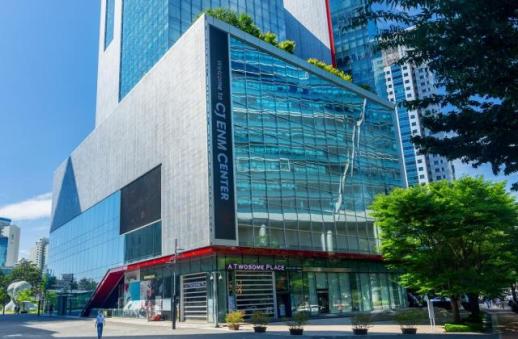 CJ ENM Q2 operating profit rises as TVING, commerce offset SEOUL, August 07 (AJP) - CJ ENM's second-quarter operating profit rose even as revenue declined, as a turnaround in its media platform business and stronger commerce earnings offset a sharp slump in film and drama Operating profit rose 16.9 percent from a year earlier to 33.4 billion won, topping the FnGuide consensus of 31.1 billion won by roughly 7.6 percent and rebounding sharply from just 1.5 billion won in the first quarter. The operating margin widened to 2.8 percent from 2.2 percent a year earlier and 0.1 percent in the previous quarter. Revenue fell 8.3 percent to 1.203 trillion won, missing the 1.264 trillion won consensus by about 4.8 percent. The main drag came from film and drama, while media platform, music and commerce all posted revenue growth. Operating expenses fell 8.9 percent, slightly faster than revenue, with cost of sales down 14.6 percent. Film and drama revenue plunged 53.7 percent to 190.2 billion won and fell 58.4 percent from the previous quarter. The division posted an operating loss of 10.5 billion won. CJ ENM attributed the decline mainly to a gap in drama deliveries from Fifth Season, its U.S. production arm, which offset stronger overseas sales of Korean studio content. Media Platform revenue rose 19 percent to 380 billion won, while the segment swung from a loss a year earlier to an operating profit of 11 billion won. TVING continued to add subscribers on KBO baseball and original programming, while advertising revenue jumped 52.2 percent. Linear TV remained weak, however, with advertising revenue down 20.9 percent. Music revenue increased 16.7 percent to 230.2 billion won on stronger album sales and global live events, but operating profit fell 36.4 percent to 10.9 billion won as spending on Mnet Plus and new artists increased. Commerce remained the company's largest profit contributor. Revenue rose 4.4 percent to 402.8 billion won and operating profit climbed 21.2 percent to 26 billion won. Mobile live commerce GMV surged 161.3 percent as short-form content helped attract new customers. Premium travel and kids products supported sales growth, while higher-margin health supplement and beauty categories helped profitability. Net income fell 80.6 percent from a year earlier to 22.2 billion won, though the company returned to profit after posting a 6.1 billion won net loss in the first quarter. CJ ENM said it plans to sustain TVING's growth in the second half, expand scripted-content sales overseas and step up new albums, tours and artist debuts in its music business. Shares of CJ ENM were up 3.37 percent at 35,250 won as of 3 p.m. in Seoul trading. AJP Takeaway: CJ ENM's second-quarter operating profit rose 16.9 percent year on year to 33.4 billion won, beating the FnGuide consensus of 31.1 billion won, even as revenue fell 8.3 percent to 1.203 trillion won. Media Platform swung to an 11 billion won operating profit as TVING subscriber growth and a 52.2 percent jump in advertising revenue helped offset continued weakness in linear TV advertising. Commerce remained CJ ENM's biggest profit contributor, with operating profit rising 21.2 percent to 26 billion won as mobile live-commerce GMV surged 161.3 percent and higher-margin health and beauty products supported profitability. Film and drama remained the main drag, with revenue plunging 53.7 percent to 190.2 billion won and the segment posting a 10.5 billion won operating loss, largely due to a gap in drama deliveries from U.S. production arm Fifth Season. CJ ENM plans to sustain TVING growth, expand overseas scripted-content sales and accelerate music releases and tours in the second half, while shares were up 3.37 percent at 35,250 won as of 3 p.m. Friday. 2026-08-07 15:43:09
 -
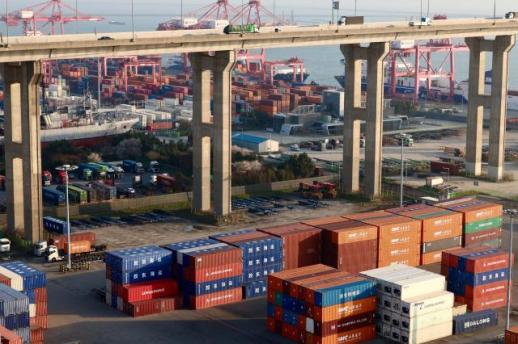 AI chip boom puts Korea ahead of Japan, lifts China trade SEOUL, August 07 (AJP) -South Korea's dominance in artificial intelligence memory chips is reshaping Asia's trade landscape, helping the country overtake Japan in merchandise exports while driving a surge in shipments to China despite Beijing's aggressive push for semiconductor self-sufficiency. China's imports from South Korea nearly doubled in July, extending an AI-fueled trade boom that has transformed Korea into one of the biggest beneficiaries of the global race to build data centers and AI infrastructure. China imported $31.05 billion worth of Korean goods in July, up 97.8 percent from a year earlier, according to data released Friday by the General Administration of Customs. Chinese exports to South Korea rose a slower 46.6 percent to $18.12 billion, while imports from Korea increased 67 percent over the first seven months of the year. The latest figures came as China's overall imports climbed 27.5 percent in July and exports rose 23.9 percent, both exceeding market expectations. Although July's country-by-product breakdown has yet to be released, recent trade data point overwhelmingly to semiconductors as the principal driver. South Korea's exports to China also jumped 96 percent in July, while total semiconductor shipments surged 179 percent as soaring memory prices and continued investment in artificial intelligence infrastructure fueled demand. Overall exports rose 62.8 percent to $98.89 billion. The surge has become large enough to alter Asia's export rankings. South Korea exported $496.3 billion worth of goods during the first half of the year, surpassing Japan's $384.4 billion for the first time on record, according to trade data compiled by Nikkei from official statistics in South Korea, Japan, Taiwan, JETRO and the United Nations. Taiwan also overtook Japan, underscoring how AI has shifted export growth toward semiconductor-producing economies. Unlike Japan, whose exports remain anchored by automobiles, machinery and industrial equipment, South Korea has emerged as one of the world's biggest beneficiaries of the AI investment cycle through Samsung Electronics and SK hynix, the two dominant suppliers of high-bandwidth memory used in AI servers. China has become one of the largest destinations for that demand. Korean semiconductor exports to China and Hong Kong climbed steadily from $9.63 billion in January to a record $20.03 billion in June. Annual growth accelerated from 122.5 percent in January to 227.4 percent in June, with semiconductors accounting for the majority of Korea's ICT exports to the two markets. The Ministry of Trade, Industry and Energy has attributed the gains to expanding demand for AI servers and sharply higher DRAM and NAND flash prices. Korea's semiconductor exports reached a record $44.82 billion in June, nearly triple the level a year earlier. The trend is particularly striking because China has simultaneously accelerated efforts to reduce reliance on imported memory. ChangXin Memory Technologies (CXMT) has expanded into the world's fourth-largest DRAM producer, while Yangtze Memory Technologies continues to increase NAND production. Yet the pace of AI-driven demand appears to have outstripped domestic supply, leaving Chinese manufacturers heavily dependent on imported Korean memory chips. CXMT completed a record 57.9 billion yuan ($8.6 billion) initial public offering on Shanghai's STAR Market in July, the largest semiconductor listing on mainland China and Asia's biggest IPO this year and dealing a brief upset to Korean chipmakers. The company has said it will use the proceeds primarily to expand DRAM production capacity and upgrade manufacturing technology as Beijing accelerates its drive for semiconductor self-sufficiency. CXMT currently operates three 12-inch DRAM fabrication plants in Hefei and Beijing, with industry estimates putting combined capacity at roughly 300,000 wafers per month. The company is planning an additional 12-inch fabrication plant in Beijing while pursuing further expansion in Shanghai and Hefei, projects that could more than double its production capacity over the coming years. Much of that memory is incorporated into servers, smartphones, personal computers and other electronics assembled in China before being sold domestically or exported worldwide. China's own export data tell a similar story. Semiconductor exports nearly doubled in value in July, while shipments of high-tech products rose 40.7 percent, underscoring how the AI investment cycle is boosting trade across the region even as parts of China's domestic economy remain under pressure. While detailed July customs data have yet to confirm how much of Korea's export surge came specifically from semiconductors, the first-half trend strongly suggests AI memory remains the engine behind the rapidly expanding Korea-China trade relationship. A clearer breakdown will depend on the release of Korea's July ICT trade figures or Chinese customs data showing July imports of Korean integrated circuits, including HS 8542. __________________________________________________________________________________ AJP Takeaways China imported $31.05 billion of South Korean goods in July, up 97.8 percent from a year earlier, while Korean exports to China rose 96 percent. Korean semiconductor exports to China and Hong Kong climbed from $9.63 billion in January to $20.03 billion in June, suggesting chips likely remained an important driver of bilateral trade in July even though detailed country-by-product data are not yet available. China's CXMT and YMTC are rapidly expanding domestic memory production, but Korean chip shipments have continued to rise as AI-server demand and higher memory prices outpace the growth in Chinese supply. 2026-08-07 15:42:12
 -
 Uzbek President Mirziyoyev holds open business dialogue in August SEOUL, August 07 (AJP) - Uzbekistan will hold its annual open dialogue between President Shavkat Mirziyoyev and entrepreneurs in late August, the Uzbek Embassy in Seoul said on Friday, with no date yet fixed three weeks out. Nearly 6,000 inquiries have reached the organizing commission's call centers and official bots since intake opened, according to material the embassy distributed. More than 4,200 were resolved, and roughly 1,800 remain under review. Expert groups are working through 300 problems classified as systemic. Business ombudsman Abdumannop Buriev, appointed in December and facing his first dialogue in the post, said the office is trying to catch problems earlier. "We focus primary attention on building a preventive system that averts issues before they arise and protects entrepreneurs' rights early on," Buriev said in the embassy statement. The largest clusters of inquiries concern legal protection for entrepreneurs, with more than 940, and banking, with more than 910. Allocation of production space drew more than 750, and simplification of business regulation nearly 680. Kashkadarya region, Tashkent city, Samarkand region and Fergana region generated the highest volumes. Away from the call center, government bodies have held more than 750 meetings with over 8,800 entrepreneurs, producing more than 3,500 proposals and complaints. The business ombudsman's office and the Chamber of Commerce and Industry ran a further 130 meetings drawing more than 5,700 entrepreneurs, who raised close to 1,500 issues. Mirziyoyev held the first of these dialogues on August 20, 2021. Four have followed, all in August, the most recent last year in New Tashkent and the one before that in Nukus. Measures announced at the meetings have reached the statute book. The 2022 dialogue removed the Chamber of Commerce and Industry from government subordination and abolished criminal liability for violating trade rules. At the 2024 meeting in Nukus, the ceiling on microloans was tripled to 300 million soum, about $25,000, and all banks and microfinance organizations were cleared to lend to small and medium businesses. The president's office says close to a thousand proposals raised at the meetings have been written into legislation. The machinery around them was formalized by a presidential resolution in May 2024, which created a republican commission to organize the dialogue and regional working groups to handle problems locally. Under that resolution, appeals are taken around the clock from June 15 each year, sorted daily to expert groups and regional teams, and systemic problems are reviewed weekly. Ahead of last year's dialogue, the call center took more than 13,000 appeals and proposals, the president's office said at the time. That was a final count. Under the 2024 resolution, intake runs until the dialogue itself, and this year's stands at roughly 6,000. 2026-08-07 15:41:24
 -
Rising Oil Prices Boost Convenience Store Profits in Q2 South Korea's leading convenience store chains, CU and GS25, reported second-quarter results that exceeded market expectations, driven by government support for rising oil prices, an increase in foreign visitors, and early summer product sales. Analysts suggest that a focus on 'qualitative growth'—enhancing sales and profitability of existing stores rather than aggressive expansion—has contributed to these results. GS Retail announced on August 7 that its consolidated operating profit for the second quarter reached 109.4 billion won, a 27.5% increase from the same period last year. Revenue rose 6.7% to 3.175 trillion won, while net profit surged 354.5% to 64.6 billion won, surpassing the market consensus of 101.3 billion won. The day before, CU's operator, BGF Retail, reported revenue of 2.4268 trillion won and an operating profit of 84.9 billion won, marking increases of 6% and 22.3%, respectively, from the previous year. The operating profit also exceeded the market forecast of 83.4 billion won, despite one-time costs related to a logistics strike. The improvement in both companies' performance was primarily driven by their core convenience store operations. GS25's second-quarter sales reached 2.3844 trillion won, a 7.1% increase, with operating profit rising 21% to 71.4 billion won. Notably, the average daily sales growth rate for existing stores was 7.5%. GS25 is focusing on enhancing existing stores and relocating to prime locations rather than expanding the number of outlets. The number of fresh-focused stores has increased to 1,000. As a result, sales of grocery items such as vegetables, fruits, and meat surged by 49.6% compared to the previous year, with vegetables up 64%, meat up 61%, and fruits up 28%. Foreign consumer spending has also emerged as a new growth driver. Based on foreign payment methods, GS25's foreign sales increased by 67.2% in the second quarter compared to the previous year. Collaborations on products utilizing intellectual property, such as 'Monchichi' and 'Jjiyang,' along with K-food and differentiated food offerings, have attracted additional demand in tourist-heavy areas. CU also benefited from an improved consumer environment. BGF Retail attributed the increase in sales of profitable summer products, such as beverages and ice cream, to fewer rainy days and higher average temperatures compared to the previous year. The government support for rising oil prices and the influx of foreign tourists were also cited as factors boosting growth at existing stores. Changes in product composition have led to improved profitability. The share of food and processed food in CU's total sales increased by 0.4 percentage points and 0.9 percentage points, respectively, compared to the previous year, while the share of lower-margin tobacco products decreased. The expansion of differentiated products, such as 'snack desserts' and ready-to-eat 'PBICK The Kitchen,' has also contributed to profit improvement. The strong performance of the two convenience store giants signifies a shift in industry competition from 'number of stores' to 'sales per store.' According to the Ministry of Trade, Industry and Energy, the total number of stores for the four major convenience store chains (GS25, CU, 7-Eleven, and Emart24) was 53,266 at the end of last year, a decrease of 1,586 from the previous year. This marks the first annual decline in store numbers since convenience stores were introduced in South Korea in 1988. GS25's store count fell from 18,112 in 2024 to 18,005 last year, a decrease of 107, marking its first decline. CU's store count increased to 18,711 at the end of last year, the only chain among the four to see growth, but the net increase in stores after accounting for closures dropped sharply from 975 in 2023 to 696 in 2024, and further to 253 last year. As key markets become saturated, the competitive strategy is shifting from aggressively opening new stores to improving the product offerings and locations of existing ones. CU is expanding specialized grocery stores and 'smart grocery' concepts, while enhancing tourist-oriented products such as K-ramen, snacks, and ready-to-eat meals in popular areas like Myeongdong, Hongdae, and Seongsu. GS Retail plans to solidify this strategy as a long-term growth model. In its recently announced corporate value enhancement plan, it set a target of 380 billion won in operating profit by 2028 and aims to expand GS25's fresh-focused stores and differentiated private brands. The company intends to streamline inefficient stores and assets to improve productivity and capital efficiency per store. An industry insider noted, “While short-term factors like government support for rising oil prices and the heat wave have impacted performance, it is important to recognize the significant increase in sales at existing stores. As the convenience store market enters a saturation phase, competition will increasingly focus on enhancing profitability per store rather than expansion.” 2026-08-07 15:40:10
-
U.S. Tariffs on Polysilicon Expected to Impact Solar Industry; Ministry to Minimize Effects The U.S. administration under President Donald Trump has introduced a minimum import price system and tariffs on polysilicon and its derivatives, which is expected to have an unavoidable impact on the domestic industry. However, since finished memory and system semiconductors are not included in this measure, the direct shock to overall semiconductor exports from South Korea is expected to be limited. Nonetheless, the inclusion of solar cells and modules in the regulations raises concerns about increased cost burdens within that supply chain.According to the Ministry of Trade, Industry and Energy, the White House announced on August 6 (local time) a proclamation introducing tariffs and a minimum import price (MIP) on polysilicon and its derivatives based on Section 232 of the Trade Expansion Act. This follows the investigation into polysilicon that began in July of last year and will take effect on December 4.The minimum import prices are set at $21 per kilogram for polysilicon, $100 per kilogram for ingots (cylindrical polysilicon), and wafers. For solar cells, the price is set at $0.22 per watt, and for modules, it is $0.38 per watt. If the import price falls below these minimums, U.S. Customs will impose tariffs equivalent to the difference.Additionally, a separate 15% tariff will apply to polysilicon derivative products. Products from countries that have trade agreements with the U.S., including South Korea, Japan, the European Union, Taiwan, and Switzerland, will face a total tariff of 15%, combining the most-favored-nation (MFN) tariff and the Section 232 tariff.The impact on the semiconductor industry, which constitutes the majority of South Korea's exports, is expected to be limited. This is because finished semiconductors, such as memory chips exported by Samsung Electronics and SK Hynix, are not included in the Section 232 measures. However, some silicon wafers used in semiconductor manufacturing may be directly affected.The solar industry is anticipated to experience a more significant impact, as the U.S. regulations extend beyond polysilicon to include ingots, wafers, solar cells, and modules. The U.S. government has noted that semiconductor-grade polysilicon accounts for only 2.4% of global polysilicon production, and the country relies heavily on imports for most solar-grade ingots, wafers, and cells.However, companies expanding local production in the U.S. may find ways to reduce their tariff burdens. The U.S. Department of Commerce has indicated that it will exclude some tariffs under Section 232 for companies that receive approval for investment plans to establish or expand polysilicon and ingot, wafer, and cell production facilities in the U.S. This could provide an opportunity for domestic solar companies to defend their market position by increasing local production.According to the Ministry of Trade, Industry and Energy, South Korea's exports of polysilicon to the U.S. subject to this measure were approximately $2.2 million last year. In contrast, exports of polysilicon derivative products are estimated at around $430 million.The government plans to assess the impact on the industry and engage in discussions with U.S. officials. The Ministry submitted a position paper during the Section 232 investigation into polysilicon last August.A ministry official stated, "We will hold a prompt meeting with relevant departments and industry representatives to closely examine the impact on exports to the U.S. and companies operating there, and we will work closely with U.S. officials to minimize the effects on our companies."* This article has been translated by AI. 2026-08-07 15:40:00