


Latest by
-
 Korea Zinc Shares Surge 11% Following Record Half-Year Earnings Korea Zinc is experiencing a strong early trading session following the announcement of its record half-year earnings and a large-scale shareholder return policy.As of 10:29 a.m. on the Korea Exchange, Korea Zinc shares rose by 128,000 won (11.69%) to 1,223,000 won compared to the previous trading day.This increase in stock price is attributed to the simultaneous announcement of strong earnings and an expanded dividend policy. The company reported a consolidated revenue of 12.445 trillion won and an operating profit of 1.333 trillion won for the first half of the year, marking increases of 62.5% in revenue and 151.1% in operating profit compared to the same period last year. The company described this as its largest half-year performance in history.Analysts attribute the performance boost to improved profitability in the non-ferrous metals sector, increased sales of precious metals, and favorable exchange rate effects. The market views Korea Zinc as maintaining a stable growth trajectory based on its core business competitiveness.The strengthened shareholder return policy has also stimulated investor sentiment. The board of directors decided to pay a dividend of 5,000 won per share for the second quarter, with the record date set for August 20 and the payment date scheduled for September 4. The total dividend for the second quarter amounts to 102 billion won.Including the dividend paid for the first quarter, the cumulative dividend for the first half of the year reaches 10,000 won per share, totaling 204 billion won.* This article has been translated by AI. 2026-08-06 10:32:00
 -
South Korea Confirms Plan to End Coal-Ammonia Co-Firing in Power Generation Kim Sung-hwan, the Minister of Climate, Energy and Environment, reiterated South Korea's commitment to ending coal-ammonia co-firing in an interview with the Nikkei. In the interview conducted at the end of last month, Kim stated that co-firing could serve as a means to prolong coal power generation and emphasized that it would no longer be utilized.Kim explained that while ammonia is recognized as a key decarbonization material due to its zero greenhouse gas emissions during combustion, continuing co-firing with coal could undermine South Korea's decarbonization strategy. He added, "We cannot return to coal power generation." Kim has consistently advocated for the cessation of co-firing and, in a previous interview with Aju Economy, stated, "Environment, industry, and energy are no longer opposing concepts," emphasizing the need for South Korea to lead the transition from a fossil fuel-based society to a decarbonized green civilization.Under the Yoon Suk-yeol administration, South Korea had been pursuing a policy to mix 20% ammonia in more than half of its coal power plants by 2030. However, the Lee Jae-myung administration is accelerating decarbonization efforts and plans to phase out coal power generation gradually. The goal is to eliminate all coal power plants by 2040, with plans to halt operations at 20 of the approximately 60 coal plants by 2030 and the remaining plants by 2040.Impact on Japan's Ammonia SupplyThe Nikkei noted that if South Korea stops co-firing, Japan would be left as the only major country using coal-ammonia co-firing. This could disrupt the global ammonia supply chain, particularly affecting major ammonia producers like the United States, and could impact Japan's ammonia procurement strategy. Japan sources ammonia from the U.S., Australia, and the Middle East, and had agreed to cooperate with South Korea in ammonia procurement as of March 2025 during the Yoon administration.Additionally, the Japanese government has actively supported ammonia usage, with JERA, Japan's largest power company, and IHI, a major chemical company, working on commercializing ammonia combustion technology in Aichi Prefecture.Kim stated that natural gas-fired power generation using liquefied natural gas (LNG) will continue to play a role until 2050. Regarding nuclear power, he emphasized that safety is the top priority and that instead of automatically shutting down aging reactors, measures for repair and lifespan extension will be pursued. However, he noted that decisions on new nuclear construction and the specific share of nuclear power have not yet been made.Support for the Semiconductor IndustryMeanwhile, Kim discussed support measures for the semiconductor industry. With the global surge in demand for memory semiconductors driven by artificial intelligence, Samsung Electronics and SK Hynix are set to build four new factories in the southern region of the country. Kim remarked, "It is a fallacy that semiconductor factories cannot operate on renewable energy," indicating plans to increase the share of renewable energy sources like wind and solar.He also emphasized that there are no significant issues with power or water supply in the semiconductor cluster currently under construction. As part of regional revitalization efforts, he mentioned plans to introduce a tiered electricity pricing system that would lower rates in areas farther from the capital region. Kim noted that the previous administration's increase in industrial electricity rates has weakened competitiveness against China, and he is considering related electricity rate reductions. 2026-08-06 10:28:00
-
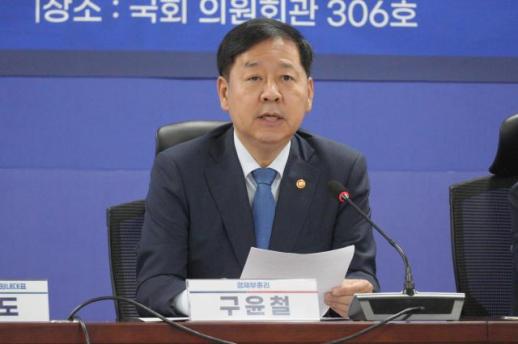 Seoul to rewrite public wealth rulebook to include cypto and AI assets SEOUL, August 06 (AJP) - South Korea will rewrite the rules governing nearly 1,403 trillion won ($985 billion) of public assets by bringing cryptocurrencies, intellectual property and financial holdings under a unified national wealth framework, marking the country's biggest overhaul of state asset management since the State Property Act was enacted more than seven decades ago. The Ministry of Economy and Finance unveiled the blueprint Thursday at an emergency economic ministers' meeting chaired by Finance Minister Koo Yun-cheol, setting out legal, governance and digital infrastructure for what it calls the K-Asset Innovation Project. At the center of the overhaul is a proposed Framework Act on National Assets, which would replace the current State Property Act, enacted in 1950, with legislation built around the broader concept of managing national wealth rather than simply owning and disposing of government property. State-owned assets have expanded more than sevenfold to 1,402.7 trillion won from 188.3 trillion won in 2001, but management remains fragmented across ministries, special accounts and public funds and is still largely geared toward land and buildings. The government argues that the existing property-based framework no longer reflects the changing composition of public wealth. While securities and intellectual property are already covered under existing law, officials say they lack management systems tailored to valuation, shareholder rights, licensing and disposal. Cryptocurrencies, meanwhile, have no explicit statutory framework. The government stressed that the 1,402.7 trillion won figure does not represent a sovereign investment portfolio or assets readily available for sale, as much of it consists of administrative property and infrastructure needed to provide public services. Instead, the new framework would distinguish assets requiring direct operational management from those held primarily for accounting or statistical purposes. One of the earliest legal changes would cover about 78 billion won worth of cryptocurrencies held by the central government as of April, most of them acquired through confiscation, forfeiture or donations. The government is considering auctioning digital assets soon after acquisition as the default disposal method while allowing sales to be split into smaller tranches when immediate liquidation could disrupt relatively thin markets or unnecessarily depress prices. The proposed legislation would also authorize the government to use private cryptocurrency exchanges for custody and disposal and establish legal grounds for recovering assets held in overseas exchanges and digital wallets. Government-owned intellectual property, valued at 2.3 trillion won at the end of last year, would shift toward a "use-first" model that emphasizes commercialization over disposal. Licensing periods could be extended beyond the current five-year limit, while contracts, royalties and revenue-sharing arrangements would be managed through a proposed national intellectual property bank. The overhaul also seeks to establish common standards for acquiring, valuing and disposing of the government's 328.7 trillion won portfolio of securities and equity holdings, including unified rules governing voting rights and shareholder engagement, which are currently exercised differently across ministries, public funds and special accounts. Management of the government's 711.1 trillion won in land and buildings would also be integrated under common development guidelines, supported by an annual matching process designed to reallocate underused properties among ministries, local governments and public institutions. A new National Asset Management Committee, comprising government officials and private-sector experts, would oversee broad policy, while each ministry would appoint a senior national asset officer responsible for compliance and stewardship of its holdings. The Korea Asset Management Corp., or Kamco, would receive an expanded mandate to manage and dispose of government assets on behalf of ministries, although officials have yet to determine how much authority should ultimately be centralized. By the end of this year, the government plans to integrate asset information from central and local governments and public institutions into its dBrain digital budget and accounting system before beginning work in 2027 on an artificial intelligence-powered database tentatively named K-Asset Cloud. Officials say the platform will identify idle assets and match them with public-sector demand, replacing today's fragmented coordination with a standardized annual process covering asset classification, demand surveys, site selection and development planning. A public-private task force led by the finance ministry and supported by the Korea Development Institute will prepare a draft of the framework act by year-end. Key details—including valuation methodologies, disposal rules, exemptions and the division of authority among government agencies—remain under negotiation. AJP Takeaways South Korea is redefining state property as national wealth through its biggest public asset overhaul in more than 70 years. The reform brings crypto, intellectual property and financial assets into the same management framework as land and buildings. The government aims to extract greater value from 1,402.7 trillion won in public assets through AI-driven management and unified governance. 2026-08-06 10:24:25
 -
Unichem Shares Surge Following Acquisition of U.S. Flexible Electronics Firm Unichem is experiencing a surge in its stock price following the announcement of its acquisition of U.S. flexible electronics company Lumia Technologies.According to the Korea Exchange, as of 10:13 a.m. on August 6, Unichem's shares rose by 1,050 won (30.00%) to 4,550 won compared to the previous trading day.Unichem disclosed that it has decided to acquire 100% of Lumia, a deep-tech company based in Brooklyn, New York, for 8.574 billion won, which represents 6.48% of its equity capital. The acquisition will be financed through a combination of cash, treasury shares, and performance-based convertible bonds.Lumia possesses core technology for ultra-thin electronic circuits that can be embedded within leather or fabric. Unichem plans to combine its processing technology for natural leather and industrial materials with Lumia's flexible electronics technology to expand its business into smart automotive interiors, tactile sensors for humanoid robots, and electronic skin.Lumia is also a member of the HAND ERC consortium, which includes industry players like Meta and Amazon Robotics, focusing on robotic tactile sensing. Following the acquisition, Unichem intends to develop large-area electronic skin that envelops robotic hands and grippers.Unichem stated, "In the future, we will expand the application of Lumia's flexible heating and sensing technology to medical heating devices, rehabilitation equipment, wearable devices, and AI data center thermal management, transitioning from a traditional automotive interior manufacturer to a smart materials platform company for future mobility and humanoid robots."* This article has been translated by AI. 2026-08-06 10:24:20
-
Government to Provide Free AI Chatbots, But GPU Resources Fall Short The South Korean government plans to support the 'Cybersecurity Specialized AI Foundation Model Project' and the 'Everyone's AI Project' with approximately 256 graphics processing units (GPUs) each. This is significantly lower than the minimum of 1,000 GPUs provided to elite teams in last year's independent AI foundation model project, raising concerns about the feasibility of building a free AI chatbot for the entire population.According to the IT industry on August 6, the Ministry of Science and ICT and the National IT Industry Promotion Agency (NIPA) published revised announcements for the 'Universal Utilization Support for National AI Services (Everyone's AI)' project and the 'Cybersecurity Specialized AI Foundation Model Development' project on July 29.The Everyone's AI project aims to provide unlimited and free AI chatbots to all citizens, utilizing 512 B200 GPUs owned by the government. If two companies are selected, they will each receive 256 GPUs; if three companies are chosen, the top company will get 256 GPUs, while the second and third will receive 128 GPUs each.Based on the market rental price for B200 GPUs (approximately 6.6 million won per month), the annual value of 256 GPUs is estimated at about 20.2 billion won, meaning the total government investment in the Everyone's AI project amounts to around 40.5 billion won annually.The Cybersecurity Specialized AI Foundation Model Development project will provide one selected team with 256 NVIDIA B200 GPUs (32 nodes) for ten months, with a total budget of up to 30 billion won, covering GPU procurement, labor costs, data construction, and service validation expenses.With 256 B200 GPUs (32B class) deployed over ten months, the theoretical token processing capacity is estimated at around 62 trillion tokens. Government officials explain that this level of support allows for initial training and service validation.However, challenges arise with the Everyone's AI project. The theoretical computational performance of 256 B200 GPUs is approximately 1,152 petaflops (PFLOPS) based on FP8 standards, which is about 2.3 times lower than that of 256 H100 GPUs.Industry analysis indicates that when converted to the actual usage benchmark of domestic AI startup Allganize, the maximum simultaneous processing capacity for 256 B200 GPUs is only about 14,000 processes. While optimization may increase this limit, providing a free AI chatbot service to the entire population is deemed practically difficult.Particularly, if specific users excessively utilize the government-provided AI chatbot, bottlenecks are likely to occur.Cho Sung-bae, a professor in the Department of Computer Science at Yonsei University, stated, "While it is possible to make the model lightweight to accommodate as many users as possible for Everyone's AI, there are realistic limitations. It is certainly not at a level suitable for development or research purposes. Nevertheless, the attempt to pursue this with limited resources is commendable."Concerns have also been raised about the insufficient national investment in AI compared to international examples. The Indian government has allocated 1.7 trillion won to its IndiaAI mission, securing over 38,000 GPUs and operating them at lower rental prices for startups and research institutions.Saudi Arabia's Public Investment Fund (PIF) has announced plans to deploy 600,000 GPUs through its state-owned AI company, Humein, over the coming years. These initiatives aim to go beyond providing free chatbots to the public, focusing on computing rentals for startups and research institutions, as well as data center exports.The government plans to allocate a significant portion of this year's national AI budget of 9.9 trillion won to expanding data centers and securing GPUs. However, as new projects increase, the number of GPUs allocated to individual projects is relatively decreasing. The Everyone's AI project aims to select operators this month and launch a beta service by the end of September, with a full official service expected later this year.* This article has been translated by AI. 2026-08-06 10:24:00
-
New Ministry of Oceans and Fisheries Headquarters to be Built in Busan by 2030 The Ministry of Oceans and Fisheries will establish its new headquarters in the first phase of the redevelopment area at Busan's North Port. The ministry plans to finalize the facility's size by the end of this year and complete construction by 2030.On August 6, the ministry announced that it has selected the North Port redevelopment site proposed by the Dong-gu District Office in Busan as the final location for the new headquarters.The planned site is located at 1270 Choryang-dong, Dong-gu, Busan, covering an area of 72,456.7 square meters, currently used as a parking lot for the Busan International Passenger Terminal.Although the site is owned by the Busan Port Authority, it can be transferred to national ownership. Being situated in the North Port redevelopment area, it is expected to facilitate collaboration with marine and fisheries-related institutions.From July 29 to 31, the ministry received proposals for the new headquarters site from local governments in the Busan area. Four districts—Gangseo-gu, Nam-gu, Dong-gu, and Jung-gu—participated in the bidding process.A site selection committee, composed of 10 members from urban, transportation, marine, fisheries organizations, academia, civic groups, and employee representatives, evaluated the proposals on August 5.The North Port site received high marks for its ease of securing land, potential for collaboration with other institutions, and transportation accessibility.With the site selection finalized, the ministry will determine the facility's size and begin subsequent procedures for design and construction by the end of this year.Minister of Oceans and Fisheries Hwang Jong-woo stated, “With the core site for the southern marine capital that will lead the Arctic shipping route era established, we will do our utmost to ensure that construction proceeds without any setbacks.”* This article has been translated by AI. 2026-08-06 10:24:00
-
Woman Arrested for Abandoning Dog in Extreme Heat A woman in her 30s has been charged with abandoning her dog in a park playground amid extreme heat reaching approximately 36 degrees Celsius.According to the Cheongju Sangdang Police Station, the woman, identified as A, is under investigation for violating the Animal Protection Act after allegedly leaving her dog tied to a post in a public park on August 1 at around 1:30 p.m.A left a note attached to the playground equipment stating, 'Abandoning. Looking for a new owner.'On that day, a heat warning was in effect as temperatures soared to 36 degrees Celsius in Cheongju.A passerby who spotted the dog posted a rescue request on social media, leading to the dog's transfer to a pet protection center.When police arrived, A reportedly appeared at the scene and identified herself as the dog's owner. Authorities are currently investigating the circumstances surrounding the incident.It is important to note that dogs have a body temperature that is about 2 degrees higher than humans and lack well-developed sweat glands, making it difficult for them to cool down through perspiration. They rely on panting to regulate their body temperature, which can lead to hyperventilation and increase the risk of heatstroke. Therefore, it is advisable to avoid outdoor activities such as walking during extreme heat.* This article has been translated by AI. 2026-08-06 10:20:00
-
 KAIST develops technique to recognize objects hidden behind fog SEOUL, August 06 (AJP) - A KAIST research team has developed an imaging method that finds a transparent object buried inside fog and works out its shape, thickness and position from a single camera exposure, the university said Thursday. Glass, clear plastic film and living cells are almost invisible to an ordinary camera because they barely change the brightness of the light passing through them. They do change something else. Light slows very slightly as it crosses them, and that shift, called phase, carries the object's outline and its optical thickness. Reading it is how scientists inspect transparent parts in semiconductors and displays, or watch living cells without staining them. The reading breaks down when something scatters the light on the way. Fog, frosted glass and cloudy tissue all send light off in random directions, and when those layers are moving, the scrambling changes moment to moment. Until now the workarounds were to take many exposures of the same target, to measure the scattering environment in advance, or to train a system on large volumes of example images. The team led by Jang Moo-seok, a professor in KAIST's Department of Bio and Brain Engineering, removed all three requirements. Their technique recovers an object sealed between two moving scattering layers, with fog in front of it and fog behind it, from one shot. Two ideas make that possible. The first is where the light goes in. Instead of lighting up the whole front layer, the researchers focus the beam onto a very small spot, the way a magnifying glass concentrates sunlight. Fewer paths through the layer means the light stays organized enough to record the object's phase in the pattern that reaches the camera. The second is where the camera sits. Placed close to the far side of the rear layer, it does not receive a purely random mess. It receives the object's pattern with a consistent smear laid over it, which the team modeled as scattering blur. A random problem became a solvable one. From there the method uses a physical model of how light travels through the object and the fog, paired with artificial intelligence. It does not work the way image AI usually does, by studying thousands of correct answers first. It runs the physics backward from the single measurement, testing what object, what blur and what distance would together produce exactly the pattern the camera saw. All three answers come out at once. The technique held up when the object moved and when the scattering changed, with no calibration and no training data, and in testing it reproduced edges and fine structure more sharply than existing single-shot phase methods. "This is the first demonstration of restoring the shape and position of a transparent object from a single measurement, even in environments where light is severely scattered, such as behind fog or a diffusive film," Jang said. He said the team plans to extend the method to more complex environments, with semiconductor inspection and biomedical imaging as targets. KAIST listed three directions for the work. In manufacturing, it could inspect transparent components sitting under scattering coatings or protective films. In medicine, it could image the retina through a cataract. Applied to reflected rather than transmitted light, it could image objects out of direct line of sight, including for military use. Kim Yoo-sun, a master's student, and Song Gook-ho, a doctoral candidate, were co-first authors, with Jang as corresponding author. The paper appeared in the optics journal Optica on July 20, and the National Research Foundation of Korea funded the work under the Ministry of Science and ICT. 2026-08-06 10:17:14
 -
U.S. Discusses Increased Tactical Nuclear Role in Defense Against China, Russia The U.S. Department of Defense is reportedly discussing a new nuclear strategy that emphasizes the use of short-range tactical nuclear weapons to defend allies in regional conflicts against China and Russia.According to NBC News on August 5, a draft of the new strategy, overseen by Elbridge Colby, the Deputy Assistant Secretary of Defense, focuses more on short-range tactical nuclear weapons rather than relying on long-range strategic nuclear capabilities.Sources familiar with the matter indicated that this strategy is designed to respond to scenarios where U.S. allies face attacks from China or Russia.A senior official at the Department of Defense told NBC, "We believe there is a need for reliable nuclear options." The official explained that if President Donald Trump secures practical and credible options through the new strategy, it could diversify response measures and enhance deterrence.If adopted, the new strategy is expected to significantly impact the security landscape of U.S. allies South Korea and Japan, which are adjacent to China and Russia.Colby was reportedly scheduled to discuss the new strategy at a closed event during a visit to the U.S. Strategic Command in Nebraska. The command oversees and manages U.S. nuclear weapons and deterrence strategies.Tactical nuclear weapons are designed to achieve military objectives on the battlefield by targeting limited objectives such as enemy troops or military bases. In contrast, strategic nuclear weapons focus on incapacitating an adversary's war-fighting capabilities or national infrastructure through large-scale destruction.Colby has long advocated for the need for low-yield short-range tactical nuclear weapons that target smaller objectives rather than major cities like capitals.A senior official at the Department of Defense stated, "If we want extended deterrence to be credible, we need to provide nuclear capabilities to the political leadership of those countries that are reasonable enough to consider actual use."The official added, "Otherwise, our leadership's options will be reduced to extreme choices that adversaries do not believe in, which would undermine deterrence."This discussion is likely to reignite concerns that increasing the emphasis on tactical nuclear weapons could lower the threshold for nuclear use and weaken preparedness.A senior member of Congress criticized the discussions as "a study that is very far from President Trump's stated position of making nuclear deterrence great again." They added, "It is clear that he (Colby) wants more options and capabilities, not fewer, calling it a weak and timid study."* This article has been translated by AI. 2026-08-06 10:16:00
-
Hana Bank's Children's Economic Musical Reaches 200,000 Audience Milestone Hana Bank's children's economic musical has achieved a milestone of 200,000 cumulative viewers after 19 years of performances.On August 5, Hana Bank held a special performance of the children's economic musical 'Jack's Magic Wallet' at the cultural space H-Pulse in Mapo-gu, Seoul, to celebrate the summer vacation.'Jack's Magic Wallet' is an economic musical designed by Hana Bank to provide financial education for future generations. Since its debut in 2007, it has been performed over 670 times, attracting approximately 200,000 viewers.The performance is based on the classic fairy tale 'Jack and the Beanstalk,' presenting economic and financial concepts in a way that is accessible to children. It emphasizes the importance of saving, proper spending habits, and the value of sharing. The show also includes lessons on currency exchange to reflect the increasingly globalized financial environment.Hana Bank invited over 200 children, including those from multicultural families, to the performance during their summer break. To accommodate viewers who may not be familiar with Korean, the show utilized AI smart glasses that provided subtitles in English, Chinese, and Vietnamese.A representative from Hana Bank stated, "We will continue to offer various financial education programs to help children, who will lead the future, establish sound economic concepts and healthy financial habits."* This article has been translated by AI. 2026-08-06 10:16:00