


Latest by
-
 KOSPI Surges Over 4% Amid U.S. Semiconductor Rally, KOSDAQ Up 2% The KOSPI index has surged more than 4%, attempting to settle above the 6,600 mark. Investor sentiment has revived following a rally in U.S. semiconductor stocks, triggering a buying sidecar early in the session.As of 1:36 p.m. on August 5, the KOSPI was up 261.53 points (4.11%) at 6,620.48. The index opened at 6,603.48, up 244.53 points (3.85%) from the previous close, and expanded its gains, prompting the buying sidecar to activate around 9:24 a.m. This marks the 23rd buying sidecar activation in the KOSPI market.In the securities market, individual investors have net sold 1.6896 trillion won, while foreign and institutional investors have net bought 1.5045 trillion won and 147.2 billion won, respectively, pushing the index higher.Major stocks in the KOSPI are showing strong gains. Samsung Electro-Mechanics is up 13.84%, followed by Samsung C&T at 7.44%, SK Hynix at 6.98%, SK Square at 6.23%, Hyundai Motor at 3.82%, Samsung Life at 3.24%, Samsung Electronics at 3.13%, LG Energy Solution at 1.67%, KB Financial at 1.24%, and Samsung Biologics at 1.02%.Kang Jin-hyuk, a researcher at Shinhan Investment Corp, noted, "The activation of the buying sidecar in the KOSPI market was driven by strong buying momentum fueled by stabilizing oil prices and interest rates, along with optimism surrounding AI developments."At the same time, the KOSDAQ index recorded a gain of 17.20 points (2.20%), reaching 797.92. It opened at 794.93, up 14.21 points (1.82%).In the KOSDAQ market, foreign and institutional investors have net sold 418.9 billion won and 65 billion won, respectively, while individual investors have net bought 476.7 billion won, absorbing the supply.Among the top market cap stocks, all except EcoPro BM (-1.07%) are rising. Notable gainers include IOTechniques at 7.28%, JUSUNG Engineering at 4.71%, Alteogen at 3.93%, HLB at 3.78%, Rino Industry at 3.11%, Rainbow Robotics at 2.78%, Wonik IPS at 1.87%, Rigakem Bio at 1.09%, ABL Bio at 0.62%, and EcoPro at 0.12%.Lee Kyung-min, a researcher at Daishin Securities, stated, "The KOSDAQ has seen an influx of buying due to a reduction in valuation pressure from declining forward P/E ratios, along with a drop in government bond yields and renewed interest in the KOSDAQ's upward mobility issues."* This article has been translated by AI. 2026-08-05 14:28:00
 -
 Bad loans at Korea's top banks hit 7-year high SEOUL, August 05 (AJP) -South Korea's five largest banks saw bad loans climb to a seven-year high in the second quarter, driven overwhelmingly by deteriorating corporate credit quality as stress spread across lenders' balance sheets. Loans classified as "estimated loss" — the weakest asset-quality grade and the portion banks consider effectively unrecoverable after accounting for collateral and expected recoveries — totaled 1.21 trillion won ($849 million) at KB Kookmin, Shinhan, Hana, Woori and NH NongHyup Bank at the end of June. The total increased 26.6 percent from 956.7 billion won a year earlier and 18.1 percent from 1.03 trillion won at the end of March, reaching its highest level since the second quarter of 2019, when the balance stood at 1.25 trillion won. Under South Korea's five-tier asset-quality classification system, loans are graded as normal, precautionary, substandard, doubtful and estimated loss. The estimated-loss category includes loans deemed effectively unrecoverable, typically involving borrowers in default, liquidation, bankruptcy or prolonged delinquency after collateral values and other recoveries have been taken into account. Estimated-loss loans, together with substandard and doubtful loans, are classified as non-performing loans, making them one of the clearest gauges of credit deterioration within banks' loan books. Corporate borrowers accounted for the bulk of the deterioration. Estimated-loss corporate loans rose 26.3 percent from a year earlier and 18.5 percent from the previous quarter to 980.9 billion won, representing about 81 percent of the five banks' total bad-loan balance. The concentration suggests credit quality is deteriorating far more rapidly among businesses than households despite concerns over household debt. Estimated-loss household loans also increased, rising 28.1 percent on year to 229.8 billion won, although they remained a much smaller share of the total. Among individual lenders, Shinhan Bank held the largest estimated-loss balance at 342.1 billion won, up 48 percent from a year earlier. NH NongHyup Bank followed with 265.5 billion won, while KB Kookmin Bank reported 248.9 billion won. Woori Bank recorded the fastest annual increase, with its balance surging 80.9 percent to 171.6 billion won, followed by Hana Bank, where estimated-loss loans climbed 55.1 percent to 182.8 billion won. NH NongHyup was the only lender to report a year-on-year decline, although its balance increased from the previous quarter. Signs of weakening credit quality were also emerging earlier in the lending cycle. Loans classified as precautionary — borrowers showing signs of financial weakness but not yet classified as non-performing — increased to 10.22 trillion won at the end of June, up 5.7 percent from a year earlier and 9.7 percent from three months earlier. Hana Bank reported the largest precautionary-loan balance at 2.48 trillion won. Borrowers in the precautionary category can be downgraded to substandard or worse if repayment conditions continue to deteriorate, including when delinquencies extend beyond 90 days. The simultaneous increase in precautionary and estimated-loss loans suggests that credit stress is spreading through multiple stages of banks' asset-quality classifications rather than being confined to already distressed borrowers. The deterioration comes before the Bank of Korea raised its benchmark interest rate by 25 basis points to 2.75 percent on July 16 to curb persistent inflation and financial stability risks. That means the latest monetary tightening has yet to be reflected in second-quarter bank balance sheets. The buildup in bad loans leaves banks balancing stronger interest income against rising credit costs as higher borrowing rates increasingly strain weaker corporate and household borrowers. AJP Takeaway: Bad loans at South Korea's five largest banks reached a seven-year high in the second quarter. Corporate borrowers accounted for more than 80 percent of the increase, signaling mounting stress in business lending. The deterioration occurred before the Bank of Korea's July rate hike, suggesting asset quality could come under further pressure in coming quarters. 2026-08-05 14:27:16
 -
Mokpo City Calls for Agreement on Medical School Establishment by August 10 Mokpo City has declared a critical period for establishing a medical school and attracting a university hospital in the Jeonnam and Gwangju regions. Officials are urging an end to local conflicts and calling for a substantial agreement on the merger of universities and the establishment of a medical school by August 10.In a joint statement on August 5, Mokpo Mayor Kang Seong-hwi, Rep. Kim Won-yi, and Mokpo City Council Chair Lee Hyung-wan requested an end to regional disputes and emphasized the need for collaborative efforts regarding the merger of Mokpo University and Suncheon University, as well as the establishment of a medical school and university hospital.This joint statement follows an emergency mediation meeting held on August 2, chaired by the special mayor for the merger. The meeting included the presidents of Mokpo University and Suncheon University, local lawmakers, and mayors, who agreed to continue discussions on the merger and medical school establishment until August 10.The Ministry of Education also highlighted the urgency of reaching an agreement, stating on August 3 that swift consensus between the two universities is essential for the establishment of a medical school in the Jeonnam and Gwangju regions by 2030.Mokpo City expressed concern that ongoing conflicts could jeopardize the establishment of the medical school and stressed the importance of cooperation from the entire community.The western region of Jeonnam is particularly noted as a healthcare vulnerable area, with urgent needs for improved access to medical services.According to the Ministry of Health and Welfare's analysis of the healthcare access in Jeollanam-do, the treatable mortality rate in the western region is 22.5% higher than in the eastern region, and the mortality rate for critically ill emergency patients is 40.5% higher. The percentage of residents unable to access advanced general hospitals is four times greater than in the eastern region, and the number of inpatient days at advanced general hospitals is analyzed to be 9,827 days higher.Kang Seong-hwi, Kim Won-yi, and Lee Hyung-wan stated in their joint statement, "The government's public health policy should prioritize the right to life of residents in healthcare vulnerable areas, rather than merely considering population size or regional distribution. Establishing a medical school and university hospital in the western region is essential for national balanced development and addressing healthcare disparities."They further emphasized, "By August 10, the two universities must lay the groundwork for the establishment of a merged university's medical school through a significant agreement. The special metropolitan city should also proceed without delay in building a super-regional integrated medical belt to fill gaps in essential and public healthcare and realize a locally integrated healthcare system."This joint statement aims to shift discussions surrounding the establishment of a medical school and university merger toward a collaborative focus. Mokpo City reiterated the need for both universities and related agencies to reach a substantial agreement during the remaining negotiation period to ensure the government's medical school establishment process proceeds smoothly.* This article has been translated by AI. 2026-08-05 14:24:00
-
Neolithic Whale Hunting Proven with Whale Bone Embedded with Harpoon Tip Designated as National Heritage The Cultural Heritage Administration announced on August 5 that the "harpoon tip embedded in whale bone" housed at the Ulsan Museum has been designated as a national intangible cultural heritage.The "harpoon tip embedded in whale bone" was excavated from a Neolithic site in Hwangseong-dong, Nam-gu, Ulsan. It was found embedded in both a whale's tailbone and a shoulder bone, indicating the lifestyle, subsistence techniques, and tool-making skills of Neolithic people on the Korean Peninsula. The discovery of the harpoon tip embedded in the whale bone provides evidence of the purpose and usage of Neolithic tools.The rock carvings at Bangudae in Ulsan, inscribed as a UNESCO World Heritage site in 2025, depict scenes of whale hunting using boats and harpoons. The "harpoon tip embedded in whale bone" serves as a significant cultural heritage that corroborates these depictions as actual records of whale hunting activities during the Neolithic period.* This article has been translated by AI. 2026-08-05 14:20:20
-
 FSC pushes back on Bloomberg's 'uninvestable' claim SEOUL, August 05 (AJP) — South Korea's financial regulator has rejected a Bloomberg column that described the country as becoming "uninvestable," saying the assessment relied on inaccurate data and overlooked the country's economic fundamentals. The Financial Services Commission (FSC) in a statement released late Tuesday said there was no basis for concerns that South Korea could be regarded as an uninvestable market, saying the country has emerged as an irreplaceable part of the global artificial intelligence (AI) supply chain and continues to attract investment. The response came after Bloomberg columnist Shuli Ren argued in a recent column titled "South Korea is Becoming Uninvestable, Too" that even investors who remain optimistic about the global AI boom could choose to stay away from South Korean stocks because of growing concerns over the market's volatility. The FSC disputed the statistics cited in the column, claiming they did not match officially verified data and that the source of the figures was unclear. The regulator noted that forced liquidations involving margin loans and unpaid purchases averaged about 3,000 accounts per day in June, far below the 360,000 accounts cited. It also added that the country’s economic fundamentals remained solid, citing second-quarter GDP growth of 3.7 percent from a year earlier and a record current account surplus of $38.61 billion in May. It said expectations for listed companies' earnings have continued to improve on optimism over the AI and semiconductor industries, even after the KOSPI reached its recent peak. According to FnGuide data cited by the FSC, projected earnings for KOSPI-listed companies rose from 644 trillion won ($465 billion) at the end of March to 978 trillion won as of Tuesday. Notably, forecasts continued to improve after the KOSPI's late-June peak, rising from 930 trillion won to 978 trillion won. Turning to the recent market turbulence, the regulator said the sharp volatility since mid-June reflected a combination of factors rather than a deterioration in the country's economic fundamentals, adding that market conditions were beginning to stabilize. It pointed to recent measures targeting single-stock leveraged exchange-traded funds (ETFs), saying the government was working to curb risks associated with the products while maintaining overall market stability. Daily turnover in the ETFs fell to 1.3 trillion won on Tuesday, down from 12.4 trillion won before the higher minimum cash deposit requirement took effect on July 30 and 19.4 trillion won at its peak on June 25. "We will continue to manage short-term market volatility while advancing measures to strengthen the capital market and support long-term growth," the FSC said. AJP Takeaways: — On Aug. 5, 2026, the Financial Services Commission (FSC) rejected a Bloomberg opinion column that described South Korea as becoming "uninvestable," saying the assessment relied on inaccurate data and did not reflect the country's economic fundamentals. — The FSC said South Korea remains an important destination for investment, citing its role in the global artificial intelligence (AI) and semiconductor supply chain, stronger corporate earnings expectations and support from domestic and international investment banks. — The regulator said forced liquidations involving margin loans and unpaid purchases averaged about 3,000 accounts per day in June 2026, disputing the Bloomberg column's reference to 360,000 accounts. — The FSC said recent market volatility reflected multiple factors rather than weakening economic fundamentals and pointed to a sharp decline in trading of single-stock leveraged exchange-traded funds (ETFs) following tighter regulations introduced on July 30, 2026. — The Financial Services Commission said it will continue managing short-term market volatility while pursuing measures to strengthen South Korea's capital market and support long-term growth. 2026-08-05 14:18:11
 -
Han Yuwon Announces 'Hyunbaek Beauty Festa' Featuring 124 Startups The Korea Small Business and Startups Agency will host two popup events at Hyundai Department Store's Pangyo and Sinchon locations to expand market access for K-beauty companies.On August 5, Han Yuwon announced the selection of 124 K-beauty startups to participate in the popup store 'Hyunbaek Beauty Festa,' in collaboration with Hyundai Department Store's beauty edit shop, 'Be Clean.'The first event will take place from October 2 to 8 at the Hyundai Department Store in Pangyo, featuring 58 participating companies. The popup store will be set up in the basement event hall, providing promotional and sales space for the products, along with discount promotions and experiential content to attract consumers and secure actual sales.The second event, involving all 124 startups, will be held from October 16 to December 15 at the fifth floor of Hyundai Department Store's Sinchon U-Plex. The entire fifth floor will be transformed into a popup store for the participating companies during this period.Earlier, on July 20 and 21, Han Yuwon held a product evaluation meeting at Seongsu's 'Basket' to select the companies for the Beauty Festa. A total of 172 K-beauty startups attended the event, where they introduced their products to Hyundai Department Store officials and industry experts. Among the final 124 selected companies are 'Doing What,' a men's beauty brand operated by YouTuber Kim Jeong-won, and the body care brand 'Nok.'Additionally, Han Yuwon recently recruited 200 companies to participate in the '2026 Offline Support Program for Startups.' This program supports the placement of 100 companies in popup stores located in major commercial districts and in offline exhibitions at large retail networks.Lee Tae-sik, CEO of Han Yuwon, stated, 'As the global status of K-beauty has risen, startups with excellent quality and branding have been selected to participate in this popup store. We aim to effectively utilize Hyundai Department Store's offline channels to promote their brands and products, ensuring that they can grow into global K-beauty companies.'* This article has been translated by AI. 2026-08-05 14:16:00
-
Ukraine Claims North Korean Missile Unit Deployed in Western Russia Ukrainian military intelligence has claimed that a North Korean missile unit has been deployed in western Russia to support attacks on Ukraine.According to Reuters on August 5, Andriy Cherniak, a representative of Ukraine's Ministry of Defense Intelligence, stated that a missile unit consisting of approximately 90 North Korean soldiers has begun to be stationed in Voronezh Oblast, western Russia.Russia is reportedly planning to integrate these troops into the 112th Missile Brigade and deploy 120 North Korean-made ballistic missiles along with six launchers.Cherniak noted that North Korea has recently sent an additional 40 KN-23 and KN-24 ballistic missiles and related personnel to Russia. The specific unit composition and total number of missiles are expected to be finalized at a high-level North Korea-Russia meeting scheduled for next month.However, it remains unclear what role the North Korean military will play in Russia's missile operations. Reuters also stated that it could not independently verify Cherniak's claims.This deployment indicates a potential expansion of military cooperation between North Korea and Russia, moving beyond missile supplies to include operational personnel. Since late 2023, Russia has been using North Korean KN-23 and KN-24 missiles in its attacks on Ukraine.Last week, Russia reportedly launched two North Korean-made ballistic missiles at Ukraine for the first time since August 2025. Ukrainian authorities reported that one of the missiles destroyed a house in the central village of Radushne, killing at least five members of a family.The KN-23 and KN-24 missiles are known to have a longer range and greater payload capacity than Russia's Iskander missiles, but they are believed to be less accurate. Ukraine is concerned that an increase in North Korean ballistic missiles, amid a lack of advanced air defense systems, will further strain its defensive capabilities.Rob Lee, a senior fellow at the Foreign Policy Research Institute, stated, "Ballistic missile defense is one of Ukraine's biggest vulnerabilities, and as the number of ballistic missiles it has to contend with increases, it will face greater challenges."* This article has been translated by AI. 2026-08-05 14:08:00
-
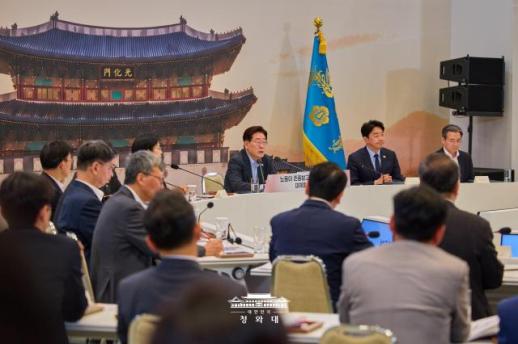 Lee commands Seoul to continue Pyongyang outreach SEOUL, August 05 (AJP) - South Korea will keep pursuing peaceful coexistence with North Korea even if Pyongyang refuses to respond, President Lee Jae Myung said Wednesday, likening the government's engagement efforts to "shouting with no echo." Speaking at an expanded government briefing on security, diplomacy, and North Korean issues, Lee acknowledged that officials responsible for inter-Korean affairs had little to show for more than a year of outreach since he took office in June 2025. "You may feel like you are shouting with no echo," Lee told officials from the Ministry of Unification. "There is no response, and sometimes the response that comes is a bad one. But they are next to us regardless." "Even if it is difficult, we have to keep going with a policy of peace and coexistence," he said. The remarks amounted to Lee's clearest public acknowledgment yet that his signature North Korea policy has failed to reopen official dialogue. He framed the stalemate as the product of decades of accumulated hostility rather than a dispute that could be resolved quickly. "We fought a war, and we are also blood relations," he said. "Relations between governments build up over time, the same way relations between people do. You could call it karma. We have lived a long time with hostility, dismissal and confrontation as our strategy, so it is hard to make it better." He warned against abandoning engagement altogether. "If we approach this as 'I go my way and you go yours,' it ends up doing harm to the national community," Lee said. The appeal stands in stark contrast to Pyongyang's increasingly institutionalized rejection of reconciliation. In December 2023, Kim Jong-un abandoned the decades-old concept of eventual reunification, declaring the two Koreas to be separate hostile states rather than one nation temporarily divided. His government dismantled Pyongyang's Arch of Reunification, abolished agencies responsible for inter-Korean affairs and removed references to shared nationhood from official language. That shift became official doctrine at the Workers' Party's Ninth Congress in February, where references to peaceful reunification were removed from the party charter. Kim described South Korea as the country's "most hostile enemy" and said North Korea could destroy it, according to the Korean Central News Agency. Pyongyang has also dismissed Lee's conciliatory gestures as meaningless. In July 2025, Kim Jong-un's sister, Kim Yo-jong, said North Korea had not even assessed the outcome of South Korea's presidential election because the result made no difference. Whatever policy Seoul adopted, she said, there was "no reason to meet and nothing to discuss." She also brushed aside Lee's suspension of anti-North loudspeaker broadcasts and efforts to curb activists sending propaganda leaflets across the border, calling the measures easily reversible. The skepticism reflects three decades of policy reversals in Seoul, where presidents serve a single five-year term and engagement has repeatedly swung with changes in government. Liberal administrations under Kim Dae-jung, Roh Moo-hyun and Moon Jae-in pursued dialogue through summits, the Kaesong Industrial Complex and military confidence-building measures. Conservative governments under Lee Myung-bak, Park Geun-hye and Yoon Suk-yeol dismantled or suspended many of those initiatives following North Korean military provocations and nuclear weapons development. North Korea, meanwhile, has steadily deepened the rupture. It sank the South Korean naval corvette Cheonan in 2010, according to an international investigation that Pyongyang denies, shelled Yeonpyeong Island later that year, demolished the joint inter-Korean liaison office in Kaesong in 2020 and formally scrapped inter-Korean economic cooperation agreements in early 2024. Lee concluded with a warning that North Korea policy itself has become a casualty of South Korea's domestic political cycle. "This gets exploited politically and for partisan gain, so you have to be very careful," he said. "A single word ends up becoming a target in political fights without anyone intending it." Kim offered a similarly dismissive assessment at the Workers' Party Congress in February, calling the conciliatory posture of Lee's government "clumsily deceptive and crude." AJP Takeaways ● Lee Jae Myung told the Ministry of Unification on Wednesday to continue a policy of peace and coexistence with North Korea despite receiving no response from Pyongyang, saying officials may feel they are shouting with no echo. No official channel between the two governments has opened since he took office in June 2025. ● Kim Jong-un wrote the "two hostile states" doctrine into the charter of the Workers' Party of Korea at its Ninth Party Congress in February, removing references to peaceful reunification and calling South Korea the "most hostile enemy," the Korean Central News Agency reported. ● Kim Yo-jong said in a statement carried by North Korean state media in July 2025 that Pyongyang had made no assessment of who won the South Korean election because it made no difference, and that there was no reason to meet and nothing to discuss. She called Seoul's halt to border loudspeaker broadcasts reversible. 2026-08-05 14:05:23
 -
Emergency Meeting Held to Minimize Heatwave and Drought Damage in Jeonbuk Lee Won-taek, the Governor of Jeonbuk Special Self-Governing Province, and the heads of 14 cities and counties are taking proactive measures to minimize the damage caused by the ongoing heatwave and drought.According to the province on August 5, an emergency meeting titled 'Heatwave and Drought Response Status Check' was held under the leadership of Governor Lee, with the participation of department heads and city and county leaders.This meeting was convened due to growing concerns over heat-related illnesses and fatalities as the heatwave continues, along with the need for effective management of agricultural and domestic water supplies due to insufficient rainfall.Currently, heatwave warnings are in effect for 12 cities and counties, with temperatures consistently exceeding 35°C. Notably, Jeonju recorded a high of 39°C and a perceived temperature of 37.2°C on August 4, prompting a severe heatwave warning.As a result, there have been 142 reported cases of heat-related illnesses, including five fatalities.During the meeting, key topics included the status of heatwave response efforts, protective measures for vulnerable populations, prevention of agricultural and livestock damage, drought response, and strategies to enhance city and county responses. Effective measures that can be implemented immediately were discussed.The province plans to strengthen welfare checks and on-site inspections for vulnerable groups, including elderly individuals living alone, those with underlying health conditions, and older farmers. They will continue to operate a protective system utilizing local safety networks.Additionally, the province will monitor compliance with rest periods at outdoor work sites, such as construction sites, and ensure adherence to heat illness prevention guidelines. Measures to prevent heat damage in livestock farms, including ventilation and water management, will also be intensified.To address the drought, the province will continuously monitor water reservoir levels and supply conditions, collaborating with cities and counties to ensure there are no disruptions in agricultural water supply. On-site inspections in drought-prone areas will also continue.Furthermore, the Disaster Safety Countermeasure Headquarters will manage the heatwave and drought situations in real-time, enhancing collaboration with cities and counties to maintain a rapid response system.Governor Lee stated, "The attention and swift response of each public official are crucial for protecting the lives and safety of our residents. I urge all public officials to ensure that administrative efforts are effectively communicated from the provincial level down to local communities, with a total commitment to response efforts."Lee Won-taek Appointed Honorary Chairman of Jeonbuk Community ChestLee Won-taek has been appointed as the sixth Honorary Chairman of the Jeonbuk Community Chest.On August 5, Governor Lee received the honorary chairmanship from Han Myung-kyu, the chairman of the Jeonbuk Community Chest, aiming to expand community participation in charitable giving and strengthen public-private cooperation to support vulnerable families and those in crisis.Governor Lee is the sixth honorary chairman, following former governors Yoo Jong-geun, Kang Hyun-wook, Kim Wan-joo, Song Ha-jin, and Kim Kwan-young.The role of the Honorary Chairman of the Jeonbuk Community Chest is to promote the value of giving among residents and encourage donations from individuals, businesses, and organizations.The Jeonbuk Community Chest collects donations from residents and businesses each year to support low-income households, social welfare facilities, families in crisis, and disaster victims, contributing to the spread of a culture of giving in the community.This year, the 'Hope 2026 Donation Campaign' raised a record 12.3 billion won, the highest amount ever.The province plans to use this appointment to activate community participation donation programs such as the Hope Sharing Campaign, Good Store, and Donation Leaders, and to strengthen efforts to identify welfare blind spots and support vulnerable groups in collaboration with the Community Chest.* This article has been translated by AI. 2026-08-05 14:00:20
-
Government Takes Steps to Resolve Power Line Conflicts by Minimizing Towers and Enhancing Site Selection Transparency Kim Sung-hwan, the Minister of the Ministry of Climate, Energy and Environment, is implementing measures to enhance community acceptance and reduce conflicts that have arisen during the expansion of the national power grid. The key strategies include minimizing the construction of new towers and increasing transparency in the site selection process.On August 5, the ministry held the third meeting with representatives from communities opposing power grid construction at the Power Infrastructure Center in Yeongdeungpo, Seoul. During this meeting, they unveiled a plan titled 'Measures to Enhance Community Acceptance in Power Grid Construction.'This meeting was organized based on feedback gathered from community representatives and site visits since the second meeting held in May. The government plans to finalize the measures after further consultations with community representatives and Korea Electric Power Corporation.The government aims to reduce the need for long-distance power lines by encouraging the decentralization of large-scale power-demand industries outside the capital region and promoting a 'local production, local consumption' power grid system. Ongoing national power grid projects will be pursued with a focus on minimizing the burden on residents.To achieve this, the government is considering options such as sharing existing power lines or integrating new routes to minimize the construction of new towers, as well as expanding underground sections in densely populated areas. Additionally, they plan to enhance transparency in the site selection process by holding community briefings from the early stages of projects, making meeting materials public, and allowing residents to attend meetings. The criteria for the operation of the site selection committee, currently governed by internal regulations of Korea Electric Power Corporation, will also be formalized through government notification to strengthen the institutional framework.Furthermore, the government will improve the system to ensure that local government support funds under the Special Act on Power Networks are prioritized for residents in affected areas, and plans to establish measures for community coexistence, including income-sharing initiatives.After incorporating feedback from this meeting, the government plans to finalize and announce the measures to enhance community acceptance through the practical working committee for the expansion of the national power grid.Minister Kim stated, "The expansion of the power grid is an urgent task that cannot be delayed any longer for energy transition and the development of advanced industries. We will continue to reduce the burden on residents while ensuring transparency in site selection, adequate compensation, and support, along with sincere communication."* This article has been translated by AI. 2026-08-05 14:00:20