SEOUL, August 05 (AJP) - South Korea will keep pursuing peaceful coexistence with North Korea even if Pyongyang refuses to respond, President Lee Jae Myung said Wednesday, likening the government's engagement efforts to "shouting with no echo."
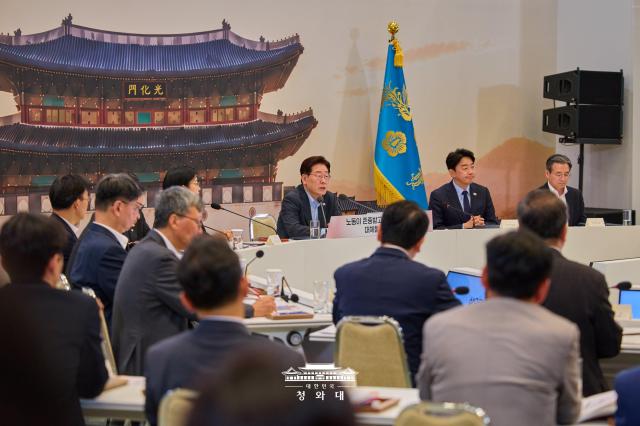
Speaking at an expanded government briefing on security, diplomacy, and North Korean issues, Lee acknowledged that officials responsible for inter-Korean affairs had little to show for more than a year of outreach since he took office in June 2025.
"You may feel like you are shouting with no echo," Lee told officials from the Ministry of Unification. "There is no response, and sometimes the response that comes is a bad one. But they are next to us regardless."
"Even if it is difficult, we have to keep going with a policy of peace and coexistence," he said.
The remarks amounted to Lee's clearest public acknowledgment yet that his signature North Korea policy has failed to reopen official dialogue.
He framed the stalemate as the product of decades of accumulated hostility rather than a dispute that could be resolved quickly.
"We fought a war, and we are also blood relations," he said. "Relations between governments build up over time, the same way relations between people do. You could call it karma. We have lived a long time with hostility, dismissal and confrontation as our strategy, so it is hard to make it better."
He warned against abandoning engagement altogether. "If we approach this as 'I go my way and you go yours,' it ends up doing harm to the national community," Lee said.
The appeal stands in stark contrast to Pyongyang's increasingly institutionalized rejection of reconciliation.
In December 2023, Kim Jong-un abandoned the decades-old concept of eventual reunification, declaring the two Koreas to be separate hostile states rather than one nation temporarily divided. His government dismantled Pyongyang's Arch of Reunification, abolished agencies responsible for inter-Korean affairs and removed references to shared nationhood from official language.
That shift became official doctrine at the Workers' Party's Ninth Congress in February, where references to peaceful reunification were removed from the party charter. Kim described South Korea as the country's "most hostile enemy" and said North Korea could destroy it, according to the Korean Central News Agency.
Pyongyang has also dismissed Lee's conciliatory gestures as meaningless.
In July 2025, Kim Jong-un's sister, Kim Yo-jong, said North Korea had not even assessed the outcome of South Korea's presidential election because the result made no difference. Whatever policy Seoul adopted, she said, there was "no reason to meet and nothing to discuss."
She also brushed aside Lee's suspension of anti-North loudspeaker broadcasts and efforts to curb activists sending propaganda leaflets across the border, calling the measures easily reversible.
The skepticism reflects three decades of policy reversals in Seoul, where presidents serve a single five-year term and engagement has repeatedly swung with changes in government.
Liberal administrations under Kim Dae-jung, Roh Moo-hyun and Moon Jae-in pursued dialogue through summits, the Kaesong Industrial Complex and military confidence-building measures. Conservative governments under Lee Myung-bak, Park Geun-hye and Yoon Suk-yeol dismantled or suspended many of those initiatives following North Korean military provocations and nuclear weapons development.
North Korea, meanwhile, has steadily deepened the rupture. It sank the South Korean naval corvette Cheonan in 2010, according to an international investigation that Pyongyang denies, shelled Yeonpyeong Island later that year, demolished the joint inter-Korean liaison office in Kaesong in 2020 and formally scrapped inter-Korean economic cooperation agreements in early 2024.
Lee concluded with a warning that North Korea policy itself has become a casualty of South Korea's domestic political cycle.
"This gets exploited politically and for partisan gain, so you have to be very careful," he said. "A single word ends up becoming a target in political fights without anyone intending it."
Kim offered a similarly dismissive assessment at the Workers' Party Congress in February, calling the conciliatory posture of Lee's government "clumsily deceptive and crude."
AJP Takeaways
● Lee Jae Myung told the Ministry of Unification on Wednesday to continue a policy of peace and coexistence with North Korea despite receiving no response from Pyongyang, saying officials may feel they are shouting with no echo. No official channel between the two governments has opened since he took office in June 2025.
● Kim Jong-un wrote the "two hostile states" doctrine into the charter of the Workers' Party of Korea at its Ninth Party Congress in February, removing references to peaceful reunification and calling South Korea the "most hostile enemy," the Korean Central News Agency reported.
● Kim Yo-jong said in a statement carried by North Korean state media in July 2025 that Pyongyang had made no assessment of who won the South Korean election because it made no difference, and that there was no reason to meet and nothing to discuss. She called Seoul's halt to border loudspeaker broadcasts reversible.
Copyright ⓒ Aju Press All rights reserved.