

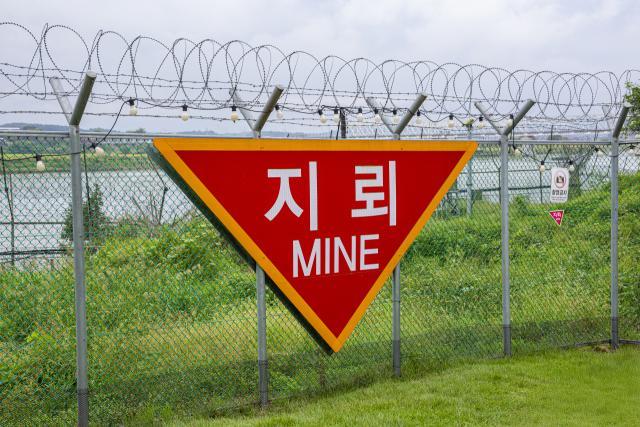
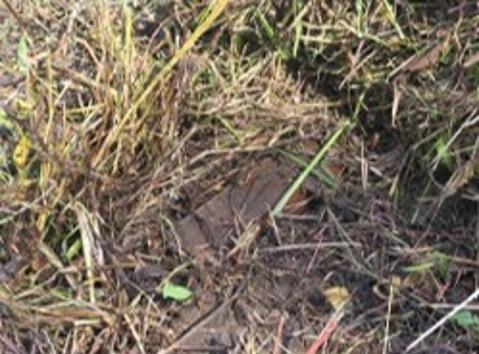
The discovery strengthens the military’s assessment of the explosions’ cause. It does not yet establish when or how the mines came to be on the southern side of the border — a distinction that could determine Seoul’s response.
The Joint Chiefs of Staff (JCS) said the newly discovered mine appeared to be different from the mine-like object troops reported seeing as they withdrew after the Sept. 21 explosions, suggesting additional North Korean mines may remain in the immediate area.
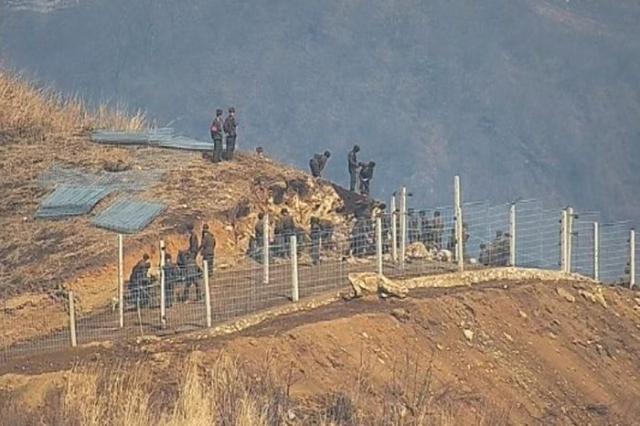
Since formally identifying the South as an enemy state, North Korea has spent much of the past two years reinforcing its side of the Demilitarized Zone with fences, mines and other barriers.
South Korea’s military has at times described those activities as armistice violations.
Its fact sheet drew a clear line at the MDL itself: placing mines south of the line would cease to be defensive activity and automatically constitute an armistice violation.
The investigation also raises questions about how South Korea handled earlier signs of suspected mine-laying.
The military detected suspicious terrain changes through satellite imagery in the 25th Infantry Division’s sector as early as September 2025 and suspected they could be linked to North Korean mines.
Nearly a year later, South Korean troops were clearing a new route for a joint inspection with the UNC when two mines exploded.
The JCS says it had been consulting with the UNC about an inspection during that period. But when pressed Tuesday, officials could not say when South Korea first requested one or provide a detailed account of the consultations over the intervening year.
Earlier this month, Rep. Yoo Yong-won of the main opposition People Power Party said six minefields and other structures in the division’s sector appeared to extend 10 to 15 meters south of the MDL.
The Sept. 21 explosions occurred about 10 meters south of the line and roughly 10 meters from an area where terrain changes suggesting North Korean mine-laying had been detected.
Investigators must still determine whether the mines were deliberately planted at the site, when they arrived and whether natural forces could have displaced them.
The distinction matters since a North Korean-made mine found south of the MDL is evidence of its origin, but does not necessarily prove that North Korean troops recently crossed the line to plant it.
If deliberate emplacement is confirmed, the issue would extend beyond Seoul’s North Korea policy to enforcement of the armistice.
The agreement prohibits hostile acts within, from or against the DMZ and bars personnel from crossing the MDL without authorization from the Military Armistice Commission. It also restricts entry into territory under the other side’s military control.
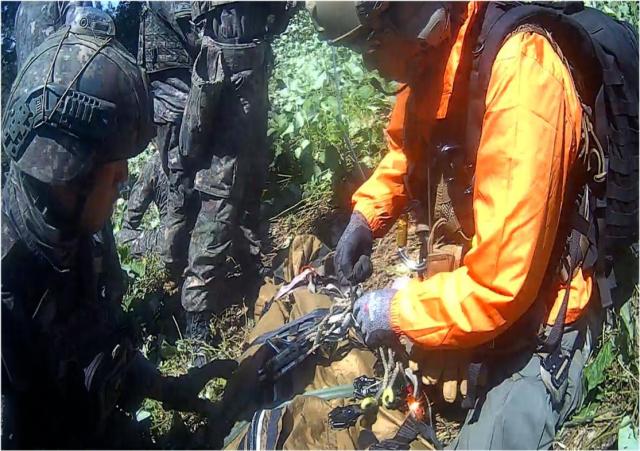
A UNC investigation concluded that North Korean forces had planted wooden-box mines along a known South Korean patrol route in the southern half of the DMZ, injuring two soldiers. It found violations of Paragraphs 6, 7 and 8 of the armistice, covering hostile acts, unauthorized MDL crossings and unauthorized entry into the other side’s area.
Evidence that an older mine had drifted or shifted south would require a different assessment from proof of deliberate placement. The mine’s origin alone would not resolve questions about responsibility for its location.
The Sept. 19, 2018, inter-Korean military agreement offers another political reference point. The pact required both sides to cease hostile acts and refrain from infiltrating, attacking or occupying each other’s areas.
North Korea declared in November 2023 that it would no longer be bound by the accord, and South Korea fully suspended it in June 2024. Lee has pledged to restore it as part of his effort to reduce military tensions.
A confirmed armistice violation would give the UNC a central role in the response.
Its Military Armistice Commission Secretariat investigates suspected violations, manages authorized access to the DMZ and crossings of the MDL, and communicates with the North Korean military. Those functions provide channels for documenting the findings and raising them with Pyongyang.
A formal finding would not, however, automatically trigger sanctions or prescribe Seoul’s military response. The UNC’s armistice enforcement role is separate from the U.N. Security Council’s authority to impose sanctions.
Sill, the Lee government can find itself in a pickle.
If investigators find that an old mine was displaced by natural forces, the immediate response could center on mine clearance, troop safety and border management.
Evidence of deliberate North Korean mine-laying south of the MDL would put greater pressure on the administration to hold Pyongyang accountable while pursuing dialogue.
The JCS has pledged “appropriate and corresponding” measures if the final investigation establishes that the soldiers were injured by mines planted by North Korean forces. What those measures would entail remains unresolved.
For Seoul, identifying the mines is only part of the investigation. Establishing how they got there will shape what comes next.

Copyright ⓒ Aju Press All rights reserved.
