


Latest by
-
 aespa to launch world tour with global cinema livestream from Seoul SEOUL, August 03 (AJP) - K-pop girl group aespa will kick off its new world tour this week, with the opening concert simultaneously screened in movie theaters across 11 regions worldwide. SM Entertainment said Monday that the first show of "2026-27 aespa LIVE TOUR – SYNK : COMPLaeXITY" on Aug. 7 will be broadcast live in 146 cinemas across 11 markets, including South Korea, allowing fans around the world to watch the group's world tour opener in real time. The second night's performance on Aug. 8 will instead be livestreamed globally through Beyond LIVE and Weverse. The two concerts will take place at Gocheok Sky Dome, marking aespa's first standalone performances at the venue and the opening of a tour that will visit 25 cities across Asia, North America, South America and Europe. In Korea, four theaters operated by Megabox, one of the country's three major multiplex chains, alongside CGV and Lotte Cinema, will participate in the live-viewing event. Three of them will become the first cinemas in the country to present a concert using AI-powered immersive audio technology, pairing spatial audio with 4K projection to deliver a more immersive viewing experience. The rollout reflects a broader trend in K-pop, with agencies increasingly turning to theatrical live viewings to reach fans unable to attend concerts in person. Groups including BTS, SEVENTEEN and IVE have all adopted the format as demand for large-scale concert broadcasts has continued to grow. The SYNK : COMPLaeXITY tour follows aespa's 2024-25 SYNK : PARALLEL LINE world tour and comes after the release of the group's second studio album, "LEMONADE," in May. The album debuted at No. 9 on the Billboard 200, becoming aespa's third top-10 entry on the U.S. albums chart. 2026-08-03 17:38:07
 -
 South Korean soprano Sumi Jo receives Maria Callas SEOUL, August 03 (AJP) - South Korean soprano Sumi Jo has received the 12th Premio Internazionale Maria Callas, becoming the first Asian artist to receive the Italian honor in the year she marks the 40th anniversary of her international debut. PRM, Jo's publicity agency, said Monday that she accepted the award in Verona on Sunday, where organizers hold the annual ceremony each Aug. 2, the anniversary of Maria Callas' debut at the Arena di Verona in 1947. The prize recognizes artists who have made lasting contributions to opera and classical music, and previous recipients include director Franco Zeffirelli and baritone Leo Nucci. In a statement, Jo said the timing made the honor especially meaningful because she received the award exactly 79 years after Callas made her own Verona debut in the same city. She described it as one of the most meaningful moments of her career. The award comes during a milestone year for Jo, one of South Korea's most internationally acclaimed classical musicians. She launched her international career after winning Italy's Carlo Alberto Cappelli International Singing Competition in 1986 and has since appeared at many of the world's leading opera houses, including the Metropolitan Opera, La Scala, the Royal Opera House and the Vienna State Opera. This year, she has marked the anniversary with the release of the commemorative album "Continuum" and the second Sumi Jo International Singing Competition, held in France in July. She is also preparing for an international tour later this year. Jo will return to Korean audiences with a concert celebrating the 40th anniversary of her international career at the Seoul Arts Center on Sept. 4. 2026-08-03 17:37:32
 -
 Groundbreaking Ceremony for National AI Computing Center in Haenam Marks Start of South Korea's AI Infrastructure Development The National AI Computing Center, a key government strategic project, officially broke ground in Haenam Solar City, South Jeolla Province, marking a significant step in establishing South Korea's artificial intelligence (AI) industry infrastructure.On August 3, Haenam County held a groundbreaking ceremony at the Solar City Data Center Park, launching a large-scale AI infrastructure project aimed for completion by 2028.This groundbreaking is particularly significant as it represents the first project to enter the execution phase among the government's three mega-projects in AI, semiconductors, and robotics. It is seen as a crucial national infrastructure supporting the government's strategy to become one of the top three AI nations.Attendees at the ceremony included Deputy Prime Minister and Minister of Science and ICT Baek Kyung-hun, Gwangju Mayor Min Hyung-bae, Haenam County Mayor Myung Hyun-gwan, Yeongam County Mayor Woo Seung-hee, and several members of the National Assembly, along with local officials and representatives from private enterprises, totaling over 200 participants.The event featured the declaration of the National AI Computing Center's vision and a ceremonial groundbreaking blast, signaling the official start of the project.Minister Baek stated, "We will build a global AI infrastructure hub centered around the National AI Computing Center by securing advanced GPUs and fostering a domestic AI semiconductor ecosystem. I expect the Solar City Data Center Park to grow into a key hub for national balanced development and future industries."The National AI Computing Center is a national project with a total budget of 2.4065 trillion won. It plans to establish 15,000 high-performance graphics processing units (GPUs) by 2028, with a phased expansion to 50,000 GPUs by 2030.The center will be built on a 48,996 square meter site within the Haenam Solar City Data Center Park, featuring a total floor area of 16,978 square meters across two stories. Initially, it will be constructed to support 40 megawatts, with plans to expand to an 80-megawatt AI-specialized data center.Once completed, the center will serve as a national AI computing hub supporting the development and research of ultra-large AI models. It is expected to operate as an open platform for joint use by academia, industry, and research institutions, facilitating both research and industrialization.Before the center's completion in 2027, some AI computing resources from the Samsung SDS data center will be made available to respond proactively to the AI development needs of research institutions and companies.The project gained momentum last October when a consortium led by Samsung SDS was selected as the preferred bidder. The consortium includes Samsung SDS, Naver Cloud, Samsung C&T, Kakao, Samsung Electronics, KT, Clush, Gwangju Metropolitan City, and the Southwest Coast Enterprise City Development. In June, a public-private joint special purpose company, the Korea AI Computing Center (KOACC), was established to oversee the project's implementation and operation.The government and participating organizations anticipate that the center's construction will create approximately 20,000 jobs and generate over 6 trillion won in economic ripple effects.Additionally, Samsung plans to gradually develop an AI data center cluster worth about 17 trillion won in the Solar City area, which will include the National AI Computing Center. Once completed, it is expected to become the largest AI industry cluster in the country, contributing to the growth of the domestic AI semiconductor industry and enhancing research and development competitiveness.Haenam County has supported the project by leveraging its competitive location, which offers large industrial sites, abundant renewable energy, and stable power and water supply, while also expediting administrative processes for permits.Looking ahead, the plan is to create an advanced industrial ecosystem that integrates cloud and digital service industries centered around the AI data center, while also fostering a RE100 national industrial complex and renewable energy-based industries, aiming to develop a future industrial city where AI and energy converge.Mayor Myung Hyun-gwan remarked, "The groundbreaking of the National AI Computing Center marks a historic starting point for South Korea's AI national strategy, which has officially begun in Haenam. We will work closely with the government and relevant agencies to successfully advance the project and develop Haenam into a key hub for South Korea's AI industry."Meanwhile, the National AI Computing Center is expected to serve as a core infrastructure for the government's policy to enhance national AI competitiveness, providing an open AI computing infrastructure for joint use by research institutions, universities, and companies, thereby driving improvements in domestic AI technology competitiveness and expanding the industrial ecosystem.* This article has been translated by AI. 2026-08-03 17:36:00
 -
Uljin Tourism Popup Store Opens in Gyeongju from August 5 Uljin County in Ulsan is launching a tourism promotion initiative at Hwanglidangil in Gyeongju to attract summer vacationers.The county announced on August 3 that it will operate the '2026 Uljin Tourism Popup Store in Gyeongju' from August 5 to 11 at the Hwanglidangil Market Story.This popup store aims to introduce Uljin's tourism resources to visitors in Gyeongju during the summer vacation season and encourage actual visits to Uljin.A hands-on space will be set up in the heart of Hwanglidangil, allowing visitors to experience Uljin's tourist attractions, festivals, and local specialties all in one place, directly reaching potential tourists.This year's popup store will be themed 'Uljin Travel Encountering Hwanglidangil.' The event will feature a Uljin tourism promotion zone, a photo zone inspired by Jinha Beach, a life-sized photo booth, a display zone for tourism souvenirs, and a space for showcasing and selling local specialties and experiences.Interactive programs will also be available for visitors. Popular activities among younger audiences, such as 'pen decorating' and 'keycap making,' will allow participants to create Uljin-themed souvenirs.A photo zone set against the backdrop of Jinha Beach and a life-sized photo booth will enable visitors to indirectly experience Uljin's tourist attractions and share their photos on social media.Uljin County's choice of Hwanglidangil as the location for the popup store is seen as a tourism marketing strategy to draw summer visitors from Gyeongju to the nearby Uljin area. Given the geographical proximity of Gyeongju and Uljin, the focus is on promoting Uljin's marine and mountain tourism resources to Hwanglidangil visitors and encouraging follow-up visits.An official from Uljin County stated, "This popup promotion center is designed to widely showcase Uljin's diverse tourism resources and local specialties in Hwanglidangil, which attracts many tourists during the summer vacation season, and to facilitate actual visits to Uljin. We will continue to expand our outreach tourism promotion efforts to attract more visitors to Uljin."* This article has been translated by AI. 2026-08-03 17:36:00
-
Woman Caught Stealing During Fire Evacuation at Sillim Station A fire broke out in a commercial building in Sillim-dong, Gwanak-gu, Seoul, prompting the evacuation of over 130 people. Amid the chaos, a woman in her twenties was caught on CCTV stealing items from a convenience store inside the building, sparking controversy.According to police and fire authorities, the fire started around 3:20 PM on August 2, and there were no reported injuries. The owner of the convenience store, identified as A, shared footage from the store's CCTV on social media, stating, "While people were evacuating outside, one woman entered the building alone. I repeatedly warned her not to go toward the fire, but she ignored me and went inside the store."After the fire was extinguished, A reviewed the CCTV footage and found that the woman was placing items from the shelves into her bag. A noted, "She seemed to know exactly where the items were located," suggesting that she was likely a regular customer.A reported the theft to the police and submitted the CCTV footage as evidence. The Gwanak Police are currently searching for the woman.As the video circulated online, netizens reacted with comments such as, "To think of stealing during a fire," and "Thanks to her bold theft, her face is now well-known." Some recalled a recent incident involving a high school student in Kumamoto, Japan, who referred to a collapsed shopping mall as an opportunity to steal.Netizens also drew parallels to the tragic collapse of the Sampoong Department Store on June 29, 1995, where a woman was photographed smiling while stealing clothes from the rubble, a moment that became known as the 'devil's smile.'* This article has been translated by AI. 2026-08-03 17:32:00
-
Muan County Expands Integrity Communication Officers to Promote Ethical Culture Muan County, located in the Jeonnam-Gwangju Integrated Special City, is accelerating the establishment of an ethical organizational culture by expanding the role of integrity communication officers, aimed at promoting exemplary behavior among senior officials and enhancing communication among staff.On August 3, during a regular meeting held in the county office conference room, Muan County announced the appointment of two additional senior officials as integrity communication officers, following personnel changes made on July 6.This appointment was necessary to maintain continuity in organizational operations after one of the existing integrity communication officers entered a period of retirement. As a result, five senior officials, including the Planning Director, the New City Support Division Head, the Health Center Director, the Agricultural Technology Center Director, and the Muan-eup Head, will now serve as integrity communication officers.The integrity communication officers are tasked with leading the spread of an integrity culture and fostering a fair and trustworthy organizational environment through communication with employees. They will collect diverse opinions from staff and serve as a link between the field and administration in the process of improving organizational culture and implementing integrity policies.Immediately following the appointment ceremony, the Planning Division held its first meeting with all five integrity communication officers to share operational directions and roles.During the meeting, various suggestions were exchanged regarding ways to enhance communication with employees, promote integrity culture within the organization, improve unreasonable systems and practices, and implement effective integrity policies. The officers agreed to strengthen field-centered integrity activities.Muan County plans to continue ongoing communication and improvement activities centered around the integrity communication officers to ensure that integrity policies are not just one-time events but are firmly established throughout the organization.County Mayor Kim San stated, "Integrity begins with the exemplary behavior of senior officials and active communication. I urge the integrity communication officers to faithfully fulfill their role as a communication channel between employees and the organization, leading to the spread of integrity culture and the realization of trustworthy governance for the citizens."Meanwhile, Muan County is working to enhance public trust and establish a culture of integrity in the public service by implementing various integrity initiatives, including integrity happy talks, integrity suggestion boxes, one department one integrity policy, self-learning on integrity, and anti-corruption and integrity education, with the goal of achieving a top rating in overall integrity.* This article has been translated by AI. 2026-08-03 17:28:00
-
Referee Chair Moon Jin-hee Resigns Amid Controversy Over Testimony The Korea Football Association announced that Moon Jin-hee has resigned from her position as referee chair due to personal reasons. According to the association's regulations, the resignation takes effect immediately upon submission.The referee committee will operate under an acting vice-chair until a new executive board is established.Moon was at the center of controversy after appearing as a witness at a parliamentary hearing held by the National Assembly's Culture, Sports and Tourism Committee on July 30. Her demeanor was criticized as uncooperative, leading to tensions with lawmakers.During the hearing, when Moon responded with one hand in her pocket, lawmaker Kim Jae-won admonished her, saying, "Please sit up straight and answer politely." Moon retorted, "Are you saying I shouldn't speak while you are? Lower your voice a bit," showing strong resistance.Further issues arose when lawmaker Jo Gye-won raised concerns about Moon's response style. Moon replied, "Stay out of this," causing further disruption in the hearing.Additionally, allegations of perjury surfaced. Moon initially denied claims that she assisted in election activities for former association president Jeong Mong-kyu, despite not having official election agent status. However, after evidence and recordings were presented suggesting she led ticket sales in exchange for referee promotions and match assignments, she changed her stance, stating, "I don't remember well."* This article has been translated by AI. 2026-08-03 17:28:00
-
Renault Korea Reports 3,030 Vehicle Sales in July, Down 58.2% Year-on-Year Renault Korea announced on July 3 that it sold a total of 3,030 vehicles in July, a 58.2% decrease compared to the same period last year.Domestic sales accounted for 1,704 units, down 57.4% year-on-year.The mid-size SUV, the Grand Koleos, was the best-selling model with 728 units sold, followed by the mid-size crossover Filante with 537 units, and the coupe-style SUV Arkana with 439 units.Notably, the Filante, which was launched in mid-March, achieved cumulative sales of 10,161 units by July, surpassing the 10,000 mark within just over four months.Among domestic sales, hybrid models totaled 1,219 units, making up 71.5% of the overall performance.The Filante Hybrid E-Tech accounted for 100% of Filante sales with 537 units, while the Grand Koleos Hybrid E-Tech represented 89.1% with 649 units. The Arkana Hybrid E-Tech made up 7.5% (33 units) of the total.Exports in July totaled 1,326 units, a 59.2% decline from the previous year. The Arkana led exports with 486 units, followed by the Polestar 4, produced under contract at the Busan plant, with 366 units, and the Grand Koleos (export name New Koleos) with 254 units.A Renault Korea official stated, "Due to the unstable international situation, shipments to the Middle East have been impossible, and securing vessels remains challenging. In this environment, the Filante successfully exported 847 units to Latin America, including an initial shipment of 220 units."* This article has been translated by AI. 2026-08-03 17:28:00
-
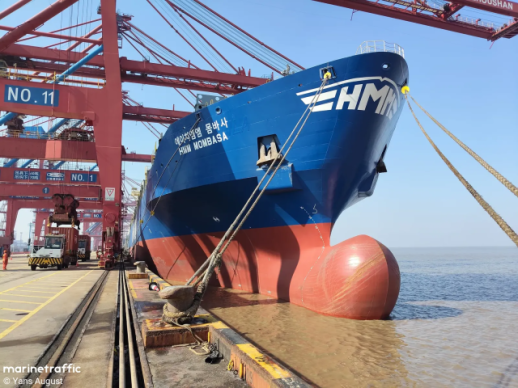 Korea readies maiden Arctic voyage to chart new container route SEOUL, August 03 (AJP) - South Korea is set to sail its first container ship from Busan to Rotterdam through Russian Arctic waters as early as this month, which will mark a milestone voyage that could reshape trade between Northeast Asia and Europe while offering an alternative route amid mounting geopolitical risks. Busan-based PanStar Line, selected to operate the government-backed pilot voyage, has acquired HMM's 2,700-TEU container ship Mombasa and renamed it PanStar Acro. The company completed the purchase on July 31 and is preparing the vessel for a tentative departure around Aug. 22, according to industry officials. The round trip is expected to take about 45 days. The Busan-to-Rotterdam voyage could shorten the conventional Suez Canal route by about 8,000 kilometers, or 36 percent, potentially reducing transit times, fuel consumption and inventory costs for exporters. The departure date, however, has yet to be finalized. A Ministry of Oceans and Fisheries official told AJP on Monday that PanStar had been confirmed as the trial operator but said the government was still weighing departures in either August or September. "We are looking at August or September," the official said. "August is being considered because that is when sea ice is expected to have melted the most, but we cannot confirm a specific departure date." Even during the summer navigation season, the vessel must meet stricter standards than conventional container ships because ice hazards remain possible. The PanStar Acro will enter Hanjin Busan New Port Co.'s terminal for modifications to improve its ice resistance before seeking a Polar Ship Certificate from the Korean Register by Aug. 15. Twenty crew members, including at least one officer experienced in polar navigation, are expected to participate in the voyage. The ship is scheduled to sail from Busan to Rotterdam before calling at Hamburg and Poland's Gdansk on its return journey. PanStar has opened a dedicated booking system and is seeking approximately 1,300 TEUs of cargo, including automobile parts, synthetic resins, steel products, food, cosmetics, used vehicles and liquid cargo. Japanese exporters have also expressed interest in using the service. Why PanStar is leading the trial PanStar, a Busan-based maritime logistics company, operates businesses spanning container shipping, freight forwarding, passenger ferries, warehousing and ship management, with an established logistics network linking South Korea and Japan. By consolidating cargo from Korea, Japan and eventually China at Busan, the company hopes to build a new Asia-Europe service while gaining early operational experience in Arctic navigation. PanStar was the only shipping company to apply for the government-backed demonstration project, as larger carriers remained cautious over sanctions risks, uncertain cargo demand and commercial profitability. The government project required a container ship of roughly 3,000 TEUs capable of sailing the Northern Sea Route during the limited August-September navigation window while qualifying for a Polar Ship Certificate. Because PanStar had no suitable vessel in its fleet, it initially explored purchasing a secondhand ship in Europe or commissioning a newbuild in China. Neither option could meet the targeted sailing schedule. The search eventually led to HMM's 2,758-TEU Mombasa. The companies signed a purchase agreement on July 31, after which the ship was renamed PanStar Acro for the Arctic mission. The transaction involved more than simply disposing of an aging vessel. HMM had been operating Mombasa in commercial service, requiring adjustments to its fleet deployment before transferring ownership. Although the purchase price has not been disclosed, comparable secondhand ships of similar size are valued at roughly $36 million in the international market. The Northern Sea Route has attracted growing attention as climate change gradually reduces Arctic sea ice. For voyages between Busan and Rotterdam, the route cuts approximately 8,000 kilometers from the traditional Suez Canal passage. While actual time savings depend on weather, ice conditions and escort requirements, shorter voyages can reduce fuel consumption, delivery times and working capital tied up in cargo. According to the Arctic Council's Protection of the Arctic Marine Environment working group, the number of vessels operating in Arctic Polar Code waters has increased by about 40 percent since 2013, while total sailing distance has nearly doubled. Satellite observations also show Arctic summer sea ice shrinking by roughly 9.8 percent each decade relative to the 1981 to 2010 average, gradually extending the seasonal navigation window. China has emerged as one of the route's most active users. Last year, the Chinese-operated Istanbul Bridge completed a voyage from China to Britain through the Arctic in about 20 days, roughly half the transit time typically required via the Suez Canal. For Beijing, the route offers not only faster access to Europe but also reduced dependence on strategic maritime chokepoints such as the Strait of Malacca. Why South Korea is moving now As one of the world's largest exporting nations, South Korea depends heavily on uninterrupted maritime supply chains. Operational experience along the Northern Sea Route could provide exporters with an alternative corridor whenever geopolitical tensions or disruptions threaten traditional shipping lanes. Busan also enjoys a geographic advantage. Located closer to the Pacific entrance of the Arctic than most competing Asian ports, it could develop into a regional consolidation hub for Korean and Japanese cargo bound for Europe. Interest from Japanese shippers in the PanStar trial underscores that potential. The voyage also marks a shift in Korea's Arctic ambitions. In 2013, Hyundai Glovis became the first Korean shipping company to test the Northern Sea Route by transporting Russian naphtha to Gwangyang aboard a chartered tanker. This time, however, the focus is not bulk commodities but ordinary containerized exports from multiple companies—a far more complex commercial model that more closely resembles regular liner shipping. The biggest challenge facing the project is geopolitical rather than environmental. Most of the Northern Sea Route lies within waters administered by Russia, making cooperation with Russian authorities unavoidable for navigation information, permits, weather services and, in some cases, icebreaker assistance. Even relatively small payments for those services could raise compliance questions under Western sanctions and potentially expose shipping companies, insurers and financial institutions to secondary sanctions. Government officials said Seoul has therefore been consulting closely with the United States and other partners before allowing the voyage to proceed. Ships operating in Arctic waters must also comply with the International Maritime Organization's Polar Code governing vessel design, equipment, crew qualifications, emergency preparedness and environmental protection before receiving a Polar Ship Certificate. Despite growing interest, the Northern Sea Route remains far from a mainstream container corridor. The route recorded just 103 full transit voyages carrying approximately 3.2 million tons of cargo in 2025—a tiny fraction of global maritime trade—and remains highly seasonal, with much of the traffic linked to Russian energy exports and Chinese shipping. 2026-08-03 17:26:24
 -
Over 5,300 Snacks, Breads, and Ice Creams Banned from School Sales More than 5,300 products, including popular snacks, breads, ice creams, and beverages, will be banned from sale at schools and designated child-friendly vendors throughout August.The Food and Drug Administration (FDA) announced on July 28 the list of high-calorie and low-nutrition foods, as well as those containing high levels of caffeine, that will be prohibited from sale.A total of 5,312 items have been designated as high-calorie and low-nutrition foods. Additionally, children's snacks labeled as containing 'high caffeine' are also included in the sales ban.However, this ban does not extend to all retail outlets nationwide. The restrictions apply specifically to schools and vendors designated by the FDA as child-friendly. Convenience stores and large supermarkets can still sell these products.Child-friendly vendors are establishments located in food safety zones around schools that are recognized for selling safe and balanced food options.The current Special Act on Children's Dietary Safety Management allows the FDA to restrict or prohibit the sale of high-calorie, low-nutrition foods and those containing high caffeine at schools and designated vendors. The sale of high-caffeine products, including coffee, is also banned in schools.High-calorie, low-nutrition foods are defined as those that are high in calories but lack essential nutrients like protein, or exceed certain thresholds for sugars, saturated fats, and sodium. Common items include snacks, candies, breads, chocolates, ice creams, and carbonated beverages that children frequently consume.Not all products in the same category are subject to the sales ban. The determination is based on serving size and the specific nutritional content of each product, meaning that inclusion may vary by manufacturer and item.Similarly, not all caffeinated products are banned. Only those children's snacks that exceed the caffeine threshold and are labeled as 'high caffeine' are included. This typically applies to certain energy drinks and beverages containing coffee.This announcement does not introduce new sales regulations for August. The FDA updates the list of banned items monthly to reflect new product launches, discontinuations, and changes in ingredients and nutritional content. In March 2026, the list included 5,056 high-calorie, low-nutrition foods, which has now increased to 5,312 in August.Being on the list does not imply that a product is unsafe or of poor quality. General consumption and sales are still permitted, but the restrictions aim to promote balanced diets for growing children in specific locations.If schools or designated vendors violate the sales ban, they may face fines based on the number of violations. The FDA allows for adjustments to the list if manufacturers submit documentation regarding changes in nutritional content or if production ceases.The specific names of the products banned in August can be found on the FDA's website, which includes the list of high-calorie, low-nutrition foods and those containing high caffeine.* This article has been translated by AI. 2026-08-03 17:20:20