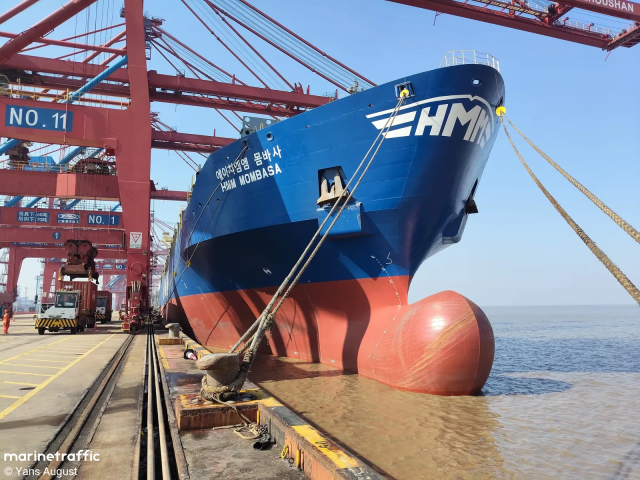
Busan-based PanStar Line, selected to operate the government-backed pilot voyage, has acquired HMM's 2,700-TEU container ship Mombasa and renamed it PanStar Acro. The company completed the purchase on July 31 and is preparing the vessel for a tentative departure around Aug. 22, according to industry officials. The round trip is expected to take about 45 days.
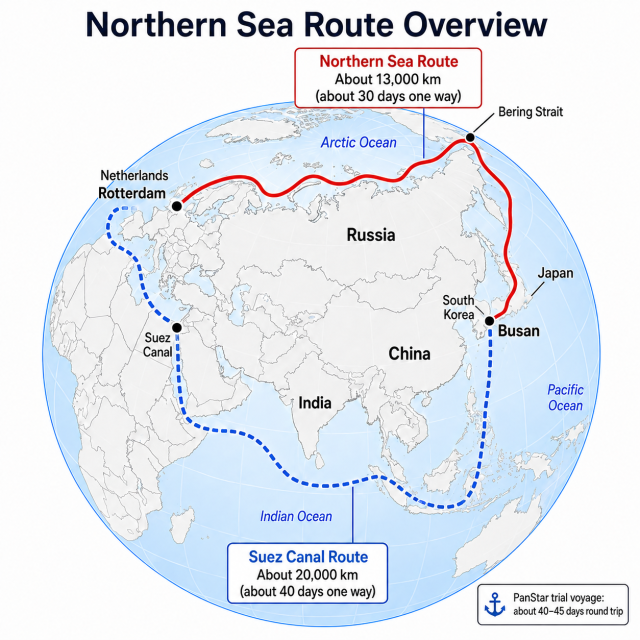
The Busan-to-Rotterdam voyage could shorten the conventional Suez Canal route by about 8,000 kilometers, or 36 percent, potentially reducing transit times, fuel consumption and inventory costs for exporters.
The departure date, however, has yet to be finalized.
"We are looking at August or September," the official said. "August is being considered because that is when sea ice is expected to have melted the most, but we cannot confirm a specific departure date."
Even during the summer navigation season, the vessel must meet stricter standards than conventional container ships because ice hazards remain possible.
The PanStar Acro will enter Hanjin Busan New Port Co.'s terminal for modifications to improve its ice resistance before seeking a Polar Ship Certificate from the Korean Register by Aug. 15. Twenty crew members, including at least one officer experienced in polar navigation, are expected to participate in the voyage.
The ship is scheduled to sail from Busan to Rotterdam before calling at Hamburg and Poland's Gdansk on its return journey.
PanStar has opened a dedicated booking system and is seeking approximately 1,300 TEUs of cargo, including automobile parts, synthetic resins, steel products, food, cosmetics, used vehicles and liquid cargo. Japanese exporters have also expressed interest in using the service.
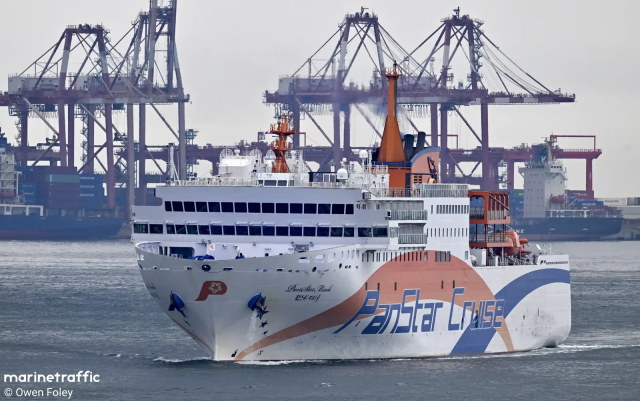
PanStar, a Busan-based maritime logistics company, operates businesses spanning container shipping, freight forwarding, passenger ferries, warehousing and ship management, with an established logistics network linking South Korea and Japan.
By consolidating cargo from Korea, Japan and eventually China at Busan, the company hopes to build a new Asia-Europe service while gaining early operational experience in Arctic navigation.
PanStar was the only shipping company to apply for the government-backed demonstration project, as larger carriers remained cautious over sanctions risks, uncertain cargo demand and commercial profitability.
The government project required a container ship of roughly 3,000 TEUs capable of sailing the Northern Sea Route during the limited August-September navigation window while qualifying for a Polar Ship Certificate.
Because PanStar had no suitable vessel in its fleet, it initially explored purchasing a secondhand ship in Europe or commissioning a newbuild in China.
Neither option could meet the targeted sailing schedule.
The search eventually led to HMM's 2,758-TEU Mombasa.
The companies signed a purchase agreement on July 31, after which the ship was renamed PanStar Acro for the Arctic mission.
The transaction involved more than simply disposing of an aging vessel. HMM had been operating Mombasa in commercial service, requiring adjustments to its fleet deployment before transferring ownership.
Although the purchase price has not been disclosed, comparable secondhand ships of similar size are valued at roughly $36 million in the international market.
The Northern Sea Route has attracted growing attention as climate change gradually reduces Arctic sea ice.
For voyages between Busan and Rotterdam, the route cuts approximately 8,000 kilometers from the traditional Suez Canal passage.
While actual time savings depend on weather, ice conditions and escort requirements, shorter voyages can reduce fuel consumption, delivery times and working capital tied up in cargo.
According to the Arctic Council's Protection of the Arctic Marine Environment working group, the number of vessels operating in Arctic Polar Code waters has increased by about 40 percent since 2013, while total sailing distance has nearly doubled.
Satellite observations also show Arctic summer sea ice shrinking by roughly 9.8 percent each decade relative to the 1981 to 2010 average, gradually extending the seasonal navigation window.
China has emerged as one of the route's most active users.
Last year, the Chinese-operated Istanbul Bridge completed a voyage from China to Britain through the Arctic in about 20 days, roughly half the transit time typically required via the Suez Canal.
For Beijing, the route offers not only faster access to Europe but also reduced dependence on strategic maritime chokepoints such as the Strait of Malacca.
As one of the world's largest exporting nations, South Korea depends heavily on uninterrupted maritime supply chains.
Operational experience along the Northern Sea Route could provide exporters with an alternative corridor whenever geopolitical tensions or disruptions threaten traditional shipping lanes.
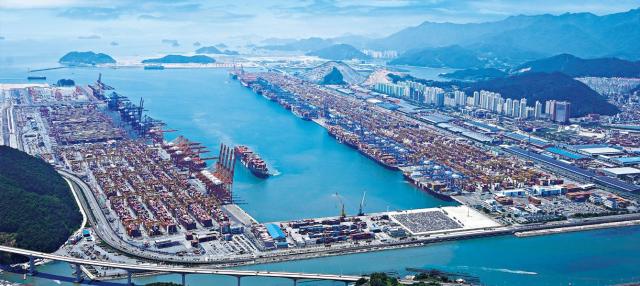
Busan also enjoys a geographic advantage.
Located closer to the Pacific entrance of the Arctic than most competing Asian ports, it could develop into a regional consolidation hub for Korean and Japanese cargo bound for Europe. Interest from Japanese shippers in the PanStar trial underscores that potential.
The voyage also marks a shift in Korea's Arctic ambitions.
In 2013, Hyundai Glovis became the first Korean shipping company to test the Northern Sea Route by transporting Russian naphtha to Gwangyang aboard a chartered tanker.
This time, however, the focus is not bulk commodities but ordinary containerized exports from multiple companies—a far more complex commercial model that more closely resembles regular liner shipping.
The biggest challenge facing the project is geopolitical rather than environmental.
Most of the Northern Sea Route lies within waters administered by Russia, making cooperation with Russian authorities unavoidable for navigation information, permits, weather services and, in some cases, icebreaker assistance.
Even relatively small payments for those services could raise compliance questions under Western sanctions and potentially expose shipping companies, insurers and financial institutions to secondary sanctions.
Government officials said Seoul has therefore been consulting closely with the United States and other partners before allowing the voyage to proceed.
Ships operating in Arctic waters must also comply with the International Maritime Organization's Polar Code governing vessel design, equipment, crew qualifications, emergency preparedness and environmental protection before receiving a Polar Ship Certificate.
Despite growing interest, the Northern Sea Route remains far from a mainstream container corridor.
The route recorded just 103 full transit voyages carrying approximately 3.2 million tons of cargo in 2025—a tiny fraction of global maritime trade—and remains highly seasonal, with much of the traffic linked to Russian energy exports and Chinese shipping.

Copyright ⓒ Aju Press All rights reserved.