


Latest by
-
 Shooting at Idaho In-N-Out Burger Leaves Four Dead, Including Suspect A shooting at an In-N-Out Burger in Twin Falls, Idaho, resulted in the deaths of four people, including the suspect, and left seven others injured. Reports indicate that an off-duty police officer and an armed citizen intervened, preventing further casualties.According to the Associated Press, the incident occurred around 2 p.m. on August 2 at the fast-food restaurant in southern Idaho.Police identified the shooter as 24-year-old Chad Williams. He was found dead from a self-inflicted gunshot wound near the restaurant after the attack. Twin Falls Police Chief Matthew Hicks stated at a press conference, "We are confident that Williams acted alone in this incident."The shooting resulted in four fatalities, including one In-N-Out employee. Lindsey Snyder, the restaurant's owner, expressed her sorrow on social media, stating, "We lost a beautiful employee tonight. I grieve with the family and pray they can endure this painful time."Authorities reported that an off-duty state police officer and a citizen with a firearm returned fire at the shooter. Their identities have not been disclosed. Chief Hicks praised their actions, saying, "Their response helped drive the suspect away from the restaurant, preventing additional casualties. We thank these heroes for their actions to stop this incident."At the time of the shooting, hundreds of people were present in the restaurant and nearby shopping mall. A witness reported that a man armed with an AR-style rifle opened fire after exiting the drive-thru, and a citizen with a handgun returned fire at the shooter.The FBI has requested that citizens submit any photos or videos taken during the incident. Police are investigating the motive behind the shooting and continuing to interview witnesses.The In-N-Out Burger where the shooting occurred opened on July 24, just a week before the tragic event, as part of the company's expansion into Idaho from its California headquarters.Twin Falls is a city of approximately 56,000 residents, located about 205 kilometers southeast of Boise, Idaho.* This article has been translated by AI. 2026-08-03 16:12:00
 -
The Myth of the Yen as a Safe Asset is Shattered The term 'safe asset' gains more significance as economic and financial markets become unstable. During times of war, financial crises, or recessions, investors tend to sell off riskier assets and flock to those perceived as stable. The U.S. dollar, gold, Swiss franc, and Japanese yen have long been considered representative safe assets. Particularly, the yen has served as a refuge in the global financial market, supported by Japan's substantial net foreign assets, ample liquidity, and political and social stability. However, the yen's recent performance starkly contrasts its past reputation.The recent acknowledgment by the U.S. and Japanese governments of their coordinated intervention in the foreign exchange market to halt the yen's sharp decline is a significant event in itself. This marks the first joint market intervention by the two nations to defend the yen since the Asian financial crisis in 1998. The yen, which fell to a 40-year low of over 160 yen per dollar, has regained some stability following the intervention, but the fact that a currency from the world's fourth-largest economy requires support from its allies is a serious concern.The yen's depreciation cannot be solely attributed to the interest rate differential between the U.S. and Japan. While the rate gap is a direct trigger, it is rooted in structural issues that have plagued the Japanese economy for decades. Long-term low growth, deflation, one of the highest national debts in the world, a declining and aging population, prolonged ultra-low interest rate policies, and doubts about the economic policies of the government led by Sanae Takaichi have collectively eroded trust in the yen, especially amid the AI revolution that has comparatively slowed industrial competitiveness. In the past, it was natural for the yen to appreciate during global economic crises, but now it is not unusual to see the yen weaken even as global uncertainties rise. The yen illustrates that the label of 'safe asset' can only be maintained when backed by a solid economic foundation.In contrast, the recent movements of the Chinese yuan present an interesting juxtaposition. Last month, the yuan's exchange rate fell below 6.8 yuan per dollar, reaching its highest value in three and a half years. China also faces significant challenges, including a real estate slump, weak consumer spending, and strategic competition with the U.S. Nevertheless, its competitiveness across various sectors, including light industry, electric vehicles, batteries, semiconductors, shipbuilding, and aerospace, has bolstered exports and increased market trust in the yuan. While the unique aspects of China's foreign exchange market management and capital controls must be considered, it is undeniable that industrial competitiveness significantly impacts currency value.The divergent trends of the yen and yuan offer insights for South Korea as well. Exchange rates are not determined solely by interest rate differentials or interventions by foreign exchange authorities. They reflect a comprehensive assessment of a country's growth potential, industrial competitiveness, fiscal health, and market expectations for the future. Increasing foreign exchange reserves and defending the exchange rate may provide temporary relief, but they do not create inherent trust in a currency. Markets evaluate currencies based on economic fundamentals. The recent appreciation of the won following SK Hynix's issuance of American Depositary Receipts (ADRs) illustrates that industrial competitiveness can influence currency value.South Korea also faces structural challenges, including low birth rates, an aging population, and declining potential growth rates. At the same time, global competition surrounding next-generation industries such as AI, semiconductors, biotechnology, and future mobility is intensifying. The yen's decline is not solely Japan's issue; it serves as a warning that currency trust stems from economic trust. The status of safe assets and strong currencies can ultimately be sustained only on the foundation of robust industrial competitiveness and sustainable growth.* This article has been translated by AI. 2026-08-03 16:12:00
-
Justice Ministry Holds Ceremony for 19 New Prosecutors The Justice Ministry held a ceremony on August 3 at the Government Complex in Gwacheon, Gyeonggi Province, to appoint 19 new prosecutors who have completed their military service as legal officers. During the ceremony, the new prosecutors pledged, "I solemnly vow to serve the people and the nation with all my strength from beginning to end, risking my honor."The new prosecutors are graduates of the 12th bar exam and have gained diverse experience over the past three years serving as military legal officers and public interest legal officers. They were selected through a rigorous evaluation process that included document screening, practical record assessments, personality tests, and evaluations of job and organizational competencies.Attendees included Justice Minister Jung Sung-ho, the new prosecutors, and their families. Family members celebrated the occasion by helping the new prosecutors don their legal robes. The new prosecutors read their oath with determined expressions, stating, "We will serve the people and the nation with all our strength from beginning to end."In his congratulatory speech, Minister Jung emphasized that the fundamental role of prosecutors in protecting citizens from crime will never change. He urged them to deeply engrain the essence of the prosecutor's system, which is to protect human rights, and to faithfully fulfill their duties.He acknowledged past public outrage and criticism due to the abuse of power by some prosecutors but noted that the majority of their predecessors dedicated their lives to protecting citizens' rights. He encouraged the new prosecutors to actively perform their roles under the new system to ensure it becomes more effective and human rights-oriented.Minister Jung also stressed the importance of professionalism and caution. He noted that the responsibilities of prosecutors will increasingly focus on serious crimes requiring high levels of expertise, such as financial and securities crimes. He cautioned that a single hasty decision or action by a prosecutor could lead to public distrust in the criminal justice system, urging them to always be mindful of their conduct.The 19 new prosecutors will complete approximately two months of practical training at the Judicial Research and Training Institute before being assigned to district prosecutors' offices in early October.A Justice Ministry official stated, "In light of significant changes in the criminal justice system, we will fully support the prosecutors in fulfilling their essential role of protecting citizens' rights and safeguarding the community from crime." 2026-08-03 16:12:00
-
 South Korea breaks ground on $1.7 billion AI computing center SEOUL, August 03 (AJP) - South Korea broke ground on a national artificial intelligence computing center in the country's southwest, launching a flagship project meant to secure the vast computing power its ambitions in the technology increasingly demand. The Ministry of Science and ICT held the groundbreaking ceremony on Monday at the Solaseado data center park in Haenam, South Jeolla Province, marking the formal start of construction on a facility that will draw about 2.5 trillion won ($1.74 billion) in investment through 2028. The center will house 15,000 graphics processing units by 2028 to train and research large-scale AI models, the ministry said, positioning the site as a national hub for the scarce chips that underpin advanced AI development. "Just two years ago we were worrying about securing GPUs, but now is the moment for Korea to leap forward as a leading player in the AI market," said Bae Kyung-hoon, Deputy Prime Minister and Minister of Science and ICT. Bae described the center as a "token factory" that would export a token-based economy to the world. A consortium led by Samsung SDS, the sole bidder in a public tender held last autumn, was selected to build and run the complex, with partners including Naver Cloud, Kakao, KT and Samsung Electronics. The group launched a public-private joint venture, Korea AI Computing Center, in June to oversee operations. Samsung SDS said the facility would support the full arc of AI development, from building industry-specific models to large-scale training and inference, and pledged discounted access for startups, smaller firms and academic researchers. How much of the computing capacity will be reserved for public-sector users has not yet been decided. The government aims to complete the center by 2028, though the consortium plans to bring some computing resources online as early as 2027 using an existing Samsung SDS data center to meet early demand from industry and academia. 2026-08-03 16:09:29
 -
Construction Companies Compete for AI Data Center Contracts in Second Half of 2026 Major construction companies are actively entering the competition for AI data center contracts in the second half of 2026. With overall recovery in second-quarter performance, the actual contracts for data center projects are expected to determine the order backlog and non-residential growth for the latter half of the year.According to the construction industry on August 3, major firms such as Samsung C&T, GS Construction, DL E&C, Daewoo Construction, and SK Eco Plant are expanding their business scope beyond data center construction to include site development, power and cooling systems, and operations.Given the ongoing uncertainties in the housing market and sales, experts suggest that securing new orders in non-residential projects like data centers and nuclear power plants is essential for maintaining the recovery trend.GS Construction is currently the center of attention in the market for the second half of the year. The GS Group plans to develop a 2.4GW AI data center campus in the Bukpyeong 2nd General Industrial Complex in Donghae City, Gangwon Province, with 1.2GW expected by 2028 and an additional 1.2GW by 2029. They have already secured a site of approximately 180,000 pyeong and can utilize nearby power facilities and water resources.GS Construction and its subsidiary, GS E&C, are currently engaged in data center projects in Goyang, Paju, and Sejong. The industry anticipates that, including projects in Ilsan and Busan, they could secure an additional 120MW and around 1 trillion won in orders this semester. If the Donghae project is officially ordered, the scale of data center contracts for construction companies could increase to the gigawatt level.However, the Donghae project has not yet been confirmed as an order for GS Construction. Due to its large scale, it must go through power supply planning, permits, and securing an operating company and investors before it can lead to a formal contract. The second half of the year will be a critical test to see if the group's investment plans can be converted into the construction company's order backlog.Samsung C&T is developing data centers as a specialized technology product. They operate a dedicated organization that encompasses investment, business development, design, construction, and operations, having secured a 40MW global cloud center in Ansan for 400 billion won. They have also acquired next-generation cooling technologies, such as immersion cooling, to reduce heat from high-performance AI servers.AI data centers consume more power and generate more heat per server than traditional data centers, making cooling and power stability crucial. Consequently, a construction company's competitiveness will likely depend on its ability to integrate initial design, power and mechanical systems, and cooling technologies rather than just construction performance.DL E&C emphasizes its experience in external orders targeting global operators and specialized clients. They have completed data centers in Sangam and Gasan and are currently constructing a data center in Gimpo. Their subsidiary, DL Construction, has also secured a contract for the construction of the Bucheon Samjeong AI Hub Center. The company aims to diversify its portfolio by expanding orders for data centers and power plants this year.Daewoo Construction has established a dedicated task force for data centers this year, expanding its scope from construction to development projects. They are participating as both an investor and contractor for the Pyeongdata Center in Jangseong, Jeollanam-do. The Jangseong center will have a power capacity of 26MW and will consist of six floors for the data center and two floors for operations. Daewoo Construction plans to enhance its capabilities in site acquisition, permitting, and operations management.SK Eco Plant is gaining integrated construction experience through its ongoing Ulsan AI data center project, which includes power and cooling systems. They are responsible for the design and construction of key facilities, as well as the establishment of power, communication, and cooling systems. They are also applying technology that utilizes heat generated during fuel cell power generation for cooling water production in their data center projects.A construction industry official stated, “The reason construction companies are focusing on data centers is that the project timelines are relatively short compared to housing, and large projects can lead to orders worth hundreds of billions to trillions of won. By participating in site development, equity investment, and operations, they can expect rental and operational revenue even after construction is completed.”* This article has been translated by AI. 2026-08-03 16:04:00
-
Physical AI: The Shift from Selling Robots to Service Models, Says Mind AI CEO As artificial intelligence (AI) expands beyond generative models into various industries, interest in new AI value chains is growing in the domestic stock market. The industrial ecosystem is rapidly reshaping, encompassing everything from AI models to semiconductors, data, robots, and application services. Aju Economy is meeting with domestic listed companies expected to secure next-generation growth engines amid global AI competition to explore their business strategies and growth potential."It is difficult to succeed in the physical AI business by merely selling robots. Ultimately, companies that provide services while accumulating on-site data will dominate the market," said Choi Hong-seob, CEO of Mind AI, in a recent interview at the company's office in the Pangyo IT Center. He emphasized that the core competitiveness of physical AI, which is gaining attention as the next growth driver after generative AI, lies in its 'service-based business model.' Mind AI aims to evolve into a full-stack service company that integrates everything from data collection to learning and operation, rather than just selling robots and AI models.Choi joined Minds Lab (now Mind AI) in 2017 and has led the shift to a physical AI strategy. He currently serves as co-CEO alongside Yoo Tae-jun, overseeing technology development and commercialization.Founded in 2014, Mind AI became a publicly traded AI company on the KOSDAQ in 2021. Recently, it has rapidly expanded its business, focusing on applying AI in real industrial settings as a future growth pillar. In 2023 and 2024, over 95% of its total revenue came from agent AI services, including enterprise AI platforms and AICC. However, last year, revenue from physical AI surged from 42 million won to 2.648 billion won, increasing its share of total revenue to 27%.Choi identified the most important milestone of the year as the government project to develop a physical AI world model in collaboration with LG Electronics. This project aims to develop a domestic physical AI foundation model applicable to manufacturing sites and validate its practical use in real industrial environments.He stated, "We plan to unveil our own physical AI model by the end of the year and are preparing a large-scale event related to it. We also plan to introduce our own dual-arm robot that can operate in actual factories within the year."Mind AI's decision to develop its own robots stems from recognizing the limitations of the traditional robot sales model in the physical AI business. Simply delivering robots does not mean they can be immediately deployed in production environments; data collection, AI learning, and iterative performance improvements must follow.Choi explained, "Just bringing one robot into a factory does not mean it can start working right away. We need to collect process data and use GPUs to train the model, and when new processes arise, we must repeat the same steps. It is virtually impossible for customers to carry out all these processes themselves."As a result, Mind AI plans to shift to a service model starting next year, providing robots and AI without the initial investment burden for customers. Mind AI will handle data collection, remote operation, model training, and maintenance.The market atmosphere for physical AI is also changing rapidly. Choi noted, "Last year, we were bidding for small-scale PoCs (proof of concepts) worth millions of won, but now project prices have increased by three to four times. Inquiries are coming in from large manufacturing projects, construction, and defense sectors, and contract sizes are expanding significantly."The government research and development (R&D) environment has also evolved. While government projects focused on LLMs until last year, they have expanded into the physical AI sector this year, although the number of companies capable of executing these projects is extremely limited. He remarked, "This year, the number of government projects is the highest since our founding, and while thousands of companies compete in LLMs, the supply in physical AI is insufficient, leading to continuously rising project prices."Choi pointed out that the high entry barriers in physical AI stem from the need to secure not only AI but also hardware, simulation, and on-device technologies. He stated, "We are now in an era where hardware is designed to ensure AI operates effectively, rather than AI determining hardware. It is challenging to secure commercialization competitiveness by developing AI and robots separately."Initially, Mind AI plans for humans to remotely operate robots while accumulating data, and in the long term, as AI performance improves, one person will manage multiple robots. Choi said, "At first, one person will manage one robot, but as that number increases to two, five, or ten, profitability will improve significantly. Even conservatively, we aim for a business model with an operating profit margin of over 50%."* This article has been translated by AI. 2026-08-03 16:00:20
-
MHS Partners with HyperExcel to Implement Liquid Cooling for AI Chips Thermal management specialist MHS is advancing plans to apply liquid cooling technology to HyperExcel's next-generation AI semiconductors. The collaboration, which began with heat sink supply, aims to expand into cooling solutions for high-heat AI semiconductors.On August 3, MHS announced it is broadening its cooling technology partnership with AI semiconductor fabless company HyperExcel. The two companies are jointly reviewing thermal management technologies from the product development stage based on a memorandum of understanding (MOU) signed last year.HyperExcel is developing an LPU architecture specialized for large language model inference operations. Its flagship product, Bertha, targets the generative AI inference semiconductor market.MHS is currently supplying heat sinks for the evaluation board (EVB) used in the development of Bertha. The evaluation board is a device that verifies performance, power efficiency, and operational stability before mass production of semiconductors.The two companies are also discussing the application of MHS's liquid cooling technology, MACS, to Bertha. MACS utilizes a microchannel cooling method that circulates coolant through fine channels within a thin cooling plate.As the computational performance and power consumption of AI semiconductors increase, it has become increasingly difficult to manage heat with traditional air cooling alone. Industry experts anticipate that the adoption of liquid cooling will expand to maintain semiconductor performance and reduce cooling power in data centers.MHS recently completed the development of thermal management components for Mobilint's next-generation NPU accelerator, MLA400, and is now responsible for mass production supply, expanding its collaboration with domestic AI semiconductor companies from the development stage to mass production.MHS plans to provide thermal analysis, heat dissipation design, and prototype production, followed by manufacturability review and mass production support. The company is expected to gradually expand the application of thermal management technologies, including heat sinks and liquid cooling, in line with Bertha's development schedule.Lim Jong-soo, CEO of MHS, stated, "We will provide suitable thermal management solutions for HyperExcel from the evaluation board stage to mass production, and we will also expand our collaboration on liquid cooling using MACS to enhance product competitiveness." 2026-08-03 16:00:20
-
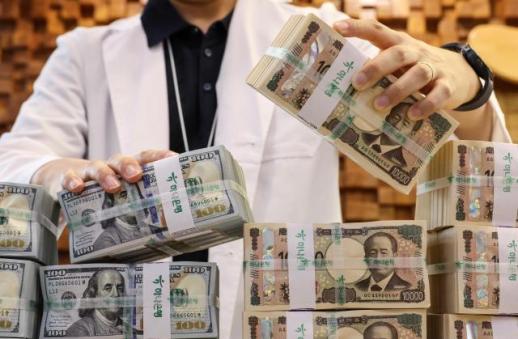 US-Japan yen rescue puts 1,400 won back in play, bonds shrug SEOUL, August 03 (AJP) - The blunt yen-defense campaign jointly mounted by Washington and Tokyo has fundamentally shifted the outlook for the Korean won, putting the psychologically important 1,400-per-dollar level back within reach after the currency spent much of the first half trading around 1,500. The same intervention, however, has offered little relief to Korea's sovereign bond market, where heavy government issuance and a hawkish Bank of Korea continue to outweigh improving global conditions. The won closed at 1,429.8 per dollar at 3:30 p.m. Monday, strengthening 3.5 won from its opening level of 1,433.3 after the coordinated intervention helped reverse its early losses. The currency has appreciated more than 8 percent over the past month, far outpacing the dollar index's 1.3 percent decline and the Japanese yen's 1.4 percent gain during the same period. By contrast, the benchmark 10-year Korean government bond yield was quoted at 4.268 percent in late-afternoon trading, 0.6 basis point above Friday's close after briefly falling to 4.247 percent earlier in the session. The divergent moves underscored that the intervention has become a far more powerful driver for foreign exchange than for Korea's longer-dated government bonds. The United States and Japan confirmed they jointly purchased yen on July 31 after the Japanese currency weakened to its lowest level in roughly four decades. U.S. Treasury Secretary Scott Bessent said Washington was prepared to participate in additional intervention if necessary, helping the yen rebound after it neared 164 per dollar. Although Korea was not directly involved, the operation significantly raised the risk of maintaining bearish positions against Asian currencies that had traded largely as proxies for the yen. The won had already strengthened sharply in July as dollar inflows increased following SK hynix's ADR offering, exporters stepped up dollar conversions and the Bank of Korea raised interest rates, narrowing the policy gap with the Federal Reserve. The currency appreciated 8.81 percent during July alone, its strongest monthly gain since March 2009, ending the month at 1,424 after beginning at 1,549.4. Most economists now see the won testing 1,400 in coming months, although views diverge over whether the rally can be sustained into year-end. Kim Seo-jae, an economist at Shinhan Bank, expects the won to strengthen beyond 1,400 during the third quarter before weakening again in the fourth quarter as large U.S. IPO-related dollar demand returns and expectations for additional Federal Reserve tightening potentially re-emerge. Taken together, the forecasts suggest the intervention has materially improved the won's near-term outlook without guaranteeing that overseas investment flows and U.S. monetary policy will not eventually reassert themselves. Bonds tell a different story The bond market responded far less enthusiastically because domestic supply and monetary policy remain the dominant drivers of longer-term yields. A stronger won reduces imported inflation and eases pressure on the Bank of Korea to tighten policy simply to defend the currency, providing greater support to short-dated bonds. Longer maturities, however, remain hostage to domestic issuance. The government auctioned 3.3 trillion won of two-year bonds Monday and is scheduled to sell another 2.8 trillion won of 30-year bonds Tuesday as part of August's 17 trillion won borrowing program. The approaching long-bond auction, combined with profit-taking after Friday's rally, kept investors cautious despite lower U.S. Treasury yields. Korea's benchmark 10-year government bond yield climbed 16.6 basis points during July after the Bank of Korea's first rate increase of the cycle and policymakers signaled additional tightening to curb inflation and speculative leverage. Meanwhile, U.S. Treasuries rallied, with the benchmark 10-year yield falling 5.7 basis points to 4.688 percent and the 30-year yield declining 4.2 basis points to 5.233 percent. The contrast illustrates that declining U.S. yields alone were insufficient to overcome Korea's immediate supply overhang. The Treasury angle The intervention also carries broader implications for global bond markets because Japan remains the largest foreign holder of U.S. government debt, with $1.143 trillion of Treasuries at the end of May. Large-scale yen intervention has historically raised concerns that Tokyo could finance dollar sales by liquidating Treasuries, putting upward pressure on global yields. Bessent sought to address those concerns by supporting wider use of the Federal Reserve's Foreign and International Monetary Authorities Repo Facility, which allows foreign central banks to obtain temporary dollar liquidity by pledging Treasuries as collateral rather than selling them outright. Greater use of the FIMA facility would enable Japan to fund future intervention while minimizing disruption to the U.S. Treasury market. That, in turn, could help contain upward pressure on long-term global yields and eventually benefit Korean government bonds through international rate linkages, although domestic issuance and Bank of Korea policy would likely remain the primary determinants of local yields. 2026-08-03 16:00:17
 -
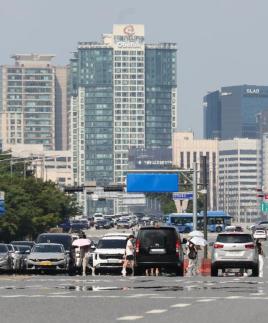 Yeongdeungpo District Faces Scorching Heat Heat haze shimmers above a road near a bus transfer center in Yeongdeungpo District, Seoul, as heat wave warnings were issued across most parts of South Korea on Aug. 3, 2026. The daytime high in Seoul soared to 37 degrees Celsius. 2026-08-03 15:57:55
 -
 Nearly 20,000 firms became 1st-time exporters last year, highest in 5 years SEOUL, August 3 (AJP) - Nearly 20,000 South Korean companies exported goods for the first time last year, the highest number in five years, according to data released by the Korea Customs Service (KCS) on Monday. The number of first-time exporters with no export record in the previous three years rose 3.7 percent from a year earlier to 19,746 in 2025, while their combined exports increased 13.2 percent to US$6.9 billion, the highest level since 2019. By product, machinery and computers accounted for the largest share of first-time exporters at 10.9 percent, followed by electrical products at 8.5 percent, cosmetics at 7 percent, plastics at 6.7 percent and automobiles at 5.6 percent. They shipped an average of 1.4 products each. Of them, 72.2 percent exported only one product, while 98.4 percent exported fewer than 10 products. In terms of export value, 15,885 companies or 80 percent of first-time exporters shipped less than US$100,000 worth of goods. Smaller exporters mainly shipped machinery and computers, electrical products and cosmetics, while automobiles accounted for the largest portion among companies exporting between $100,000 and less than $10 million. Exporters with shipments of $10 million or more mainly exported precious metals. First-time exporters shipped goods to 173 countries, with China being the top destination at 14 percent, followed by the United States at 10.9 percent, Japan at 7.5 percent, Vietnam at 6.4 percent and the European Union at 5.3 percent. Each company exported to an average of 1.6 countries, while 15,929 companies, or 80.7 percent, shipped goods to only one country. They were mostly concentrated in Seoul and the metropolitan areas including Incheon and Gyeonggi Province, which accounted for 70.4 percent of the total. 2026-08-03 15:57:50