


Latest by
-
 Samsung SDS Partners with Anthropic to Target Enterprise AI Market Samsung SDS announced a strategic partnership with global artificial intelligence (AI) company Anthropic to expand the enterprise AI market in South Korea.Samsung SDS is the first domestic company to establish a strategic partnership with Anthropic. The two companies plan to jointly explore new business opportunities in the Korean market and support the adoption and utilization of AI within enterprises. They aim to strengthen their approach to the enterprise AI market through joint marketing, proof of concept (PoC) initiatives, and collaborative projects.This collaboration will enable Samsung SDS to expand its enterprise AI business based on Anthropic's generative AI model, Claude. Currently, Samsung is transitioning to an AI-centered work system, providing 'Claude Enterprise' to 20 affiliated companies and approximately 70,000 employees.Additionally, Samsung SDS plans to operate a program to train application-based AI engineers capable of managing everything from planning to implementation and technical support for Claude. In the future, the company aims to support external corporate clients throughout the entire process of adopting and utilizing Claude, thereby expanding its AI transformation (AX) business.Lee Jun-hee, CEO of Samsung SDS, stated, "We will support our customers' AI innovation based on the strengths of both companies and create new business value through reliable AI solutions." Chris Siouris, head of Anthropic International, explained, "Samsung SDS has the capabilities to play a key role in accelerating the adoption of Claude among Korean companies, which is why we established this strategic partnership."Meanwhile, Samsung SDS is also collaborating with other global AI companies, including OpenAI and Google Cloud. This foundation allows Samsung to provide various generative AI services, such as ChatGPT, Claude, and Gemini, to its affiliated employees.* This article has been translated by AI. 2026-07-25 15:48:00
 -
Korea's Tidal Flats Achieve Expanded UNESCO World Heritage Status Heo Min, the head of the Cultural Heritage Administration, described the expanded listing of Korea's tidal flats as a "glorious achievement" on July 25.During the 48th UNESCO World Heritage Committee meeting held at BEXCO in Busan, the second phase of the listing for "Korea's Tidal Flats" was confirmed. Heo expressed hope that this would enhance international solidarity and cooperation to preserve the tidal flats' outstanding universal value.On the same day, participating countries announced the "Busan Declaration on Cooperation for the Conservation of the Yellow Sea Tidal Flats and Coastal Wetlands." This declaration is a voluntary commitment among participating organizations and relevant countries to support the conservation of the Yellow Sea's tidal flats and coastal wetlands, which serve as habitats for migratory birds. It includes provisions to enhance communication and cooperation among representatives of coastal countries, promote joint scientific research, monitoring, and data sharing to improve understanding of the ecological connectivity of the Yellow Sea habitats.Heo stated, "With the 'Joint Statement on Cooperation for the Conservation of the Yellow Sea Tidal Flats and Coastal Wetlands,' I hope we can advance international solidarity and cooperation to preserve the outstanding universal value of the tidal flats. We will continue to work closely with the Ministry of Oceans and Fisheries, local governments, the Korea Tidal Flats Listing Promotion Team, and the international community."He also emphasized that tidal flats are not merely natural heritage confined to a single country, but are a crucial ecological axis of the East Asia-Australasia Flyway, connecting migratory birds across borders. He noted, "In particular, the tidal flats and coastal wetlands of the Yellow Sea are vital resting and feeding grounds for numerous migratory birds. Protecting these tidal flats is not just the responsibility of one country; it is a shared task that the international community must undertake together."Since the listing of "Korea's Tidal Flats" as a World Heritage site in 2021, South Korea has diligently implemented the recommendations of the World Heritage Committee and has continuously worked to enhance the outstanding universal value of the tidal flats.Heo concluded, "Today's expanded listing is the result of collaboration among the central government, local governments, communities, the World Heritage Center, IUCN (International Union for Conservation of Nature), EAAFP (East Asia-Australasia Flyway Partnership), WCF (World Coastal Forum), and all international organizations and partners, achieved through trust and cooperation." 2026-07-25 15:44:00
-
The Future of K-Content in the Age of Generative AI, Says Kim Yoon-ji South Korea is leading the global cultural market with K-pop, K-dramas, games, and webtoons. However, the emergence of generative AI is reshaping the content industry. AI is no longer just a production tool; it is a new platform that transforms content planning, creation, distribution, and export. The Korea Creative Content Agency (KOCCA) stands at the forefront of whether South Korea can evolve from a K-content powerhouse to an AI content leader. AI is transforming the content industry The content industry is at a significant turning point. In the past, creative ideas and excellent production skills were the keys to competitiveness. Now, AI is being added to the mix. Generative AI is fundamentally changing the production methods for videos, music, webtoons, games, and animations. Production times are decreasing, and costs are being cut. We are entering an era where individuals can create content aimed at global markets. The question is clear: Will South Korea be a consumer of these changes, or will it become a leading nation that creates new markets? AI does not replace creators but enhances their imagination One of the most common concerns about AI is that it will take jobs away from creators. However, the true role of AI is not to replace creators but to expand their imagination. AI reduces repetitive tasks, automates translation and dubbing, and assists with video editing and special effects. This allows creators to focus more on planning, storytelling, and emotional expression. We are moving into an era where it is not about competition between AI and humans, but rather about creators who effectively utilize AI leading the global market. K-Content must integrate with AI South Korea's greatest competitive advantage lies in its strong intellectual property (IP). Dramas, films, webtoons, games, music, and characters are recognized as valuable content assets worldwide. Now, AI must be added to this mix. AI can translate content into various languages, analyze overseas user preferences, and recommend content suitable for global platforms. It can also support the production process. Combining K-content with AI will enhance production efficiency and strengthen global competitiveness. AI is a new growth engine for the content industry. We need to nurture AI creators The key competitive advantage in the AI era is not technology but people. We need more directors who make films using AI, programmers who develop games, writers who create webtoons, and producers who make music. The training and education of AI creators promoted by KOCCA are significant in this regard. Equipping industry professionals with the ability to utilize AI and create a new creative ecosystem can lead to national competitiveness. AI content companies must expand globally Creating good content is not enough; it must connect to the global market. AI lowers the barriers to international expansion. Automated translation, dubbing, and localization technologies help K-content reach more countries. When KOCCA's overseas business hubs combine with AI technology, domestic content companies can target the global market more quickly. We must create an AI content ecosystem In the AI era, it is difficult for companies to grow alone. AI companies and content companies must collaborate. Startups and large corporations should work together to create new production systems. Universities and research institutions need to develop new technologies, and the government should support these efforts. AI content production support projects are policies aimed at creating such an ecosystem. They provide support for AI content production at various stages of company growth through entry-level, leading, and collaborative assistance. AI heralds a new era for K-Culture K-content has already become a representative export industry for South Korea. Now, the goal is even bigger. Through AI, we must produce content more quickly, export it to a wider range of countries, and continuously create new IP. When games, films, broadcasting, webtoons, music, and performances are interconnected within a single AI ecosystem, South Korea can leap from being a cultural powerhouse to an AI cultural superpower. AI is not just a technological revolution; it is a cultural revolution. Kim Yoon-ji, the head of KOCCA, has emphasized the core direction since her appointment: creating new value from intellectual property (IP), supporting export economic policies for the content industry, establishing a growth foundation for creators and companies, and proactively responding to advanced technologies like artificial intelligence (AI). This ultimately signifies the future growth strategy for South Korea's content industry. KOCCA's role must also evolve. It should transform from an agency that supports content to a platform that designs the AI content industry. AI does not replace creators; it expands their possibilities. AI does not standardize content; it enables a wider range of imagination to be realized. To maintain the global competitiveness of K-content in the AI era, South Korea must connect technology, creativity, IP, and global strategies into one. The goal of the AI content revolution is clear: to elevate South Korea from a content powerhouse to an AI content superpower. Kim Yoon-ji, the head of KOCCA, is an expert in the content industry and cultural economy, having researched the economic effects of content exports and the financial infrastructure needed for global expansion at the Korea Export-Import Bank's Overseas Economic Research Institute. Since her appointment, she has focused on creating value from intellectual property (IP), supporting industry from an export economic policy perspective, establishing a growth foundation for creators and companies, and responding to advanced technologies like artificial intelligence (AI), concentrating her efforts on helping content companies enter global markets and fostering an AI-based industrial ecosystem.* This article has been translated by AI. 2026-07-25 15:36:00
-
Lee Jae-yong Highlights AI's Importance for Future Generations Lee Jae-yong, chairman of Samsung Electronics, emphasized the company's commitment to nurturing the next generation in the age of artificial intelligence (AI) by referencing a story from President Yoon Suk Yeol's autobiography.Speaking at the San Francisco AI Summit on July 24, Lee recalled a moment from the president's autobiography when he described feeling awe as a boy after seeing a helicopter land at his rural elementary school 50 years ago. Lee stated, "Just as that boy dreamed of the future upon seeing the helicopter, we at Samsung will do our utmost to ensure that the next generation living in the AI era can dream even bigger dreams."He also highlighted the significance of Korea-U.S. cooperation, stating, "The AI era cannot be achieved by the strength of a single company or nation alone. If the strengths of our two countries combine, we can innovate faster, grow larger, and solve more complex challenges."Lee expressed his amazement at the rapid pace at which AI is transforming lives and the world during his recent visits to Silicon Valley. He noted, "How we develop and utilize AI will determine the vastly different futures that lie ahead of us. Humanity's way of working, thinking, and living has fundamentally changed."He added, "Building a perfect ecosystem that includes innovative AI models, cutting-edge semiconductors, reliable data centers, and abundant power is essential, as is global cooperation that transcends borders."Finally, Lee reiterated Samsung's management philosophy of contributing to society through technology, stating, "We will continue to pursue innovations in AI that enhance safety and improve human life in alignment with the global community."* This article has been translated by AI. 2026-07-25 15:32:00
-
Hyundai's Chung Un-chan Unveils AI Vision for Cities in San Francisco Chung Un-chan, chairman of Hyundai Motor Group, unveiled the group's vision for the era of Physical AI at the San Francisco AI Summit on July 24.He presented a future vision of 'city-level integrated intelligence' that connects not only cars and robots but also factories and urban infrastructure through AI. The group plans to strengthen partnerships with global tech companies to achieve this.Chung stated, "Hyundai Motor Group is transitioning beyond traditional automotive manufacturing to become a Physical AI solutions company, focusing on autonomous driving, robotics, and AI factories." The ultimate goal of the group's Physical AI initiative is to achieve 'integrated intelligence at the city level.'He explained, "The Physical AI we pursue starts with the intelligence of individual devices like cars and robots, progresses to the intelligence of specific spaces like AI factories, and ultimately aims for the organic connection and operation of the entire urban infrastructure at the city level."Chung outlined strategic collaborations with global tech giants such as NVIDIA, Waymo, and Google DeepMind to enhance Physical AI capabilities. He emphasized that Hyundai Motor Group aims to leverage its world-class manufacturing competitiveness, leading robotics technology, and data flywheel capabilities to strengthen its Physical AI competitiveness both domestically and internationally.Specifically, he revealed plans for a joint development of a 'robot reference platform' that combines Hyundai's Physical AI capabilities with NVIDIA, as well as investments in the 'Saemangeum AI Valley' to foster a new leap in the domestic industrial and technological ecosystem.Hyundai Motor Group signed a contract last year to supply 50,000 Blackwell GPUs from NVIDIA and is now working on an MOU to enhance domestic Physical AI capabilities. This includes establishing an AI technology center in collaboration with NVIDIA and expanding AI infrastructure and talent development.In Saemangeum, the group is developing the 'Saemangeum AI Valley,' which will include an AI data center, a robotics manufacturing cluster, an electrolysis plant, and an AI hydrogen city, with an investment of approximately 9 trillion won. In the Yeongnam region, Hyundai plans to invest a total of 42 trillion won over the next decade to develop a manufacturing hub based on AI, as well as advanced industries in future aviation, space, and sustainable energy infrastructure.Through these investments, Hyundai aims to secure the core foundations of data, energy, and robotics production and testing capabilities essential for the Physical AI era, contributing to national industrial competitiveness, regional balanced development, and job creation.Chung concluded, "The combination of Hyundai Motor Group's manufacturing capabilities, robotics technology, and data strengths with the advantages of big tech companies can create a new innovation ecosystem for the Physical AI era. Hyundai plans to establish an open ecosystem for the advancement of domestic robotics and AI technologies." 2026-07-25 15:32:00
-
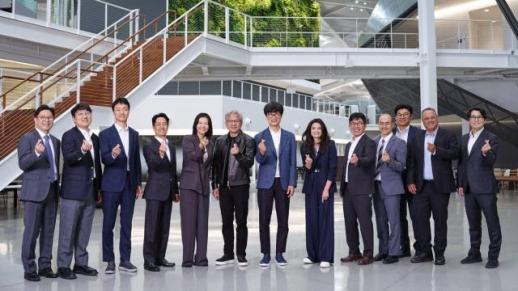 Korean firms strike $950 billion chip deals with US big tech SEOUL, July 25 (AJP) - South Korean companies and American technology giants will pursue semiconductor cooperation worth a combined $950 billion over the next five years, the presidential Blue House said Saturday, putting a price on the summit President Lee Jae Myung convened in San Francisco a day earlier. Kim Yong-beom, the presidential policy chief, gave the figure at a briefing at the press center in San Francisco, breaking down the results of the San Francisco AI Summit across the three pillars of the government's Three Mega Projects: semiconductors, AI data centers and physical AI. The total comes to about $950 billion (1,375 trillion won). The commitments are frameworks rather than signed orders. The Blue House said the announced scale covers memorandums of understanding and long-term cooperation plans, with actual investment and supply to follow as contracts are executed and projects proceed. Even so, the scale is difficult to overstate. Spread over five years, $950 billion works out to about $190 billion a year, close to the entire annual revenue of either Nvidia or Samsung Electronics, and the total nearly doubles the roughly $520 billion the two Korean chipmakers pledged in June toward new domestic fabrication plants. The largest single piece belongs to SK. The group will pursue long-term supply cooperation for advanced memory chips with Nvidia and other global technology companies worth $750 billion over five years, the Blue House said. That figure resolves a number that had hung over the summit since Friday, when Nvidia chief executive Jensen Huang told Lee that a partnership with SK Group would reach $500 billion. No documentation followed his remark. The official tally now puts SK's memory cooperation half again higher, with Huang's figure apparently representing the Nvidia portion of a wider multi-buyer arrangement. Samsung Electronics signed a memorandum of understanding with Broadcom covering $200 billion over five years, spanning advanced memory supply and foundry cooperation to manufacture AI chips. The agreement pairs Samsung's contract chipmaking business with the company designing custom AI processors for several of the world's largest cloud operators. In data centers, Korean and global companies will pursue investment cooperation on roughly five gigawatts of AI data center capacity running about two million graphics processing units. For scale, the government had secured 260,000 advanced GPUs as of this spring, and its first-phase national plan targets eight gigawatts. SK Telecom agreed with Nvidia on support for building and expanding AI data centers of up to two gigawatts, with priority allocation of Nvidia's latest Vera Rubin systems, and will pursue investment in a gigawatt-class domestic AI data center project with Anthropic. Naver signed a strategic investment agreement with Nvidia and an infrastructure supply contract with the global investment firm Brookfield to build an AI factory complex worth a combined $10 billion. In physical AI, Hyundai Motor Group and Nvidia will jointly build what they call a robot reference platform, a standardized base for developing and validating AI robots that universities and startups can build on. The Blue House also said an autonomous vehicle foundry plan was announced with Waymo, without giving details. Samsung SDS signed a strategic partnership with Anthropic to jointly develop new AI markets and train AI engineers. The results land two days after Kim told foreign correspondents the figures companies were preparing could exceed the 4,700 trillion won ($3.2 billion) headline attached to the June investment package, and they close the loop the summit opened. Lee's San Francisco AI Declaration on Friday promised that South Korea would anchor the global AI supply chain while serving as the place where the technology is put to work first. Saturday's tally is the first accounting of what that pitch brought back. "This San Francisco AI Summit was a venue for combining South Korea's semiconductor competitiveness and its AI infrastructure, model and physical AI capabilities with the technology and capital of global big tech, to build an investment and cooperation ecosystem across the full AI stack," Kim said. "It carries meaning as the starting point of a global project that will lead the world's AI industry." 2026-07-25 15:20:25
 -
SK Group's Chey Tae-won Advocates for AI Native Nation at San Francisco Summit SK Group has joined forces with global tech giants in Silicon Valley to expand the global AI ecosystem. On July 24, during the K-AI Summit held at the Fairmont Hotel in San Francisco, SK Group reached agreements with Nvidia, Microsoft, and Anthropic to collaborate on AI infrastructure, including AI semiconductors and data centers.Additionally, in a separate meeting with Amazon Web Services (AWS), SK Group discussed expanding domestic AI infrastructure cooperation based on their existing partnership in building a joint AI data center in Ulsan.Following the announcement of nationwide AI data center construction and semiconductor belt investment plans at the 'Three Mega Projects National Report Meeting' in June, SK Group aims to strengthen the execution foundation of these projects through collaboration with global tech firms. This initiative is designed to enhance South Korea's AI competitiveness while expanding the global AI ecosystem.An SK Group official stated, "The expansion of cooperation with global tech giants like Nvidia reaffirms the rapidly growing demand for AI infrastructure, such as AI memory. We expect this collaboration to further energize the recently announced 'Mega Projects' by the government."Nvidia and SK Group to Collaborate on Comprehensive AI InfrastructureSK Group will engage in comprehensive cooperation with Nvidia to build AI infrastructure worth over $500 billion. This partnership, which includes the establishment of AI factories and the supply of AI memory, was formalized with a letter of intent (LOI) signed on the same day.Initially, SK Telecom will receive next-generation GPUs to build a domestic AI factory with a capacity of up to 2 gigawatts (GW) and pursue investment collaboration. This partnership is a concrete step following their agreement in June to establish a GW-class AI factory in South Korea.SK Telecom plans to introduce the next-generation AI computing system 'Vera Rubin,' equipped with SK Hynix's HBM4, based on Nvidia's full-stack AI factory architecture, the 'DSX' platform. The goal is to gradually establish and operate high-performance AI factories starting in 2027, accelerating the development of large-scale AI infrastructure that encompasses sovereign, physical, and agentic AI, while jointly addressing the growing AI demand in the Asia-Pacific region.This collaboration is expected to accelerate the spread of AI infrastructure utilizing Nvidia technology and broaden customer access to advanced cloud services. As a result, SK Telecom will embark on large-scale AI infrastructure investments and expansions, making cutting-edge AI infrastructure more accessible to a wider range of customers.SK Hynix will also engage in long-term cooperation for AI memory supply. Following their previously established long-term technology partnership, Nvidia will provide next-generation AI memory, allowing SK Hynix to expand its growth base in the AI memory business.The two companies plan to jointly develop and optimize next-generation AI memory, such as HBM, to meet the infrastructure demands ranging from large language model (LLM) training to agentic and physical AI.Jensen Huang, founder and CEO of Nvidia, stated, "South Korea has all the conditions to become a global AI powerhouse, including world-class networks, data centers, semiconductor technology leadership, and a vast industrial base. Nvidia will work with SK Telecom and SK Hynix to create a new generation of AI factories that will drive the next growth phase in Korea."Chey Tae-won, chairman of SK Group, remarked, "The competitiveness in the AI era depends not only on how well we utilize AI but also on how much intelligence we can generate. SK aims to build world-class AI factories in collaboration with Nvidia, leveraging SK Telecom's AI infrastructure capabilities and SK Hynix's AI memory, contributing to South Korea's transformation from an AI-consuming nation to a global hub for AI innovation."SK Hynix and Microsoft to Establish Long-term AI Memory Supply CooperationSK Hynix has decided to pursue long-term memory supply cooperation with Microsoft. The two companies aim to supply server memory optimized for AI workloads to Microsoft's data centers in response to the surging demand for AI services.They plan to explore memory solutions tailored to AI workload requirements and establish new standards for AI server memory through validation in actual server environments.SK Telecom Expands AI Data Center Cooperation with Anthropic and AWSSK Telecom and Anthropic signed a comprehensive memorandum of understanding (MOU) to collaborate on building GW-class AI data centers in South Korea. Anthropic is expected to participate in SK Telecom's ongoing AI data center construction project, with plans to discuss specific cooperation methods.With AWS, SK Telecom will expand the scope of cooperation in AI infrastructure based on their partnership in jointly building the Ulsan AI data center. The two companies aim to combine SK Telecom's domestic AI data center construction and operational capabilities with AWS's global cloud and AI technology and customer base to broaden their business in key domestic locations and secure GW-class AI computing capacity in the long term.On the same day, Chey Tae-won met with Sam Altman, CEO of OpenAI, to discuss long-term cooperation in the AI infrastructure sector. SK and OpenAI have been continuously discussing collaboration plans for AI infrastructure, including memory, and have been strengthening their strategic partnership since signing a partnership agreement last October regarding memory supply and the establishment and operation of a southwestern AI data center.Chey Tae-won Proposes Three Key Tasks for Mega Project SuccessDuring the K-AI Summit attended by President Lee Jae-myung, global tech representatives, AI experts, researchers, startups, and investors, Chey Tae-won emphasized the recent announcement of three mega projects, stating, "The investment scale may seem unfamiliar due to its size, but it is a realistic plan based on actual demand in the global AI market."Chey introduced his meetings with executives from global tech firms like Nvidia, Broadcom, Anthropic, and OpenAI, noting, "The scale of AI chips and computing power demanded by companies is growing much faster than expected. The announced investment scale is realistic when considering future demand."He added, "The three mega projects are AI initiatives for South Korea's growth and a project for all of us. We must consolidate our capabilities as quickly as possible to ensure success."Chey outlined three key tasks for project success: 1) Implementing an 'AI Native Nation' where each citizen utilizes at least one AI agent, making South Korea a global AI testbed; 2) Reducing token costs through memory production and expansion of AI data centers; and 3) Establishing AI governance while minimizing AI-related side effects, including job creation and environmental preservation.He also stated, "AI is still in its early stage. South Korea must leap to become an AI infrastructure hub connecting the U.S., Europe, and Asia, based on more memory and AI data centers." 2026-07-25 15:20:00
-
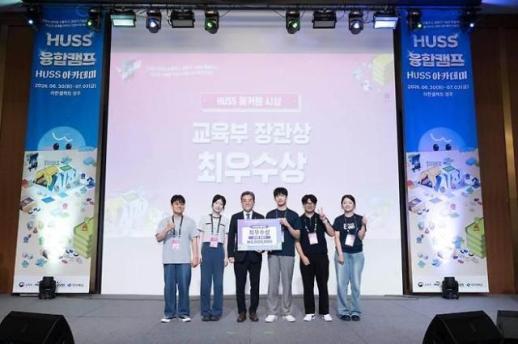 Kookmin students take top prize at HUSS hackathon SEOUL, July 25 (AJP) - Kookmin University students helped win the top prize and two other awards at a national hackathon that asked humanities and social science students to solve social problems with artificial intelligence. The 2026 HUSS Convergence Camp Insight hackathon ran from July 1 to 3 at the Sono Calm resort in Gyeongju, backed by the Ministry of Education and the National Research Foundation of Korea and organized by the council of the Humanities Utmost Sharing System (HUSS), a government program that trains humanities and social science students to work across disciplinary lines. About 430 students and program officials took part in the hackathon, with students from different universities and majors grouped into five-member joint teams to propose solutions to social problems. A total of 55 teams entered. Around 20 advanced through a written preliminary round to the final presentations, where 10 teams took prizes: one top prize carrying the award of the deputy prime minister and education minister, four excellence prizes from the National Research Foundation chairman, and five encouragement prizes from the HUSS council chair. Kookmin students stood on three of those teams, including the one that won it all. The top team, Onsaemiro, included Yang Seung-eon of Kookmin's Department of Political Science and International Relations and Lee Tae-ho of the Department of AI, Big Data and Management. The team proposed ORIGIN, a platform that screens AI-generated traditional culture content for distortion before it spreads. The service analyzes such content for likely historical and cultural errors, then runs it past heritage practitioners and experts before issuing certification. Yang researched distortion cases and the surrounding regulations, defined the problem and built the presentation. Lee tested the feasibility of the solution and shaped a business model aimed at government agencies and public institutions. Kim Yun-seo of the School of Management Information Systems joined the excellence prize team Daumi, which proposed Dahda, an AI-based indoor evacuation navigator for visually impaired people. The service uses Wi-Fi fingerprinting and Bluetooth beacon technology to guide users to the nearest emergency exit during a fire and relays their location inside the building to rescue teams, with voice and vibration guidance tailored to different types of disability. Kim designed and developed the application prototype and handled its interface design. Hyun Yun-su of the School of Management Information Systems and Choi So-yul of Kookmin University Business School (KIBS) joined the encouragement prize team Poporiner, which proposed Daol, a legal and administrative support service for migrant workers offering individual visa schedule management, administrative information and expert consultations in users' native languages. The two managed the team, planned the service and led the research behind its main functions. The results gave Kookmin students a hand in solutions spanning cultural content credibility, disaster safety and support for vulnerable groups, the mix of AI technique and humanities grounding the HUSS program was built to produce. The university's HUSS office said it would keep expanding hands-on education that turns that grounding toward real social problems, working through inter-university cooperation and global partnerships. 2026-07-25 14:59:36
 -
Democratic Party Candidates Express Condolences Over Shipyard Death, Stress Safety Candidates for the leadership of the Democratic Party, Kim Min-seok, Jeong Cheong-rae, and Song Young-gil, expressed their condolences over the death of a worker in his 30s at a shipyard in Gunsan, Jeollabuk-do.According to Yonhap News on July 25, the three candidates voiced their deep regret over the tragic incident that occurred the previous day, emphasizing the need for rigorous safety management in industrial workplaces.Kim Min-seok stated on his X (formerly Twitter) account, "Despite the efforts of the Lee Jae-myung administration to eradicate industrial accidents, it seems we still have a long way to go, and I feel a heavier sense of responsibility. I will ensure that safety in industrial workplaces is prioritized more thoroughly."Jeong Cheong-rae also posted on Facebook, highlighting the necessity for a thorough investigation into the cause of the accident and comprehensive safety checks across workplaces. He added, "The Democratic Party will do its utmost to create safer industrial environments."Song Young-gil expressed his sorrow on Facebook, noting, "It is still a recurring tragedy that someone who leaves for work in the morning does not return home in the evening." He continued, "As someone who worked in a factory in my youth, I will ensure that safety in labor environments is taken more seriously."Meanwhile, according to the Gunsan Fire Department, a report was received on the afternoon of the previous day regarding an incident at a shipyard in Bi-eungdo-dong, Gunsan, where a worker's head became trapped in equipment. Emergency responders quickly transported the worker, identified as A, to the hospital in a state of cardiac arrest, but he ultimately did not survive.* This article has been translated by AI. 2026-07-25 14:48:00
-
Na Hong-jin's 'Hope' Surpasses 3 Million Viewers in 11 Days Na Hong-jin's new sci-fi film 'Hope' has surpassed 3 million viewers just 11 days after its release.According to Yonhap News on July 25, 'Hope' reached the milestone of 3 million viewers on the afternoon of its 11th day in theaters. This achievement comes a day later than the record set by director Yeon Sang-ho's zombie film 'Goonche,' which reached 3 million in 10 days.'Hope,' which premiered on July 15, has consistently held the top spot at the box office. It notably surpassed 1 million viewers on its third day and 2 million on its fifth day, demonstrating the fastest initial audience growth of the year.However, recent trends indicate a slowdown in audience growth. Last week, weekday attendance ranged between 200,000 and 300,000, but this week it has dropped to around 100,000.'Hope' depicts a struggle against an unidentified alien life form that appears near the Demilitarized Zone. This marks Na's first film in a decade since 'The Wailing' in 2016, featuring intense action from actors Hwang Jung-min, Jo In-sung, and Jung Ho-yeon. The film also includes global Hollywood stars such as Michael Fassbender, Alicia Vikander, and Taylor Russell.* This article has been translated by AI. 2026-07-25 14:08:00