


Latest by
-
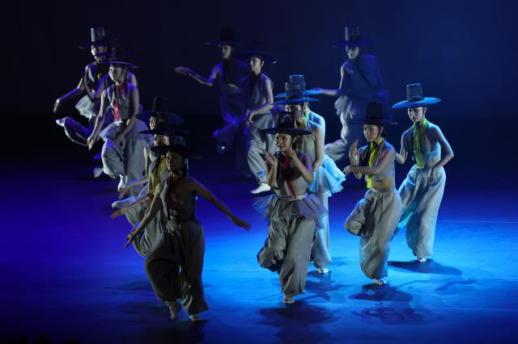 Sanhwabi brings Korea's living heritage to Busan stage BUSAN, July 25 (AJP) - A special performance titled "Sanhwabi" filled BEXCO Auditorium in Busan, presented as part of the Intangible Heritage Festival in Busan celebrating the 48th session of the UNESCO World Heritage Committee. South Korea is hosting the committee for the first time since joining the World Heritage Convention in 1988. The 11-day session opened on July 19 and runs through July 29 at BEXCO, bringing together delegates from around the world to decide World Heritage inscriptions and set conservation and management policy. Directed and conceived by Nam In-woo, Sanhwabi explored the roots and future of Korea's intangible heritage, presenting tradition not as a relic but as a living cultural asset that continues to evolve. The production traced how traditional culture weathered the colonial period and rapid modernization, then reached for what comes next, layering media art, electronic music and contemporary stage design over traditional performing arts. The auditorium was nearly full with citizens and committee participants, and applause carried through the evening. Participation was built into the show rather than added to it. In the "Pan" segment, a traditional lion dance pulled audience members in among the performers, and in the closing "Ye" segment, people of all ages climbed on stage to perform alongside the cast. Korea Heritage Service administrator Heo Min joined them to deliver closing remarks, ending the night as a celebration of community and shared heritage. Sanhwabi was staged as one of the signature cultural events of the committee session. 2026-07-25 13:41:19
 -
 South Korea and U.S. Tech Giants Forge $950 Billion Semiconductor Partnership South Korean President Lee Jae-myung met with top executives from major global tech companies in San Francisco to discuss large-scale investments and collaborations in sectors ranging from semiconductors to artificial intelligence (AI) data centers and physical AI. Over the next five years, a total of $950 billion will be invested in semiconductor cooperation alone.Kim Yong-beom, head of the Presidential Policy Office, announced on July 24 that President Lee held individual meetings with Jensen Huang, CEO of NVIDIA; Hock Tan, CEO of Broadcom; Sam Altman, CEO of OpenAI; and Dario Amodei, CEO of Anthropic, before attending the 'San Francisco AI Summit.'This event was organized to enhance the scale and execution of the three mega projects announced last month for South Korea's major leap forward by combining the technology and capital of global big tech firms. The government plans to solidify investment and cooperation across the entire AI stack based on South Korea's semiconductor and AI infrastructure, AI models, and physical AI capabilities.Attendees at the summit included President Lee, global tech CEOs, Lee Jae-yong, chairman of Samsung Electronics; Chey Tae-won, chairman of SK Group; Chung Eui-sun, chairman of Hyundai Motor Group; and Lee Hae-jin, chairman of Naver's board. The event attracted over 230 participants, including domestic and international business leaders, researchers, startups, investors, and students.Satya Nadella, CEO of Microsoft, conveyed his commitment to collaborating with South Korea in the semiconductor and AI infrastructure sectors through a video message.In the semiconductor sector, domestic companies and global tech giants have agreed to pursue a total of $950 billion in cooperation.Samsung Electronics and Broadcom signed a memorandum of understanding (MOU) for advanced memory semiconductor supply and AI chip production, valued at $200 billion over the next five years. SK will also engage in long-term supply cooperation for advanced memory semiconductors worth $750 billion with global tech firms, including NVIDIA.The Ministry of Science and ICT and AMD signed an MOU on July 23 to jointly establish and demonstrate AI computing infrastructure that links South Korea's neural processing units (NPU) with AMD's central processing units (CPU) and graphics processing units (GPU). The government views this as a foundation for cooperation that encompasses semiconductor supply and production, next-generation chip co-design, and domestic AI semiconductor validation.In the AI data center sector, investment cooperation is being pursued to secure approximately 5GW of infrastructure and around 2 million GPUs based on NVIDIA's B200 standard.SK Telecom will collaborate with NVIDIA to build and expand AI data centers with a capacity of up to 2GW, prioritizing the allocation of the latest GPU, the Vera Rubin system. They will also pursue investment cooperation for a domestic GW-level AI data center project with Anthropic. Amazon Web Services (AWS) plans to expand its existing Ulsan AI data center project into a major domestic hub to secure GW-level AI computing capacity.Naver aims to establish a global AI factory worth $10 billion, backed by investments from NVIDIA and Brookfield. Naver will secure $1 billion from NVIDIA to enhance GPU supply and technical collaboration, while Brookfield will provide up to $9 billion to jointly build the infrastructure and supply chain necessary for operating the GW-level AI factory.Cooperation plans were also announced in the fields of physical AI, autonomous driving, and AI talent development.Hyundai Motor Group and NVIDIA will jointly develop a standardized 'robot reference platform' to create and validate AI robots, which will be made available to universities and startups to support various robot development initiatives. Hyundai also announced plans for an autonomous vehicle foundry in collaboration with Waymo.Samsung SDS and Anthropic signed a strategic partnership agreement to jointly explore new AI markets and train AI engineers.During the summit, President Lee announced the 'San Francisco AI Declaration,' presenting a vision to make South Korea a global AI production hub and a foundation for innovation. He aims to create a dynamic market that utilizes AI most effectively and to establish a horizontal cooperation network among countries, propelling South Korea to become a global AI hub.President Lee also emphasized the importance of developing AI responsibly and human-centered, aiming to realize an 'AI basic society' that translates growth outcomes into new opportunities for society as a whole. This initiative seeks to position South Korea as an indispensable core country in the global AI supply chain.After the event, President Lee dined with Jensen Huang, Hock Tan, Rani Borkar, president of Microsoft Azure Hardware, and other business leaders, including Lee Jae-yong, Chey Tae-won, and Chung Eui-sun.Participants responded to President Lee's call to action by affirming their commitment to global AI supply chain cooperation. President Lee noted that thanks to corporate investments and collaborations, the country's economic growth rate has significantly increased, achieving its best performance in decades, and urged continued contributions to the development of the industrial ecosystem.Jensen Huang remarked that South Korea is already a 'global powerhouse' in AI, stating, 'While AI technology is indeed challenging, it is not impossible.' He suggested that investing in South Korea could yield top-tier frontier AI models in a short time and emphasized the need to build both domestic AI models and utilize those from other countries.Kim Yong-beom stated, 'The government plans to strengthen cooperation between domestic companies and global big tech through these individual meetings, the AI summit, and the dinner, aiming to achieve visible results from the three mega projects at an early stage.'* This article has been translated by AI. 2026-07-25 13:32:00
 -
Lee Discusses AI Collaboration with Global Tech CEOs in San Francisco President Lee Jae-myung met with Jensen Huang, CEO of NVIDIA, and other leaders from U.S. and Korean tech companies to discuss artificial intelligence (AI) collaboration during a dinner in San Francisco. On July 24, local time, President Lee hosted a dinner at The Ramp restaurant with business leaders from both countries. The group enjoyed mini burgers, fish and chips, fried squid, and clam chowder while sipping Budweiser beer at an outdoor terrace table overlooking the San Francisco Bay. President Lee opened the conversation with a light-hearted remark, referencing a previous meeting with Huang in Korea where they had chicken and beer, saying, "We might need some chicken here." Huang then asked the President, "When was the last time you had a burger?" to which President Lee replied he couldn't quite remember. Attendees included Huang, Hock Tan, CEO of Broadcom, and Rani Borkar, President of Microsoft Azure Hardware. From Korea, Lee Jae-yong, Chairman of Samsung Electronics, Chey Tae-won, Chairman of SK Group, Chung Eui-sun, Chairman of Hyundai Motor Group, and Lee Hae-jin, Chairman of Naver's board were present. Government officials included Deputy Prime Minister Baek Kyung-hun and Kim Yong-beom, Chief Policy Officer at the Blue House. During the dinner, President Lee explained to Huang that in Korea, people refer to family as "sikgu," meaning those who share meals together. Huang responded in English, "So we are family," prompting President Lee to propose a toast, saying, "We are sikgu," and emphasizing the significance of sharing a meal. When Deputy Prime Minister Baek offered to cover the meal's cost, Huang jokingly requested another beer. President Lee quipped, "I can’t do that because I’m a public servant," to which Huang humorously replied, "Korea is a rich country." President Lee laughed and agreed, saying, "That’s true, but still, I can’t." The dinner also touched on the recent volatility in the Korean stock market. According to Kim Yong-beom, when President Lee noted that Korean stocks have been experiencing some adjustments, Huang responded, "They will rise again." Huang inquired about Korea's GDP size, and after receiving an explanation, he asked, "So can I have another beer? I need one more." When Huang asked about the forecast for Korea's GDP growth this year, President Lee stated, "Last year it was around 1%, but this year it seems we will exceed 3%. We expect it to rise above the potential growth rate, which hasn’t happened in decades." 2026-07-25 13:12:00
-
K-Heritage Gains Recognition with Expanded Registration of Korean Tidal Flats and Busan Declaration The 48th session of the UNESCO World Heritage Committee is taking place in Busan, elevating the status of K-Heritage. Significant achievements include the expanded registration of 'Korean tidal flats,' the Busan Declaration, which proposes new directions for the preservation of world heritage, and calls for improved exhibition strategies for Japan's Sado Mine. The movement to register Busan as a refuge city heritage by 2030 is also expected to gain momentum.The most notable achievement is the second phase of the expanded registration of 'Korean tidal flats.' On July 25, the World Heritage Committee approved the addition of the tidal flats of Muan, Goheung, Yeosu, and Seosan to the existing sites of Seocheon, Gochang, Sinan, and Boseong-Suncheon. This marks the first instance of expanding the scope of an existing World Heritage site in Korea.The committee praised the Korean tidal flats as a key habitat in the Yellow Sea ecosystem and the East Asia-Australasia migratory bird route. The international community has once again recognized the natural heritage value that contributes to the conservation of migratory waterfowl and various marine life.As the host country, South Korea also led discussions on world heritage. The 'Busan Declaration on World Heritage,' adopted on July 20, was drafted collaboratively by South Korea and experts from 21 World Heritage Committee member countries, as well as the International Centre for the Study of the Preservation and Restoration of Cultural Property (ICCROM), the International Council on Monuments and Sites (ICOMOS), and the International Union for Conservation of Nature (IUCN).The Busan Declaration emphasizes the need for a collective international response to the crises facing world heritage, including armed conflict, climate change, and development pressures. It proposes adding 'cooperation' to the existing five strategic goals of the World Heritage Convention and highlights key issues such as digital transformation, accountability, and inclusive interpretation. The Cultural Heritage Administration plans to pursue follow-up projects to create more concrete and practical outcomes following the declaration.In relation to the Sado Mine issue, South Korea's position has gained support. The World Heritage Committee noted that while Japan has made some progress in developing an interpretation and exhibition strategy that reflects the 'full history' of the Sado Mine, it deemed the efforts insufficient. The committee recommended that Japan comprehensively address the entire history of the mine's development on-site and improve its exhibitions. This marks an official acknowledgment by the international body that Japan has not fully implemented the historical explanations promised during the mine's registration.Additionally, as Busan aims for the registration of the 'Refuge City Busan Heritage,' the push for registration is expected to accelerate. The Cultural Heritage Administration and the World Heritage Centre are currently discussing the necessary measures for registering Busan's heritage as a World Heritage site. 2026-07-25 13:04:00
-
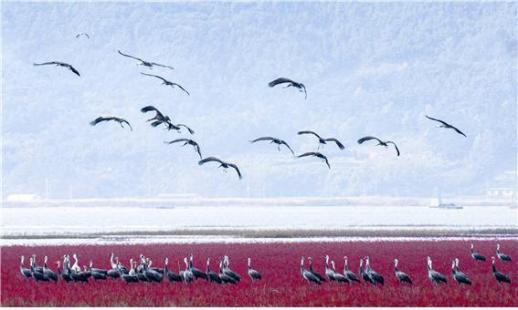 UNESCO expands Korean tidal flats World Heritage listing SEOUL, July 25 (AJP) - The mudflats where the world's rarest sandpiper refuels twice a year got bigger on the map that matters most. The UNESCO World Heritage Committee on Saturday approved a major expansion of Getbol, Korean Tidal Flats, adding four coastal wetlands and bringing South Korea's only natural World Heritage property on the mainland to six components stretching along the country's southwestern and southern coasts, the Ministry of Foreign Affairs said. The decision, taken at the committee's 48th session in Busan, adds the tidal flats of Yeosu, Goheung and Muan in South Jeolla Province and Seosan in South Chungcheong Province to the property inscribed in 2021. It is a boundary modification rather than a new inscription, so South Korea's World Heritage count stays at 17. According to the announcement, issued jointly by the Ministry of Foreign Affairs (MOFA) and the Korea Heritage Service, the committee found that the expanded property meets criterion (x), the natural heritage standard covering the most important habitats for conserving biological diversity, and cited its value to migratory waterbirds and marine life across the Yellow Sea ecosystem. The approval was expected. The International Union for Conservation of Nature (IUCN), the committee's advisory body on natural sites, recommended the expansion on June 5, and properties arriving with a positive recommendation are rarely turned back. The session itself is a first for South Korea, which has never hosted the committee since joining the World Heritage Convention in 1988. Getbol is the Korean word for tidal flats, the vast plains of mud and sand that the Yellow Sea's tides expose and drown twice daily. The sea's shallow basin and large tidal range have built some of the widest flats on Earth, fed by sediment from rivers on both the Korean and Chinese coasts. What looks like empty mud is among the most productive ecosystems known. UNESCO's records for the property count about 2,150 species, including 857 kinds of macrobenthos, the clams, crabs, worms and snails living in and on the sediment, along with mud octopuses, fiddler crabs and 47 invertebrate species found nowhere else. That buried abundance is what makes the flats matter far beyond South Korea. They sit at the waist of the East Asian-Australasian Flyway, the migration corridor running from breeding grounds in Siberia and Alaska to wintering grounds as far south as Australia and New Zealand, used by an estimated 50 million waterbirds. For long-distance migrants, the Yellow Sea is the critical refueling stop in both directions, and the food packed into its mud is the fuel. The flyway is considered the most threatened of the world's major bird migration routes, largely because so much of the Yellow Sea coastline has been reclaimed for farmland, ports and industry over the past half century. The property provides habitat for 118 migratory bird species, among them eight globally threatened species found only on this flyway. The spoon-billed sandpiper, a bird small enough to sit in a palm with a bill flattened like a spatula, is the starkest case. It is critically endangered, with the wild population estimated in the hundreds, and it cannot complete its migration without the Yellow Sea flats. The endangered black-faced spoonbill, far eastern curlew, great knot and spotted greenshank depend on the same mud, as do the hooded crane, Saunders's gull and Chinese egret. The expansion also deepens a rare piece of cross-border conservation. China won World Heritage status for its own Yellow Sea coast in 2019, with the migratory bird sanctuaries along the Yellow Sea-Bohai Gulf, and the two listings now protect stopover habitat on both shores of the same sea, used by the same birds in the same weeks of the year. Saturday's result closes a condition attached to the original listing, and the history behind that condition is less tidy than the celebration suggests. When Getbol first came before the committee in 2021, IUCN recommended deferral, judging that the four nominated flats at Seocheon, Gochang, Shinan and Boseong-Suncheon did not cover enough of the habitat to justify inscription. South Korea overcame the recommendation on the committee floor. An amendment tabled by Kyrgyzstan drew the co-signatures of 13 of the 21 member states, and the property was inscribed by consensus, with MOFA describing the outcome at the time as the result of active diplomatic engagement with the World Heritage Centre and committee members. The inscription came with a recommendation to expand the property in a second phase. The government initially aimed higher than what was delivered on Saturday. When the 2021 listing was secured, the heritage authorities announced a Phase 2 plan covering nine additional sites, and the committee's own recommendation named candidates including Incheon, Hwaseong and Gunsan alongside the four that made it. The flats that dropped out along the way include some of the most ecologically prominent and the most contested. Ganghwa's flats near Incheon, a designated natural monument and the best-known breeding ground of the black-faced spoonbill, were left out of the nomination, as were the Incheon, Hwaseong and Gunsan flats, all of them under heavier reclamation and development pressure than the sites that went forward. Environmental groups made the gap explicit while the committee was sitting. On July 20, campaigners including the Incheon and Hwaseong branches of the Korean Federation for Environmental Movement held a press conference outside BEXCO, the Busan convention center hosting the session, calling for a third phase covering Incheon, Hwaseong, Gunsan and Busan. Their argument tracks the science: a flyway is a chain of stopovers, and protecting some links while leaving others exposed protects the birds only part of the way. IUCN's approval in June pointed in the same direction, recommending that South Korea continue analyzing additional flats with potential heritage value and keep building local community support, alongside sustaining traditional fishing and gathering practices and strengthening cooperation with other flyway countries. The Korea Heritage Service, led by administrator Heo Min, said the expansion was the joint work of MOFA, the Ministry of Oceans and Fisheries under Minister Hwang Jong-woo, local governments and the Getbol World Heritage Promotion Team, and confirmed international recognition that the 2021 recommendations had been faithfully carried out. The service said it would continue working with the ministries, local governments and communities to preserve the property's value and build a base for sustainable use. The committee session in Busan runs through July 29. 2026-07-25 12:54:42
 -
Defense Minister An Kyu-baek Marks One Year in Office, Commits to Reform On July 25, Defense Minister An Kyu-baek reaffirmed his strong commitment to completing defense reforms as he marked his one-year anniversary in office.In a post on his Facebook page, An acknowledged that "the deeper and broader the scope of reform, the more intense the growing pains will be," but he vowed to move forward without wavering.He stated, "I will shoulder all the burdens of reform" and requested warm encouragement and support from the 550,000 members of the defense family who are quietly walking this path.An characterized the government's defense reform as a "paradigm shift" rather than mere institutional adjustments, emphasizing, "Based on the great achievements that have led South Korea to become a strong nation over the past 80 years, we will surely achieve a new paradigm shift for success in the next 80 years."Notably, he addressed the transfer of wartime operational control, stating, "The journey of recovery is also heading toward a conclusion," and assessed that the timing and conditions for regaining operational control have matured to the point of being encouraging to allied nations.Accordingly, the Ministry of National Defense plans to finalize the verification of the Future Combined Command's Full Operational Capability (FOC) during the upcoming Security Consultative Meeting (SCM) in Washington, D.C., scheduled for October or November. Following this, the defense ministers of both countries aim to propose and announce the target year for the transfer of operational control to their respective presidents. Achieving this transfer by June 2030, before President Lee Jae-myung's term ends, is a key policy goal of the current administration.An also listed significant achievements from the past year, including high-intensity internal audits and personnel reforms in response to the December 3 emergency martial law situation, legal and institutional improvements related to martial law, enhanced constitutional education, the operational deployment of the high-power missile Hyunmoo-5, the unveiling of the nuclear-powered submarine Jangbogo N Project, improvements in service members' treatment, and the easing of military facility protection zones.Looking ahead, he outlined tasks for the remainder of his term, including the establishment of the National Military Academy, restructuring the military, normalizing intelligence and counterintelligence agencies, reforming the Marine Corps into a "quasi-fourth military branch," reorganizing the Defense Drone Headquarters, and increasing duty pay and various allowances.An, who became the first civilian defense minister in 64 years, has led significant military organizational reforms, including the push for the transfer of operational control and the integration of military academies. However, he has faced internal resistance and personal attacks related to past allegations of military service violations during his tenure.* This article has been translated by AI. 2026-07-25 12:52:00
-
Korean Tidal Flats Recognized as UNESCO World Heritage Site 'Korean tidal flats' have expanded their boundaries, reaffirming their outstanding value as a UNESCO World Heritage site.The 48th World Heritage Committee made the final decision on July 25 during a meeting in Busan to expand the registration of 'Korean tidal flats' to a second phase.With this decision, the existing four tidal flats registered as World Heritage in 2021—the Seocheon tidal flats in South Chungcheong Province, the Gochang tidal flats in North Jeolla Province, the Sinan tidal flats in South Jeolla Province, and the Boseong-Suncheon tidal flats—will now include the tidal flats of Muan, Goheung, Yeosu, and Seosan. This marks the first case of an expanded registration among South Korea's World Heritage sites.As a result, 'Korean tidal flats' have been expanded into a continuous heritage site consisting of six components: Boseong-Suncheon-Yeosu-Goheung tidal flats, Sinan-Muan Tando Bay tidal flats, Muan Hamhae Bay tidal flats, Gochang tidal flats, Seocheon tidal flats, and Seosan tidal flats.This expansion signifies the international community's renewed recognition of the universal value of the biodiversity and migratory bird habitats found in Korea's tidal flats. The World Heritage Committee particularly praised the natural heritage value of these sites for their contribution to the conservation of migratory waterbirds and various marine life, as key habitats in the Yellow Sea ecosystem and the East Asia-Australasia migratory flyway.South Korea previously applied for the expansion of the existing World Heritage boundaries through a 'boundary modification (expansion registration)' method. The World Heritage Committee had recommended including additional tidal flat areas to more fully demonstrate the heritage's value when it registered the four tidal flats in 2021.In response, the Cultural Heritage Administration has closely collaborated with relevant central government departments, local governments, communities, and the Korea Tidal Flats World Heritage Registration Promotion Team since the first phase of registration in 2021 to implement the committee's recommendations. This included reviewing the World Heritage value of the additional tidal flat areas, designating protected areas, establishing management systems, consulting with local communities, and responding to assessments from the International Union for Conservation of Nature (IUCN).A representative from the Cultural Heritage Administration stated, "This second phase of expansion registration is a valuable result achieved through the combined efforts of the Cultural Heritage Administration, the Ministry of Foreign Affairs, the Ministry of Oceans and Fisheries, the relevant local governments, and the Korea Tidal Flats World Heritage Registration Promotion Team. It is also significant that our adherence to the recommendations made during the 2021 registration has been recognized internationally."Following this registration, the government is expected to continue research on the additional tidal flat areas and efforts to secure community support. Furthermore, the IUCN has previously recommended strengthening international cooperation with relevant parties to ensure the continuation of traditional fishing and tidal flat resource harvesting practices, as well as the conservation of migratory bird habitats, which will also be prioritized.Heo Min, head of the Cultural Heritage Administration, remarked, "The second phase of the expansion registration of Korean tidal flats is a meaningful achievement that faithfully implements the recommendations of the World Heritage Committee in 2021 and further enhances the conservation value and integrity of our tidal flats. Above all, it is significant that this is the result of long-term efforts by the government, local governments, communities, and experts working together."He added, "I hope this registration will serve as an opportunity to further expand international cooperation for the conservation of the Yellow Sea ecosystem and the East Asia-Australasia migratory flyway. We will continue to do our best for systematic preservation, management, and sustainable use, recognizing that Korea's tidal flats are not only a heritage of South Korea but a precious natural heritage that the whole world must protect." 2026-07-25 12:44:00
-
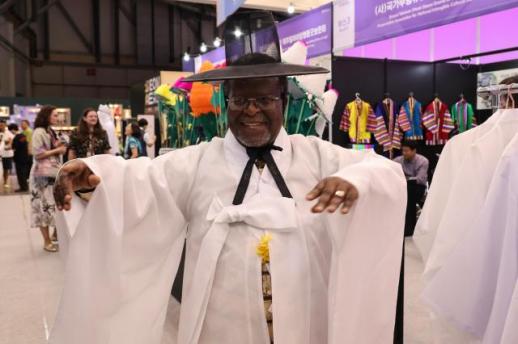 Korea Pavilion shows nation's heritage to world SEOUL, July 24 (AJP) - The Republic of Korea Pavilion, the official host country exhibition for the 48th session of the UNESCO World Heritage Committee, is introducing Korea's cultural heritage to visitors from around the world at BEXCO in Busan. South Korea is hosting the committee for the first time since joining the World Heritage Convention in 1988. The 11-day session opened on July 19 and runs through July 29, bringing together delegates and heritage experts to decide which sites join the World Heritage List and how existing ones are conserved and managed. The committee is reviewing 30 new nominations and three proposals to expand or modify existing listings, and assessing the conservation status of 147 properties already on the list. For the host country, the biggest items on the agenda are the expansion of Getbol, Korean Tidal Flats, which added the tidal flats of Yeosu, Goheung, Muan and Seosan on Saturday, and follow-up measures on Japan's Sado mine complex, where Koreans were forced to work during Japan's colonial rule. Inside the pavilion, 35 organizations, including government agencies, local governments, religious orders and foundations, present Korea's World Heritage, Intangible Cultural Heritage and Memory of the World inscriptions alongside national heritage policy and international cooperation programs. Delegates and visitors moved through the halls, listening to guides, posing for photographs, and trying hands-on programs, with displays pairing traditional heritage and digital technology that drew some of the largest crowds. The pavilion is open through July 29, from 10 a.m. to 6 p.m., in Halls 2B, 3A and 3B of BEXCO's Exhibition Hall 1. Admission is free for committee participants and the general public alike. 2026-07-25 12:26:48
 -
Naver Secures $10 Billion Investment from Nvidia and Brookfield for AI Factory Naver has secured a massive $10 billion investment from Nvidia and Brookfield, a major alternative asset management firm. This funding aims to establish an AI factory with a capacity of up to 1 gigawatt (GW) and to expand a 'Sovereign AI' ecosystem that is not tied to specific countries or companies.On July 24, during the AI Summit held at The Midway in San Francisco, Naver founder and board chairman Lee Hae-jin officially announced this development in the presence of President Yoon Suk Yeol.Lee stated, "Nvidia and Brookfield have invested a significant amount of $10 billion in us. This will serve as a turning point for Naver to make a substantial change and leap forward."He projected that this investment would be a pivotal moment for expanding AI infrastructure on a global scale, emphasizing the opportunity to rapidly enhance Naver's data center operations through the global brands and networks of the two companies.The investment will primarily fund Naver's ongoing large-scale AI factory project. Brookfield, which has over 120 years of history and manages more than $1 trillion in assets, previously met with Lee and Naver CEO Choi Soo-yeon at its headquarters in Toronto to discuss funding strategies in detail.The AI factory will integrate GPU servers, AI models, and cloud technologies on a physical foundation of large-scale power and cooling facilities, providing robust computational capabilities.Last month, Naver and Nvidia agreed to jointly build a global AI factory based on Nvidia's AI factory optimization platform, the 'DSX Architecture.' The two companies plan to initially operate a 55-megawatt (MW) AI factory at the Sejong data center, 'Gak Sejong,' in the first half of 2027, with plans to expand to 200 MW by 2028 and ultimately reach 1 GW in the long term.On this day, Lee also presented a strong vision for Naver's 'Sovereign AI' alongside the infrastructure expansion.He asserted, "The internet world that Naver envisions is not one dominated by specific countries or companies. To maintain the diversity of the world, each country, region, and company must be able to create and operate its own AI." He added, "With this investment, Naver will continue its research and investment in technology, striving to create an environment where diverse AI ecosystems coexist in collaboration with companies around the world that share the same vision."* This article has been translated by AI. 2026-07-25 12:20:00
-
Bahrain and Kuwait Conduct Secret Airstrikes Against Iran Bahrain and Kuwait reportedly carried out secret airstrikes targeting Iran earlier this month.According to Yonhap News on July 25, the Wall Street Journal (WSJ) cited sources indicating that the two countries targeted key military facilities in Iran, including drone and missile storage sites. The United Arab Emirates (UAE) is said to have provided intelligence and air support during these operations. However, Kuwait has strongly denied the report, while Bahrain declined to confirm it.Previously, reports indicated that the UAE and Saudi Arabia participated in U.S. and Israeli airstrikes against Iran in early April, but this marks the first time Bahrain and Kuwait have taken direct action. Following the resumption of hostilities this month, Iran has shifted its focus from attacks on the UAE and Saudi Arabia to Bahrain and Kuwait. Given that Oman and Qatar are acting as mediators, these two Gulf states are essentially the only ones remaining within Iran's reach.The WSJ described the airstrikes as "Bahrain and Kuwait's first direct retaliatory attack against Iran," analyzing that this reflects the difficult position Arab nations face amid the prolonged conflict. Countries that previously endured attacks from Iran are now confronting long-term threats to their security and economies, prompting them to take more proactive measures.Dina Esfandiary, a Middle East analyst at Bloomberg Economics, noted, "The current state of war is their worst-case scenario," explaining that losing the image of a stable refuge in an unstable region would undermine their national development models. Gulf oil states, hoping to focus on oil exports and economic growth after the war, are currently experiencing direct economic damage at a level akin to "economic paralysis" due to Iran's blockade of the Hormuz Strait.Consequently, the WSJ reported that Gulf states are weighing more aggressive responses to forcibly reopen the critical trade route of the Hormuz Strait.Umer Karim, a researcher at the University of Birmingham specializing in Saudi policy and Gulf geography, assessed that "Gulf states have realized that the war will continue for the foreseeable future, which ultimately means they must confront Iran openly." He added that these governments are even considering the idea of regime change in Iran, as coexisting with the current regime would effectively mean succumbing to its hegemony.* This article has been translated by AI. 2026-07-25 12:04:00