


Latest by
-
 Seoul to offer free month of bike-sharing after data breach SEOUL, July 24 (AJP) - The Seoul Facilities Corporation, which suffered a data breach affecting 4.62 million citizens after its Ddareungi bike-sharing system was hacked by two middle school students, announced it will provide affected users with a one-month Ddareungi pass worth 5,000 won. The operator of bike-sharing service Ddareungi, sent text messages to users on July 21 informing them of the details of the hacking incident and the categories of personal information exposed. According to the company, leaked data included user IDs and birth dates, as well as phone numbers, gender, email addresses, home addresses, and weight. It added no evidence has been found so far indicating that the leaked personal information was distributed to third parties. The hacking occurred in June 2024. The hackers exploited a security vulnerability in the Ddareungi system to steal the personal information of 4.62 million citizens. The operator was ignorant of the breach until Seoul city discovered it during an internal investigation in January. Seoul city subsequently requested the Seoul Metropolitan Police Agency investigate the system management team at the corporation's Public Bicycle Operations Department, and the hacking was confirmed during a cybercrime investigation by the Seoul police in February. 2026-07-24 17:07:56
-
 US-Saudi nuclear deal exposes limits of Seoul's enrichment push SEOUL, July 24 (AJP) - A proposed U.S.-Saudi nuclear cooperation agreement allowing Riyadh to eventually enrich uranium on its own soil may strengthen South Korea's case for greater control over its civilian nuclear fuel cycle, but it does little to resolve the far more difficult question confronting Seoul's nuclear submarine ambitions: who supplies the fuel. The issue has taken on greater urgency as South Korea and the United States resumed follow-up talks last month on security commitments made by Presidents Donald Trump and Lee Jae Myung. The agenda includes Seoul's plans to build nuclear-powered submarines, expand cooperation in shipbuilding and seek greater autonomy over uranium enrichment and spent fuel reprocessing. U.S. Under Secretary of State for Political Affairs Allison Hooker, who led the American delegation, described the discussions as "a brief but very productive visit" that laid the groundwork for "continued technical conversations." At the center of the debate is South Korea's decades-old nuclear cooperation agreement with Washington. Under the bilateral "123 Agreement," Seoul cannot enrich uranium or reprocess spent nuclear fuel without prior U.S. approval, even for civilian purposes. Those restrictions have remained despite South Korea's compliance with the Nuclear Non-Proliferation Treaty and its long-standing cooperation with the International Atomic Energy Agency. The Saudi proposal appears to signal greater U.S. flexibility. According to The New York Times, the agreement envisions a two-year joint U.S.-Saudi study on whether domestic uranium enrichment is economically justified. Depending on the outcome, Washington could eventually permit Saudi Arabia to enrich uranium or reprocess plutonium on its own territory. For advocates in Seoul, that could strengthen the argument that South Korea—which already operates one of the world's largest civilian reactor fleets—has an even stronger economic case for domestic fuel production. But experts caution that the Saudi negotiations and South Korea's submarine ambitions involve fundamentally different legal questions. "When people hear enrichment, they immediately think of highly enriched uranium," said Suh Kune-yull, professor of nuclear engineering at Seoul National University. "Nuclear-powered submarines do not necessarily require that level of fuel. It is technically possible to operate with low-enriched uranium of around 5 percent, similar to commercial nuclear fuel. France and China are known to operate submarines using low-enriched uranium." South Korea has already indicated that any future indigenous nuclear submarines would use low-enriched uranium rather than weapons-grade fuel in an effort to ease proliferation concerns. Yet even that approach does not remove the legal obstacles. "The 123 Agreement governs the peaceful use of nuclear energy, not military purposes," said Chung Bum-jin, professor of nuclear engineering at Kyung Hee University. "Building an enrichment plant for commercial nuclear fuel may be possible, but it has nothing to do with submarines." In other words, even if Washington eventually grants Seoul greater civilian enrichment rights, the allies would still need a separate arrangement covering fuel for military reactors. That leaves unresolved the most sensitive issue surrounding South Korea's submarine program—whether the United States would provide reactor fuel, allow South Korea to produce it domestically, or devise an entirely new legal framework. For Saudi Arabia, meanwhile, the debate centers on economics. Unlike South Korea, Saudi Arabia has no operating commercial nuclear reactors and remains in the early stages of developing a civilian nuclear industry. "The key question is whether Saudi Arabia can demonstrate economic feasibility," Chung said. "If a country has only a handful of nuclear power plants, it may simply be told to purchase fuel instead. If a country with virtually no nuclear industry insists on enrichment, that naturally raises questions about its intentions." He suggested Washington may have left itself considerable room to maneuver. "For years Saudi Arabia insisted it would not purchase reactors unless it received enrichment rights," Chung said. "The United States may be opening the door now, but it can still close it later by concluding there is no economic justification." He said the proposed agreement may primarily serve as a vehicle for U.S. reactor suppliers such as Westinghouse to gain access to Saudi Arabia's emerging nuclear market. South Korea presents a markedly different case. "South Korea operates about 30 commercial reactors, and if exported reactors are included, it effectively supports around 40 units," Chung said. "Those reactors all require fuel. That economic rationale is much easier to demonstrate." Even so, Washington has another reason for caution. "From the U.S. perspective, South Korea is a competitor in the nuclear fuel market," Chung said. "Saudi Arabia is not." For Seoul, the Saudi negotiations may therefore strengthen the political argument for expanding civilian enrichment rights, but they offer little guidance on the separate challenge of fueling a future fleet of nuclear-powered submarines. The next round of Korea-U.S. nuclear talks will test whether Washington is prepared to distinguish between those two issues—granting greater flexibility over the civilian fuel cycle while maintaining tighter restrictions on military nuclear propulsion. 2026-07-24 17:05:52
-
 Jennie takes creative control of new single 'Less than a Lover' SEOUL, July 24 (AJP) - BLACKPINK's Jennie released a new single, Less than a Lover, on Friday after taking part in both the songwriting and visual production of the project. The track arrived at 1 p.m. (0400 GMT), according to OA Entertainment. Jennie contributed to its lyrics and composition, drawing on the atmosphere of summer while developing the song. Less than a Lover centers on the anticipation and lingering uncertainty of a relationship suspended somewhere between friendship and romance, the agency said. Jennie also participated in directing the song's music video, extending her involvement beyond the recording process. She is set to headline Lollapalooza Chicago, which runs from July 30 to Aug. 2 at Grant Park, before performing at Summer Sonic 2026 in Tokyo on Aug. 14 and Osaka on Aug. 16. 2026-07-24 17:05:45
-
 Government to Issue 6.7 Trillion Won in Public Bonds in Q3 The issuance of major public bonds in the third quarter is expected to reach 6.7 trillion won, an increase of 4 trillion won from previous plans.On July 24, the Ministry of Finance held its third meeting of the 'Bond Issuance Agency Council' chaired by Hwang Soon-kwan, head of the National Treasury. Representatives from the Financial Services Commission, the Financial Supervisory Service, and key government-backed bond issuing agencies attended the meeting to review second-quarter performance and discuss plans for the third quarter.Earlier, the government and issuing agencies had agreed in April to normalize the issuance volume for the second quarter. However, a review revealed that the issuance conditions in May and June were worse than expected, leading to a reduction in the issuance volume. In the first half of the year, 124.1 trillion won in government bonds were issued, while public bonds excluding government bonds totaled 70 trillion won in the second quarter. Overall, the first half's issuance was 1 trillion won lower than the initial plan.For the third quarter, the issuance of major public bonds, excluding government bonds, is projected to be around 67 trillion won, reflecting an increase of 4 trillion won due to rising policy demand. However, this represents a decrease of 3 trillion won compared to the previous quarter.Attendees noted that while interest rates remain high, bond demand has shown some signs of recovery this month.The government and issuing agencies plan to proceed with the scheduled issuance of government bonds and major public bonds in the third quarter as planned.Participating agencies will flexibly adjust bond issuance. They will diversify issuance schedules and maturities, and if necessary, issue foreign currency bonds or conduct direct borrowing. Additionally, if a significant increase in issuance is anticipated, they plan to consult with the Bond Issuance Agency Council to adjust the volume and timing of issuance.Hwang emphasized, "Given the ongoing domestic and international uncertainties surrounding the bond market in the second half of the year, cooperation among institutions is crucial for market stability. We will hold meetings as needed to discuss issuance volumes and timing."* This article has been translated by AI. 2026-07-24 17:04:00
-
Miss Grand Vietnam 2026 Swimwear Competition Sparks Controversy The swimwear competition stage of the Miss Grand Vietnam 2026 pageant has ignited fierce debate following participant Emura Pham's pose in front of the pool. Some viewers criticized the display for being overly revealing, while others defended it as a simple gymnastic move that showcased individuality.According to the organizers of Miss Grand Vietnam 2026, the committee confirmed that one participant added or altered movements during the swimwear competition, which deviated from the dress rehearsal. They stated that they would enhance training, rehearsal, and oversight processes moving forward.Mixed Reactions to Poolside PoseThe controversy began during the swimwear segment, 'Best in Swimsuit,' held on July 23 in Ho Chi Minh City. In this round, participants introduced themselves with their names, numbers, and representing organizations while demonstrating stage presence, expression, and readiness in swimwear.The stage setup included participants pausing to pose for the camera. The second pose location was at the pool's edge, where most contestants struck relatively simple poses. In contrast, Emura Pham supported herself on the pool's edge and performed a push-up-like move, leaving a distinct impression compared to her peers.This scene quickly spread online after the event. A video of Emura Pham's walk and pose garnered over 500,000 views, 3,000 reactions, and hundreds of comments within just two hours. Some netizens pointed out that the exposure and emphasis on her physique were excessive, while others argued that it was merely a gymnastic move and that the criticism was unwarranted.Commentary was sharply divided. One user remarked, "It was more awkward than sexy," while another noted, "I had a good impression from previous performances, but this was too much." Conversely, some comments praised the beautiful background and the quality of the video, asserting that the poolside move was simply a gymnastic action that might have appeared provocative due to the bikini. Another user highlighted Emura Pham's mixed heritage and unique charm as a representative of Vietnam.Organizers Address the ControversyAs the controversy escalated, the organizers clarified that the participant's official stage movements differed from the pre-event checks. A committee representative told the Vietnam Youth Newspaper, "During rehearsals and dress rehearsals, the committee and professional panel require participants to adequately demonstrate their skills, movements, and stage intentions. Feedback, advice, and adjustments are made based on this to ensure the performance aligns with competition standards and overall direction."They added, "However, on the day of the official competition, one participant added or changed some movements compared to what was presented during the dress rehearsal." The committee explained that these changes might stem from the participant's stage strategy or creative attempts but emphasized that all performances must undergo concept review and rehearsal completion.The organizers also expressed their commitment to respecting participants' individuality and creativity. However, they stated that they would minimize changes outside of agreed-upon content to maintain the competition's professionalism, consistency, and program direction. The committee plans to incorporate audience and media feedback to ensure more organized and professional stages in future rounds.Meanwhile, Emura Pham reportedly did not make it into the top five of the Best in Swimsuit category despite the controversy. Born in 2000, her real name is Pham Chan Phuong. She was born to a British father and a Vietnamese mother and returned to Ho Chi Minh City after completing her studies in the United States. She graduated from the International School of Ho Chi Minh City and completed an Associate in Arts degree at Irvine Valley College in California. Since early this year, she has been preparing for Miss Grand Vietnam 2026 by learning Vietnamese and stage techniques.Miss Grand Vietnam 2026 marks its fifth season this year. The preliminary round took place on June 19 in Ho Chi Minh City, and the semifinals will be held on July 28 alongside the Grand National Costume competition. The finals are scheduled for July 31 in Ho Chi Minh City, where the winner will represent Vietnam at the Miss Grand International pageant in November 2027. 2026-07-24 17:00:00
-
 AI boom rewrites "Happy Forever" in Korea's biggest divorce battle SEOUL, July 24 (AJP) — A handmade birthday poster once wished SK Group Chairman Chey Tae-won and Roh Soh-yeong "Happy Forever." Nearly four decades later, their marriage has ended in a 944 billion won ($642 million) property settlement shaped not only by family history and corporate succession, but also by an artificial intelligence boom that transformed the value of Chey's fortune. The Seoul High Court on Friday largely upheld its earlier landmark ruling in what has become known as South Korea's "divorce of the century," ordering Chey to pay Roh 944 billion won after reducing the property division from the 1.38 trillion won awarded in the previous appellate decision. The court reaffirmed that Chey's SK Inc. shares remain marital property subject to division while excluding 30 billion won linked to former President Roh Tae-woo, the ex's late father, from calculating her legal contribution, in line with last year's Supreme Court ruling. Yet the retrial became about far more than correcting an accounting issue. Between the original appeal and Friday's judgment, SK Inc.'s value surged alongside the global artificial intelligence rally as SK hynix emerged as one of Nvidia's most important suppliers of high-bandwidth memory chips. The judges directly addressed that extraordinary appreciation. "The respondent's share price rose sharply after the close of arguments in the previous appellate proceedings," the court said in an explanation released after the ruling. Rather than simply updating the valuation to reflect today's much higher market price, however, the court struck a middle ground. "The increase cannot be regarded as having been unaffected by the respondent's managerial contribution," it said. The judges concluded that allowing either spouse alone to capture gains or losses after the marriage had effectively ended would undermine the purpose of equitable property division. "If profits or losses arising from the disposition of shares after judicial divorce are attributed only to one spouse, it would not accord with the purpose of fairly liquidating and dividing marital property," the court said. Instead, the court kept the valuation date at the close of arguments in the original appellate proceedings but reflected the subsequent surge by adjusting the division ratio itself. It awarded Roh one-third of the marital estate while allowing Chey to retain the remaining two-thirds. "The substantial rise in the respondent's share price after the previous appeal is taken into account in determining the division ratio," the court wrote, adding that the appreciation also reflected "the respondent's managerial contribution." The judges further ruled that Chey should retain ownership of his SK Inc. shares because they underpin management control of South Korea's second-largest conglomerate. "The respondent shall continue to hold the shares, while the portion lacking in the applicant's share shall be compensated in cash." That leaves Chey facing a cash obligation of 944 billion won plus statutory interest after the judgment becomes final. AI turns domestic divorce into global corporate case The litigation has attracted attention far beyond South Korea because it unfolded alongside one of the biggest wealth creations in modern semiconductor history. SK hynix has become one of the world's largest beneficiaries of the AI boom through its dominance in high-bandwidth memory chips powering Nvidia's AI accelerators. This month the chipmaker raised about $26.5 billion through the largest U.S. equity offering ever completed by a foreign issuer. Its rise substantially increased the value of SK Inc., the holding company through which Chey controls the sprawling SK Group. Even after Friday's reduced award, Chey still faces nearly 1 trillion won in cash payments should the ruling stand, renewing market attention on whether SK Group could accelerate asset sales, including the long-discussed disposal of silicon wafer maker SK Siltron. A marriage that mirrored corporate Korea Chey and Roh married in 1988, uniting one of South Korea's most influential business families with the daughter of then-President Roh Tae-woo. Their marriage survived financial crises, corporate restructurings and Chey's imprisonment. While behind bars following his conviction for corporate crimes, Chey cemented his control over SK's holding company through the merger of two SK affiliates, strengthening his grip over the conglomerate. During that period he also wrote a 229-page book, New Exploration, Social Enterprise, arguing that governments should create incentives encouraging companies to solve social problems. He received his second presidential pardon in August 2015. Later that year, he publicly announced his intention to divorce after revealing he had fathered a daughter with another woman, bringing one of South Korea's highest-profile marriages to a dramatic end. Chey's partner, Kim Hee-young, who uses the English name Chloe, later established the T&C Foundation in 2018, a nonprofit supporting scholarships and educational programs. The couple made their first official public appearance together the following year. At the event, Chey reflected publicly on his personal life. "I reflected on my past and realized that I had lived my life wrongly," he said, adding that he had come to see himself as "a coldhearted businessman with zero sympathy." Formal divorce proceedings began in 2017 after efforts to reach a settlement failed. From $50 million to nearly $1 billion The family court in 2022 ordered Chey to pay Roh 66.5 billion won in property division and 100 million won in alimony, concluding that much of his SK-related wealth could not be treated as jointly accumulated marital property. Roh appealed the ruling, calling the award "a denial of women's commitment to the household." Her persistence dramatically changed the outcome. The Seoul High Court in 2024 increased the property award to about 1.38 trillion won and raised alimony to 2 billion won, finding that Roh's decades of child-rearing, household responsibilities and public role as the spouse of a chaebol chairman had materially contributed to the formation, maintenance and growth of the marital estate, including the value of Chey's SK Inc. holdings. The Supreme Court later upheld the divorce and the 2 billion won alimony award but sent only the property division issue back for reconsideration, ruling that 30 billion won linked to former President Roh Tae-woo could not legally be counted as Roh's contribution to the marital estate. Friday's judgment reduced the payment to 944 billion won, but preserved the central legal principle. "The shares held by the respondent constitute property subject to division," the court said, finding that both spouses contributed to "the formation, maintenance and increase in value" of those assets during their marriage. For Roh, the legal battle ultimately transformed what began as a 66.5 billion won ($50 million) award into one of the largest divorce settlements ever ordered in Asia. Even after the retrial reduced the previous record award, she emerged entitled to nearly 1 trillion won, vindicating her long-running argument that decades devoted to supporting one of South Korea's largest business empires deserved far greater recognition than the trial court had initially granted. "Happy Forever" For all the attention on AI, corporate control and billion-dollar shareholdings, the case ultimately traces the unraveling of a marriage that lasted nearly four decades. Before leaving the family home after 37 years, Roh wrote that the hardest item to pack away was not jewelry or artwork but a handmade birthday poster created by their three children. The drawing showed their parents dressed as a bride and groom beneath hearts and stars. Written underneath were two words that, in retrospect, became the most poignant line in South Korea's biggest divorce battle: "Happy Forever." 2026-07-24 16:59:02
-
Korean Pavilion in Busan Showcases Living Heritage On July 24, visitors to the Korean Pavilion at BEXCO in Busan experienced the vibrant essence of 'K-heritage.'The exhibition, titled 'Living Intangible Heritage,' featured artisans demonstrating their crafts, allowing attendees to engage with traditional culture. The expressions of those watching the artisans at work were serious, as they observed the delicate techniques. If there is a term for gazing at artifacts, the Korean Pavilion offered a similar experience called 'artisan gaze,' where visitors were captivated by the artisans' skilled hands.Jang Cheol-young, a master artisan, explained the process of creating Najeon, a traditional craft involving the intricate cutting of abalone shells to form beautiful patterns. A steady stream of visitors gathered in front of his demonstration area.Jang remarked, "Abalone shells are not just waste; in Japan, they are considered national treasures, yet Korea lacks national treasures related to Najeon."In addition to Jang, other artisans such as Park Myung-bae, a master of woodcraft, Kim Hye-jung, a master of traditional Korean paper, and Kang Jeon-hyang and Jeon Yeong-in, masters of traditional headgear, showcased their skills.Many families visited the exhibition, including Kwak Min-jeong, 47, who brought her second-grade child. She said, "I wanted my child to experience our cultural heritage. It's great that they can see and touch both tangible and intangible cultural assets firsthand."Some children returned to watch the artisans again after initially exploring the exhibition. Fourth-grader Kang Hyo-rim said, "There were too many people earlier, so I couldn't see well. Now that I'm back, the Najeon is so beautiful."The experiential programs were highly popular, with activities like making Najeon tumblers and horsehair necklaces fully booked shortly after opening. An official noted, "As soon as the doors opened, visitors rushed in to make reservations, and they filled up quickly."The Jin Gwan Sa booth was also bustling with families eager to create paper flowers, known as 'Jihwa.' A monk explained, "Jihwa are flowers made of paper. In the past, real flowers were rare, so people dyed paper flowers for offerings." The children's eyes sparkled with interest.Long lines formed in front of the K-heritage immersive exhibition, featuring media art installations like 'Time of Reflection,' 'Realistic Gyeongguk,' and 'Timeless Time.'Fifth-grader Ahn Chae-eun expressed her enjoyment, saying, "It was magical, and I loved the music. It made me think about how important it is to preserve our cultural heritage."The Korean Pavilion is an official exhibition set up to commemorate the 48th UNESCO World Heritage Committee meeting. It will operate at BEXCO's Exhibition Hall 1 until July 29, featuring a special exhibition with 35 participating institutions, 38 traditional performances, and various experiential programs. 2026-07-24 16:56:00
-
Government to Provide $6.5 Million in Emergency Support for Homeplus Workers The government will support workers affected by wage arrears at Homeplus with advance payments for unpaid wages and living expense loans, while also offering management consultation for partner companies.Kang Gi-ryong, Deputy Minister of Finance, held a meeting on July 24 at the Government Seoul Complex with a dedicated task force to assess the situation of Homeplus employees and partner companies.According to the review, from July 3 to 23, following the court's termination of the rehabilitation process, the Ministry of Employment and Labor received 1,935 consultations through its one-stop counseling service.The government plans to guide Homeplus in resolving wage arrears promptly after securing DIP financing. Additionally, it will closely monitor the situation to prevent further occurrences of wage delays.Currently, the Ministry of Finance is providing up to 21 million won (approximately $18,000) in advance payments for unpaid wages and up to 10 million won (about $8,500) in living expense loans for affected workers. As of July 23, a total of 41 billion won (around $34 million) in living expense loans has been disbursed across 8,934 cases since the start of the rehabilitation process.Furthermore, 152 consultations for management difficulties have been conducted through the one-stop counseling service of the Small and Medium Business Administration. Additionally, as of July 23, a total of 6.5 billion won (approximately $5.5 million) in emergency management stabilization funds has been provided to small businesses.Emergency management stabilization funds for small and medium-sized enterprises will begin accepting applications on July 27. Homeplus partner companies will also be included in the emergency management guarantee support, extending the existing guarantee period by one year.Support has also been extended for loans to Homeplus partner companies. As of July 17, banks have provided 52 trillion won (about $43 billion) in maturity extensions and repayment deferrals, along with 19.1 billion won (approximately $16 million) in new emergency loans.* This article has been translated by AI. 2026-07-24 16:52:00
-
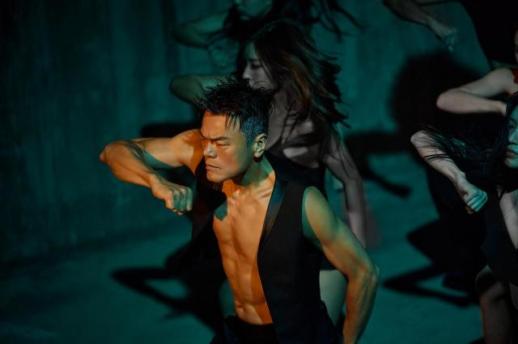 K-pop impresario Park Jin-young shows off biceps in photos for new single SEOUL, July 24 (AJP) - K-pop singer and producer Park Jin-young on Friday shared several behind-the-scenes photos to promote his new single released the previous day. "WET" marks his first summer-themed single since "When We Disco," his 2020 collaboration with Sunmi, a former member of K-pop girl group Wonder Girls. The reggae-inspired track was also chosen as the main theme song for this year's "Waterbomb," one of South Korea's biggest summer music festivals. The photos show Park showcasing his choreography with dancers under red lighting during the single's music video shoot. His namesake agency, JYP Entertainment, said Park reduced his body fat percentage to below 10 percent for his return, showing off his biceps and toned physique. He wrote, composed and produced the single, describing it as "reggaeton with a Latin American sound that perfectly matches the heat of summer," and said it is about dancing until "your whole body is soaked in sweat." Park, who performed the song on Mnet's "M Countdown" the previous day, is set to appear at the Waterbomb festival in Goyang, Gyeonggi Province on Sunday. 2026-07-24 16:51:53
-
Woori Financial Reports Second Quarter Net Profit of 1.06 Trillion Won Woori Financial Group announced that it achieved a net profit exceeding 1 trillion won in the second quarter of this year.On July 24, Woori Financial reported a net profit of 1.046 trillion won for the second quarter, a 7.4% increase compared to the same period last year.This marks the second-largest quarterly profit in the company's history, following last year's third quarter profit of 1.244 trillion won. It is also the largest profit recorded for the second quarter.Compared to the first quarter of this year, which saw a net profit of 604.3 billion won, the second quarter profit represents a 66.2% increase. The first quarter profit had decreased by 2.1% year-on-year due to provisions set aside for overseas bank subsidiaries.The cumulative net profit for the first half of the year reached 1.609 trillion won, up 3.7% from the same period last year.A Woori Financial official stated, "Despite geopolitical instability in the Middle East and increased exchange rate volatility, the contribution of non-banking sectors has expanded, demonstrating the success of our transformation into a comprehensive financial group."The integration of the insurance company also positively impacted the results. The contribution of the non-banking sector in the first half was 22.3%, more than three times the 6.9% recorded last year.Woori Investment & Securities reported a net profit of 24.7 billion won for the first half, a 44.2% increase from 17.1 billion won in the same period last year. Woori Card and Woori Financial Capital also saw increases of 24.2% and 14.1%, respectively, with profits of 94.5 billion won and 76.9 billion won.Dongyang Life, acquired last year, recorded a net profit of 91.9 billion won in the first half.Thanks to growth in the non-banking sector, non-interest income for the second quarter rose by 19.4% to 629 billion won, while interest income increased by 3.3% to 2.336 trillion won.With both interest and non-interest income rising, the total operating revenue (interest income + non-interest income) for the first half reached a record 5.7227 trillion won.In the second quarter, Woori Financial (bank and card) and Woori Bank's net interest margin (NIM) were 1.75% and 1.51%, respectively, up by 0.04 percentage points and 0.06 percentage points from the same period last year.The common equity tier 1 capital ratio increased to 13.7%, up from 13.6% in the previous quarter.Woori Financial stated, "We have maintained a stable level above our medium-term target of 13%."On the same day, Woori Financial's board of directors decided to maintain the second quarter dividend at 22 billion won per share, the same as the previous quarter. The dividend will be paid as a tax-exempt distribution.Additionally, the company has decided to repurchase and retire 150 billion won worth of its own shares in the second half of the year.As a result, the total amount of share repurchases and retirements for this year will reach 350 billion won, the largest since the group's inception.A Woori Financial official remarked, "The recovery of quarterly net profit exceeding 1 trillion won signifies the strengthening of Woori Financial Group's fundamentals and profit-generating capacity. We will continue to enhance corporate value by expanding shareholder returns." 2026-07-24 16:48:00