


Latest by
-
 Japan to Cut Diabetes Drug Prices, Increasing Cosmetic Prescriptions? Japan will reduce the price of the diabetes medication 'Mounjaro' by 25% starting in August. While this will lessen the financial burden on diabetes patients, the Nihon Keizai Shimbun reports that prescriptions for Mounjaro for cosmetic and weight loss purposes may increase.Mounjaro, developed by Eli Lilly, is a treatment for type 2 diabetes that was approved in Japan in 2022. It mimics the action of the gut hormone incretin to suppress appetite and lower blood sugar levels. Its weight loss effects have led to increased use among young women for cosmetic purposes, representing an 'off-label use' of a drug approved for diabetes treatment.In Japan, such off-label prescriptions are recognized at the discretion of medical professionals. However, public health insurance does not cover these prescriptions, meaning patients must bear the full cost, similar to non-covered treatments in South Korea. The legal basis for direct regulation of off-label prescriptions by administrative authorities is also limited.Despite the existence of separate obesity treatments with the same active ingredient, Mounjaro is widely prescribed in cosmetic settings. Eli Lilly also sells an obesity treatment called 'Zepbound,' which contains the same active ingredient, but it is subject to specific conditions for prescription by medical institutions under the Ministry of Health, Labour and Welfare's optimal use guidelines. Mounjaro does not have such restrictions, and its wholesale price is lower than that of Zepbound.So, how much of the Mounjaro sold in Japan is prescribed for cosmetic and weight loss purposes? While exact figures are not publicly available, sales statistics provide a rough outline. According to the U.S. research firm IQVIA, Mounjaro's sales in Japan from October to December last year amounted to approximately 38.8 billion yen (about $345 million), making it the third highest-selling medical drug. This averages to about 13 billion yen per month. In contrast, estimates based on the National Database (NDB) of the Ministry of Health, Labour and Welfare, which only accounts for insurance-covered treatments, suggest a monthly sales figure of about 8.3 billion to 12.5 billion yen. The Nihon Keizai Shimbun estimates that the sales for off-label use could reach up to 5 billion yen per month when considering the differences in these statistics.The growth of Mounjaro's off-label market can be attributed to Japan's online medical consultation structure, which allows patients to complete consultations, prescriptions, and deliveries via smartphone without visiting medical institutions or undergoing in-person examinations. The process is convenient and cost-effective. The online medical service 'Diet Beauty' advertises Mounjaro prescriptions starting at 18,000 yen per month. For medical institutions, it is easier to enter the market by providing online prescriptions without significant capital investment. The beauty medical market in Japan is also rapidly expanding, with the Yano Research Institute reporting that its size has increased by about 1.6 times since 2020, reaching 631 billion yen in 2024.In response to the surge in Mounjaro sales, the Japanese government has decided to cut the drug's price by 25% starting in August. This decision follows the application of a 'sustainability special price adjustment' rule, which reduces prices when the sales of insured drugs exceed expectations. While this aims to alleviate the burden on diabetes patients and health insurance finances, it may have the opposite effect in the cosmetic off-label market.Concerns Over Price Reduction Side EffectsThe issue is that the effects of the price reduction will not be limited to insured treatments. Pharmaceuticals are supplied from manufacturers to wholesalers and then to medical institutions. Wholesalers do not distinguish whether Mounjaro is used for diabetes treatment under insurance or for cosmetic purposes in off-label use. If the price decreases, the purchase price for cosmetic clinics may also drop. Hiroaki Mamiya, an associate professor at Ritsumeikan University, warns that the price reduction intended to lower medical costs could inadvertently encourage the use of Mounjaro for cosmetic purposes in the off-label market. If clinics pass on the price drop to patients, accessibility will increase, and if they maintain existing prices, profitability will improve, incentivizing expanded prescriptions.In practice, there have already been reports of side effects. A gastroenterologist operating a clinic in Tokyo treated three young female patients who complained of bloating and nausea. Endoscopic examinations revealed that all three had food from the previous evening still in their stomachs. Mounjaro has a known effect of slowing gastrointestinal motility. The doctor believes that all three cases are related to Mounjaro use.The side effects are not trivial. Nausea and lethargy can occur, as well as severe side effects like acute pancreatitis. The effects of long-term use in healthy individuals, as opposed to diabetes patients, are still unknown. The doctor cautioned, 'Suppressing appetite with medication can lead to eating disorders.' The Ministry of Health, Labour and Welfare issued a notice on June 16 requesting medical institutions to ensure appropriate use.While the side effects themselves are concerning, another issue is who will bear the treatment costs. Patients prescribed Mounjaro through off-label use must pay the full price, but treatment for side effects may be covered by health insurance. While the price reduction may increase profits for cosmetic clinics, the costs of treating health complications could fall on public insurance, potentially creating a new burden from a measure intended to reduce medical expenses. The doctor pointed out, 'It is insufficient for the Ministry of Health, Labour and Welfare to merely issue a notice for appropriate use. Without specific sanctions against doctors who prescribe inappropriately, the trend of cosmetic prescriptions will not decrease.'South Korea's situation is different. The Ministry of Health and Welfare plans to include obesity treatments in the list of medications restricted to non-face-to-face prescriptions starting in December 2024, making it unlikely that Japan's online structure, which allows consultations, prescriptions, and deliveries to be completed online, will spread. However, the trend of increasing off-label prescriptions for cosmetic purposes is not unique to Japan. The paradox of policies aimed at lowering drug prices encouraging misuse and shifting the costs of side effect treatments to public insurance is not just a Japanese issue.* This article has been translated by AI. 2026-07-24 17:36:00
 -
 KOSPI leads Asian retreat on oil jitters, capping sidecar-ridden week SEOUL, July 24 (AJP)— South Korean stocks suffered another sharp selloff Friday as surging oil prices driven by escalating Middle East tensions and mounting interest-rate concerns fueled broad risk aversion, sending both the KOSPI and KOSDAQ into sell-side sidecars for a fifth consecutive trading session. The benchmark KOSPI closed at 6,690.62, down 5.72 percent, and the junior KOSDAQ fell 5.32 percent, to 748.22, as foreign and institutional investors accelerated selling despite heavy buying by retail investors. The plunge followed another weak session on Wall Street overnight, where technology shares came under pressure and rising oil prices added to concerns over the global inflation outlook. Samsung Electronics and SK hynix bore the brunt of the selloff as foreign investors rapidly unwound positions in the two semiconductor heavyweights. Samsung Electronics tumbled 7.59 percent to 249,500 won, while SK hynix dropped 8.34 percent to 1,759,000 won. Foreign investors dumped a net 1.76 trillion won worth of SK hynix shares and 873 billion won of Samsung Electronics, while institutions also emerged as the largest sellers of both companies, offloading 867.3 billion won and 858.8 billion won, respectively. The SK Group was also in focus after the Seoul High Court largely upheld its revised divorce ruling ordering Chairman Chey Tae-won to pay former wife Roh Soh-yeong 944 billion won in the property settlement. SK Square fell 9.17 percent amid the broader market selloff. Selling spread across other large-cap technology and cyclical names. Samsung Electronics preferred shares lost 7.33 percent to 177,100 won, Samsung Electro-Mechanics fell 8.43 percent to 1,326,000 won, Hyundai Motor declined 7.18 percent to 401,000 won, and LG Energy Solution slipped 5.32 percent to 329,500 won. Financial shares also weakened, with Samsung Life Insurance falling 3.49 percent and KB Financial losing 2.72 percent, while Samsung C&T declined 5.00 percent. Among industrials, HD Hyundai Heavy Industries dropped 2.51 percent, and Kia slumped 12.88 percent, making it one of the day's biggest losers among blue chips. Defensive buying was limited. Samsung Biologics climbed 10.08 percent to 1,518,000 won, while Hanwha Aerospace gained 2.19 percent and Shinhan Financial edged up 0.58 percent. The weakness was equally pronounced on the junior KOSDAQ market. Among heavyweights, HLB was the lone gainer, rising 4.33 percent to 31,300 won. Biotechnology company Alteogen slipped 1.96 percent to 300,500 won, while battery materials makers EcoPro and EcoPro BM fell 7.35 percent and 8.38 percent, respectively. Drug developer LegoChem Biosciences tumbled 17.62 percent, semiconductor equipment makers Jusung Engineering and PSK dropped 13.97 percent and 8.34 percent, respectively, while semiconductor equipment supplier Wonik IPS lost 11.30 percent. Precision parts maker Leeno Industrial declined 7.71 percent and biotech firm ABL Bio edged down 2.56 percent. The Korean won, however, was broadly steady, with the dollar trading at 1,464.50 won, compared with 1,466.8 won in the previous session. The market rout came as investors grappled with a deteriorating macroeconomic outlook. Brent crude climbed back toward $100 a barrel and the yield on the benchmark U.S. 10-year Treasury note rose above 4.7 percent, reinforcing concerns that higher energy prices could keep inflation elevated and delay monetary easing. Adding to the cautious mood, Alphabet shares fell 6.89 percent after the company unveiled a sharply higher AI spending plan despite beating quarterly revenue estimates. The selloff was mirrored across regional markets. Japan's Nikkei 225 dropped 2.79 percent to 64,572.00, Hong Kong's Hang Seng Index declined 1.16 percent to 24,919.50 and China's Shanghai Composite fell 1.61 percent to 3,814.20. 2026-07-24 17:30:50
 -
DYA Faces Challenges as Stock Price Falls Below 800 Won DY Associates (DYA) is facing scrutiny as its stock price has fallen significantly. The company, which supplies automotive seats to Hyundai and Kia, has seen its stock drop nearly 30% this year, bringing its market capitalization close to the threshold for maintaining its listing. In response, DYA is pursuing a stock consolidation and large-scale facility investments, but concerns among investors about maintaining its listing and boosting stock prices are growing.According to the Korea Exchange, DYA's stock closed at 773 won. This represents a 29.5% decline from its closing price of 1,096 won on the first trading day of the year, January 2. During the same period, its market capitalization shrank from 51.3 billion won to 36.2 billion won. If the stock price falls by about 17.1% from its current level, it will dip below the 30 billion won threshold required for listing maintenance on the KOSDAQ.The stock price has been on a downward trend this year. After dropping to 983 won on March 3, it has mostly traded below 1,000 won. On June 22, it fell to 718 won. Although it reached a high of 1,063 won on July 10, it subsequently dropped by 10.54% and 10.41% on July 13 and 14, respectively, returning to penny stock status.Last month, DYA decided to consolidate its shares to enhance stock value. On June 25, the company announced a plan to consolidate five common shares into one. Once the consolidation is complete, the par value per share will increase from 500 won to 2,500 won, reducing the number of shares from approximately 46.77 million to 9.35 million. The new shares are set to be listed on September 11. However, while the number of shares in circulation will decrease, the value of shareholders' equity and the company's market capitalization will remain unchanged. There is also a possibility that selling pressure could lead to a further decline in stock prices post-consolidation.In addition to the stock consolidation, DYA is making significant investments to boost its stock price and expand its business. In April, the company decided to invest 42.8 billion won, equivalent to 91.99% of its equity, to establish a new plant in Inju, Asan, South Chungcheong Province. In May, it committed 12.11 billion won to upgrade production facilities and establish a payment system at its Gwangju Plant No. 1, which represents about 26.03% of its equity.DYA also changed its name. Following a resolution at its regular shareholders' meeting in March, the company rebranded from Daeyu A-Tech to DYA. This marks the second name change since it transitioned from Daeyu DMC to Daeyu A-Tech in 2010. At that time, the company expressed its goal to become a global enterprise encompassing the entire future mobility ecosystem.However, financial structure remains a concern. As of the end of the first quarter, DYA's total liabilities stood at 376.5 billion won, more than seven times its total equity of 50 billion won, resulting in a debt ratio of 752.3%. Short-term liquidity is also weak, with current assets at 156 billion won against current liabilities of 326.1 billion won, yielding a current ratio of 47.8%. Cash and cash equivalents plummeted from 13.2 billion won at the end of last year to 2.3 billion won at the end of the first quarter, a decrease of 82.4%. With ongoing large-scale facility investments, securing funding and managing financial burdens are expected to be future challenges.Restoring market confidence is another critical task. The Korea Exchange designated DYA as an unfaithful disclosure company on February 6 due to a delayed announcement regarding a lawsuit and corrections. Although no penalty points were imposed at that time, a fine of 12 million won for disclosure violations was levied. However, since the accumulated penalty points remain at zero, the company is not immediately subject to management designation or delisting review due to disclosure violations.Investor anxiety is also rising. In online investment communities, there are calls for effective measures to raise stock prices rather than simply reducing the number of shares. Concerns have been raised about significant losses for long-term investors. As the company continues to struggle with poor stock performance and financial burdens, market attention is focused on whether it can restore confidence and revive investor sentiment.* This article has been translated by AI. 2026-07-24 17:20:00
-
South Korean Prime Minister: Saemangeum to be a Hub for Robotics and AI Han Seung-soo, the Prime Minister of South Korea, visited Saemangeum on July 24 as part of his first national tour since taking office. He stated, "As we all know, this is a land of opportunity," adding that it will likely become a crucial hub for advanced strategic industries such as robotics, artificial intelligence, hydrogen, and renewable energy. During a meeting with representatives from companies investing in Saemangeum at the Saemangeum Development Agency in Gunsan, North Jeolla Province, the Prime Minister emphasized, "The future of Saemangeum depends on how we envision it from now on, as it holds immense potential." He noted the government's role in this development is something that must be considered seriously. He acknowledged that while there had been high expectations for Saemangeum in the past, progress had been slow. However, he pointed out that recent large-scale investment plans announced by Hyundai Motor Company, along with advancements in secondary battery materials, provide a clearer vision for the future of Saemangeum. The Prime Minister stated, "The government considers the role and importance of Saemangeum in the development of South Korea's advanced industries and balanced national development to be more significant than any previous administration." He also highlighted the importance of the announcement to advance the development goal of Saemangeum from 2050 to 2035, which was made by the Saemangeum Development Agency. Additionally, he mentioned that the government is fully committed to supporting Hyundai's investment plans by establishing a comprehensive support plan through the Saemangeum Jeonbuk Great Innovation Task Force. "In the physical AI sector, which is a key strategic industry for both Hyundai Group and North Jeolla Province, good data is essential for accurate outcomes. Therefore, government policies must reflect the voices from the field and achieve tangible results," he said. He concluded by stating that the 9 trillion won investment announced by Hyundai Group marks the beginning of Saemangeum's future development. He emphasized that multiplying this investment will depend on the interest, efforts, and future cooperation of all stakeholders present, assuring that the government will do everything possible to facilitate additional corporate investments and align future directions.* This article has been translated by AI. 2026-07-24 17:20:00
-
 Court rejects bid to block wider distribution of box office hit 'The King's Warden' SEOUL, July 24 (AJP) - A Seoul court has rejected a bid to block further distribution of The King's Warden, clearing a legal obstacle to the historical drama's release on streaming services, home video and other platforms. The Seoul Western District Court dismissed an injunction sought by the family of a screenwriter who alleged that the film had copied the script of the 2000s television drama Eom Heung-do. The application was filed against co-producers Onda Works and BA Entertainment, as well as distributor Showbox. Thursday's decision allows the companies to offer the film through over-the-top streaming platforms and DVDs, arrange screenings aboard aircraft and ships, and pursue further overseas distribution. Directed by Jang Hang-jun, The King's Warden has drawn about 16.88 million admissions since opening in February, making it the second-most-watched film in South Korean box office history. It trails only the 2014 historical epic Roaring Currents, which recorded about 17.61 million admissions. The court's 21st Civil Division, led by Presiding Judge Shin Myung-hee, found that the two works were not sufficiently similar despite drawing on the same historical figures and events. According to the ruling, the television screenplay is built around Confucian loyalty, depicting Eom Heung-do as unwaveringly devoted to the deposed King Danjong. The film instead focuses on how Danjong, Eom and the villagers change through their encounters, giving the two works different themes, narrative structures and characterizations. The court said similarities arising from their shared historical setting were insufficient to establish copying because the relationship between Danjong and Eom, the overall plots and the central themes differed. It also found no evidence that Jang, who revised the film's screenplay, had access to the plaintiffs' work. The allegations surfaced after the film's theatrical release, with the screenwriter's family claiming that the film had copied elements of the earlier drama. 2026-07-24 17:19:10
 -
Internal Conflicts Emerge in People Power Party's Ethics Committee Amid Disciplinary Procedure Concerns 국민의힘 중앙윤리위원회가 회의 운영 방식과 징계 기준 등을 두고 내홍을 겪고 있다. 당초 윤리위는 당내 독립기구로 윤리위원의 신원조차 밝혀지지 않았지만 최근 내부 갈등이 표출되면서 공개 공방으로 번지고 있다. 24일 정치권에 따르면 우종환 중앙윤리위 부위원장은 윤민우 위원장의 일방적 운영에 대한 공개사과와 당 미디어대변인인 정경욱 윤리위원의 당직 또는 윤리위원 중 한 가지 사퇴를 요구했다. 우 부위원장은 "정 위원은 매일신문 유튜브에 출연해 22일 윤리위가 무산된 후 배포된 보도자료 문구를 두고 내부 위원들이 문제를 제기하고 언론에 보도가 된 일에 대해 설명하며 반대파 윤리위원들이 친한(친한동훈)계거나 징계 대상자들과 연루되어 있다는 뉘앙스의 발언을 했다"고 주장했다. 이어 "한동훈, 배현진, 김종혁을 징계한 우리가 친한계라는 주장을 하는 분이 이 당의 대변인 겸 윤리위원이라는 것이 놀랍다"며 "유튜브에 출연해 가짜 프레임 씌우기 주장을 하며 매우 부적절한 비하성 발언을 하는 것이 독립기구인 윤리위원의 품격에 맞는 언행이냐"고 지적했다. 그러면서 윤 위원장이 지난 22일 징계 기준을 담은 보도자료를 배포한 것에 대해 "반복적·조직적·지속적으로 당 대표를 비난하면 징계한다는 기준은 표현이 매우 주관적이어서 징계 대상자의 수용성이 떨어진다"며 "국민의힘이 독재 정당이라고 공표한 것과 다름없다"고 비판했다. 앞서 윤리위는 지난 6일과 22일 회의를 열었지만 일부 위원이 참석하지 않으면서 의결 정족수가 미달된 것으로 알려졌다. 또한 윤리위원 중 1명은 신원 공개 등이 부담된다는 이유로 사퇴하기도 했다. 현재 윤리위에 접수된 징계요구서는 60여건에 달하지만 내홍이 지속되면서 징계 절차도 미뤄질 것으로 보인다. 우 부위원장은 아주경제에 "윤 위원장이 모든 결정문과 보도자료를 위원들 전체가 공람하고 동의받은 후에 배포한다는 약속을 하지 않으면 향후 회의에 참석이 어려울 수 있다"고 밝혔다.* This article has been translated by AI. 2026-07-24 17:16:00
-
Pacific Law Firm Strengthens Expertise in Major Disaster Response with New Hires Pacific Law Firm announced on July 24 that it has recently strengthened its Major Disaster Response Headquarters by hiring attorney Lee Hee-dong, along with labor consultants Son Jun-hae and Ma Dong-jun. The firm stated, "Since the implementation of the Serious Accident Punishment Act, it has become increasingly important to establish a comprehensive response system that covers all processes from accident prevention to on-site response, investigations by the Ministry of Employment and Labor, police and prosecution inquiries, and civil and criminal disputes." It added that it has been actively recruiting experts in industrial safety from the government and investigative agencies. Attorney Lee is a notable addition. He has served as the head of public investigation at the Supreme Prosecutors' Office and has held leadership positions in public investigation divisions at the Seoul Central District Prosecutors' Office, Gwangju District Prosecutors' Office, and Incheon District Prosecutors' Office. Pacific Law Firm described Lee as possessing exceptional investigative capabilities in the field of industrial safety and major disasters, having led national industrial safety cases at the Supreme Prosecutors' Office and directly handled industrial safety and major disaster cases while serving as the head of public security at local prosecutors' offices. The firm also noted his extensive experience in corporate criminal and financial investigations, having concurrently served as the first and second deputy chief at the Seoul Southern District Prosecutors' Office, which focuses on financial crimes. Recently, the firm has also enhanced its expertise in labor issues by hiring Son, who worked in the Major Disaster Investigation Division at the Gwangju Employment and Labor Office, and Ma, who served as the head of the Industrial Accident Prevention Guidance Division at the Ulsan and Busan offices. These two experts are supporting companies in building compliance and responding to accidents based on their practical experience in industrial safety supervision and major disaster investigations. Last year, the firm recruited Park Hwa-jin, a former vice minister of the Ministry of Employment and Labor, who is recognized as an expert in labor administration, having overseen industrial safety policies and the establishment of major disaster response systems while serving as the head of the Labor Policy Office and vice minister. Additionally, the firm welcomed advisors Song Guk-il, a former head of the Central Accident Investigation Team at the Korea Occupational Safety and Health Agency, and Oh Byeong-kwon, a former director of the Natural Disaster Division at the Ministry of the Interior and Safety. They also launched a 'Disaster Safety Strategy Research Institute' by bringing in Yoon Myung-ho, an honorary professor at the University of Seoul, who is an authority on firefighting and disaster prevention. Through the recruitment of experts from various fields, Pacific Law Firm is enhancing its competitiveness in responding to major disasters. The Major Disaster Response Headquarters operates a '24-hour comprehensive situation room' where experts in criminal law, labor, industrial safety, administration, and regulation collaborate for rapid response in the event of an accident. The firm provides tailored legal services covering all processes that companies face, from accident prevention to on-site response, investigations by supervisory agencies, criminal procedures, and civil disputes. Lee Hyung-seok, the head attorney of the Major Disaster Response Headquarters, stated, "Responding to major disasters requires not only investigative and prosecutorial responses but also expertise in industrial safety, labor, and administration. We plan to integrate the experiences of our recently hired experts to enhance our comprehensive response system that covers all processes." Meanwhile, Pacific Law Firm has formed specialized teams across various fields to provide one-stop services. The firm has achieved success in corporate legal affairs, mergers and acquisitions, securities and finance, fair trade, and international arbitration, and is composed of approximately 900 professionals, including 600 attorneys.* This article has been translated by AI. 2026-07-24 17:16:00
-
 SM Entertainment to host running event for K-pop fans this fall SEOUL, July 24 (AJP) - A running event bringing together K-pop singers and their fans will be held this autumn, talent mill SM Entertainment said on Friday. Dubbed "SMTOWN RUN CLUB 26," the event is scheduled to be held at Wangsan Marina in the western port city of Incheon on Oct. 3, featuring a 10-kilometer course followed by live performances by SM artists and singers. The event was inspired by the "SM London Run," a fan-coined name for an impromptu run last summer in which SHINee member Minho and fellow SM stars ran through central London while taking part in the annual SMTOWN LIVE tour in the city. Photos and videos from the outing went viral on social media, prompting the company to turn the idea into an official event. Those interested can sign up through sneaker resale platform KREAM from Aug. 6 to Aug. 13, with more information available on the event's official website and Instagram account. 2026-07-24 17:15:05
 -
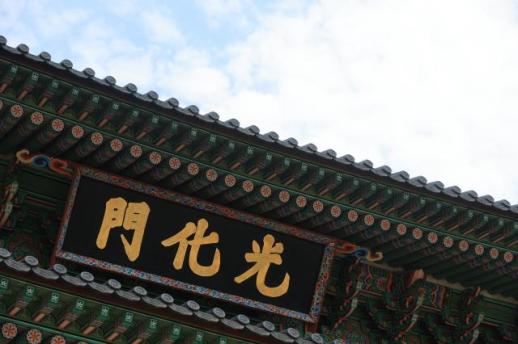 Gwanghwamun's Hangul signboard to be discussed SEOUL, July 24 (AJP) - The government will bring 200 citizens together this weekend to debate whether a Hangeul signboard should hang at Gwanghwamun Gate alongside the existing Chinese character one. The Ministry of the Interior and Safety and the Ministry of Culture, Sports and Tourism will hold the first "Forum for Everyone" on the question from 10 a.m. to 6 p.m. on July 26 at Yonsei University's Baekyang-nuri hall in Seoul, the ministries said Thursday. Forum for Everyone is a new cross-ministerial format designed to feed citizens' views directly into policymaking. The 200 participants, selected through advance recruitment, will weigh the signboard question from historical, cultural, and other angles and work toward practical policy directions. The day will move through expert presentations, small-group discussions, and a plenary session where participants exchange views and draw up a collective final position. The forum will be livestreamed on KTV's YouTube channel, with on-site participants voting in real time by mobile phone. 2026-07-24 17:14:08
 -
Revised Property Tax Law Increases Tax Burden on Multiple Homeowners A recent study has found that the government's revision of the comprehensive real estate tax has led to a concentration of wealth among multiple homeowners in high-value properties in the metropolitan area.According to a report by the National Institute of Public Finance titled 'Analysis of Effective Tax Rate Disparities by Number of Homes and Changes in Housing Ownership Structure,' the effective tax rate gap between multiple homeowners and single homeowners has widened to 0.71 percentage points, a 2.4-fold increase over the past year since the 2020 tax reform.The tax reform implemented around 2020 aimed to increase the tax burden on multiple homeowners while expanding basic deductions for single homeowners and tax credits for seniors and long-term property holders.As a result, the effective tax rate for multiple homeowners rose to 1.21% in the following year, more than doubling from 0.59% the previous year. In contrast, the effective tax rate for single homeowners increased only from 0.30% to 0.50%. The gap in effective tax rates between the two groups reached its highest level of 0.71 percentage points between 2015 and 2024.During this period, statistics on housing ownership revealed that the number of single homeowners nationwide increased by 438,936 in 2021, while the number of multiple homeowners decreased by 46,393. The trend of increasing multiple homeownership, which had been rising until 2019, shifted to a slowdown and eventual decline following the tax reform.This trend was particularly pronounced in Seoul. Since 2020, the number of multiple homeowners in Seoul decreased by 1.77%, and in 2021, the decline was nearly double the national average at -3.83%.Kim Jin-wook, the lead researcher, explained, "Seoul has been designated as a regulated area since 2017, which likely means that multiple homeowners in regulated areas felt the impact of increased tax rates earlier than those in other regions."Analysis of individual housing ownership changes by the National Data Agency showed that between 2020 and 2021, 328,000 individuals transitioned from being multiple homeowners to single homeowners, while 283,000 made the opposite transition. This reversal has only occurred during this specific period in the last five years.This indicates that taxpayers adjusted the number of homes they owned in response to changes in the tax system. The phenomenon of concentrating assets into a single property, referred to as 'one good house,' can be seen as a result of the tax system differentiating tax burdens based on the number of properties owned.Experts warn that if this imbalance is not addressed, the incentive to concentrate assets into high-value single properties to evade regulations on multiple homeownership will continue, potentially exacerbating price pressures on high-value homes in the metropolitan area.Kim suggested, "The ongoing discussions in government and academia regarding a shift in the comprehensive real estate tax assessment criteria towards asset value should be considered in light of these concerns. Additionally, measures to reduce deductions and exemptions for high-value single homeowners should be prioritized."* This article has been translated by AI. 2026-07-24 17:12:00