


Latest by
-
 Defense Minister An Kyu-baek Marks One Year in Office, Commits to Reform On July 25, Defense Minister An Kyu-baek reaffirmed his strong commitment to completing defense reforms as he marked his one-year anniversary in office.In a post on his Facebook page, An acknowledged that "the deeper and broader the scope of reform, the more intense the growing pains will be," but he vowed to move forward without wavering.He stated, "I will shoulder all the burdens of reform" and requested warm encouragement and support from the 550,000 members of the defense family who are quietly walking this path.An characterized the government's defense reform as a "paradigm shift" rather than mere institutional adjustments, emphasizing, "Based on the great achievements that have led South Korea to become a strong nation over the past 80 years, we will surely achieve a new paradigm shift for success in the next 80 years."Notably, he addressed the transfer of wartime operational control, stating, "The journey of recovery is also heading toward a conclusion," and assessed that the timing and conditions for regaining operational control have matured to the point of being encouraging to allied nations.Accordingly, the Ministry of National Defense plans to finalize the verification of the Future Combined Command's Full Operational Capability (FOC) during the upcoming Security Consultative Meeting (SCM) in Washington, D.C., scheduled for October or November. Following this, the defense ministers of both countries aim to propose and announce the target year for the transfer of operational control to their respective presidents. Achieving this transfer by June 2030, before President Lee Jae-myung's term ends, is a key policy goal of the current administration.An also listed significant achievements from the past year, including high-intensity internal audits and personnel reforms in response to the December 3 emergency martial law situation, legal and institutional improvements related to martial law, enhanced constitutional education, the operational deployment of the high-power missile Hyunmoo-5, the unveiling of the nuclear-powered submarine Jangbogo N Project, improvements in service members' treatment, and the easing of military facility protection zones.Looking ahead, he outlined tasks for the remainder of his term, including the establishment of the National Military Academy, restructuring the military, normalizing intelligence and counterintelligence agencies, reforming the Marine Corps into a "quasi-fourth military branch," reorganizing the Defense Drone Headquarters, and increasing duty pay and various allowances.An, who became the first civilian defense minister in 64 years, has led significant military organizational reforms, including the push for the transfer of operational control and the integration of military academies. However, he has faced internal resistance and personal attacks related to past allegations of military service violations during his tenure.* This article has been translated by AI. 2026-07-25 12:52:00
-
Korean Tidal Flats Recognized as UNESCO World Heritage Site 'Korean tidal flats' have expanded their boundaries, reaffirming their outstanding value as a UNESCO World Heritage site.The 48th World Heritage Committee made the final decision on July 25 during a meeting in Busan to expand the registration of 'Korean tidal flats' to a second phase.With this decision, the existing four tidal flats registered as World Heritage in 2021—the Seocheon tidal flats in South Chungcheong Province, the Gochang tidal flats in North Jeolla Province, the Sinan tidal flats in South Jeolla Province, and the Boseong-Suncheon tidal flats—will now include the tidal flats of Muan, Goheung, Yeosu, and Seosan. This marks the first case of an expanded registration among South Korea's World Heritage sites.As a result, 'Korean tidal flats' have been expanded into a continuous heritage site consisting of six components: Boseong-Suncheon-Yeosu-Goheung tidal flats, Sinan-Muan Tando Bay tidal flats, Muan Hamhae Bay tidal flats, Gochang tidal flats, Seocheon tidal flats, and Seosan tidal flats.This expansion signifies the international community's renewed recognition of the universal value of the biodiversity and migratory bird habitats found in Korea's tidal flats. The World Heritage Committee particularly praised the natural heritage value of these sites for their contribution to the conservation of migratory waterbirds and various marine life, as key habitats in the Yellow Sea ecosystem and the East Asia-Australasia migratory flyway.South Korea previously applied for the expansion of the existing World Heritage boundaries through a 'boundary modification (expansion registration)' method. The World Heritage Committee had recommended including additional tidal flat areas to more fully demonstrate the heritage's value when it registered the four tidal flats in 2021.In response, the Cultural Heritage Administration has closely collaborated with relevant central government departments, local governments, communities, and the Korea Tidal Flats World Heritage Registration Promotion Team since the first phase of registration in 2021 to implement the committee's recommendations. This included reviewing the World Heritage value of the additional tidal flat areas, designating protected areas, establishing management systems, consulting with local communities, and responding to assessments from the International Union for Conservation of Nature (IUCN).A representative from the Cultural Heritage Administration stated, "This second phase of expansion registration is a valuable result achieved through the combined efforts of the Cultural Heritage Administration, the Ministry of Foreign Affairs, the Ministry of Oceans and Fisheries, the relevant local governments, and the Korea Tidal Flats World Heritage Registration Promotion Team. It is also significant that our adherence to the recommendations made during the 2021 registration has been recognized internationally."Following this registration, the government is expected to continue research on the additional tidal flat areas and efforts to secure community support. Furthermore, the IUCN has previously recommended strengthening international cooperation with relevant parties to ensure the continuation of traditional fishing and tidal flat resource harvesting practices, as well as the conservation of migratory bird habitats, which will also be prioritized.Heo Min, head of the Cultural Heritage Administration, remarked, "The second phase of the expansion registration of Korean tidal flats is a meaningful achievement that faithfully implements the recommendations of the World Heritage Committee in 2021 and further enhances the conservation value and integrity of our tidal flats. Above all, it is significant that this is the result of long-term efforts by the government, local governments, communities, and experts working together."He added, "I hope this registration will serve as an opportunity to further expand international cooperation for the conservation of the Yellow Sea ecosystem and the East Asia-Australasia migratory flyway. We will continue to do our best for systematic preservation, management, and sustainable use, recognizing that Korea's tidal flats are not only a heritage of South Korea but a precious natural heritage that the whole world must protect." 2026-07-25 12:44:00
-
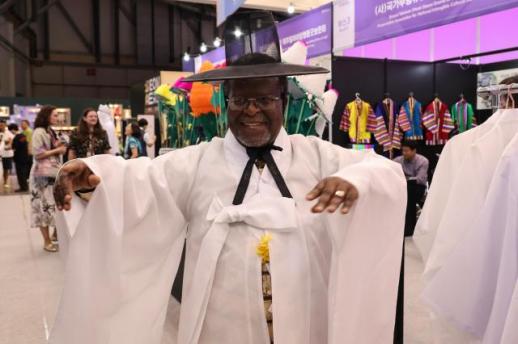 Korea Pavilion shows nation's heritage to world SEOUL, July 24 (AJP) - The Republic of Korea Pavilion, the official host country exhibition for the 48th session of the UNESCO World Heritage Committee, is introducing Korea's cultural heritage to visitors from around the world at BEXCO in Busan. South Korea is hosting the committee for the first time since joining the World Heritage Convention in 1988. The 11-day session opened on July 19 and runs through July 29, bringing together delegates and heritage experts to decide which sites join the World Heritage List and how existing ones are conserved and managed. The committee is reviewing 30 new nominations and three proposals to expand or modify existing listings, and assessing the conservation status of 147 properties already on the list. For the host country, the biggest items on the agenda are the expansion of Getbol, Korean Tidal Flats, which added the tidal flats of Yeosu, Goheung, Muan and Seosan on Saturday, and follow-up measures on Japan's Sado mine complex, where Koreans were forced to work during Japan's colonial rule. Inside the pavilion, 35 organizations, including government agencies, local governments, religious orders and foundations, present Korea's World Heritage, Intangible Cultural Heritage and Memory of the World inscriptions alongside national heritage policy and international cooperation programs. Delegates and visitors moved through the halls, listening to guides, posing for photographs, and trying hands-on programs, with displays pairing traditional heritage and digital technology that drew some of the largest crowds. The pavilion is open through July 29, from 10 a.m. to 6 p.m., in Halls 2B, 3A and 3B of BEXCO's Exhibition Hall 1. Admission is free for committee participants and the general public alike. 2026-07-25 12:26:48
-
Naver Secures $10 Billion Investment from Nvidia and Brookfield for AI Factory Naver has secured a massive $10 billion investment from Nvidia and Brookfield, a major alternative asset management firm. This funding aims to establish an AI factory with a capacity of up to 1 gigawatt (GW) and to expand a 'Sovereign AI' ecosystem that is not tied to specific countries or companies.On July 24, during the AI Summit held at The Midway in San Francisco, Naver founder and board chairman Lee Hae-jin officially announced this development in the presence of President Yoon Suk Yeol.Lee stated, "Nvidia and Brookfield have invested a significant amount of $10 billion in us. This will serve as a turning point for Naver to make a substantial change and leap forward."He projected that this investment would be a pivotal moment for expanding AI infrastructure on a global scale, emphasizing the opportunity to rapidly enhance Naver's data center operations through the global brands and networks of the two companies.The investment will primarily fund Naver's ongoing large-scale AI factory project. Brookfield, which has over 120 years of history and manages more than $1 trillion in assets, previously met with Lee and Naver CEO Choi Soo-yeon at its headquarters in Toronto to discuss funding strategies in detail.The AI factory will integrate GPU servers, AI models, and cloud technologies on a physical foundation of large-scale power and cooling facilities, providing robust computational capabilities.Last month, Naver and Nvidia agreed to jointly build a global AI factory based on Nvidia's AI factory optimization platform, the 'DSX Architecture.' The two companies plan to initially operate a 55-megawatt (MW) AI factory at the Sejong data center, 'Gak Sejong,' in the first half of 2027, with plans to expand to 200 MW by 2028 and ultimately reach 1 GW in the long term.On this day, Lee also presented a strong vision for Naver's 'Sovereign AI' alongside the infrastructure expansion.He asserted, "The internet world that Naver envisions is not one dominated by specific countries or companies. To maintain the diversity of the world, each country, region, and company must be able to create and operate its own AI." He added, "With this investment, Naver will continue its research and investment in technology, striving to create an environment where diverse AI ecosystems coexist in collaboration with companies around the world that share the same vision."* This article has been translated by AI. 2026-07-25 12:20:00
-
Bahrain and Kuwait Conduct Secret Airstrikes Against Iran Bahrain and Kuwait reportedly carried out secret airstrikes targeting Iran earlier this month.According to Yonhap News on July 25, the Wall Street Journal (WSJ) cited sources indicating that the two countries targeted key military facilities in Iran, including drone and missile storage sites. The United Arab Emirates (UAE) is said to have provided intelligence and air support during these operations. However, Kuwait has strongly denied the report, while Bahrain declined to confirm it.Previously, reports indicated that the UAE and Saudi Arabia participated in U.S. and Israeli airstrikes against Iran in early April, but this marks the first time Bahrain and Kuwait have taken direct action. Following the resumption of hostilities this month, Iran has shifted its focus from attacks on the UAE and Saudi Arabia to Bahrain and Kuwait. Given that Oman and Qatar are acting as mediators, these two Gulf states are essentially the only ones remaining within Iran's reach.The WSJ described the airstrikes as "Bahrain and Kuwait's first direct retaliatory attack against Iran," analyzing that this reflects the difficult position Arab nations face amid the prolonged conflict. Countries that previously endured attacks from Iran are now confronting long-term threats to their security and economies, prompting them to take more proactive measures.Dina Esfandiary, a Middle East analyst at Bloomberg Economics, noted, "The current state of war is their worst-case scenario," explaining that losing the image of a stable refuge in an unstable region would undermine their national development models. Gulf oil states, hoping to focus on oil exports and economic growth after the war, are currently experiencing direct economic damage at a level akin to "economic paralysis" due to Iran's blockade of the Hormuz Strait.Consequently, the WSJ reported that Gulf states are weighing more aggressive responses to forcibly reopen the critical trade route of the Hormuz Strait.Umer Karim, a researcher at the University of Birmingham specializing in Saudi policy and Gulf geography, assessed that "Gulf states have realized that the war will continue for the foreseeable future, which ultimately means they must confront Iran openly." He added that these governments are even considering the idea of regime change in Iran, as coexisting with the current regime would effectively mean succumbing to its hegemony.* This article has been translated by AI. 2026-07-25 12:04:00
-
 Nvidia puts SK partnership at $500 billion SEOUL, July 25 (AJP) - A partnership between SK Group and Nvidia will reach $500 billion, Nvidia chief executive Jensen Huang said in San Francisco on Friday (local time), naming a sum larger than everything the chipmaker sold in its last full fiscal year. He said it in the future tense during a meeting with President Lee Jae Myung at a hotel downtown. The two companies would announce the partnership that day, he said, and the scale reached $500 billion (733 trillion won). As of Saturday morning in Seoul, no press release, regulatory filing, or statement from either company had put the figure on paper. The running blog Nvidia maintained through the summit carried a joint research lab with a Korean university and a note about a dinner in Woodside, California. It made no mention of $500 billion. The number is worth measuring against the company that named it. Nvidia reported revenue of $215.9 billion for the fiscal year that ended in January, a record, up 65 percent from the year before. The figure Huang attached to SK Group is more than twice that. It sits close to the roughly $520 billion Samsung Electronics and SK hynix jointly committed last month to new fabrication plants in southwestern South Korea, and it matches the headline value of Stargate, the data center program OpenAI announced last year. What the money covers, over what period, and whether it represents new business or a value placed on an arrangement that already exists were all left undisclosed. The last question is the live one. Nvidia and SK announced an expanded partnership in Seoul on June 8, and it was not small. SK hynix signed a multiyear technology agreement to co-develop memory for Nvidia's Vera Rubin AI supercomputers, Vera central processing units, RTX Spark personal computers and Jetson Thor robotics platforms. SK Telecom agreed to build a full-stack AI cloud on Nvidia's DSX platform, aimed at gigawatt-scale AI factories. SK Group chairman Chey Tae-won said at the time that cooperation with Nvidia, until then centered on memory supply, was being raised to the level of the whole group. Huang did not say on Friday whether the $500 billion is separate from that framework or a price now attached to it. Around the headline figure sat a list of commitments that reached across most of South Korean industry. SK hynix and Samsung Electronics would work with Nvidia on chip design and memory design, Huang said. Naver would receive a large investment, and he described the company as South Korea's leading cloud provider, saying the partnership would support its expansion at home and abroad. With Hyundai Motor Group, Nvidia would jointly develop a self-driving Genesis vehicle and work on robotics. With LG, he said, the two companies are developing power generation systems for use in factories and in homes. Two of the announcements concern where the research happens rather than what gets built. Nvidia is starting what Huang called an AI frontier lab in South Korea, and he said leading company researchers plan to relocate from California to work there. Nvidia and the Korea Advanced Institute of Science and Technology (KAIST) announced a joint AI research lab on Friday at the Kim Jaechul Graduate School of AI on the university's Seoul campus, a $300 million commitment over an initial five years that includes $50 million a year in computing resources, funding for at least 10 researchers annually and internships for each of them. Nvidia describes it as the first joint AI lab between a Korean university and any global technology company. Aju Press reported the terms on Friday. Huang tied that work to something larger. Nvidia is cooperating with KAIST to build what he called Korea AI, he said, and plans to develop a Korean large language model in South Korea, for South Koreans. Partnerships now run from conglomerates to startups to research organizations, he added, and span AI chips, physical AI and infrastructure. Physical AI is the government's term for machines that carry the technology off the screen, robots and vehicles and factory equipment that sense their surroundings and act on them. It is one of the three pillars of the investment package Lee announced on June 29, alongside semiconductors and AI data centers. Blue House policy chief Kim Yong-beom told reporters on Thursday that more than half of the roughly eight gigawatts of first-phase AI data center capacity the government has planned is expected to take firm shape during the two-day visit. He declined to give values ahead of company announcements, and said the presidential trip had acted as a catalyst, helping close negotiations between South Korean and American companies that had run on for months. Lee used the meeting to press for more. South Korea intends to become the country that leads the world on artificial intelligence and on putting AI to actual use, he said, asking Nvidia to take an active role. The government spent the past year preparing before launching the Three Mega Projects, he added, and is now building a society and a state with AI at the center. The exchange was friendly. Lee told Huang he had watched broadcasts of the Nvidia chief eating fried chicken and drinking beer in Seoul more than once and had been sorry to miss it. Huang said the energy he felt in South Korea, from fried chicken through to grilled pork belly, had been remarkable, and credited Lee's stated goal of building an AI native nation with giving the country momentum. Lee picked up a phrase Huang had used and returned it. Calling this an AI golden age is exactly right, he said, and the country is now entering the beginning of it. "Under the president's leadership, Korea has achieved a great deal over the past year," Huang said. "It would not be an exaggeration to call this truly South Korea's golden age." 2026-07-25 11:44:11
-
Korea's Trade Chief Engages U.S. to Address Digital Policy Concerns The South Korean government has launched an active campaign to address U.S. concerns regarding the Section 301 tariff measures and domestic digital regulations, including the Coupang incident.According to Yonhap News on July 25, Yeo Han-goo, head of the Trade Negotiation Bureau, visited Washington, D.C., from July 21 to 24 to engage in in-depth discussions on key trade issues with U.S. government officials, lawmakers, and industry leaders.During this visit, Yeo met with ten U.S. lawmakers, including Senator Bill Hagerty and Representative Adrian Smith, chair of the House Ways and Means Trade Subcommittee, to clearly convey that South Korea's digital laws and policies do not discriminate against U.S. companies.He emphasized the need for close cooperation in critical industries such as semiconductors, shipbuilding, and energy, reminding them that South Korea is one of the largest investors in the U.S. He also urged for active support from the U.S. Congress to strengthen the mutually beneficial economic relationship between the two countries.Yeo joined a delegation from the Korea-U.S. Congressional Friendship Group, led by Representative Shin Dong-hoon, to meet with Senators Steve Daines and Brad Schneider, reaffirming their commitment to enhancing Korea-U.S. relations.Additionally, in meetings with major U.S. tech companies such as Google, Apple, Amazon Web Services (AWS), and Qualcomm, he reiterated that South Korean government policies do not apply discriminatory practices against U.S. firms.Earlier, on July 21, just before the legal expiration date of the global tariff (10%) under Section 122 of the U.S. Trade Act, Yeo met with U.S. Trade Representative Jamieson Greer to confirm plans for future actions regarding the Section 301 investigation.At that meeting, he conveyed the South Korean government's position that the balance of benefits under the existing Korea-U.S. tariff agreement must be maintained.* This article has been translated by AI. 2026-07-25 11:12:00
-
 President Lee pitches South Korea as AI testbed SEOUL, July 25 (AJP) - The country that makes most of the world's memory chips now wants to be the first country to put artificial intelligence to work everywhere else. President Lee Jae Myung carried that argument to San Francisco on Friday, delivering what his office named the San Francisco AI Declaration to a room holding the chief executives of Nvidia, OpenAI, Anthropic and Broadcom. The declaration made two promises at once. South Korea would keep AI chips moving to global buyers under any conditions, and it would open its own factories, cities and public offices as the ground where the technology gets proven in use. The first promise rests on market position. Samsung Electronics and SK hynix together account for roughly 80 percent of global sales of high-bandwidth memory, the chips stacked alongside the graphics processors that run large AI models, according to the Korea Economic Institute of America. The second rests on a domestic program that has no clear equivalent anywhere else. Both trace back to the package the government calls the Three Mega Projects, announced on June 29 at the presidential Blue House, the presidential office in Seoul, when Samsung and SK Group committed a combined 4,755 trillion won ($3.2 trillion) to semiconductors, AI data centers and physical AI, the government's term for robots and other machines that carry the technology off the screen. Adding pledges from GS, Naver and others, the Blue House put the total near 5,000 trillion won. "South Korea will rise as an irreplaceable core country in the global AI supply chain," Lee said in his address. He grounded that in memory manufacturing, saying the country would serve as a trusted production base for AI chips and as a supply chain partner, and pointed to a shift already underway from a single cluster near Seoul toward production sites spread across the provinces. Then he moved to the part other governments cannot easily copy. South Korea would become a global AI testbed and production platform, he said, a place where the technology runs not only in laboratories and on screens but on factory floors, inside cities and across logistics networks. He asked the executives in front of him to choose the country as the stage where their technologies and ideas turn into working products fastest. That claim leans on a program Lee has pushed since taking office in June 2025, which his government calls an AI Basic Society. The premise is that access to AI belongs closer to a public utility than to a consumer product. Lee put it plainly at the Blue House in December, telling SoftBank chairman Masayoshi Son that AI should become basic infrastructure the way water, sewerage and roads are, available to every citizen, company and organization at least at a working level. The legislative piece arrived on January 22, when South Korea's framework act on the development of AI took effect after a one-year grace period. It pairs rules for higher-risk applications with state support for adoption. The European Union legislated first but has delayed its high-risk provisions, which leaves South Korea as the first country actually applying a comprehensive AI law in full. Lee cited it from the stage. "South Korea will build a society where no citizen is left behind even in the AI era," he said. "We call this an AI Basic Society." The programs underneath are specific and close at hand. Bae Kyung-hoon, deputy prime minister and minister of science and information and communication technology, told a ministry briefing at the Blue House on July 16 that a free AI service for the entire population, branded AI for All, would launch in December. He said at the same session that South Korea was capable of building a model in the class of Mythos, the frontier system from Anthropic, whose chief executive sat in the San Francisco audience eight days later. Kim Yong-beom, the policy chief at the Blue House, sharpened the argument on July 21. Access to AI should now be treated as a basic right, he said, and the state should hand citizens a domestically built system at no cost, both to pull users away from foreign services and to accumulate the demand and data a home market needs to grow on its own. He drew a line between that and cash welfare. Guaranteeing everyone a minimum amount of computing, in his framing, adds to what a person can produce rather than to what they can spend. A second program would place an AI agent inside public administration, identifying the benefits and permits a citizen qualifies for and filing the applications on their behalf. Kim argued that the state absorbing the risk of first adoption is what opens the larger market, since AI has still not moved into the places where people currently exercise judgment and carry responsibility, among them hospital consulting rooms, classrooms and government offices. Money and hardware have followed. The government tripled AI spending this year to 10.1 trillion won from 3.3 trillion. It has secured 260,000 advanced graphics processors, helped by a priority supply commitment Nvidia chief executive Jensen Huang made at the Asia-Pacific Economic Cooperation summit in Gyeongju last October. A presidential committee on national AI strategy, chaired by Lee, launched in September 2025 with a contribution to a global AI Basic Society written in as one of three policy pillars. The gap that remains is wide. Stanford University's Institute for Human-Centered AI , in an index published in April, counted five notable AI models from South Korea, third in the world but far behind 50 from the United States and 30 from China. The same report ranked South Korea first for AI patents per 100,000 people for a second consecutive year, a pattern that fits a country better at applying technology than at inventing the frontier version of it. Lee's pitch in San Francisco was, in effect, that the first skill is worth buying. The response from the room was warm. Altman had met Lee at a hotel in downtown San Francisco earlier on Friday, where Lee asked him to take a larger role in the Three Mega Projects. Altman told him the effort the South Korean government was making on AI placed the country among the most important in the world, and said he hoped leaders elsewhere would follow Lee's example on investment and policy. Wide access to enough high-quality AI mattered greatly, he added, and he pointed to the Korean projects as the kind of program that delivers it. Lee had opened that meeting by telling Altman that South Koreans were pleased and hopeful he had taken an interest and decided to invest while the country reorganizes its industries around AI. Smiling, he added that he had been making good use of ChatGPT. Concrete numbers were promised but not disclosed. Kim said on Friday that the summit would produce confirmed customers for large-scale AI data center construction, and that Samsung Electronics and SK hynix had each agreed new long-term supply contracts for specified chips. At a briefing for foreign correspondents the previous day, he said the figures the companies were preparing to announce could exceed the June headline. That headline deserves reading closely. Of Samsung's 2,655 trillion won, 2,030 trillion is committed to the existing Pyeongtaek and Yongin clusters, leaving 625 trillion for the new sites in the Honam, Chungcheong and Yeongnam regions. The government has said investment outside the capital region comes to about 1,600 trillion won. The totals bundle new commitments together with capital plans the companies had already set, and both depend on power and water arriving on schedule at sites where neither is guaranteed. The government-backed summit was held at the Midway, an arts and events venue in San Francisco, and drew about 150 people, including researchers, investors and startup founders. Samsung Electronics executive chairman Lee Jae-yong, SK Group chairman Chey Tae-won, Hyundai Motor Group executive chair Chung Eui-sun and Naver co-founder and board chair Lee Hae-jin attended alongside Huang, Altman, Amodei and Broadcom president and chief executive Hock Tan. Lee put the combined corporate value of the companies represented at more than 20,000 trillion won, about $13.6 trillion. San Francisco is the first stop on an 11-day trip that continues to Brazil, Chile and Argentina before a stopover in Frankfurt. In his closing remarks, Lee reached for a larger frame. AI , he said, is like a new fire that humanity has discovered, and responding to what cannot be avoided is something South Korea has proved good at. The country is not yet 100 years past colonial rule and started again from the total destruction of war, he noted, reaching industrialization and then democracy in a short span. He then tied the economic argument to South Korean politics. Economic questions and democracy run together, he said, because both demand that things be rational, transparent, fair and predictable. He cited what he called the turmoil of about two years ago as proof of the country's democratic capacity, a reference to the martial law declaration of December 2024 and the impeachment that followed. "Until now, South Korea has been chasing the advanced countries," Lee said. "Now we intend to stand a step ahead and take the path of becoming a model for everyone." He asked the global companies in the room to work with the country at the threshold of what he called the AI golden age. "I dare say you will never be disappointed." 2026-07-25 10:55:14
-
Education Ministry's RISE Program Faces Transparency Criticism Despite 21.4 Trillion Won Budget The Education Ministry's RISE (Regional Innovation System for Education) program, which transfers financial support authority to local governments, has seen its budget soar to 21.4 trillion won this year. However, concerns have been raised about the lack of transparency regarding how these funds are utilized and the outcomes of the support provided. Despite the significant taxpayer investment, the program's operations have been criticized for their opacity, making it difficult to verify allegations of misallocation. On July 20, the University Education Research Institute (UERI) released a report titled 'Is the RISE Program Transparently Disclosed?' According to the report, among the 17 local governments managing the RISE program, only Daegu has publicly disclosed detailed budget information. The RISE initiative aims to enable local governments to provide concentrated support to universities in line with regional development. The budget for this program has increased dramatically, from 354 billion won in 2023 to 1.2 trillion won in 2024, 2 trillion won in 2025, and now 21.4 trillion won this year. To assess the transparency of the RISE program, UERI filed requests for information regarding the detailed budget and support outcomes for universities with the 17 local governments. The analysis revealed that only Daegu provided comprehensive information about the program's objectives, overview, and detailed budget breakdown on its website. In contrast, the other 16 local governments either listed only total amounts in their revenue and expenditure budgets or posted implementation plans and announcements without providing specific budgetary justifications. The disclosure of 'university-specific support results' was even less satisfactory. Only five of the 17 local governments reported that they would disclose support results, with only Seoul providing the names of individual universities and the specific amounts of support. Gyeonggi and Chungnam only revealed the names of selected universities, while Jeonnam and Jeonbuk aggregated support totals by project. The remaining 12 local governments did not disclose any support results. Previously, when the Education Ministry directly managed university financial support programs, detailed budgets and explanatory materials were made publicly available. However, since the implementation of RISE, the ministry's budget reports only indicate the total amount of 21.4 trillion won, leaving no way to trace the flow of funds. UERI stated, "While the Education Ministry has pointed out issues of fairness and patronage in the RISE program, the current publicly available data does not even allow us to confirm whether such problems exist, rendering transparency impossible." In April, the Education Ministry announced a restructuring of the RISE program as 'ANCHOR' (a system for nurturing regional talent) and pledged to improve the program's allocation practices. Im Eun-hee, a researcher at UERI, emphasized, "As the program has been restructured into the ANCHOR system, the disclosure system must also be revised. Local governments should be required to publicly disclose the budget size, detailed breakdowns, and university support results on the ANCHOR website, and the Education Ministry must establish a management and oversight system to monitor local governments' compliance with information disclosure requirements."* This article has been translated by AI. 2026-07-25 10:08:00
-
Ministerial Vacancy at Small and Medium Enterprises Ministry Delays Policies Since Han Seong-sook transitioned to the role of Prime Minister, the appointment of a new Minister for the Ministry of SMEs and Startups has been delayed for over a month, raising concerns about a policy gap. With small and medium enterprises (SMEs) and small business owners struggling amid high inflation and sluggish domestic demand, the absence of a policy leader is hindering initiatives like the normalization of the Everyone's Startup program and appointments within affiliated agencies.According to government sources on July 25, the Ministry has been operating without a minister for nearly six weeks since Han was nominated as Prime Minister on June 7. Although First Vice Minister Noh Yong-seok is currently acting in the minister's role, the announcement of a successor has yet to be made.The prolonged absence of a minister is causing delays in addressing significant issues. The Ministry's key initiative, the Everyone's Startup project, has seen its second recruitment phase postponed indefinitely following a data breach incident involving participants from the first phase, which was originally scheduled for July.Support for SMEs and small business owners, who are facing dire circumstances due to high interest rates and inflation, as well as policies for AI transition, venture investment recovery, and global expansion, are not being expedited.Moreover, the impact of the ministerial vacancy is cascading down to affiliated agencies. The term of Lee Tae-sik, head of the Korea SMEs and Startups Agency, has already ended, and next month, the terms of Kang Seok-jin, head of the Korea Small Business Corporation, and Kim Young-shin, head of the Korea Technology and Information Promotion Agency for SMEs, will also expire.Typically, the appointment of heads of affiliated agencies requires a recommendation from the relevant minister, which means the absence of a minister is leading to stagnation in these appointments.Additionally, there is a possibility that the presidential work report scheduled for early next month will be conducted without a minister, with the acting vice minister stepping in.Currently, various candidates for the next minister are being discussed in government and political circles, ranging from politicians to academics and private sector leaders. However, given the current economic challenges and global uncertainties, there is a growing call for a qualified individual with a deep understanding of the SME and startup sectors, as well as the expertise and drive to foster growth.An industry insider stated, "We need to quickly appoint a hands-on candidate who understands the field and can lead policies with urgency, beyond political calculations or delays in verification."* This article has been translated by AI. 2026-07-25 10:08:00