


Latest by
-
 HJ Heavy Industries Leads US-Korea Joint Shipbuilding R&D, Developing AI Welding Technology HJ Heavy Industries has been selected as the lead organization for a joint research and development (R&D) project in shipbuilding between South Korea and the United States, signing a collaborative agreement with U.S. research institutions.On July 23, HJ Heavy Industries attended the opening ceremony of the 'Korea-U.S. Shipbuilding Cooperation Partnership Center' in Washington, D.C., where it announced the signing of an agreement with San Diego State University (SDSU), the U.S. partner in the joint R&D.This project is part of a key technology development initiative for the shipbuilding and marine industry, announced by the Ministry of Trade, Industry and Energy last month. HJ Heavy Industries will focus on developing a Physical AI-based Friction Stir Welding (FSW) system for the autonomous manufacturing of aluminum ship panels, one of eight AI-related projects selected by the government.Friction Stir Welding (FSW), recognized as a next-generation welding technology, is a solid-state joining method that uses friction heat and pressure without melting the metal. This technique enables high-strength and high-quality welding of aluminum panels, which is challenging with traditional arc welding methods. It is particularly noted for its energy efficiency and processing stability, making it a key technology to meet the global trend toward lightweight ships and low-carbon vessels.In this research, HJ Heavy Industries will collaborate with the Korea Institute of Small Shipbuilding and Kyungpook National University to develop AI-based optimization technology for the FSW process. SDSU and domestic company Sangrim MSP will handle the design and production of system hardware and tools. Samsung Heavy Industries, Hanwha Ocean, and Gangnam will also participate as demand institutions to enhance the effectiveness of the developed technology.This joint R&D in core shipbuilding technology is significant as it aligns with the Korea-U.S. shipbuilding cooperation framework known as MASGA. Earlier this year, HJ Heavy Industries became the first medium-sized shipbuilder in South Korea to sign a Maintenance Support Agreement (MSRA) with the U.S. Navy, securing eligibility to enter the U.S. Navy's maintenance, repair, and overhaul (MRO) market.Industry experts believe that the development of this AI-based welding technology will enhance competitiveness not only in shipbuilding but also in the MRO sector. There are also expectations for the Korea Institute of Small Shipbuilding to benefit from support in entering the U.S. market.Through this R&D, HJ Heavy Industries anticipates that securing high-quality solid-state joining technology will have ripple effects across related industries such as aerospace and manufacturing, as well as contribute to technology support for small and medium-sized enterprises in the defense and shipbuilding sectors and the creation of a manufacturing ecosystem.HJ Heavy Industries CEO Yoo Sang-cheol stated, "This joint development of shipbuilding technology between Korea and the U.S. will be a symbolic case of combining the strengths of both countries to secure future technological competitiveness and lead the green and digital transition. We aim to accelerate the development and commercialization of next-generation core technologies through close cooperation among shipyards, companies, and research institutions in both countries, creating a new growth model that generates demand in the global market."* This article has been translated by AI. 2026-07-24 11:44:00
 -
Sandara Park Creates Special Memories for Underprivileged Children in Singapore Singer Sandara Park partnered with the social contribution platform Dream Fund to create special memories for underprivileged children in Singapore.On July 17, Dream Fund hosted a cultural experience program at the Museum of Ice Cream, inviting 19 children from the nonprofit organization Epworth Community Services.The children enjoyed a meaningful day exploring interactive exhibits like the Sprinkles Pool and Banana Jungle Maze, as well as indulging in various ice cream and play activities. Many of the participants were visiting the Museum of Ice Cream for the first time.Epworth Community Services is a leading nonprofit organization in Singapore that supports children, youth, and families from vulnerable and crisis backgrounds. It aids healthy development through operating group homes, literacy improvement programs, and psychological and behavioral support initiatives.Sandara Park expressed, "Seeing the children smile and enjoy themselves was a great gift in itself," adding, "I want to continue participating in activities that bring hope to children."A representative from Epworth Community Services remarked, "It was truly an unforgettable day for the children," and expressed gratitude to Dream Fund and Sandara Park for providing such a meaningful experience.David Yong, founder of Dream Fund, stated, "Children are our future," emphasizing that the goal of Dream Fund is to create opportunities for children to dream and realize their potential. He added that this collaboration marks the beginning of ongoing social contribution activities with various organizations in Singapore.Last winter, Dream Fund continued its support for vulnerable children by donating padded jackets to three child welfare facilities in Seoul. This program is significant as it goes beyond a one-time experience, aiming to enhance children's self-esteem and social experiences through culture and play.* This article has been translated by AI. 2026-07-24 11:36:00
-
North Korean Defector School 'Yeomyung School' Settles in Seoul with Hyundai Support Yeomyung School, an alternative school for North Korean defectors, has settled in the site of the closed Yeomgang Elementary School in Gangseo, Seoul, with support from Hyundai Motor Company, the Ministry of Unification, and the Seoul Education Office.On July 24, Hyundai Motor Group announced that it signed a memorandum of understanding (MOU) with the Ministry of Unification and the Seoul Education Office for the construction of new facilities for Yeomyung School.Founded in 2004 in Bongcheon-dong, Seoul, Yeomyung School is an alternative school for North Korean defectors that received official recognition for middle and high school education in 2010. The school has faced challenges in establishing a permanent location due to a lack of space and facilities.Since 2023, the school has been operating under a temporary use permit at the site of the closed Yeomgang Elementary School, but the permit is set to expire in February 2027, necessitating the search for a new location.In response, Hyundai Motor Group, the Ministry of Unification, and the Seoul Education Office have stepped in to support Yeomyung School's stable establishment. Hyundai Motor Group will provide funding for the construction of new school facilities, reportedly amounting to 6 billion won.The Seoul Education Office will offer the site of the closed Yeomgang Elementary School for the new school construction at no cost, while the Ministry of Unification will assist with relevant administrative and legal improvements. Yeomyung School will oversee the construction and operation of the new facilities.Hyundai Motor Group plans to implement tailored education and support programs for current and former students of Yeomyung School. The company will deploy 20 college mentors from its social contribution program, H-Jump School, to provide customized learning in subjects such as English, math, and science. Additionally, the school will offer career exploration programs during winter break and vocational lectures, as well as build a community with alumni to assist with career planning and social adaptation. The Hyundai Chung Mong-koo Foundation will also provide scholarships for outstanding graduates to cover college tuition and living expenses.“The newly created educational space will be a cradle of hope where students can dream bigger and plan for their futures,” said Sung Kim, president of Hyundai Motor Group. “We will continue to work closely with relevant agencies to create an inclusive society where all children can realize their potential.” 2026-07-24 11:32:00
-
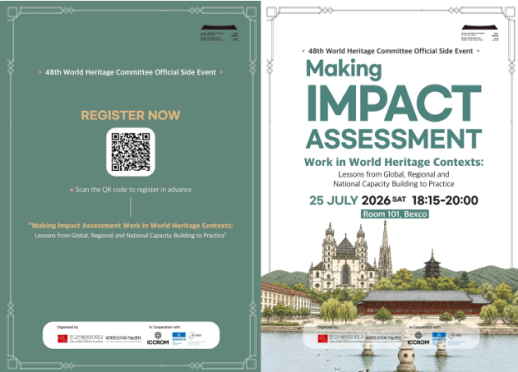 Korea spotlights heritage impact assessments versus developments SEOUL, July 24 (AJP) - Korea will bring together international heritage experts to discuss how Heritage Impact Assessments (HIA) can help safeguard UNESCO World Heritage sites from mounting pressure caused by development projects, tourism and climate change, the Korea National University of Heritage, which operates under the Korea Heritage Service, said Friday. The forum, titled Making Impact Assessment Work for World Heritage: From Capacity Building to Practice, will be held from 6:15 p.m. to 8 p.m. on July 25 in Room 101 at BEXCO in Busan as an official side event of the 48th session of the UNESCO World Heritage Committee. The event is organized by the Centre for World Heritage and Sustainable Development at the Korea National University of Heritage in cooperation with the International Centre for the Study of the Preservation and Restoration of Cultural Property (ICCROM) and UNESCO's World Heritage Institute of Training and Research for the Asia and the Pacific Region, Shanghai. According to the university, Heritage Impact Assessments are becoming increasingly important as governments seek to evaluate how development projects, infrastructure expansion, tourism and climate change could affect the Outstanding Universal Value of World Heritage properties before projects move forward. The forum will explore ways to integrate the assessments into heritage conservation, site management and development planning. The program will open with presentations on international, regional and national efforts to strengthen impact assessment capacity. Speakers include Eugene Jo of the ICCROM-IUCN World Heritage Leadership Program, Li Hong of UNESCO WHITR-AP Shanghai, and Seolin Kim of the Korea National University of Heritage. The presentations will be followed by a roundtable discussion on the legal, institutional and practical challenges of implementing Heritage Impact Assessments. The discussion will examine Korea's legal and institutional framework before experts from Norway, Ireland and Japan share their national experiences in implementing the system. The Korea National University of Heritage said the forum aims to contribute to international discussions on Heritage Impact Assessments while strengthening Korea's capacity to conserve and manage World Heritage sites in line with international standards. The university also plans to expand cooperation with UNESCO WHITR-AP Shanghai on education and professional training in Heritage Impact Assessments. 2026-07-24 11:30:40
 -
 Korea brings galleries, auction houses under mandatory art-market registration SEOUL, July 24 (AJP) - South Korea will require galleries, auction houses and other art businesses to register with local authorities beginning July 26, marking the country's first comprehensive effort to bring the commercial art market under a unified regulatory system, the Ministry of Culture, Sports and Tourism said Friday. The new system applies to six business categories: galleries, art auctions, art advisory services, art rental and sales, appraisal services, and exhibition operators. Businesses must register separately from their standard business registration. The registration requirement was newly established under Article 18 of the Fine Arts Promotion Act, which was enacted in 2023 and takes effect this year after a three-year preparation period. The requirement extends beyond major auction houses and established galleries. Online platforms that repeatedly broker art sales, individuals who continuously engage in art sales as a business — including artists selling their own work — foreign galleries operating in Korea, and regularly held art fairs may also be required to register, according to ministry guidance. One-off private sales and temporary exhibitions are generally exempt. The ministry said the system is intended to improve transparency in an industry where transaction records, auction disclosures and appraisal standards have not previously been subject to uniform rules. It also expects the registration framework to provide a clearer picture of Korea's commercial art market, supporting future policy development. Registered galleries, auction houses, advisers and art dealers will be required to keep records of the artworks they handle, including the type of artwork, transaction date, title, artist, sale price and seller. They must also provide information needed to administer artists' resale royalty payments. Auction houses must disclose winning bids and whether buyers have completed payment. They are also prohibited from participating in their own auctions or engaging in practices that undermine fair bidding. If an auction house offers a work owned or managed by the operator or a relative, that relationship must be disclosed to bidders before the auction. Separate rules apply to appraisal businesses. Appraisers must remain independent from clients and other market participants and issue appraisal reports using a government-designated format. They are prohibited from issuing false appraisal reports, conducting sole appraisals of works owned or circulated by themselves or close relatives where conflicts of interest may arise, and accepting compensation beyond appraisal fees and related expenses. They are also barred from offering money or other benefits in exchange for appraisal work. Businesses that fail to register or violate their obligations may face administrative fines or suspension of operations. However, the ministry will operate a one-year grace period through July 25, 2027, postponing penalties while local governments and related agencies help businesses adapt to the new requirements. Once the registration system is fully in place, the ministry said it plans to use the data collected to develop policies and support programs tailored to different sectors of the art market. "The art service business registration system will help build consumer confidence in the art market and support its continued growth," Jeong Hyang-mi, head of the ministry's Culture and Arts Policy Office, said. 2026-07-24 11:28:17
 -
President Lee's Approval Rating Drops to 51%, Real Estate Policy Criticized President Lee Jae-myung's approval rating has seen a slight decline for the third consecutive week, according to a recent public opinion survey. The primary reason cited for disapproval was his real estate policy.On July 24, Korea Gallup reported that President Lee's job approval rating stands at 51%. Meanwhile, 38% of respondents indicated they believe he is performing poorly, and 11% withheld their opinions. The survey was conducted from July 21 to July 23 among 1,003 adults aged 18 and older across the country.This figure matches the lowest approval rating recorded since President Lee took office, which was also 51% in the survey conducted in the fourth week of June. Following a 54% approval rating released in the first week of July, the president's approval has dropped by 1 percentage point each week for three weeks.Among the reasons for positive evaluations, 'diplomacy' was the most frequently mentioned at 17%. Other reasons included 'economy and livelihood' (15%), 'overall performance' (9%), and 'communication' (8%).Conversely, the reasons for disapproval were led by 'real estate policy' (22%), followed by 'economy, livelihood, and high exchange rates' (10%), 'overall poor performance' (7%), and 'issues of morality and evading personal trials' (5%).Regionally, the highest support was found in Gwangju and Jeolla at 76%, followed by Busan, Ulsan, and Gyeongnam at 52%, and Daejeon, Sejong, and Chungcheong at 51%. In Incheon and Gyeonggi, support was at 50%, while Seoul recorded 43%, and Daegu and Gyeongbuk had 40%.By age group, support was over 50% among those in their 50s (69%), 40s (63%), and 60s (51%). However, support among those aged 18 to 29 was only 33%, and 39% among those in their 30s. Support levels were 83% among progressives, 49% among moderates, and 26% among conservatives.In terms of party support, the Democratic Party received 44%, while the People Power Party garnered 23%. Compared to the previous survey, the Democratic Party's support increased by 4 percentage points, while the People Power Party's dropped by 3 percentage points. The Justice and Innovation Party and the Reform Party each received 2%, the Progressive Party received 1%, and 27% of respondents were undecided.This survey was conducted via telephone interviews using randomly selected virtual numbers. The margin of error is ±3.1 percentage points at a 95% confidence level, with a contact rate of 39.7% and a response rate of 10.7%. For more details, please refer to the website of the National Election Survey Deliberation Commission.* This article has been translated by AI. 2026-07-24 11:28:00
-
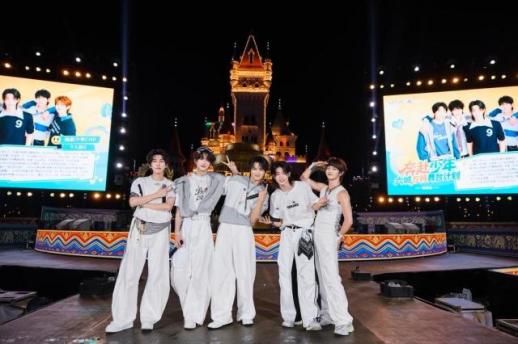 China-based K-pop boy group CIIU to release album next month SEOUL, July 24 (AJP) - China-based K-pop boy group CIIU will release their first extended play (EP) next month since making their debut last year, their agency JYP Entertainment said on Friday. CIIU debuted in August 2025 under JYP Entertainment's "Globalization by Localization" strategy, which develops artists tailored to individual overseas markets. The strategy first produced Boy Story in China before expanding to Japan-based girl group NiziU and U.S.-based girl group VCHA. Following their debut, CIIU's first single entered the top 10 of QQ Music's daily popularity and trending charts. With the EP, "Closer To 'You'" slated for release on Aug. 4, its title track "Closer" centers on themes of youth and emotional growth, portraying the journey of growing closer to someone. The release is built around the group's signature "C-Tro Pop" style, which blends Chinese retro influences with contemporary pop. The promotional rollout began earlier this month with the release of a teaser poster and concept film. On July 14, CIIU pre-released the B-side track "Step By Step" along with its accompanying music video. The song combines the sound of a traditional Chinese wind instrument with hip-hop elements. Another B-side, "Next To You," is scheduled for release on Aug. 19. Beyond music, the boys have expanded their presence in China through collaborations with local brands and promotional events. They were recently selected as an advertising model for Chinese electric bicycle brand Xinri and are partnering with theme park operator Fantawild for promotional events. They are also scheduled to perform at the 2026 TMELive International Music Awards on Aug. 22 before meeting fans in Shanghai on Aug. 29 to mark the first anniversary of their debut. 2026-07-24 11:14:55
 -
Economic Growth Rate Exceeds Expectations, Securities Firms Raise Annual Forecasts This year, South Korea's economy has shown stronger growth than expected in the first half, prompting securities firms to raise their annual economic growth forecasts. Following a surprising growth in the first quarter, the economy continued to exceed market expectations in the second quarter, making the possibility of a 3% annual growth rate more realistic.According to the financial investment industry on July 24, major domestic securities firms have recently adjusted their forecasts for this year's real Gross Domestic Product (GDP) growth upward. This comes after the Bank of Korea reported a preliminary real GDP growth rate of 0.6% for the second quarter, surpassing both market expectations and the bank's own projections.The economy has shown a robust performance throughout the first half of the year. The first quarter growth rate was revised upward from an initial estimate of 1.7% to 1.8%, significantly exceeding forecasts. In the second quarter, the growth rate reached 0.6%, three times higher than the Bank of Korea's forecast of 0.2%.Typically, when the previous quarter's growth rate is high, the following quarter may experience a slowdown due to base effects. However, this year, the economy has continued to grow positively after the 1.8% growth in the first quarter, confirming a stronger-than-expected recovery.Notably, in the second quarter, strong semiconductor exports offset the impact of rising international oil prices and increased external uncertainties due to conflicts in the Middle East. Both private consumption and exports increased, contributing to growth in domestic demand and net exports.In light of the unexpected growth in the first half, securities firms have raised their annual growth rate forecasts. Hyundai Motor Securities increased its forecast from 2.7% to 3.2%, while Meritz Securities raised its estimate from 2.9% to 3.4%. Shinhan Investment Corp. adjusted its forecast from 3.1% to 3.3%. Korea Investment & Securities and Shinhan Investment Corp. projected growth rates of 3.2% and 3.1%, respectively, both higher by 0.5 and 0.4 percentage points from their previous estimates. iM Securities provided the highest forecast among major firms at 3.6%, while Daishin Securities anticipated a growth rate of 3.5%.Park Sang-hyun, a researcher at iM Securities, stated, "The growth trend centered on strong semiconductor exports is expected to continue in the second half. The ongoing investment cycle in artificial intelligence (AI) in the United States will sustain the semiconductor export boom in the latter half of the year." He added, "While the increase in semiconductor export prices drove growth in the first half, we expect a relative increase in export volumes in the second half to further support this growth."The Bank of Korea has also noted that the possibility of achieving a 3% annual growth rate has significantly increased. A Bank of Korea official stated, "Even if the average growth rate in the third and fourth quarters is only -0.1%, we can still achieve a 3% annual growth rate." Deputy Prime Minister and Minister of Economy and Finance Koo Yun-cheol also remarked that the likelihood of achieving 3% annual growth and a per capita national income (GNI) of $40,000 has become very high.Market observers are paying close attention to the potential for further upward adjustments to the Bank of Korea's growth forecast for this year. In its economic outlook released in May, the Bank of Korea assumed a growth rate of about 3.3% for the first half, but the actual growth rate is estimated to have risen to approximately 3.8% compared to the same period last year.Kim Yu-mi, a researcher at Kiwoom Securities, noted, "Considering that the first half growth rate has exceeded initial projections by more than 0.5 percentage points, it is highly likely that the Bank of Korea will make a relatively significant upward adjustment in its economic outlook to be announced in August. The annual growth rate is expected to converge around 3.0%, close to the government's forecast."* This article has been translated by AI. 2026-07-24 11:12:00
-
Shinhan Investment Corp. Reports 123% Increase in First-Half Net Profit Shinhan Investment Corp. announced that its net profit for the first half of the year reached 577.7 billion won, a 123.1% increase compared to 258.9 billion won during the same period last year.Operating profit for the same period rose to 748.4 billion won, up 135.0% year-on-year, while operating revenue increased by 76.3% to 1.4741 trillion won.In the second quarter, net profit was 289.3 billion won, reflecting a 0.3% increase from the previous quarter and a 91.6% rise from the same quarter last year. Operating profit for the second quarter was 362.0 billion won, an 80.2% increase year-on-year, with operating revenue reaching 772.6 billion won, up 65.4%.The strong performance in the first half was driven by growth in the brokerage sector. Commission income totaled 935.4 billion won, with trust commissions soaring to 677.9 billion won, a 228.5% increase from 206.4 billion won in the same period last year. This surge was attributed to increased trading volumes amid a booming capital market.Conversely, the investment banking (IB) sector experienced some challenges. IB revenue for the first half was 73.4 billion won, down 24.7% from the previous year. In the second quarter, IB revenue also fell to 30.8 billion won, a decrease of 26.7% year-on-year and 27.7% from the previous quarter.Shinhan Investment Corp. stated, "The significant improvement in performance compared to the previous year was due to increased commission income from stock trading and financial products, along with improved product management income. However, despite the rise in stock trading commissions due to favorable capital market conditions, conservative management strategies in response to rising market interest rates led to a slight increase in net profit compared to the previous quarter."* This article has been translated by AI. 2026-07-24 11:08:00
-
 K-pop quartet aespa release new album in Japan SEOUL, July 24 (AJP) - K-pop girl group aespa released their first Japanese mini album on Friday as they seek to expand their presence in Japan. "KISS N TELL" features six songs including the title track of the same name, a dance-pop song with upbeat piano melodies, rhythmic beats and layered harmonies, with lyrics exploring deepening friendships through shared personal concerns and emotions, according to their agency SM Entertainment. Released alongside the album, the music video for the title track is set in an amusement park and showcases the quartet's choreography against bright, summery visuals. The album also includes "ATTITUDE," a theme song for the Japanese television anime "Kill Blue"; "In Halo," featured in the drama "First Bite"; and three new songs, "Orbit Pop," "Fangirl" and "Done with Rules." The latest release comes about two years after aespa debuted in Japan with their single "Hot Mess" in 2024. Meanwhile, aespa will perform at this year's Lollapalooza Chicago in Grant Park, a music festival in Illinois, in August. 2026-07-24 11:04:48