


Latest by
-
 Vietnam Stock Market Declines, But Korean Funds Show Resilience The Vietnamese stock market has plummeted to its lowest level in four months, yet some Korean funds have managed to maintain positive returns in the first half of the year. Amid margin calls and foreign selling pressure, strategies focusing on large-cap stocks like VIC (Vingroup) and VHM (Vinhomes) have differentiated the performance of two funds managed by Korean Investment Trust Management in Vietnam.On July 22, the VN Index of the Ho Chi Minh Stock Exchange closed down more than 62 points at 1,668, marking the largest decline since late March and falling below the psychologically significant 1,700 level.The VN Index has dropped significantly for four consecutive trading days, accumulating a 7.6% decline. Compared to its all-time high of 1,927 points recorded two months ago, the adjustment has reached 13.5%. The total trading value on the Ho Chi Minh Stock Exchange was approximately 23 trillion dong (about $1.68 billion), slightly up from the previous trading day, but buying interest remained weak.The direct cause of this sharp decline has been attributed to margin calls and the resulting 'forced selling pressure.' Tyler Nguyen Minh Dung, a senior market strategy researcher at HSC Securities, identified the increased volume of forced selling as a primary reason for the drop. He noted, "Selling pressure concentrated between 10:30 and 11:00 AM, and again from 2:00 to 2:30 PM."Forced selling has spread as declines in certain stocks prompted sales of other holdings. Dung observed that the selling affected speculative stocks, those that had already fallen significantly, and even large-cap stocks that had no apparent negative news. He suggested, "Cross-forced selling may have contributed to the widening adjustment during the trading session."Truong Quang Binh, head of the Ho Chi Minh branch of ACB Securities, also diagnosed that margin calls and forced selling rapidly exacerbated the index's decline. He explained, "By the end of the second quarter, the balance of margin loans at securities firms had surged to about 450 trillion dong (approximately $25.3 billion), causing investors to feel pressured." Consequently, some investors appeared to have reduced their positions to minimize losses or protect existing gains.In terms of supply and demand, foreign selling of large-cap stocks has added to the market's burden. On that day, foreign investors net sold approximately 5 trillion dong (about $281 million), marking the largest selling volume in the past month and a half. Stocks representing various sectors, including SSI, ACB, EIB, TPB, and VIB, were among those targeted by foreign sellers.Binh explained that after funds exited major sectors such as banking, securities, oil and gas, and steel, pressure also mounted on stocks affiliated with Vingroup. Notably, VIC and VHM, which had previously supported the index amid selling in various sectors, accounted for 32 points of the index's decline on that day.Korean Funds Show ResilienceMeanwhile, despite the rollercoaster ride of the Vietnamese stock market in the first half of the year, some Korean-managed funds have reported positive returns. As of June 30, among 15 major foreign investment funds, only three recorded positive returns when converted to Vietnamese dong. Among them, the KIM Vietnam Growth Fund achieved a return of 1.7%, while the KITMC Worldwide Vietnam RSP Balanced Fund posted a 1.5% return.Both funds are products of Korean Investment Trust Management. The KIM Vietnam Growth Fund invests in leading high-growth companies in Vietnam and maintains a significant allocation to listed stocks. The KITMC Worldwide Vietnam RSP Balanced Fund seeks long-term capital growth by investing in listed companies in Vietnam or those primarily operating in Vietnam, combining both stocks and bonds.As of mid-July, the KIM Vietnam Growth Fund had net assets of approximately $310 million (about 4.58 trillion dong), while the KITMC Worldwide Vietnam RSP Balanced Fund had net assets of $192 million (about 2.83 trillion dong).The performance difference can be attributed to their portfolios. As of the end of last month, the KIM Vietnam Growth Fund had the largest allocations in top market capitalization stocks in Vietnam, including VIC, VHM, and VCB (Vietcombank). Among these, the allocations to VIC and VHM were significant, along with holdings in MBB (Military Bank) and CTG (Vietnam Joint Stock Commercial Bank for Industry and Trade). The KITMC Worldwide Vietnam RSP Balanced Fund had a similar composition but with a larger allocation to VIC.The strength of VIC and VHM has positively impacted the two Korean funds. These stocks have shown triple-digit growth rates over the past two years, leading the VN Index's rise. However, on the day of the sharp decline, these same stocks also faced selling pressure, contributing to the index's drop.In contrast, other major foreign funds struggled to defend their returns. The JP Morgan Vietnam Opportunities Fund recorded a slight gain of 0.1%, while the Vietnam Enterprise Investment Limited and Vietnam Equity UCITS Fund managed by Dragon Capital reported returns of -3.7% and -6.6%, respectively. The Forum One-VinaCapital Vietnam Fund, part of the VinaCapital group, posted -0.3%, and the VinaCapital Vietnam Opportunities Fund recorded -2.6%, while the Finland-based PYN Elite Fund saw a return of -6.1%.In terms of long-term performance, both Korean funds have outperformed the market. From December 31, 2019, to June 30, the KITMC Worldwide Vietnam RSP Balanced Fund achieved a return of 122.7%, surpassing the VN Index's increase of 93.6% during the same period, making it the highest among 15 foreign funds. The KIM Vietnam Growth Fund also recorded a return of 101.8% during that time.* This article has been translated by AI. 2026-07-24 13:52:00
-
Presidential Security Service Launches Safety Control Team for Korea-Central Asia Summit The Presidential Security Service announced the establishment of a safety control team on July 24, in preparation for the '2026 Korea-Central Asia Summit' scheduled to take place in Seoul this September.The safety control team, led by the Security Planning and Coordination Office, consists of five divisions: the Security Operations Headquarters, Military Operations Headquarters, Police Operations Headquarters, Fire Operations Headquarters, and Terrorism Information Support Headquarters. The team will oversee the safety of delegations, including heads of state, and manage security at various event venues.Particularly for this summit, which will be held in downtown Seoul, the security service emphasized its commitment to ensuring safety while minimizing public inconvenience. Plans are in place to limit traffic disruptions and enhance traffic information dissemination.Hwang In-gwon, head of the Presidential Security Service, stated, “We will showcase world-class ‘K-security’ by integrating the expertise gained from numerous multilateral summits with advanced technology. We aim to harmonize perfect security with minimal public inconvenience through restrained control, ensuring that this summit becomes a successful national celebration.”* This article has been translated by AI. 2026-07-24 13:52:00
-
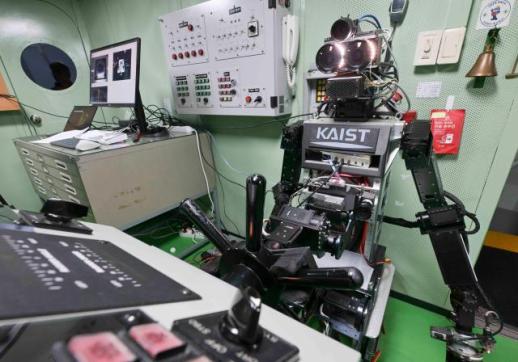 Navy tests humanoid robot at ship's wheel in first crew experiment SEOUL, July 24 (AJP) - South Korea’s Navy has tested a humanoid robot as a ship crew member for the first time, putting the machine at the wheel inside a bridge simulator as part of efforts to reduce sailors’ workload and prepare for a shrinking pool of military personnel. The Navy said Friday that the experiment was conducted Wednesday at the Naval Education and Training Command’s ship-handling training facility in Changwon, South Gyeongsang Province, in cooperation with the Korea Advanced Institute of Science and Technology. Video footage released by the Navy showed KAIST’s humanoid robot PIBOT standing at the helm inside a bridge simulator designed to replicate a naval vessel. Navy personnel stood watch at the windows and control panels, while researchers monitored the robot from nearby computer screens. In the footage, an officer of the watch gave PIBOT a helm order through a handheld microphone, just as he would to a human sailor: “Rudder left five degrees, steady on 330.” PIBOT repeated the command, moved its mechanical arm toward the wheel and turned the steering gear. After the simulated vessel’s heading stabilized, the robot reported that the course change had been completed. The repeat-back procedure is a standard part of ship handling, used to ensure that helm orders are clearly received and correctly executed. The Navy said PIBOT followed the same process used by human sailors. The test was conducted under a range of simulated conditions that naval vessels could face at sea, including narrow-channel navigation requiring frequent course changes, rough weather that repeatedly shifts a ship’s heading and nighttime navigation. The footage showed the simulator’s bridge windows switching between maritime scenarios, while PIBOT remained at the steering station and responded to orders from Navy personnel. The experiment assigned PIBOT the role of helmsman, a crew member responsible for operating the steering gear in response to orders from the captain or the officer of the watch. On a naval vessel, another sailor, known as the engine order telegraph operator, separately adjusts the ship’s speed. The Navy said the experiment was intended to examine whether robots can take over some shipboard duties now performed by sailors, beginning with steering tasks, and to explore how robotic systems could be operated aboard naval vessels. The project is linked to the Navy’s broader Navy Sea GHOST initiative, a manned-unmanned maritime combat system designed to integrate unmanned platforms and advanced technologies into future naval operations. The combat experiment will proceed in four stages: land-based ship-handling simulation, testing aboard a docked vessel, daytime sea trials and long-duration day-and-night sea trials at sea. Wednesday’s experiment was the first stage. “The Navy will use the results of this experiment to explore ways to operate robots aboard ships, reduce the workload of ship crews and actively respond to a changing defense environment, including a sharp decline in military manpower and rapid advances in high technology,” Rear Adm. Kim Hyung-jun, head of the Navy Force Analysis, Test and Evaluation Group, said. KAIST professor Shim Hyun-chul, who leads the research team, said it was meaningful to test whether a humanoid robot based on physical AI technology could perform the role of a Navy helmsman. PIBOT has been under development by KAIST since 2022 under an ADD defense technology program, with $4.1 million in funding from the Defense Acquisition Program Administration. 2026-07-24 13:48:56
-
President Lee Departs for U.S. and South America, to Announce AI Declaration in San Francisco President Lee Jae-myung and First Lady Kim Hye-kyung departed for a 7-night, 11-day tour of the United States and South America on July 24, 2026. They will visit San Francisco, Brazil, Chile, Argentina, and return via Germany.President Lee and First Lady Kim left Seoul's Seongnam Airport around 1 p.m. on July 24. They were seen off by key officials, including Chief of Staff Kang Hoon-sik, Chief Political Secretary Hong Ik-pyo, and Acting Leader of the Democratic Party Han Byeong-do.Upon arrival in San Francisco, President Lee will hold a series of meetings with Dario Amodei, CEO of Anthropic; Sam Altman, CEO of OpenAI; Jensen Huang, CEO of NVIDIA; and Hock Tan, President and CEO of Broadcom. He will also attend the upcoming 'San Francisco AI Summit.'The summit will feature over 150 participants, including prominent South Korean business leaders such as Lee Jae-yong of Samsung Electronics, Choi Tae-won of SK Group, Chung Eui-sun of Hyundai Motor Group, and Lee Hae-jin of Naver, alongside global tech CEOs, AI companies, researchers, startups, and investors.During the summit, agreements between domestic companies and big tech firms will be signed, and President Lee will announce the 'San Francisco AI Declaration' and participate in discussions.Later, President Lee will host a dinner with representatives from domestic and big tech companies. In the afternoon, he will attend a 'Silicon Valley Venture Investment Meetup,' meeting with representatives from six leading venture capital firms, including Andreessen Horowitz, General Catalyst, Sequoia Capital, Khosla Ventures, Lightspeed Venture Partners, and New Enterprise Associates.Following a signing ceremony for an MOU between the National Pension Service and these VCs, a roundtable will be held to discuss cooperation in the Korea-U.S. venture ecosystem.On July 26, President Lee will make a state visit to Brazil, arriving in Brasília for a welcome reception hosted by President Luiz Inácio Lula da Silva and his wife.The next day, an official welcome ceremony will take place, followed by a summit at the Palácio da Alvorada, an MOU signing ceremony, a joint press conference, and a state luncheon. Afterward, President Lee will travel to São Paulo for a luncheon with expatriates and a 'Korea-Brazil Business Roundtable' on July 28.On July 29, President Lee will begin his official visit to Chile with a dinner for expatriates. On July 30, he will lay a wreath at the statue of national hero O'Higgins, followed by an official welcome ceremony at the Palacio de La Moneda, a summit, an MOU signing ceremony, a joint press conference, and an official luncheon. In the afternoon, he will attend a 'Korea-Chile Business Roundtable.'That night, President Lee will arrive in Buenos Aires to commence his official visit to Argentina. On July 31, he will honor the national hero at Plaza San Martín, followed by an official welcome event at the Casa Rosada and a summit with President Javier Milei, concluding with a dinner for expatriates.On August 2, President Lee will stop in Frankfurt, Germany, for a meeting with expatriates before returning home.National Security Office Director Wi Seong-lak stated, 'Brazil, as the fifth largest country by area and seventh by population, leads the regional order in South America and demonstrates active leadership in the UN and G20. This South America tour will solidify international cooperation with these nations.' 2026-07-24 13:44:00
-
Solus Advanced Materials Reports 2nd Quarter Operating Loss of 21.3 Billion Won Solus Advanced Materials announced on July 24 that it recorded a consolidated operating loss of 21.3 billion won and sales of 101.9 billion won for the second quarter of 2026.Sales increased by about 31% compared to 77.8 billion won in the same period last year and rose approximately 16% from 88.1 billion won in the previous quarter. The operating loss slightly increased from 20.8 billion won year-on-year but decreased by 35.8% from 32.4 billion won in the previous quarter.While profitability is improving due to expanded sales and increased operating rates, ongoing losses are attributed to rising raw material prices caused by the war and the impact of the new OLED factory expansion.The battery foil segment recorded sales of 75 billion won, a 63% increase from the same period last year, driven by increased orders from existing major customers and new client acquisitions. The demand for energy storage system (ESS) products has also surged due to the expansion of AI data centers. In Europe, the recovery in demand for electric vehicles (EVs) has led to increased supply of products for EVs and ESS, contributing to overall growth.The company expects profitability to improve gradually starting in the third quarter as the effects of a product mix shift toward high-value products are reflected. It anticipates that increased supply to major North American customers and expanded production by European clients, including CATL, will drive performance.In the OLED division, sales reached 26.9 billion won, a 15% decrease compared to the previous year. This decline is attributed to seasonal off-peak effects in the first half, which led to reduced sales volumes from major customers and delays in OEM approval schedules from clients in China.The copper foil (circuit foil) segment, which has completed its sale process, is not included in this quarter's results.Gwak Geun-man, CEO of Solus Advanced Materials, stated, "The demand for battery foil from North American and European customers continues to expand. We expect that improvements in product mix and the effects of new project production will lead to increased average operating rates and a foundation for profitability in the second half of the year."Meanwhile, Solus Advanced Materials has secured the only production base in Europe through its battery foil plant in Hungary. To respond to increasing customer demand, the company decided to invest 40 billion won in its Hungarian subsidiary last month.* This article has been translated by AI. 2026-07-24 13:40:00
-
U.S. and Iran Diplomats Exchange Heated Words Over Retaliation The top diplomats of the United States and Iran engaged in a public exchange over the level of retaliation each country would pursue. Iran's assertion of a 'eye for an eye' principle was met with a stronger U.S. response, described as 'eye for a head.'On July 23, U.S. Secretary of State Marco Rubio spoke with reporters at a meeting of ASEAN foreign ministers in Manila, Philippines, stating, "I saw the Iranian foreign minister say that 'eye for an eye' is their policy. President Trump's policy is 'eye for a head.'" This indicates a willingness to respond to Iranian attacks with even greater force.Rubio warned, "Iran will pay a very heavy price for its current actions," and claimed that Iran has been seeking negotiations with the U.S. both directly and indirectly.Earlier, Iranian Foreign Minister Abbas Araghchi posted on X (formerly Twitter), stating, "Our defense principle is clear: an eye for an eye," and warned that any aggression targeting Iran, including infrastructure, would provoke a strong and decisive response.Following Rubio's comments, Araghchi took to X again to rebut, criticizing some U.S. officials for burying their heads in the sand and focusing solely on the 2028 U.S. presidential election while ignoring reality. He asserted, "The U.S. president wants to achieve results in negotiations with Iran, but due to the reckless attacks of some individuals, they will pay a greater price."This exchange of words was sparked by President Donald Trump's warning the previous day that he would bomb bridges and power plants in response to Iranian attacks on vessels in the Strait of Hormuz. Trump stated on social media platform Truth Social, "Whenever Iran attacks a ship in the Strait of Hormuz, I will destroy one of their bridges or power plants."* This article has been translated by AI. 2026-07-24 13:40:00
-
Large $1.7 billion international money transfer completed in one hour via China's payment network A large international money transfer worth 1.7 billion dollars was completed in just one hour through China's payment network. According to the South China Morning Post on July 24, the Bank of China processed a remittance of 1.7 billion dollars (approximately 2.5 trillion won) through its Shenzhen branch using mBridge, the international payment platform of the People's Bank of China. This month, a larger amount was reported to have been transferred to the Bank of China's Fujian branch from overseas. The July transaction was the largest in terms of value among those using mBridge. The June transaction involved a Chinese corporate client sending money to an overseas corporate client, while the July transfer was made by an overseas remitter to a corporate account in mainland China. The transfer took less than 60 minutes to complete. China launched mBridge, a digital payment platform based on blockchain technology, in 2021. A key feature of mBridge is that it does not go through the international payment network SWIFT. Central banks from various countries join mBridge to settle transactions using central bank digital currencies, allowing financial institutions to conduct cross-border remittances. This system differs from the Cross-Border Interbank Payment System (CIPS), which China established in 2015 to facilitate international transactions in yuan. CIPS uses existing banking payment systems for international yuan payments and settlements and also utilizes the SWIFT system. Market analysts view mBridge as a crucial tool for China to reduce geopolitical risks and decrease reliance on the dollar-centric international payment network. A recent report from the Japan Research Institute described mBridge as a project designed to establish a mechanism for continuing yuan-denominated payments amid rising geopolitical tensions and economic sanctions. French investment bank Natixis stated, "As the use cases for mBridge increase, the platform's maturity will grow, and in the long term, it could establish itself as an alternative payment network to SWIFT while supporting the internationalization of the yuan."* This article has been translated by AI. 2026-07-24 13:40:00
-
U.S. Imposes 12.5% Tariff on South Korean Goods Over Forced Labor The U.S. Trade Representative (USTR) has decided to impose a minimum tariff of 12.5% on South Korean products due to deficiencies in the country's forced labor import ban. The South Korean government noted that the U.S. reaffirmed the 15% tariff cap agreed upon in the Korea-U.S. tariff agreement, which alleviates some uncertainty regarding tariffs.According to the Ministry of Trade, Industry and Energy, the USTR announced the final results of its Section 301 investigation into the forced labor import ban on July 23 (local time). The U.S. will categorize South Korea, China, the European Union, Japan, the United Kingdom, India, and 60 other economies into four groups, applying tariffs of either 10% or 12.5% based on their forced labor import ban and existing trade agreements.For South Korea, Japan, and Switzerland, if the existing Most-Favored-Nation (MFN) tariff is lower than 12.5%, the Section 301 tariff will be added to ensure a total tariff rate of 12.5%. Products already subject to MFN tariffs of 12.5% or higher will not incur additional Section 301 tariffs, maintaining the existing rates. As a result, South Korean products will face a minimum tariff rate of 12.5%.However, products and components subject to Section 232 tariffs, such as automobiles, steel, and semiconductors, are excluded from this measure. Raw materials and certain specific items that could cause supply shortages or economic disruption in the U.S. are also exempt.The new tariffs will take effect at 12:01 a.m. Eastern Time on July 24. Previously, the U.S. had imposed a temporary global tariff of 10% under Section 122 of the Trade Act after a court ruled that the reciprocal tariffs based on the International Emergency Economic Powers Act (IEEPA) were illegal. The forced labor Section 301 tariffs will be applied when the Section 122 tariffs expire.The Ministry of Trade assessed that the recent decision does not undermine last year's Korea-U.S. tariff agreement. Minister Kim Jung-kwan and Trade Negotiations Chief Yeo Han-goo visited the U.S. this week to discuss the forced labor and overproduction Section 301 tariffs with U.S. Secretary of Commerce Howard Rutnik and USTR Representative Jamieson Greer.South Korean officials emphasized that the combined burden of the two types of Section 301 tariffs should not exceed the agreed-upon 15% level. The U.S. also reaffirmed its commitment to adhere to existing trade agreements. The joint fact sheet from the Korea-U.S. agreement states that the U.S. will apply the higher of the Korea-U.S. Free Trade Agreement (FTA) or MFN rates and the 15% tariff on South Korean products.Looking ahead, the South Korean government aims to limit any additional tariff burden from the ongoing structural overproduction Section 301 investigation to a maximum of 2.5 percentage points. If the total tariff rate already reaches 12.5% due to the forced labor tariff, adding an overproduction tariff exceeding 2.5 percentage points could surpass the agreed 15% threshold.The overproduction investigation targets key South Korean manufacturing sectors, including steel, automobiles, batteries, semiconductors, chemicals, machinery, and shipbuilding. The USTR began its investigation in March involving 16 economies, including South Korea, China, the EU, and Japan, but has yet to finalize the tariff rates and targeted products.The government believes that the finalization of the forced labor tariffs has reduced some uncertainty following the court ruling on reciprocal tariffs and the expiration of the Section 122 tariffs. However, as the overproduction investigation is still ongoing, high-level consultations and sector-specific responses will continue until the U.S. announces its final measures.A Ministry official stated, "We clearly communicated to the U.S. that the total of the forced labor Section 301 tariffs and the overproduction Section 301 tariffs should not exceed 15%. The U.S. has reaffirmed its commitment to adhere to the existing Korea-U.S. tariff agreement, and we will work closely to maintain a balance of interests for our side."* This article has been translated by AI. 2026-07-24 13:32:00
-
KOSPI and KOSDAQ Plunge Over 5%, Triggering Sell Sidecar The KOSPI index dropped more than 5%, falling below the 6,700 mark. Major semiconductor stocks, including Samsung Electronics and SK Hynix, showed significant weakness, leading to increased volatility in both the KOSPI and KOSDAQ markets, prompting the activation of sell sidecars.According to the Korea Exchange, as of 1:08 PM, the KOSPI was trading at 6,695.23, down 401.66 points (5.66%) from the previous trading day. The index opened at 7,000.78, down 96.11 points (1.35%), and continued to decline throughout the session.Foreign and institutional investors sold a net 33.75 billion won and 16.84 billion won, respectively, contributing to the index's drop. In contrast, individual investors were net buyers, purchasing 50.99 billion won.As market volatility increased, a sell sidecar for the KOSPI was activated at 11:23 AM. This occurs when the price of the most traded futures contract based on the KOSPI 200 falls by more than 5% for one minute.The decline was primarily driven by major semiconductor stocks. SK Hynix was trading at 1,763,000 won, down 156,000 won (8.13%). Samsung Electronics also fell by 21,500 won (7.96%), trading at 248,500 won.Other large-cap stocks also showed weakness, with Hyundai Motor (-8.68%), SK Square (-8.48%), Samsung Electro-Mechanics (-8.29%), Samsung C&T (-6.25%), Samsung Life (-5.61%), LG Energy Solution (-5.60%), and KB Financial (-4.76%) all declining. However, Samsung Biologics was the only stock showing strength, rising by 10.15%.The KOSDAQ also experienced a decline of over 5%. At the same time, the KOSDAQ index recorded a drop of 40.57 points (5.13%), trading at 749.73.In the KOSDAQ market, individual investors were net buyers, purchasing 48.21 billion won, while foreign and institutional investors sold a net 22.51 billion won and 25.53 billion won, respectively.A sell sidecar for the KOSDAQ was activated at 11:47 AM after the KOSDAQ 150 futures fell by more than 6% and the KOSDAQ 150 index dropped by over 3% for one minute.Factors weighing on the domestic stock market include geopolitical uncertainties in the Middle East and a surge in international oil prices.As military tensions rise in the Middle East, Brent crude oil traded at $100.69 per barrel, up 7% from the previous session, surpassing $100 for the first time since May. West Texas Intermediate (WTI) also surged by 6.2%, reaching $92.19 per barrel. Concerns over oil supply disruptions have increased following attacks on Saudi Arabian tankers by Yemen's Iran-aligned Houthi rebels and ongoing military clashes between the U.S. and Iran.Han Ji-young, a researcher at Kiwoom Securities, stated, "The current surge in oil prices is exerting upward pressure on interest rates again, which could create a burden on stock market valuations. However, it is important to note that the valuation burden on the KOSPI is lower compared to previous periods of rising interest rates."* This article has been translated by AI. 2026-07-24 13:32:00
-
Small Business Agency Launches S-GDP Initiative to Measure Economic Value The Small Business Market Promotion Agency announced on July 24 that it will actively pursue research to establish the 'Small Business Gross Domestic Product (S-GDP)', a measure of the production and added value generated by small businesses in the national economy, similar to GDP.On the same day, the agency launched the 'Expert Advisory Group for Establishing a System to Measure the Economic Value of Small Businesses' at Dream Square in Mapo District and began research based on the System of National Accounts (SNA) for the S-GDP.The advisory group includes experts from relevant institutions and academia, such as the Bank of Korea, the National Data Agency, the Korea Development Institute (KDI), the Korean Economic Association, and the Korean Association of Applied Economics.During the meeting, participants discussed sharing past research outcomes, concepts and measurement methods, consistency with national statistics, and policy utilization strategies.The launch of this advisory group is one of the implementation tasks of the 'Small Business Value Coexistence Project' announced by Director In Tae-yeon during a press conference marking his 100th day in office. The aim is to establish a foundation for measuring the economic value of small businesses through the development of S-GDP.With the establishment of the advisory group, the agency plans to enhance its previous research and incorporate expert opinions to improve the objectivity and policy applicability of the study.In Tae-yeon, the agency's director, stated, 'Small businesses are an ecosystem that drives our economy and local communities. We will use data to show who is producing in the Korean economy and establish a policy foundation that allows the public to feel the economic value created by small businesses.'* This article has been translated by AI. 2026-07-24 13:32:00