


Latest by
-
 Lee seeks broad consensus on housing to avoid Japan-style property bust SEOUL, July 23 (AJP) -Normalizing property prices distorted by "abnormal" demand and supply is the purpose of housing policy, South Korean President Lee Jae Myung said Thursday, calling for a broad social consensus on how to balance housing supply, lending restrictions and taxation to prevent the country from following Japan's decades-long property bust. "Real estate is one of the biggest challenges facing the Republic of Korea," Lee said in opening remarks at a nationally televised housing policy forum held at the KBS annex in Seoul. "Looking at the assets held by Korean households, real estate accounts for the largest share," he said. "There is broad public consensus that measures are needed to address property prices." Lee warned that South Korea should draw lessons from Japan, where soaring land and property prices in the late 1980s culminated in the collapse of one of the world's largest asset bubbles. "Japan once suffered greatly because of its property problem," Lee said. "Prices continued to rise until they reached their limit and burst like a balloon, leading people to speak of the 'lost 20 years' and the 'lost 30 years.'" "There are quite a few people who worry that we, too, may be racing toward that peak." The forum came as the government searches for a policy formula capable of cooling Seoul's increasingly unaffordable housing market without undermining household finances, suppressing legitimate demand or further discouraging residential construction. Lee stressed that the government was not seeking to force housing prices lower artificially but to normalize distortions created by imbalances in demand and supply while reconciling competing interests over land, credit, taxation and the basic purpose of housing. "A house is a place to live, but it is also an investment asset," he said. He acknowledged that expanding supply remained essential but argued policymakers faced practical and political limits over where and how new homes could be built. "If the government tries to release greenbelt land, nearby residents ask why good land should be destroyed," Lee said. "Some argue that we should build homes even at the cost of some environmental damage. In any case, there are clear limits to supply." The president also revisited the long-running debate over whether taxes should be used to influence housing demand and supply, saying such intervention could depart from taxation's original purpose and therefore remained open to legitimate public debate. He took a similar view of mortgage lending, describing finance as "half public" because banks ultimately lend money entrusted to them by society. "Who should be given the opportunity to use finance can ultimately be translated into a question of policy," Lee said. "There are those who believe people should be allowed to use finance to buy homes for profit. But if that causes housing prices to rise excessively, people who actually need homes end up suffering." South Korea's housing market has long forced successive governments to balance protecting homeowners' wealth with improving affordability for younger and lower-income households. Restrictions on borrowing may curb speculative demand but also make it more difficult for first-time buyers to enter the market, while supply measures often take years to translate into completed homes. Lee said making such trade-offs was among the most difficult responsibilities of government. "When one side is pushed down, another side tends to rise," he said. "The power to bring competing sides to a final conclusion is power itself. That is why public officials are elected or appointed." "Even if it brings some conflict and resistance, isn't this what people elected someone like me to do?" he added. "When authority is exercised, responsibility must be taken in proportion to that authority. The greatest virtue of a public official is taking responsibility." Lee said officials must be prepared to withstand criticism and political resistance but should first gather and reconcile as many opinions as possible, which he said was the purpose of Thursday's forum bringing together policymakers, academics, financial experts, real estate professionals, civic groups and members of the public. Jin Mi-yoon, a professor at Myongji University's Graduate School of Real Estate, at the debate argued that Korea's biggest supply problem was not merely fewer homes being built but a breakdown in the entire housing pipeline. "What is most concerning today is that the housing supply chain — from permits to construction starts and ultimately occupancy — has been broken," Jin said. She warned that today's decline in construction starts would eventually translate into fewer completed homes and properties available for sale, placing greater pressure on housing costs for working- and middle-class households. Jin called for targeted financial and tax support to revive housing construction, with priority given to projects most likely to proceed quickly to actual building. She also urged more active management of redevelopment and reconstruction projects, which are frequently delayed by rising construction costs, disputes among association members and deteriorating project economics. "Various types of housing must be supplied at prices people can afford," Jin said. She further proposed fostering professional rental housing operators so the rental market could provide stable housing while helping tenants move gradually toward homeownership. Official data illustrate the uneven nature of the housing recovery. Nationwide housing completions fell 17.8 percent in 2025, while Seoul presales plunged 53.3 percent. Although construction starts rose 27 percent year-on-year during the first five months of 2026, that improvement has yet to translate into a sustained increase in completed housing. The government plans to begin construction on 1.35 million homes across the Seoul metropolitan area between 2026 and 2030, equivalent to about 270,000 homes annually. It also aims to develop roughly 60,000 additional homes on underused public land while starting construction on more than 62,000 public housing units this year, including 18,200 in third-generation new towns. Kim Young-do, a senior research fellow at the Korea Institute of Finance, proposed imposing a macroprudential levy on borrowers taking unusually large mortgages, arguing that excessive use of society's limited lending resources should carry an explicit cost. Such a levy could be targeted at borrowers purchasing expensive homes and help reduce the tendency for transactions in luxury properties to push up prices across the broader market, although he acknowledged it would not be a cure-all. Kim argued that existing tools—including loan-to-value and debt-service-ratio regulations and lending quotas—mainly restrict the quantity of credit. Policymakers should also consider whether price-based measures could work more efficiently. "The housing market is too complex to be treated with a single regulation," Kim said. "The core of demand-control policy is an appropriate combination of measures, and the order of priority is also important." Lee's administration has already introduced some of the toughest mortgage restrictions in recent years, progressively tightening loan ceilings, reducing loan-to-value ratios and imposing stricter borrowing limits on higher-priced homes in Seoul and surrounding areas. Even so, the capital's housing market has continued to climb. Seoul apartment prices rose 0.30 percent in the second week of July, extending gains to a 75th consecutive week, while jeonse deposit prices increased 0.28 percent. Household borrowing has also remained elevated despite tighter lending rules. The government aims to limit household loan growth to 1.5 percent this year and reduce household debt to around 80 percent of gross domestic product by 2030, while the Bank of Korea raised its benchmark interest rate to 2.75 percent on July 16, its first increase since January 2023, citing inflation, household debt and an overheating property market. Lee said public attitudes toward housing appeared to be evolving, with greater emphasis being placed on homes as places for stable living rather than simply vehicles for investment. He also said there was growing agreement that young people, newlyweds and families with several children deserved special consideration. Expressing confidence that consensus was achievable, Lee said another round of discussions chaired by the prime minister could be held if necessary. 2026-07-23 14:28:10
-
 U.S. Tariff Policy Faces New Challenges Amid Trade Agreement Concerns The U.S. tariff policy has reached another turning point. Following a ruling by the U.S. Supreme Court that halted country-specific tariffs, the Trump administration has invoked Trade Law 301 as a new tool for tariffs. An additional 12.5% tariff has been announced for South Korea, citing insufficient measures to block imports of products made with forced labor. With the potential for further tariffs due to structural overproduction, it is difficult to rule out exceeding the agreed 15% between South Korea and the U.S.Last year, South Korea pledged $350 billion in investments in exchange for reducing mutual tariffs from 25% to 15%. The government and businesses viewed this as a safety net to reduce uncertainty in exports to the U.S. However, if the U.S. alters the legal basis for tariffs and imposes new ones, the hard-won agreement could be effectively nullified. The worst-case scenario could see investment commitments remain while tariff benefits disappear.Trade Law 301 allows the U.S. to investigate unfair practices by trading partners and take retaliatory measures. Unlike mutual tariffs that apply uniformly across countries, this law can target specific policies, industries, and products. The tariff rates and applicable targets can vary based on U.S. judgment, making it more challenging for businesses to respond. Investigations could also extend to digital regulations, subsidies, and currency issues, in addition to forced labor and overproduction.The government's top priority should be to establish the 15% as a definitive cap on total tariffs. Even if the names and legal bases of tariffs change, it is crucial to secure a written confirmation from the U.S. that additional tariffs on South Korean products will not exceed 15%. Investments being pursued under the existing agreement should also be linked to tariff exemptions and reductions. It will be difficult to maintain negotiating power if tariffs are discussed only after investments are executed.In addressing forced labor issues, the government must not rely solely on defensive arguments. The U.S. claims that South Korea has not sufficiently blocked imports of foreign goods produced with forced labor. The government needs to enhance relevant laws and customs procedures and quickly establish a system to trace supply chains from raw materials to finished products. Guidelines and certification systems should be developed to ensure that South Korean companies can inspect raw materials and intermediate goods sourced from third countries. Eliminating the justification for tariffs will strengthen the case for their withdrawal.To counter overproduction investigations, industry-specific data must be presented. The U.S. may view certain South Korean industries, such as steel, petrochemicals, and batteries, as relying on government support for overproduction. However, not all production increases can be classified as unfair practices. The government and industry must jointly demonstrate production capacity, subsidies, market prices, and the effects of U.S. investments and local employment. Negotiations should also be pursued to exclude South Korean materials and components that contribute to U.S. supply chain stability from tariff targets.Above all, it is crucial to avoid being treated less favorably than competitors. If tariffs cannot be completely eliminated, at the very least, South Korea should not face higher rates than competitors such as Japan, the European Union, and Taiwan. If only South Korea faces higher tariffs on the same products, it could lead to a loss of market share in the U.S. beyond just reduced exports. This is why relative price competitiveness is more important than the tariff rate itself.Domestic measures to address potential impacts should also be prepared in advance. The government should assess the tariff impacts on vulnerable sectors such as petrochemicals, steel, batteries, and general machinery, and expand export financing and trade insurance. However, a blanket subsidy approach for all companies should be avoided. Support should differentiate between companies that are competitive but facing temporary shocks and those needing restructuring. Efforts to diversify export markets and transition to high-value-added products should also be pursued.The U.S. tariff pressure is not a matter that can be resolved in a single negotiation. It is a long-term battle that will involve changing legal bases and justifications. The government should not only focus on maintaining the 15% agreement but also bundle institutional improvements, item-specific negotiations, and industrial competitiveness enhancements into a single strategy. In trade, promises are not kept automatically. South Korea can minimize tariff damage by leveraging its investment and supply chain value as a negotiating tool. 2026-07-23 14:28:00
-
Trade Commission Recommends Anti-Dumping Duties on Chinese Butyl Acrylate The Ministry of Trade, Industry and Energy's Trade Commission has recommended that the Ministry of Economy and Finance impose anti-dumping duties on Chinese butyl acrylate. This comes as investigations into dumping of cold-rolled steel sheets and polyvinyl chloride (PVC) suspension resin have also begun, indicating an expansion of trade remedy measures concerning Chinese materials and chemical products.During its 475th meeting on July 23, the Trade Commission reviewed and approved six cases, including one final determination on the dumping investigation of Chinese butyl acrylate and five investigations into unfair trade practices related to automotive battery packs.The investigation into Chinese butyl acrylate was initiated last July at the request of LG Chem. The Trade Commission issued a preliminary ruling in February, and since April 22, provisional anti-dumping duties ranging from 9.53% to 19.17% have been in effect. In its final determination, the Commission concluded that domestic industries suffered harm due to dumping and recommended that the Minister of Economy and Finance impose anti-dumping duties of 8.32% to 19.17%.Butyl acrylate is an organic compound produced through the esterification of acrylic acid and butanol. It is used in adhesives, acrylic paints, and specialty plastic materials. The basic tariff rate is 8%, the WTO agreement rate is 6.5%, but the Korea-China Free Trade Agreement (FTA) rate is 0%.The recommended levels of final anti-dumping duties vary by supplier: 11.42% for Tsinghua Unigroup and its affiliates, 8.32% for Shanghai Huayi and its affiliates, 19.17% for Pinghu Petrochemical and its affiliates, and 18.69% for other suppliers. The currently applied provisional anti-dumping duties will remain in effect until July 21.The Trade Commission also reported the initiation of dumping investigations into Chinese cold-rolled steel sheets and PVC suspension resin. The Trade Investigation Office determined that it was appropriate to commence investigations based on the review of eligibility, representation, evidence of dumping, and domestic industry harm. Both investigations are expected to conclude with final determinations in April of next year.The cold-rolled steel sheet investigation was requested by TCC Steel and Shinwa Dynamics. The products under investigation include cold-rolled steel sheets used in food packaging, pressurized containers like butane gas canisters, industrial packaging, electronic components, and construction materials. The suppliers under investigation include three companies, including Jiangsu Yufu Sheet Technology from China.The PVC suspension resin investigation was requested by Hanwha Solutions. The product is a white granular resin produced through the suspension polymerization of vinyl chloride monomer, used as a raw material for industrial goods and household items such as pipes, windows, and wire coatings. The suppliers under investigation include two companies, including Tianjin Bohua from China.Unfair trade cases involving patent infringement related to automotive battery packs and lithium-ion batteries for electric vehicles were concluded during the investigation process after a licensing agreement was reached between the parties. The complainant requested the withdrawal of the investigation application in accordance with the agreement, and the Trade Commission accepted this request.On the same day, the Trade Commission held a public hearing regarding domestic industry harm related to cold-rolled products and H-beams from China. Over 60 participants, including representatives from the complainants and suppliers, attended the hearing. The Commission plans to review the opinions raised during the hearing to make a final determination on dumping.* This article has been translated by AI. 2026-07-23 14:24:00
-
 Samsung's 8-year-old foldables evolve for every need SEOUL, July 23 (AJP) - Foldables in their eighth generation have come of age, arriving in different shapes and forms tailored to different user needs with the artificial intelligence at the center of the experience, according to Samsung Electronics, the pioneer of foldable smartphones. At a media briefing held in central Seoul on Thursday, a day after Galaxy Unpacked in London, executives from the company's Mobile eXperience (MX) division walked journalists through the newly unveiled Galaxy Z Fold8 Ultra, Fold8 and Flip8, explaining the thinking behind Samsung's first three-tier foldable lineup. Rather than presenting foldables as a single category, Samsung said it had redesigned the lineup around different user needs: the Fold8 Ultra for productivity-focused professionals, the Fold8 for immersive content consumption and multitasking, and the Flip8 for users seeking portability and self-expression. "Ultra represents our determination not to compromise on anything," Kim Jae-hyuk, a product planning manager in Samsung's smartphone business, told reporters. He said the Fold8 Ultra combines Samsung's highest-end camera system, premium hardware and productivity features in its foldable lineup for the first time. Artificial intelligence has become the central design principle behind the new devices, he said. The new Galaxy foldables are designed to understand user context, proactively suggest actions and reduce the number of steps needed to complete tasks through Gemini-powered agentic AI. Features such as automatic multi-window suggestions, contextual notifications and AI-assisted note organization were highlighted during live demonstrations. Gemini Notebook combines documents, images, voice recordings and notes into a single workspace capable of generating summaries, reports and infographics, positioning the feature as a productivity tool for professionals handling large volumes of information. Samsung said AI experiences across the new foldable lineup will extend beyond smartphones to Galaxy Watch devices and the company's newly announced AI-powered smart glasses, expanding the Galaxy ecosystem around context-aware AI. Display technology remains another defining feature of the foldable family in its eighth generation. "Flex Titanium" is a new titanium-based display support structure designed to reduce visible creases while improving rigidity without adding weight. The devices also feature a peak brightness of 3,000 nits and a new anti-reflective layer to improve outdoor visibility. Preorders for the new Galaxy devices opened Thursday. Samsung Electronics shares were up 2.98 percent at 268,250 won as of 1 p.m. in Seoul. 2026-07-23 14:21:14
-
U.S. Congress Calls for Enhanced Cooperation with Allies to Counter China's Shipbuilding Dominance U.S. lawmakers have called for leveraging the shipbuilding expertise and workforce of allies like South Korea and Japan to counter China's dominance in the industry.On July 22, the House Foreign Affairs Committee held a hearing on "Responding to China's Dominance in Shipbuilding," inviting experts from think tanks to provide insights.During the hearing, both Democratic and Republican lawmakers pointed out that China's control over commercial shipbuilding poses significant vulnerabilities to U.S. economic and national security.According to U.S. government investigations and research from the Center for Strategic and International Studies (CSIS), China currently accounts for more than half of the world's commercial shipbuilding output, while South Korea and Japan follow, with the U.S. share falling below 1%.Rep. Ami Bera, a California Democrat and committee chair, stated, "We are increasingly falling behind China," adding, "We cannot catch up to China on our own."Lawmakers from both parties agreed on the need to strengthen cooperation with allies like South Korea and Japan, which possess global shipbuilding competitiveness, to close the gap with China.Rep. Young Kim, a California Republican, proposed bringing skilled South Korean shipbuilding workers to the U.S. to train American workers, aiming to rebuild the U.S. shipbuilding workforce and industrial base using South Korean technology and production experience.Brent Sadler, a senior researcher at the Heritage Foundation, suggested forming a coalition of major maritime nations, expanding participation to include countries like the Philippines, Vietnam, Germany, Greece, the Netherlands, Norway, and Singapore, with South Korea and Japan at the center.J. James Kim, director of the Korea Program at the Henry L. Stimson Center, noted that South Korea's automation technology and skilled workforce could contribute to the revitalization of the U.S. shipbuilding industry. However, he emphasized that the U.S. government must present long-term vessel ordering and procurement plans to encourage actual investment from Korean companies.In addition to revitalizing the shipbuilding industry, the U.S. is also looking for participation from Asian allies like South Korea and Japan to ensure safe navigation in the Strait of Hormuz.According to the U.S. State Department, Secretary of State Marco Rubio, currently in Manila for the ASEAN Foreign Ministers' Meeting, mentioned the possibility of deploying Asian allies, including South Korea, to the Strait of Hormuz during a press briefing.When asked if he had directly requested naval assets from allies, Rubio replied, "I did not make a direct request today," but noted that these countries rely heavily on oil and natural gas from the Middle East, making their contribution to safe navigation in the Strait beneficial for them as well.He clarified that no agreements were reached during the trilateral meeting with South Korean Foreign Minister Park Jin and Japanese Foreign Minister Toshimitsu Motegi, and that it was not a core agenda item. However, he added, "While I did not make a direct request today, I have had discussions with them in the past," explaining that each country has different domestic procedures and constraints, including legislative approvals. He continued, "I have raised this issue with several countries, and some have special capabilities, such as mine removal, which would be very beneficial if they participate in this effort."* This article has been translated by AI. 2026-07-23 14:20:00
-
Iran Targets CIA Facilities; U.S. Investigates Possible Russian Support U.S. intelligence agencies are investigating whether Russia was involved in Iran's attack on CIA facilities in the Middle East in March. They are looking into the possibility that Russia provided targeting information or advanced drone technology.According to Reuters on July 22, U.S. intelligence is examining the high accuracy of the attacks and the existing military cooperation between Russia and Iran.Iran reportedly launched drone attacks in March against at least two locations, including a CIA branch within the U.S. Embassy in Riyadh, Saudi Arabia, and a CIA facility in eastern Iraq.In the Riyadh attack, the first drone created a hole in the embassy's outer wall, allowing a second drone to enter and explode.U.S. authorities believe that Iranian-made Shahed drones, enhanced with Russian technology, may have been used in the attacks. One source indicated that Russia provided Iran with the 'Kometa-M' satellite navigation system to improve drone accuracy.U.S. intelligence is also investigating whether Iran received location information about CIA facilities from Russia. However, they are not ruling out the possibility that the CIA branch was accidentally hit during the attack on the U.S. Embassy.As of now, no conclusion has been reached regarding direct Russian involvement in the attacks.* This article has been translated by AI. 2026-07-23 14:20:00
-
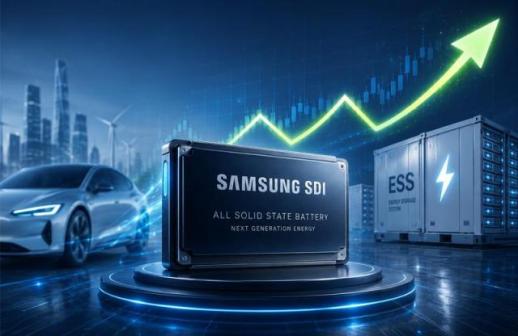 Korea's battery trio turns corner on ESS boom SEOUL, July 23 (AJP) - South Korea's three largest battery makers are seen to have bottomed out in the second quarter as AI boom-led energy storage demand and renewed appetite for EVs from Gulf conflict-induced oil price turbulence pulled them out of a near two-year slump. The reversal of fortune has most benefited Samsung SDI, the underdog among the trio, with analysts expecting it to return to an operating profit for the first time in seven quarters. That would end a losing streak dating back to the third quarter of 2024. The biggest catalyst has not been electric vehicles but energy storage systems (ESS), once considered the industry's backup engine, as AI-driven data center construction fuels surging demand for large-scale battery storage. Samsung SDI's ESS production lines have been running at full capacity. In March, its U.S. subsidiary secured a 1.5 trillion won ($1 billion) contract to supply prismatic ESS batteries to a U.S. energy company through 2029, following an earlier award worth more than 2 trillion won for lithium iron phosphate (LFP) cells. The company bills itself as North America's only non-Chinese producer of prismatic ESS batteries, a niche that has become increasingly valuable as customers seek to diversify supply chains. Government policy has further brightened the outlook. Advanced manufacturing production credits tied to Samsung SDI's U.S. output are projected to reach about 97.7 billion won this quarter, up 21 percent from the previous three months. "As promised earlier this year, we expect an earnings turnaround to be achievable this year," Samsung SDI Chief Executive Choi Joo-sun said at an event marking the company's 56th anniversary, citing new ESS projects and contracts with premium automakers. Among them was Samsung SDI's first-ever battery supply agreement with Mercedes-Benz, signed in Seoul in April, to provide high-nickel batteries for the German automaker's next-generation electric vehicles. The deal means Samsung SDI now counts all three of Germany's premium automotive brands among its customers. An unlikely boost to EV demand came from the Middle East. Oil prices surged as conflict around the Strait of Hormuz threatened energy supplies, prompting more consumers to consider electric vehicles. Domestic EV registrations jumped about 140 percent from a year earlier in April as drivers sought relief from rising fuel costs. The rebound has, at least temporarily, softened the industry's prolonged EV demand slowdown that followed reductions in government subsidies. Chinese manufacturers, however, continue to dominate the global EV battery market. LG Energy Solution, the country's largest battery maker, presented a more mixed picture. It returned to net profit with operating income of 113.3 billion won, but the result relied heavily on 241 billion won in U.S. advanced manufacturing tax credits. Excluding those incentives, its core business remained in the red, posting an underlying operating loss of roughly 127.7 billion won for a third consecutive quarter. Management nevertheless expects to achieve a subsidy-free turnaround by the fourth quarter. Its order pipeline, however, suggests underlying demand remains solid. The company secured more than 100 gigawatt-hours of new orders for its 46-series cylindrical EV batteries in the first quarter, lifting its order backlog above 440 gigawatt-hours. It also plans to expand its North American ESS production capacity to more than 50 gigawatt-hours by year-end. "The ESS ecosystem has kept expanding quietly, even as the market looked away," said Kim Hyun-soo, an analyst at Hana Securities. "After LG Energy Solution won an Oracle order in May, a Google order was confirmed last week. The industry is at the threshold of a genuine surge in hyperscaler ESS demand." SK On, the smallest of the three battery makers, is aiming to return to profitability in the second half. The company is relying on aggressive cost-cutting, including shutting excess production lines and integrating affiliates, alongside what it expects to be another wave of ESS orders from AI data centers and solar power projects. The industry's brightest prospects now rest on that storage boom. Yet the same geopolitical tensions supporting EV demand have also created fresh supply-chain risks. Disruptions around Hormuz have constrained sulfur shipments, affecting production of sulfuric acid used to refine battery-grade nickel and lithium. The squeeze has reinforced Korea's longer-term effort to reduce dependence on Chinese battery materials. Samsung SDI underscored that strategy when it announced a 1.6 trillion won cathode materials supply agreement with domestic producer L&F. In the near term, however, the market is preparing for a sharp decline in U.S. EV sales. "Because subsidies expired on Sept. 30, 2025, pull-forward demand concentrated sales between July and September, meaning this year's third quarter will face a much steeper year-on-year comparison," Kim said. "But that has been anticipated since the beginning of the year. From October, the base effect eases, making a return to year-on-year growth likely." Another question is whether CATL, the world's largest battery maker, can erode Korea's position as it rolls out its new sodium-ion battery brand, expands domestic sales and targets European customers. Some analysts expect only limited impact. "The U.S. ESS market will be shaped by supply-chain de-risking requirements needed to qualify for tax credits, so CATL's expansion is unlikely to undermine the competitiveness of Korean manufacturers," said Chang Jung-hoon, an analyst at Samsung Securities. For now, raw material constraints have yet to derail the sector's recovery. But with lithium markets already shifting from years of oversupply toward deficit, Korea's battery makers may ultimately find that restoring earnings is easier than securing the critical materials needed to sustain growth. 2026-07-23 14:19:02
-
South Korea's Economy Grows 0.6% in Second Quarter, Driven by Semiconductor Sector In the second quarter of this year, South Korea's economy grew by 0.6% compared to the previous quarter. This figure is three times higher than the Bank of Korea's initial forecast of 0.2%. Following a 1.8% growth in the first quarter, this marks two consecutive quarters of growth, showcasing the resilience of the South Korean economy amid geopolitical tensions in the Middle East, rising international oil prices, and U.S. tariff pressures.However, it would be a mistake to assume that the economy's fundamentals have strengthened solely based on this growth rate. A significant portion of this growth can be attributed to the semiconductor industry. Exports increased by 1.4%, primarily driven by semiconductors and machinery, contributing 0.3 percentage points to the overall growth rate. Investment in facilities also relied heavily on equipment for semiconductor manufacturing, indicating that semiconductors have simultaneously boosted exports, production, investment, and income.On the other hand, other sectors of the economy remain unstable. While private consumption rose by 0.4%, contributing 0.2 percentage points to growth, this increase was significantly influenced by government support, corporate promotions, and the wealth effect from rising stock prices. It remains to be seen whether this recovery in consumption is based on structural trends of rising employment and wages. Construction investment fell by 0.2% due to sluggish civil engineering, and production in the construction sector decreased by 1.9%. Key industries such as petrochemicals, steel, and automobiles are struggling amid low-cost competition from China and trade pressures from the U.S.The challenge lies in the fact that the semiconductor boom will not last indefinitely. Semiconductors are a classic cyclical industry. When demand increases and prices rise, companies expand production capacity, but once supply outstrips demand, prices and investments can plummet. Historically, South Korea's economy has experienced simultaneous increases in growth rates and tax revenues during semiconductor booms, only to see exports, investment, and fiscal health falter when the cycle turns. While the current boom in AI semiconductors may last longer than previous cycles, the cyclical nature of the industry remains unchanged.Moreover, as dependence on semiconductors increases, economic volatility also rises. National growth rates may fluctuate based on semiconductor prices, investment decisions by global tech giants, and the technological rivalry between the U.S. and China. If the improved performance of a few large corporations does not sufficiently benefit small and medium-sized enterprises, local economies, and household incomes, the gap between strong exports and perceived economic conditions will only widen. This is evident in the current situation where, despite the semiconductor boom, manufacturing and youth employment remain sluggish.The government must not only enjoy the semiconductor boom but also prepare for the next downturn. The current increase in tax revenues and strong exports should be utilized as time and resources for industrial restructuring. It is essential to broaden growth engines into areas such as AI, biotechnology, future vehicles, robotics, secondary batteries, and shipbuilding and defense, while also accelerating the transition to high value-added production in existing industries like petrochemicals and steel. Enhancing productivity in the service sector to create a job base that can absorb shocks to manufacturing is also crucial.Within the semiconductor industry, it is important to move beyond a memory-centric structure and simultaneously develop competitiveness in system semiconductors, materials, components, equipment, design, and packaging. Achieving results concentrated in specific items and companies must spread throughout the industrial ecosystem for the semiconductor boom to translate into national competitiveness. Research and development, talent cultivation, and the expansion of power, water, and transmission networks should be pursued under long-term plans that remain stable regardless of economic conditions.The 0.6% growth in the second quarter is undoubtedly good news. However, it is crucial not to mistake the growth supported by semiconductors for a broader economic recovery. Booms eventually come to an end. It is essential to establish a foundation for industries, domestic demand, and employment that can sustain growth even after the semiconductor cycle declines. The true strength of an economy lies not in how high a single industry can rise, but in how well the entire nation can withstand its decline. 2026-07-23 14:16:00
-
Hyundai Motor Reports 20.8% Drop in Q2 Operating Profit Hyundai Motor announced on July 23 that it recorded a revenue of 49.2153 trillion won and an operating profit of 2.8509 trillion won for the second quarter of this year.While revenue increased by 1.9% compared to the same period last year, operating profit fell by 20.8%. The operating profit margin dropped by 1.7 percentage points to 5.8%, despite strong sales of hybrid vehicles, due to rising raw material costs and production disruptions caused by fires at parts suppliers.A Hyundai official stated, "The global automotive industry is facing unprecedented challenges, with demand down 3.8% year-on-year due to geopolitical issues and intensified competition. We will strive to demonstrate our fundamentals in the global market through new vehicle launches in the second half of the year."In the second quarter, global sales reached 991,885 units, a decrease of 6.9% from the previous year.In South Korea, sales fell by 16.4% year-on-year to 157,647 units due to supply chain disruptions from parts supplier fires. Internationally, sales also declined by 4.9% during the same period, totaling 834,238 units.Meanwhile, Hyundai will maintain its quarterly dividend at 2,500 won, consistent with the previous year, as part of its value-up program announced in 2024.The Hyundai official added, "Despite changes in the macroeconomic environment, we will faithfully implement our shareholder return policy as promised to maximize shareholder value."* This article has been translated by AI. 2026-07-23 14:12:00
-
Lotte Chilsung's Soonhari Jin Surpasses Last Year's Sales in Just Six Months Lotte Chilsung Beverage's ready-to-drink (RTD) alcohol brand, Soonhari Jin, has surpassed last year's total sales in just the first half of this year.On July 23, Lotte Chilsung Beverage announced that Soonhari Jin recorded sales of 17 billion won in the first half of the year, exceeding last year's annual sales of 16.2 billion won within just six months.If the current trend continues, the company anticipates that Soonhari Jin's annual sales will more than double compared to the previous year. Since its launch in May 2021, cumulative sales are expected to exceed 120 million cans (based on 355ml).Since the introduction of Soonhari Lemon Jin in 2021, the product line has expanded to include four varieties: Lemon Jin, Grapefruit Jin, Yuzu Jin, and Sangria Jin. Among these, Lemon Jin accounts for the largest share of sales at 58%, followed by Grapefruit Jin at 22%, Sangria Jin at 11%, and Yuzu Jin at 9%.A representative from Lotte Chilsung Beverage attributed the growth of Soonhari Jin to its inherent product competitiveness and the development of products that reflect consumer demand.Soonhari Jin utilizes a 'freeze extraction method' that freezes whole fruits at ultra-low temperatures to maximize their rich flavors. Based on consumer research, the product has been improved to meet the demand for zero sugar and a clean drinking experience, offering a variety of alcohol levels and flavors, including 4.5%, 7%, and 9% options.The representative stated, "We have enhanced our brand competitiveness through product development that reflects consumer trends and offers differentiated taste and aroma. We plan to continue strengthening our product competitiveness in the future."Meanwhile, the global RTD alcohol market continues to grow steadily. According to market research firm Euromonitor, the global RTD alcohol market is projected to reach $24.5 billion by 2024, with an average annual growth rate of 7.8%, expected to reach $35.6 billion by 2029. The domestic RTD alcohol market is estimated to be around $50 million. 2026-07-23 14:12:00