


Latest by
-
 Mother Acquitted in 36-Week Abortion Case; Hospital Director and Surgeon Sentenced A mother who was charged with killing her fetus after a cesarean section at 36 weeks of pregnancy has been acquitted in an appeals court. Meanwhile, the hospital director and the surgeon involved in the case were found guilty of fetal homicide, but their sentences were reduced from the first trial.On July 23, the Seoul High Court's Criminal Division 5, led by Judge Kim Yong-seok, acquitted the mother, identified as Kwon. The first trial had sentenced her to three years in prison, suspended for five years, after recognizing her as an accomplice in the murder. However, the appeals court overturned that decision.The court determined that it was difficult to conclude that Kwon was aware that the fetus would be killed after being born alive. It found that Kwon believed the fetus would be stillborn and did not know that medical staff would kill a living fetus. Therefore, the court ruled that the intent to commit murder, as recognized in the first trial, could not be established.The court noted that Kwon had received information through a broker stating that the fetus would be stillborn and did not verify the fetus's condition with medical staff, which indicated her belief in that explanation. Additionally, the mere fact that she signed a consent form allowing the hospital to handle the fetus did not imply that she accepted the killing of a living fetus.Furthermore, the court referenced Kwon's decision to create and share a video of her recovery process on YouTube after the surgery as part of its reasoning. The court stated, "It is hard to believe that she would post a video on a public channel knowing that she had given birth to a living fetus and that it would be killed artificially."In contrast, the hospital director, identified as Yoon, and the surgeon, identified as Shim, were found guilty of murder. According to Yonhap News, the two were charged with killing the fetus after performing a cesarean section on Kwon, who was between 34 and 36 weeks pregnant, in June 2024, by covering the fetus with a plastic wrap and placing it in a freezer.The appeals court sentenced Yoon to four years in prison, a fine of 1.5 million won, and a confiscation order of 9 million won, while Shim received a sentence of two years and six months. Both were also banned from working in child-related institutions for five years, a reduction from the six-year and four-year sentences imposed in the first trial.The court criticized the actions, stating, "Murder is a crime that takes away the absolute value of life and cannot be justified for any reason," adding, "It is hard to imagine the fear the victim faced while struggling for life."However, regarding sentencing, the court acknowledged that a pregnant woman's right to decide whether to continue her pregnancy is derived from the constitutional right to self-determination. It considered that the crime stemmed from Kwon's desire to terminate her pregnancy. The defendants' acknowledgment of their actions and expressions of remorse in court were also taken into account for the reduced sentences.This case gained public attention when Kwon shared her abortion experience on YouTube, prompting the Ministry of Health and Welfare to file a complaint with the police in July 2024, leading to the investigation.* This article has been translated by AI. 2026-07-23 17:32:00
-
 U.S. pressure exposes South Korea's limited Hormuz options SEOUL, July 23 (AJP) - As long as the Strait of Hormuz remains a potential flashpoint, one question is likely to keep returning to Seoul: What can South Korea realistically contribute if Washington asks for military support? Remarks by U.S. Secretary of State Marco Rubio this week have revived that debate, raising fresh questions over what Seoul can realistically offer should Washington turn its expectations into a concrete request. Speaking to reporters in Manila on Wednesday after meetings on the sidelines of ASEAN-related forums, Rubio said the United States had not asked South Korea or other allies that day to provide naval assets. But Washington had raised the issue with several countries previously, he said, arguing that participation would be in their own interest because many Asian economies depend heavily on Middle Eastern oil and natural gas. Rubio also singled out mine-clearing as one area where allies with "unique capabilities" could make meaningful contributions to securing the waterway. His remarks followed reports in Seoul that the Trump administration had asked South Korea to consider deploying a warship to help protect commercial shipping through Hormuz. South Korea's presidential office has said there has been no additional U.S. request for a specific contribution while reiterating that Seoul is considering practical ways to help restore freedom of navigation. The issue is difficult for Seoul to ignore. South Korea imports roughly 70 percent of its crude oil and about one-fifth of its liquefied natural gas from the Middle East, making safe passage through Hormuz a core energy security concern. The military options, however, are far less straightforward. Seoul could dispatch a Cheonghae Unit destroyer to escort South Korean commercial vessels, assign officers to a multinational command structure or expand intelligence and logistical support. A more demanding option would involve mine-clearing assets — the capability Rubio specifically highlighted. Yet analysts say a single destroyer would fall far short if South Korea intends to operate independently rather than under U.S. command. "If South Korea conducts an independent operation, it would need at least 10 ships," Paik Seung-hoon, a senior researcher at the HUFS Middle East Institute, said. "It cannot be done by sending just one Aegis destroyer." Paik said South Korea could participate with a smaller naval presence if it operated within a U.S.-led command structure, relying on American intelligence and missile defense support. But that would fundamentally alter the political meaning of the deployment. "If we say we are joining the operation under U.S. command, that means we are participating in a U.S.-led war," he said. If Seoul wants to avoid that perception, Paik said, it would need to define the mission narrowly as protecting South Korean nationals and commercial shipping, similar to its 2020 expansion of the Cheonghae Unit's operational area during heightened U.S.-Iran tensions. Unlike six years ago, however, the current crisis involves an active war, making parliamentary approval likely before any major deployment. Nor would the mission amount to a symbolic naval dispatch. Mine threats, anti-ship missiles, drones and fast attack craft would require not only a destroyer but also command-and-control assets, escorts, mine countermeasure vessels and potentially submarine or maritime patrol support, Paik said. Japan could further complicate Seoul's calculations. Rubio's reference to mine-clearing capabilities was widely interpreted as applying, at least in part, to Japan, whose Maritime Self-Defense Force has long maintained one of the world's strongest mine countermeasure fleets. If Tokyo decides to participate, pressure on Seoul could quickly intensify. "If Japan sends forces, can South Korea simply refuse to send anything?" Paik said, noting that alliance politics often narrow Seoul's room for maneuver. Kim Houng-yu, a committee member of the Korea Defense Industry Association, said Japan's mine-clearing expertise reflects decades of preparing for the security challenges of an island nation. "Japan is strong in naval operations because it is an island country," Kim said, adding that its mine-clearing capabilities are regarded as among the world's most advanced. He said Tokyo's possible participation should also be viewed in the broader context of Japan's steadily expanding security role alongside the United States. In April, Japan lifted its long-standing ban on lethal weapons exports, marking a major shift in its postwar security policy and opening the door to broader overseas transfers of defense equipment. Around the same time, Tokyo and Washington accelerated defense industrial cooperation aimed at strengthening supply chains, production capacity and long-term sustainment. The momentum continued at a Japan-U.S. defense ministers' meeting in Singapore on May 30, where both sides agreed to accelerate a broad range of initiatives to strengthen deterrence and military readiness. Against that backdrop, Kim said a mine-clearing mission in Hormuz would also allow Tokyo to present its expanding military role as a response to international demand rather than purely domestic policy changes. South Korea's calculus is considerably more complicated. Keeping Hormuz open is clearly in Seoul's economic interest. Yet any naval deployment would immediately raise difficult questions over command authority, combat risk, parliamentary approval and the diversion of naval assets from waters closer to the Korean Peninsula. South Korea's stake in Hormuz is beyond dispute. The harder question is whether Seoul can translate that stake into a military contribution substantial enough to satisfy Washington, yet limited enough to avoid being drawn into a U.S.-led conflict with Iran. 2026-07-23 17:25:59
-
 Trump's tariff maze keeps Korea guessing as another deadline looms SEOUL, July 23 (AJP) - For U.S. trading partners—foes and allies alike—it has become nearly impossible to keep up with tariff rates during President Donald Trump’s second term. The levy on South Korean imports has swung from 25 percent to 10 percent, back toward 25 percent, down to 15 percent and then back again to 10 percent — all in little more than a year. The next number could be 12.5 percent. A temporary 10 percent U.S. surcharge on imports from South Korea and most other trading partners expires at 12:01 a.m. Eastern time on Friday. The Trump administration is preparing to replace it with tariffs imposed under Section 301 of the Trade Act of 1974, citing the alleged failure of dozens of economies to block imports made with forced labor. South Korea has been provisionally placed among economies facing a proposed 12.5 percent tariff, rather than the 10 percent rate reserved for countries judged to have stronger or partial restrictions on forced-labor imports. U.S. Trade Representative Jamieson Greer told lawmakers Wednesday that the final action could be released as soon as Thursday. If the proposal is adopted with similar product coverage, the additional tariff burden on many Korean exports would rise by 2.5 percentage points overnight. "It is at least somewhat reassuring that most of our major competitors fall into the same group subject to the 12.5 percent tariff," Rep. Park Sun-won of the Democratic Party, a former first deputy director of South Korea's National Intelligence Service, told AJP. "South Korean companies are fighting for survival to secure an edge over their overseas rivals." South Korean Industry Minister Kim Jung-kwan traveled to Washington this week for meetings with senior U.S. officials as Seoul sought to preserve the 15 percent tariff ceiling negotiated last year and prevent another increase in the cost of accessing its second-largest export market. Yet the constantly shifting tariff rates tell only part of the story. Economists interviewed by AJP said Trump's tariffs are reshaping U.S. political coalitions, raising costs for American businesses and households, fragmenting global trade and steadily eroding confidence in agreements reached with Washington. "The tariffs have reshaped voter coalitions," said Kevin Milligan, professor of economics at the University of British Columbia. "Farm states like Iowa have suffered because their inputs — machinery, potash and other supplies — have become more expensive," he said. "Their agricultural exports have suffered from counter-tariffs imposed by other countries." "This has eroded President Trump's support in states like Iowa that have been heavily affected." Trump's first major blow to South Korea's export economy came through automobiles. On March 26, 2025, Trump invoked Section 232 of the Trade Expansion Act, a national security provision, to impose a 25 percent tariff on imported automobiles and selected parts. The vehicle tariff took effect on April 3, followed by covered auto parts on May 3. Automobiles are among South Korea's largest exports to the United States, making the measure particularly consequential for Hyundai Motor, Kia and their extensive network of suppliers. Days later, Trump unveiled his "Liberation Day" trade program, imposing a 10 percent baseline tariff on most imports while assigning higher country-specific reciprocal tariffs to dozens of trading partners. South Korea received a 25 percent rate despite the Korea-U.S. Free Trade Agreement having eliminated duties on most bilateral merchandise trade. The 10 percent baseline took effect on April 5, while South Korea's 25 percent reciprocal tariff formally began on April 9. It survived for barely a day. After global financial markets tumbled and governments pressed Washington to negotiate, Trump suspended the higher country-specific tariffs for 90 days. Beginning April 10, eligible South Korean products were again subject to a 10 percent tariff rather than 25 percent. The reciprocal tariff never applied universally. Automobiles, steel, aluminum and other products already covered under Section 232 remained outside the measure, as did semiconductors, pharmaceuticals, energy products and several other categories. That distinction remains crucial because there has never been a single tariff rate covering every South Korean export. Trump escalated his metals policy in June 2025 by doubling Section 232 tariffs on many steel and aluminum products to 50 percent. Washington later introduced more differentiated treatment, allowing some Korean steel and aluminum derivative products to receive a 15 percent tariff floor beginning in June 2026 while core metal products continued to face rates as high as 50 percent. The original 90-day pause was due to expire in July 2025. Trump instead extended negotiations until Aug. 1 while warning South Korea that the 25 percent reciprocal tariff would return unless the two governments reached an agreement. A preliminary deal emerged on July 30. Washington agreed to reduce the threatened tariff to 15 percent. In return, Seoul pledged a $350 billion investment framework in the United States, including $150 billion linked to shipbuilding and another $200 billion for strategic industries. Trump and President Lee Jae Myung finalized the core terms during their October summit in Gyeongju. A joint fact sheet later stated that the United States would generally apply whichever was higher — the existing tariff or 15 percent — to qualifying South Korean products. The agreement also lowered total tariffs on South Korean automobiles, auto parts, timber and lumber to 15 percent. The stability proved temporary. On Jan. 26, Trump accused South Korea's National Assembly of moving too slowly to implement legislation supporting the investment package and declared that tariffs on South Korean automobiles, lumber, pharmaceuticals and other products would rise from 15 percent to 25 percent. The announcement included neither an implementation date nor a formal revision to the U.S. tariff schedule. Two days later, Trump said the two countries would "work something out," effectively leaving the 15 percent arrangement intact. For Seoul, the episode underscored that even a negotiated trade agreement backed by a massive investment pledge could be reopened through a presidential social media post. Milligan said that unpredictability may ultimately prove more damaging to the United States than the economic cost of any individual tariff. "I think the biggest long-run impact is the complete erosion of trust in 'deals' made with the United States," he said. "Canadians and many other governments have watched President Trump rip up commitments and walk away from solemn agreements." "Trust in the United States has forever been broken, and this will have serious long-term consequences because countries will hesitate to strike deals if they believe America's word can no longer be relied upon." The legal foundation of Trump's reciprocal tariff system collapsed on Feb. 20 when the U.S. Supreme Court ruled 6-3 that the International Emergency Economic Powers Act did not authorize the president to impose tariffs. The ruling invalidated the emergency-based tariff system under which South Korea had first faced a 25 percent tariff before negotiating it down to 15 percent. It did not affect tariffs imposed under separate authorities, including Section 232 measures covering automobiles and metals. Trump responded by invoking Section 122 of the Trade Act, allowing the administration to impose a temporary 10 percent import surcharge for up to 150 days beginning Feb. 24 and expiring Friday. Washington simultaneously began constructing a more durable replacement under Section 301, which authorizes trade action against foreign practices deemed unreasonable or burdensome to U.S. commerce. The Office of the U.S. Trade Representative opened investigations into 60 economies accounting for more than 99 percent of U.S. imports. Its June report concluded that South Korea had failed to adequately prohibit imports produced with forced labor and that the failure burdened U.S. commerce. Seoul has rejected the proposed 12.5 percent tariff as disproportionate, arguing that South Korea's labor protections, cooperation with the United States and bilateral trade commitments warrant different treatment. The investigation nevertheless illustrates the administration's ability to move from one legal authority to another — emergency powers, national security statutes, a temporary balance-of-payments provision and now an unfair-trade investigation — while keeping tariffs at the center of U.S. trade policy. Kenneth Rogoff, professor of economics at Harvard University and former chief economist of the International Monetary Fund, described the approach as an effort to use trade policy as an instrument of personal and political power. "Trump's weaponization of tariffs, and his use of them as a tool of individual power, will surely undermine U.S. leadership in the global economy over the long run," Rogoff said. "The inevitable balkanization of global trade will also undermine the dominance of the U.S. dollar." Costs for American companies and workers Trump has repeatedly argued that tariffs will revive manufacturing, encourage companies to build factories in the United States and reduce dependence on foreign supply chains. Milligan offered a sharply different assessment. "For the U.S. economy, there is nothing good," he said. "Manufacturing employment is down as exports suffer, while the cost of imported inputs such as Canadian aluminum has risen." U.S. manufacturing employment declined from about 12.64 million in June 2025 to 12.60 million in June 2026, according to seasonally adjusted Bureau of Labor Statistics data. Employment in motor vehicle and parts manufacturing fell by more than 21,000 over the same period. Tariffs designed to protect one domestic industry can simultaneously raise costs for downstream manufacturers using imported steel, aluminum and intermediate goods. Exporters may also face retaliation abroad, while households ultimately bear part of the burden through higher retail prices. David Laibson, the Robert I. Goldman Professor of Economics at Harvard University, summarized the impact succinctly. "U.S. tariffs have damaged the global trading system, hurting most U.S. households, most U.S. firms, and all U.S. trading partners." Rogoff said the tariffs had caused less macroeconomic damage than initially feared, although the longer-term structural risks remained significant. "The effects on the U.S. economy have been relatively modest," he said, adding that Trump's immigration crackdown, particularly on highly skilled workers, "will ultimately have a much greater impact." "The global economy has also proved surprisingly resilient despite the arbitrary nature of the tariffs and the broader erosion of confidence in U.S. global leadership." IMF projections reflect that combination of resilience and drag. The fund forecasts global growth of 3 percent in 2026 and 3.4 percent in 2027 while expecting world trade volume growth to slow from 5 percent in 2025 to 3.5 percent this year. "The broader global economy: the impact is bad, but not as bad as feared," Milligan said. "For Canada, which is the most dependent on U.S. trade, the impact has been much larger. But not for the world as a whole." A policy that may outlast Trump The political consequences are harder to isolate. Trump has simultaneously pursued sweeping changes in immigration, taxation, foreign policy and the federal bureaucracy, making it difficult to determine how much of his declining approval ratings can be attributed specifically to tariffs. "As for the political impact in the United States, he has taken so many dramatic actions that it is difficult to isolate any one policy as the dominant driver of his low approval ratings," Rogoff said. He nevertheless expects aggressive tariff policy to continue through the remainder of Trump's presidency and perhaps beyond. "I strongly expect Trump to continue to use tariffs aggressively for the next two and a half years," Rogoff said. "Frankly, things may not change that much after 2028, given that the Democratic Party is dominated by the hard left, who are very protectionist, while any Republican successor will likely need to embrace Trump's policies to secure his political support." For South Korea, the immediate question is whether Friday's expiring 10 percent surcharge will be replaced by the proposed 12.5 percent tariff, a modified rate with broader exemptions or yet another last-minute compromise. Today, the tariff facing a Korean exporter depends not only on the country of origin but also on the product itself, its tariff classification, its metal content and the particular U.S. trade law being invoked. The broader lesson extends well beyond tariff schedules. The Korea-U.S. Free Trade Agreement may continue to set the underlying tariff on most Korean products at or near zero, but it has not shielded exporters from additional duties imposed under U.S. domestic trade laws. Nor did Seoul's promise to invest $350 billion in the United States permanently settle the tariff question. After more than a year of threats, negotiations, court rulings and fresh investigations, the tariff on South Korean exports is once again no longer a fixed number. It is a moving target. 2026-07-23 17:24:33
-
Kang Hoon-sik Hosts Meeting for All Cheong Wa Dae Employees Kang Hoon-sik, head of the Presidential Office, held a meeting on July 23 for all Cheong Wa Dae employees to mark the second year of the Lee Jae-myung administration. This meeting is the second of its kind since one was held last October. According to Cheong Wa Dae, the purpose of this meeting was to encourage employees who have dedicated themselves to their work, reflect on the past year, and outline the goals and operational direction for the second year of the administration. Kang stated that the true achievements of the Lee Jae-myung administration over the past year are not just visible indicators like the KOSPI and export figures, but rather correcting irregularities and establishing a system that allows for performance commensurate with effort. He expressed gratitude and respect for the employees who have demonstrated a united front as a 'One Team Cheong Wa Dae.' He emphasized that to leap forward under the national vision of 'Irreplaceable Republic of Korea' in the second year, it is essential to go beyond 'One Team Cheong Wa Dae.' Kang urged, "Let us maximize the capabilities of each individual and department while achieving greater results as a single organization," introducing the term 'United Cheong Wa Dae' as the goal for the second year. He added, "United Cheong Wa Dae should not just be an organization that responds to change, but one that designs, leads, and realizes change for the Republic of Korea. Let us be a Cheong Wa Dae that interprets, plans, and adapts flexibly." Furthermore, he noted that the past year was not just about planning but also about execution and delivering tangible results, stating, "It felt like we spent it as if it were 'one term.' I intend to approach this as the first year of the second term."* This article has been translated by AI. 2026-07-23 17:24:00
-
JB Financial Reports Record Half-Year Profit of 385.7 Billion Won JB Financial Group achieved a record half-year net profit nearing 400 billion won this year. On July 23, JB Financial announced that its net profit for the second quarter was 219.6 billion won, a 5.7% increase compared to the same period last year. The cumulative net profit for the first half of the year reached 385.7 billion won, marking a 4.1% rise from the same period last year and setting a new record for the half-year. The return on equity (ROE) for the second quarter was 13.0%, while the return on assets (ROA) stood at 1.07%. The cost-to-income ratio (CIR) was reported at 36.9%, and the common equity tier 1 capital ratio (CET1) was 12.52%. JB Financial stated, "Thanks to solid revenue growth and ongoing cost management, we improved our CIR and maintained stable capital adequacy." Among its subsidiaries, JB Woori Capital led the overall performance with a second-quarter net profit of 104.1 billion won, more than a 42% increase from 73.2 billion won in the same period last year. Gwangju Bank also reported a second-quarter net profit of 85.6 billion won, up over 5% from 81.4 billion won a year earlier. In contrast, Jeonbuk Bank saw its second-quarter net profit decline to 54.6 billion won from 65.1 billion won last year, a decrease of about 16%. Phnom Penh Commercial Bank (PPCBank) recorded a net profit of 14 billion won, while JB Investment reported 2.3 billion won, and JB Asset Management posted 400 million won in net profit. Additionally, JB Financial's board of directors approved a quarterly cash dividend of 314 won per common share, the largest in its history. The board also decided to acquire and retire treasury stock worth 100 billion won. A JB Financial representative stated, "We maintained profitability and capital adequacy based on the stable performance of our core subsidiaries, and we plan to continue our shareholder return policy to enhance corporate value." * This article has been translated by AI. 2026-07-23 17:24:00
-
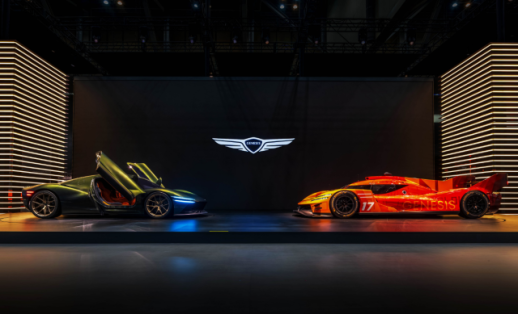 Hyundai flags Europe drag as sales target comes under pressure SEOUL, July 23 (AJP) -Shares of Hyundai Motor have nearly halved from their June peak entering the second half, and the automaker on Thursday signaled its annual sales target could come under pressure as weak European demand offsets resilient profitability. South Korea's largest automaker reported an operating profit of 2.851 trillion won ($1.94 billion) for the April-June period, down 20.8 percent from a year earlier, even as revenue rose 1.9 percent to a record 49.215 trillion won. Operating margin narrowed to 5.8 percent from 7.5 percent a year earlier. The results came in slightly below analysts' consensus forecasts of about 2.90 trillion won in operating profit and a 6.0 percent operating margin. During the earnings conference call, Hyundai said annual wholesale sales could fall short of its original target amid persistent market uncertainty, while maintaining its full-year operating margin guidance of 6.3 percent to 7.3 percent on expectations of a richer product mix and growing hybrid demand. "Based on current forecasts and various indicators, we may fall short" of the annual wholesale sales target, Chief Financial Officer Lee Seung-joo told analysts, while stopping short of a formal downgrade. Lee noted Hyundai has missed its annual sales target in each of the past three years while still meeting its revenue and profitability goals. Updated sales assumptions will be presented at the company's Investor Day in late August after gaining greater visibility into second-half market conditions. Europe has emerged as Hyundai's biggest challenge for the remainder of the year. Wholesale shipments in the region fell 10.9 percent from a year earlier to 144,000 vehicles as aging core models, including the Tucson and Kona, lost momentum while Chinese electric vehicle makers intensified price competition. Lee said Europe has grown into a larger industry market than the United States, making the slowdown particularly significant for Hyundai. The company expects the launch of the Ioniq 3, positioned as a competitively priced compact EV, and a redesigned Tucson later this year to strengthen its lineup. Hyundai aims to sell more than 20,000 Ioniq 3 vehicles in the second half, although the redesigned Tucson will not reach Europe until the fourth quarter. "Hitting our original European target this year will be difficult," Lee said, adding that a more meaningful recovery is likely next year after both new models have been on sale for a full year. The Ioniq 3 is intended to expand Hyundai's presence in Europe's mass-market EV segment rather than maximize near-term profitability as the company seeks to counter rapidly expanding Chinese rivals. Much of the second-quarter volume decline stemmed from a fire at an engine-valve supplier that disrupted production at Hyundai's largest domestic plant, halting Genesis and Palisade output for several weeks. Replacement parts were qualified by May, allowing production to normalize. A separate fire at a Hyundai Mobis supplier also temporarily disrupted production at Hyundai's Indian plant. Global wholesale shipments consequently fell 6.9 percent from a year earlier to 992,000 vehicles. Despite softer vehicle demand, Hyundai expects profitability to remain resilient thanks to a stronger sales mix. Hybrid vehicles accounted for a record 18.9 percent of global wholesale shipments during the quarter. In the United States, hybrids represented a record 26.2 percent of sales, helping lift Hyundai's market share to 6.3 percent, up 0.2 percentage point from a year earlier and marking its fifth consecutive quarter above the 6 percent threshold. The company attributed the decline in operating profit primarily to weaker sales volume, which reduced earnings by 542 billion won, and a less favorable product and incentive mix, which cut another 570 billion won. Lee said the weaker mix reflected roughly 200 billion won in lost Genesis and Palisade production following the supplier fire, along with about 400 billion won in higher incentives following the repeal of U.S. EV tax credits, intensifying Chinese EV competition in Europe and inventory clearance ahead of new model launches. Those headwinds were partly offset by roughly 400 billion won from a richer hybrid mix. Favorable exchange rates added 238 billion won, while the financial services division contributed 106 billion won. Higher raw material costs, driven by Middle East geopolitical tensions and inflation, increased expenses by roughly 400 billion won during the quarter. About half of the increase was offset through cost-cutting measures, with further relief expected in the second half as raw material prices stabilize. Executives also said U.S. tariff-related costs should become more manageable in the second half because of a more favorable comparison base, although they cautioned that policy uncertainty remains. Tariff-related costs totaled about 900 billion won in both the first and second quarters, compared with 1.8 trillion won in the third quarter of last year and 1.5 trillion won in the fourth. Shares of Hyundai Motor closed 3.35 percent higher at 432,000 won on Thursday despite the weaker earnings, though the stock remains about 45 percent below its June 1 peak of 783,000 won. 2026-07-23 17:22:38
-
Musinsa Targets Fall/Winter Market with Premium Down Outerwear Collection Musinsa is set to target the fall and winter market by diversifying its down outerwear line under its private brand, Musinsa Standard, and introducing a new collection featuring premium materials.On July 23, Musinsa held a '2026 FW Season Preview' in Seongdong-gu, Seoul, showcasing key products scheduled for release in the second half of the year.This season, the brand has strengthened its outerwear offerings, focusing on its flagship collection, City Leisure. The popular light down jacket has been segmented into light, midweight, and heavy options, broadening consumer choices based on warmth and thickness.A Musinsa representative stated, "Given the popularity of the light down jacket, we have expanded the down outerwear line by diversifying materials and thicknesses."The brand also introduced a new 'Trail Line' designed for both urban and outdoor use. Trail sports refer to activities enjoyed off paved roads, including dirt paths, forests, and mountainous terrains. Musinsa Standard has crafted these products to maintain the functionality of professional outdoor wear while ensuring they can be worn casually in everyday settings.Kim Ji-hoon, head of design at Musinsa Standard, explained, "We launched the Trail Line in response to consumer demand for trail sports, ensuring the products can be used casually in the city, not just for trail activities."The new collection, 'Musinsa Standard Plus,' was also unveiled, emphasizing high-quality materials and craftsmanship. It retains the practicality of basic wear while elevating the quality of fabrics and stitching.Sweaters feature a blend of Surri alpaca, 100% cashmere from Inner Mongolia, and silk-cashmere yarns. Shirts and pants utilize Egyptian Giza cotton and high-density twill fabric from Japan's Cosmos. Musinsa highlighted its meticulous production methods to enhance the fabric's texture and silhouette.Collaborations with global outdoor brand Helinox and women's fashion brand Ohesio were also showcased. The collection with Helinox features a 'Durable Bag Collection' that applies high-strength fabrics used in outdoor environments to everyday bags, enhancing durability and storage convenience while maintaining a simple design.The collaboration with Ohesio combines Ohesio's delicate details with Musinsa Standard's fundamental design.Musinsa transformed the preview venue into an experiential space where visitors could try on upcoming products and examine materials and silhouettes. A photo booth was also set up for guests to capture styles featuring the FW products.A Musinsa representative stated, "In the second half of this year, we will continue to strengthen our brand competitiveness by opening new Musinsa Standard stores in key areas of Seoul, including Seongdong and Myeongdong."* This article has been translated by AI. 2026-07-23 17:20:00
-
KB Securities Reports Record Half-Year Operating Profit of 1.05 Trillion Won KB Securities achieved a record half-year operating profit of over 1 trillion won, driven by a strong domestic stock market.On July 23, KB Securities announced that its consolidated operating profit for the first half of the year reached 1.0537 trillion won, a 138% increase compared to the same period last year. Pre-tax profit was reported at 1.08 trillion won, with net profit amounting to 801 billion won.Both the half-year operating profit and net profit set new records.In the second quarter, operating profit soared to 600.6 billion won, marking a 175.5% increase from the previous year, while net profit rose by 180.6% to 450.8 billion won.KB Securities attributed its record half-year performance to robust growth across all business sectors, fueled by a bullish stock market.In the wealth management (WM) sector, the favorable market environment led to an increase in asset allocation products and personalized consulting, resulting in the first-time surpassing of 200 trillion won in assets under management (AUM) for individual clients. The company enhanced its marketing focused on BK&WM and advanced AI-based services to attract more client assets.Despite ongoing market volatility, the investment banking (IB) sector strengthened its corporate finance capabilities.In the debt capital markets (DCM) sector, KB Securities maintained its market dominance by leading large-scale underwriting and managing the issuance of foreign exchange stabilization fund bonds and kimchi bonds. In the equity capital markets (ECM) sector, it successfully completed four initial public offerings (IPOs) including License Medical, Chaevi, Stradvision, and Lemon Healthcare, as well as a large deal involving SKC's capital increase.The acquisition finance and mergers & acquisitions (M&A) sector focused on strengthening its competitiveness in high-quality domestic transactions, while the project finance (PF) sector maintained stable profitability through quality projects centered in the metropolitan area and expanded into new growth areas such as data centers.In the capital markets sector, despite ongoing fluctuations in interest rates and exchange rates, profits increased year-on-year due to expanded mezzanine investment returns, foreign exchange flows, increased proprietary trading profits, and enhanced collaboration in equity-linked securities (ELS) operations.The wholesale sector also recorded its best half-year performance, leveraging a global and institutional sales integrated platform. It expanded cross-border transactions by linking international inbound customer services with outbound markets, achieving the top market share in domestic institutional equities and enhancing profitability based on its liquidity provider competitiveness. The prime brokerage services (PBS) sector continued its growth trend.* This article has been translated by AI. 2026-07-23 17:20:00
-
Hyundai Commercial Reports 117.1 Billion Won in First-Half Net Profit, Up 17.2% Year-on-Year Hyundai Commercial reported a double-digit increase in net profit for the first half of the year, driven by the expansion of its investment finance assets. The company announced on July 23 that its net profit for the first half of the year reached 117.1 billion won, a 17.2% increase compared to the same period last year. Operating revenue rose to 745.8 billion won, marking a 14.5% increase during the same timeframe. By the end of the first half, total assets amounted to 10.7988 trillion won, up 6.0% from the previous year. Industrial finance assets remained stable at 5.1567 trillion won, while corporate finance assets slightly decreased to 3.0575 trillion won. Investment finance assets surged by 44.5% year-on-year to 2.5846 trillion won, primarily due to investments in overseas private equity funds, private debt funds, domestic real estate, and non-performing loans. Operating profit was recorded at 69.7 billion won, a decrease of 3.6% from the previous year. Despite the increase in operating revenue, operating expenses rose by 16.8%. Pre-tax profit increased by 20.6% to 134.1 billion won. The delinquency rate, a key indicator of financial health, rose to 0.90%, up 0.19 percentage points from the previous year, but remained below 1%. The ratio of non-performing loans was 1.3%, with a non-performing loan coverage ratio of 119.4%. The leverage ratio decreased from 7.6 times to 6.9 times. A Hyundai Commercial representative stated, "As we maintain a stable asset base in industrial and corporate finance, the growth in investment finance assets has led to increases in operating revenue and net profit. We are also managing our financial health by keeping the delinquency rate below 1%."* This article has been translated by AI. 2026-07-23 17:20:00
-
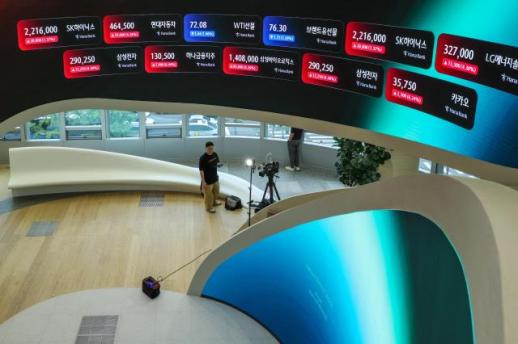 Won surges amid foreign inflows as stronger-than-expected GDP SEOUL, July 23 (AJP) - The South Korean won strengthened sharply against the dollar on Thursday as foreign investors poured more than 2 trillion won into local shares following stronger-than-expected economic growth and renewed optimism over artificial intelligence-related chip demand. Government bond yields, by contrast, ended little changed as the prospect of further monetary tightening was offset by buying interest after their recent climb. The won gained 13.3 won to close daytime trading at 1,466.8 per dollar, its strongest level in about two and a half months. The currency opened near 1,477 per dollar and briefly weakened before reversing direction and advancing into the mid-1,460s later in the session. Foreign investors purchased a net 2.136 trillion won (US$1.46 billion) of shares on the main Kospi market, adding to demand for the won and accelerating the currency's rise. The benchmark KOSPI climbed 4.40 percent to 7,096.89 as overseas investors concentrated their purchases in large-cap stocks, including semiconductor companies. The scale of foreign buying strengthened expectations of equity-related dollar selling, while exporters also sold dollars as the exchange rate extended its decline. The market rally followed data showing that South Korea's real gross domestic product expanded 0.6 percent in the second quarter from the previous three months, exceeding the 0.4 percent median forecast in a Reuters poll. The economy grew 3.7 percent from a year earlier, also beating expectations, as exports increased 1.4 percent on strong shipments of semiconductors, machinery and equipment. The figures eased concern that economic momentum would fade sharply after 1.8 percent growth in the first quarter and reinforced expectations that the Bank of Korea will raise its annual growth forecast next month. They also strengthened the case for at least one more interest-rate increase, improving the won's relative yield outlook despite continued strength in the broader dollar. Renewed optimism over global artificial intelligence (AI)-related investment provided additional support, lifting South Korean chipmakers and drawing foreign funds back into a market that had recently experienced sharp volatility. Government bonds showed a much more restrained response to the GDP surprise, with yields ending on opposite sides of their previous closes. The yield on the three-year government bond rose 0.4 basis point to 3.917 percent, while the benchmark 10-year yield declined 0.8 basis point to 4.392 percent. The stronger growth figures kept expectations for another BOK rate increase intact, but the possibility had already been largely reflected in short-term yields after their recent advance. The central bank raised its benchmark interest rate by 25 basis points to 2.75 percent on July 16, and economists broadly expect at least one additional increase to 3.00 percent by the end of the year. Buying interest emerged as the three-year yield approached 3.9 percent and the 10-year yield neared 4.4 percent, limiting further losses in bond prices despite the stronger-than-expected GDP data. The decline in the longer-dated yield slightly flattened the yield curve, indicating that investors were reluctant to extend the bond sell-off without clearer evidence that stronger growth would generate persistent inflation. Thursday's trading highlighted a divergence across South Korean financial markets, with the won and equities responding strongly to foreign inflows and the chip-led growth surprise while bonds remained caught between additional rate-hike risks and perceptions that yields were near a short-term peak. 2026-07-23 17:12:19