


Latest by
-
 Cellbiotech's Duolac Achieves 13th Consecutive Year as Top Probiotic Exporter in South Korea Cellbiotech's probiotic brand Duolac has achieved the top position in South Korea's probiotic exports for 13 consecutive years. The company continues to enhance the global competitiveness of K-probiotics based on its proprietary strains and technology.On July 22, Cellbiotech announced that Duolac has maintained its status as the leading exporter of probiotics in South Korea for 13 years.According to the Ministry of Food and Drug Safety's '2025 Food Production Performance Report,' the total export value of probiotics from South Korea last year was 72 billion won. Of this, Cellbiotech recorded an export performance of 29.1 billion won.This achievement is particularly significant as it comes amid a trade deficit in the health functional food industry. Last year, South Korea's imports of health functional foods reached 1.4505 trillion won, while exports totaled 452.4 billion won, resulting in a trade deficit of approximately 1 trillion won.Since the collection of related statistics began in 2013, Cellbiotech has consistently held the top position in probiotic exports. Over the past 13 years, the cumulative export value of probiotics from South Korea has reached 538.5 billion won, with Cellbiotech accounting for 26.88 billion won, or about 50% of the total.Since 2000, the company has expanded its global market based on its self-developed Korean CBT probiotics and unique technology. It currently exports to 55 countries worldwide, including Denmark, Turkey, Singapore, and Mexico.Cellbiotech's 'Dual Coating' technology protects live probiotics with a double coating of protein and polysaccharides, shielding them from stomach acid and bile salts while ensuring delivery to the intestines. According to the company, this technology has increased the survival rate of probiotics by up to 91.6%, demonstrating intestinal survival rates up to 221 times higher than non-coated probiotics in human trials.Experts advise consumers to consider the strains used, the source of ingredients, the manufacturer, verification of stability, and research evidence such as human application tests when selecting probiotic products.Cellbiotech is expanding its overseas business by supplying products tailored to the market environment and consumer characteristics of each country, based on its proprietary strains and dual coating technology. The company plans to strengthen not only finished product exports but also local partnerships and customized product development.A Cellbiotech representative stated, "Maintaining the top export position for 13 consecutive years is a result of Duolac's competitiveness being continuously recognized in the global market. We will continue to enhance the competitiveness of K-probiotics based on our unique strain development and dual coating technology."* This article has been translated by AI. 2026-07-22 18:16:00
-
GM Union Faces Decision on New Car Allocation: South Korea or China? The Korea General Motors (GM) labor union has confirmed that the new vehicle it is demanding for domestic allocation in labor negotiations is a next-generation small sports utility vehicle (SUV) that will succeed the current Trax crossover and Trailblazer. The production locations for this vehicle are spread across South Korea and China, making the decision on domestic allocation crucial for the sustainability of Korea GM.According to industry sources, GM's Korea research and development organization, GM Technical Center Korea (GMTCK), began developing the new vehicle, designated '9B.2', in April. This vehicle is a small SUV similar to the current Trailblazer, with full-scale development starting this year and production targeted for 2030.The allocation of production sites for this model remains undecided. The union has prioritized new car allocation in this year's labor negotiations, but GM headquarters has not disclosed specific production plans.Industry analysts believe that since the 9B.2 is a next-generation project that will inherit GM's small SUV platform '9B.1', it is likely to be produced at either Korea GM or Shanghai GM. Currently, Korea GM handles exports to North America, while Shanghai GM manages domestic sales in China. In the first half of this year, Korea GM exported approximately 270,000 units of the Trax crossover and Trailblazer to North America.However, both Korea and China GM are facing challenges in securing new production volumes, leading to inevitable internal competition. Shanghai GM has restructured its production base, closing its Shenyang plant last year due to poor sales and external uncertainties. Similarly, Korea GM has seen increased uncertainty regarding long-term production volumes after canceling a plug-in hybrid electric vehicle (PHEV) development project that was initiated in 2024.The Korea GM union is emphasizing the domestic production allocation of the new vehicle as a key demand in this year's labor negotiations. With the main models, the Trax crossover and Trailblazer, expected to be discontinued between 2029 and 2032, securing a successor model is seen as critical for the factory's long-term competitiveness.An industry insider stated, "GM operates a global new car allocation program, reviewing the productivity, cost competitiveness, and market conditions of each production site before making final decisions on production locations. Competition to secure successor models is inevitable."* This article has been translated by AI. 2026-07-22 18:12:00
-
Yoo Soo-young Appointed as New Head of Korea Credit Information Corporation 신임 한국신용정보원 원장에 유수영 재정경제부 대변인(사진)이 내정됐다. On July 22, the Credit Information Corporation's Candidate Recommendation Committee recommended Yoo Soo-young as the sole candidate for the new head of the organization. Currently serving as a spokesperson for the Ministry of Finance, Yoo will undergo an employment review by the Government Ethics Committee after completing the resignation process. Following approval from the Credit Information Corporation's board of directors, he is expected to take office as early as September. If Yoo is ultimately appointed, he will become the first head of the Credit Information Corporation from the Ministry of Finance. Since its establishment in 2016, the organization has been led by individuals from the Financial Services Commission, with the exception of its inaugural head, Min Seong-ki, who came from the Bank of Korea.* This article has been translated by AI. 2026-07-22 18:12:00
-
Why Princess Aiko Cannot Become Emperor of Japan 37 years after the death of Emperor Showa, Japan is once again embroiled in royal succession debates, this time concerning the future of the imperial line. The focus is on the issue of whether Princess Aiko, the only daughter of the current Emperor Naruhito, should be granted succession rights. However, this topic has been notably absent from recent discussions regarding reforms to the imperial family system. The Japanese government has proposed measures that would allow married female royals to remain in the imperial family and perform official duties, as well as adopt male descendants from former royal families to maintain the dwindling number of royals. Yet, the question of allowing a female emperor or granting succession rights to Princess Aiko has been excluded from these discussions. This has led to public frustration, with some questioning, "Why are we looking for male descendants from former royal families that separated centuries ago while leaving Princess Aiko aside?" This sentiment resonates with many, including those in South Korea. To understand this issue, it is essential to differentiate between two terms frequently used in Japan: 'female emperor' and 'female succession.' While they may seem similar, they represent distinct concepts. A female emperor refers to a woman ascending to the throne, which has historical precedent in Japan, with eight female emperors having reigned in the past. However, the conservative political factions in Japan prioritize 'female succession,' which pertains to the lineage of the imperial family rather than the gender of the successor. For instance, if Princess Aiko were to become empress and her son were to inherit the throne, he would be considered a product of 'female succession' because he would inherit the imperial bloodline through his mother. Conversely, if a male emperor were succeeded by a male heir from the same male lineage, it would not be classified as 'female succession.' Thus, the principle that conservatives seek to uphold is not merely that only men can be emperors, but that the imperial bloodline must be passed down through the male line. This distinction sheds light on why the Japanese government prioritizes male descendants from former royal families over Princess Aiko. While the public may view the current emperor's only daughter as a more relevant candidate, the political landscape values the continuity of bloodlines over individual candidates. Public opinion appears to diverge from political tradition. Recent surveys indicate that around 70% of Japanese citizens support the idea of allowing a female emperor, and many do not oppose the prospect of Princess Aiko becoming the next empress. Conversely, there is significant opposition to the idea of reinstating male descendants from former royal families, highlighting a growing gap between traditional political views and public sentiment. Globally, royal succession practices are evolving. In 2013, the United Kingdom amended its succession laws to eliminate gender distinctions, allowing the firstborn child, regardless of gender, to inherit the throne. Sweden was the first to implement gender-neutral primogeniture in 1980, with other countries like the Netherlands, Belgium, Norway, and Denmark following suit. Today, many European monarchies prioritize birth order over gender. Internationally, the United Nations Committee on the Elimination of Discrimination against Women (CEDAW) has repeatedly urged Japan to reconsider its male-centric succession laws, citing gender equality principles. However, the Japanese government has rejected these recommendations, asserting that succession is a matter of national history and tradition, not gender equality, and has taken a firm stance against CEDAW, even withholding some contributions. Interestingly, many historians do not view the current male succession principle as an unchangeable tradition. Research indicates that female emperors existed, and the strict male-centric system was solidified during the Meiji era. In 1989, I witnessed Japan halt broadcasts in mourning for Emperor Showa. In 2026, the majority of the public supports Princess Aiko as the next empress, yet the political establishment remains reluctant to abandon the male succession principle. While the emperor may change, the surrounding institutions are slow to adapt. This royal succession debate is not merely about who will become the next emperor; it serves as a litmus test for how far Japan is willing to uphold tradition while adapting to contemporary societal changes.* This article has been translated by AI. 2026-07-22 18:12:00
-
Dongkuk Pharmaceutical Launches 'Madeca Sun Shield Pad' Sunscreen Dongkuk Pharmaceutical has launched the 'Madeca Sun Shield Pad,' a pad-type sunscreen designed for easy reapplication during the summer. This hygienic pad can be used without getting hands dirty, enhancing convenience for outdoor activities.The company announced the release of the Madeca Sun Shield Pad on July 22. It is suitable for those who find sticky sunscreen burdensome or need to reapply sunscreen frequently.To maximize the sunscreen's effectiveness, it is important to adhere to the recommended usage amount. Each pad is generously infused with sunscreen liquid, making it suitable for use on the face as well as larger areas like the neck and arms. The product comes in a zip-lock pouch for easy portability.The pad adheres evenly to the skin's texture, allowing for application on contoured areas such as around the eyes and nostrils. It also helps remove impurities from the skin's surface, including sweat, sebum, and fine dust, enabling more effective UV protection.Additionally, the product contains centella asiatica extract and other Cica ingredients that may help soothe skin irritated by UV rays and external heat. It is enriched with ten types of hyaluronic acid to enhance skin hydration and has passed low-irritation tests for sensitive skin.A representative from Dongkuk Pharmaceutical stated, "It can be used hygienically without getting hands dirty, making it highly versatile for summer activities as well as camping, golfing, and hiking."* This article has been translated by AI. 2026-07-22 18:12:00
-
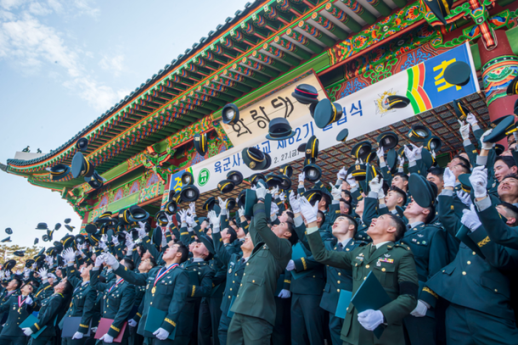 New joint military academy campus could take decade to build, ministry says SEOUL, July 22 (AJP) - Building a new campus in Daejeon for South Korea’s planned joint military academy could take about 10 years, the Ministry of National Defense said Wednesday, raising the possibility that a temporary facility may be used before construction is completed. Kim Hong-chul, head of the ministry’s defense policy office, told reporters after a policy forum at the Korean Constitutional Association in Seoul that construction of the new campus would take “roughly 10 years.” The ministry is reportedly working on the assumption that the campus at Jaundae, a military complex in Daejeon, would be completed around 2036. Asked whether the new Korea Armed Forces Academy could begin accepting cadets at a temporary facility before the Daejeon campus is completed, Kim said several options were being discussed. “Various plans are currently under consideration, but nothing has been decided,” he said. “We will also review that possibility.” The ministry is reportedly considering using the existing Korea Military Academy campus in Seoul’s Nowon District as a temporary home for the integrated academy. The Defense Ministry earlier announced a basic plan to establish a four-year joint academy at Jaundae by integrating the Army, Navy and Air Force academies. Under the proposal, the three existing service academies would be reorganized as separate undergraduate divisions under the joint academy. Cadets would receive common education during their first two years before moving into service-specific education and training in their third and fourth years. He said the integrated academy should strengthen jointness among the armed services and develop officers capable of conducting multidomain operations. The ministry plans to hold public hearings and policy briefings before announcing a detailed establishment plan in October. It is also seeking to enact legislation authorizing the creation of the academy by the end of this year. 2026-07-22 18:08:18
-
President Yoon Orders Financial Commission to Discuss Leverage ETF Measures The Financial Commission convened an emergency meeting with leaders of major asset management firms to discuss measures regarding leverage exchange-traded funds (ETFs). This follows President Yoon Suk Yeol's directive to develop additional safeguards for single-stock leverage ETFs. The meeting comes just six days after the announcement of previous measures, indicating a swift response from financial authorities to enhance protections. On July 22, the financial investment industry reported that the Financial Commission held discussions with ETF heads from major asset management firms, including Samsung Asset Management, Mirae Asset Management, and KB Asset Management, to address supplementary measures related to single-stock leverage ETFs. This meeting is seen as a follow-up to President Yoon's public criticism of the effectiveness of existing measures during a Cabinet meeting the previous day. On July 21, he remarked, "There are concerns about whether the current measures will suffice," and urged, "Act decisively and swiftly to implement necessary responses." He also pointed out that the measures are not immediately effective but will take time to be enacted. Earlier, on July 16, financial authorities announced a temporary halt on new product launches for single-stock leverage ETFs and increased the minimum deposit requirement from 10 million won to 30 million won. Additional measures included expanding minimum trading quantities, enhancing pre-education, and restricting advertising. However, both industry insiders and lawmakers have raised concerns that these investor protection measures may not be sufficient, particularly regarding the increase in the minimum deposit, which is set to take effect in August, leading to debates about its effectiveness. As the Financial Commission discusses response strategies with major asset management firms, there is keen interest in whether further supplementary measures will be introduced. However, financial authorities have stated that while various options are under consideration, no specific plans have been finalized.* This article has been translated by AI. 2026-07-22 18:08:00
-
U.S. Tariff Reinstatement Could Shake Petrochemical Exports If the United States imposes new tariffs under Section 301 of its trade law, South Korea's key industries, including petrochemicals, are expected to suffer significant blows to their exports. With the supply of naphtha, a key raw material, already unstable, the addition of tariff barriers could lead to inevitable export disruptions. According to relevant government agencies on July 22, the proposed tariff rate on South Korean products is set at 12.5% due to insufficient measures against forced labor imports. This rate is 2.5 percentage points higher than the existing global tariff rate of 10%. There is also a possibility that the rate could increase further if South Korea is designated as an overproduction country. The petrochemical sector is expected to be hit hardest by the tariff increase. South Korea primarily exports benzene, toluene, and mixed xylene to the U.S. In fact, during the first half of this year, exports of benzene and toluene to the U.S. surged by 128% and 150%, respectively, reaching $10.48 million and $10.3 million compared to the same period last year. However, as tariffs loom, industry concerns are deepening. Most export items are generic products that are difficult to differentiate, making it nearly impossible to pass the increased tariff costs onto local selling prices in the U.S. Additionally, there are discussions about Taiwan potentially benefiting from a lower tariff rate of 10%, and the U.S. Trade Representative (USTR) has officially pointed out South Korea's overproduction issues in the petrochemical sector, adding to the negative outlook. The plastics industry is also bracing for the impact of tariffs. Despite an unstable supply of raw materials, exports of various plastic products, including mats and films, reached $970 million in the first half of the year, showing resilience. However, the outlook for the second half remains uncertain. The high proportion of small and medium-sized enterprises in the sector, coupled with insufficient local investment capacity to avoid tariffs, is seen as a major vulnerability. Exports of key consumer goods, such as cosmetics and K-Food, are also at risk. These products are particularly sensitive to price fluctuations. In the first half of this year, exports of cosmetics and K-Food to the U.S. increased by 40% and 8%, respectively, totaling $1.44 billion and $1.23 billion compared to the previous year, but it is uncertain whether this upward trend can continue in the second half. The rapidly changing U.S. tariff policies have also left the home appliances, electronics, and machinery sectors on edge. The U.S. imposes item-specific tariffs on products that include steel and aluminum, but these tariffs are frequently altered without consistent principles. The shift from a content-based tariff assessment to a differential method has heightened uncertainty in the industry. If U.S. tariff pressures materialize, small and medium-sized enterprises, which struggle to invest locally, are expected to bear the brunt of the impact. This contrasts with large corporations that have been able to circumvent tariffs by increasing local investments with substantial capital. Small businesses, facing high interest rates that complicate funding, are now confronted with additional risks. The trade industry is calling for the government to actively engage in trade diplomacy to minimize the impact of tariff increases. A trade industry official stated, "The U.S. administration appears to be using the Section 301 investigation as leverage to raise mutual tariffs to previous levels. While it may not be possible to completely avoid tariffs, urgent diplomatic efforts are needed to secure conditions that are not disadvantageous compared to major competitors like Japan and Taiwan."* This article has been translated by AI. 2026-07-22 18:08:00
-
U.S. Tariff Deadline Approaches as South Korea Prepares for Trade Talks As the end of the U.S. 10% global tariff approaches in two days, the South Korean government has launched a full-scale effort to prevent additional tariffs under Trade Law 301. With the possibility of a minimum 12.5% tariff due to forced labor concerns, uncertainty in trade is rising as investigations into structural overproduction across domestic manufacturing continue.According to the Ministry of Trade, Industry and Energy, Minister Kim Jeong-kwan is visiting Washington, D.C., from July 22 to 25. He will attend the opening ceremony of the Korea-U.S. Shipbuilding Cooperation Center on July 23 and discuss investment and trade issues with senior U.S. officials, including Secretary of Commerce Gina Raimondo. Trade Negotiations Chief Yeo Han-goo has been in the U.S. since the previous day.Before his departure from Incheon International Airport, Minister Kim told reporters, "We plan to further specify the details and schedule of investment projects related to the U.S. The opening of the Korea-U.S. Shipbuilding Cooperation Center is significant as it provides an official platform for the MASGA project."Discussions are also likely to include U.S. tariffs. In February, President Donald Trump imposed global tariffs based on Trade Law 122 after a court ruled that reciprocal tariffs under the International Emergency Economic Powers Act (IEEPA) were illegal. The global tariffs can be imposed for up to 150 days and are set to end on July 24.The concern lies in what happens after the global tariffs expire. The U.S. is moving forward with procedures to utilize Trade Law 301 as a new tariff tool. The Office of the U.S. Trade Representative (USTR) is conducting investigations into forced labor and structural overproduction. USTR representative Jamieson Greer stated in a July 21 interview with CNBC that "we expect action soon," although he could not specify a timeline.Investigations related to forced labor are progressing rapidly. The USTR has previously investigated 60 economies, including South Korea, for failing to adequately ban imports of goods produced with forced labor. Following this, a proposal to impose an additional 12.5% tariff on South Korean products has been made, with only final actions pending.Separately, the USTR is also conducting a Trade Law 301 investigation into structural overproduction in manufacturing across 16 economies, including South Korea, China, Japan, and the European Union. While key domestic manufacturing sectors may be included in the investigation, specific tariff rates and applicable items have not yet been announced.The government is expected to focus on preventing the 301 measures from exceeding the previously agreed 15% level during these high-level discussions. It is crucial to design the final tariff system to avoid overlaps between item-specific tariffs and 301 tariffs, as well as to secure exemptions or tariff reductions for South Korean products.Minister Kim noted, "The Department of Commerce and USTR have expressed their commitment to maintaining a balance of interests between South Korea and the U.S. We will discuss these issues thoroughly during this visit to the U.S."The Blue House also stated, "The government is closely monitoring related developments, and the U.S. government has expressed its intention to respect the Korea-U.S. tariff agreement. Minister Kim and Chief Yeo will plan to discuss these matters with the Department of Commerce and USTR during this week’s visit to the U.S."* This article has been translated by AI. 2026-07-22 18:08:00
-
 K-pop's second act: Why groups no longer really disappear SEOUL, July 22 (AJP) - When NewJeans released a surprise anniversary film at midnight on July 22, it did more than celebrate four years since the group's debut. The video reunited Minji, Hanni, Haerin and Hyein in official group content for the first time in one year and four months after a prolonged contract dispute that had brought the group's activities to a halt. A court sided with their agency, ADOR, in both an injunction and the main lawsuit over the validity of their exclusive contracts. Haerin, Hyein and Hanni subsequently returned to the label, while ADOR terminated Danielle's contract in December. Minji also appeared in the film, although her contractual status had not been formally clarified at the time of its release. No comeback has been announced. ADOR has said it will reveal NewJeans' future plans once discussions are complete. Yet the appearance of four members alone was enough to reignite speculation that one of K-pop's most influential groups of the past four years could be edging toward a return. NewJeans has neither disbanded nor reunited. That ambiguity is precisely what makes the group's situation significant. Increasingly, a K-pop group can stop functioning without disappearing. A breakup, agency split or years-long hiatus no longer necessarily marks the end. Members may pursue separate careers. The legal rights may remain with a former agency. The original lineup may never perform together again. Yet the group's name, catalog, visual identity and emotional bond with fans often continue to exist—and to retain considerable commercial value. In modern K-pop, a group is becoming less a temporary collection of performers than a long-lived intellectual property. More than one way back The industry has already produced several models of what a "comeback" can mean. Sechs Kies offers the classic reunion story. After formally disbanding in 2000, the first-generation boy band unexpectedly reunited in 2016, signing with YG Entertainment, holding concerts and releasing new music 16 years after its final activities. Kara followed a different path. Rather than reuniting after an official breakup, it resumed activities in 2022 following a seven-year hiatus with the anniversary album Move Again. Its title track, When I Move, made Kara the first girl group to win on Korean music programs across the 2000s, 2010s and 2020s. Then came 2NE1. A decade after its previous solo concert, the four members reunited in October 2024 for a 15th-anniversary world tour. YG Entertainment expanded the tour to 27 performances in 12 cities, with expected attendance of about 220,000. More than 400,000 users reportedly attempted to purchase tickets for the opening Seoul concerts alone. All three are commonly described as reunions, but each represents a different business model. Sechs Kies returned after formal disbandment. Kara resumed activities after an extended hiatus. 2NE1 reassembled years after its agency had effectively ended the group's career. Other groups demonstrate that survival sometimes requires abandoning the very identity that made them famous. Unable to continue using the Beast trademark after leaving Cube Entertainment, the remaining members relaunched as Highlight in 2017. Although they later regained the legal rights to the Beast name, they continued promoting under Highlight, having already built a successful second identity. VIVIZ illustrates yet another model. Rather than reviving GFriend, former members Eunha, SinB and Umji created a separate trio after GFriend's activities ended in 2021. What links these examples is not disbandment itself but something more fundamental. K-pop groups have become modular. Their lineup, catalog, trademark, music and fan community can now survive independently and be recombined in different ways. Nostalgia has become an asset For entertainment companies, the value of returning groups is easier to see in ticket demand than in abstract discussions about fandom. Launching a successful rookie group requires years of recruitment, training, production and marketing—with no guarantee of success. Returning groups already possess something almost impossible to manufacture: recognition. They also own an existing catalog and a fan base whose emotional attachment has survived years of inactivity. The phenomenon extends well beyond K-pop. Oasis sold roughly one million tickets after announcing its reunion despite a 15-year split. ABBA went even further. Its London residency ABBA Voyage, featuring digital avatars rather than the members themselves, generated £103.7 million ($139 million) in ticket revenue in 2023 while attracting nearly 1.1 million visitors. Different technology. Different audiences. The same commercial principle. People are not simply paying to hear familiar songs. They are paying to revisit a period of their own lives. In that sense, nostalgia is no longer merely an emotion. It has become a monetizable asset. The fight over identity Turning nostalgia into a comeback, however, is often more difficult than reuniting the members. A group also needs access to its name, catalog, trademarks, recordings and performance rights—assets that frequently remain under the control of current or former agencies. Shinhwa spent 12 years fighting legal battles over the right to use its own name before reaching a court-mediated settlement in 2015. Highlight chose the opposite strategy, building a new identity instead of waiting to recover Beast. NewJeans now finds itself confronting the same divide between performers and intellectual property. According to legal experts cited during the dispute, ADOR owns the NewJeans trademark. The members briefly attempted to promote independently as NJZ before a court prohibited activities outside the agency. Changing the name solved nothing. The legal conflict was never about the letters. It was about ownership of the identity those letters represented. That explains why entertainment companies fight so fiercely over trademarks. A group's name is no longer simply a label. It is a business asset built through years of accumulated recognition, fan loyalty and commercial value. The people who created that value and the company that legally owns it are not always the same. What fans are really waiting for For fans, however, reunions are rarely experienced as legal disputes. Lim Jung-bin, a 40-year-old office worker in Seoul, has followed 2NE1 since its debut in 2009. "When I heard they were getting back together, I almost cried," she said. "The group was part of the brightest years of my twenties." She never stopped listening to 2NE1's music during the hiatus and followed each member's solo career. Attending the reunion concert in Seoul last October, she said, "felt like a dream." "It was a precious moment when everyone sang together and shared the same memories. I want to experience it again." Her comments illustrate why inactive groups continue to generate economic value. Fans rarely experience the inactive years as empty time. They keep listening. They follow individual members. They preserve the emotional context that first connected them to the music. Watching the NewJeans dispute, Lim said the exact lineup mattered less than preserving the group's distinctive identity. "Whether four members come back or five, NewJeans has its own atmosphere," she said. "I miss that retro, lo-fi sound." Not every fan would agree. Some believe a reunion without every original member is incomplete. But her response highlights the central paradox of modern K-pop. Fans often remain attached to the identity of a group even after the people, contracts and companies behind it have changed. That is what makes returning groups simultaneously so valuable—and so difficult to recreate. A K-pop group is no longer defined only by the people standing on stage. It is also a trademark, a catalog, a visual language and a community of memories that can outlive the contracts that first brought those people together. The performers may leave. The music may stop. Ownership may change. But the group itself rarely disappears. Its next chapter is written in the space between what fans still remember and what the law allows someone else to revive. 2026-07-22 18:04:05