


Latest by
-
 LG Display Returns to Profit in First Half, Accelerates OLED Transition LG Display has successfully returned to profitability in the first half of the year through a focus on OLED-centered business restructuring and cost innovation. Although the company reported a loss in the second quarter due to one-time expenses, it has broken the trend of losses seen in the first half of last year, laying the groundwork for improved annual performance.According to LG Display on July 22, the company recorded consolidated sales of 11.1461 trillion won and an operating profit of 39 billion won in the first half of this year. In the same period last year, sales were 11.6523 trillion won, with an operating loss of 826 billion won.The operating profit improved by 1.216 trillion won year-on-year. While sales slightly decreased, the company turned a profit, reflecting the benefits of moving away from a low-margin LCD-centric structure to a higher proportion of OLED and value-added products.In the second quarter alone, sales were 5.6121 trillion won, with an operating loss of 1.077 trillion won. The quarterly loss occurred despite the overall first-half profit due to seasonal downturns and one-time costs associated with workforce efficiency improvements.Typically, the display industry experiences weaker demand in the first half of the year as finished product manufacturers adjust component inventories ahead of new product launches in the second half. This year, the second quarter's profitability was temporarily affected by the inclusion of one-time costs.Industry analysts believe that the launch of new mobile products and demand for OLED monitors in the second half will be critical factors in determining whether LG Display can maintain annual profitability.LG Display plans to strengthen its OLED-centered business structure in the second half. The small and medium-sized business segment will focus on high-end products, utilizing a stable technology, development, and mass production system to respond to changes in customer demand.In the large business segment, the company aims to enhance profitability by focusing on premium products, particularly targeting the rapidly transitioning monitor market from LCD to OLED. LG Display intends to expand its lineup of high-value products, such as gaming OLED monitors, to increase shipments.Cost innovation remains a key challenge. LG Display emphasizes production efficiency through AI transformation (AX) rather than simple cost-cutting measures. The strategy aims to improve process efficiency throughout the entire development, manufacturing, and production cycle.Kim Sung-hyun, Chief Financial Officer of LG Display, stated, "Excluding one-time factors in the second quarter, the core profitability of the business remained in the black. We will solidify a stable profit structure through advanced cost innovation and enhanced business competitiveness in the second half."* This article has been translated by AI. 2026-07-22 09:36:00
-
Gaon Cable Reports Record Half-Year Performance Driven by U.S. Infrastructure Exports Gaon Cable has achieved its highest-ever performance in the first half of the year, driven by increased investments in AI data centers and power grid infrastructure in the United States. The demand for cables is shifting from construction to data centers, renewable energy, and power grid replacement, leading to a rise in exports and the share of high-value products.According to Gaon Cable, the company recorded a consolidated revenue of 1.633 trillion won and an operating profit of 64 billion won in the first half of the year. Revenue increased by 27.3% compared to the same period last year, while operating profit rose by 41.8%.Both revenue and operating profit are the highest ever recorded for a half-year period. The growth rate of operating profit outpaced that of revenue, indicating improved profitability. The company attributed its performance to a shift in its business structure towards high-value products.The U.S. market has been a key driver of this performance. Investments in AI data centers and renewable energy are increasing simultaneously in the U.S. As servers and power equipment become larger, the demand for distribution cables and bus ducts is also growing.Bus ducts are power distribution devices that supply large amounts of electricity within buildings. They are more efficient to install and manage than cables, making them suitable for large data centers, factories, and power generation facilities. AI data centers have a higher power usage per rack, leading to a rapid increase in demand for power infrastructure products.Industry sources indicate that investments in AI data centers are driving demand for a wide range of power equipment, including transformers, switchboards, cables, and bus ducts.Gaon Cable's exports of distribution cables are also increasing in response to supply shortages and expanded power grid investments in the U.S. The ongoing replacement of aging power grids and investments in renewable energy-related facilities have made securing local supply chains crucial.Gaon Cable's U.S. subsidiary, LSCUS, is also experiencing growth. The company expects LSCUS's revenue to nearly double this year due to increased cable supply for AI data centers and solar power plants.Collaboration with LS Cable is also expanding. Gaon Cable is supplying bus ducts to major U.S. tech companies' AI data centers in partnership with LS Cable. The company plans to leverage this collaboration to become one of the top five bus duct suppliers globally.Gaon Cable aims to increase exports of high-value products to the U.S. in the second half of the year. The company plans to enhance its delivery responsiveness and supply stability by utilizing its local production base, as increasing orders from AI data centers make local production and quick supply capabilities competitive advantages.Jung Hyun, CEO of Gaon Cable, stated, "The structural growth trend in the U.S. power infrastructure market continues, driven by investments in AI data centers and power grids. Based on the expansion of exports from our headquarters and the growth of LSCUS, we will continue to achieve revenue growth and improve profitability in the second half of the year."* This article has been translated by AI. 2026-07-22 09:32:00
-
South Korea Acknowledges Upcoming U.S. Trade Law Tariff Announcement The Blue House stated on July 22 that it is closely monitoring reports regarding the imminent announcement of tariffs under the U.S. Trade Law Section 301. With the deadline for the end of global tariffs approaching on July 24 (local time), the government is actively tracking related developments.In a morning press release, the Blue House emphasized that the U.S. government has previously expressed its commitment to respecting the Korea-U.S. tariff agreement.Last year, President Yoon Suk Yeol and President Donald Trump agreed to reduce mutual tariffs from 25% to 15%. However, following a ruling by the U.S. Supreme Court declaring the mutual tariffs illegal, the U.S. has been seeking alternatives.The Blue House added that Kim Jeong-kwan, the Minister of Trade, Industry and Energy, and Yeo Han-goo, the head of the Trade Negotiation Headquarters, plan to discuss these matters with the U.S. Department of Commerce and the U.S. Trade Representative during their visit to the United States this week.* This article has been translated by AI. 2026-07-22 09:32:00
-
Korea Chemical Industry Association Welcomes Approval of Second Petrochemical Restructuring Project The Korea Chemical Industry Association welcomed the government's announcement on the approval of the second petrochemical industry restructuring project, which involves Lotte Chemical, DL Chemical, and Hanwha Solutions at the Yeosu Industrial Complex.This approval marks the second restructuring in the domestic petrochemical sector, following the first project at the Daesan Industrial Complex in February, and is the first approval for the Yeosu Industrial Complex.The association stated, "With the approval of the Yeosu restructuring following the Daesan project, we believe it will help alleviate the domestic petrochemical supply surplus and restore industrial competitiveness."It added that relevant ministries and agencies, including the Ministry of Trade, Industry and Energy, the Ministry of Economy and Finance, the Fair Trade Commission, and the Financial Services Commission, collaborated during the approval process to establish support measures in finance, taxation, and research and development.The association anticipates that the restructuring will lead to a reduction and relocation of production facilities within the Yeosu Industrial Complex, enhancing production efficiency and cost competitiveness.Participating companies are also expected to focus on transitioning their business structures toward high-value and eco-friendly products while securing future growth engines.Um Chan-wang, the executive vice president of the Korea Chemical Industry Association, remarked, "With the approval of the Yeosu Industrial Complex restructuring following the Daesan project, the restructuring of the domestic petrochemical industry has begun in earnest."He emphasized, "To overcome the structural crisis in the petrochemical industry, effective policy support from the government must continue alongside companies' self-reform efforts. Support is needed to help the petrochemical industry regain its competitiveness as a national strategic industry amid external uncertainties such as the Middle East conflict."The association plans to continue collaborating with the government, the National Assembly, and the industrial sector to complete the restructuring of the petrochemical industry.Meanwhile, the government has reviewed the proposals submitted by the Yeosu project companies and prepared a tailored support package focusing on finance and taxation, cost reduction and system rationalization, regional economic stability and employment, and technology development.* This article has been translated by AI. 2026-07-22 09:32:00
-
SK Hynix Shares Surge Over 8% to Reclaim 2 Million Won Amid U.S. Semiconductor Rally SK Hynix shares surged more than 8% in early trading, briefly reclaiming the 2 million won mark. This increase is attributed to a strong performance by major semiconductor stocks on the New York Stock Exchange, along with a double-digit rise in SK Hynix's American Depositary Receipts (ADRs), which boosted investor sentiment.As of 9:25 a.m. on July 22, SK Hynix was trading at 1,991,000 won, up 155,000 won (8.44%) from the previous trading day.The stock opened at 1,977,000 won and peaked at 2,006,000 won during the session, marking a return to the so-called '2 million won' level for the first time in four trading days since July 15.The rebound in U.S. semiconductor stocks appears to have driven the price increase. On July 21, NVIDIA rose 1.97%, Micron gained 12.17%, and Broadcom increased by 2.21%. The Philadelphia Semiconductor Index also jumped 5.21%.SK Hynix's ADR closed at $171.94, a 13.75% increase from the previous day. This surge follows a period of significant declines in global semiconductor stocks, leading to renewed buying interest in domestic semiconductor shares.In the domestic market, foreign investors have been net buyers in the securities market, contributing to the rise in indices. Major semiconductor stocks, which had seen substantial declines recently, are rebounding strongly, helping the KOSPI index rise over 5% in early trading, reclaiming the 7,100 level.However, despite the recent rebound, SK Hynix's stock price remains significantly below its peak. The company's 52-week high is 2,987,000 won, meaning the intraday high of 2,006,000 won is approximately 32.8% lower than that peak.* This article has been translated by AI. 2026-07-22 09:32:00
-
Despite Rise of Social Studies, 78% of Top University Admits Still Require Two Science Subjects Although an increasing number of science students are opting for social studies, a trend known as 'social studies run,' the key to admission at major universities in Seoul remains firmly in the hands of science subjects. The impact of bonus points awarded to science test-takers means that those choosing social studies must achieve significantly higher scores to be competitive. On July 22, the admissions information platform JinHakSa analyzed mock application data for the 2026 academic year from nine major universities in Seoul (excluding Seoul National University, which requires two science subjects). The universities included Kyung Hee University, Korea University, Sogang University, University of Seoul, Sungkyunkwan University, Yonsei University, Ewha Womans University, Chung-Ang University, and Hanyang University. The analysis revealed that among 30,215 total mock applicants for the science programs at these nine universities, 71.1% took two science subjects, 18.5% took one social and one science subject, and 10.3% took two social subjects. However, when narrowing the focus to the 11,165 students predicted to be in the 'admission range,' the results shifted. The proportion of students taking two science subjects increased to 78.2%, a rise of 7.1 percentage points from the mock applications, while those taking one social and one science subject dropped to 15.0%, and those taking two social subjects fell to 6.8%, each decreasing by 3.5 percentage points. This trend of increasing reliance on science subjects among admitted students is largely attributed to the bonus points and high weight given to science scores in the admissions process. Examining the scores of students predicted to be in the admission range, the average percentile for those taking two science subjects was 89.75, while those taking one social and one science subject averaged 92.63, and those taking two social subjects averaged 95.54, indicating a significant gap. The average percentiles for Korean, math, and inquiry subjects also showed that students taking two science subjects (93.33) scored lower than those taking one social and one science subject (93.96) and those taking two social subjects (95.00). This suggests that social studies students must achieve much higher scores than their science counterparts to be competitive for the same admission range. Admissions experts caution against choosing social studies solely to reduce academic burden. Yoo Won-cheol, director of JinHakSa's admissions strategy research center, stated, "While the option to take social studies has diversified application strategies, students aiming for top-tier universities in science fields still find that those taking science subjects dominate the admission range." He added, "Choosing social studies can be a strategy to broaden application opportunities, but considering the bonus points and scoring systems for science subjects, students must secure higher scores to remain competitive. It is crucial to analyze the bonus points and scoring methods of target universities to develop a favorable application strategy."* This article has been translated by AI. 2026-07-22 09:28:00
-
KB Kookmin Bank Raises Major Savings and Deposit Rates by Up to 0.30% KB Kookmin Bank announced on July 22 that it will increase its major savings and deposit rates. Starting today, the bank will raise its time deposit rates, with regular savings rates set to increase from July 24 by 0.20 to 0.30 percentage points. As a result, the interest rate for the bank's flagship non-face-to-face time deposit product, 'KB Star Time Deposit,' has been raised from 2.90% to 3.20% for a one-year term. Additionally, the interest rate for the 'Regular Time Deposit' for a one-year term has increased from 2.25% to 2.50%. The 'KB Golden Life Pension Deposit' has also been adjusted, with the maximum rate rising from 3.20% to 3.40%. The highest rate for the 'KB Clear Sky Savings' for a one-year term will increase from 3.25% to 3.45%. The 'KB National Happiness Savings,' aimed at supporting asset formation for vulnerable groups, will see its base rate increase by 0.30 percentage points, offering a maximum interest rate of 5.70%. A Kookmin Bank official stated, "We have adjusted the rates of our major savings and deposit products to support our customers' asset formation in response to the rise in the base rate and market interest rates. We will continue to introduce financial products that provide real benefits to our customers."* This article has been translated by AI. 2026-07-22 09:28:00
-
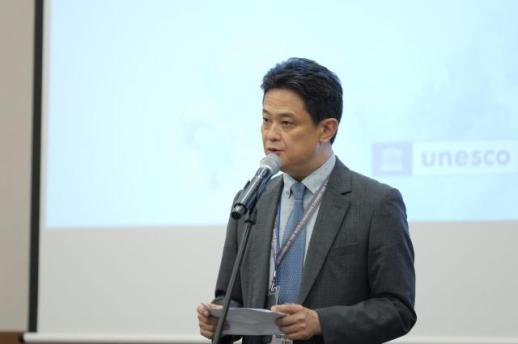 UNESCO adopts heritage strategy for climate-hit island states SEOUL, July 22 (AJP) - UNESCO's World Heritage Committee adopted a new strategy on Tuesday to help small island nations protect cultural and natural heritage that climate change is steadily destroying, a group of countries that hold some of the planet's most distinctive sites but barely register on the World Heritage List, South Korea's Ministry of Foreign Affairs said Wednesday. The scale of the gap is stark. The 39 small island developing states that have joined the World Heritage Convention account for one fifth of its membership, yet together they hold just 37 of the 1,248 sites on the list, about three percent, according to UNESCO's World Heritage Centre. Three of them, Nauru, Niue and Timor-Leste, have no inscribed site and no candidate list at all. Tuvalu shows what is at stake. The Pacific nation of nine coral atolls, where the highest point sits less than five meters above the waves, has watched the sea around it rise at twice the global average over the past 40 years. Half of its capital is projected to flood by 2050, and more than 5,000 residents, nearly half the population, have applied for a climate migration visa to Australia. Last year Tuvalu submitted its first-ever World Heritage bid, an unprecedented attempt to inscribe the cultural landscape of an entire nation, its meeting halls, taro pits and sacred sites, before the ocean claims them. The World Heritage Strategy for Small Island Developing States (SIDS), adopted during the committee's 48th session in Busan, is meant to close that gap. It sets out an eight-year plan to strengthen the capacity of island governments to nominate, manage and defend their heritage. The strategy answers a problem that has been raised for years. SIDS, a group of countries scattered across the Caribbean, the Pacific and the Atlantic and Indian Oceans, were recognized by the United Nations as a distinct category of developing nations in 1992. They face the sharpest edge of climate change while running some of the world's smallest governments. Niue has a population of about 1,300. Tuvalu's entire land area is 26 square kilometers. That smallness is why they have long been overlooked. Getting a site onto the World Heritage List requires years of technical work, nomination dossiers, comparative studies, management plans, that small island bureaucracies rarely have the staff or money to produce. International heritage funding and expertise have tended to flow toward larger developing countries with more sites, more institutions and more diplomatic weight, leaving island states at the back of the queue even as their heritage faces the most immediate threats. To mark the strategy's launch, South Korea's Ministry of Foreign Affairs and the UNESCO World Heritage Centre held a joint side event at the BEXCO convention center in Busan on July 21, bringing together around 10 representatives of island states, including panelists from Mauritius, the Maldives, the Cook Islands and Cuba. Participants discussed climate resilience, governance, policy development and community participation, the pillars of the strategy's implementation, along with ways to strengthen partnerships over the eight-year rollout. Lim Sang-woo, the ministry's Ambassador for Public Diplomacy, welcomed the adoption in his opening remarks. "SIDS possess outstanding cultural and natural heritage, yet they face numerous challenges, including climate change," Lim said. "I hope this event allows diverse views on protecting heritage in the SIDS region to be shared and lays the groundwork for practical cooperation." The strategy's adoption came during the first World Heritage Committee session ever hosted by South Korea, which joined the convention in 1988. Around 3,000 delegates from 196 member states are gathered in Busan from July 19 to 29 to decide new inscriptions and conservation policy. On the session's opening day, the committee adopted the Busan Declaration, a separate consensus document calling for international collaboration to become a guiding principle of heritage protection as climate change, armed conflict and rapid development strain sites worldwide. For Tuvalu, the timing is not academic. If current trends hold, projections show 95 percent of its land flooded by routine high tides by 2100. 2026-07-22 09:27:30
-
Samsung Electronics Service Ranks First in Home Appliance and Mobile IT After-Sales Service Quality Samsung Electronics Service has once again ranked first in the quality evaluation of after-sales service (AS) for home appliances and mobile IT devices. As the replacement cycle for electronic products lengthens, the importance of repair, inspection, and connectivity services has grown for manufacturers.On July 22, Samsung Electronics Service announced that it was selected as the top provider in the home appliance AS and mobile IT device AS categories in the 'Korean Service Quality Index (KSQI)' survey conducted by the Korea Management Association Consulting.In the home appliance AS category, Samsung has maintained the top position for 16 consecutive years since 2011. In the mobile IT device AS category, it has held the number one spot for 15 consecutive years since 2012. Both categories have never dropped from first place since the survey began.The KSQI is a system where a professional evaluation team directly experiences the services of the surveyed companies to assess quality levels. In this year's survey, Samsung Electronics Service received the highest scores in service expertise, customer response, and customized service.Samsung Electronics Service continues to lead in major service quality surveys released this year. In February, it ranked first in the service center category of 'Korea's Most Respected Companies.' In June, it received the home appliance AS award at the 'National Service Awards.' In July, it was recognized as number one in all categories of the 'Korean Service Quality Index' and 'National Customer Satisfaction Index.'The company is also changing its service operation methods. In April, Samsung expanded the number of service center reservation locations from 23 to all service centers nationwide. Starting in June, the reservation days were extended to include Monday through Saturday mornings.In the electronics industry, not only the speed of repairs but also the convenience of reservations, pre-inspections, and connectivity services are becoming key factors in customer satisfaction.This trend is reflected in the fact that the number of customers using the reservation service more than doubled from March to June this year. On weekdays, customers can use the reservation service at all service centers nationwide. On weekends and holidays, reservation services are available at nine 'Weekend Care Centers' across the country.The home appliance on-site service is also expanding from simple repairs to product management. When engineers visit for on-site service, they also check other Samsung products the customer is using, in a service called 'Plus Inspection,' which is available year-round.During the service visit, Samsung also offers a 'SmartThings Connectivity Service.' Customers can check product usage methods and replacement times for consumables through SmartThings. This reflects a shift in after-sales service from merely responding to breakdowns to proactive management and connectivity services.For areas where visiting a service center is difficult, Samsung sends out 'Mobile Phone Service' vehicles. They also operate on-site services for customers in remote island and mountainous areas. In disaster situations such as wildfires and floods, a special service team is dispatched to the site to assist with product inspections, repairs, and cleaning.Kim Young-ho, CEO of Samsung Electronics Service, expressed gratitude, stating, 'I sincerely thank our customers for selecting us as number one in all major service quality surveys in 2026. We will continue to do our best to ensure customer satisfaction.' 2026-07-22 09:24:00
-
U.S. and China to Hold AI Security Talks in September The United States and China, leading players in the global AI industry, are set to hold AI security talks.President Donald Trump and Chinese President Xi Jinping agreed to convene the AI talks during their summit in Beijing in May. Following this agreement, the U.S. government is pushing to hold the talks with China in September, according to a report by Reuters on July 22.The U.S.-China AI talks are expected to take place before Xi's planned visit to the U.S. on September 24. U.S. Treasury Secretary Scott Vessen will reportedly lead the delegation. Specific details regarding the date, location, and participants of the meeting have yet to be finalized.A key focus of the discussions will be on managing security risks associated with large language models (LLMs). The U.S. is concerned about the rapid advancement of China's AI industry and the potential for Chinese AI technologies to be used by adversarial nations such as North Korea, Russia, and Iran, posing a threat to U.S. security. Conversely, China is wary of the potential misuse of the next-generation model, Mythos, being developed by the U.S. AI company Anthropic.Both countries are expected to share examples of security risks posed by AI and results from security tests, facilitating communication on risk management strategies. They are also likely to discuss establishing a hotline to prevent misunderstandings in the event of AI-related incidents.Notably, the timing of the U.S.-China AI talks coincides with the recent unveiling of the large model K3 by Chinese AI company Moonshot AI, which has demonstrated performance close to that of the U.S.'s cutting-edge AI models. As Chinese AI companies adopt open-source strategies, the advancement and proliferation of Chinese AI have emerged as new security challenges for the U.S. Reports indicate that the U.S. is considering effective measures to restrict access to Chinese AI products for its domestic companies.Meanwhile, President Trump has announced that President Xi is expected to visit the U.S. on September 24, although China has not yet officially confirmed Xi's visit.* This article has been translated by AI. 2026-07-22 09:24:00