


Latest by
-
 Korea's manufacturing share hits 10-year high on chip power SEOUL, July 22 (AJP) - Manufacturing accounted for 27.2 percent of South Korea’s real gross domestic product last year, the highest share in a decade, as the country’s industrial growth became increasingly concentrated in semiconductors and other electronics. Real value added generated by manufacturers rose 2.3 percent, or 14.5 trillion won, ($10 billion) from a year earlier to 632.4 trillion won in 2025, according to the National Assembly Budget Office’s Economic Overview of the Republic of Korea 2026. The sector expanded for a third consecutive year, although the annual increase slowed to about half of the 28.6 trillion won recorded in 2024. Manufacturing’s share of real GDP also rose for a third year to 27.2 percent, the highest in data reviewed by the budget office covering the period since 2016. Manufacturing value added has increased from 498.4 trillion won in 2016, producing average annual growth of about 2.7 percent through last year. That outpaced the roughly 2.3 percent annual expansion in real GDP over the same period, lifting manufacturing’s weight in Asia’s fourth-largest economy. The headline increase, however, masked a growing concentration of industrial activity in a narrow section of the economy. Computers, electronic and optical products accounted for 37.4 percent of manufacturing value added last year, up 14.7 percentage points from 22.7 percent in 2016. The budget office said the sector’s share had risen over the past three years, reflecting a structural shift towards semiconductor-led electronics production. By contrast, the relative contributions of transport equipment, machinery and chemicals have either declined or remained broadly stagnant, pointing to a widening gap between electronics and more traditional manufacturers. South Korea’s reliance on manufacturing is also pronounced by international standards. Manufacturing accounted for 27.4 percent of Korean GDP in 2024 on an OECD-comparable basis, the second-highest share among member countries after Ireland’s 31.1 percent. The figure was well above Germany’s 19.9 percent and Japan’s 19.0 percent, and exceeded the OECD average of 15.2 percent by 12.2 percentage points. The budget office said high-technology industries, including semiconductors and displays, remained particularly important to South Korea because of the economy’s heavy reliance on manufactured exports. Maintaining the country’s existing technological lead while strengthening the competitiveness of those industries would therefore remain a central economic challenge, it said. The broader report said the Korean economy was gradually emerging from last year’s weakness on the back of semiconductor exports and a recovery in domestic demand, while warning that external uncertainty, demographic change and entrenched low growth continued to pose risks. 2026-07-22 10:05:31
-
 Korean Minister Kim Jong-kwan Visits U.S. to Discuss Trade and Investment Korean Minister of Trade, Industry and Energy Kim Jong-kwan is visiting the United States to address the ongoing investigation under Trade Act Section 301 and to advance strategic investment projects. As the deadline for the U.S. to conclude its global tariff imposition approaches, discussions on how to respond are intensifying. There is particular interest in finding solutions related to investments in the U.S.According to the Ministry of Trade, Industry and Energy, Kim will be in Washington, D.C., from July 22 to July 25 to discuss trade and investment issues between South Korea and the U.S. During his visit, he is scheduled to meet with U.S. Secretary of Commerce Howard Rutnik to discuss key matters, including strategic investments.The meeting is expected to address the investigation being conducted by the Office of the U.S. Trade Representative (USTR) into South Korea under Trade Act Section 301. The South Korean government plans to explain that its manufacturing production and support policies do not unfairly harm U.S. companies and will seek to persuade the U.S. not to impose additional tariffs based on the investigation's findings.In March, the USTR initiated an investigation into 'structural overcapacity' affecting South Korea, China, Japan, the European Union, and 12 other economies. Industries potentially affected include steel, automobiles, batteries, chemicals, semiconductors, machinery, shipbuilding, and solar energy. The USTR is examining whether foreign government subsidies and policy financing artificially inflate production capacity and restrict U.S. commerce.Given that South Korea has a high export ratio to the U.S. in key industries, the imposition of Section 301 tariffs would pose a significant burden. There is also a possibility that these tariffs could be layered on top of existing tariffs, potentially diminishing price competitiveness in the U.S. market.Additionally, a separate Section 301 investigation concerning products made with forced labor will also be discussed. In June, the USTR determined that South Korea and 60 other economies had not sufficiently banned the import of goods produced with forced labor and proposed additional tariffs. Public hearings on the potential tariffs were held from July 7 to July 9, with a proposed tariff rate of 12.5% for South Korea.Kim will also meet with U.S. officials, including Secretary of Energy Chris Wright, to discuss strengthening cooperation in the resource and energy sectors. He plans to engage with members of the U.S. Congress to emphasize the importance of South Korea's investments in the U.S. and the bilateral trade cooperation.On July 23, Kim will attend the opening ceremony of the Korea-U.S. Shipbuilding Cooperation Center, which will be attended by key figures from both countries and shipbuilding companies. This center is a follow-up to the memorandum of understanding (MOU) signed in May between the Ministry of Trade, Industry and Energy and the U.S. Department of Commerce, aimed at discovering and supporting collaborative projects between shipbuilding companies in both nations.Kim stated, "We are actively working to advance strategic investment projects in the U.S. under the Korea-U.S. Strategic Investment Special Act. Through this visit, we aim to clarify the direction of these investment projects and ensure the smooth implementation of the Korea-U.S. tariff agreement to maintain stable trade relations between the two countries."* This article has been translated by AI. 2026-07-22 10:04:00
-
Massive $1.5 Billion Fund to Boost K-Culture and AI Content A massive fund of 1.5 trillion won (approximately $1.5 billion) will be established to enhance the global competitiveness of K-Culture.The Ministry of Culture, Sports and Tourism and the Financial Services Commission announced on July 22 that they have opened a recruitment notice for the selection of a management company for the 'K-Culture Value-Up Fund.'This fund is a National Growth Fund that will invest in the entire K-Culture industry, as well as artificial intelligence (AI) content and technology. It aims to raise over 700 billion won in private funds, based on a government contribution of 500 billion won and an additional 300 billion won from the Industrial Bank and the Advanced Strategic Industry Fund, bringing the total to 1.5 trillion won.Previously, the Ministry of Culture has operated various funds, including the Cultural Account of the Fund of Funds, the Film Account, and the K-Content and Media Strategic Fund. However, most of these funds were around 500 billion won, limiting investments in large-scale content that requires significant production costs. This time, the total fund size has been expanded to 1.5 trillion won, which is expected to enable large-scale investments.The fund will be divided into two areas: AI and intellectual property (IP) and content innovation. The AI and IP sector will manage a fund of 1 trillion won, investing in companies that utilize AI technology to plan and produce content or operate K-Culture industries using content IP from games, videos, and music.In the content innovation sector, a fund of 500 billion won will invest in companies engaged in economic activities related to content production and distribution. Both funds will set the investment ratio for content in the Advanced Strategic Industry Fund at a level more than double the contribution ratio, at 15-25%, to strengthen support for the content industry.This investment initiative marks the first case of the National Growth Fund expanding its scale in collaboration with government policy funds. The Ministry of Culture and the Financial Services Commission plan to leverage this collaboration to maximize the ripple effects of 'K-Content' and support K-Culture in becoming a leading industry in the global market.Proposals for fund management will be accepted from 10 a.m. to 4 p.m. on August 12, with the final management company to be selected and announced in September. Korea Growth Investment Corporation, the operator of the Fund of Funds, will hold an investment briefing soon. Detailed schedules can be found on the Korea Growth Investment Corporation's website.* This article has been translated by AI. 2026-07-22 10:04:00
-
Han Byeong-do: No Delay in Prosecutorial Reform Han Byeong-do, the acting leader of the Democratic Party and floor leader, stated on July 22, "There is always resistance to reform," adding, "We will no longer delay prosecutorial reform." He emphasized that simply changing the names of the prosecution to the Serious Crimes Investigation Agency and the Public Prosecution Service is not enough.During a Supreme Council meeting held at the National Assembly, Han remarked, "Prosecutorial reform is not a slogan that has suddenly emerged. It is a history written with the blood and tears of South Korean democracy." He further stressed the need to rectify the distorted criminal justice system that has been centered around the prosecution for over 70 years and to return judicial sovereignty to the people.Han warned, "Unchecked power will inevitably be abused," and stated, "If we maintain the structure that allows the prosecution to judge the cases they create, the history of a political prosecution will inevitably repeat itself. We must not only change the name through amendments to the criminal procedure law but also replace the actual powers and operational methods." He added, "The belief that only prosecutors can protect victims is not true when we look back at the past. What is needed is not unchecked power but a meticulously designed system." Moreover, Han declared, "If we do not implement this again, the dark history of political prosecution will repeat itself," asserting that the Democratic Party will uphold principles and strengthen the system to responsibly complete prosecutorial reform.* This article has been translated by AI. 2026-07-22 10:04:00
-
Shinhan Bank Partners with Seoul City University to Enhance Financial Services for Students and Staff Shinhan Bank is set to expand financial services for students and staff at Seoul City University.On July 21, Shinhan Bank announced that it signed a memorandum of understanding with Seoul City University in Dongdaemun-gu, Seoul, aimed at mutual development. The signing ceremony was attended by Shinhan Bank CEO Jeong Sang-hyeok and Seoul City University President Won Yong-gul, along with officials from both institutions.Under the agreement, Shinhan Bank will provide financial services necessary for the university's operations. This includes support for issuing student ID cards that also function as debit cards, along with various financial conveniences and benefits for students and staff.Additionally, both institutions agreed to establish a long-term cooperative framework to enhance the university's stable operations and improve financial accessibility for its members.Shinhan Bank plans to leverage its experience in public finance, gained from operating the Seoul City Treasury Bank, to support the financial services needed for the university's educational, research, and administrative activities.Jeong Sang-hyeok, CEO of Shinhan Bank, stated, "We will provide financial services that are easy and convenient for the members of Seoul City University, and we will strive to be a financial partner that supports the university's development."On the same day, Shinhan Bank also signed an agreement to perform treasury operations for Seoul City University. The agreement is set to last for four years, starting in 2027.* This article has been translated by AI. 2026-07-22 10:04:00
-
U.S. Military Launches 11th Day of Airstrikes Against Iran The U.S. military has announced the start of its 11th day of airstrikes against Iran. U.S. Central Command (CENTCOM) stated on social media platform X that "as of 7 a.m. Eastern Time today (8 a.m. Korea Time on July 22), we have commenced airstrikes targeting Iranian military objectives for the 11th consecutive day." The command explained that these strikes aim to continuously weaken Iran's capabilities that threaten commercial shipping in the Strait of Hormuz. The strikes are focused on Iran's military operations centers, maritime facilities, aircraft hangars, drone storage sites, and logistics infrastructure. The U.S. has been conducting daily airstrikes against Iran following recent attacks on commercial vessels in the Strait of Hormuz and the deaths of U.S. service members. President Donald Trump expressed his commitment to continuing airstrikes during a meeting with Lebanese President Joseph Aoun at the White House, stating, "If we stop (the airstrikes) now, it will take Iran 20 to 25 years to rebuild. But we have not stopped at all... We are not leaving now." Earlier, Israeli media outlet Jerusalem Post reported that Iran had proposed a 10-day ceasefire to the U.S. amid ongoing airstrikes. However, the U.S. reportedly indicated that any ceasefire must first ensure the free passage of vessels through the Strait of Hormuz. In response to U.S. attacks, Iran has targeted regional Middle Eastern countries hosting U.S. military bases, including Bahrain, Kuwait, and Jordan. Meanwhile, the Iranian military warned that if the U.S. attacks Iran's nuclear facilities, it would escalate into a broader conflict. The Central Military Command of the Iranian military, known as the Khatam al-Anbiya Headquarters, issued a statement saying, "The U.S. is threatening to attack Iran's nuclear facilities and key sensitive sites. If the U.S. aggressive and terrorist military actually reaches that stage, we will consider it an escalation of regional war." 2026-07-22 10:00:00
-
 MOFA presses US on immigration harm to Koreans SEOUL, July 22 (AJP) - South Korea's Ministry of Foreign Affairs has asked the United States to ensure Korean nationals do not suffer unintended harm from American immigration enforcement, raising the issue directly with a senior State Department official in Seoul on Tuesday, ten months after a Georgia factory raid that saw more than 300 Korean workers detained and flown home. Park Jong-han, Deputy Minister for Economic Affairs at the Ministry of Foreign Affairs (MOFA), requested a meeting with Jason Evans, US Under Secretary of State for Management, according to a ministry statement released Wednesday. Park asked for American attention and support so that Korean nationals face no "unintended damage or unjust infringement of their rights" in connection with US immigration policy. The language was not chosen casually. "Unjust infringement" is the same phrase President Lee Jae Myung used in September 2025, after US Immigration and Customs Enforcement (ICE) agents raided the Hyundai-LG battery plant construction site near Savannah, Georgia, and detained roughly 475 workers, among them more than 300 Koreans, some led away in handcuffs and leg chains. It was the largest single-site workplace enforcement operation in the history of the US Department of Homeland Security, and it ended with MOFA negotiating the workers' release and a chartered Korean Air jet bringing them home. The raid turned a long-simmering visa problem into a diplomatic wound. Korean companies have committed hundreds of billions of dollars to US manufacturing, yet the engineers and technicians needed to build and launch those plants have no dedicated visa category. Many have entered on short-term business visas or visa waivers that sit uneasily with hands-on installation work, an ambiguity that ICE treated as illegality in Georgia. A bill to create an E-4 visa reserved for Korean professionals, similar to what Australians already hold, remains parked in the House Judiciary Committee. Lee pressed visiting US senators on the issue as recently as this spring. The enforcement climate has only hardened since President Donald Trump began his second term. His executive orders mandate what US Citizenship and Immigration Services describes as strict screening and vetting of foreign nationals seeking entry or immigration benefits, and arrest quotas reported to reach 3,000 a day have pushed agents toward large workplace operations of the kind that swept up the Korean workers. Evans was a fitting audience for the complaint. The undersecretary for management, a career diplomat sworn in shortly after the Georgia raid in September 2025, oversees the State Department's administrative machinery, including the consular bureau that issues visas. Park also told Evans that active people-to-people exchange between the two countries deepens mutual understanding and serves as a core driver sustaining a future-oriented alliance, according to the ministry. MOFA said the government plans to keep strengthening cooperation with Washington across various fields, including personnel exchanges, through the two countries' diplomatic channels. 2026-07-22 09:57:51
-
Samsung's Robotics Business Sparks Surge in KOSDAQ Robotics Stocks KOSDAQ robotics stocks are experiencing a strong rally in early trading, driven by heightened expectations following Samsung Electronics' establishment of a dedicated robotics division.As of 9:48 a.m. on July 22, Cosmo Robotics saw its shares rise by 4,050 won (29.96%) to 17,570 won, hitting the upper limit. TXR Robotics (29.95%) and iRobotics (29.89%) also reached their price limits. An Robotics increased by 25.00%, while SPG gained 24.70%.Major robotics stocks joined the upward trend as well. Rainbow Robotics traded up 21.02% at 498,000 won, with Doosan (15.14%), Roboteers (13.96%), Robostar (13.92%), CloBot (12.69%), Hyulim Robot (11.76%), and Doosan Robotics (10.17%) all recording double-digit increases.The surge in robotics stocks is attributed to Samsung Electronics' recent announcement of expanding its robotics business. On July 21, CEO and DX Division Head Roh Tae-moon revealed the creation of the 'Robotics Experience (RX) Business Promotion Office,' which will oversee strategy formulation, core technology development, and product planning for the robotics sector.Market analysts believe that Samsung's strengthened robotics initiatives could serve as a catalyst for the growth of the domestic robotics ecosystem. There is also speculation that Samsung may pursue mergers and acquisitions or equity investments in robotics firms, leading to increased buying interest in companies with relevant technologies.* This article has been translated by AI. 2026-07-22 09:56:00
-
Houthi Threats Prompt Tankers to Change Course in Red Sea The Houthi movement in Yemen has declared a maritime blockade targeting Saudi Arabia, prompting tankers operating in the Red Sea to change their routes. Asian oil companies are now considering long detours to transport Saudi crude oil via the Suez Canal and around Africa's Cape of Good Hope.According to Bloomberg and Reuters, six vessels altered their routes within 24 hours following the Houthi's warning of a maritime blockade against Saudi Arabia.Previously, the Houthi-run Humanitarian Operations Coordination Center (HOCC) sent an email to global shipping companies warning that "all vessels are prohibited from loading and unloading cargo at Saudi ports." Houthi-operated Saba News reported that ships changed their routes after receiving the warning, but did not disclose specific vessel details.Bloomberg reported that following the warning, some tankers carrying Saudi crude oil either halted operations in the Red Sea or changed course northward toward the Suez Canal. Several Chinese vessels and a tanker managed by the Greek shipping company Dynacom also turned back.As the Houthi threat escalates, Asian oil companies are exploring options to transport crude oil from Yanbu, a Saudi port on the Red Sea, northward through the Suez Canal and around the Cape of Good Hope back to Asia.This plan represents a significant detour compared to the existing route that involves traveling south from Yanbu through the Bab el-Mandeb Strait.Hyundai Oilbank is reportedly seeking very large crude carriers (VLCCs) to load oil from Yanbu for transport to South Korea. They are also considering using Egypt's Sumed pipeline in conjunction with the Suez Canal due to draft restrictions.According to financial information firm LSEG and shipping data provider Kpler, the Liberia-flagged tanker Rhodes, which was heading to India's western coast from Yanbu, also changed its destination to the Suez Canal.Analysts believe that using such detour routes could extend transport times by up to four weeks, increasing freight and fuel costs.Matt Smith, head of commodity research at Kpler, stated, "The change in tanker operations indicates that shipping companies are taking the Houthi threat seriously."As tensions rise in the region, the Red Sea has emerged as a critical alternative transport route, especially with disruptions in the Strait of Hormuz due to the Iran conflict. Last month, Saudi oil and petroleum product volumes passing through the Bab el-Mandeb Strait exceeded 4 million barrels per day, marking a record high.Fatih Birol, Executive Director of the International Energy Agency (IEA), warned that threats to the Bab el-Mandeb Strait, which has become increasingly important as an alternative to the Strait of Hormuz, exacerbate supply uncertainties, stating, "We cannot afford to be complacent about energy security."Meanwhile, President Donald Trump met with Lebanese President Joseph Aoun at the White House, responding to the Houthi declaration of a blockade in the Red Sea by saying, "This has not happened before, but if it does, we will handle it."* This article has been translated by AI. 2026-07-22 09:56:00
-
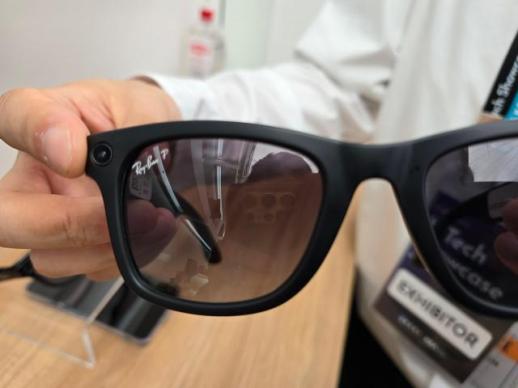 Korea's telecom trio begins selling Ray-Ban Meta AI glasses SEOUL, July 22 (AJP) - South Korea's three mobile carriers began selling Meta's "Ray-Ban Meta (Gen 2)" artificial-intelligence glasses from Wednesday, pairing the device with tariff-linked discounts as they race to push AI services beyond the smartphone. SK Telecom, KT and LG Uplus each said they would offer the AI eyewear through their retail and online channels, part of a broader strategy to extend smartphone-centered AI offerings onto new wearable devices and widen their AI ecosystems. Co-developed by Meta and global eyewear group EssilorLuxottica, the glasses respond to a spoken "Hey Meta" command, letting wearers converse with Meta AI for searches, recommendations, answers and real-time translation. The device carries a 12-megapixel ultra-wide camera capable of 3K ultra-high-definition video, open-ear speakers and five microphones, and runs for up to about eight hours on a charge — or up to about 48 hours with its charging case. The carriers sought to soften the price with handset discounts and dedicated plans. KT said it would grant members a 10 percent discount and, through device-only tariffs, bring the effective monthly cost to the 10,000 won ($6.76) or 7,000 won range, while LG Uplus offered device discounts of up to 80 percent depending on the plan chosen. SK Telecom, for its part, tied installment discounts to its premium "Best" plans and stocked the glasses at its online store and six outlets across Seoul and Gyeonggi Province. Each carrier also set up hands-on spaces — KT at 11 stores nationwide and SK Telecom at its six regional outlets — where shoppers can try the device's AI features and photo and video capture. The three companies said the launch marked the start of a wider push, with plans to expand their AI-device lineups and deepen AI-driven customer experiences linked to their telecom services. 2026-07-22 09:55:47