


Latest by
-
 U.S. Passport Drops to 10th Place, Ending 20-Year Reign at the Top The strength of passports around the world has evolved beyond mere travel convenience, now serving as indicators of a nation's level of peace and diplomatic trust. While Singapore, South Korea, and Japan occupy the top ranks, the United States, once considered the strongest passport, has fallen to 10th place for the first time in 20 years.On July 21, CNN reported, citing the 20th anniversary report of the Henley Passport Index by Henley & Partners, that there is a strong correlation between passport power and a country's level of peace.The Henley Passport Index evaluates the freedom of movement for passport holders based on the number of destinations they can visit without a visa or by obtaining a visa on arrival.As of July 2026, the strongest passport in the world is Singapore's, allowing its citizens to visit 192 destinations visa-free. This marks an increase of 70 destinations since 2006.South Korea and Japan, along with the United Arab Emirates (UAE), are tied for second place, with each passport granting access to 188 visa-free destinations. Over the past 20 years, South Korea has added 73 destinations, while Japan has increased by 60. The UAE saw the most significant rise, with an increase of 153 destinations.In contrast, the U.S. passport is tied for 10th place with Iceland, allowing visa-free access to 180 destinations, an increase of 50 since 2006. Although the absolute number of accessible destinations has grown, the U.S. has not kept pace with the rapid increases seen in other countries, resulting in its drop in ranking.In 2006, the U.S. was ranked alongside Denmark and Finland as one of the top passports globally. However, the current Henley Index counts multiple countries with the same score as a single rank, meaning there are now 36 countries ahead of the U.S.The report analyzes that these changes reflect not only the economic power of nations but also their diplomatic relations, levels of peace, and the trust that the international community places in their institutions and citizens.Christian H. Kälin, chairman of Henley & Partners, told CNN, “The data over the past 20 years shows that passport power is one of the clearest indicators of a country's geopolitical capital.” He added, “The strongest passports are held by countries that others want to partner with in trade, investment, security, and cooperation. Mobility ultimately reflects how much value other countries place on their relationship with a specific nation.”Indeed, a comparison of the Henley Passport Index with the Global Peace Index from the Institute for Economics and Peace shows significant overlap among the top-ranking countries. Singapore, ranked first in the passport index, also ranks 8th in the Global Peace Index. Other countries like Japan, Switzerland, Ireland, Austria, Portugal, Finland, Denmark, New Zealand, Canada, the Czech Republic, and Malaysia are also included in the top tiers of both indices.This indicates that nations with peaceful societies, stable institutions, and international cooperation earn high trust when their citizens seek entry into other countries. It is noteworthy that a passport serves not only as an individual's travel document but also as a compact representation of a nation's accumulated trust and diplomatic capital in the international community.However, the U.S. stands out as a notable exception. While it maintains a 10th place in the Henley Passport Index, it ranks 134th in the Global Peace Index. Similarly, Israel holds the 18th position in the passport index but is ranked 149th in the peace index.Henley & Partners attributes the passport competitiveness of the U.S. and Israel to decades of accumulated diplomatic capital, geopolitical influence, economic significance, and international trust in their institutions and travel documents. Despite existing domestic and international conflicts and military tensions, their established diplomatic and economic influence supports a degree of mobility.However, the U.S.'s decline in ranking over the past 20 years illustrates that past diplomatic assets alone cannot permanently maintain passport superiority. CNN reports that while passport power is not solely determined by peace levels, how a country is perceived as a safe and trustworthy partner in the international community is closely linked to its citizens' freedom of movement.* This article has been translated by AI. 2026-07-22 10:40:00
-
Shin Jin-seo Demonstrates Human Competitiveness in the AI Era Top-ranked Go player Shin Jin-seo achieved victory against the advanced AI program KataGo in a three-game match, winning two consecutive games after an initial loss. This comeback is significant, as Go has been viewed as a domain where AI has surpassed human players since Lee Sedol's match against AlphaGo in 2016. A decade later, humans are facing AI with new strategies and conditions.However, this victory should not be interpreted as humans surpassing AI. In direct matches, AI's strength is already far superior to that of human players. In this match, Shin started with a two-stone handicap, while KataGo made its moves within 20 seconds each time, compared to Shin's five hours plus one 30-second overtime. Shin's achievement lies not in being stronger than AI, but in accurately assessing the conditions and executing a winning strategy.In the first game, Shin maintained an early advantage but faced a setback in the middle game, ultimately losing by resignation after 245 moves. He quickly adjusted his strategy for the second game, sacrificing three stones in the center to regain control and winning by 4.5 points after 290 moves.In the final game, Shin focused on securing territory while minimizing risky confrontations. After building a strong position on the right side around the 80th move, he maintained his lead and won by 11.5 points after 221 moves, turning the series around.The three games did not follow a single tactic against AI. Shin acknowledged the issues from the first game and varied his strategies for each match. Instead of directly competing with AI's calculation power, he made choices suited to the situation. The victory resulted from prudent decision-making that minimized risks and maintained advantages, rather than from flashy moves.Notably, Shin did not reject AI; he has regularly used AI analysis to refine his judgment. He embraced technology, understanding and utilizing it to develop his own strategies.This has significant implications in the age of generative AI. While AI can write, create art, and analyze vast amounts of data, it cannot replace the human role. The responsibility for what questions to ask and which answers to choose remains with humans. The gap will widen between those who accept AI results blindly and those who verify errors and context.Governments and businesses should not focus solely on computational power and investment in AI. Education should foster the ability to redefine problems and validate results rather than just finding quick answers. Companies and public institutions must not attribute AI errors and biases to mere 'machine mistakes.' We must prevent a structure where responsibility is relinquished to machines.Shin's comeback does not imply that humans are superior to AI. In the AI era, competitiveness does not stem from simply defeating machines. It arises from understanding the capabilities and limitations of technology and applying it to human objectives. While AI can calculate, it cannot determine direction. Ultimately, competitiveness in the technological age comes from human strategy, judgment, and responsibility. This is the most significant takeaway from Shin's remarkable victory.* This article has been translated by AI. 2026-07-22 10:36:00
-
Tencent to Build AI Supernode Using Chinese GPUs and Optical Modules Tencent, a major Chinese tech company, plans to establish a supernode, following Huawei's lead.Tencent Cloud, a subsidiary of Tencent, announced on July 22 that it aims to build the supernode in the fourth quarter of this year. The company stated that it intends to create large-scale AI computing capabilities using Chinese technology to minimize inference costs.A supernode is a massive AI computing system that connects thousands of AI semiconductors to function as a single large computer. Building a supernode is essential for reliably providing services for training and inference of large language models (LLMs). The supernode will utilize Chinese-made AI semiconductors, although specific products have not yet been disclosed.Additionally, Tencent indicated that the supernode will be based on NPO (Near-Package Optics) technology. NPO involves placing optical modules next to chips to transmit data as optical signals, which can reduce power consumption and heat generation, leading to cost savings. This technology is still in its early commercialization phase and requires compatibility among optical modules, switches, and packaging technologies. Tencent emphasized the need for industry stakeholders to collaboratively establish NPO standards.Tencent Cloud provides AI infrastructure to major AI startups and corporate clients in China. The goal of building the supernode is to offer services at even lower costs.Meanwhile, due to U.S. semiconductor sanctions, China has been unable to procure NVIDIA's latest AI semiconductors. As a result, the country is adopting a strategy of connecting lower-spec Chinese AI semiconductors in large clusters to compensate for the lack of chip performance.On July 17, Huawei unveiled its self-developed supernode system, the Atlas 950 Superpod, at the World Artificial Intelligence Conference (WAIC) in Shanghai. This product is designed to efficiently connect up to 8,192 neural processing units (NPUs) for training and inference of large language models with trillions of parameters. Huawei's supernode is equipped with its own AI chip, Ascend.* This article has been translated by AI. 2026-07-22 10:36:00
-
Minister Kim Seong-hwan Inspects Decarbonization and Resource Recycling Efforts Kim Seong-hwan, the Minister of Climate, Energy and Environment, visited several corporate sites to assess the progress of eco-friendly policies aimed at decarbonizing the building sector and promoting a circular economy.The ministry reported that on July 22, Minister Kim visited Samsung C&T's Residential Performance Research Institute, Samsung Electronics' Suwon facility, and the Yongin Metropolitan Resource Recycling Center to examine the status of heat pump deployment, reusable container usage, and the recycling of discarded electronics.As carbon neutrality policies expand beyond greenhouse gas reduction to include industrial competitiveness, heat pumps and the recycling of critical minerals are seen as key areas that can address both energy transition and supply chain stability. In particular, the commercialization of recycling technologies for discarded electronics is expected to positively impact resource acquisition and raw material supply stability, especially given the high dependence on foreign sources for rare earth elements.During his visit to Samsung C&T's Residential Performance Research Institute, Minister Kim observed a demonstration of an integrated heat pump system that provides heating, cooling, and hot water from a single unit. Heat pumps are high-efficiency systems that utilize heat from the outside air, representing a significant electrification technology that can reduce fossil fuel use in buildings.The government confirmed the feasibility of applying this technology in multi-family housing, as well as the installation environment, electrical conditions, and regulatory challenges, with plans to gradually establish a foundation for heat pump deployment focused on multi-family residences.At Samsung Electronics' Suwon facility, Minister Kim checked the reusable container system in operation at all cafes and cafeterias. Samsung Electronics is expanding the use of reusable containers from the Suwon facility to 13 sites, including Samsung SDI and Samsung Display, while the government is considering institutional support to promote similar initiatives across various public facilities.Later, Minister Kim visited the Yongin Metropolitan Resource Recycling Center, where he observed the disassembly process for discarded refrigerators and air conditioners, as well as the refrigerant treatment procedures. He also inspected the recovery of permanent magnets containing copper, aluminum, and rare earth elements, and evaluated the potential for commercializing critical mineral recycling technologies through a pilot project being conducted by LG Electronics and the Circular Governance.The government plans to improve the standards for the recovery and recycling of rare earth permanent magnets based on the pilot results, aiming to establish a domestic circular utilization system for critical minerals.Minister Kim stated, "The transition to heat pumps in industries and buildings, the practice of reducing plastic in daily life, and the recycling of critical minerals from discarded electrical and electronic products are central to promoting carbon neutrality and a circular economy. We will continue to provide policy support to ensure that these leading models spread throughout the industry, enhancing our companies' global green competitiveness."* This article has been translated by AI. 2026-07-22 10:36:00
-
Korean Conservative Party Urged to Evolve into a National Party 국민의힘 소장파 의원 모임인 '대안과 미래'는 22일 당 개혁 방안에 대해 논의하며 보수 이념이나 영남 지역에 국한되지 않은 전국 정당으로 나아가야 한다고 밝혔다. 모임 간사인 이성권 의원은 이날 '정당 혁신 어떻게 할 것인가'를 주제로 비공개 토론 후 기자들과 만나 "보수 정당이 이기기 위해서는 보수라는 이념에 치중되지 않고 그것을 넘어서 국민 정당으로 탈바꿈해야 한다"며 이같이 말했다. 이 의원은 "영남에 기반을 두고 있는 지역 정당으로 한정되지 않고, 수도권을 중심으로 한 중수청(중도·수도권·청년)으로의 외연 확장을 통한 전국 정당화가 돼야 한다"며 "당원 구조에 있어서도 국민 전체를 아우를 수 있도록 세대 연합 정당으로 탈바꿈해야 한다"고 강조했다. 이어 "당원 중심 정당으로만 한정돼선 선거에서 이기기 쉽지 않기 때문에 당원의 참여를 보장하되 국민 주권이 반영될 수 있는 열린 국민 정당으로 가기 위한 방향이 무엇인지에 대해 공개 토론회를 조만간 실시할 예정"이라며 "수도권을 포괄한 형태의 전국 정당으로 가기 위한 방안에 대한 토론회도 지속적으로 이어 나갈 것"이라고 했다. 토론회에서는 '제왕적 당대표 체제'에 대한 문제점도 논의됐다. 이 의원은 "당 운영과 인사, 공천권에 관한 권한이 당 대표에게 집중돼 있기 때문에 제왕적 대표 측면에서 부작용이 많은 것도 사실"이라며 "대표 자체를 없애는 것은 한국 정치 정당 역사상 쉽지 않은 문제이고, 그 부작용을 줄일 수 있는 방안들에 대해 지속적으로 찾아보기로 했다"고 언급했다. 당 중앙윤리위원회가 이날 회의를 열어 징계 절차를 개시할 것이라는 전망에 대해서는 "윤리위가 당 통합을 저해하고 분열과 갈등을 조장하는 징계 국면으로 진입하는 입구가 돼선 안 된다"고 덧붙였다.* This article has been translated by AI. 2026-07-22 10:36:00
-
TSMC to Raise Foundry Prices by Up to 10% Starting in 2027 The world's largest foundry, TSMC, is set to increase prices for advanced and mature processes by up to 10% starting in 2027, reflecting rising costs of raw materials, manufacturing equipment, and overseas factory construction.According to Nikkei Asia, multiple sources reported on July 21 that TSMC has recently completed price negotiations with major clients, with new rates expected to take effect in early 2027. The price increase will apply to advanced processes below 7 nanometers (nm), which accounted for approximately 77% of TSMC's total revenue in the second quarter.The base increase is reported to be between 5% and 10%, depending on the customer and product. If a customer exceeds previous expectations with additional orders for high-performance computing (HPC) semiconductors, a surcharge of 10% to 15% will be added to the base increase. As a result, the final price increase for some advanced semiconductor orders could exceed 10%.Prices for mature processes, including legacy processes such as 12nm, 16nm, and 28nm, are also expected to rise by up to 10%. However, some products may see lower increases. Mature processes accounted for about 23% of TSMC's revenue in the most recent quarter.The price negotiations began in June and were reportedly concluded this month. Industry insiders noted that TSMC opted for a cautious approach by delaying the implementation of the price increase until 2027, allowing clients time to adjust.This price hike is attributed to overall increases in production costs, including labor, raw materials, chemicals, and logistics. The expansion of overseas production facilities and the ramp-up of the cutting-edge 2nm process are also putting pressure on profitability. Additionally, TSMC has warned that geopolitical tensions, particularly following the outbreak of war between the U.S. and Iran earlier this year, could impact the supply and cost of essential gases needed for semiconductor production.Previously, TSMC Chairman C.C. Wei addressed the company's pricing strategy during a recent earnings call, stating, "We do not suddenly raise prices four or five times. It would be difficult for our customers to endure such price increases and survive."In the semiconductor industry, there has been a trend of price increases in response to rising costs and expanded investments in artificial intelligence (AI) infrastructure. Companies like Intel and AMD have raised product prices due to supply constraints driven by demand for AI computing, while Taiwanese foundry UMC and TSMC subsidiary Vanguard International Semiconductor have also announced price hikes.* This article has been translated by AI. 2026-07-22 10:32:00
-
MHS Begins Mass Production of Mobilint's Next-Gen NPU 'MLA400' Thermal Management Components Thermal management specialist MHS announced on July 22 that it has completed the development of thermal management components for Mobilint's MLA400 and signed a mass production supply contract.The MLA400 is a PCIe-based AI accelerator developed by Mobilint, built on its proprietary NPU 'ARIES.' It is designed to handle various inference tasks, including computer vision, AI video surveillance, and large language models (LLMs) and vision-language models (VLMs).MHS is responsible for developing heat sinks and other thermal management components for both active and passive products of the MLA400. The two companies have verified heat dissipation performance and mechanical stability from the early stages of development. By taking on both development and mass production, MHS aims to minimize potential errors in component design changes and production processes.AI semiconductors can experience throttling, which reduces processing speed, or shortened component lifespan when operating temperatures rise. Heat sinks and cooling structures play a crucial role in determining not only the chip's instantaneous performance but also long-term operational stability and system reliability.Lim Jong-soo, CEO of MHS, stated, "We collaborated throughout the entire development and mass production process to ensure the MLA400 achieves stable performance and quality. We will continue to serve as a partner supporting Mobilint's product development and business expansion." 2026-07-22 10:32:00
-
Dongdaemun Spicy Tteokbokki Expands Customer Engagement with App Discounts Amid Summer Heat Dongdaemun Spicy Tteokbokki, a leading tteokbokki brand in South Korea, is offering various discounts and rewards for customers using its official app, Yop Tteok app, in response to the increased demand for delivery during the summer.As a heatwave and monsoon season lead more consumers to order food for delivery rather than dining out, Dongdaemun Spicy Tteokbokki has implemented app-exclusive benefits that can be utilized for delivery, takeout, and dine-in orders.Customers who place delivery orders through the Yop Tteok app can apply a 3,000 won discount coupon. After selecting their desired menu items, customers can use the coupon at the payment stage, allowing them to enjoy their meals at a more reasonable price without having to go out in the heat.The same 3,000 won discount is available for customers opting for takeout. Additionally, those dining in at the restaurant can receive a 2,000 won discount, providing various options for customers to choose from based on their ordering preferences.The app also features a point accumulation service. When customers order through the Yop Tteok app, 2% of the payment amount is credited as points, which can be used alongside CJ ONE points. Accumulated points can be redeemed for future orders, enhancing benefits for repeat customers.Furthermore, the Yop Tteok app provides updates on brand events, promotions, and membership information, allowing users to check various offers and events simultaneously, thereby improving convenience.Dongdaemun Spicy Tteokbokki emphasizes a brand experience centered around enjoying deliciously spicy dishes during the summer, aiming to enhance customer satisfaction through seasonal app benefits.A representative from Dongdaemun Spicy Tteokbokki stated, "We are operating various benefits to ensure that customers can conveniently and reasonably enjoy our menu through the Yop Tteok app, even in the sweltering summer. We plan to continue expanding services tailored to customer usage patterns, including delivery, takeout, and dine-in orders."Meanwhile, Dongdaemun Spicy Tteokbokki is continuously strengthening various customer benefits, including discount promotions and point accumulation, centered around the convenience of ordering through its official app. 2026-07-22 10:28:00
-
Auto Insurance Loss Ratio Rises to 84.5% in First Half of 2026 The auto insurance loss ratio for the first half of 2026 has increased compared to last year. Concerns are growing that the loss ratio will continue to worsen in the second half due to rising claims costs and an expected increase in accidents during the rainy season.According to the non-life insurance industry on July 22, the cumulative loss ratio for the four major auto insurers—Samsung Fire & Marine Insurance, Hyundai Marine & Fire Insurance, DB Insurance, and KB Insurance—was recorded at 84.5% for the first half of the year, up 1.9 percentage points from the same period last year.The loss ratio for June also rose by 1.9 percentage points year-on-year to 83.6%.The limited increase in auto insurance premiums earlier this year, coupled with rising claims costs, is seen as a contributing factor to the worsening loss ratio.Industry experts predict that the burden of the loss ratio will persist in the second half. The likelihood of increased vehicle flooding, falling object accidents, and traffic accidents on wet roads during the summer rainy season is significant. Additionally, rising vehicle maintenance costs and wages for temporary workers continue to drive up claims costs. As a result, annual losses in auto insurance are anticipated.An industry official stated, "Given the various factors driving up the costs of auto insurance, the loss ratio is expected to continue to deteriorate. Improvements to systems such as the '8-week rule' to prevent claims leakage need to be implemented promptly."* This article has been translated by AI. 2026-07-22 10:28:00
-
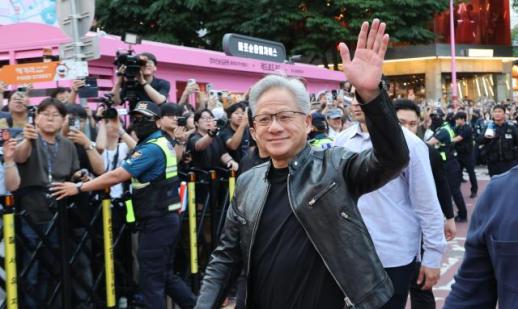 Samsung, SK, Naver chiefs set for rare AI summit with Nvidia's Huang SEOUL, July 22 (AJP) - Samsung Electronics Chairman Jay Y. Lee, SK Group Chairman Chey Tae-won and Naver founder Lee Hae-jin are expected to meet Nvidia Chief Executive Jensen Huang in Silicon Valley this week, in what could become one of the highest-profile gatherings of global artificial intelligence leaders amid sustained investment in AI infrastructure. The roundtable, expected to take place on Friday, would also likely include OpenAI CEO Sam Altman and Anthropic CEO Dario Amodei, according to industry sources. If confirmed, the meeting would bring together leaders spanning AI memory, computing hardware and generative AI services as companies deepen strategic partnerships across the AI supply chain. Samsung and SK hynix supply high-bandwidth memory (HBM) chips to Nvidia for AI accelerators and are expected to provide next-generation HBM4 for Nvidia's upcoming Vera Rubin platform. Both companies are also supplying memory for OpenAI's custom AI chips and have agreed to support the Stargate AI infrastructure project announced last year. Samsung has also expanded its foundry ties with AI companies. The company is manufacturing Groq's language processing units for deployment on Nvidia platforms and is in talks with Anthropic over AI chip production using Samsung's 2-nanometer process, according to industry sources. Naver is expected to discuss potential cooperation on AI factory projects, which combine GPU servers, data centers and cloud infrastructure to support large-scale AI computing. The meeting comes as investors have raised concerns over a potential peak in AI-related demand following recent declines in semiconductor shares. Industry officials, however, continue to expect AI infrastructure investment to remain robust over the next several years, supporting strong demand for advanced memory chips. The gathering would also mark another meeting between Huang and South Korean business leaders little more than a month after the Nvidia chief visited Seoul in June, where he met executives from Samsung, SK Group, Hyundai Motor Group, LG Group and Naver to discuss AI collaboration. 2026-07-22 10:25:23