


Latest by
-
 Hyundai Targets Africa's 1.4 Billion Population Amid Middle East Uncertainty Hyundai Motor Group is focusing on the African market, which boasts significant growth potential. With a population of 1.4 billion, the continent has an automobile penetration rate of less than 1%, indicating it is still in the early stages of market development. The company aims to strengthen its position in a market dominated by Japan and China through expanded local production and enhanced partnerships.According to industry sources, Hyundai is considering Ghana as a key production hub in West Africa. Since 2022, Hyundai has operated a semi-knocked down (CKD) plant in Tema, Ghana's largest port city, and is exploring plans to establish additional production facilities. Recently, Euisun Chung, chairman of Hyundai Motor Group, visited the Manhyia Palace in Kumasi, Ghana, to discuss business expansion in the region with the Asantehene, the king of the Ashanti Kingdom.With a rapidly growing young economic population, Africa is expected to see increased demand for finished vehicles in the coming years. By 2030, the continent's population is projected to reach 2 billion, with an estimated 500 million middle-class individuals capable of purchasing new cars, according to global automotive industry forecasts. The Ghanaian government is also providing various incentives to foreign companies that establish automotive production facilities in the country as part of its Automotive Industry Development Policy (GADP) introduced in 2019.Hyundai is also expanding its production in North Africa. The company is establishing a CKD plant in Algeria, focusing on small hatchbacks and SUVs, with mass production targeted for 2027. Once operational, the Algerian facility is expected to meet North African demand and provide a foundation for exports to neighboring countries.Last year, Hyundai's global sales reached 4,108,605 units, with the Middle East and Africa accounting for about 8% of that total. However, the region has seen an annual growth rate exceeding 5%, and Hyundai anticipates that the abundance of key minerals such as cobalt, lithium, platinum, and rare earth elements will play a crucial role in future electrification supply chains. Sung Kim, head of Hyundai Motor Group's strategic planning division, stated, "We see Africa as the next stage for global growth."Industry analysts emphasize that Africa, composed of 54 countries and thousands of ethnic groups, requires the establishment of ongoing relationships and trust within communities for successful business development. An industry insider noted, "Hyundai's strategy for entering Africa is a comprehensive package that goes beyond mere new car sales, encompassing market, resources, supply chains, production, technology, and talent development. It represents an evolved approach aimed at simultaneously seizing the initial automotive ecosystem and future mobility in Africa, building on the localization success achieved in the Middle East."* This article has been translated by AI. 2026-07-21 18:04:00
-
Hanwha Solutions Halves Capital Increase Amid Focus on U.S. Solar Business Recovery Hanwha Solutions has confirmed that its capital increase will be approximately 1.2 trillion won, half of the initially planned 2.4 trillion won. The performance of its U.S. solar business has become increasingly critical to offset the funding shortfall.According to industry sources on July 21, Hanwha Solutions aims to raise a total of 1.1713 trillion won through this capital increase, significantly lower than the original target of 2.3976 trillion won. Financial authorities and investors have raised concerns about the plan to allocate most of the raised funds for debt repayment, leading to the reduced scale.Previously, Hanwha Solutions announced that it would allocate 1.5 trillion won of the raised funds for debt repayment and the remaining 900 billion won for future growth investments.Despite the decrease in raised funds, Hanwha Solutions maintains that it will proceed with its investment plans for U.S. production facilities as scheduled. The company plans to secure the necessary funds through local liquidity in the U.S. However, the amount allocated for debt repayment has been cut from 571 billion won to 263.6 billion won, a reduction of more than half, to support its U.S. solar investment plans.Hanwha Solutions is also implementing stringent self-help measures. On July 16, the company sold a venture capital fund it had invested in to discover innovative U.S. companies for $84.3 million (approximately 125.5 billion won).Additionally, the company issued 300 billion won worth of redeemable convertible preferred shares (RCPS) through its engineering, procurement, and construction (EPC) subsidiary in the U.S. It has also secured approximately 340 billion won in advanced manufacturing production tax credits (AMPC) for last year and this year.However, these measures are still insufficient to fill the funding gap. Ultimately, the recovery of profitability in the U.S. solar business will be a key variable.Hanwha Solutions expects that the profitability of Hanwha Q CELLS will improve starting in the third quarter, driven by the expansion of U.S. cell premiums and the normalization of Solar Hub operations. Currently, the annual demand for solar modules in the U.S. is about 40 gigawatts, but local cell production capacity is expected to be around 30 gigawatts next year, indicating a likely supply shortage of U.S.-made cells.If the production yield and operational rate of Solar Hub stabilize, the effects of rising cell sales prices and AMPC benefits could be fully reflected in the company's performance.A Hanwha Solutions official stated, "Following the sale of the venture fund, we are continuously identifying liquid assets. Since asset sales cannot be completed in the short term, we are reviewing various self-help measures to ensure that our investment plans for the second half of the year proceed without disruption."* This article has been translated by AI. 2026-07-21 18:04:00
-
Korea to Play Key Role in India's Shipbuilding Mission, Says Ambassador Lee Lee Sung-ho, South Korea's Ambassador to India, predicted that Korea will play a key partnership role in India's shipbuilding industry development strategy. Following the Korea-India summit in April, the two countries agreed to expand cooperation in shipbuilding, shipping, and maritime logistics, raising expectations that economic collaboration could lead to concrete industrial partnerships starting with large shipbuilding projects.During a forum hosted by the Korea-India Future Association in Seoul on July 21, Ambassador Lee stated, "I believe we will participate as an important partner in India's shipbuilding mission."The forum, chaired by Shin Bong-gil, former Ambassador to India, focused on India's political and economic environment and future tasks for economic cooperation between the two countries.Ambassador Lee explained that while India has focused on developing its semiconductor industry, it has recently identified shipbuilding as a core strategic industry. He noted, "The areas that India feels the most need to push forward are the semiconductor mission and the shipbuilding mission, with shipbuilding currently being the most emphasized field."He added, "India has a long coastline and significant export and import volumes, but it currently lacks the capacity to build large container ships. To change this, India is pursuing a national shipbuilding mission with a target year of 2047."Ambassador Lee indicated that India views Korea as its most promising partner in this endeavor. He remarked, "India believes that Korea is the country that can best assist them and is actively seeking our cooperation. Fortunately, Korean companies are also showing interest in the shipbuilding sector."He further stated, "If large shipbuilding projects are realized, they will become signature projects of Korea-India cooperation, potentially opening a second wave of Korean corporate investment following the first wave led by Samsung, LG, Hyundai, and Kia in the 1990s."Ambassador Lee emphasized that such signature projects would symbolize the strategic closeness between Korea and India and could provide new investment opportunities for small and medium-sized enterprises in Korea that have viewed India with skepticism.He stressed that future cooperation between the two countries should expand beyond shipbuilding to include sectors such as secondary batteries and strategic manufacturing, which are essential for India's industrial transition.He stated, "From India's perspective, what is most needed from Korea is economic and strategic investment. If such investments are connected through supply chains, Korea could emerge as a strategic partner on par with Japan and the United States in the 'Make in India' initiative."These remarks follow the agreement made during the April summit between President Yoon Suk Yeol and Indian Prime Minister Narendra Modi to strengthen cooperation in shipbuilding, shipping, and maritime logistics.At that time, the two countries agreed to pursue the development of large shipbuilding clusters, construction of shipyards, training of maritime professionals, infrastructure development for ports, and cooperation in supply chains for equipment.India aims to become a global shipbuilding powerhouse by 2047 through its 'Maritime Amrit Kaal Vision 2047.' The initial key project involves the construction of an eco-friendly large shipyard in the Tuticorin area of Tamil Nadu, with HD Korea Shipbuilding & Offshore Engineering's participation being discussed.In his speech, Ambassador Lee identified India's rise as one of the most significant changes that Korean diplomacy must strategically respond to. However, he noted that Korea is not yet India's top priority partner.He assessed, "As of 2026, Korea is considered a second-tier partner from India's perspective. While interest and necessity for Korea have grown, countries like the United States, China, Russia, major European nations, Japan, Australia, Canada, and Singapore still form the top tier."He added, "The extent to which Korea actively participates in India's 'Viksit Bharat 2047' national vision over the next 20 years will determine our strategic status. Depending on how closely we accompany India on its journey to becoming a developed nation, Korea may have the opportunity to rise to a top-tier country."Ambassador Lee concluded, "The 20 years from 2026 to 2047 could be the last opportunity for India to strategically need Korea. Korea must approach India more actively, persistently, and strategically than ever before." 2026-07-21 18:04:00
-
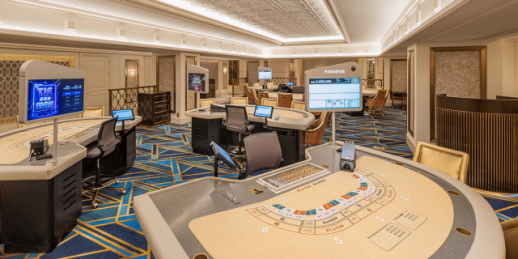 Korea ups casino taxes while Japan expands casino resort SEOUL, July 21 (AJP) - South Korea is moving to raise the maximum levy on casino operators by 50 percent, a step that could further erode the industry's competitiveness just as Japan expands its gaming sector with its first integrated resort. The government plans to lift the statutory ceiling on the Tourism Promotion and Development Fund levy from 10 percent to 15 percent of casino revenue. The current system applies a progressive levy of 1 percent on annual revenue of up to 1 billion won, 5 percent on revenue between 1 billion won and 10 billion won, and 10 percent on revenue above 10 billion won. The levy is imposed on individual casino properties rather than on operators, meaning a company running several casinos is assessed separately for each location. The government plans to amend the Tourism Promotion Act to raise the legal ceiling, then set the revenue threshold for the new 15 percent rate through an enforcement decree. The threshold has not yet been decided. The Ministry of Culture, Sports and Tourism is also pursuing a five-year casino license renewal system and a prior approval requirement for transfers of casino business rights. The ministry said the renewal system would periodically verify whether operators continue to meet their original licensing conditions. The transfer approval system would tighten scrutiny of ownership changes and how casino acquisitions are financed. The ministry argues that the current levy brackets no longer reflect the scale of the industry. When the levy was introduced in 1994, six of the country's 13 casino properties generated more than 10 billion won in annual revenue. Most casinos now exceed that level. Total revenue at foreigner-only casinos has increased more than tenfold since then, while average revenue per property has risen more than sevenfold. According to the Korea Casino Tourism Association, annual industry payments into the tourism fund increased from 1.2 billion won in 1994 to 303.9 billion won in 2025. The higher levy, however, could add to the cost burden on Korean operators as they prepare for stronger regional competition. Construction is progressing on Japan's first integrated resort on Yumeshima island in Osaka. The project, led by MGM Resorts and Orix, began construction in April 2025 and is scheduled to open in the fall of 2030. Initial investment is estimated at about 1.27 trillion yen. Osaka authorities project the resort will attract about 20 million visitors annually, including 6 million from overseas. In an October 2025 commentary, Seo Won-seok, president of the Korea Tourism Society, estimated that Korean customers could account for at least 33 percent of the Osaka resort's gaming demand. He projected that 1.6 trillion won in Korean casino spending could shift to Japan during the resort's first year of operation, rising to 2.3 trillion won after the business stabilizes. The figures are projections, not confirmed spending data. Korean casino operators argue that a higher levy could reduce funds available for hotel, entertainment and other non-gaming investment, as well as overseas customer recruitment. The Korea Casino Tourism Association has also noted that operators already pay individual consumption, education and corporate taxes, while the tourism fund levy is assessed on revenue regardless of whether a casino turns a profit. Analyst estimates vary depending on how the new bracket is structured. Eugene Investment & Securities estimated that a broad five-percentage-point increase would cost Paradise an additional 47 billion won a year and Grand Korea Leisure an additional 23 billion won. It estimated an additional burden of 30 billion won for Lotte Tourism Development if Jeju introduced a comparable system. Under that assumption, projected operating profit at the three companies could decline by about 20 percent to 30 percent. Hana Securities separately estimated operating profit reductions of 22 percent for Paradise and 28 percent for GKL. The government has said the actual impact will depend on the revenue threshold and progressive brackets established in the enforcement decree. Jeju, whose casinos are governed separately under the Jeju Special Act, is not directly covered by the proposed amendment. The island's eight foreigner-only casinos posted preliminary revenue of 646.5 billion won in 2025, up 40.8 percent from 458.9 billion won a year earlier and the highest annual figure on record. Securities firms have nevertheless included Lotte Tourism Development, which operates the Dream Tower casino in Jeju, in their impact estimates on expectations that the provincial government may eventually follow the central government's move. Company reports published by Eugene Investment & Securities in May showed differing first-quarter customer trends among the major operators. GKL's drop volume rose 12.6 percent year-on-year to 931 billion won, supported by a 31.2 percent increase in Chinese VIP drop volume and a 12.7 percent rise in other VIP segments. The company dispatched staff to Japan, Taiwan, Mongolia and Thailand to recruit VIP customers, although the expanded marketing activity also raised costs. Paradise reported total drop volume of about 1.8 trillion won, up 3.6 percent from a year earlier. Chinese VIP drop volume fell 17.6 percent, while other VIP volume rose 14.8 percent and mass-market betting increased 16.8 percent. First-quarter revenue increased 3.8 percent to 294 billion won, but operating profit fell 34.9 percent to 37.3 billion won as labor, advertising and hotel operating expenses rose. Lotte Tourism Development's Dream Tower casino recorded about 150,000 visitors in the first quarter, up 37.3 percent year-on-year, while drop volume increased 35 percent to 650.5 billion won. Casino revenue rose 40.3 percent to 118.6 billion won. The company reported total first-quarter operating profit of 28.8 billion won, up 121 percent from a year earlier. Gangwon Land, Korea's only casino licensed to admit Korean nationals, is separately pursuing a 2.5 trillion won expansion program through 2032. The plan includes a second casino building, hotel expansion and additional non-gaming facilities. The second casino is scheduled to open in early 2028, while renovation work is underway on 757 of the resort's 1,827 hotel and condominium rooms. Kangwon Land has cited the Osaka project as a factor behind its efforts to expand and diversify the resort. The ministry says the proposed changes are intended to restore progressivity to a levy system that has barely changed in three decades and to direct additional revenue into tourism infrastructure and workforce development. A parliamentary forum on the proposed regulatory changes is scheduled for July 23. Rep. Cho Gye-won of the ruling Democratic Party is expected to introduce related amendments afterward. Specific levy brackets will be determined only after the Tourism Promotion Act is revised and the government completes consultations with the industry and tax and fiscal experts. 2026-07-21 18:00:03
-
 Lee revives Korea's unfinished abortion debate SEOUL, July 21 (AJP) - For seven years, South Korea's abortion debate has remained trapped between a Constitutional Court ruling that struck down the country's abortion ban and a legal vacuum that has left women navigating an unregulated market for medication. President Lee Jae Myung has now thrust the issue back onto the government's agenda by questioning why women seeking to terminate pregnancies are still being driven toward illicit online sellers for a medicine that is legally prescribed across much of the developed world. At a Cabinet meeting on July 14, Lee instructed the government to find a way to permit the proper use of mifepristone even before lawmakers complete long-delayed revisions to abortion laws. "Even if it creates some difficulty for the government, we should make it possible for the drug to be administered properly," Lee said. "I think it is irresponsible for the government to leave things as they are." Lee also suggested doctors could temporarily be given professional discretion over prescribing the medicine, arguing supervised treatment is preferable to women buying unidentified products online without prescriptions or follow-up care. Relevant ministries have begun consultations under the Office for Government Policy Coordination. His intervention has transformed what had largely been a dispute among regulators, women's rights groups and medical organizations into a broader test of whether the government can move administratively while the National Assembly remains deadlocked. At the center of the debate is mifepristone, used together with misoprostol, the internationally accepted medication regimen for early pregnancy termination and approved in nearly 100 countries. Can approval come before abortion-law reform? Progressive Party lawmaker Son Sol, who has proposed revisions to Korea's abortion laws, argues it can. She said the Ministry of Food and Drug Safety already has authority under the Pharmaceutical Affairs Act to review and approve mifepristone independently of broader abortion legislation. "Marketing authorization should be pursued first, while amendments to the Mother and Child Health Act and related laws covering the legal definition of pregnancy termination, standards for medical provision and national health insurance coverage should proceed at the same time," Son told AJP. The distinction is significant. Drug approval determines whether a medicine satisfies standards for safety, efficacy and quality, along with approved dosage, indications and gestational limits. Separate legislation would still be required to determine who may prescribe the drug, where it may be dispensed, how complications are managed and whether treatment qualifies for national health insurance. Son's amendment to the Mother and Child Health Act, introduced in March, remains stalled in committee along with a companion bill extending national health insurance coverage for abortion care. The legislative impasse dates back to April 2019, when South Korea's Constitutional Court ruled that blanket criminal punishment for abortion disproportionately infringed women's right to self-determination. The court gave lawmakers until the end of 2020 to devise a replacement framework, but Parliament failed to act, causing the criminal provisions to lapse on Jan. 1, 2021. The result has been an uneasy legal overlap in which criminal penalties disappeared while the country's medical and regulatory systems were never comprehensively updated. Medical evidence versus political deadlock Medical specialists say the debate should be grounded in evidence rather than political rhetoric. Lee Yong Soo, a pharmacology professor at Duksung Women's University, explained that mifepristone blocks progesterone receptors needed to sustain pregnancy, while misoprostol induces uterine contractions to expel pregnancy tissue. Because the medicines are administered only once, prolonged drug toxicity is not the principal concern, Lee said. Greater risks arise from incomplete abortion, excessive bleeding or infection, making proper follow-up care essential. Cho Jung Hwan, professor of pharmacy at Sookmyung Women's University, said neither portraying the regimen as experimental nor describing it as harmless accurately reflects current scientific evidence. Clinical studies cited in U.S. prescribing information show complete termination rates of approximately 96 to 97 percent through 70 days of pregnancy, he said. Around 2.6 to 3.8 percent of patients require surgical intervention because of ongoing pregnancy, incomplete expulsion, bleeding or patient request, while serious adverse reactions occur in fewer than 0.5 percent of cases. He nevertheless stressed that safe introduction would require screening for ectopic pregnancy, assessment of contraindications, informed consent, emergency referral systems and follow-up examinations seven to 14 days after treatment. Any Korean approval, he said, should combine scientific review with quality control, patient counseling, emergency care and clearly defined legal responsibility. That evidence-based middle ground remains largely absent from Korea's illicit market. Na-young, head of the Center for Sexual Rights and Reproductive Justice, or SHARE, said many women, particularly teenagers, continue purchasing abortion pills through unregulated channels without knowing the ingredients or dosage. A five-year regulatory loop Hyundai Pharmaceutical first applied for Korean approval of Mifegymiso in July 2021. The company withdrew the application in late 2022 after the MFDS requested additional safety, efficacy and quality data. It reapplied in December 2024, and the application remains under review. The prolonged process reflects two separate questions. One concerns whether the product satisfies Korean pharmaceutical standards. The other is whether the government is prepared to determine prescription rules before lawmakers agree on a comprehensive abortion framework. Critics of immediate introduction argue that approval alone cannot resolve issues including medical liability, emergency treatment, conscientious objection and protections for minors. Ahn Sang-hoon, a People Power Party lawmaker and former Seoul National University professor, said political hesitation reflects interests extending well beyond medicine. "The reason the South Korean government and political community have been passive on the issue of pregnancy termination is that it is not confined to an area of professional judgment such as medicine, but involves the complex interests of various groups, including religious communities," Ahn told AJP. "This is an issue that requires consideration not only of a specific medication but also of cultural responses, including efforts to promote adoption." Is access a constitutional obligation? Jeff King, professor of law at University College London, said recognition of a protected personal choice does not automatically create a constitutional obligation for governments to provide abortion services. A court could, for example, conclude cannabis use should not be criminalized without requiring governments to facilitate access, he said. The analysis changes, however, if people cannot safely exercise a legally protected choice because the government fails to regulate access to necessary medical treatment. King was more critical of delaying pharmaceutical review solely until lawmakers complete abortion legislation. If regulators do not ordinarily suspend drug reviews because a treatment is politically controversial, withholding a decision on mifepristone could indicate opposition to abortion rather than ordinary pharmaceutical standards, he said. In that case, prolonged delay itself could become vulnerable to constitutional challenge. His analysis broadly aligns with South Korea's National Human Rights Commission, which last year urged the government to integrate abortion care into the public health system, apply national health insurance coverage, train medical professionals and introduce abortion medication as an essential medicine. Other countries separate approval from service rules International experience suggests pharmaceutical approval, abortion law and health-care delivery need not be resolved simultaneously. France approved mifepristone in 1988, the United States in 2000 and Japan in 2023. England and Wales permanently allow eligible patients to receive early medical-abortion medication through teleconsultation and complete treatment at home. The World Health Organization similarly supports self-managed medical abortion before 12 weeks, provided patients have accurate medical information, quality-assured medicines, trained health-care providers and access to emergency treatment when needed. The international record therefore offers little support for either extreme. It does not endorse unrestricted online sales, but neither does it suggest governments must postpone pharmaceutical approval until every legal and ethical question surrounding abortion has been resolved. Two clocks are running The Lee administration now faces two separate timelines. One runs at the Ministry of Food and Drug Safety, where Hyundai Pharmaceutical's application remains under review. The other runs at the National Assembly, where abortion-law revisions have remained dormant since March. The president's remarks cannot resolve questions over gestational limits, insurance coverage, conscientious objection or medical liability. But they have made one point increasingly difficult for the government to avoid: continued inaction is itself a policy choice. Medical experts broadly agree that authorization must be accompanied by screening, follow-up care and emergency medical support. Lawmakers remain divided over how abortion should ultimately be regulated. The question is no longer whether South Korea can continue postponing a decision. Women seeking abortions have already been absorbing the consequences through uncertain products, high costs and fragmented medical care. The issue now is whether Lee's intervention finally connects decriminalization with a functioning health-care system — or merely opens another chapter in a debate that has already outlasted the law it was meant to replace. 2026-07-21 17:57:28
-
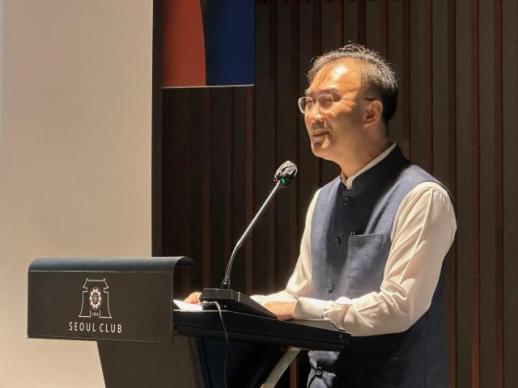 Korea eyed as key partner to India's maritime vision: envoy SEOUL, July 21 (AJP) - South Korea is poised to become a key partner in India's drive to build a globally competitive shipbuilding industry, Seoul's ambassador to New Delhi said Tuesday, describing maritime cooperation as the next flagship project in bilateral economic ties. "We believe Korea will participate as an important partner in India's shipbuilding mission," Ambassador Lee Seong-ho said at a Seoul forum, adding that New Delhi has increasingly turned its attention from semiconductors to shipbuilding as it seeks to transform itself into a developed economy by 2047. Speaking at a forum hosted by the Korea-India Future Association, chaired by former Ambassador Shin Bong-kil, Lee said India has been strategically identifying sectors critical to its industrial development. "India has been strategically pursuing areas where it feels the greatest need, including its semiconductor mission and shipbuilding mission," he said. "The area it is now watching most closely is shipbuilding." Despite its extensive coastline and growing trade, India still lacks the capacity to build large container ships domestically, prompting New Delhi to seek overseas partners with advanced shipbuilding technology. "India believes Korea is the country most capable of helping with this, and it has been persistently reaching out to us," Lee said. "Fortunately, Korean companies are also looking at shipbuilding with interest." He said a major shipbuilding project could become the "signature program" of Korea-India cooperation, paving the way for a second wave of Korean investment following the first generation led by Samsung Electronics, LG Electronics, Hyundai Motor and Kia in the 1990s. While the initial investment wave centered on consumer electronics and automobiles, Lee said future cooperation should focus on industries central to India's industrial upgrading, including shipbuilding, batteries and strategic manufacturing. "If such a signature program is created, it could send a signal that Korea and India are becoming strategically closer," he said. "That could encourage many Korean small and medium-sized companies that have been watching India from the outside but still see it as a difficult market." The remarks build on agreements reached during President Lee Jae Myung's summit with Indian Prime Minister Narendra Modi in April, when the two leaders agreed to deepen cooperation in shipbuilding, shipping and maritime logistics. Under the maritime cooperation framework announced after the summit, India invited Korean shipbuilders to participate as technical and strategic partners in large-scale shipbuilding clusters. The two sides also discussed cooperation in shipyard development, maritime workforce training, port infrastructure and marine equipment supply chains. India is expanding domestic shipbuilding under its Maritime Amrit Kaal Vision 2047, an initiative aimed at elevating the country into the world's top tier of shipbuilding nations by the centenary of its independence. One of the flagship projects is a proposed greenfield mega shipyard in Thoothukudi, Tamil Nadu, involving HD Korea Shipbuilding & Offshore Engineering. Lee said economic and strategic investment represents the greatest opportunity for bilateral cooperation. "For India, what it needs most from Korea is economic and strategic investment," he said. "If these investments become supply-chain links and Korea is recognized as an important partner in Make in India, Korea can rise to become a partner as important as Japan or the United States." Former Ambassador Shin Bong-kil said India is becoming increasingly central to South Korea's diplomatic and economic strategy as its geopolitical and industrial influence expands. Lee argued that India should become South Korea's "fifth major strategic partner" alongside the United States, China, Japan and Russia, but said such a relationship would require deliberate policy rather than happen automatically. "India is a country we must strategically approach and make into Korea's fifth major power," Lee said. "In the 20-year journey from 2026 to 2047, we believe this is virtually the last opportunity in which India still needs Korea." 2026-07-21 17:57:27
-
 KOSPI rebounds over 3% as chipmakers lead broad rally SEOUL, July 21 (AJP) - South Korean stocks closed higher on Tuesday, with the benchmark KOSPI advancing more than 3 percent as Samsung Electronics and SK hynix led a rebound in semiconductor shares. The KOSPI rose 231.68 points or 3.56 percent to close at 6,747.95 as a buy-side sidecar was activated on the main bourse after the index's gains accelerated. It opened 0.58 percent higher at 6,553.88 and fell to an intraday low of 6,429.03 during early volatile trading before climbing as high as 6,836.86. Buying strengthened in the afternoon as investors returned to semiconductor shares following the previous session's sharp selloff. A buy-side sidecar was activated at around 12:41 p.m., temporarily suspending program buy orders for five minutes. It was the 39th sidecar activation of the year and the 19th on the buy side. Institutional investors purchased 1.3744 trillion won ($931.8 million) worth of KOSPI shares, while foreign investors bought 295.1 billion won. Retail investors sold 1.6421 trillion won. Samsung Electronics jumped 6.2 percent to 259,000 won, while SK hynix gained 4.1 percent to 1,836,000 won. Samsung C&T surged 8.2 percent to 343,500 won and SK Square climbed 6.46 percent. Samsung Biologics rose 3.72 percent, Samsung Electro-Mechanics gained 2.75 percent and Naver advanced 3.8 percent to 193,000 won. Hanmi Semiconductor added 0.9 percent to 224,000 won. In contrast, Hanwha Ocean fell 1.6 percent to 81,900 won, while LG Energy Solution, Celltrion and Hana Financial Group slipped 0.16 percent, 0.58 percent and 0.60 percent, respectively. Semiconductor and semiconductor equipment shares gained 5.2 percent, led by a 29.9 percent surge in Zinitix and a 23.1 percent rise in Ajin Extek. Diversified companies advanced 4.8 percent, while life insurers gained 4.4 percent. Robot-related shares were also among the strongest performers. Everybot and Cosmo Robotics both surged 30 percent, while Elensys jumped 30 percent as physical artificial intelligence and humanoid-related shares rallied. A total of 485 KOSPI-listed stocks advanced, while 382 declined and 47 were unchanged. The tech-heavy KOSDAQ rose 3.70 points or 0.49 percent to close at 753.34. The index opened 0.06 percent higher at 750.07. It fell to an intraday low of 730.81 before recovering to reach a session high of 758.36. Retail investors purchased 144.9 billion won worth of KOSDAQ shares. Foreign investors sold 134.3 billion won, while institutions unloaded 14.4 billion won. Zinitix surged 29.9 percent, Ajin Extek gained 23.1 percent and Nature Cell climbed 9 percent to 24,750 won. Samchundang Pharmaceutical plunged 29.8 percent to 167,800 won, while Kolon TissueGene tumbled 29.9 percent to 42,900 won. Among the most actively traded shares, SI Resources surged 29.6 percent and Cho-A Pharmaceutical jumped 29.8 percent. JW Shinyak rose 6.2 percent to 2,145 won, while Mirae Life Resources fell 6.6 percent to 2,460 won. A total of 983 KOSDAQ-listed stocks rose, while 657 declined and 96 were unchanged. The Korean won strengthened against the U.S. dollar, trading at 1,475.0 won per dollar. Japan's Nikkei 225 jumped 3.3 percent to 66,232.2. China's Shanghai Composite Index rose 1.7 percent to 3,861.3, while Hong Kong's Hang Seng Index edged up 0.1 percent to 25,165.6. Brent crude rose 0.2 percent to $89.4 a barrel, while West Texas Intermediate gained 0.6 percent to $83.0 a barrel. 2026-07-21 17:50:05
-
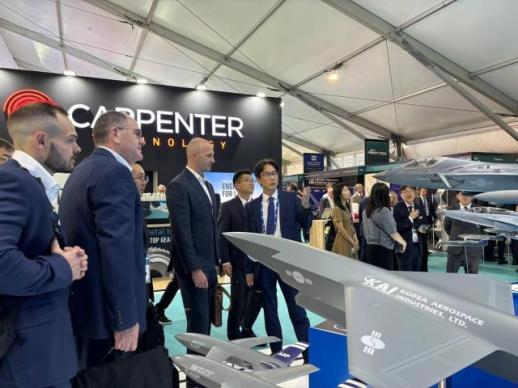 KAI pitches TF-50 for British trainer contract SEOUL, July 21 (AJP) - South Korea's aerospace contractor Korea Aerospace Industries is pitching its TF-50 trainer jet for a Royal Air Force competition that has not yet formally launched, using this week's Farnborough International Airshow in Britain to make its case against rivals with a significant head start. Korea Aerospace Industries (KAI) said Tuesday it is showcasing next-generation air combat systems and aerospace solutions at the airshow, running July 20 to 24, as part of a push into the global market. The event, marking its fortieth edition this year, has drawn 1,500 companies from 41 countries. The Royal Air Force needs to replace its aging Hawk trainer fleet, a requirement the British government's 2025 Strategic Defence Review made explicit, and the Ministry of Defence has committed £360 million ($483.5 million) toward the overhaul, funding that will also cover new aircraft for the Red Arrows aerobatic display team. But the competition to decide which jet gets that money has not formally launched, and KAI is one of several contenders rather than the clear favorite. The leading bid appears to come from Boeing, teamed with BAE Systems and Saab, offering the T-7A Red Hawk with final assembly built in Britain, an advantage that matters because the Defence Review called for the replacement to prioritize British industrial workshare. Leonardo's M-346 and Turkish Aerospace's Hürjet are also in contention. A homegrown design from the British startup Aeralis had been floated as well, but that company has since gone into administration. KAI is instead betting on pedigree. The T-50 family, of which TF-50 is a variant, was designed from the outset as a derivative of the world's favorite jet fighter, the F-16, sharing similar wing geometry, a single-engine layout and cockpit architecture developed with Lockheed Martin, at roughly eighty percent of the F-16's physical size. Air forces that already fly the F-16 have tended to favor it for exactly that reason, since pilots trained on the T-50 family can move into F-16 cockpits with comparatively little relearning. Britain does not fly the F-16, relying instead on the Typhoon and the F-35, so that particular argument carries less direct weight in London than it has in markets where the T-50 family has found buyers. That footprint has grown considerably. The T-50 and FA-50 family now operates in seven countries with roughly 210 aircraft in service, and close to 290 once contracted and in-production units are counted, KAI's largest export presence in its aircraft class. Poland, Indonesia, Malaysia, Iraq, Thailand and the Philippines all fly variants of the jet, and the aircraft is battle-proven, having flown combat missions for the Philippine Air Force during the 2017 Battle of Marawi and, more recently, for Thailand's air force during its December 2025 border conflict with Cambodia. The Philippines has continued expanding its fleet, signing a $700 million deal last year for 12 additional FA-50 Block 70 jets on top of the 12 already in service, bringing its total toward 24 aircraft with deliveries underway. KAI is pairing the TF-50 pitch with FA-50, the light attack variant of the same airframe, aimed more broadly at expanding the company's footprint across Europe. Beyond the trainer competition, KAI used the airshow to lay out a broader vision of where South Korea's combat aircraft ambitions are headed. The company presented an artificial intelligence-based logistics and support system it described as central to future warfare, then put its KF-21 Boramae, a homemade 4.5-generation fighter jet, at the center of its display, flanked by unmanned combat aircraft, a multipurpose drone and a micro synthetic aperture radar communication satellite, framed together as a single manned-unmanned combat network rather than standalone platforms. On the rotary wing side, KAI showed its marine attack helicopter, light armed helicopter and next-generation medium utility helicopter, outlining its concept for how each would be used in future operations. Throughout the run of the airshow, KAI is meeting with senior military officials and executives from partner companies across Europe, the Middle East, Africa and the Americas, marketing its aircraft on NATO interoperability and delivery speed. The company also plans to deepen partnerships with GE, Safran and Martin-Baker, key suppliers of engines, avionics and ejection seats across its aircraft lines. 2026-07-21 17:48:16
-
Breast Cancer Diagnosis Significantly Increases Stroke Risk Research indicates that the risk of ischemic stroke temporarily increases significantly following a breast cancer diagnosis, peaking at 2.9 times higher within the first three months.On July 21, medical professionals reported findings from a research team led by Professor Shin Dong-wook of Samsung Medical Center, Professor Han Kyung-do of Soongsil University, Professor Park Yong-moon of the University of Arkansas for Medical Sciences, and Dr. Jeong Won-young of the University of Pennsylvania (currently at the Cleveland Clinic). They utilized big data from the National Health Insurance Service to compare 107,606 breast cancer surgery patients with 322,818 women without a cancer history.The study focused on women aged 18 and older who were newly diagnosed with breast cancer and had no prior history of stroke between 2010 and 2016. Each breast cancer patient was matched with three women of the same birth year without a cancer history for an average follow-up of 7.2 years.The primary evaluation metric was the occurrence of ischemic stroke, a condition where blood supply to brain tissue is interrupted due to blocked blood vessels, commonly known as cerebral infarction, which can lead to death and disability.Results showed that ischemic stroke occurred in 1,155 (1.07%) of breast cancer surgery patients, compared to 3,698 (1.15%) in the control group. Overall, the risk of ischemic stroke during the follow-up period did not differ significantly between the two groups, with a slight trend toward lower risk over the long term.However, the risk of ischemic stroke was notably elevated immediately after diagnosis.Within one year of diagnosis, the risk of ischemic stroke was 59% higher than in women without cancer. Specifically, the risk was highest at 2.90 times greater within the first three months and remained 2.27 times higher within six months. Over time, the risk gradually decreased, dropping to 17% higher by the three-year mark post-diagnosis.The research team suggested that factors such as a hypercoagulable state due to cancer, inflammatory responses during surgery and treatment, and cardiovascular stress from chemotherapy may have contributed to the increased risk.Professor Park Yong-moon, the lead author, emphasized the importance of considering not only how high the stroke risk is for breast cancer patients but also when that risk is elevated.Professor Shin Dong-wook, the study's principal investigator, noted that patients with cardiovascular risk factors such as hypertension, diabetes, or those who smoke require more careful management during the initial treatment phase. He advised that symptoms like sudden weakness in one limb, facial drooping, slurred speech, or loss of vision in one eye should prompt immediate medical attention for potential ischemic stroke.This study was published in the latest issue of the journal Neurology, the official publication of the American Academy of Neurology.Meanwhile, breast cancer is the most common cancer among women in South Korea. According to the Korean Breast Cancer Society, the age-standardized incidence rate was 68.6 per 100,000 women in 2021.* This article has been translated by AI. 2026-07-21 17:48:00
-
Korea Zinc to Hold Extraordinary Shareholders' Meeting on September 9 Korea Zinc will hold an extraordinary shareholders' meeting on September 9 to elect separate audit committee members and independent directors. The company also approved an investment in the Richmond Valley Project, a renewable energy development initiative in Australia.On July 21, Korea Zinc convened an extraordinary board meeting to finalize the agenda for the upcoming shareholders' meeting. The meeting is scheduled for 10 a.m. on September 9 at the Grand Ballroom of the Mondrian Hotel in Yongsan, Seoul.The agenda includes amendments to the articles of incorporation to expand the separate election of audit committee members, the election of four directors through cumulative voting, and the appointment of independent directors to the audit committee. According to revised commercial law and interpretations from the Ministry of Justice, large listed companies must elect at least two separate audit committee members by September 10.Korea Zinc had proposed related items at its regular shareholders' meeting in March, but they were rejected due to opposition from MBK Partners and Youngpoong. The same items will be addressed again at this extraordinary meeting.Additionally, the company will appoint four independent directors through cumulative voting to fill vacancies created by the resignation of four independent directors in June. This agenda item was proposed by Korea Zinc's shareholders, Yumi Development and the MBK-Youngpoong alliance.A Korea Zinc official stated, "We have been working on amending the articles of incorporation to respond to the implementation of the revised commercial law regarding the expansion of separate election of audit committee members. This extraordinary meeting aims to enhance the stability of board operations and continue efforts to improve shareholder value and governance structure."During the extraordinary board meeting, the company also approved an investment in the Richmond Valley Project, which is being pursued by its Australian subsidiary, Arc Energy. This project involves the integrated construction of a battery energy storage system (BESS) and a solar power plant in New South Wales, Australia.The project will have a storage capacity of 2,200 MWh and a generation capacity of 200 MW, with an operational period of 40 years. It was selected as a long-term energy services contractor (LTESA) by the New South Wales government in 2023, securing a stable revenue base.The company expects that integrating the BESS and solar power plant will reduce capital and operational costs while increasing generation efficiency.Korea Zinc has decided to invest in Sun Metals Holdings (SMH), the parent company of Arc Energy, to fund the construction and operation of the project.A Korea Zinc official remarked, "The Richmond Valley Project is a key initiative in our strategy for business diversification, green energy procurement, and securing stable revenue sources. This investment will play a crucial role in the successful advancement of the project and the establishment of a long-term revenue base."Meanwhile, the management dispute at Korea Zinc has entered its third year. The alliance of Youngpoong and MBK Partners continues to engage in a fierce battle with Chairman Choi Yoon-bum over control of management, involving public offerings, capital increases, and board dominance.* This article has been translated by AI. 2026-07-21 17:48:00