


Latest by
-
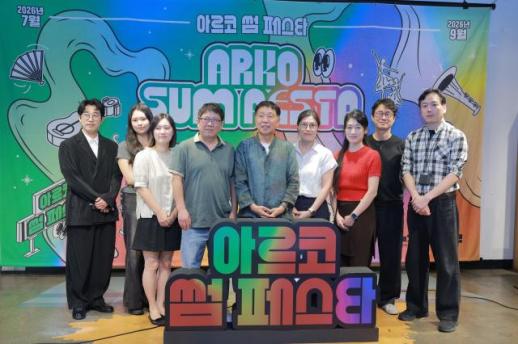 ARKO festivals bring Korea's living traditions to new audiences SEOUL, July 21 (AJP) — "Ulsoo!" The spirited exclamation that punctuates BTS's hit song "Idol" comes from Pansori, Korea's traditional musical storytelling in which audiences cheer performers over the hypnotic yet exhilarating beat of the janggu drum. That same call-and-response energy also defines Madanggeuk, Korea's open-air folk theater where music, dance, satire and audience participation blur the line between performers and spectators. Now, those centuries-old traditions are finding new audiences through ARKO SUM FESTA, as artists reinterpret Korean heritage while organizers work to ensure it remains accessible — even dispatching vans to bring elderly villagers to performances. Arts Council Korea (ARKO) on Tuesday unveiled the second lineup of ARKO SUM FESTA, featuring eight performing arts festivals to be held across the country from August through September. The events complete a 15-festival nationwide program uniting independently organized dance, music, theater and traditional arts festivals under one banner. Traditional arts occupy the center of this year's lineup, with organizers focusing on three challenges: preserving disappearing performance traditions, encouraging younger artists to reinterpret them and expanding access to audiences often left behind. In Busan, the Dongnae Folk Arts Festival, organized by an association established in 1965, will devote its second day to students studying traditional performing arts, highlighting efforts to cultivate the next generation of performers. Association chairman Kim Ik-hyeon warned that enrollment in traditional arts training programs has continued to decline. "Our responsibility is to interpret these traditions and find ways for them to connect with today's generation," Kim said. Scheduled for Sept. 19-20, the festival preserves five local traditions, including the state-designated Dongnae Yaryu mask dance drama, Dongnae Hakchum crane dance and Jisin Balbgi, a traditional ground-blessing ritual. This year's program will also feature a Japanese creative taiko ensemble and performances led by younger practitioners. Younger artists will also take center stage at the 16th Chum & Pan Gomusin Dance Festival, where 24 emerging choreographers — twice last year's number — will collaborate on a joint production. Kim Yeon-hwa of the Korean Dance Association said the festival's traditional dance performances consistently attract more overseas ticket buyers, both online and at the venue, than any of the organization's other events, reflecting growing international interest in Korean dance. Running in Seoul from Aug. 27 to Sept. 5, the festival will present inherited repertoire alongside newly created works and contemporary reinterpretations of traditional Korean dance. Accessibility remains another defining theme. In Cheongju, the Rural Madanggeuk Grand Festival will continue a tradition it began more than two decades ago by operating shuttle vans that transport elderly residents from surrounding villages to live performances. Organizer Kim Chang-gon said the idea emerged after his theater company relocated to a rural village of about 20 households and discovered many older residents rarely attended performances because of transportation difficulties and costs. The company initially operated four vans, providing transportation, meals, performances and return trips. While audiences have since expanded to include families, the transportation service for senior residents remains a core part of the festival. The lineup also stretches beyond traditional performance. British tenor Ian Bostridge will perform Mahler with the Sejong Soloists at the Hic et Nunc! Music Festival on Aug. 26, while the Seoul International Computer Music Festival will merge electronic sound, digital media and traditional Korean instruments under the theme "Time Synthesis." The Chuncheon Performing Arts Festival will feature Liquid Sound, a Korean performance group officially invited to the 2026 Avignon Festival, alongside dance, theater, music and children's productions staged throughout the city. The eight festivals will take place in Seoul, Chuncheon, Busan, Cheongju and Gwangmyeong through Sept. 20, presenting Korea's performing arts not as museum pieces but as living traditions evolving for new generations at home and abroad. 2026-07-21 20:50:37
-
 Korean Labor Minister Kim Young-hoon Marks One Year in Office with Focus on Workplace Safety Kim Young-hoon, the Minister of Employment and Labor under the Yoon Suk-yeol administration, is approaching his one-year anniversary in office. While he has made significant strides in reducing workplace injuries, uncertainties surrounding the implementation of the Yellow Envelope Law (revised Labor Union Act Articles 2 and 3) remain a pressing issue.According to relevant authorities on July 21, Minister Kim has focused on mediating conflicts between labor and management while aligning with the government's policy direction over the past year.From the outset of his tenure, Kim prioritized reducing workplace injuries. He emphasized at a Cabinet meeting early in his term, "I will stake my position on reducing workplace injuries." In response, the Ministry of Labor expanded on-site inspection personnel and conducted intensive inspections at 100,000 high-risk workplaces. Additionally, consulting services were provided to small businesses with fewer than five employees, which had previously been considered blind spots, and special measures were implemented for companies with recurring serious accidents.These policy efforts have yielded results. In the first half of the year, the number of workplace fatalities investigated was 253, a decrease of 34 (11.8%) compared to the same period last year. This marks the lowest figure since the relevant statistics began in 2022, with the largest reduction recorded to date. Notably, the construction industry, identified as a major risk sector, saw 33 fewer fatalities compared to the previous year.The Yellow Envelope Law presents both advantages and challenges. Under this law, primary contractors are recognized as employers even if they do not directly sign labor contracts, and restructuring is included within the scope of collective bargaining. This measure aims to improve the rights of subcontracted workers, ensuring the constitutional labor rights of freedom of association, collective bargaining, and collective action.However, the practical implementation of the Yellow Envelope Law remains a challenge. There is still insufficient clarity on the criteria for determining the extent of influence primary contractors have over the working conditions of subcontracted workers to be recognized as employers. Consequently, requests for clarification on the primary contractors' bargaining obligations have been submitted to the Labor Relations Commission.Even after the Labor Commission makes its determinations, delays in sending out detailed rulings with specific grounds for recognition or non-recognition have led to repeated disputes, as labor and management have been unable to confirm the criteria in a timely manner. Moving forward, Minister Kim's task will be to enhance the predictability of the Yellow Envelope Law and ensure its effective implementation in the field, which means increasing the transparency of rulings and reducing confusion in workplaces.There are still structural challenges that need to be addressed. With a continuous decline in employment among the youth due to changes in social structure, discussions on extending the retirement age must commence. Finding a cooperative solution that prevents youth employment contraction while alleviating social burdens is essential.Additionally, protecting platform workers and reforming employment insurance based on income are pressing issues. The Ministry of Labor has recently commissioned research to develop policies aimed at protecting the rights of workers outside the Labor Standards Act, including platform workers and freelancers. A legislative proposal to amend the Employment Insurance Act and the Enforcement Decree of the Employment and Industrial Accident Insurance Collection Act, which would change the criteria for employment insurance coverage from working hours to income, has also been announced.* This article has been translated by AI. 2026-07-21 20:28:00
-
100 Days Since Jeju Air Tragedy: 1,582 Remains Recovered 12·29 Jeju Air passenger plane tragedy recovery efforts have reached 100 days as of July 21, with 1,582 items believed to be human remains confirmed recovered. According to the 12·29 Jeju Air passenger plane tragedy victims' families association, three additional items presumed to be remains were discovered at the Muan International Airport accident site on this day. This brings the total number of presumed remains recovered since the re-search began on April 13 to 1,582. Of the 1,582 items recovered so far, 195 have been confirmed as remains of the tragedy's victims. DNA analysis is currently being conducted on the remaining items. A total of 833 personal belongings have been collected, along with 1,195.9 kg of debris from the damaged aircraft. The re-search is conducted on weekdays by excavating the soil at the accident site and sifting through it to identify remains and belongings. Although the operation has faced temporary suspensions due to the discovery of contaminants or heavy rainfall, it has continued without significant disruption. Yoon Jae-bok, secretary of the 12·29 Jeju Air passenger plane tragedy victims' families association, stated, "Although 100 days have passed since the re-search began, many families have yet to receive their loved ones' remains. We hope that the recovery of remains and the clarification of the cause of the accident will proceed swiftly."* This article has been translated by AI. 2026-07-21 20:16:00
-
People Power Party Nominates Chairs for Seven Committees Ahead of Vote 국민의힘이 22대 국회 후반기 원 구성에 나선 가운데 자당 몫인 7곳의 상임위원장을 내정했다. 3선인 김성원 의원은 21일 국회에서 기자들과 만나 국민의힘 몫 상임위원장 후보를 발표했다. 보건복지위원장 후보로 이만희 의원, 산업통상자원중소벤처기업위원장 후보 김성원 의원, 교육위원장 후보 김희정 의원, 성평등가족위원장 후보 임이자 의원이 추천됐다. 정보위원장 후보로 추천된 이양수 의원의 경우, 여당과 합의에 따라 1년간 정보위원장직을 맡고, 이후 1년은 농림축산식품해양수산위원장을 맡기로 했다. 국토교통위원장과 외교통일위원장은 김정재·송석준 의원이 1년씩 나눠서 맡기로 했으며 순서는 추후 정하기로 했다. 국회는 23일 본회의를 열고 이들을 상임위원장으로 선출할 것으로 예상된다. 국회법상 상임위원장은 본회의 선거를 거쳐 임명하도록 돼 있다. 앞서 더불어민주당은 11개 상임위원장을 단독 선출했다. 김 의원은 상임위원장 인선에 대해 "관행상 3선 의원들 간 협의를 거쳐 진행돼 왔다"며 "내일 접수 후 모레 의총에서 추인을 거치고 본회의 일정이 (여당과) 합의되면 모레 본회의에서 22대 후반기 국회를 다시 시작하는 시간이 될 것"이라고 말했다.* This article has been translated by AI. 2026-07-21 19:56:00
-
ASEAN Foreign Ministers' Meeting Opens, Urges Restraint in Iran Conflict and Resumption of Hormuz Passage ASEAN (Association of Southeast Asian Nations) foreign ministers have called for restraint in the U.S.-Iran conflict and the resumption of passage through the Strait of Hormuz. The ASEAN Foreign Ministers' Meeting, which opened in Manila, Philippines, will take place over three days until July 23.On July 21, local time, ASEAN expressed "serious concern" in a joint statement regarding the potential resumption of hostilities between the U.S. and Iran, warning that it could further impact trade, food, and energy security in the region.The statement urged all parties involved to exercise maximum restraint and to avoid any actions that could exacerbate the situation.The ministers also emphasized the importance of maintaining maritime safety and security, calling for the safe and uninterrupted passage of vessels and aircraft in the Strait of Hormuz.During the meeting, they plan to discuss the expedited ratification of the ASEAN Petroleum Security Agreement (APSA), which aims to facilitate oil sharing and support among member states in times of crisis, as well as the implementation of the ASEAN Power Grid (APG) agreed upon at the ASEAN summit in May.ASEAN foreign ministers are scheduled to meet with U.S. Secretary of State Marco Rubio on July 22. This meeting is expected to address concerns about the potential impact on U.S. policy in the Asia-Pacific region, particularly regarding China's pressures in the South China Sea and Taiwan as the U.S. focuses on the Iran conflict.* This article has been translated by AI. 2026-07-21 19:24:00
-
Exploring Choices in 'Dead Poets Society' Stage Adaptation On July 21, a press call for the play 'Dead Poets Society' was held at NOL Theater in Daehangno, Seoul, where cast members demonstrated key scenes. "Both Nolan and Keating are important. Their roles change depending on the situation and events," said director Jo Kwang-hwa. This statement may be hard for fans of the 1989 film adaptation to accept, as Keating, who taught freedom, is seen as a captain, while Principal Nolan, who emphasized discipline, symbolizes authority. However, Jo does not divide the two characters into good and evil. He believes that everyone possesses both Keating's and Nolan's traits. He stated, "The essence of this work is to live your life by your own choices. It’s not about avoiding medicine or law; what matters is whether the path you take is your own choice." The stage adaptation, based on the film, focuses on the iconic phrase 'Carpe Diem' and the fundamental questions the work raises. In a reality that pressures students toward exams and social success, teacher John Keating encourages students to write their own 'poetry' rather than conforming to others' expectations. In contrast, Principal Nolan prioritizes discipline and achievement, presenting admission to prestigious universities as the standard for a successful life. Jo does not interpret their relationship as a simple conflict. He warns that while Keating tells students to 'live your life,' he does not mean to destroy it. "Schools symbolize oppression and discipline, but they also provide golden opportunities. It is because of principals like Nolan that many students can attend Ivy League schools, which is also a significant value," he explained. He emphasized that both medicine and law, as well as dreams and romance, are important, but ultimately, what matters is whether one follows a path of their own choosing. Jo also clarified that the work should not be read solely as a critique of South Korea's educational reality. He explained, "In schools, there are teachers and students, and in society, there are bosses and new employees. The military has seniors and juniors, and in life, there are those who have walked the path before us." He described the play as addressing universal relationships between people. Park Ji-il, who plays both Principal Nolan and Neil's father, Perry, in a dual role, also finds the message of the play in human relationships. Both characters love their students and children but impose their beliefs about the right way to live onto them. Park stated, "Their ways of loving lack compassion, dignity, and subjectivity. This work makes us reflect on how much we care for and respect those around us." Rather than designing others' lives, the goal is to support them in finding their own paths. Cha In-pyo, who plays Keating in a triple cast, interprets Keating as someone who embodies this approach. "Regardless of age, we all dream of change and want to break free from constraints. If we are alive, we all have such hopes. I aim to portray Keating as a colleague who reminds us that it is okay to have such hopes and that there are many frameworks in the world," he said. The play will run until September 13 at NOL Theater in Daehangno.* This article has been translated by AI. 2026-07-21 19:00:00
-
South Korea's Economic Team Marks One Year with Growth and Inflation Management As South Korea's economic team, led by Deputy Prime Minister and Minister of Economy and Finance Koo Yun-cheol, marks its first anniversary, key achievements include economic recovery and inflation stabilization. However, analysts note that the growth is heavily reliant on the semiconductor boom, and the ability to adjust policies following the reorganization of economic ministries remains a challenge.According to the Ministry of Economy and Finance on July 21, the government implemented policies to stimulate consumption and stabilize livelihoods in response to economic contraction caused by the initial martial law and increased external uncertainties. By distributing consumer recovery coupons and expanding fiscal spending, the government supported domestic demand, resulting in a 3.6% economic growth rate in the first quarter of this year. This growth rate is the highest among major OECD countries, with a quarter-on-quarter increase of 1.7%.The government also assessed that the recovery in growth has improved its tax revenue base. The increase in corporate performance due to the recovery in growth has led to higher tax revenues, thereby expanding fiscal capacity. Domestic research institutions and foreign investment banks have subsequently revised their growth forecasts for this year upward, projecting a mid-2% range.Managing consumer prices has also been highlighted as a significant achievement. The government implemented a maximum price system for oil for the first time in 29 years and reduced fuel taxes, which helped lower the rate of consumer price increases. The government analyzed that this led to a 0.6 percentage point decrease in consumer prices in March and a 1.2 percentage point decrease in April.Additionally, a special task force led by the Deputy Prime Minister focused on managing essential living costs, including school uniforms, management fees, academy fees, and communication expenses. As a result, prices for certain processed foods, such as cooking oil, flour, and sugar, have shown a downward trend.Building on this momentum, the Ministry of Economy and Finance plans to present a '3-4-5 Vision' for the second half of the year, aiming for a potential growth rate of 3%, becoming the world's fourth-largest exporter, and achieving a national income of $50,000. The government has identified semiconductors, artificial intelligence (AI) data centers, and physical AI as three major mega-projects to secure future growth drivers and enhance industrial competitiveness.However, there are significant challenges ahead regarding economic policy. Concerns have been raised that this year's growth improvement is largely attributed to the strong performance of semiconductor exports rather than the effectiveness of government policies. There are fears that a slowdown in the semiconductor market could weaken growth again.Unresolved issues such as high exchange rates and instability in the real estate market are also seen as potential risks. Fluctuations in raw material prices and exchange rates may increase due to changes in international circumstances, and ongoing regional disparities and price instability in the real estate market could hinder economic recovery.The ability to coordinate policies following the reorganization of economic ministries will also be a key factor in future performance. There have been ongoing concerns that the separation of the Ministry of Economy and Finance into the Ministry of Economy and Finance and the Ministry of Planning and Budget has weakened policy connectivity. Therefore, how effectively Deputy Prime Minister Koo can coordinate policies between ministries will likely be a major evaluation criterion for the economic team in its second year.* This article has been translated by AI. 2026-07-21 18:52:00
-
Kim Jeong-gwan Leads Trade Negotiations and Export Records Amid Economic Challenges Kim Jeong-gwan, Minister of Trade, Industry and Energy, has focused on reducing external uncertainties over the past year, responding to U.S. tariff pressures and the energy supply crisis caused by the Middle East conflict. This effort coincided with a boom in artificial intelligence (AI) semiconductors, leading to record exports.According to relevant ministries on July 21, Minister Kim took the lead in U.S.-Korea tariff negotiations shortly after taking office last year. During this process, he held several face-to-face and virtual meetings with his counterpart, U.S. Secretary of Commerce Gina Raimondo. A notable moment in the negotiations occurred when Secretary Raimondo traveled from Washington, D.C., to New York and then to Scotland, before returning to the U.S., marking a pivotal point in the last-minute talks.As a result of the negotiations, the U.S. agreed to lower reciprocal tariffs applicable to South Korea and reduced the Section 232 tariffs on automobiles and parts to 15%. The agreement also ensured that South Korea would not face unfavorable treatment compared to major competitors regarding future semiconductor tariffs. This significantly alleviated uncertainties for South Korean exporters.With the reduction of tariff uncertainties and the AI semiconductor boom, exports have reached new heights. Last month, South Korea's monthly export figures surpassed $100 billion for the first time, with first-half export performance nearing $50 billion. If the current trend continues, annual exports are projected to exceed $1 trillion for the first time.In response to the energy crisis stemming from the Middle East conflict, the government has managed to maintain relative stability. In light of the U.S.-Iran tensions and the blockade of the Strait of Hormuz, efforts have focused on securing alternative crude oil supplies. The government introduced a strategic oil swap to supply its reserves first when private companies confirm alternative oil shipments, and implemented a maximum price system for petroleum products to stabilize supply and demand.The M.AX initiative, touted as a future growth driver for South Korea, is expanding beyond its initial participation phase into investment and commercialization. Launched in September last year by the Ministry of Trade, Industry and Energy in collaboration with over 1,000 companies, universities, and research institutions, the M.AX Alliance now includes more than 1,300 participants. This month, the Ministry and the Financial Services Commission also initiated the 'M.AX Frontier Project.'However, addressing export concentration remains a challenge. With semiconductors accounting for nearly 40% of total exports, any downturn in AI investment or memory market conditions could destabilize overall export performance.Connecting the $350 billion strategic investment in the U.S. to actual business operations is expected to influence the second-year results. It is crucial to ensure that the first investment projects secure commercial viability and the potential for principal and interest recovery, leading to domestic companies winning contracts and entering supply chains. Responding to additional U.S. tariffs and non-tariff barriers also remains a task ahead.* This article has been translated by AI. 2026-07-21 18:52:00
-
Economic Growth Driven by Semiconductors Amid Inflation and Employment Challenges The economic team of President Lee Jae-myung marks its first anniversary, with evaluations indicating a sharp rebound in growth and export figures, largely driven by strong semiconductor exports. However, persistent high inflation, currency fluctuations, and employment challenges remain significant hurdles in translating these improvements into tangible economic recovery for the public.According to relevant ministries, Deputy Prime Minister and Minister of Economy and Finance Koo Yun-cheol and Minister of Trade, Industry and Energy Kim Jeong-kwan held their inauguration ceremonies on July 21 last year, officially commencing their duties. Minister of Climate, Energy and Environment Kim Sung-hwan followed suit on July 22, and Minister of Employment and Labor Kim Young-hoon took office on July 24.The first economic team faced numerous challenges amid domestic and international uncertainties, particularly due to prolonged domestic sluggishness and increasing tariff uncertainties from the United States. Concerns grew that the annual growth rate could remain around 0% after experiencing negative growth in the first quarter of last year.However, the government focused on economic recovery through supplementary budgets, increased investment in advanced industries, and export support. The surge in exports, particularly in semiconductors, fueled by expanded artificial intelligence (AI) investments, led to a notable improvement in the economic performance indicators.South Korea's real GDP growth rate was 1.0% last year, but it rebounded with a 1.8% growth in the first quarter of this year compared to the previous quarter, largely due to increased exports in information technology (IT) products, including semiconductors. Reflecting this trend, the government recently revised its growth forecast for this year from 2.0% to 3.0%, an increase of one percentage point.Exports have been the key driver of economic recovery. According to the Korea Customs Service, last year's exports reached $709.47 billion, surpassing the $700 billion mark for the first time. In the first half of this year, exports also recorded a 48.3% increase year-on-year, totaling $496.35 billion, with semiconductor exports alone surging over 160% in the same period.However, the growth led by semiconductors has sparked debate, as the semiconductor sector accounted for nearly 40% of total exports in the first half of this year, indicating a concentration of growth in specific sectors. This has resulted in a lack of sufficient spillover effects on employment and overall domestic demand.Last month, the number of employed individuals increased by only 63,000 compared to a year earlier. Employment in the manufacturing sector decreased by 97,000, marking a 24-month consecutive decline, while the youth employment rate has shrunk for 26 months. In contrast, employment for those aged 60 and over increased by 211,000, raising concerns about the quality of jobs.Inflation and currency pressures remain significant. The consumer price index in June rose by 3.2% compared to a year earlier, marking the second consecutive month above 3%. The living cost index, which closely reflects consumer sentiment, increased by 3.4%, outpacing the overall inflation rate. Although the won-dollar exchange rate has stabilized slightly, it continues to hover around 1,470 to 1,480 won, exacerbating import prices and cost burdens for businesses.As the economic team enters its second year, its primary challenge will be to broaden the semiconductor-driven 'K-shaped recovery' to encompass domestic demand, regional development, small and medium-sized enterprises, and job creation. While the first year laid the groundwork for economic recovery, the focus now shifts to fostering growth across the economy through domestic demand and employment recovery, as well as investment outside the capital region.The government is expected to intensify its efforts on three major projects: semiconductors, physical AI, and AI data centers. Achieving this will require attracting significant private investment and ensuring the provision of essential infrastructure, including power supply, water resources, and suitable locations. Additionally, the government must manage external pressures such as U.S. tariff policies, high oil prices from the Middle East, currency fluctuations, real estate instability, and fiscal burdens.President Lee Jae-myung emphasized during a Cabinet meeting at the Blue House that now is the time to accelerate government initiatives as the administration enters its second year. He stated, "The first year was a preparatory phase, and now we must move forward with greater urgency in governance."* This article has been translated by AI. 2026-07-21 18:48:00
-
Bond Yields Rise Following Rate Hike, Increasing Loan Costs in Second Half Government bond yields in South Korea continue to rise, reflecting the Bank of Korea's shift to a tightening cycle and expectations for further interest rate hikes. This increase is expected to push loan interest rates into a significant upward trend in the second half of the year. As the central bank raises rates and the government maintains its stance on managing household debt, the financial burden on borrowers is likely to grow.According to the Korea Financial Investment Association, the yield on three-year government bonds closed at 3.867% on July 21, up 93.2 basis points from the end of last year (2.935%). Similarly, the yield on ten-year government bonds rose from 3.385% to 4.328%, an increase of 94.3 basis points during the same period.This rise in government bond yields has been driven by geopolitical risks in the Middle East, inflation concerns, and expectations of interest rate hikes. Notably, the Bank of Korea raised its benchmark rate from 2.50% to 2.75% on July 16 and hinted at the possibility of further increases, intensifying upward pressure on bond yields.The increase in market interest rates raises banks' funding costs, which in turn leads to higher loan interest rates. For instance, the yield on one-year bank bonds (AAA, unsecured) rose from 2.816% at the end of last year to 3.737% recently, an increase of 92.1 basis points. The one-year bank bond yield is a key indicator of banks' short-term funding costs, and rising costs can exert upward pressure on loan reference rates such as the COFIX.The key reference rate for mixed-rate (fixed-rate) mortgage loans, the five-year bank bond yield, also increased from 3.495% at the end of last year to 4.480%, while the three-year bank bond yield rose from 3.205% to 4.258%, a jump of 105.3 basis points.Loan interest rates are showing signs of rising again. According to the Bank of Korea, the interest rate on new household loans from deposit banks fell from 4.51% in March to 4.43% in April but rebounded to 4.46% in May. As market interest rates continue to rise and the benchmark rate is increased, upward pressure on loan interest rates is expected to intensify.In this context, the burden on borrowers is anticipated to increase. As of the end of May, the proportion of variable-rate loans among household loans was 75.4%, with variable-rate mortgages making up 58.4%. Variable-rate loans are structured to reflect changes in reference rates like COFIX relatively quickly, meaning that if the trend of rising benchmark rates continues, borrowers with variable rates are likely to face increased interest burdens.It is also expected that banks will raise their lending thresholds. The Bank of Korea indicated that the comprehensive index of banks' lending attitudes is projected to drop to -7 in the third quarter, down from -1 in the first quarter and -2 in the second quarter. A negative lending attitude index indicates a tightening of lending criteria. The index for household mortgage loans is expected to be -14, while the index for general household loans is projected at -11, with household credit risk remaining high. The Bank of Korea analyzed that the deterioration of repayment capacity among vulnerable borrowers and the government's household debt management policy will influence banks' tightening of lending standards.As loan interest rates rise and lending criteria tighten, the demand for funds among borrowers is expected to persist, while the conditions for securing funds will become increasingly challenging. The survey indicated that despite the tightening of lending standards, demand for credit loans for living expenses and stock market investments is expected to continue. In contrast, housing-related loans are projected to decline due to increased regulations and rising interest rates.Market analysts believe that the upward trend in bond yields will likely continue for the time being due to the shift to a tightening cycle. Hana Securities stated that if the second-quarter economic growth rate hovers around 0.4% compared to the previous quarter, there is a strong possibility that the Bank of Korea will implement consecutive interest rate hikes in August. Park Jun-woo, a researcher at Hana Securities, noted, "If expectations for further interest rate hikes persist, the yields on three-year and ten-year government bonds by the end of the year could rise to levels 10 to 20 basis points higher than the previous forecasts of 4.0% and 4.3%, respectively."* This article has been translated by AI. 2026-07-21 18:48:00