


Latest by
-
 Han Byeong-do: Creating a Forum to Alleviate Public Anxiety Over Criminal Procedure Law Reform Han Byeong-do, acting leader of the Democratic Party and floor leader, stated on July 21 that a forum has been established to alleviate even 1% of the public's anxiety regarding the proposed amendments to the Criminal Procedure Law, part of judicial reform.During a policy meeting held at the National Assembly with experts, Han remarked, "Judicial reform is a mandate from the people to correct the abuses of unchecked power and to create a society where all are equal."He emphasized, "Establishing a system where investigative agencies conduct investigations and prosecutorial agencies handle prosecutions is common sense and a task assigned to us."Han further noted, "To complete the reform of fully separating investigation and prosecution, we must finalize the amendments to the Criminal Procedure Law without delay."He added, "The Democratic Party will make every effort to minimize gaps in protecting vulnerable members of society and to establish a responsible investigation system."Meanwhile, the Democratic Party is pushing for amendments to the Criminal Procedure Law that include the abolition of supplementary investigation authority to ensure the normal launch of the Serious Crimes Investigation Agency and the Prosecution Agency in October. However, there are concerns within the party that abolishing the supplementary investigation authority could have adverse effects on victims in exceptional cases such as sexual violence and child and elder abuse, leading to calls for its retention.* This article has been translated by AI. 2026-07-21 16:12:00
-
Chinese Stock Market Rallies on Stimulus Hopes, Semiconductor Sector Surges The Chinese stock market showed a strong upward trend on July 21, following a successful rebound the previous day. Analysts attribute this positive movement to the market's favorable assessment of the Chinese government's commitment to support the stock market.On this day, the Shanghai Composite Index closed up 1.80% at 3,864.57, the Shenzhen Component Index rose 4.81% to 14,264.74, and the ChiNext Index increased by 7.09% to 3,687.11.The China Securities Regulatory Commission convened a meeting with major securities firms and asset management companies the day before. During this meeting, the regulatory body expressed its determination to make every effort to stabilize the stock market. With the government's commitment to market stabilization confirmed, the Chinese stock market began to rise from the morning session, with gains accelerating in the afternoon.The semiconductor sector also contributed to the index's rise. Although the sector had recently experienced a sharp decline, bargain-hunting activity on this day was noted, with analysts suggesting that this represented a strong technical rebound.Additionally, news that the United States is considering a ceasefire with Iran positively impacted the stock market.Expectations are also building for the upcoming Politburo meeting of the Chinese Communist Party at the end of the month, where plans for additional stimulus measures for the second half of the year are anticipated. China's GDP growth rate for the second quarter was 4.3%, below expectations, increasing the need for further stimulus announcements.Fangzheng Securities stated in a report that the long-term positive trend of the Chinese economy remains unchanged, and the valuation of the Chinese stock market is still within a reasonable range. They noted that long-term investment capital continues to flow into the market, indicating many positive aspects for the Chinese stock market.Notable stocks included those in the semiconductor sector, with companies like Northern Huachuang and Zhengfan Technology hitting their daily price limits.Reports emerged that Samsung Electronics is considering doubling the initial production scale at its Taylor, Texas, facility, generating optimism about the semiconductor boom. Additionally, TSMC announced an increase in its annual capital expenditure from $60 billion to $64 billion, which also served as a positive factor. Morgan Stanley projected that the semiconductor supply shortage would persist until 2028.Stocks related to zirconia also showed strength, with Dongfang Zirconium and Guocera Materials reaching their daily price limits.Guocera Materials announced on the night of July 20 that it would raise the price of zirconia powder by 40%. Zirconia is used as a raw material for MLCCs (multi-layer ceramic capacitors), and the ongoing boom in MLCCs has led to an increase in the price of this raw material.Meanwhile, the People's Bank of China set the yuan's central parity rate against the dollar at 6.7917 yuan on July 21, a decrease of 0.0031 yuan from the previous trading day, reflecting a 0.046% increase in the value of the yuan.* This article has been translated by AI. 2026-07-21 16:12:00
-
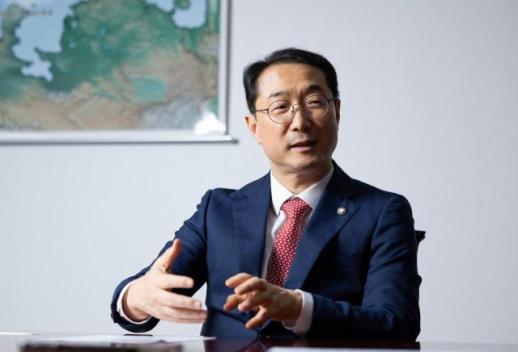 Lawmaker Kim Gunn seeks legal mandate to shield companies abroad SEOUL, July 21 (AJP) - A former diplomat turned lawmaker introduced legislation Tuesday that would give South Korean embassies and consulates an explicit legal mandate to help Korean companies navigate sudden regulatory changes and other obstacles overseas. Rep. Kim Gunn of the main opposition People Power Party proposed the bill, tentatively titled the Act on Support for Overseas-Expanding Companies by Diplomatic Missions, aiming to turn South Korea's overseas missions into more systematic support centers for businesses operating abroad or preparing to expand into new markets. South Korean companies have been pushing further into overseas investment and competing for major construction, engineering, infrastructure and natural resources projects even as economic nationalism intensifies and global supply chains get reorganized around the world. That combination has left companies exposed to risks that go beyond ordinary market competition, since a change in a host country's laws, administrative procedures or industrial policy can upend the conditions a company is operating under with little warning. South Korean missions, Kim's office said, have lacked a clear enough legal basis to step in and help when that happens. Under the bill, the foreign minister would be authorized to set policy for supporting South Korean companies overseas, and ambassadors, consuls general and other heads of mission would be required to carry out that policy according to local conditions. Companies could request information from a mission about a host country's economic and industrial conditions, its investment environment, and changes underway to local laws, regulations or administrative procedures. The mission could collect and analyze that material, seeking cooperation from other government agencies as needed. Missions could also assist companies facing difficulties with local authorities, drawing on official communication channels, local networks and negotiating capacity. The bill stops short of giving companies an unrestricted right to diplomatic intervention. Missions would be required to treat applicants fairly, provide only the minimum support deemed necessary, and avoid granting improper favors to any particular company or individual. A mission would have to reject a request if providing the information could damage diplomatic relations or national security, if the assistance sought would involve breaking the law, or under other grounds set by presidential decree, and the company would have to be told why. The bill also includes confidentiality provisions barring current and former diplomatic personnel from disclosing trade secrets or other sensitive corporate information obtained in the course of their duties, and would allow the foreign minister to survey South Korean companies about their overseas operations and difficulties to help shape future support policy. Kim, 59, is a first-term proportional-representation lawmaker who entered the National Assembly in 2024 after more than three decades in the foreign service. He joined the Foreign Ministry in 1989 and built much of his career around diplomacy involving the United States, China and North Korea, holding posts including deputy minister for political affairs, consul general in Vancouver and ambassador to Britain before serving as special representative for Korean Peninsula peace and security affairs, South Korea's chief envoy on North Korea's nuclear program. If passed, the legislation would take effect six months after its promulgation. "South Korea should make active use of its overseas diplomatic network so that Korean companies do not suffer disadvantages from sudden institutional changes or regulations imposed by host governments," Kim said. "Through this legislation, I hope our diplomatic missions around the world will establish themselves as support hubs that provide practical assistance for Korean companies' overseas activities." 2026-07-21 16:09:55
-
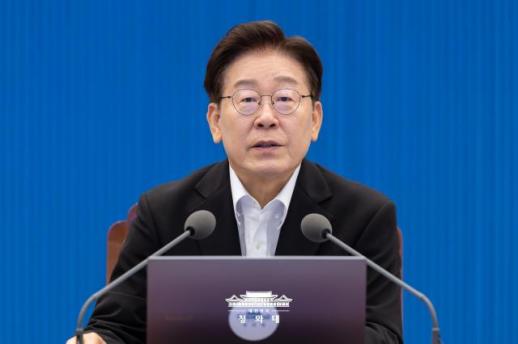 Lee orders review of leveraged chip ETFs after retail investor losses SEOUL, July 21 (AJP) — President Lee Jae Myung on Tuesday ordered financial authorities to draw up "swift and thorough" stabilization measures for controversial single-stock leveraged exchange-traded funds (ETFs), saying the government must address mounting losses suffered by retail investors who piled into the products after regulators approved their launch. Speaking at a Cabinet meeting, Lee pointed to the divided views over leveraged ETFs linked to Samsung Electronics and SK hynix, which were introduced in late May when both semiconductor giants were enjoying a powerful rally that had helped propel the benchmark KOSPI to record highs. The president said the products had helped keep domestic capital from flowing overseas but had also amplified market volatility. Financial Services Commission Chairman Lee Eog-weon defended the products, saying similar single-stock leveraged ETFs are widely available in overseas markets and were introduced as part of efforts to advance South Korea's capital market. "They nonetheless have become a source of grievance for investors, haven't they?" President Lee replied. He said public criticism was increasingly being directed at the government because the ETFs were launched near the peak of the semiconductor rally before sharp declines inflicted heavy losses on retail investors. Calling for authorities to consider "various factors," Lee instructed regulators to prepare comprehensive measures to stabilize the market and better protect investors while reviewing the role of such high-risk investment products. 2026-07-21 16:06:29
-
Trump's New Tariff Strategy: Section 338 of the Tariff Act Revived Donald Trump has introduced a new tariff strategy. After facing a setback from the U.S. Supreme Court regarding tariffs based on the International Emergency Economic Powers Act (IEEPA), he has now imposed a 50% tariff on Canadian products using Section 338 of the Tariff Act of 1930. This provision, which had been largely dormant for decades, has been revived as a new trade weapon in Trump's arsenal. Section 338 allows the president to impose additional tariffs if a foreign government discriminates against U.S. products or takes actions detrimental to U.S. commerce. This provision has rarely been used in modern trade policy, and many may not even be aware of its existence. However, this lack of familiarity may actually appeal to Trump, as it provides a new means to enhance negotiating power without being constrained by existing trade policies. The differences become even clearer when compared to other provisions. The Trade Act Section 122, currently used as a basis for global tariffs, allows for a maximum tariff of only 15% for 150 days, making both the duration and the tariff rate limited. Additionally, the Trade Expansion Act Section 232, which is used for tariffs on specific items like steel and aluminum, is limited to cases where imports are deemed a threat to national security. In contrast, Section 301, which is more comprehensive, requires extensive procedures including investigations, public hearings, and stakeholder input. Section 338, however, does not demand such complex procedures while offering a broader scope for enforcement than Sections 122 and 232. Of course, Section 338 is not free from legal controversy. There are few real-world applications, and it may still face judicial scrutiny. However, the key point is not the ultimate fate of this provision, but rather that Trump continues to explore new legal authorities to advance his tariff policies. This case exemplifies the characteristics of Trump's trade policy. When one legal avenue is blocked, he seeks out another, even utilizing provisions that have rarely been employed. Therefore, it is highly likely that Trump will continue to actively leverage various legal provisions to pursue his tariff agenda. This situation is not just a concern for the United States; it also directly impacts South Korea. With many industries, such as automobiles, semiconductors, steel, and batteries, heavily reliant on the U.S. market, changes in U.S. trade policy will directly affect the business environment for South Korean companies. Even if South Korea is not the direct target, new U.S. tariffs can disrupt global supply chains and increase uncertainty. As tariffs are used more frequently as a negotiating tool, the uncertainty for businesses will inevitably grow. Thus, South Korea must go beyond merely assessing which products will be subject to tariffs and closely analyze which legal provisions the U.S. may invoke. A system for continuous monitoring of the structure of U.S. trade law, presidential authority, and potential judicial rulings must be established. The upcoming trade war is likely to be less about tariff rates and more about competition in laws and regulations. This dynamic is expected to persist even after the Trump administration ends, continuing to exert influence. South Korea must now develop the ability to interpret changes in U.S. trade law as part of its national competitiveness. It is time to prepare for any 'new weapons' that the U.S. may deploy without being shaken by them.* This article has been translated by AI. 2026-07-21 16:04:00
-
President Lee Jae-myung Becomes Homeowner After Selling Apartment Amid Loan Regulations President Lee Jae-myung has sold his apartment in the Su-nae-dong area of Bundang, Seongnam, for 2.9 billion won, becoming a homeowner for the first time in 28 years. The property, which he owned since 1998, was transferred on July 16, along with a mortgage of 1.77 billion won held by the President and his wife. While the exact amount of unpaid balance has not been disclosed, the buyer received ownership before paying the full purchase price, with the President securing a claim against the property as collateral.The timing of the transaction is notable. The apartment is located in Yangji Village, designated as a leading area for redevelopment of the first new town, with the application for a project implementer designation completed last month. It is expected that the designation will be announced by the end of this month. In speculative areas, rights to properties acquired after the designation may be limited. The timing of the ownership transfer, just two days after the contract, raises questions about the redevelopment schedule.There is a legal distinction between financial loan regulations and private agreements regarding unpaid balances. The transaction, where the seller established a mortgage to secure the unpaid balance, does not appear to be illegal. The Bundang District Office has stated that there were no issues or special privileges during the land transaction approval and real estate reporting processes. The concern lies not in legal violations but in the gap between the government's loan regulations and the President's transaction method. Last October, the government imposed a limit of 200 million won on housing loans for properties exceeding 2.5 billion won in the metropolitan area and regulated zones. The mortgage applicable to this 2.9 billion won apartment is also capped at 200 million won. However, the President allowed the buyer to defer payment of the balance while securing a mortgage of around 1.7 billion won on the property, effectively easing the buyer's initial financial burden due to the loan regulations.The Blue House explained that while the President was not obligated to sell his home, he sold it for 2.9 billion won, lower than surrounding listings, to demonstrate a commitment to real estate normalization. They stated that the mortgage was established due to the buyer's circumstances. The buyers are expected to sell their current apartment by the end of October and pay the balance, leading to the cancellation of the mortgage. While the circumstances are becoming clearer, the actual amount of unpaid balance and interest terms have not been disclosed. Although ownership has been transferred, the transaction is not yet fully settled.It is not necessary for the President to sell a home at a low price, nor should he favor the buyer. However, as the highest authority of a government enforcing strict loan regulations, the President bears a greater responsibility to explain the unusual terms of this transaction. The Blue House should transparently disclose the actual amount of unpaid balance, interest rates, and repayment terms related to the transaction.Trust in real estate policy is not gained merely by imposing strict regulations. The credibility of the policy is strengthened when those who create it respect its intent in their own transactions. More important than the symbolism of the President becoming a homeowner is whether the process aligns with the principles the government has demanded from the public. If the focus remains solely on the intent to normalize without addressing the substantial mortgage, it will be difficult to maintain trust in the policy.* This article has been translated by AI. 2026-07-21 16:04:00
-
Second Special Prosecutor Extension Bill Passes in National Assembly Amid Opposition Claims of Political Suppression 2nd Special Prosecutor's investigation extension bill passed the National Assembly on July 21, led by the ruling party. The second special prosecutor, tasked with investigating remaining allegations following the three major special prosecutors (insurrection, Kim Geon-hee, and Chae Hae-byeong), will have its investigation period extended until August 23. During the session, the National Assembly approved the bill titled 'Partial Amendment to the Act on the Appointment of Special Prosecutors for Investigating Insurrection, Foreign Exchange, and State Affairs Manipulation by Yoon Suk Yeol and Kim Geon-hee' with unanimous support from 173 lawmakers present. Members of the People Power Party and the Reform Party abstained from the vote. A filibuster initiated immediately after the bill was introduced ended after 24 hours, following agreement from lawmakers of the Democratic Party and other ruling coalition members. The amendment extends the investigation period of the second special prosecutor by 30 days and increases the cap on dispatched personnel from 130 to 150. It also includes provisions to investigate acts that obstruct audits by public officials and allows for the designation of up to 10 special prosecutors with at least five years of legal experience as prosecutors for maintaining public prosecution. The People Power Party opposed the bill's introduction by the Democratic Party, responding with a filibuster. Floor leader Jeong Jeom-sik stated during a meeting that the special prosecutor had demanded the attendance of opposition politicians just before the end of the investigation period, claiming that the extension was a blatant lobbying effort by the ruling party, revealing the essence of the special prosecutor as a means of suppressing the opposition. He further criticized the special prosecutor's extension as merely a continuation of the three major special prosecutors, stating that it was a waste of national investigative resources, ultimately passing the burden onto the public. Starting from the previous day, lawmakers including Yoon Sang-hyun, Kwak Gyu-taek, Lee Jin-sook, Kim Tae-kyu, and Yoon Yong-geun participated in the filibuster. However, the filibuster was forcibly concluded after 24 hours due to the ruling coalition's agreement to end the debate.* This article has been translated by AI. 2026-07-21 16:04:00
-
Houthi Rebels Target Saudi Oil Routes Amid Rising Tensions in the Red Sea As tensions between the U.S. and Iran escalate, shipping traffic through the Strait of Hormuz has plummeted, causing instability in maritime logistics that has now spread to the Red Sea. The Iran-aligned Houthi rebels in Yemen have declared a maritime blockade against Saudi Arabia, which has redirected its oil exports to avoid the Strait.According to shipping analytics firm Kpler, only four vessels carrying commodities passed through the Strait of Hormuz on July 20, a decrease from seven the previous day. No Very Large Crude Carriers (VLCCs) or liquefied natural gas (LNG) carriers were reported.Attacks on vessels have continued, with reports on July 21 indicating that a tanker was struck by a projectile near the Strait of Hormuz, prompting crew members to abandon ship. Two other tankers were attacked the previous day in the same vicinity.With oil transport through Hormuz disrupted, Saudi Arabia has significantly increased its reliance on the Red Sea. An analysis by Reuters of data from Kpler and Signal Ocean revealed that over 70% of Saudi oil exports are now being routed to the Red Sea port of Yanbu.Shipments from Yanbu have surged to an average of about 4 million barrels per day, more than quadrupling from 973,000 barrels per day a year ago. The volume of oil passing through the Bab el-Mandeb Strait also rose to 7.4 million barrels per day last month, up from 4.2 million barrels a year earlier.However, the Red Sea route, which was seen as a safer alternative, is now facing new threats. The Houthis announced their intention to impose a maritime blockade, citing Saudi attacks on the international airport in Sana'a and the blockade of ports under their control.While the specifics of the blockade have not been disclosed, concerns are growing that the Houthis may target Saudi vessels in this critical maritime corridor, leading to a rapid increase in shipping risk costs.According to Reuters, the war risk insurance premiums for vessels transiting the Red Sea have jumped from about 0.3% to 0.75% of the vessel's value since the Houthi blockade announcement. If passage through Bab el-Mandeb is restricted, Saudi oil bound for Asia would need to navigate around the southern tip of Africa, significantly increasing transport times and costs.In the past, attacks by the Houthis on commercial vessels led to significant disruptions in global logistics. The International Monetary Fund (IMF) reported that trade volumes through the Suez Canal fell by 50% in the first two months of 2024 compared to the same period the previous year.The United Nations Conference on Trade and Development (UNCTAD) noted that as vessels began to reroute around the Cape of Good Hope, container shipping rates from Shanghai surged by an average of 122% and by 256% for shipments to Europe between early December 2023 and early February 2024.Now, with operations in the Strait of Hormuz severely curtailed, there are concerns that disruptions could extend to Bab el-Mandeb, further straining oil and logistics transport.Notably, the primary destinations for oil and petroleum products departing from Yanbu include South Korea, Japan, China, Singapore, and India, meaning that Asia's energy supply chain could be directly impacted. The volume of oil passing through Bab el-Mandeb last month accounted for about 7% of global oil production.In response, Saudi Arabia has taken action. The Saudi-led Arab coalition stated that it is implementing measures to protect commercial vessels transiting Bab el-Mandeb and will respond swiftly and decisively if the Houthis attack ships.Meanwhile, U.S. forces have been conducting airstrikes against Iran for ten consecutive days, aiming to weaken Iran's ability to attack commercial vessels. President Donald Trump recently warned that Iran would face severe consequences for each U.S. military casualty.Amid escalating hostilities, efforts for a ceasefire continue. Mediators have proposed a ten-day truce to revive a temporary agreement reached last month between the U.S. and Iran, although both sides have yet to accept the proposal.* This article has been translated by AI. 2026-07-21 16:00:00
-
Bukwang Pharmaceutical Reports First Half Revenue Exceeding 100 Billion Won Bukwang Pharmaceutical has reported that its revenue for the first half of the year has surpassed 100 billion won for the first time in the company's history. While revenue grew by double digits, profitability significantly declined due to rising costs.On July 21, Bukwang announced that it recorded 104.8 billion won in revenue and 2.5 billion won in operating profit for the first half of the year. This represents a 15.9% increase in revenue compared to the same period last year, while operating profit fell by 49.9%.The revenue growth was attributed to improved performance from Bukwang Medica and growth in key products. However, the decline in operating profit was due to increased cost burdens from rising exchange rates, higher outsourcing costs related to the establishment of automated production lines, and temporary increases in initial marketing expenses for new product launches.Prescription drugs also continued to show growth. The prescription amounts for the diabetic neuropathy treatments 'Dexide' and 'Chioctaside' increased by 7% compared to the same period last year.The central nervous system (CNS) product line also experienced growth. The prescription amounts for strategic products such as the schizophrenia and bipolar disorder treatment 'Latuda', the insomnia treatment 'Zaleplon', and the epilepsy treatment 'Orphir' increased by 32% compared to the first half of last year.During an investor relations event, the company disclosed its R&D status. Bukwang received approval for an Investigational New Drug (IND) application for a Phase 3 clinical trial to expand the indications for 'Latuda' as an adjunctive treatment for major depressive disorder (MDD). The company plans to use this to broaden the prescription range of 'Latuda' and enhance its product competitiveness.Subsidiary Contera Pharma has applied for an IND for a global Phase 2 clinical trial of 'CP-012', a treatment for morning akinesia in Parkinson's disease. This trial will involve 80 adult Parkinson's patients experiencing morning off symptoms, and will be conducted at 25 specialized medical institutions in the United States, Poland, Italy, and Spain. The company aims to secure key top-line data in the first quarter of 2028 and complete the final clinical trial report in the first half of that year.Meanwhile, Bukwang is pursuing a strategic integration with Korea Union Pharmaceutical and has restructured its board. Seong Kwang-hyun has been appointed as the CEO of Korea Union Pharmaceutical, while Kim Seong-soo has been named the Vice President of Korea Union Pharmaceutical.Seong Kwang-hyun, an in-house director, is a human resources and organizational management expert who previously served as the Executive Director of OCI HR/GA and the Executive Director of OCI Holdings' HR department. He has been leading the integration efforts as the Vice President of the Union Pharmaceutical Acquisition Planning Task Force (TF) at Bukwang.Kim Seong-soo, also an in-house director, is a financial and management consulting expert who has served as a partner at Samil PwC, EY Hanyoung, and Samjeong KPMG. Since 2024, he has been the Vice President overseeing Bukwang's business operations, leading the company's turnaround efforts.* This article has been translated by AI. 2026-07-21 16:00:00
-
Kyobo Life Expands Integrated App Services to Include Health Checkup Reservations Kyobo Life has launched a health checkup reservation service, enhancing its competitiveness as a health management platform beyond insurance.The company announced on July 21 that the new service simplifies the process of booking health checkups through its integrated app. Customers holding Kyobo Life's insurance, loans, or retirement pension products can easily compare various health checkup items and prices from multiple centers.Additionally, in partnership with the health checkup platform 'Good Doctor,' users can reserve discounted health checkup packages at over 180 major centers nationwide.Since launching the integrated app in September 2022, Kyobo Life has been offering a range of financial services, including insurance, retirement pensions, loans, and trusts, all within a single app. The company is also continuously expanding lifestyle services such as library services, health and mental management, coverage analysis, asset discovery, and supplement recommendations.Thanks to these enhancements, the monthly active users (MAU) of the Kyobo Life integrated app surpassed 710,000 as of June, making it the second most used app in the life insurance sector according to Mobile Index. The number of registered users has also been steadily increasing, nearing 3.2 million last month, marking the highest level since its launch.A Kyobo Life representative stated, "Helping customers manage their health before they get sick is also part of our commitment to customer protection. We will continue to expand differentiated services to develop a platform that accompanies customers throughout the entire process from insurance enrollment to maintenance and claims."* This article has been translated by AI. 2026-07-21 15:56:00