


Latest by
-
 Seegene USA Receives FDA Emergency Use Authorization for Syndromic PCR Diagnostic Product Seegene USA has obtained Emergency Use Authorization (EUA) from the U.S. Food and Drug Administration (FDA) for its syndromic PCR diagnostic product that can simultaneously identify viruses causing skin and mucosal lesions. This approval is significant as it allows for a competitive edge in the market where appropriate treatments are lacking.On July 21, Seegene announced that its U.S. subsidiary, Seegene USA, received the EUA for the Allplex™ HSV-1&2/VZV/MPXV Assay.The Allplex HSV-1&2/VZV/MPXV Assay is a real-time syndromic PCR diagnostic product designed to detect multiple viral pathogens that cause similar clinical manifestations in skin and mucosal lesions. Previously, there were products available to diagnose herpes simplex virus (HSV-1, HSV-2), varicella-zoster virus (VZV), and monkeypox virus (MPXV) individually, but none could test for these viruses simultaneously. This integrated diagnostic solution received FDA EUA to enhance diagnostic accuracy and facilitate rapid identification of infection sources.The product is designed to detect MPXV clades I and II, as well as HSV-1, HSV-2, and VZV in a single test, utilizing Seegene's proprietary syndromic PCR technology. Infections from these viruses often present similar clinical symptoms, such as vesicular or pustular lesions on the skin, making it challenging to distinguish between them with single-pathogen tests alone.A study presented at the 2024 Clinical Virology Symposium revealed that among 966 samples previously confirmed negative by single-pathogen tests, 54 were found to contain undetected HSV, VZV, or MPXV clades I and II upon reanalysis with multiplex PCR testing. This indicates that single-target tests may miss some infection cases, according to the company.Notably, this product is the first FDA EUA product capable of detecting both MPXV clades I and II and providing separate confirmation of clade II, offering essential information for patient management and infection control.Kim Jun-beom, CEO of Seegene USA, stated, "Seegene's syndromic PCR technology is already widely utilized in global markets. This emergency use authorization marks a significant milestone for Seegene USA, allowing for a more robust application of this technology in the U.S. market and laying the groundwork for the development of localized syndromic molecular diagnostic products to support clinical laboratories and public health needs in the United States."* This article has been translated by AI. 2026-07-21 15:28:00
-
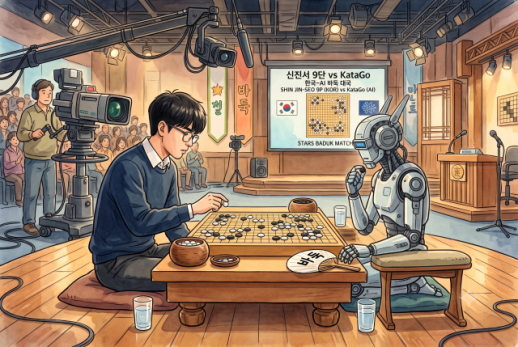 Shin Jin-seo beats KataGo, echoes Lee Se-dol's AI win SEOUL, July 21 (AJP) - Nine years ago, a South Korean Go master sat across a board from a machine that was not supposed to be beatable. On March 13, 2016, in the fourth game of a five-game match against Google DeepMind's AlphaGo in Seoul, Lee Sedol became the only human ever to defeat that particular artificial intelligence, snapping three straight losses along the way. He would go on to lose the fifth game and the series overall, four games to one. But that one win, built around a move at position 78 so unexpected that Go commentators later nicknamed it the "divine move," became one of the defining moments in the early public understanding of what AI could and could not do. Lee retired from professional play in 2019, saying that even the best human could never again claim the top spot in Go, calling AI "an entity that cannot be defeated." Nine years later, another South Korean player picked up where Lee left off, and went further. Shin Jin-seo, the world's top-ranked Go player since 2019 and, at 26, the sport's most dominant active figure, defeated KataGo, one of the strongest Go-playing AI systems in the world, in the deciding third game of a three-game match held Tuesday in Seoul. Since turning professional at age 12 as the youngest player ever to do so in South Korea, Shin has built a career defined by consistency rather than single dramatic upsets. He has held the world number one ranking by rating points continuously since 2019 and has won nine major international titles, including three LG Cups and the 2023 Ing Cup, one of Go's most prestigious world championships. Shin won two games to one, closing out the series with an 11.5-point victory after 221 moves and roughly three hours and twenty minutes of play. The event, called the SSEN and KED Go Match, was staged at a KED TV studio in central Seoul. KataGo is a free, open-source Go program built by American developer David Wu and first released in 2019, three years after AlphaGo's match against Lee. Unlike AlphaGo, which was developed and run internally by Google DeepMind on proprietary hardware, KataGo was designed to reach superhuman strength through self-play alone, learning purely by playing itself millions of times rather than studying human game records, and to do so on far more modest computing power. It has since become one of the most widely used Go engines in the world, adopted by players and researchers alike for its ability to estimate territory and score in addition to simple win probability. The margin of victory, in some ways, was less remarkable than the terms under which it happened. AlphaGo played Lee in 2016 with no handicap at all, meeting him as a true equal on the board. KataGo, by 2025 standards a far more advanced program, needed to give Shin a two-stone head start just to play him even, and still lost the match. Most Go experts had expected Shin would be doing well to win a single game. Instead, he won two. The symbolism was not lost on the Go world. Where Lee's 2016 win stood as a lone flicker of resistance in an otherwise total defeat, a single game salvaged from a series he had no real chance of winning, Shin's performance nine years later looked more like an argument that the gap between human and machine, while still real, had not closed in the AI's favor alone. If anything, the fact that KataGo needed a handicap to stay competitive suggested developers themselves have come to treat an unhandicapped human loss as close to a foregone conclusion, making Shin's win with a head start a different kind of statement than Lee's had been. Shin's road to the win was not smooth. He lost the opening game after being caught off guard early, then rallied to take the second and third. In the deciding game, playing with the two-stone advantage, he entered with a projected win probability of 99 percent, a number that had collapsed dramatically late in each of the two earlier games, at move 70 in game one and move 160 in game two, as KataGo clawed back territory. This time, Shin held that 99 percent probability from start to finish. He had said before the match that he intended to avoid heavy fighting and win on territory instead, a more conservative approach than his usual style. He kept that promise. KataGo opened game three differently than it had the first two, taking an unfamiliar corner point that left Shin thinking for roughly two minutes before he responded. From there, both sides settled into a quiet, territorial contest with little direct confrontation. By move 80, Shin had begun pressing KataGo's white stones and building a large formation of black territory stretching from the upper side of the board toward the center, a foundation that held for the rest of the game. Shin played with five hours on the clock plus one 30-second overtime period. KataGo, running without an overall time limit, was required to move within 20 seconds each turn on a dedicated system built from four Nvidia RTX 3090 graphics cards hosted on the Tygem online Go server. Because KataGo is software, its moves were physically placed on the board by a human proxy, Lee Dan-bi, a professional with the Korea Baduk Association. For the win, Shin received 250 million won, about $169,000, including his match fee, along with a luxury Genesis G90 sedan as a victory prize. 2026-07-21 15:27:22
-
Public Employees to Receive Compensation for Actual Overtime Hours Worked Public employees will now be recognized for actual overtime hours worked, even if it exceeds the previous limit of four hours per day. Additionally, a new 'overtime compensation allowance' will be established for level 4 public employees.The Ministry of Personnel Management and the Ministry of the Interior and Safety announced on July 21 that they will propose amendments to the 'Regulations on Public Employee Allowances' and 'Regulations on Local Public Employee Allowances.'This amendment follows a directive from President Lee Jae-myung during a senior advisor meeting in April, where he instructed officials to ensure that necessary overtime is recognized and to address unnecessary formal overtime practices.Under the proposed changes, the previous daily limit of four hours for overtime will be eliminated. Previously, even if employees worked more than four hours of overtime during busy periods, only four hours were recognized regardless of actual hours worked.Moving forward, employees will be credited for the actual hours they work. However, to protect employees' right to rest, a monthly cap of 57 hours will remain in place. This aims to prevent excessive overtime while managing total working hours within a reasonable range.Kim Seong-hoon, Deputy Minister of Personnel Management, stated, "Last year, public employees averaged about 22 hours of overtime per month. We expect that even during peak times, employees will remain within the '57-hour' limit."Furthermore, the system that previously allowed for a maximum of 100 hours of overtime with special approval for urgent issues will be revised. From now on, there will be no cap on overtime, and the authority to approve exceptions will be adjusted from department heads to directors.A new 'overtime compensation allowance' will also be introduced for level 4 public employees. Currently, these employees do not receive overtime pay due to receiving management allowances, even when they perform practical duties before being assigned to managerial positions. Considering the reality that many level 4 employees handle practical tasks, they will now be eligible for this allowance.However, since level 4 employees already receive management allowances, only those designated by their respective ministers who exceed 25 hours of overtime in a month will receive additional compensation for the excess hours.Management and oversight of unnecessary formal overtime practices will also be strengthened. The electronic personnel management systems for national and local employees will be improved to require employees to log their working hours at regular intervals, allowing department heads to verify this information.Local governments will also implement total overtime management functions, and those that operate these systems will receive administrative and financial incentives.On the other hand, the criteria for penalties will be tightened. Currently, disciplinary action is mandatory only for those who improperly receive overtime pay more than twice. In the future, even a single instance of improper receipt exceeding 500,000 won will trigger mandatory disciplinary action.The standards for disciplinary action will also be strengthened from the current threshold of 1 million won to 500,000 won, and the supervisory responsibilities of managers will be clearly defined. Additionally, when improper receipt is detected, criminal charges may be filed, and disciplinary actions related to improper receipt will include a six-month extension on promotion and salary increase restrictions. The Ministry of Personnel Management plans to clarify these potential sanctions in the 'Guidelines for Public Employee Compensation' to raise awareness of improper receipt.Choi Dong-seok, Minister of Personnel Management, emphasized, "This is not about normalizing long working hours but ensuring fair compensation for unavoidable work hours. As we enhance compensation, we will also strengthen management against improper receipt."* This article has been translated by AI. 2026-07-21 15:24:00
-
Woman Arrested for Blocking Jamsil Ballot Counting Center; Junior Handball Player Searched Illegally A woman in her 30s appeared in court on July 21 for a warrant review after allegedly blocking access to the Olympic Park handball venue, which was used as a ballot counting center for the June 3 local elections.Judge Seo Beom-jun of the Seoul Eastern District Court began the warrant review for the woman, identified as A, at 2:30 p.m. on charges of obstructing business.Earlier, police applied for a pre-arrest warrant for A on July 16, and prosecutors filed for the arrest on the same day.Upon arriving at the court at 2:24 p.m., A declined to answer reporters' questions about what she would present during the review and whether she acknowledged the charges against her, proceeding directly into the courtroom.A is accused of obstructing business for approximately two hours on June 16, when she and other protesters prevented members of a sports organization, including the leader of the People Power Party, Jang Dong-hyuk, from entering the venue. Despite attempts by Jang and Yoo Seung-min, president of the Korean Sports Council, to persuade her, A insisted that procedures to secure the ballots and ballot boxes must be completed first, ultimately preventing access to the handball venue.Some have referred to A as the 'Joan of Arc of Olympic Park,' coining the term 'Oldark.'The court is also reviewing warrants for a man in his 30s accused of illegally searching the junior women's handball team that entered the venue and for three men in their 20s who insulted police officers and blocked their path at the ballot counting site on July 6.* This article has been translated by AI. 2026-07-21 15:24:00
-
Education Ministry Cracks Down on TOPIK Proxy Exam Scandal Foreign students have been caught using forged identification and advanced equipment to cheat on the Test of Proficiency in Korean (TOPIK), gaining admission to domestic universities and receiving scholarships. In response, the Education Ministry and the National Institute for International Education are demanding strict penalties, including degree revocation and scholarship recovery, while implementing measures to eradicate organized cheating. On July 21, the Seoul Metropolitan Police Agency's International Crime Investigation Unit announced the arrest of broker B and the identification of 112 individuals involved in proxy testing and organized cheating using forged IDs at TOPIK test sites. All were charged with obstructing official duties. According to police, the suspects recruited clients through advertisements on Chinese social media platforms, promising guaranteed high scores on the TOPIK. The brokers allegedly used forged IDs to deceive exam proctors and employed advanced devices like miniature earpieces and transmitters to relay answers during the tests. The fraudulent scores were misused for meeting admission and graduation requirements at major universities in South Korea, as well as for obtaining scholarships and employment. Police are also pursuing two individuals who supplied equipment to the test-takers and the main organizer in China. Following the police briefing, the Education Ministry and the National Institute for International Education stated, “We take the organized cheating revealed by the police investigation very seriously and will ensure the integrity of the TOPIK moving forward.” The ministry plans to apply the principle of strict punishment to all identified cheaters. It will immediately notify the universities of the cheating incidents, prompting them to revoke degrees and recover scholarships. Additionally, under the Basic Operating Regulations for the Korean Language Proficiency Test, those who request or participate in proxy testing will have their scores invalidated and will be banned from taking the TOPIK for four years. The National Institute for International Education is preparing measures to prevent cheating. Initially, it will tighten the verification process for valid IDs. In the short term, the types of IDs accepted for the TOPIK will be strictly limited, and those who present forged IDs will face penalties equivalent to those for proxy testing. Moreover, organized crimes such as proxy testing, question leaks, and the use of advanced devices will be classified as “serious cheating,” leading to significantly increased penalties. To combat cheating using advanced devices, the National Institute for International Education will introduce detection technology capable of identifying Bluetooth-enabled devices like miniature earpieces and AI glasses. Training on the use of detection devices will be conducted at each test site to enhance on-site supervision. An Education Ministry official emphasized, “This incident serves as a reminder that no benefits can be gained from scores obtained through cheating, and those involved will face severe consequences.”* This article has been translated by AI. 2026-07-21 15:20:00
-
 High-school baseball team gets reduced ban over chants mocking Gwangju uprising SEOUL, July 21 (AJP) - Paichai High School's baseball team can now return to competition after South Korea's top sports disciplinary body cut its ban from six months to one month over chants mocking the 1980 Gwangju democratic uprising. The Sports Fairness Committee of the Korean Sport & Olympic Committee (KSOC) made the decision after a meeting in southern Seoul on Monday, reversing most of the punishment issued by the Korea Baseball Softball Association (KBSA) early this month, after it drew widespread criticism as excessive. The KSOC committee serves as the final appeals body for disciplinary decisions made by its affiliated sports organizations, and its decision took effect immediately. Lee Young-jin, chairman of the committee, said the players' misconduct clearly constituted grounds for punishment but concluded that the original six-month suspension was excessive. Lee said the committee considered that the players were "still in the process of learning," had traveled to Gwangju to apologize and had been forgiven by the opposing school. The potential impact of the suspension on the students' college admissions and athletic careers was also taken into account. The controversy erupted during Paichai's first-round game against Gwangju Jeil High School at the 81st Cheongryonggi National High School Baseball Championship at Mokdong Stadium in western Seoul on June 29. With Paichai leading 6-2 in the top of the eighth inning, several players in its dugout repeatedly chanted, "Let's go, let's go, let's go to Starbucks," toward the Gwangju team's dugout. Another player shouted, "Tank Day." The chanting continued until Gwangju Jeil coaches protested and game officials intervened. Video footage of the incident later spread across social media, prompting criticism that the players had used regional hatred and a national tragedy as material for taunting an opponent. The references carried a particularly charged meaning because Gwangju Jeil is based in the southern city at the center of South Korea's most painful episode of military repression. The chants appeared to invoke a Starbucks Korea marketing scandal that erupted weeks earlier. On May 18, the anniversary of the Gwangju uprising, the coffee chain promoted an oversized tumbler called a "tank" under a campaign labeled "Tank Day." Critics said the promotion evoked the tanks, troops and helicopters used to suppress pro-democracy demonstrators in Gwangju in May 1980. Starbucks Korea withdrew the promotion amid a nationwide backlash, while Shinsegae Group, the Korean retail conglomerate that controls the local Starbucks business, dismissed the chain's chief executive. Shinsegae Chairman Chung Yong-jin later made a televised apology to the victims, bereaved families and the public. The Gwangju democratic uprising occurred on May 18, 1980, after students and residents resisted the expansion of martial law under the military leadership of strongman Chun Doo-hwan. Government forces violently crushed the demonstrations after days of confrontation, killing or injuring hundreds. The uprising later became a defining symbol of South Korea's struggle against dictatorship and its transition to democracy. The KBSA's Sports Fairness Committee responded to the June baseball incident on July 1 by banning Paichai from national competitions for six months and ordering the forfeiture of its remaining Cheongryonggi games. The penalty would effectively have barred the school from every remaining national tournament this year. Paichai said after conducting an internal inquiry that the players who initiated the chants claimed not to have fully understood their historical meaning. School officials acknowledged, however, that the students knew Starbucks had apologized for the "Tank Day" campaign and promised history, human rights and anti-hate education for the baseball team and the wider student body. Players, coaches, school officials and parents traveled to Gwangju on July 6 to deliver an official apology to Gwangju Jeil. The two teams also visited the May 18 National Cemetery, where victims of the uprising and figures associated with South Korea's democratization movement are honored. Gwangju Jeil accepted the apology and subsequently asked sports authorities to show leniency, saying the Paichai students appeared to be sincerely reflecting on their misconduct. Paichai filed an appeal with the KSOC on July 8. The case also prompted a broader debate over how language originating in extremist online communities and social media can spread among teenagers who may repeat hateful expressions without fully understanding their historical origins. Han Kang, the South Korean Nobel literature laureate whose novel "Human Acts" portrays the violence and trauma of the Gwangju uprising, said last week that the Paichai incident should not simply be allowed to fade from public attention. She called on adults and educators to examine how hatred reaches young people and to treat the episode as an opportunity for social reflection. The reduced suspension allows Paichai to enter the 54th Bonghwangdaegi National High School Baseball Tournament, which opens Aug. 6. The tournament is effectively the school's final national competition of the year and an important showcase for third-year players seeking university admission or selection in professional baseball. Paichai is scheduled to face Incheon High School in the first round at Mokdong Stadium at 5 p.m. on Aug. 11. A rematch with Gwangju Jeil would be possible only if both schools advance to the final. 2026-07-21 15:16:47
-
President's Directive Poses Challenges for Financial Authorities on Leverage ETFs President Lee Jae-myung has raised concerns about the effectiveness of additional measures for single-stock leveraged exchange-traded funds (ETFs), deepening the worries of financial authorities. Just five days after the Financial Services Commission (FSC) announced investor protection-focused measures on July 16, the need for further revisions has become unavoidable. The challenge lies in the lack of effective additional measures.According to financial authorities on July 21, the FSC has begun reviewing additional measures for single-stock leverage ETFs following President Lee's directive during a Cabinet meeting. The President remarked, "There are questions about whether the measures announced on the 16th will suffice," and urged for prompt and decisive action. He also pointed out that the implementation of these measures is not immediate but will take time.An FSC official stated, "The President's directive means to prepare effective measures, and we will review the overall effectiveness of the currently announced supplementary plans," but added, "No additional regulations have been specifically decided yet."Industry observers are closely watching for any new measures following the President's public directive. Previously, the FSC announced on July 16 a series of supplementary measures, including a temporary halt on new product launches, raising the basic deposit from 10 million won to 30 million won, extending pre-education from 2 to 3 hours, and banning advertisements. Among these, all measures except for the halt on new product launches and the advertising ban are set to be implemented sequentially after August. The key regulation, raising the basic deposit from the current 10 million won to 30 million won, is scheduled to take effect on August 5, while the measure that does not recognize substitute securities as deposits will be implemented starting August 19.Some speculate that the President's call for 'swift' and 'decisive' action could lead to an acceleration of the existing measures' implementation timeline. However, adjusting the schedule is not an easy task. Changes to the basic deposit amount and other measures have been planned considering the regulations of the Korea Exchange and the Financial Investment Association, as well as the development schedules of securities firms.In the securities industry, there are concerns that due to the need for sufficient testing and development by each securities firm, it will be practically difficult to shorten the timeline. The FSC has also stated that there are no set plans to expedite the implementation schedule. Furthermore, introducing additional regulations before assessing the effectiveness of measures announced just five days ago could lead to controversies regarding policy consistency, which is a burden for the FSC.* This article has been translated by AI. 2026-07-21 15:16:00
-
Korean Business Group Proposes 112 Regulatory Reforms for AI and Robotics As challenges in the fields of artificial intelligence (AI) and robotics continue to mount, calls for regulatory reform are growing. On July 21, the Korea Employers Federation (KEF) proposed 112 regulatory rationalization tasks across five key areas—future industries, corporate management, environment and safety, labor, and field challenges—to the Office for Government Policy Coordination and the Ministry of Trade, Industry and Energy.Among the most urgent issues identified by KEF is the regulation surrounding the use of AI training data. AI models require vast amounts of data for collection and learning, but the current copyright law in South Korea presents ambiguities regarding fair use, leading to potential legal disputes and criminal penalties.In the robotics sector, KEF highlighted the need to improve restrictions on the use of original data for AI training. While autonomous driving can utilize original data, robotics is limited by privacy regulations, which only allow the use of mosaic images and altered audio. This restriction hampers the advancement of physical AI technologies that rely on recognizing human expressions and voices.Additionally, the hydrogen industry faces challenges due to the lack of specific standards for charging hydrogen vehicles in ultra-low pressure (0 bar) conditions, complicating the assembly of new vehicles and the maintenance of accident-damaged ones. Other recommendations include easing criteria for selecting domestic-returning companies, improving the designation system for large corporate groups, legislating standards and procedures for dismissing long-term underperformers, and expanding permissible tasks for dispatched workers.Kim Jae-hyun, head of KEF's regulatory reform team, emphasized, "To secure a competitive edge in the global AI race, our companies must boldly reform outdated regulations that hinder the pace of development in advanced industries like AI and robotics."* This article has been translated by AI. 2026-07-21 15:16:00
-
 Chip boom puts BOK on tightening path, but spillover debate clouds outlook SEOUL, July 21 (AJP) - South Korea's bond market is increasingly pricing in another interest-rate increase this year after the Bank of Korea's July hike, as Governor Shin Hyun-song argues that the country's chip-driven income boom is beginning to generate demand-side inflation despite a still-sluggish domestic economy. Investors now widely expect the benchmark policy rate to reach 3.0 percent by year-end after the central bank last week raised it by 25 basis points to 2.75 percent, its first increase since January 2023. Some analysts see the next move coming as early as the Aug. 28 policy meeting. "We are seeing an exceptional condition. The gross domestic product has grown 3.8 percent (from a year earlier) in the first quarter whereas the gross domestic income grew much greater at 13.2 percent," Shin said after the July 16 monetary policy meeting. "We have to see if this is a temporary phenomenon or one that could have a big impact on the economy." Shin said the divergence suggested the economy may be entering a new phase in which income growth, fueled by soaring export prices, begins to feed domestic demand. "If income improvement continues at this kind of strength, we may have to be wary of inflationary pressure from the demand side," he said. Markets have already begun positioning for that possibility. The benchmark 10-year Korean government bond yield climbed to an annual high of 4.365 percent by midday Tuesday, up from an average of 4.252 percent in June and 3.612 percent in February before the outbreak of the Iran conflict. Shin has also indicated that the latest rate increase marks the beginning of a broader tightening cycle. Alongside imported inflation stemming from elevated energy prices and a weaker won, he has increasingly pointed to domestic pressures, including faster wage gains linked to the AI boom. The government's recent decision to raise its 2026 economic growth forecast to 3.0 percent — the strongest pace since 2021 — has reinforced that narrative. Semiconductor exports have powered much of the recovery, with outbound shipments reaching $551.3 billion as of July 20, keeping the country on course to touch the $1 trillion mark for the first time. Government officials and the central bank argue that the current semiconductor cycle differs fundamentally from previous booms. Unlike earlier upcycles, they contend, the AI-driven surge is generating unprecedented corporate earnings that are flowing into wages, shareholder income, investment and tax revenues, creating a broader economic impact. The BOK maintains that stronger semiconductor earnings will gradually spread through investment, household income and consumption while lifting corporate and earned-income tax receipts. Shin has rejected the view that the benefits will remain confined to a handful of chipmakers, although he acknowledged much of the fiscal windfall will become visible next year. The central bank strengthened that argument in an Issue Note released Sunday, saying the latest improvement in Korea's terms of trade could have a more durable effect on domestic demand because it stems from structural AI-related semiconductor demand and higher export prices rather than temporary declines in oil prices. According to the report, previous improvements in the terms of trade often reflected cheaper imported energy, which boosted purchasing power but faded as commodity prices recovered. This time, however, higher export prices driven by AI memory chips may sustain income gains for longer, encouraging consumption and business investment. Yet evidence that the semiconductor windfall is spreading across the broader economy remains mixed. Retail sales, construction activity and many service industries have recovered only gradually despite record exports and surging corporate earnings. Corporate data also point to a disconnect between profits and employment. Employment at 282 of Korea's 500 largest companies rose just 0.2 percent over the past three years even as sales increased 10.9 percent and operating profit jumped 81.0 percent, according to corporate tracker Leaders Index. The contrast is even sharper in the semiconductor-heavy IT, electrical and electronics sector. Sales climbed 34.4 percent and operating profit surged 2,740.5 percent, yet employment increased by only 1,727 workers, or 0.6 percent. The BOK itself acknowledges many of those limitations. Its report noted that IT manufacturing accounts for only 2.6 percent of business-sector employment, limiting the direct transmission of semiconductor gains into household income. It also said most wage increases and equity gains accrue to high-income households with relatively low propensities to consume. Investment spillovers may also prove weaker than headline figures suggest. Roughly 60 percent of semiconductor manufacturing equipment is imported, while Korean chipmakers have increasingly expanded production overseas, reducing the domestic impact of capital spending. Persistent weakness in construction, retail, smaller manufacturers and other non-IT industries could further dilute the benefits from the export boom. By contrast, the pressures supporting tighter monetary policy are already visible. The won remains one of Asia's weakest major currencies. Shin has repeatedly argued that the Korea-U.S. interest-rate gap deserves close attention because cheaper won funding can encourage carry trades into dollar assets and increase hedging costs for overseas investments, reinforcing depreciation pressure. Following last week's policy meeting, he said the BOK is closely monitoring offshore non-deliverable forward markets and is preparing additional research on how changes in the interest-rate differential affect currency flows. Even after the July rate increase, Korea's benchmark rate remains 1 percentage point below the upper end of the U.S. Federal Reserve's 3.50-3.75 percent target range. Currency weakness has also offset part of the income gains generated by stronger exports. While Taiwan has benefited from the same AI-driven semiconductor cycle, the Korean won has fallen about 13 percent against the U.S. dollar since the end of 2023, compared with roughly 5 percent for the Taiwan dollar. That depreciation has continued to raise import costs for energy, food and raw materials, with Shin noting that import prices remain around 20 percent higher than a year earlier. Meanwhile, financial stability concerns continue to build. Housing prices have accelerated across Seoul and much of Gyeonggi Province, while household lending has continued expanding by roughly 8 trillion won to 9 trillion won a month despite tighter lending regulations. Those pressures complicate the policy outlook. The immediate beneficiaries of the semiconductor boom remain concentrated among large exporters, shareholders and highly paid technology workers, while higher borrowing costs are felt much more broadly by indebted households, small-business owners, builders and smaller manufacturers. Shin has argued that such distributional issues should be addressed through targeted fiscal and financial policies rather than monetary policy, allowing interest rates to focus primarily on inflation and financial stability. For markets, the debate is no longer whether semiconductors are lifting Korea's national income — they clearly are. The more important question is whether those gains will spread widely enough through wages, consumption and investment to justify a sustained tightening cycle before the broader domestic economy fully recovers. That question is likely to shape not only the Bank of Korea's next rate decision, but also how investors judge the durability of Korea's AI-driven economic resurgence in the months ahead. 2026-07-21 15:13:57
-
Mortgage Rates Exceed 7.5% as Major Banks Tighten Lending The upper limit for mortgage rates at banks has surpassed 7.5%. With the increase in the base rate and stricter management of household loan volumes, the highest mortgage rates at major commercial banks are rising rapidly. As banks raise their lending thresholds, the financial burden on actual borrowers has intensified.As of July 21, the five major commercial banks—KB Kookmin, Shinhan, Hana, Woori, and NH Nonghyup—reported fixed-rate mortgage rates ranging from 4.79% to 7.52%. This marks an increase from the end of May, when rates were between 4.26% and 7.10%, with the lower limit rising by 0.53 percentage points and the upper limit by 0.42 percentage points.The rapid rise in market interest rates is attributed to the Bank of Korea's shift to a tightening monetary policy for the first time in three and a half years. The five-year bank bond rate, a key indicator for fixed-rate mortgages, increased from 4.207% to 4.478%, a rise of 0.271 percentage points during the same period.Variable mortgage rates are also on the rise. The five major banks' six-month variable mortgage rates are reported to be between 4.17% and 6.88%, reflecting a three-month consecutive increase in the COFIX rate, a key benchmark for variable loans.The upward trend in loan rates is expected to continue for the foreseeable future. The Bank of Korea may implement up to two additional rate hikes this year, and banks are raising spreads or reducing preferential rates to manage household loan volumes.In this environment of rising rates, banks are also increasing their lending thresholds, creating additional challenges for actual borrowers. KB Kookmin Bank has reduced its mortgage loan limit from 600 million won to 300 million won this month. Shinhan Bank and Hana Bank are also limiting applications through loan brokers. Woori Bank has cut its monthly loan limit for housing-related loans from 3 billion won to 1 billion won per branch.Even SC First Bank, which had been considered a last resort among first-tier banks, has closed its lending window. The bank is currently not accepting new applications for general mortgage loans until the end of October. It has become increasingly difficult to secure new mortgage loans across the banking sector.As of July 15, the outstanding balance of household loans at the five major banks, excluding policy loans, was reported at 649.6612 trillion won, an increase of 4.6912 trillion won from 644.970 trillion won at the end of last year. These banks have already exceeded their annual household loan growth target of approximately 4.34 trillion won, which they submitted to the Financial Supervisory Service at the beginning of the year, by about 350 billion won. This has led to expectations of stringent loan management throughout the second half of the year.According to the Bank of Korea's recently released 'Financial Institution Loan Behavior Survey Results,' the loan attitude index for domestic banks in the third quarter was recorded at -7, down 5 points from -2 in the previous quarter. A lower index indicates stricter loan assessments by banks. It is anticipated that banks will raise the thresholds for mortgage loans, jeonse loans, and credit loans.A financial industry official stated, "As interest rates rise and obtaining loans becomes more difficult, there may be an increase in cases where individuals need to revise their plans for purchasing homes or securing funds. Given the possibility of further rate hikes, it is essential to assess repayment capacity based on anticipated interest rate increases." 2026-07-21 15:12:00