


Latest by
-
 New AI rules take effect in South Korea SEOUL, July 21 (AJP) - Stricter regulations on the use of artificial intelligence (AI) took effect across industries on Tuesday, requiring businesses to disclose the use of generative AI and label AI-generated content. Under the regulations as part of the so-called "AI Basic Act," the country's first legal framework for artificial intelligence, companies developing or operating AI services must notify users when generative AI is used and label AI-generated content. Those whose systems could significantly affect people's rights or safety must also assess potential risks and impacts and put internal governance and risk management systems in place. To avoid discouraging innovation under the stricter rules, the government, however, is also rolling out incentives to help foster the domestic AI industry. Verified AI products and services will receive preferential treatment in public procurement as well as bonus points in bid evaluations. Other measures include funding for startups, job training, broader access to public data for AI development, and subsidies aimed at improving access to AI services for older adults, people with disabilities, job seekers and other underserved groups. Major South Korean tech companies including Kakao, KT, LG Uplus, Naver, SK Telecom, as well as AI startup Upstage have already strengthened their AI governance and expanded labeling of AI-generated content to comply with the new law. But some industry workers say uncertainty still remains over how much generative AI must be used before content-labeling requirements apply, and whether the same standards apply when AI-generated content is edited or reviewed by humans. They also say that the lack of clear definitions for AI with high potential impact could increase costs for assessment and delay product launches, particularly for startups with fewer resources than large tech companies. These debates come as major economies take different approaches to AI-related regulation. The U.S. and Japan have focused on promoting innovation, while the European Union has adopted a risk-based framework that imposes different obligations depending on the potential risks posed by AI. A one-year grace period will be given to businesses before full enforcement, allowing authorities to gather industry feedback and establish more detailed guidelines. 2026-07-21 11:28:01
-
 Lotte Department Store Launches NEXTLAB to Support K-Fashion Brands' Global Expansion Lotte Department Store is launching a global platform to support the international expansion of Korean fashion brands. On July 21, Lotte Department Store announced the launch of 'NEXTLAB,' a platform designed to comprehensively assist K-Fashion brands in their overseas ventures. This initiative aims to accelerate global business efforts. NEXTLAB will help small fashion brands navigate the complex procedures of international expansion, including export customs, store design, and local marketing, leveraging the department store's global infrastructure and operational expertise. The first base for this platform will be at 'Lotte Mall Westlake Hanoi' in Vietnam. Since its opening in 2023, the mall has attracted numerous local trendsetters and tourists, making it a key commercial area likely to achieve cumulative sales of 1 trillion won this year. It will serve as a gateway to the Vietnamese market, which has a high preference for K-Fashion. Shin Dong-bin, Chairman of Lotte Group, visited Hanoi in April to review the business status of major subsidiaries, including Lotte Department Store, Lotte Mart, and Lotte Hotel, and to inspect operations on-site. The first brand to participate in NEXTLAB is the streetwear label 'Musent.' Recently gaining attention for successful pop-ups in Japan and France, Musent will hold its first pop-up in Vietnam from July 24 to August 4, showcasing signature items such as baseball caps, bags, and cropped t-shirts, along with customer appreciation events. Following Musent, Lotte Department Store plans to sequentially introduce a total of five K-Fashion brand pop-ups at Lotte Mall Westlake Hanoi by the end of the year, including 'Setter' and 'No Manual.' Additionally, in the second half of this year, the department store will partner with key shopping malls in Tokyo and Osaka to expand its local pop-up initiatives. Next year, NEXTLAB will evolve further, establishing permanent K-Fashion pop-up spaces in major locations such as Vietnam and Japan. The plan includes operating dozens of K-Fashion brand pop-ups throughout the year in dedicated store formats. To execute this project efficiently, Lotte Department Store established an independent organization called 'Next Content Lab' earlier this year. This team will focus on supporting K-Fashion's international expansion, as well as developing innovative projects that break down retail boundaries through space planning and IP-linked content development. Lee Hyuk, head of the Next Content Lab at Lotte Department Store, stated, "By fully utilizing our unique overseas store infrastructure and accumulated international capabilities, Lotte Department Store will provide a solid foundation for promising K-Fashion brands to grow into global brands."* This article has been translated by AI. 2026-07-21 11:28:00
-
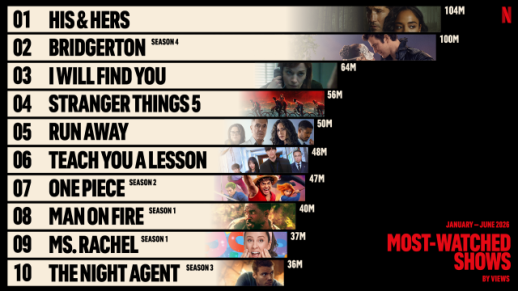 Korean titles make Netflix's most-watched in H1 SEOUL, July 21 (AJP) - South Korean productions remained among Netflix's biggest global draws in the first half of 2026, with two Korean series breaking into the platform's worldwide top 10 and multiple other titles attracting tens of millions of viewers, according to Netflix's latest engagement report. Legal drama "Teach You a Lesson" followed at No. 6 with 48 million views, making South Korea the only non-English market to place two original series in Netflix's global top 10 during the period. South Korea placed several additional productions among Netflix's most-viewed releases. Romantic comedy "Can This Love Be Translated?" drew 29 million views, followed by "The Art of Sarah" with 26 million, the second season of action thriller "Bloodhounds" with 24 million and historical romance "My Royal Nemesis" with 16 million. Korean films also continued to perform strongly. Animated feature "K-Pop Demon Hunters" ranked fourth among all movies on Netflix with 130 million views, trailing "War Machine," and "The Rip and Swapped". Despite premiering in June of 2025, the film remained one of the platform's most-watched movies during the six-month period. Netflix said non-English titles accounted for more than one-third of all viewing worldwide during the January-June period, with South Korea, Japan, Spain, India and South Africa producing many of the platform's strongest-performing local-language releases. Korean animation and live entertainment also drew large global audiences during the period. "BTS THE COMEBACK LIVE | ARIRANG" attracted 21 million views, ranking among Netflix's biggest live-event releases of the half, while K-Pop Demon Hunters was on pace to become the platform's second most-watched original animated film ever. Netflix said viewers spent more than 97 billion hours watching content during the first six months of the year, the highest total ever recorded for a half-year period. Beginning in 2027, the company plans to publish its audience data annually instead of every six months. 2026-07-21 11:24:16
-
Trump Imposes 50% Tariff on Canadian Goods, Signals New Trade War President Donald Trump has activated Section 338 of the Tariff Act for the first time, imposing a 50% additional tariff on certain Canadian products. With the 10% global tariff set to expire on July 24, a new Section 301 tariff is also expected to be announced soon, indicating a potential resurgence of the trade war initiated by Trump.According to reports from Politico and other political outlets on July 20, Trump signed three proclamations imposing a 50% additional tariff on select Canadian goods under Section 338 of the Tariff Act of 1930. The new tariffs will apply to Canadian products such as wine, honey, textiles, fishing rods, jewelry, and furniture, taking effect on August 19. Unlike previous tariffs on Canada, products covered under the United States-Mexico-Canada Agreement (USMCA) will not be exempt.This marks the first time Section 338 has been used to impose tariffs. This provision allows for tariffs of up to 50% on countries that discriminate against U.S. trade, without needing congressional approval, although the U.S. government must first confirm the discriminatory practices.The Trump administration has criticized Canada for retaliating against U.S. tariffs on steel and aluminum and for restricting the sale of U.S. alcoholic beverages. Canada’s supply management system, which limits imports of U.S. dairy products, and caps on auto exports from companies that moved production facilities to the U.S. have also been labeled as unfair practices.Jamieson Greer, the U.S. Trade Representative (USTR), stated, "Canada continues to retaliate against U.S. efforts to restore trade balance and protect national security-related industries, unlike other trading partners and allies."This action comes amid ongoing negotiations to amend the USMCA. Ryan Majerus, a partner at the international trade law firm King & Spalding, noted that this appears to be a move to gain leverage in the current USMCA negotiations between the U.S. and Mexico. Canadian Prime Minister Mark Carney issued a statement indicating that Canada would actively engage in discussions with the U.S. to resolve these issues.However, the imposition of new tariffs raises the possibility of reigniting the trade war. CNN reported that "Trump's new 50% tariff on Canada poses a risk of triggering a new trade conflict."Section 301 Tariffs Expected SoonMeanwhile, the Trump administration is expected to restructure the global tariff system. Following a February ruling by the Supreme Court that deemed reciprocal tariffs based on the International Emergency Economic Powers Act (IEEPA) illegal, the 10% global tariff imposed under Trade Act Section 122 is set to expire on July 24. Tariffs under Section 122 can only be maintained for a maximum of 150 days without congressional approval.The administration is anticipated to replace this with tariffs under Section 301 of the Trade Act, which allows for tariffs in response to unfair or discriminatory foreign government policies and practices. The USTR has been pursuing Section 301 procedures based on forced labor and structural overproduction. A total of 16 entities have been identified for overproduction, and 60 for forced labor, with South Korea included in both categories.Regarding forced labor, a proposal has been made to impose a 12.5% tariff on certain countries, including South Korea. With public hearings already concluded, the USTR may announce a final plan as early as this week to coincide with the expiration of the global tariff. Specific proposals for overproduction tariffs have yet to be detailed, and it is unlikely that any decisions will be finalized before July 24 due to the need for public comment and hearings.For South Korea, the key issue is whether the 15% tariff cap established in the U.S.-Korea trade agreement will be maintained. If the 12.5% forced labor tariff is combined with overproduction tariffs, the total rate could exceed 15%. Last July, South Korea and the U.S. agreed to lower the tariff rate on South Korean products from 25% to 15% in exchange for South Korea's $350 billion investment in the U.S. Greer has indicated that the administration intends to respect the tariff cap, but how the final rates will be adjusted remains uncertain.Additionally, on the same day, President Trump signed a proclamation reducing import tariffs by half for companies investing in primary aluminum production facilities in the U.S. Companies approved by the Department of Commerce will only pay a 25% tariff on import volumes corresponding to their expected annual production from new facilities, down from the current 50%.* This article has been translated by AI. 2026-07-21 11:24:00
-
Finance Minister Koo Yoon-cheol Highlights Employee Dedication in Economic Recovery Koo Yoon-cheol, the Deputy Prime Minister and Minister of Finance, stated on July 20 that the opportunity for South Korea's economic recovery over the past year was due to the dedication and efforts of the ministry's employees. He expressed his commitment to making the Ministry of Finance a workplace that employees look forward to. The Ministry of Finance announced on July 21 that it held a special communication event to mark the 200th day since its launch and the one-year anniversary of Koo's appointment. The event included a three-part town hall meeting, a discussion with union leaders, and a children's invitation event for families. The town hall meeting, titled 'Three Tastes Town Hall Meeting,' was conducted with the assistance of the ministry's AI learning group, 'AX Jiphyeonjeon 2.0.' Employees' candid questions were translated in real-time by AI and displayed on a screen, allowing Koo to respond directly. Koo also expressed his intentions to expand opportunities for employee promotions and overseas training in the second half of the year, as well as improve employee welfare facilities. He stated, 'I will strive to make the Ministry of Finance a workplace that employees enjoy coming to, and I hope they will share their ideas at any time.' During the subsequent discussion with union leader Jeong Wan-jun, strategies for cooperative labor-management relations were addressed. Jeong conveyed the concerns and welfare issues of union members, to which Koo responded, 'The labor union is a partner that considers both the ministry's development and employee happiness.' Both sides agreed to enhance communication, sharing plans for a training session scheduled for September. The event concluded with a children's invitation ceremony attended by 115 participants, including employees, environmental workers, and family members of the press corps. The invited children received honorary civil servant certificates and visited the Deputy Prime Minister's office for a commemorative photo. Koo promised to listen to family suggestions and do his best to ensure a balance between work and family life. In closing, Koo reiterated, 'The opportunity for our economy to recover over the past year was thanks to the dedication and efforts of all employees in the Ministry of Finance. I ask everyone to continue striving to achieve the 3-4-5 vision outlined in the economic growth strategy for the second half of 2026, to complete an irreplaceable South Korea.'* This article has been translated by AI. 2026-07-21 11:24:00
-
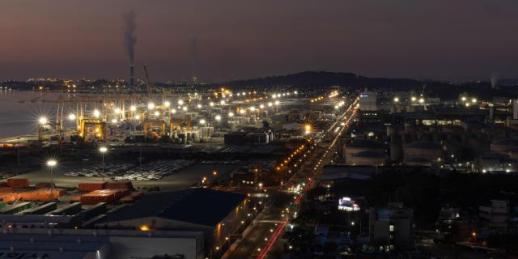 Korea's July exports set 20-day record on chip strength SEOUL, July 21 (AJP) -South Korea is set to extend its record-setting export streak in July, with chip-led outbound shipments surging 52.3 percent in the first 20 days to a record $54.93 billion for the period, preliminary customs data showed Tuesday. Exports totaled $54.93 billion from July 1 to 20, while imports increased 20.0 percent from a year earlier to $42.72 billion, generating a trade surplus of $12.22 billion. Final monthly trade data will be released by the Ministry of Trade, Industry and Resources on Aug. 1. The export figure was the highest ever recorded for the first 20 days of July, surpassing the previous record of $36.9 billion set in 2024. Growth moderated from the first 20 days of June, when exports rose 60.2 percent to $61.92 billion. On a nominal basis, early July exports were 11.3 percent lower than during the comparable June period. July had 14.5 working days, one fewer than a year earlier. Adjusted for the calendar effect, average daily exports climbed 62.9 percent to $3.79 billion, accelerating from June's 49.7 percent increase. Semiconductor exports surged 180.6 percent from a year earlier to $22.11 billion. Chips accounted for 40.3 percent of total exports, slightly down from June's 41.2 percent share when semiconductor shipments reached $25.51 billion, but remained by far the country's largest export engine. Computer peripheral exports more than tripled to $2.04 billion. Shipments of ships, wireless communication devices and petroleum products rose 70.8 percent, 65.9 percent and 33.4 percent, respectively. Automobile exports fell 10.6 percent to $3.24 billion, while auto parts shipments declined 9.6 percent. Exports to China nearly doubled to $13.36 billion. Shipments to the United States rose 39.6 percent to $8.96 billion, while those to Vietnam climbed 82.4 percent to $6.21 billion. Exports to the European Union increased 30.3 percent, while shipments to Taiwan gained 41.8 percent. China, the United States and Vietnam together accounted for 51.9 percent of total exports. Imports reflected continued strength in the semiconductor sector. Semiconductor imports rose 54.9 percent to $6.50 billion, while imports of chipmaking equipment increased 56.9 percent to $2.15 billion. Crude oil imports climbed 27.5 percent, while imports of natural gas and coal rose 27.9 percent and 25.7 percent, respectively. Combined energy imports increased 27.4 percent. The trade surplus narrowed from $17.44 billion in the first 20 days of June as energy imports grew and exports eased from the previous month's exceptionally strong pace. Cumulative exports from Jan. 1 through July 20 rose 48.7 percent from a year earlier to $551.28 billion, while imports increased 17.1 percent to $401.37 billion. The cumulative trade surplus reached $149.91 billion. The Korea Customs Service said the preliminary figures may be affected by changes in the number of working days and remain subject to revision when the final monthly data are released. 2026-07-21 11:21:24
-
Yoon Sang-hyun Visits Seoul City Hall Amid Oh Se-hoon's Rising Political Status Yoon Sang-hyun, a senior member of the People Power Party, visited Seoul City Hall on the morning of July 21 to meet with Mayor Oh Se-hoon. The meeting concluded around 8:20 a.m., after which Yoon held a briefing with reporters at the city hall.While the visit appears to be a routine meeting between a party member and the mayor, political analysts view it as more significant. Following his decisive victory in the local elections, Oh has emerged as a leading presidential candidate within the conservative camp, making Yoon's visit to City Hall noteworthy.Political observers are particularly focused on the timing and location of the meeting. Conducted at City Hall rather than the National Assembly, and early in the day, the meeting carries symbolic weight beyond mere pleasantries. While administrative issues could be discussed, the venue and timing often convey a political message.Oh Se-hoon's Changed Political StatusNot long ago, Oh was primarily seen as the head of Seoul's local government. However, his recent electoral success has solidified his status as a prominent figure in the conservative political landscape, consistently appearing in polls as a potential candidate for the next presidential election.In this context, visits from senior party members to City Hall are interpreted as seeking out a key player in the future conservative leadership.Seoul City Hall as a New Political StageTraditionally, political activities for presidential candidates took place in the National Assembly or party headquarters. However, for Oh, Seoul City Hall is becoming a central political stage.As issues like reconstruction, housing supply, regulatory reform, low birth rates, and nighttime economy become national agendas, City Hall is drawing increased attention from central politics, transcending its role in local administration.Yoon's visit is seen as part of this evolving dynamic.Where is the Conservative Faction Heading?Following the local elections, the People Power Party is naturally contemplating its future leadership structure and presidential race. In this context, the actions of senior politicians serve as signals for the future power landscape.Yoon's visit to City Hall is receiving attention within this framework. While the meeting alone does not confirm any political alliances or role-sharing, it is clear that political focus is shifting not only to the National Assembly but also to City Hall.The Meeting is Over, but Political Interpretations are Just BeginningPolitics often involves interpreting the context behind meetings rather than the meetings themselves. Yoon Sang-hyun's early morning visit to City Hall for discussions with Mayor Oh Se-hoon, followed by a press briefing, has become a symbolic moment that highlights Oh's current political stature.Oh is increasingly viewed as a significant player in central politics, beyond just local governance. Thus, this meeting is interpreted as a reflection of where political attention is currently focused.* This article has been translated by AI. 2026-07-21 11:20:00
-
President Lee Calls for Swift Action on Leverage ETFs President Lee Jae-myung emphasized the need for prompt and thorough measures regarding single-stock leverage exchange-traded funds (ETFs) during a Cabinet meeting on July 21.During the meeting held at the Blue House, President Lee stated, "From the perspective of stock market participants, the inefficiencies or problems in policy are much greater." He added, "It seems like it is taking too long."When Financial Services Commission Chairman Lee Ok-keun mentioned the proposed measures announced on July 16, which include increasing the basic deposit and trading units, President Lee responded, "There are concerns that this alone may not be sufficient."Regarding the government's plan to implement these measures starting August 5, President Lee remarked, "It seems that the implementation is not immediate or early, but rather delayed. Market participants expect that such issues should have been anticipated in advance."He continued, "While it is difficult for policy authorities to achieve perfection, they should act decisively and swiftly in necessary responses." He noted that the timing of the measures, introduced during a rapid market surge, may have created the illusion that they were the cause of significant issues.In response to a report from Policy Chief Kim Yong-beom about the reduced outflow of foreign capital, President Lee stated, "That reflects the effectiveness of government policy, but stock market participants believe that this has increased volatility and losses, which is why creating supplementary measures is the government's responsibility." He urged, "It is a challenging situation, but let’s navigate it wisely."* This article has been translated by AI. 2026-07-21 11:20:00
-
Controversy Over Paichai High School Baseball Team's Punishment Sparks Debate Paichai High School's baseball team, which faced a six-month suspension from national competitions due to the "Starbucks mock cheer" controversy, has had its punishment reduced to one month, igniting a heated online debate.The Korea Sports Council's Sports Fairness Committee announced on July 20 that it had reduced the six-month suspension imposed by the Korea Baseball Softball Association to one month. This decision allows the Paichai High School baseball team to participate in the upcoming 54th Bonghwangdaegi National High School Baseball Tournament next month.Following the announcement, social media platforms, including X (formerly Twitter), were flooded with comments questioning the accountability of Paichai High School. Critics expressed concerns, stating, "What responsibility has Paichai High School taken in this matter? This will only fuel further hatred and chaos from far-right groups," and "I believe this will be remembered as a terrible decision." Others remarked, "What is the point of holding the May 18 memorial ceremony every year if we cannot protect the honor of the deceased?"Conversely, some defended the decision, arguing, "One month is too much. Why punish students for a prank?" and "This is an opportunity to legally assess whether the disciplinary process was justified." Supporters also claimed, "This is a form of social satire by passionate youth; why suppress their expression?"Amid this controversy, reports emerged indicating that the civic education program established in response to the "Starbucks cheer" incident was deemed "meaningless" by students. According to a report by youth-led media outlet Tokki-pul, a Paichai High School student who attended the civic education lecture stated, "Out of more than 30 students in my class, only two, including myself, stayed awake." The student added, "When the speaker, Lee Jae-oh, chairman of the Democracy Movement Memorial Foundation, began the lecture by saying, 'It's okay to sleep, but those who want to listen should pay attention,' most students fell asleep after hearing that."The student further expressed doubts about the effectiveness of the education, saying, "They told us that hate speech exists and is bad, but we didn't learn what kinds of hate speech exist or why they are harmful." The student characterized the culture of mockery among peers as "just a joke for fun," noting, "It seems like 70% of the students are just messing around. There is a strong culture of following along, and if you don't participate in the jokes, you get ostracized."In response to the news, many comments on the article criticized the situation, stating, "Ultimately, this is just a performative response," and "Clumsy forgiveness leads to tragedy. It's unfortunate that the Paichai case wasn't used as a teaching moment."This incident highlights the shortcomings of hastily implemented "historical education" in response to the intense backlash surrounding the "Starbucks cheer" controversy. As the culture of hate and mockery among youth continues to spread, there is a growing consensus that the government, educational institutions, parents, and students must come together to discuss and establish fundamental solutions.Meanwhile, according to a report by Yonhap News, the National Education Commission, an administrative body under the President, announced on July 21 that it has developed a draft of the "National Basic Principles for School Civic Education." The draft emphasizes that schools should reject hate and discrimination while ensuring that teachers maintain political neutrality and present diverse perspectives on social issues.The National Education Commission stated that the principles specifically instruct schools to teach students that words and actions reflecting prejudice, insults, bullying, mockery, and hate against individuals or groups are anti-civic acts that violate human dignity.To gather public input on these principles, the National Education Commission plans to hold online discussions on July 22 and 25, as well as an in-person discussion in Busan. The public participation committee consists of over 500 members, including students, parents, education stakeholders, and general citizens.* This article has been translated by AI. 2026-07-21 11:16:00
-
Bank of Korea to Launch Won International Payment System in September The Bank of Korea announced on July 21 that it has officially named its offshore won payment system the 'Bank of Korea Won International Payment Network' (BOK International Network) and will begin pilot operations in September.The pilot program will involve four major banks: KB Kookmin, Woori, Hana, and Shinhan, which are currently conducting tests with participating institutions. The necessary revisions to the Bank of Korea's payment and settlement system regulations are expected to be completed by August.The BOK Won International Payment Network is designed to facilitate transactions in won between foreign individuals using accounts opened at their domestic banks. Previously, the government announced a 'won internationalization roadmap' that allows foreigners to freely use won overseas, following the 24-hour opening of the foreign exchange market.To achieve this, a new offshore won payment network will be established, with plans for it to operate 24 hours a day starting in January next year after the pilot phase. Foreign investors will be able to conduct won transactions in line with the business hours of financial markets in their respective countries, significantly enhancing the convenience of managing and utilizing won funds.The Bank of Korea stated, 'We expect that the establishment of the Won International Payment Network will improve foreign access to won payment infrastructure and positively contribute to the inclusion in the Morgan Stanley Capital International (MSCI) developed market index.'* This article has been translated by AI. 2026-07-21 11:16:00