


Latest by
-
 Duty-Free Industry Accelerates AI Integration from Product Recommendations to Logistics “Recommend a whiskey for a gift.” ChatGPT selects personalized products for customers, while artificial intelligence (AI) and robots manage the logistics of duty-free goods according to departure times. This is the landscape of South Korea's duty-free shops, which are expanding the application of AI from product exploration and purchasing to logistics. The strategy aims to enhance customer convenience, increase conversion rates, and reduce repetitive tasks and logistics costs. According to industry sources, Lotte Duty-Free introduced the country’s first ChatGPT-based conversational shopping service in mid-July. Customers can browse products within ChatGPT without needing to install a separate application or first access the Lotte Internet Duty-Free site. When customers input requests like “Show me the best-selling perfumes” or “What are today’s special offers?” the AI suggests products that meet their needs. The recommended items link to the Lotte Duty-Free purchase page, where customers can view detailed information and make purchases. Lotte Duty-Free plans to enhance its personalized recommendation feature by accumulating service usage data that reflects customers' budgets and purchasing goals. Shilla Duty-Free has advanced its online search service using generative AI and vector embedding technology. This technology connects words and products with similar meanings, even if expressed differently. For example, customers can input a product's purpose or features instead of its name, and the system will find products that closely match their search intent. A representative from Shilla Duty-Free stated, “We have implemented meaning-based search that understands customer intent and context, moving beyond simple keyword matching, and improved accuracy by recognizing synonyms, similar words, typos, and Korean-English conversion searches.” Shinsegae Duty-Free is enhancing both customer-facing online services and backend logistics. It is using generative AI to create key campaign images and video content internally, while also strengthening AI-based product recommendations and search functions on its online mall. Notably, it is collaborating with LG Electronics to develop an AI-based smart logistics system. This system will automate the entire logistics process from ordering to receiving, inspecting, picking, and shipping, incorporating mobile robots, real-time data analysis, and a digital twin-based control system. The focus is on improving logistics speed and product delivery reliability, considering the unique characteristics of duty-free operations that require timely delivery. Hyundai Duty-Free has integrated AI into its experiential services at offline stores. From January to April this year, it operated the 'AI Beauty Trip' at its Trade Center location, analyzing customers' face shapes, personal colors, and skin conditions such as pores, oiliness, and wrinkles to recommend suitable products from about 800 items across 36 brands. Customers could check their diagnostic results and recommended products via a QR code. A representative from Hyundai Duty-Free noted, “The diagnostic results are provided in a QR code-based report format, which can also be accessed in foreign languages like Chinese, receiving positive feedback from international customers,” adding that they are considering reintroducing the AI Beauty Trip service in the future. The rapid adoption of AI in the duty-free industry is driven by a slowdown in domestic consumer spending and market stagnation, prompting a focus on 'internal management.' With the market's growth hitting a limit, companies aim to reduce costs and maximize efficiency through digital technology. According to the Korea Duty-Free Association, domestic sales at duty-free shops fell from 284.2 billion won in January to 257.6 billion won in February and 231.2 billion won in March, marking two consecutive months of decline. Although sales rebounded slightly to 239.7 billion won in April and 254.6 billion won in May, they still remain below early year levels. An industry insider remarked, “In a stagnant domestic duty-free market, breaking the high-cost structure and enhancing per capita productivity through technology is essential for survival. The digital transformation utilizing AI will determine the competitiveness of duty-free shops in the future.” 2026-07-21 11:16:00
-
Unity Unveils Roadmap for Next-Generation Game Development Platform 'Unity 7' Game engine company Unity has unveiled the roadmap for its next-generation game development platform, 'Unity 7,' which significantly enhances AI-based collaboration features.Unity announced the roadmap for Unity 7 at the global developer conference 'Unite Seoul 2026' held on July 21 at COEX in Samseong-dong, Seoul.Matthew Bromberg, Unity's President and CEO, stated, "Game development is changing faster than ever before. In the future, teams that leverage new technologies to create unique content and attract players will be more competitive than the largest development teams. Unity 7 is designed to meet this shift." Unity 7 is an open platform designed for collaboration among developers, artists, producers, and even AI coding agents within a single development environment. It aims to shorten the process of turning ideas into actual games by integrating with existing AI tools, supporting the entire cycle from development to operation and monetization.Current users of Unity 6 can transition to Unity 7 without needing to rebuild projects or learn new programming languages. The platform maintains compatibility with existing projects and code, minimizing the upgrade burden.Unity 7 will focus on five core features: improved development speed, an open collaboration ecosystem, next-generation graphics, AI-driven growth and monetization, and compatibility with Unity 6.Initial beta testing for Unity 7 is set to begin in December, with the official version expected to launch in the first quarter of next year.* This article has been translated by AI. 2026-07-21 11:12:00
-
J-Ocean Industries Partners with Ucast to Build Smart Shipyard J-Ocean Industries is taking significant steps to transform the Gunsan Shipyard into a safe and efficient next-generation smart shipyard in partnership with Ucast. On July 21, J-Ocean Industries announced that it has signed a memorandum of understanding with Ucast to establish a smart shipyard at Gunsan and to introduce physical artificial intelligence (AI) solutions based on a 5G specialized network. The signing ceremony was attended by J-Ocean Industries CEO Ha Hwa-jeong and Ucast CEO Kim Jae-hyung, along with representatives from both companies. The agreement aims to integrate J-Ocean Industries' shipbuilding and marine infrastructure with Ucast's 5G specialized network, AX (AI transformation) and IoT (Internet of Things) solutions, and robotics technology to elevate the Gunsan Shipyard to the next level. As part of the initiative, J-Ocean Industries will provide infrastructure, including a demonstration site and on-site equipment, to support the creation of an effective testing environment using real-time process data and shipyard-specific scenarios. Ucast will develop the master plan for the project, which includes designing and optimizing the 5G wireless communication infrastructure, creating a 3D digital twin platform for real-time monitoring of the shipyard, and establishing a highly reliable IoT sensor network. Both companies are also committed to enhancing worker safety by preventing serious accidents. They plan to integrate industrial and collaborative robots, as well as autonomous solutions tailored to the shipyard environment, with physical AI solutions to drive innovation in autonomous manufacturing within the shipbuilding industry. Additionally, the two companies agreed to jointly propose and participate in government-supported projects related to the AX industrial complex demonstration and the expansion of the 5G specialized network. If the project transitions to a government initiative, Ucast will be granted priority rights to form a consortium as the lead organization. A representative from J-Ocean Industries stated, "This agreement marks a symbolic step in integrating cutting-edge 5G and physical AI technologies into the Gunsan Shipyard. We aim to accelerate the digital transformation of processes by leveraging Ucast's exceptional technology, setting a standard for a safe and smart next-generation shipyard that will lead the shipbuilding industry." Meanwhile, J-Ocean Industries is a corporation established by Ecoprime Marine Pacific, the largest shareholder of HJ Industries, to acquire the Gunsan Shipyard. Last month, J-Ocean Industries and HD Hyundai Heavy Industries signed a contract to transfer ownership of the Gunsan Shipyard for 780 billion won.* This article has been translated by AI. 2026-07-21 11:08:00
-
Hanwha Aerospace Issues $500 Million International Bond, a First for South Korea's Defense Sector Hanwha Aerospace has issued $500 million in international bonds, marking the first instance for a South Korean defense and aerospace company.On July 21, Hanwha Aerospace announced that it had confirmed the issuance of $500 million (approximately 741 billion won) after conducting demand forecasting for U.S. dollar bonds in Europe and Asia.The bonds have a fixed interest rate and a maturity of three years. The issuance rate is set at a level that adds 83 basis points (1 basis point = 0.01 percentage points) to the yield of U.S. Treasury bonds of the same maturity. The final terms were 32 basis points more favorable than the initial pricing guidance (IPG).Leading underwriters for the issuance included Citigroup Global Markets, Crédit Agricole Securities, and UBS.The demand forecast attracted approximately $3.3 billion, nearly seven times the issuance amount, indicating strong recognition of Hanwha Aerospace's global competitiveness.Previously, Hanwha Aerospace became the first South Korean defense and aerospace company to receive an A- credit rating from global credit rating agency Standard & Poor's (S&P) last month.A representative from Hanwha Aerospace stated, "The successful completion of our first international bond issuance reflects the high regard that prominent global investors have for Hanwha Aerospace's growth potential and financial stability."* This article has been translated by AI. 2026-07-21 11:08:00
-
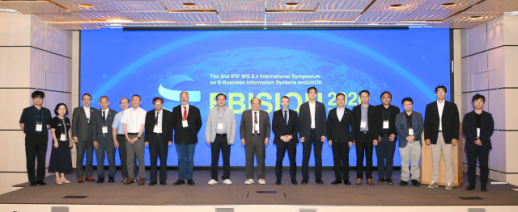 KMU hosts global ICT security symposium, signs 10 partnerships SEOUL, July 21 (AJP) - Kookmin University wrapped up a three-day international symposium on information security and e-business in Seoul earlier this month, walking away with 10 cooperation agreements signed with universities and a company abroad, the university said in a statement on Tuesday. The event, called EBISION 2026, was the second symposium held under Working Group 8.4 of the International Federation for Information Processing (IFIP), a nonprofit that coordinates ICT research across more than 100 countries. It ran from July 8 to 10 and pulled in researchers and industry officials from 11 countries. Over the three days, presenters delivered 91 papers, 50 as oral talks and the rest as posters, and more than half came from outside South Korea. Kookmin University (KMU)'s Yoo Il-sun chaired the symposium. He is a professor in the university's Department of Information Security, Cryptology and Mathematics and also directs its Global ICT Convergence Security Innovation Research Center. At the opening ceremony, President Jeong Seung-ryul told attendees that international joint research and closer industry-academia ties would be needed to keep up with AI-driven digital transformation and advances in quantum technology. Son Jin-sik, the university's vice president for planning, also attended. Six of the 10 agreements were memorandums of understanding, a firmer commitment to work together, and four were letters of intent, an earlier-stage signal that two sides plan to collaborate. Kookmin signed memorandums with National Taiwan University, Asia University, Tunghai University and National Sun Yat-sen University in Taiwan, plus King Mongkut's University of Technology North Bangkok in Thailand and the electronics maker Delta Electronics. The letters of intent went to the Technical University of Denmark, the National Technical University of Athens, the University of Murcia in Spain and Sweden's Luleå University of Technology. The university also used the symposium to talk with Yokohama National University about launching a dual-degree program. Yokohama's vice president, Junji Shikata, was in Seoul to receive the IFIP WG 8.4 Distinguished Lecturer Award, and officials from both schools discussed student exchanges and joint teaching and research while he was there. Keynote and invited sessions featured researchers tied to several of the partner institutions. Delta Electronics chief technology officer Tei-Wei Kuo spoke on AI-driven digital transformation, and Nicola Dragoni of the Technical University of Denmark and Antonio F. Skarmeta of the University of Murcia covered cyber threat intelligence. Manos Varvarigos, a vice president at the National Technical University of Athens, presented on next-generation network architecture and security for high-performance computing. Eight companies took part in an industry session, including KT, Japan's ZenmuTech, China's Sangfor and Taiwan's AI DataBrushing, each giving technical presentations and live demonstrations. KT laid out what it calls a four-layer network security framework built for the AI and quantum era. "Researchers and industry figures in e-business information systems and ICT convergence security shared their main findings and technology trends at this symposium," Yoo said. "We will build on the memorandums and letters of intent signed during the event to develop concrete international joint research and industry-academia projects." 2026-07-21 11:07:16
-
Korean Agriculture Ministry Promotes K-Food at UNESCO Event The South Korean government is ramping up efforts to promote K-Food through international events. A promotional booth will showcase the country's culinary culture and related policies.The Ministry of Agriculture, Food and Rural Affairs announced on July 21 that it will operate a promotional booth at the 48th UNESCO World Heritage Committee meeting in Busan, targeting delegations and visitors from around the world.The booth, which will run until July 29, is themed "K-Food: Bridging Tradition to the Future! Capturing the Hearts of the World!" It will highlight the history of K-Food, from traditional culinary practices to modern heritage and global friendship zones.In the traditional food culture section, the booth will feature "Kimchi and Kimjang Culture" and "Fermentation Culture"—both recognized as UNESCO Intangible Cultural Heritage. Visitors can experience fermentation culture through displays of traditional fermentation pots and a simulation game for making fermented sauces.The modern heritage section will spotlight the Korean Food Master system, showcasing excellent traditional foods made by masters, including sauces, kimchi, traditional liquor, and sweets. Videos will illustrate the deep flavors of Korean traditions and the skills of artisans.Additionally, the global friendship zone will present top 10 K-Food items, including ramen and beverages, as well as halal and vegan certified products and region-specific export items. This section will provide a glimpse into the current status and future potential of K-Food in the daily lives of people worldwide.The booth will also feature events where visitors can directly experience K-Food. After completing a survey, attendees can choose to receive a traditional sweet, a traditional beverage, or fruit-flavored milk.Jung Kyung-seok, Director of Food Industry Policy at the Ministry of Agriculture, Food and Rural Affairs, stated, "It is very meaningful to promote the value and excellence of K-Food, encompassing tradition, modernity, and the future, to delegations from various countries and domestic and international visitors during the first UNESCO World Heritage Committee held in Korea. We will spare no effort in supporting the global market expansion of K-Food while preserving our traditions."* This article has been translated by AI. 2026-07-21 11:04:00
-
Korean Consumer Goods Exporters Prepare for Indonesia's Halal Certification Mandate The South Korean government is providing support for halal certification to exporters targeting Indonesia and Malaysia. This initiative aims to alleviate the certification burden on K-consumer goods exporters as Indonesia plans to implement mandatory halal certification for imported goods, including food and cosmetics, starting in October.On July 21, the Ministry of Trade, Industry and Energy and the Korea Trade-Investment Promotion Agency (KOTRA) held an online briefing for over 150 representatives from small and medium-sized enterprises exporting to Indonesia and Malaysia.Halal certification is a system where accredited organizations verify that products and services comply with halal standards throughout the entire process, including raw materials, manufacturing, and distribution. Many companies aspiring to enter the Southeast Asian market have found the halal certification process challenging, prompting the need for this briefing.Starting in October 2026, Indonesia will enforce mandatory halal certification for imported goods, including food and cosmetics. As a result, obtaining halal certification has become a necessary step for K-consumer goods companies targeting the Indonesian market.The briefing included participation from KOTRA's FTA Overseas Utilization Support Center in Indonesia and Malaysia, which explained the halal certification systems in both countries, methods for mutual recognition of certifications through domestic halal certification agencies, and support for certification costs through government export vouchers.Mutual recognition allows Korean halal certification agencies to have their certificates recognized at the same level as those issued by local certification bodies in foreign countries under mutual recognition agreements. In Malaysia, the Korea Halal Industry Promotion Agency and the Korea Halal Certification Agency can serve as domestic certification bodies. In Indonesia, six organizations, including the Korea Testing Laboratory of Machinery and Electronics and the Korea Halal Industry Promotion Agency, provide related certification support.KOTRA also outlined support for certification costs through its export voucher program, which can cover 70% of certification costs for small enterprises and 50% for medium-sized enterprises.Halal certification has evolved into a significant non-tariff barrier affecting entry into the Southeast Asian consumer goods market, extending beyond mere religious considerations. The certification status can directly impact the ability to enter local distribution networks and customs processes, meaning delays in preparation could hinder export schedules.As demand for K-food and K-beauty products rises, managing the entire production process in accordance with halal standards is essential for effectively targeting the Muslim consumer market.Park Geun-o, Director of Trade Agreement Policy at the Ministry of Trade, Industry and Energy, stated, "In the face of rapid changes in the international trade environment and increasing trade barriers, proactive preparation for region-specific certifications like halal is a key factor in determining the international competitiveness of our export companies. We will expand tailored support activities that small and medium-sized enterprises can feel."* This article has been translated by AI. 2026-07-21 11:04:00
-
Public Home Shopping Launches Call for Quality Products to Support SMEs and Small Businesses Public Home Shopping announced on July 21 that it will conduct a call for quality products, titled 'Everyone's Market,' to support small and medium enterprises, small business owners, and farmers in expanding their market access.'Everyone's Market' is designed to provide practical market opportunities for all small and medium enterprises, small business owners, and farmers with quality products.Applications will be accepted from July 22 to August 21 through the application page on the Public Home Shopping website. Applicants should include 'Everyone's Market' in front of their product name when submitting.To lower the entry barrier for new participants, any small and medium enterprise, small business owner, or farmer wishing to expand their market through Public Home Shopping can apply, regardless of previous trading history. Products that pass internal evaluations and consumer product assessment committees will be eligible for sale through Public Home Shopping's online mall (Public Shop), live commerce (Public Live), and TV home shopping (Public Shopping).Additionally, Public Home Shopping is conducting a 'Weekend Grocery Shopping' event every weekend to broaden the market for small and medium enterprise products and agricultural, livestock, and fishery products. This program has achieved approximately 620 million won in market support within two weeks of its launch on May 29.A representative from Public Home Shopping stated, "We plan to provide our 11 years of home shopping operational expertise, not just product validation. We hope for significant interest in this public call for applications to help expand market access as a public institution home shopping service."* This article has been translated by AI. 2026-07-21 11:00:00
-
Interest Rates on Loans Rise Again, Commercial Real Estate Faces Scrutiny The commercial real estate market is expected to experience increased polarization as it concludes a period of declining interest rates and enters a phase of rising financing costs. On July 21, R Square released its '2026 Commercial Real Estate Collateral Loan Report: The End of the Downward Trend in Interest Rates, True Asset Selection Amid Financing Challenges,' indicating that the commercial real estate market has entered a 'new phase of rising loan rates' following recent interest rate hikes. The report noted that the downward trend in interest rates, which began in the second half of last year amid global tightening, has effectively come to an end. The Bank of Korea's interest rate hike on July 16 has intensified the pressure for increased financing costs. According to R Square, the interest rate for prime collateral loans for offices in the Seoul and Bundang areas reached 4.03% in the second quarter of this year. The total effective financing cost, including financial institution fees, rose to 4.43%, increasing the financial burden on investors. There is also a noticeable differentiation in loan conditions by asset type. In the first quarter of this year, the interest rate for prime collateral loans for offices was 4.04%, while logistics centers recorded 4.74%, resulting in a 70 basis point (0.70 percentage point) gap between the two asset types. This indicates that assets with stable cash flows are increasingly able to secure financing at lower rates. Investment profitability is also under growing pressure. In the first quarter, the office cap rate (the expected return on investment) was 4.36%, narrowing the gap with the prime loan rate (4.04%) to 32 basis points. If interest rates continue to rise, there is a possibility of 'negative leverage,' where loan rates exceed asset returns. R Square anticipates that the gap in financing conditions between high-quality and lower-quality assets in the commercial real estate market will widen further. Assets with stable rental income and cash flow are expected to maintain relatively lower rates and favorable financing conditions, while other assets may face increased financing burdens. Choi Kyu-jeong, a researcher at R Square, stated, 'The recent interest rate hike will sustain upward pressure on rates for new and refinancing loans for the time being. It is crucial to adopt a conservative approach to pricing and proactive liquidity management, focusing on investment strategies centered around high-quality assets with stable cash flows.' Meanwhile, the factory and warehouse investment market is seeing a recovery, particularly with logistics centers, as large transactions exceeding 100 billion won are occurring. R Square's analytics team reported that, according to data from the Ministry of Land, Infrastructure and Transport, the total transaction volume for factories and warehouses nationwide in May reached 1.142 trillion won, with 260 transactions recorded.* This article has been translated by AI. 2026-07-21 11:00:00
-
Prosecutors and Police Conduct Simultaneous Raids in Investigation of Jang Yoon-ki Case Prosecutors and police are conducting simultaneous raids on the National Police Agency and the National Investigation Agency to investigate allegations of evidence tampering related to the Jang Yoon-ki case.The Gwangju District Prosecutors' Office began its search at 6:15 a.m. on July 21, focusing on allegations of leaking official secrets and evidence tampering by police in the Jang Yoon-ki case.The targets of the search include the National Investigation Agency's Serious Crimes Investigation Division, the Women and Youth Crimes Investigation Division, and various departmental offices and affiliated organizations.The police's special investigation team into the Jang Yoon-ki case also commenced its search at 7:30 a.m. at the offices of the Serious Crimes Investigation Division.Prosecutors arrived first to begin the search, while police monitored the situation before proceeding with their own actions.Both agencies obtained individual search warrants for the operation.The police explained that most of the items being seized are digital materials, allowing for data duplication, which means that even if prosecutors execute their warrants first, they can still secure the same materials.A representative from the National Investigation Agency is currently known to be a witness in the case.Legal experts have noted that it is unusual for a search warrant to be issued without any current officials from the National Investigation Agency being charged.This raid follows testimonies from investigating officers indicating that the National Investigation Agency directed the separation of investigations into the murder case and past sexual assault cases.There were discussions about merging the investigation with a sexual assault case reported to police in another region, but the case was assigned to the Women and Youth Crimes Investigation Division per the National Investigation Agency's directive.Prosecutors and police believe there was intentional negligence in the investigation of the Jang Yoon-ki case, including failure to secure key evidence and ignoring significant circumstances, and are investigating the involvement of the supervisory chain in the case.Jang Yoon-ki was arrested and indicted in May for the murder of 16-year-old Lee Chae-won in Gwangju, Jeollanam-do, under charges including murder and sexual violence. 2026-07-21 11:00:00