


Latest by
-
 Supercycle Milestone: Demand to Outpace Supply Until 2030 Amid Chinese Pricing Strategies In response to concerns about a peak in the semiconductor market, the artificial intelligence (AI) industry argues that excess demand for AI and semiconductors will continue at least until 2030. However, China's low-cost strategy, backed by national support, is seen as a potential variable that could impact the market landscape. On July 20, Jensen Huang, CEO of NVIDIA, announced plans for AI infrastructure development in Japan, stating, "The global AI infrastructure buildout is just beginning," and asserted, "This cycle will last for more than the next decade." His comments dismiss concerns about an early slowdown in the anticipated supercycle. In South Korea, there are calls to accelerate infrastructure development to meet the excess demand for semiconductors. Ryu Jin, chairman of the Korea Economic Association, noted that "70-80% of domestic AI queries are processed by overseas data centers," emphasizing the urgent need to expand domestic infrastructure centered around semiconductors. The recent imbalance in memory supply stems from a paradigm shift due to the transition to AI. The Bank of Korea has also reported that "the current expansion phase is based on structural demand driven by AI proliferation," predicting that the duration of this boom will significantly exceed that of past cycles. While aggressive investments from global tech giants continue, the supply of memory to support these efforts remains sluggish. Considering the timelines for new fabs from Samsung Electronics and SK Hynix to stabilize yields, it is expected that supply will only improve around 2030. If new fabs are not secured in time, supply shortages could worsen after 2032. Hong Sang-jin, a professor at Myongji University, stated, "The memory production structure is being restructured around high-performance products like HBM, making it impossible to simply increase supply," adding that big tech companies are strengthening partnerships with both domestic firms through long-term supply contracts to secure volumes. China poses a potential disruptor in this market trend. Changxin Memory Technologies (CXMT) achieved a global market share of 8% last year, ranking fourth in the industry. With an upcoming IPO on the Shanghai Stock Exchange on July 27, CXMT plans to invest the funds into expanding its monthly wafer production capacity to 500,000 by 2028. Yangtze Memory Technologies (YMTC), which focuses on NAND flash, has also increased its market share to 13% in the first quarter and is accelerating its market penetration by advancing the mass production timeline of its third factory in Wuhan to the end of this year. Not only in memory, but China is also pursuing low-cost strategies in AI models. Moonshot AI's "Kimi K3" has demonstrated performance comparable to top U.S. models at a lower cost. This strategy aims to dominate the global AI ecosystem by combining hardware manufacturing capabilities with software cost-effectiveness. While China's memory technology still lags behind South Korea, it aims to enter the market by targeting the production of next-generation advanced products like HBM. Lee Jong-hwan, a professor at Sangmyung University, warned, "China is likely to flood the general DRAM market with low-cost products, driving down overall prices," and emphasized that South Korean companies must maintain market leadership through overwhelming technological advantages rather than price competition.* This article has been translated by AI. 2026-07-20 18:12:00
-
Korean 'Beggar Map' Helps Users Find Affordable Dining Options A domestic online service called 'Beggar Map,' which shares information about affordable dining options, has garnered attention from foreign media.On July 20, the Hong Kong-based South China Morning Post (SCMP) reported that South Korean youth are turning the challenge of high prices and job insecurity into a communal activity, highlighting the Beggar Map. SCMP described the platform as an interactive service that has made the search for restaurants costing less than 8,000 won (about $6) a viral trend.The Beggar Map is an online mapping service where users can register information about inexpensive restaurants. Users input details such as the restaurant name, menu, prices, and categories, which then appear on the map. Other users can view the registered restaurant information and reviews.The primary registration criterion is that the price for a meal should be around 8,000 won. However, if a restaurant exceeds this price but offers substantial portions or includes relatively expensive ingredients like meat, it may still qualify for registration based on value.The platform's operators review the information submitted by users. If a restaurant priced over 8,000 won is deemed to lack sufficient value or appears to be promotional content, it is removed from the map.The Beggar Map launched on March 20 and quickly gained traction, attracting 570,000 users within two weeks. By April 23, the cumulative number of visitors surpassed 1.3 million, spreading rapidly through social media, university communities, and local online forums.The service was created by 30-year-old developer Choi Seong-su. After being laid off from his job in the IT industry, he began to cut down on food expenses. Limiting his daily food budget to 10,000 to 12,000 won, he started packing lunches and dividing delivery meals into multiple servings, which inspired the development of the Beggar Map.Choi envisioned a map that would allow users to easily find affordable restaurants. Instead of having operators input restaurant information, he designed the service to allow users to report and edit details themselves.The name 'Beggar Map' is derived from a savings group called 'Beggar Room,' which spread through KakaoTalk open chat rooms. In the Beggar Room, users share their daily expenditures and evaluate each other's saving efforts.Choi explained that the name reflects a humorous approach to the difficult economic situation, emphasizing solidarity among those preparing for the future.SCMP noted that the popularity of the Beggar Map highlights the economic burdens faced by South Korean youth.* This article has been translated by AI. 2026-07-20 18:12:00
-
AI Evolution and Semiconductor Market Dynamics Amidst Price Pressures Stocks of companies related to artificial intelligence (AI) semiconductors have sharply declined due to concerns over low-cost AI shocks from China and fears of a peak-out in the market. However, analysts suggest it is premature to declare the end of the memory supercycle, as the AI industry is expanding beyond generative AI and agents into physical AI, AI factories, and data centers, leading to explosive demand growth.On July 20, both the KOSPI and KOSDAQ markets triggered sell-side circuit breakers. Samsung Electronics and SK Hynix both experienced declines, contributing to a broader drop in indices. This downturn reflects a combination of global semiconductor stock adjustments and concerns over the Chinese AI shock that accumulated over the three-day holiday weekend.The stock market trends diverge somewhat from corporate performance. Samsung Electronics reported record earnings for the second quarter, while SK Hynix is also expected to post strong results based on demand for high-bandwidth memory (HBM). The peak theory circulating in the market has two main arguments. The first is the potential slowdown in AI investments by U.S. big tech companies, raising doubts that rising costs for data centers and other investments may outpace revenue generation. If big tech slows its capital expenditures next year, demand for GPUs and HBM could also weaken.The second concern is price pressure from China. CXMT's expansion in DRAM production is seen as a variable that could disrupt general memory prices. Low-cost AI models like the 'Kimi K3' from China's Moonshot AI could also dampen demand for expensive GPUs and HBM. However, this situation is viewed more as a reassessment of AI investment profitability and memory pricing rather than the end of the supercycle.In fact, industry indicators have not yet tilted toward a peak-out. The Bank of Korea recently assessed the current global semiconductor market expansion as the strongest since the 2000s. A key point noted by the Bank of Korea is the evolution of AI. AI is expanding from text-based large language models to multimodal models that process both video and audio, which will drive demand for high-performance memory and computing semiconductors. The spread of physical AI is also expected to increase the demand for high-performance computing and low-power semiconductors.Market research firm Gartner has also projected additional growth in the semiconductor market. Gartner forecasts that global semiconductor revenue will rise from $805.3 billion last year to $1.3202 trillion this year, and further to $1.5545 trillion next year. This year's growth rate is expected to be 64%, the highest in 20 years. Notably, memory revenue is projected to increase nearly threefold from $216.3 billion last year to $633.3 billion this year, with expectations of reaching $748.1 billion next year.The Boston Consulting Group (BCG) views data centers as the foundational infrastructure for the spread of physical AI. BCG analyzes that AI infrastructure will become a strategic asset supporting seamless AI services in manufacturing and industrial settings. As AI technology transitions from screen-based services to real-world applications, demand for data centers and semiconductors will inevitably grow.Jung So-young, CEO of NVIDIA Korea, stated, "Energy, semiconductors, and data centers are currently in a serious bottleneck situation. Supply is unable to keep up with demand, leading to limitless advancements in AI."* This article has been translated by AI. 2026-07-20 18:08:00
-
Oil and Petrochemical Industries on High Alert Amid Red Sea and Hormuz Strait Blockades The domestic oil and petrochemical industries are on high alert due to the renewed conflict between the U.S. and Iran, which has led to blockades in the Hormuz Strait, along with the increasing possibility of attacks by Houthi rebels in the Red Sea.Thanks to proactive measures by the government and companies securing supplies for September, there are currently no immediate disruptions in crude oil supply. However, if the blockades in both straits persist, rising transportation costs, insurance premiums, and raw material expenses will inevitably lead to decreased profitability.According to industry sources, domestic refiners have already completed shipments of crude oil needed for August and are in the process of transporting it to South Korea. Supplies for September have also been confirmed from various countries, including those in the Middle East.The greater concern lies in the potential cost burdens if the blockades in the Hormuz Strait and the Red Sea become a reality. With international oil prices, maritime freight rates, and war risk insurance premiums all rising simultaneously, the cost of procuring crude oil is expected to increase.The Hormuz Strait and the Red Sea are critical maritime routes for transporting Middle Eastern crude oil to major consumer markets in Asia and Europe. The industry anticipates that if disruptions occur in both routes, the logistical burdens for crude oil procurement and petroleum product exports will significantly escalate.Another challenge is the difficulty in immediately passing increased costs onto product prices. Under the government's price stabilization policy, there is pressure to avoid raising retail prices at gas stations, and intense competition among refiners makes it challenging to fully transfer cost increases.The petrochemical sector is also feeling the strain. The instability in supply leading to higher crude oil prices is driving up naphtha prices, increasing raw material costs. With the ethylene spread already below the breakeven point, further increases in raw material and logistics costs could necessitate a reduction in the operating rates of naphtha cracking centers (NCC) or adjustments in the production of certain petrochemical products.Cost pressures are already being reflected in the market. Following a ceasefire between the U.S. and Iran, international oil prices, which had dropped to between $60 and $70 per barrel, have now risen above $90.The price of Dubai crude, a key benchmark for South Korea's oil imports, also rose by $1.42 to $75.19 per barrel compared to the previous day. Consequently, prices for naphtha, a core raw material for petrochemicals, are on the rise, with key feedstock prices such as butadiene (BD), benzene, and ethylene increasing by over 10% in the past week, further heightening cost pressures.One industry official stated, "Since the conflict between the U.S. and Iran, we have diversified our crude oil purchasing sources beyond the Middle East, but it is difficult to completely avoid Middle Eastern risks. If the instability in the Hormuz Strait and the Red Sea persists simultaneously, the rising costs of freight and insurance, along with challenges in securing vessels, could significantly increase the overall burden of crude oil procurement costs."* This article has been translated by AI. 2026-07-20 18:08:00
-
SK Hynix and U.S. Tech Giants Enter Earnings Season Amid AI Profitability Hopes The future of artificial intelligence (AI) and the semiconductor industry is expected to become clearer with the upcoming second-quarter earnings reports from major U.S. tech companies and SK Hynix.According to financial investment industry sources on July 20, Alphabet, Google's parent company, and Tesla will announce their second-quarter results on July 22, U.S. local time, while Intel will follow on July 23. SK Hynix will hold its second-quarter earnings conference call on July 29. These reports will provide insights from key players in the global AI supply chain.Last week, TSMC reported its highest-ever net profit for the second quarter, citing strong demand for AI chips that is expected to continue for several years.This week, the earnings reports from U.S. tech giants will be closely watched. For Alphabet, key points of interest include cloud services and capital investment. If Google Cloud continues to grow and AI services help maintain revenue from search and advertising, concerns about a bubble may ease. Conversely, if data center investment pressures profit margins, doubts about the sustainability of AI investments could increase.Tesla faces a different kind of scrutiny. While it is primarily an electric vehicle manufacturer, the market also views it as a player in the robotaxi, humanoid robot, and autonomous driving AI sectors. Investors may react more sensitively to the scale of AI investments and the timeline for profitability than to vehicle sales.Intel, meanwhile, must demonstrate a turnaround in its AI semiconductor supply chain, which has become dominated by Nvidia and TSMC. The company needs to show progress in its foundry and server semiconductor sectors. If Intel falters, concerns about polarization in the AI semiconductor ecosystem could resurface.Next week, SK Hynix will take the spotlight. Its earnings will serve as an indicator of the ongoing HBM supercycle. While revenue and operating profit are important, the market will pay closer attention to the sustainability of HBM orders, negotiations for next year's volumes, and trends in general DRAM prices.This earnings season will simultaneously validate companies investing in AI infrastructure and semiconductor suppliers. If the big tech companies exceed expectations, concerns about the burden of AI investments may diminish. Should SK Hynix project strong demand, fears of a peak in HBM may also subside.On the other hand, if big tech companies express concerns about investment burdens or if cloud growth rates slow, the narrative of an AI peak could solidify. If SK Hynix signals a conservative outlook for next year's demand, the adjustment period for domestic semiconductor stocks could extend.Kim Dong-won, head of research at KB Securities, stated in a report on SK Hynix's second-quarter results that "the memory supply shortage felt by general customers next year will be close to a zero-supply level," predicting that long-term supply contracts (LTA) between big tech and memory companies will secure production volumes.* This article has been translated by AI. 2026-07-20 18:08:00
-
The Role of Special Envoys in Defense and Security Cooperation As competition intensifies over semiconductor and battery supply chains, defense exports, nuclear energy, and artificial intelligence, the nature of diplomacy is rapidly changing. While traditional diplomacy focused on managing inter-state relations and formal negotiations, today’s overseas missions have evolved into complex forward bases that support market entry for domestic companies, identify supply chain disruptions, secure large contracts, and ensure the safety of citizens abroad during wars and disasters. The Ministry of Foreign Affairs is already operating meetings for economic security officers at overseas missions, urging collaboration with local businesses and relevant organizations to resolve corporate challenges. In this context, Aju Economy examines the roles and significance of overseas missions through the current status of domestic and international envoys. “We can see a phenomenon where various elements, such as national strategic cooperation, industrial collaboration, technology transfer, joint research and development, weapon system maintenance, personnel training and exchanges, and joint exercises, are being organically combined beyond simple arms exports.” Seong-il, President of Hanwha Aerospace MENA, highlighted these characteristics of recent overseas defense and security cooperation in an interview with Aju Economy on July 20. Seong-il stated, “When addressing defense and security issues between countries in the diplomatic field, a higher understanding of the counterpart's defense and acquisition systems, organizational structures, and decision-making processes is required. When special envoys with relevant experience are active, it positively impacts cooperation between the two countries.” Hanwha Aerospace MENA was established in Riyadh, Saudi Arabia, in September 2025. It serves as a regional control tower overseeing existing operations in the United Arab Emirates (UAE), Egypt, and other areas. The Middle East has already become a key strategic partner for South Korea in diplomacy, security, and economic fields. Countries in the Gulf Cooperation Council (GCC), including Saudi Arabia, the UAE, Kuwait, Qatar, Bahrain, and Oman, are actively pursuing large-scale military enhancements and the development of their defense industries. In response, the South Korean government is working to develop strategic partnerships with domestic defense companies that include technology transfer, joint development, local production, maintenance, and personnel training. Seong-il explained the advantages of special envoys by stating, “By sufficiently understanding the purpose and characteristics of the projects the host country is pursuing, we can more effectively support essential solutions during cooperation between the governments and companies of both countries.” For example, if the host country prefers wheeled artillery in its procurement project, it may be possible to recommend the K9, which has proven capabilities in rugged terrain and extreme climate conditions, while suggesting the development of the wheeled K9-MH for flat and well-developed road areas, thus proposing new requirements. The Lee Jae-myung administration has set the goal of becoming one of the world’s top four defense exporters as a national agenda. The role of special envoys is crucial to realizing this goal, especially as countries are increasing their defense budgets. It is also necessary to expand defense cooperation beyond the Middle East to Southeast Asia and South America. Um Hyo-sik, Director of the Korea Defense Security Forum, noted, “There are many areas for defense cooperation with Southeast Asian countries like Vietnam, Malaysia, and Indonesia, and South America is also a place where we need to start anew. Sending special envoys to build cooperative relationships is very necessary.” However, the special envoy system also has areas that need improvement. Critics point out that there is no objective evaluation system for assessing the diplomatic abilities or expertise of candidates for special missions during the selection process. There is a need to shed the label that it has become a tool for distributing positions as favors. Some suggest that candidates for special envoys, who receive vice-ministerial treatment, should undergo a National Assembly confirmation hearing. Additionally, establishing a training system for special envoys is necessary. Seong-il stated, “To enhance the positive effects of special envoys, it is necessary to consider complementing their roles with deputy envoys, as they may lack capabilities compared to professional diplomats.”* This article has been translated by AI. 2026-07-20 18:04:00
-
Hyundai's Beijing Plant Exports Half of Its Production Amid Domestic Struggles Hyundai Motor's Chinese subsidiary, Beijing Hyundai, is expanding its exports while facing domestic sales challenges, emerging as a global production hub. Amid overall sluggish production and exports from overseas subsidiaries in Europe and Asia, the Chinese operation is increasing its exports, positioning itself as a new global export base for Hyundai.According to Hyundai, Beijing Hyundai (BHMC) sold a total of 86,347 vehicles in the first half of this year, with 40,285 units, or 46.7%, designated for export. This means that one out of every two vehicles sold in the first half was headed for overseas markets.While total sales decreased from 94,175 units last year, export volumes increased by 5,421 units compared to the same period last year (34,864 units). The export share rose significantly from 37% to 46.7%, an increase of 9.7 percentage points.Notably, in the second quarter, exports surpassed domestic sales for the first time. The export volume for the second quarter reached 24,083 units, exceeding domestic sales of 19,062 units. Despite a decline in local sales due to intensified competition from domestic electric vehicle manufacturers, the company is transitioning to a structure that maintains production levels through increased exports.By model, the Elantra was the most exported vehicle, with 14,803 units. It was followed by the Sonata (10,328 units), the Mufasa (6,051 units), and the Tucson (5,874 units).This export expansion at Beijing Hyundai contrasts with trends at other overseas production facilities. Production and export volumes from Hyundai's overseas subsidiaries in Europe and Asia are declining.Hyundai's Indian subsidiary (HMI) sold a total of 386,357 units in the first half of this year, an increase from 372,049 units in the same period last year. However, exports decreased from 86,240 units to 80,405 units, with the export share dropping from 23.2% to 20.8%.Hyundai's Turkish subsidiary (HMTR), a European export base, exported 57,552 out of 77,758 total units in the first half, resulting in a 74.0% export share. This is a significant decline compared to last year's first half, when 100,176 out of 120,347 units were exported, yielding an export share of 82.4%.Similarly, Hyundai's Indonesian subsidiary (HMMI), an ASEAN production base, exported 22,045 out of 29,945 total units in the first half, achieving a 73.6% export share. This is a slight decrease from last year's first half, when 25,973 out of 34,921 units were exported, resulting in a 74.3% export share.Experts believe that Hyundai's strategy to use China as an export base is beginning to yield results. By compensating for domestic sluggishness with exports to third countries, the company is enhancing its factory utilization and production efficiency.Kim Pil-soo, a professor at Daelim University specializing in future mobility, stated, "The vehicles produced by Hyundai in China primarily head to third countries such as the Middle East and Asia. To minimize market overlap with domestically produced models, a strategy that emphasizes brand competitiveness over production location, similar to Tesla, is necessary."* This article has been translated by AI. 2026-07-20 18:04:00
-
New Approach to Practical Diplomacy: Special Envoys on the Rise Diplomacy is becoming increasingly complex, influenced by factors such as the prolonged Middle East conflict and U.S. tariff pressures. Lee Jae-myung, the President of South Korea, recently stated, "We must accelerate the economic transformation in the second half of the year," urging that 2026 be remembered as the year South Korea becomes an irreplaceable nation with a potential growth rate of 3%, a global trade ranking of 4th, and a national income of $50,000. To support this, the role of diplomacy is crucial. President Lee emphasized, "For South Korea to achieve greater leaps and sustained growth, a more stable and peaceful global order is essential," adding, "Although the global order is currently very unstable, our government will steadfastly fulfill its role and responsibilities as a global responsible power based on practical diplomacy centered on national interests." To achieve practical diplomacy for national interests, a diversification of diplomacy is necessary. The special envoy system allows the president to appoint experts, not current diplomats, to handle specific diplomatic tasks. This enables the strengthening of diplomatic capabilities for national interests by bringing in external personnel with expertise and experience in areas such as economy, culture, and security.Special envoys share the president's governance philosophy and are expected to leverage a broad network in the private sector to create tangible national benefits. The government plans to appoint 30 to 40 special envoys after its inauguration to seek strategic diplomatic diversification. Many countries are currently experiencing direct and indirect impacts from the war in Ukraine and the conflict in the Middle East. The importance of diplomatic personnel with specific expertise is growing beyond traditional concepts in international diplomacy. A notable area is defense. The Lee Jae-myung administration has set a national goal of becoming a "global defense export powerhouse." Currently, former Deputy Commander of the ROK-U.S. Combined Forces Command, Kang Shin-cheol, serves as the ambassador to Saudi Arabia; former Joint Chiefs of Staff Vice Chairman Choi Hyun-guk is the ambassador to Colombia; former Air Force Chief of Staff Park In-ho is the ambassador to Israel; and former Navy Chief of Staff Boo Seok-jong is the ambassador to Turkey. Ambassador Choi is a former commander of the 16th Fighter Wing, which was the first unit to deploy South Korea's domestically produced FA-50 fighter jets. The Colombian Air Force is reportedly considering the introduction of the FA-50. The previous ambassador to Colombia, Lee Wang-geun, was also a former Air Force Chief of Staff. Seong Il, CEO of Hanwha Aerospace for the Middle East and North Africa (MENA), stated, "By actively utilizing special envoys with experience and expertise in strategic regions like the Middle East, we can further enhance South Korea's diplomatic power, defense export competitiveness, and national strategic partnerships." * This article has been translated by AI. 2026-07-20 18:04:00
-
Samsung Unveils Innovations at Galaxy Unpacked 2026 Event Samsung Electronics is set to showcase a range of innovations, from foldable phones with new aspect ratios to smart glasses, leading the charge into the AI era. The company aims to set new standards for personalized and optimized mobile experiences.According to industry sources, Samsung will hold its 'Galaxy Unpacked 2026' event on July 22 at 2 p.m. local time in London (10 p.m. KST). The event will feature the Galaxy Z series, including the wide-format 'Galaxy Z Fold 8' with a 4:3 aspect ratio, the 'Galaxy Z Fold 8 Ultra' maintaining the existing 3:2 ratio, and the 'Galaxy Z Flip 8.' Additionally, the company will unveil enhanced wearable products like the Galaxy Watch 9 and Galaxy Watch Ultra 2, which focus on health features. Samsung and Google will also present AI smart glasses developed in collaboration.The standout product is the 'Galaxy Z Fold 8,' which introduces a wide fold design that reduces vertical length while increasing horizontal width. This 'passport-style' foldable phone is expected to enhance video viewing, document editing, and multitasking capabilities. The existing fold design will be rebranded as the high-performance 'Galaxy Z Fold 8 Ultra.'The Ultra model will feature upgraded camera and AI capabilities. The standard version is expected to include a 50-megapixel wide-angle camera, while the Ultra will boast a top-tier 200-megapixel wide-angle camera and on-device AI functionality. However, due to high specifications and rising memory costs, price increases are anticipated, with the Fold 8 estimated at around $1,899 and the Fold 8 Ultra at approximately $2,099.Samsung has also made significant improvements to the foldable's most notable weakness: screen creasing. The newly introduced 'Flex Titanium' technology combines titanium alloy film with reinforced titanium plates, creating a unique dual structure that enhances durability while reducing weight and thickness, thereby improving both screen creasing and overall durability.The 'Galaxy Z Flip 8' focuses on practical usability rather than design changes. It enhances the functionality of the external cover display, allowing users to access Google Gemini, check schedules, control the camera, and run widgets without opening the device. The weight is expected to be lighter than its predecessor, with improved battery efficiency and reduced screen creasing.Wearables are also evolving with an AI focus. The 'Galaxy Watch 9' and 'Galaxy Watch Ultra 2' will go beyond merely recording health data, as AI will analyze users' physical conditions and suggest exercise and rest routines, acting as an 'AI health coach.' They will analyze heart rate, respiratory rate, and skin temperature to detect bodily changes and provide personalized health management based on daily activity levels.Another highlight of this Unpacked event will be the 'smart glasses.' Samsung is likely to unveil AI glasses developed in collaboration with Google. Expected to weigh around 50 grams, similar to regular glasses, they will feature a 12-megapixel camera and Qualcomm Snapdragon AR1 platform, along with Google Gemini. The AI will recognize scenes in real-time, providing navigation, foreign language translation, voice commands, and photo capture, creating a new AI interface. A formal release is anticipated this fall.Through this Unpacked event, Samsung aims to lead innovation in the ecosystem of AI devices, spanning smartphones, watches, and smart glasses.Noh Tae-moon, head of Samsung Electronics' DX division, recently stated, "The new form factors from foldables to smart glasses will expand the touchpoints where AI meets users," hinting at a new hardware strategy for the AI era. 2026-07-20 18:04:00
-
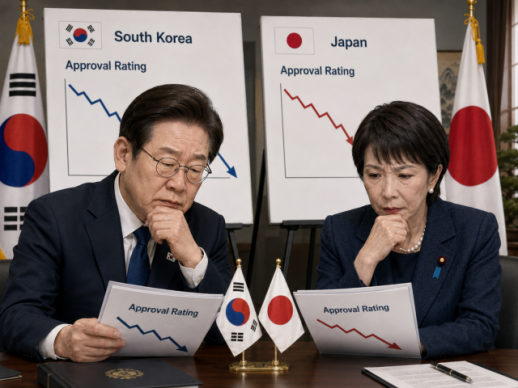 Reality check for Korea's Lee and Japan's Takaichi as their honeymoons end SEOUL, July 20 (AJP) - The chemistry between South Korean President Lee Jae Myung and Japanese Prime Minister Sanae Takaichi appeared immediate, culminating in an impromptu drumming performance during their January summit in Nara. They also had much in common. Both took office as agents of change after periods of political turmoil. Both entered government with approval ratings that would be enviable in almost any mature democracy. Both benefited from weakened opposition camps and presented themselves as decisive leaders capable of breaking with the drift and disorder associated with their predecessors. Lee took office on June 4, 2025, after winning a snap election triggered by the removal of former President Yoon Suk Yeol following his short-lived declaration of martial law. Takaichi became Japan’s first female prime minister on Oct. 21, 2025, giving the governing Liberal Democratic Party a new face after years of scandals, factional conflict and declining public trust. Their political honeymoons were unusually strong. Lee's first Gallup Korea approval rating stood at 64 percent in late June 2025 and later peaked at 67 percent in March and April 2026. Takaichi's Cabinet began with similarly robust support. A Kyodo News poll conducted immediately after its formation put approval at 64.4 percent, while Asahi Shimbun and Mainichi Shimbun surveys measured 68 percent and 67 percent, respectively. Some later polls placed her support above 70 percent. The numbers reflected more than ordinary post-election goodwill. Lee benefited from a widespread desire to restore institutional stability after the martial law crisis. Even voters wary of his combative political style could view his government as a return to normal democratic administration. His emphasis on economic revival, pragmatic diplomacy and active government reinforced the perception that the presidency was functioning again. Takaichi combined the symbolism of becoming Japan's first female leader with a direct and energetic communication style. Her promises to raise disposable income, confront inflation and restore confidence resonated particularly strongly with younger voters. She quickly converted personal popularity into political power. In February, the LDP won 316 seats in the lower house, while the governing bloc, including the Japan Innovation Party, secured 352 of the chamber's 465 seats, exceeding the two-thirds threshold needed to override the upper house on ordinary legislation. By July, however, the mood surrounding both leaders had changed. Lee’s Gallup Korea approval rating fell to 52 percent in a July 14-16 survey, down from 67 percent at its spring peak. His disapproval rating rose to 37 percent. Realmeter placed his positive assessment lower, at 48.4 percent, marking a fifth consecutive week in the 40 percent range. Takaichi's decline was sharper in some polls. An Asahi survey conducted July 18-19 put Cabinet approval at 53 percent, down 7 percentage points from June and the lowest level since her government was formed. A Mainichi poll over the same weekend recorded approval at just 41 percent, down 10 points in a month, while disapproval rose to 44 percent. Polls from different countries and organizations are not directly comparable. Survey methods, political cultures and question wording differ. The more meaningful comparison is the direction of travel within each pollster's series. On that measure, both leaders have moved from unusually favorable conditions into the first genuinely difficult phase of governing. Their immediate problems differ. Takaichi faces a backlash over national identity, gender and the use of parliamentary power. Lee confronts a more diffuse set of doubts involving election administration, financial regulation, housing and younger voters. But the underlying question is the same: Can leaders who rose as symbols of change retain public trust once they become responsible for the failures and contradictions of the systems they control? Takaichi's imperial gamble The immediate trigger for Takaichi's latest decline appears to be parliament's July 17 revision of Japan’s Imperial House Law. The legislation was intended to address the shrinking size of the imperial family and the shortage of potential male heirs. Japan's succession rules permit only men descended through the male line to inherit the Chrysanthemum Throne. The revised law allows male-line descendants of former imperial branches that lost royal status after World War II to be adopted into the current imperial family. Their future male-line sons could then become eligible for succession. It also allows female members of the imperial family to retain their status after marrying commoners and continue performing official duties. Their husbands and children, however, would not become members of the imperial family. What the law does not permit is a female emperor. Princess Aiko, the only child of Emperor Naruhito and Empress Masako, therefore remains excluded. The succession line continues through the emperor's younger brother, Crown Prince Fumihito; Fumihito's son, Prince Hisahito; and the emperor's elderly uncle, Prince Hitachi. The reform addresses an administrative problem — how to maintain enough imperial family members to perform public duties — without confronting what many voters regard as the central question: why the emperor's daughter should remain ineligible solely because she is a woman. Polls have repeatedly shown that roughly 70 percent or more of Japanese voters would accept a female emperor or support Princess Aiko's accession. Instead, the government chose to reach into distant male branches separated from Emperor Naruhito by centuries of genealogy. Some potential candidates share an ancestor with him from roughly 600 years ago. The solution is vulnerable from both sides. Traditionalists may object that bringing people raised outside the imperial household into the family weakens the institution's continuity. Reformists argue that preferring a remote male relative over the emperor's daughter exposes the irrationality of preserving an exclusively male line. The Asahi poll found that 60 percent of respondents believed the revision had not gained sufficient public understanding. Among them, Cabinet approval stood at 42 percent and disapproval at 49 percent, suggesting that the controversy contributed materially to Takaichi’s decline. The Mainichi poll was more negative. Forty-five percent viewed the revision unfavorably, compared with 19 percent who approved. Sixty-two percent said they could not accept the continued exclusion of women from the throne. For Takaichi, the issue carries added symbolism. Her appointment as Japan's first female prime minister was widely seen as a breakthrough in one of the world's most male-dominated political systems. Yet she has long been associated with the conservative wing of the LDP and has resisted changes to traditional family and gender institutions. She is now defending a system in which she can lead the government but the emperor's daughter cannot inherit the throne. Takaichi argues that male-line continuity is a defining element of imperial legitimacy, not a broader judgment about women's ability to lead. But the controversy has reinforced concerns about how her government exercises power after its landslide lower house victory. In the Mainichi poll, 46 percent said the government was not sufficiently careful or respectful in advancing policy, while 38 percent judged its approach favorably. The result echoed opposition accusations that the governing bloc is using its numerical dominance to push through measures without adequately considering public objections. Many younger voters who initially admired Takaichi's energy and economic message did not necessarily embrace her social conservatism. They were drawn to her promises to increase take-home pay, reduce bureaucratic caution and provide faster economic relief. A supermajority can pass a law. It cannot manufacture public consent. Takaichi's government approved a major stimulus program in November 2025, including energy subsidies, tax measures and household assistance. Yet the weak yen, expensive food and energy, social insurance burdens and worries over fiscal sustainability continue to weigh on consumers. Her early support among younger voters was partly transactional. If living standards do not improve, it can disappear quickly. The imperial dispute is therefore dangerous because it reinforces a broader narrative: that the government is spending political capital on conservative institutional priorities while households remain preoccupied with the cost of everyday life. Economic discomfort combined with perceived ideological overreach has weakened governments far more secure than Takaichi's. Lee's more diffuse challenge Lee's decline has no single equivalent to Japan's Imperial House Law revision. Instead, a series of controversies has accumulated since early June, raising questions about competence, oversight and fairness. South Korea's June 3 local elections were marred in some areas by ballot-paper shortages and other administrative failures. The incidents angered voters who were delayed or unable to vote normally and revived broader distrust of the National Election Commission. Documented administrative failures must be distinguished from allegations of deliberate election fraud. Ballot shortages demonstrated serious planning and management problems. They did not prove that votes were fabricated or that officials sought to alter the results. But they occurred in a political environment already saturated with suspicion, allowing genuine logistical failures to fuel more sweeping claims. A Gallup Korea survey conducted June 9-11 found that 67 percent regarded the shortages as poor election management and an infringement of voting rights. Twenty-five percent saw them as evidence of illegal intervention or attempted fraud. On whether entirely new elections should be held, 44 percent agreed and 48 percent disagreed. Support for a rerun was particularly high among younger voters, reaching 67 percent among those aged 18 to 29 and 62 percent among people in their 30s. In the same survey, election-management failures, alleged fraud and problems involving the commission were cited by 16 percent of Lee's critics as the main reason for their negative assessment, the largest single category. His approval fell to 57 percent, down 7 points from the previous Gallup survey. By June 23-25, approval had fallen further to 51 percent. Economic and cost-of-living concerns led negative responses at 15 percent, while election-related issues and housing policy each accounted for 10 percent. The election commission is an independent constitutional institution, not an agency directly controlled by the presidency. Lee expressed regret and called for accountability, positioning himself alongside voters demanding reform. That may have limited the damage, but it did not resolve the deeper problem of institutional distrust. A stock-market success turns into a liability Lee made revival of the domestic stock market a central part of his economic agenda. He promoted corporate governance reform, stronger protection of minority shareholders and measures to reduce the "Korea discount." As the KOSPI rallied, the market became evidence that optimism and reform were returning. That narrative was weakened by extreme volatility in leveraged exchange-traded funds tied to individual companies, particularly Samsung Electronics and SK hynix. Introduced in late May, the products were designed to deliver roughly twice the daily movement of their underlying stocks. Because Samsung Electronics and SK hynix account for an unusually large share of the benchmark index, heavy trading in leveraged products linked to the two companies magnified pressure across the broader market. Such funds must rebalance as prices move. In volatile markets, that mechanism can force additional buying during rallies and additional selling during declines, amplifying momentum in both directions. The KOSPI, previously celebrated as one of the world's strongest major markets, began recording violent daily swings. Retail investors who entered at elevated prices faced losses, margin calls and growing concern that a market promoted as a vehicle for national wealth creation had become excessively speculative. Lee ordered regulators on July 15 to prepare safeguards. The Financial Services Commission suspended new listings of single-stock leveraged funds, increased the minimum retail deposit from 10 million won to 30 million won, raised minimum trading units and strengthened mandatory investor education. There is no evidence that Lee personally approved the products, and public criticism has also focused on regulators, the stock exchange and senior economic officials. Major polls have not yet identified leveraged ETFs as an independent driver of his approval decline. The political risk is nevertheless clear. The episode strikes at one of Lee's central claims: that his government can make Korean markets both more dynamic and fairer to ordinary investors. If retail investors conclude that the state encouraged risk during the boom and intervened only after losses emerged, the controversy becomes a story about unequal responsibility. Profits appear private at the top, while small investors bear the cost of belated regulation. Housing poses a more persistent threat. Korean presidents repeatedly discover that public judgment of the economy is inseparable from apartment prices. Rising prices reward existing owners but exclude younger and first-time buyers. Falling prices threaten highly leveraged households, construction and consumption. There is no politically painless equilibrium. Lee initially appeared to be performing well. In March, 51 percent of Gallup respondents positively assessed the government's housing policy, the highest favorable rating in the pollster's series since 2013. Only 27 percent judged it negatively. Four months later, the balance had reversed. A Gallup survey conducted June 30-July 2 found that 46 percent believed the government was handling housing poorly, while 26 percent approved. Fifty-five percent expected home prices to rise over the next year, compared with 14 percent who expected them to fall. Negative sentiment was strongest among younger adults. More than half of respondents in their 20s and 30s disapproved of the government’s housing policy. Among people in their 30s, 56 percent rated it negatively, the highest share of any age group, while just 15 percent approved. Critics most frequently cited the failure to restrain prices. Lending restrictions and excessive regulation were also mentioned. The tension is obvious. Young Koreans are told that household debt is excessive and tighter lending rules are necessary. But when borrowing limits are tightened without a corresponding fall in prices, people without family wealth are placed at an even greater disadvantage against cash-rich buyers. Credit controls can therefore deepen perceptions of unfairness if they fail to cool the market. Older homeowners may regard rising apartment values as economic security. For salaried workers in their 20s and 30s, they can represent the disappearance of any realistic path into the middle class. Lee knows the political history. The previous progressive administration of Moon Jae-in was badly damaged when Seoul housing prices surged despite repeated regulation. Lee has sought to distinguish himself by combining supply, redevelopment and regional development with financial controls. But voters judge outcomes faster than housing supply can be delivered. Gallup's July 14-16 survey showed housing as the second-most cited reason for disapproving of Lee, at 11 percent. Economic conditions, livelihoods and the weak won ranked first at 16 percent. That combination is politically combustible. Households are not only worried that homes are unaffordable. They also fear that daily costs are rising and their savings are losing purchasing power. Macroeconomic optimism rarely overcomes that experience. Lee's unresolved youth problem Housing is central to Lee’s fourth challenge: weak support among younger voters. Even when his national approval was near its peak, Lee performed less strongly among people in their 20s than among voters in their 40s and 50s. A Gallup report in April showed his approval among young adults remaining in the 40 percent range while his national rating stood in the mid-60s. By June 23-25, approval among those aged 18 to 29 had fallen to 36 percent, the lowest of any age group. Approval among people in their 30s stood at 47 percent, also below the national average. Several forces are at work. The first is the generational gender divide. Young women played an important role in Lee's 2025 victory. Exit polling indicated that about 58 percent of women in their 20s and 57 percent of those in their 30s supported him, while many young men backed conservative or third-party candidates. Lee therefore entered office with a divided youth coalition. Some young women expected stronger action on workplace discrimination, digital sex crimes and gender-based violence and have become frustrated by what they see as excessive caution. Young men remain skeptical of the Democratic Party's positions on military service, recruitment, gender policy and fairness. Attempts to avoid alienating either side risk satisfying neither. Employment is another concern. Young Koreans face intense competition for stable entry-level jobs at large companies and public institutions, while artificial intelligence and automation create uncertainty over white-collar careers. Semiconductor-led growth and rising asset prices do not necessarily translate into opportunity for graduates and first-time job seekers. Housing and asset inequality deepen the frustration. Older generations who bought homes before major price increases accumulated wealth even when wage growth was modest. Younger workers must save from income while the cost of entry moves steadily farther away. A rising stock market was supposed to offer another path to asset building. The leveraged ETF controversy showed how quickly retail participation could become exposure to amplified losses. Political representation is another source of alienation. Younger voters often view mainstream parties as organizations dominated by older politicians who invoke youth during elections but exclude younger people from candidate selection and senior decision-making. This is why Lee's youth problem cannot be repaired with one cash benefit or slogan. It is rooted in a belief that the system distributes opportunity according to accumulated assets, family background, institutional connections and timing rather than effort. Younger voters are also less attached to traditional parties and more willing to shift rapidly over specific fairness controversies involving elections, recruitment, housing loans and investment losses. Lee's strength remains concentrated among voters in their 40s and 50s, whose political identities were shaped by earlier democratic struggles and partisan conflicts. Younger voters are less inclined to support him because of the Democratic Party's historical identity or because the opposition remains associated with Yoon. The memory of martial law still matters, but it cannot indefinitely substitute for answers on housing, jobs and fairness. Two different mandates The comparison between Lee and Takaichi should not obscure the differences between their political systems. Lee is a directly elected president serving a single five-year term. His authority does not depend on remaining party leader or repeatedly winning parliamentary confidence. Takaichi's position depends on control of her party and a parliamentary majority. Even a prime minister with a huge lower house advantage can be removed if internal support collapses. Their approval ratings also carry different implications. Lee's 52 percent Gallup rating remains above half, while the Democratic Party led the opposition People Power Party by 40 percent to 26 percent in the July 14-16 survey. His numbers represent a significant retreat, not a collapse. Takaichi still recorded 53 percent approval in the Asahi poll. But Mainichi's finding of 41 percent approval and 44 percent disapproval suggests her support is more sensitive to pollster, audience and issue framing. The abrupt 10-point fall may also influence expectations inside the LDP. Their opposition camps differ as well. Lee faces conservatives who remain divided and burdened by their association with Yoon and martial law. That weakness allows him to absorb lower approval without immediately losing control of the political agenda. Japan’s parliamentary opposition is also fragmented, but Takaichi's greater danger may come from within the LDP. If lawmakers conclude that her ideological agenda is eroding the electoral advantage created by her personal popularity, internal pressure could grow before the next election. For both Lee and Takaichi, the easy phase is over. Their early popularity rested on what they represented: stability after turmoil, change after stagnation and leadership after drift. Their durability will depend on something harder — whether voters believe the systems they now control are becoming fairer, more competent and more responsive to ordinary life. 2026-07-20 18:01:53