


Latest by
-
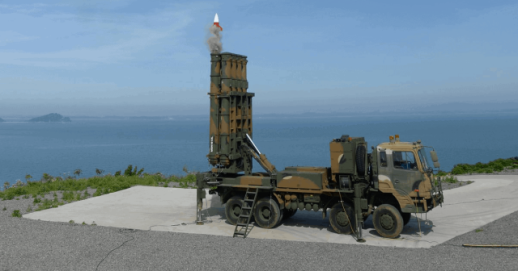 Prolonged US-Iran war may boost Korean missile defense exports: report SEOUL, July 20 (AJP) - A prolonged war between the United States and Iran could create fresh export opportunities for South Korea’s missile defense systems, as Gulf countries face shrinking interceptor stockpiles and sustained Iranian missile attacks, a South Korean brokerage said Monday. DS Investment & Securities said in a report that a ceasefire memorandum between Washington and Tehran had effectively collapsed after just three weeks, with both sides returning to high-intensity missile, drone and air attacks. “Both sides have no clear definition of ‘victory’ and no viable exit strategy,” analyst Kang Tae-ho said in the report. “Missile-based airstrikes and exchanges are therefore likely to continue for the time being.” Iran has stepped up attacks on countries hosting major U.S. military assets, including Bahrain, Kuwait and Jordan. The conflict escalated further after an Iranian missile and drone attack on a U.S. base in Jordan left two American service members dead and another missing. Tehran has said the U.S. violations rendered the memorandum ineffective and vowed to continue its attacks. Washington, for its part, is expected to intensify strikes against the leadership, command facilities and assets of Iran’s Islamic Revolutionary Guard Corps following the deaths of U.S. troops. However, DS Securities said a broader U.S. escalation would carry significant political and economic risks. The report estimated that the direct and indirect costs of the war had already exceeded $100 billion, while about 70 percent of Americans support ending the conflict. The prolonged conflict is also drawing greater attention to South Korea’s defense industry, particularly its missile defense systems, as Gulf countries look to replenish interceptor stockpiles and bolster defenses against sustained Iranian attacks. Iran has expanded its attacks beyond military installations to critical civilian infrastructure, including power generation and desalination facilities in Kuwait. The report also said Patriot interceptor missile stocks are running low, weakening the ability of countries targeted by Iranian ballistic missiles to maintain high interception rates. “The depletion of interceptor stocks is creating replacement demand for air defense systems and a favorable environment for discussions on the introduction of the Cheongung-II and L-SAM,” Kang said. The report identified potential opportunities for additional Cheongung-II purchases in Saudi Arabia, while pointing to possible L-SAM demand in Saudi Arabia, the United Arab Emirates and Iraq. Kuwait and Qatar were also cited as potential markets for the Cheongung-II system. South Korean defense companies could benefit from their ability to offer layered air defense systems covering both medium- and long-range threats, the report suggested. DS Securities selected LIG Defense & Aerospace and Hanwha Aerospace as its top defense-sector picks, reflecting expectations that the prolonged conflict and shrinking interceptor inventories will support further export momentum for South Korean missile defense systems. 2026-07-20 11:07:07
-
 Motorists in their 50s and older own half of all registered vehicles SEOUL, July 20 (AJP) - Half of all registered vehicles in South Korea, excluding those owned by corporations and other entities, are now held by people aged 50 and older, according to data released by the Ministry of Land, Infrastructure and Transport on Monday. The number of motorists in their 50s and older stood at 13.40 million, accounting for 50.2 percent of the 26.68 million privately registered vehicles as of the end of June. More specifically, those in their 50s owned the most vehicles at 6.33 million, followed by those in their 40s with 5.22 million and those in their 60s with 5.09 million. In contrast, vehicles registered to people in their 30s and younger fell to 3.99 million from 4.10 million at the end of last year, making up 14.9 percent of privately registered vehicles. Market analysts attributed the trend to rising vehicle prices and a shift toward premium and large models, which have made middle-aged and older buyers the core consumer group in the market. Reflecting growing demand for larger, premium vehicles, Hyundai Motor's Grandeur sedan led monthly sales in June with 10,062 units sold, as automakers are accelerating the rollout of large SUVs and EVs, including Hyundai's Ioniq 9, Kia's EV9, Volvo's EX90 and ES90, and Genesis' GV90. 2026-07-20 11:05:05
-
 KOTRA and Lotte Home Shopping Launch K-Brand Export Platform in LA KOTRA has established an export platform with Lotte Home Shopping to promote K-beauty and lifestyle products in the western United States. The initiative aims to enhance the market entry potential for domestic small and medium-sized enterprises (SMEs) by combining product displays with consumer experiences and consultations with local distributors.According to KOTRA, the two organizations are operating a K-beauty and lifestyle pop-up store at The Grove in Los Angeles from July 17 to August 15. A total of 39 domestic SMEs are participating in the event.The Grove is a prominent shopping destination frequented by both locals and tourists in Los Angeles. KOTRA plans to showcase products in an area where K-pop and K-beauty consumption is thriving, aiming to increase brand awareness and gauge local market reactions.The pop-up store is themed 'Live Seoul' and features two main areas: 'Seoul Beauty,' which offers personal color diagnosis and makeup classes, and 'Seoul Now,' where visitors can experience K-pop, food, fashion, instant photography, and coin karaoke.KOTRA is linking the consumer-focused pop-up with one-on-one export consultations for major U.S. retail buyers. They will invite representatives from beauty specialty chains, large retailers, and online platforms to explore the potential for local market entry and export contracts for participating companies.Last year, the United States was the largest market for K-consumer goods, with exports in food, beauty, household items, and fashion totaling $6.5 billion. The U.S. beauty and personal care market was valued at $104 billion in the same year.The U.S. consumer goods market varies significantly by region in terms of consumer preferences and distribution structures, making the pop-up a valuable opportunity to assess local reactions and connect with buyers before formal market entry.This event is part of the 'Export Support Project for Retail Companies' launched by the Ministry of Trade, Industry and Energy and KOTRA in April. It aims to support the overseas expansion of domestic retail companies while simultaneously broadening the export channels for SMEs that enter these retail networks.KOTRA is providing marketing, consulting, import customs and tariff information, and buyer consultations for 13 selected retail companies this year. By securing a sales base abroad, domestic retail companies can help SMEs enter the local market without needing to establish separate distribution networks.Kang Kyung-seong, President of KOTRA, stated, "This is a mutually beneficial support model that expands the market for small K-consumer goods companies alongside the overseas expansion of retail companies. We aim to create an ecosystem where the globalization of culture and industry can thrive together."* This article has been translated by AI. 2026-07-20 11:04:00
-
Yoon Suk Yeol Accepts Supreme Court Ruling, Rejects Constitutional Appeal Former President Yoon Suk Yeol, who was sentenced to seven years in prison for obstructing the execution of an arrest warrant related to the declaration of martial law on December 3, has decided not to file a constitutional appeal. Yoon expressed that such an appeal does not align with the current judicial system or his constitutional views. On July 20, Yoon's legal team issued a statement saying, "The recent Supreme Court ruling on Yoon Suk Yeol's case involved significant constitutional issues, including the scope of the Corruption Investigation Office's investigative powers, the president's immunity from prosecution, the limits of compulsory investigations during a president's term, the legality of searches in military secret locations, and the scope of cabinet members' deliberative rights and the establishment of abuse of power charges. Despite this, the Supreme Court made a ruling that contradicts existing precedents without referring the matter to a full bench." They further stated, "The Supreme Court abandoned its responsibility to provide legal interpretations on key legal issues, dismissing most of the case based on factual determinations and subjective judgment. The legal and constitutional questions raised by this ruling are far from trivial, as the highest court has failed to fulfill its duty to ensure the consistency and legal stability of precedents." The legal team noted that they considered various constitutional procedures, including a constitutional appeal, based on these concerns. They mentioned that there were significant internal discussions about the need to seek a constitutional judgment, especially considering the ruling's impact on the public's right to a fair trial and the principle of the rule of law. However, Yoon acknowledged that while he finds many aspects of the Supreme Court ruling difficult to accept, he clearly stated that pursuing a so-called "constitutional appeal" against a final court ruling is incompatible with the judicial system established by the current South Korean Constitution and does not align with his consistent constitutional views. The legal team also expressed agreement with Yoon's constitutional judgment, emphasizing that the constitutional order must respect not only its substantive values but also the distribution of powers and procedural limits that implement those values. They concluded that this decision was based on the principle that respecting the structure of judicial authority and the distribution of powers defined by the current Constitution is essential to uphold the rule of law, leading them to ultimately decide against filing a constitutional appeal. Yoon was arrested and indicted in July of last year on charges of obstructing the execution of an arrest warrant and abuse of power by mobilizing presidential security personnel to interfere with the Corruption Investigation Office's execution of the warrant following the declaration of martial law on December 3, 2024. On July 7, the Supreme Court's third division, led by Justice Lee Suk-yeon, upheld the original seven-year prison sentence for Yoon. This marked the first Supreme Court ruling related to Yoon after 583 days since the declaration of martial law. Following the Supreme Court ruling, the legal team expressed deep regret that the highest court concluded such a significant case without sufficient deliberation from the perspective of the rule of law and warrant principles. They also stated their intention to challenge the constitutionality of the ruling through constitutional procedures, including a constitutional appeal, to protect the fundamental rights guaranteed by the Constitution.* This article has been translated by AI. 2026-07-20 11:00:00
-
Woori Bank Partners with Popular YouTuber for Youth Financial Education Woori Bank is collaborating with popular YouTuber MimiMinu to enhance youth financial education. The initiative aims to engage students by simplifying complex financial concepts through entertainment content and mock investment games. On July 20, Woori Bank announced the release of YouTube entertainment content created in partnership with MimiMinu to promote the Financial Supervisory Service's 'One Company, One School Financial Education' program. The 'One Company, One School Financial Education' program pairs financial institutions with schools across the country to provide students with financial knowledge. Since 2015, Woori Bank has been developing age-appropriate financial education content and conducting classes in schools. In the video, MimiMinu transforms into a high school student and attends financial classes with students. The content also features her participation in a financial musical, allowing students to learn financial concepts in a fun and engaging way. Reflecting the growing interest in investment among youth, the program includes investment education. Students participate in a mock investment game that simplifies complex concepts such as profit, risk, and investment judgment. A Woori Bank representative stated, "We collaborated with a popular creator to make financial education more accessible to youth. We will continue to support education that helps students develop sound financial habits and investment perspectives."* This article has been translated by AI. 2026-07-20 11:00:00
-
Impact of Fuel Price Support Payments Boosts Sales at KGC's Jeonggwanjang Stores Following the government's distribution of fuel price support payments, consumer spending has increased, leading to a double-digit rise in sales at Jeonggwanjang franchise stores.KGC reported on July 20 that sales at Jeonggwanjang franchise stores nationwide increased by 12% during the "Cheer Up, Korea" promotion held from June 11 to June 30 compared to the same period last year.Regionally, the proportion of franchise stores with increased sales outside the capital area was 7 percentage points higher than in the capital area. Notably, sales growth was particularly strong in the Gyeongsang, Jeolla, and Chungcheong regions.New customer acquisition also saw significant growth. During the promotion, sales from new customers rose by 23% compared to last year, outpacing the 13% increase in sales from existing customers. By age group, sales among customers in their 20s surged by 39%, while those in their 30s saw a 19% increase, indicating the largest growth among the 2030 demographic.In terms of specific products, sales of "Vitality" experienced a remarkable 65% increase, marking the highest growth rate. Vitality is a convenient health drink made from six-year-old red ginseng extract combined with traditional ingredients like ginger, jujube, goji berries, and schizandra, along with vitamins B and C, appealing to younger consumers engaged in outdoor activities. Additionally, sales of the flagship product "Everytime" rose by 41%, and "Red Ginseng" sales increased by 33%.This growth trend appears to be influenced by the government's fuel price support payments. Recently, the Ministry of SMEs and Startups analyzed that sales across the nation increased by 10.6% compared to the previous year following the distribution of these payments.A KGC representative stated, "We believe that the increase in franchise sales is linked to the rise in local consumer spending coinciding with summer health management needs. The influx of 2030 customers is also a significant change."Earlier, the government announced that to alleviate the burden on low-income households due to high fuel prices, exchange rates, and inflation, it would provide fuel price support payments ranging from 100,000 to 600,000 won to the bottom 70% of income earners. The payments can be used at franchise stores within the recipient's residential area until August 31, and any unused amounts will automatically expire. 2026-07-20 10:56:00
-
Koo Yun-cheol: Managing Stable Trade Relations with the U.S. and Promoting K-AI Package Koo Yun-cheol, Deputy Prime Minister and Minister of Economy and Finance, stated on July 20 that the government will prioritize national interests in managing stable trade relations with the United States and will promote a Korean-style AI package based on concessional official development assistance (ODA).Koo made these remarks while presiding over the 271st External Economic Ministers' Meeting at the Government Sejong Center. The meeting addressed recent trade issues with the U.S. and the direction of responses, as well as the K-AI (Artificial Intelligence) package centered on concessional ODA.The government is currently responding to the U.S. global temporary tariffs from a national interest perspective. Koo noted, "We are establishing a framework to implement U.S. investments and are reviewing the commercial viability of projects. We will closely consult with the U.S. to manage trade relations stably, prioritizing national interests."Discussions also took place regarding the strategy for promoting the K-AI package for strategic economic cooperation. The plan aims to enhance the growth potential of developing countries and contribute to the realization of a global AI-based society through a concessional ODA-based K-AI package.Additionally, the government plans to continuously expand the menu of Korean-style K-AI package projects, developing signature projects and disseminating them to developing countries through a global AI hub to be established in Korea.Koo explained, "We have prepared a project menu based on Korea's strengths in seven key areas, including water resources, health, and culture. We plan to utilize various development cooperation tools, such as the Economic Development Cooperation Fund (EDCF), Knowledge Sharing Program (KSP), multilateral development bank (MDB) trust funds, and cooperative loans, in an organic manner to provide support."The meeting also discussed plans to address key issues at the World Trade Organization (WTO) and the promotion of a multilateral green economy agreement. The government views the weakening of the WTO's functions as a threat to the international trade order. It also believes that trade policies introduced by various countries to combat climate change are acting as new protectionist barriers.Koo stated, "We will respond to key tasks such as WTO reform discussions, early announcements of investment facilitation agreements, and the end of digital tariff-free practices. We will actively participate in discussions on forming new trade norms related to the green economy to reflect our position and support the enhancement of our economy's green industry competitiveness."Regarding the progress of the Comprehensive Development Assistance Program (CDAP) between South Korea and Bangladesh, Koo emphasized the need to expand cooperation foundations into new markets. Bangladesh, with the eighth-largest population in the world, is considered a key market in South Asia, having experienced annual growth rates of around 6% since 2000.Koo remarked, "The Korea-Bangladesh Comprehensive Economic Partnership Agreement (CEPA) will not only enhance our companies' market accessibility but also serve as a strategic foothold for entering the South Asian market. We expect to expand cooperation beyond the existing focus on textiles and clothing to various sectors, including infrastructure, manufacturing, and digital technology."* This article has been translated by AI. 2026-07-20 10:52:00
-
Financial Institutions Restructure to Enhance Consumer Protection and Support Seogumwon and Shinbokwi have both undergone organizational restructuring aimed at providing quicker policy support for low-income financial assistance and enhancing consumer protection against illegal lending and complaints. According to the financial sector on July 20, Seogumwon and Shinbokwi will operate under their restructured organizations starting today. Seogumwon has integrated its previously dispersed guarantee, loan, and review functions into its Financial Business Division, which supplies policy financial assistance through financial companies. This aims to improve the speed of support by closely linking loan execution by financial companies with guarantee reviews by Seogumwon. The Youth Financial Business Division under the Financial Support Division has been restructured into the Future Asset Formation Support Division. This change expands the target demographic for asset formation support beyond just young people to align with the life cycle of all citizens. The Microfinance Division has also been rebranded as the Microfinance Support Division. The counseling function has been strengthened as well. The Customer Support Division has been renamed the Counseling Support Division, incorporating the Counseling Planning Department and the Non-Face-to-Face Counseling Department. The plan is to shift from a system where citizens visit the institution to apply, to a proactive counseling system that reaches out to users at risk of financial crises. The data research function of the Strategic Planning Division has been advanced into a research center system, and the Public Relations Cooperation Office has been restructured into a Public Relations Office. The organizational structure has changed from four divisions, 15 departments, and three offices to four divisions, 15 departments, and four offices. Shinbokwi has established a Future Business Promotion Division directly under the chairperson. This division consolidates functions related to business improvement and new business development, which were previously scattered across the Strategic Planning and Management Innovation sectors, and will also be responsible for planning international and overseas activities. The head of the Future Business Promotion Division will also serve as the secretary general. The secretary's office, previously under the Human Resource Management Division, has also been moved to report directly to the chairperson. This is seen as a measure to enhance the chairperson's direct oversight of major projects and organizational operations. A new Consumer Protection Department has also been created. Functions related to illegal lending responses and complaint handling, previously managed by the Customer Service Operations Department, have been transferred to the Consumer Protection Department to ensure these responsibilities are handled by a dedicated unit. A Shinbokwi official stated, “The Future Business Promotion Division will oversee the innovation and new business development functions that were previously dispersed within the organization,” adding, “We have also strengthened consumer protection by establishing a separate department.” However, it was clarified that this restructuring is not aimed at merging Seogumwon and Shinbokwi. A Shinbokwi official noted, “This is not a restructuring for the purpose of institutional integration, but rather to enhance business innovation and consumer protection.” Meanwhile, the appointment of the next deputy director of Seogumwon has been delayed by about three months. 2026-07-20 10:48:00
-
Gabia Shares Surge Amid Macquarie's Tender Offer and Delisting Plans Gabia's shares have surged to the upper limit following news of a tender offer from Macquarie Asset Management and plans for voluntary delisting.According to the Korea Exchange, as of 10:42 a.m., Gabia's stock was trading at 44,050 won, up 10,150 won (29.94%) from the previous trading day.On the same day, the Financial Supervisory Service's electronic disclosure system revealed that DCK Investment, a special purpose company established by Macquarie Asset Management, announced a tender offer for 9,805,505 common shares of Gabia, representing 73.1% of the total issued shares.DCK Investment stated, "The purpose of the tender offer is to acquire management rights through mergers and acquisitions (M&A) and to facilitate delisting. We aim to expedite Gabia's voluntary delisting to make it a wholly-owned subsidiary of the tender offeror."This transaction involves both the acquisition of management rights and the tender offer. On July 17, Macquarie signed a stock purchase agreement (SPA) to acquire 3,270,248 common shares (24.4% stake) held by Kim Hong-guk, Gabia's largest shareholder and co-CEO, for a total transaction value of 157 billion won.The tender offer price is set at 48,000 won per share, which is 41.6% higher than the closing price of 33,900 won on the last trading day before the announcement. The tender offer period runs from today until September 17, with the settlement date scheduled for September 21.* This article has been translated by AI. 2026-07-20 10:48:00
-
China Launches Five Attack Submarines in First Half of 2026, Totaling 14 in Service China is accelerating the construction of attack submarines, narrowing the gap with the United States.The Chinese Navy launched five attack submarines in the first half of this year, according to a report by the French media outlet Le Figaro on July 20. This estimate is based on satellite imagery analysis rather than an official announcement from China.Among the five submarines, two are of the 093B class. Once these two are commissioned, the Chinese Navy will operate a total of eight 093B nuclear submarines. One of the five is a 095 class submarine, while the remaining two are believed to be a new, undisclosed model known as the 095A class.China had six attack submarines in operation at the beginning of 2020. As the country enhances its submarine construction capabilities, it is rapidly increasing its fleet size. If all five submarines are commissioned, China will have a total of 14 attack submarines. The report predicts that this number could rise to 17 within the next one to two years.The United States currently operates about 49 attack submarines, followed by Russia with 17. This positions China as the third-largest operator of attack submarines in the world, ahead of the United Kingdom and France, each with six.While China is quickly closing the gap with the U.S. in terms of the number of attack submarines, analysts suggest that the U.S. still maintains a significant advantage, particularly in areas such as stealth, crew proficiency, and combat experience. Consequently, it is believed that China will deploy its attack submarines in the South China Sea, the Taiwan Strait, and the Second Island Chain rather than in distant waters.Meanwhile, the Chinese People's Liberation Army announced that on July 6, a strategic nuclear submarine successfully launched a submarine-launched strategic missile equipped with a simulated warhead in international waters of the Pacific, hitting its designated target. Although the Chinese military did not disclose the specifications of the missile, The New York Times speculated that it was likely the JL-3 submarine-launched ballistic missile (SLBM). 2026-07-20 10:48:00