


Latest by
-
 Simplified Foreign Account Opening Process in South Korea Foreign corporations can now simplify the process of opening investment accounts with domestic financial institutions by submitting just a single LEI issuance confirmation document instead of multiple identity verification documents.The Korea Securities Depository announced on July 16 that it began offering the 'LEI Issuance Confirmation Document Service' in April. This document certifies the issuance status of the Legal Entity Identifier (LEI) held by foreign corporations, including the corporate name, country of establishment, and level of information verification.The LEI is a 20-character international standard identifier assigned to distinguish entities participating in financial transactions. It was introduced to address issues during the global financial crisis when different identifiers used by financial institutions made it difficult to quickly assess the parties involved in derivative transactions and the associated risks.Previously, the government abolished the foreign investor registration system in December 2023 to enhance access for foreign investors to the domestic capital market. Individuals can now open accounts using their passport numbers, while corporations can do so using their LEIs. However, foreign corporations were required to translate and notarize their corporate registration documents if they did not possess physical identity verification documents despite having an LEI.To alleviate this burden, the Korea Securities Depository secured the authority to issue confirmation documents after discussions with the Global Legal Entity Identifier Foundation (GLEIF). In collaboration with the Korea Federation of Banks, it revised the guidelines for financial real-name transactions to include the LEI issuance confirmation document as an official identity verification document for foreign investors. As a result, holders of 'Level 1' LEIs, which have fully verified corporate information, can now complete identity verification with just the issuance confirmation document, without the need for additional translation or notarization. Approximately 88% of LEIs worldwide fall under Level 1.The Korea Securities Depository is the only LEI issuing authority globally that can issue confirmation documents for LEIs issued by other countries and institutions. Users can apply for and print the confirmation document in PDF format through the Korea Securities Depository's LEI management system, 'LEI-K.' The document features anti-tampering barcodes and electronic signatures. To support the establishment of this system, the issuance fee will be temporarily waived.According to the Korea Securities Depository, a total of 200 confirmation documents were issued by the end of April since the service began. Of these, 137 were for funds, 59 for general corporations, and 4 for government agencies, including the International Monetary Fund (IMF) and the New Jersey State Pension Fund.Currently, the Korea Securities Depository provides LEI services to nine English-speaking countries, including South Korea, the United States, the United Kingdom, and Singapore. As of the end of March this year, a total of 2,008 LEIs are being issued and managed.* This article has been translated by AI. 2026-07-16 17:40:00
-
Uber Begins Acquisition Process for Delivery Hero, Parent Company of Baemin Uber, the largest delivery platform in the world, has initiated the acquisition process for Delivery Hero, the parent company of the South Korean food delivery service Baemin.On July 16, local time, Reuters reported that Uber launched a public tender offer for shares of Delivery Hero. The offer price is set at €41.50 (approximately $70.41), representing a premium of about 34% over the three-month volume-weighted average share price as of the previous day.This acquisition would value Delivery Hero at $14.8 billion (approximately 21.89 trillion won) and is expected to position it as the largest food delivery company in the world, excluding China, with a total gross merchandise value of $236 billion last year, according to Reuters.Uber already holds nearly 37% of Delivery Hero's shares, and it is reported that Dutch investment firm Prosus, which owns about 17% of Delivery Hero, has agreed to sell its stake to Uber.The acquisition is anticipated to be completed in the second half of next year, after which Baemin is expected to become a subsidiary of Uber. Amid increasing competition from food delivery companies like DoorDash, Uber has been pursuing the acquisition of Delivery Hero to strengthen its market position.Kristin Skogen Lund, chair of Delivery Hero's supervisory board, emphasized, "The food delivery business is highly competitive, and success is determined by scale. Partnering with a strong ally is the best course of action for Delivery Hero to secure its future competitiveness." 2026-07-16 17:40:00
-
Korea's Drug Approval Process Reduced to 240 Days to Boost K-Bio Competitiveness The Ministry of Food and Drug Safety has reduced the drug approval and review period from 420 days to 240 days, establishing a world-class rapid review system.During a report on the second half of the year held at the Blue House on July 16, the ministry presented its key achievements from the first half of the year and plans for the upcoming months.The ministry achieved its goal of reducing the drug approval and review period to 240 days ahead of schedule, initially set for the fourth quarter of this year. Additionally, it has focused on ensuring food and drug safety in line with consumer trends, including popular K-culture tourism sites and social media products.The ministry also reported progress in global regulatory cooperation, expanding the foundation for the overseas market entry of K-medical products and K-food through the designation of the United Arab Emirates as a reference country for pharmaceuticals and the signing of a comprehensive registration agreement for Korean and Chinese food exporters. Furthermore, it has engaged with the public through site visits and policy discussions to gather opinions and identify key safety tasks.Building on these achievements, the ministry plans to accelerate follow-up tasks centered on safety policies that the public can feel in the second half of the year.To ensure consumer rights and health protection, the ministry will expand the labeling requirements for genetically modified (GMO) foods to include those without GMO residues and will publicly disclose the results of harmful substance analyses in tobacco for the first time in the country.Support for enhancing the global competitiveness of K-food, K-beauty, and K-bio will also be expanded. The ministry plans to establish a public halal certification system for food and operate a consultative body for global cosmetics regulatory authorities, as well as develop a regulatory support system for contract development and manufacturing organizations (CDMO) in biopharmaceuticals.Additionally, to increase treatment opportunities for patients with rare and intractable diseases, the ministry will expand the emergency import of essential medical products and rationalize the approval requirements for rare drugs and follow-on products with the same ingredients.Artificial intelligence (AI) will be actively utilized in food safety management. The ministry plans to introduce AI import food inspectors, AI foreign substance investigators, and an AI overseas direct purchase app, while providing real-time food safety information through digital platforms like FoodQR.The ministry will also pursue regulatory improvements to prevent consumer confusion and misrepresentation. It will revise regulations related to the labeling and formulation of foods that use names or forms similar to pharmaceuticals and will establish a dedicated organization to eradicate various unfair practices in food advertising, including those involving AI.To combat the misuse and illegal distribution of medical narcotics, the ministry will introduce punitive fines and establish a comprehensive monitoring system for narcotics misuse (K-NASS), enhancing the surveillance framework. Plans are also in place to improve the response system from prevention to rehabilitation.Additionally, during the World Heritage Committee meeting in Busan starting July 19, the ministry will operate a food safety management team and activate a rapid response system for foodborne illnesses, ensuring thorough food safety management during the summer.Oh Yu-kyung, head of the Ministry of Food and Drug Safety, stated, "The second half of the year will be a turning point for innovation in food and drug safety management, integrating AI and digital technology. We will prioritize public safety while further strengthening global cooperation."* This article has been translated by AI. 2026-07-16 17:32:00
-
Weather Forecast: Overcast Nationwide on Constitution Day with Rain in Southern Regions On July 17, Constitution Day and a Friday, the weather will be generally overcast across the country, with rainy season showers expected mainly in the southern regions, including Chungcheong.Expected rainfall amounts are 20-60 mm in Daejeon, Sejong, southern Chungcheong, and 30-80 mm in Jeonbuk, Gwangju, and Jeonnam. Busan, Ulsan, and Gyeongnam are also forecasted to receive 30-80 mm, while Daegu and Gyeongbuk may see 20-60 mm of rain. Jeju Island is expected to receive 5-30 mm.This rainy season is expected to expand nationwide, including the capital region, starting from the weekend of July 18.On the morning of July 17, the lowest temperatures are predicted to range from 21 to 25°C, with daytime highs expected to be between 27 and 33°C.Morning lows by region are forecasted as follows: Seoul, Incheon, Suwon, Chuncheon, Gangneung, Daejeon, and Sejong at 23°C; Cheongju, Jeonju, Daegu, Busan, and Ulsan at 24°C; Gwangju and Changwon at 25°C; and Jeju at 26°C.Daytime highs are expected to be 32°C in Seoul, 31°C in Incheon, Suwon, Chuncheon, Cheongju, and Jeju, 30°C in Daejeon, Sejong, Jeonju, Gwangju, Ulsan, and Changwon, and 29°C in Gangneung and Busan. Daegu is expected to be the hottest, reaching 33°C.Seoul, Incheon, and Suwon will remain overcast throughout the day, while Chuncheon will see increased cloud cover in the afternoon. Daejeon may experience rain at times during the morning and afternoon, and rain is expected to continue in Jeonju, Gwangju, Daegu, Busan, Ulsan, Changwon, and Jeju.Waves in the East and South Seas are expected to reach 0.5 to 1.5 meters, while the West Sea will see waves of 0.5 to 1.0 meters. Offshore wave heights are forecasted to be 0.5 to 2.0 meters in the East and South Seas and 0.5 to 1.5 meters in the West Sea.* This article has been translated by AI. 2026-07-16 17:32:00
-
South Korea Holds NSC Meeting to Address U.S. Trade and Security Issues The National Security Office of South Korea convened a meeting of the National Security Council (NSC) Standing Committee on July 16 to review trade and security issues between South Korea and the United States and discuss a multi-agency response strategy.The NSC stated that the meeting was chaired by Suh Wook, the head of the National Security Office, and included representatives from the Ministry of Economy and Finance, the Ministry of Trade, Industry and Energy, and the Fair Trade Commission, among others. Notably, South Korean Ambassador to the U.S. Kang Kyung-wha, who was temporarily back in the country, also attended.Participants reviewed key issues between the two countries and discussed ways to establish a consistent response strategy.The National Security Office indicated that it plans to maintain a continuous cooperation system among relevant ministries to maximize national interests, in line with the close connection between trade issues and security agendas.Suh stated, "As uncertainties in the external environment increase, we must coordinate our response measures to protect national interests based on a common understanding. Since U.S.-Korea relations are intertwined with trade and security, various ministries must work together organically to advance these relations."* This article has been translated by AI. 2026-07-16 17:32:00
-
GC Green Cross Strengthens Bio Supply Chain Collaboration with Cytiva GC Green Cross is enhancing its collaboration with global life sciences company Cytiva to strengthen the supply chain for biopharmaceuticals. The partnership aims to secure a stable production base for its product 'Aliglo,' targeting the U.S. market, and to expand cooperation in next-generation bioprocessing technologies.On July 16, GC Green Cross announced that it has signed a memorandum of understanding (MOU) with Cytiva to establish a stable supply system for essential consumables needed for biopharmaceutical production and to collaborate on next-generation bioprocessing technologies.This agreement marks the 30th anniversary of their partnership, which began with their first transaction in 1996. The two companies shared strategies to respond to changes in the global biopharmaceutical market.Under the agreement, they plan to establish a priority supply system for essential consumables, such as virus removal filters, needed for the production of Aliglo, a key blood product for entering the U.S. market, to address global supply chain volatility.Additionally, they will utilize Cytiva's APAC Fast Trak center in Songdo, Incheon, to expand support for process optimization technologies for messenger RNA (mRNA) and cell and gene therapies (CGT), as well as training programs.Shin Woong, head of GC Green Cross, stated, "The collaboration we have built with Cytiva over the past 30 years has laid the foundation for GC Green Cross's growth in the global blood product market. With this agreement, we aim to ensure stable global supply of Aliglo and enhance our competitiveness in developing next-generation biopharmaceuticals."Meanwhile, Aliglo, a 10% immunoglobulin (IVIG) product developed by GC Green Cross, received approval from the U.S. Food and Drug Administration (FDA) in 2023 and generated $106 million (approximately 159.3 billion won) in sales in the U.S. last year.* This article has been translated by AI. 2026-07-16 17:28:00
-
KOSPI Plummets Over 6% as Sell-off Triggers Circuit Breakers The KOSPI index fell more than 6%, dropping to the 6,800 level due to massive sell-offs by foreign and institutional investors. The volatility in the market increased significantly, prompting the activation of sell-side circuit breakers in both the KOSPI and KOSDAQ markets.On July 16, the Korea Exchange reported that the KOSPI closed at 6,820.60, down 463.81 points (6.37%) from the previous trading day.The index opened at 6,960.50, down 323.91 points (4.45%), and continued to decline, reaching the 6,800 level during trading.As volatility increased early in the session, sell-side circuit breakers were activated in both markets. The Korea Exchange triggered a sell-side circuit breaker at 9:10 a.m. when the KOSPI 200 futures price fell more than 5% from the reference price for one minute, suspending the effectiveness of program sell orders in the securities market for five minutes. Subsequently, at 10:20 a.m., the KOSDAQ 150 futures price dropped 6.07%, and the KOSDAQ 150 index fell 5.52% for one minute, leading to a similar suspension in the KOSDAQ market.Overnight, U.S. stocks closed higher as the Producer Price Index (PPI) for June fell 0.3% from the previous month, below market expectations, and major financial firms like BlackRock and Morgan Stanley reported strong earnings. However, the Philadelphia Semiconductor Index dropped 2.08%, and shares of SK Hynix's American Depositary Receipts (ADRs) fell 9%, contributing to a decline in investor sentiment in the domestic market.In the securities market, individual investors made a net purchase of 4.8972 trillion won, while foreign and institutional investors sold a net 2.0107 trillion won and 3.0861 trillion won, respectively.Among the top market capitalization stocks, most saw declines, including SK Hynix (-11.53%), Samsung Electronics (-8.77%), SK Square (-12.30%), Samsung Electro-Mechanics (-9.62%), Hanmi Semiconductor (-10.02%), Hyundai Motor (-2.07%), LG Electronics (-7.73%), and KB Financial (-0.28%).The KOSDAQ index closed at 791.84, down 37.59 points (4.53%). It opened at 813.32, down 16.11 points (1.94%), and fell below the 800 level due to selling pressure from foreign and institutional investors.In the KOSDAQ market, individual investors made a net purchase of 508.7 billion won, while foreign and institutional investors sold a net 371.4 billion won and 157.6 billion won, respectively.Among the top KOSDAQ stocks, declines were seen in Alteogen (-4.16%), EcoPro BM (-7.03%), EcoPro (-7.41%), JUSUNG Engineering (-10.31%), Rainbow Robotics (-7.67%), Wonik IPS (-1.40%), PSK (-4.45%), Rino Industry (-7.19%), and Kolon TissueGene (-20.28%).Lee Kyung-min, a researcher at Daishin Securities, stated, "The sharp decline in U.S. semiconductor stocks has raised concerns about the memory market, leading to increased selling pressure from foreign and institutional investors, particularly on Samsung Electronics and SK Hynix. The investment sentiment has significantly weakened, resulting in the 19th activation of sell-side circuit breakers for the KOSPI and KOSDAQ this year, further amplifying market volatility."* This article has been translated by AI. 2026-07-16 17:24:00
-
President Lee Criticizes Claims of Neglect in Mega Projects for Jeonbuk President Lee Jae-myung criticized claims that Jeonbuk has been neglected in the "three mega projects," stating, "Ordinary citizens might wonder, 'Why are they investing so much elsewhere while we only get this much?' It is truly problematic when responsible individuals make such strange comments." He also labeled these remarks as "irresponsible."During a meeting at the Blue House with officials from the Ministry of Land, Infrastructure and Transport, the Ministry of Agriculture, Food and Rural Affairs, and the Ministry of Oceans and Fisheries, President Lee referenced Hyundai Motor Group's 9 trillion won investment in Saemangeum.He noted, "Hyundai's investment is indeed substantial. However, when we hear about 800 trillion won investments elsewhere, it creates a perception of disparity regarding the Saemangeum investment, leading to questions like, 'What is this?'"President Lee added, "The 9 trillion won is just the initial investment estimate, and if the project expands successfully, it could lead to massive investments multiplying by several times."He explained that the Honam semiconductor cluster is a decision made by companies like Samsung and SK based on economic logic, not merely a matter of establishing public enterprises. "It is not something that can be addressed by simply adding more to appease those who feel slighted," he said.He further emphasized, "Making unrealistic promises that only serve to upset people does not lead to solutions. This is what we call irresponsibility. The primary virtue of a public official is to take responsibility."President Lee stressed, "It is the worst behavior to make statements that one cannot stand behind, just to please someone, and then create a worse situation later."Additionally, he criticized the lack of understanding among agency heads regarding their most critical tasks, stating, "It is absolutely unacceptable to be unaware of even the basic outlines of their responsibilities, especially after previous reports highlighted these issues and caused embarrassment."He remarked, "I saw that some agency heads still do not know what their jobs entail, despite having been pointed out in previous meetings. This is simply unacceptable."* This article has been translated by AI. 2026-07-16 17:24:00
-
New Listing Temporarily Halted, Deposit Requirement Raised to 30 Million Won Authorities have announced measures to address the concerns surrounding single stock leverage, which has been identified as a major contributor to recent market volatility. The financial authorities have decided to immediately suspend the listing of new single stock leverage products, including inverse and covered call options, and will require a full cash deposit of 30 million won, up from the previous 10 million won, starting around August 5. Additionally, they will implement stricter entry barriers for single stock leverage investments by enhancing investor education and increasing the minimum trading unit.On July 16, the financial authorities announced these measures following a market situation review meeting chaired by the Deputy Prime Minister at the Korea Federation of Banks.To prevent overheating in investment demand, the launch of new single stock leverage products will be halted immediately, and all related marketing by securities firms and asset management companies will be banned. Until the market stabilizes, the listing of all products, except for the currently listed 16 single stock leverage and inverse ETFs and 2 ETNs, will be temporarily suspended.The required basic deposit for purchasing single stock leverage products will increase from 10 million won to 30 million won. Previously, the deposit could include not only cash in the account but also the market value of stocks, ETFs (excluding leverage ETFs), and bonds, calculated at approximately 70% of their market value. Going forward, the deposit must be made entirely in cash.Existing investors will also need to meet the 30 million won deposit requirement if they wish to purchase additional single stock leverage products. While some securities firms previously lowered or waived the basic deposit based on individual trading experience and credit status, this practice will also be prohibited. This requirement will apply equally to both domestic and foreign single stock leverage products based on domestic and foreign stocks.Furthermore, the minimum trading unit for single stock leverage products will be increased. Previously, investors could trade from 1 unit, allowing for lower-cost investments in underlying assets like Samsung Electronics or SK Hynix. In the future, trading will only be possible in increments of 20 units.Investor risk education will also be strengthened. Previously, investors were required to complete a total of 2 hours of training, consisting of 1 hour of basic training and 1 hour of advanced training. With the addition of case-based advanced training, the advanced training duration will increase from 1 hour to 2 hours. Moreover, there will be more mid-chapter assessments, and those who do not meet the required scores will need to retake the relevant chapter.The responsibility for managing the discrepancy rate for liquidity providers (LPs) and asset management companies will also be reinforced. The current obligation for LPs to manage the closing price discrepancy rate, set at 3% for domestic stock ETFs and ETNs and 6% for foreign stock ETFs and ETNs, will be tightened to 2% for domestic and 5% for foreign. If LPs violate these obligations, their LP activities for new products may be restricted, and asset management companies managing the ETFs may face limitations on new ETF listings. Additionally, the process for designating a product as a cautionary item for violating the discrepancy rate will be streamlined from the current three steps to two.These measures reflect concerns over increased market volatility following the initial launch of single stock leverage products on May 27, which saw a rapid surge in market capitalization and trading volume.According to the Financial Services Commission, the market capitalization of the 16 single stock leverage and inverse ETFs grew from 4.4 trillion won on their listing date to 11.9 trillion won as of July 15, accounting for 2.5% of the total ETF market. On July 15, trading volume reached 13 trillion won, representing 38.2% of the total ETF trading volume, with a turnover rate exceeding 100%.Relevant agencies are committed to swiftly implementing measures to stabilize the market and will continue to monitor the situation closely. Should the market remain unstable, they will consider additional measures through in-depth discussions with experts and investors. 2026-07-16 17:24:00
-
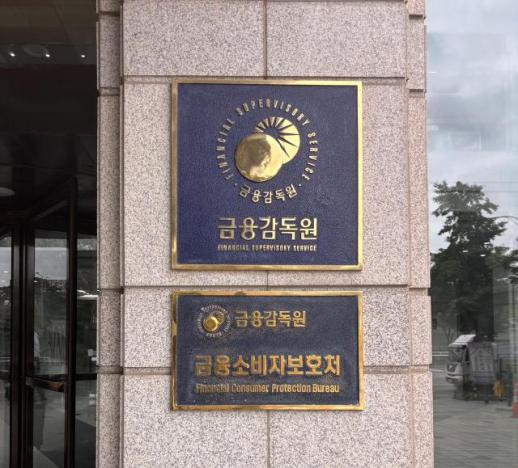 FSS chief warns of greater market volatility after BOK's rate hike SEOUL, July 16 (AJP) - Financial Supervisory Service (FSS) chief Lee Chan-jin on Thursday warned that market volatility could intensify after the Bank of Korea (BOK) raised its benchmark interest rate. It also called for financial institutions to strengthen their preparedness against potential risks. The warning followed the central bank's decision to raise its benchmark rate by 25 basis points earlier in the day, a move Lee said was largely in line with market expectations. Speaking at a financial market monitoring meeting, Lee pointed to elevated volatility in South Korea's stock market. "Continued instability in the Middle East and the possibility of further U.S. interest rate hikes could further increase volatility in financial markets," he said. Lee instructed officials to closely monitor sector-specific risks that could arise from higher interest rates, including tighter financing conditions for companies and increased debt-servicing burdens for vulnerable borrowers. The FSS said it will also strengthen oversight of financial institutions and closely monitor margin lending and unsettled stock trading at brokerages, as heightened market volatility could trigger forced liquidations and amplify losses for retail investors. It added that it will respond promptly to any signs of market stress. The regulator will also continue monitoring the foreign exchange market following South Korea's transition to 24-hour won trading, including exchange rate movements, trading volumes and financial institutions' foreign currency funding conditions. 2026-07-16 17:21:20