


Latest by
-
 World Cup Final: Yamal Reunites with Messi After 19 Years The 2026 North America World Cup final will feature a matchup between Argentina and Spain, drawing attention to a photo of Lionel Messi and Lamine Yamal taken 19 years ago.According to a report by Yonhap News on July 16, citing the Associated Press, Yamal, who was a newborn in the 2007 photo, has now become a key player for the Spanish national team and will face Messi on the World Cup stage for the championship.The photo was taken in the fall of 2007 at Camp Nou in Barcelona during a charity calendar shoot for the newspaper Sport and UNICEF. At the event, FC Barcelona players posed with children, and a family that included Yamal was paired with the then-20-year-old Messi. Yamal's mother, originally from Equatorial Guinea, is also featured in the image.In the photo, a young Messi, with long hair, is seen bathing the infant Yamal in a plastic tub. The image gained worldwide attention when Yamal's father shared it on social media in 2024.Joan Monfort, the photographer, recalled in an interview with the AP that Messi was very shy and reserved at the time. He described entering the locker room to find a baby in a tub and noted that Messi initially didn't know how to hold the child.Monfort expressed that the connection between the two players through a single photograph is a "remarkable coincidence" and described it as a moment when "the stars aligned." According to Yonhap News, the two, who met by chance in a Barcelona locker room 19 years ago, will now compete for the World Cup trophy. Messi is seeking a second consecutive title for Argentina, while Yamal aims for Spain's second championship and its first in 16 years.The 2026 North America World Cup final is set to take place on July 20 at 4 a.m. KST at MetLife Stadium in New Jersey, USA.* This article has been translated by AI. 2026-07-16 17:12:00
-
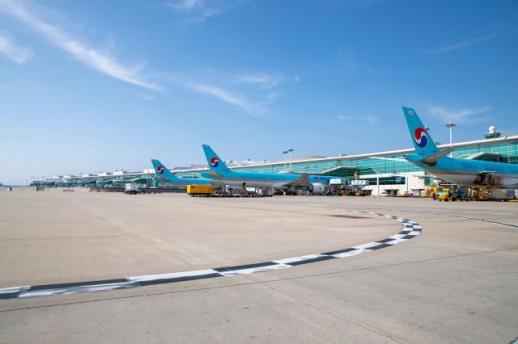 Eased fuel surcharges boost overseas bookings, but keep travelers on short-haul trips SEOUL, July 16 (AJP) - South Koreans are booking more overseas trips as falling jet fuel prices ease airline surcharges, but demand remains concentrated on nearby destinations as the weak won and high travel costs keep them tightening their purse strings. The country's flagship carrier Korean Air on Thursday said that its international fuel surcharge for tickets issued in August will fall five levels, from Level 19 in July to Level 14. The airline will charge between 35,200 won (US$24) and 259,200 won each way, depending on the distance, down from between 46,400 won and 344,000 won in July. For routes to New York, Boston and Atlanta, the surcharge on a round-trip ticket will fall by 169,600 won to 518,400 won. On shorter routes, such as Fukuoka in Japan and Qingdao in China, the round-trip charge will decline by 22,400 won to 70,400 won. The reduction reflects a decline in the average price of Singapore jet fuel, the benchmark used by South Korean airlines. The average fell 16.2 percent to $119.06 per barrel between June 16 and July 15, from $142.09 during the previous calculation period. A Korean Air staffer said ahead of the announcement that fuel surcharges are determined based on the average price through the 15th of each month, rather than daily fluctuations in international oil prices. August will mark the third consecutive monthly reduction since fuel surcharges reached a record-high Level 33 in May. Even after falling to Level 14, the August charges will remain roughly twice as high as those imposed in March, before the impact of the U.S.-Iran war was fully reflected in aviation fuel prices. The lower surcharges are already showing signs of stimulating overseas travel demand. Budget travel agency Yellow Balloon Tour said bookings for overseas package tours departing in July and August increased 61.2 percent after the July fuel surcharge reduction was announced. It compared bookings made between June 16 and July 9 with those made between May 23 and June 15. Japan recorded the largest increase, with bookings surging 174.5 percent. Viet Nam followed with a 73.4 percent increase, while bookings for China rose 62.5 percent. Seoul-based Yellow Balloon Tour said demand was concentrated on destinations with relatively short flight times and lower overall costs. Hokkaido, Kyushu and Osaka were the most popular Japanese destinations, while Da Nang, Nha Trang and Phu Quoc led bookings for Viet Nam. The figures suggest that lower fuel surcharges are acting as a trigger for travelers who had postponed making reservations because of higher costs. However, the strongest response has come from short-haul travel, where the actual reduction in fuel surcharges is smaller than on long-distance routes. The immediate impact of the August reduction on peak summer passenger numbers may also be limited, as many travelers have already booked their flights. "July and August see the largest number of passengers, but many of them have already purchased their tickets," a Korean Air official said. The trend reflects a broader shift among South Korean travelers toward shorter, more frequent and value-conscious trips in 2026. A Booking.com survey of 32,800 travelers worldwide including 800 South Koreans, found that Korean respondents traveled within Asia an average of 1.95 times, compared with the global average of 1.38 times. The company described the pattern as a preference for traveling “short and often” rather than taking a single extended trip. The won has recently strengthened to below 1,500 against the dollar but remains weak, with the exchange rate standing at around 1,478 won per dollar on Thursday. The exchange rate continues to raise the cost of hotels, meals and other expenses overseas, particularly in the United States and Europe. Renewed instability in the Middle East, including the latest closure of the Strait of Hormuz, could further strengthen demand for shorter and less expensive trips closer to home. The August reduction could provide another boost to late-summer travel and bookings for the Chuseok holiday period. 2026-07-16 17:11:47
-
'Tomorrow is Taekwondo King 2' to Premiere on July 19, Uncovering Taekwondo Talents SBS Sports' 'Tomorrow is Taekwondo King Season 2' will premiere on July 19.This season is a taekwondo survival program aimed at discovering South Korea's next generation of taekwondo talents. Returning after a year, this season features participants who have overcome a competition ratio of 80 to 1, alongside masters who are former national representatives.Continuing from Season 1, former national taekwondo representative Lee Dae-hoon and 'Taekwondo Trot' star Na Tae-joo will reunite as hosts. Notably, Lee Dae-hoon, who has been appointed as a coach for the U.S. taekwondo national team for the 2028 LA Olympics, will serve as a mentor, analyzing the participants' skills and guiding their development.Newcomers include Kim Min-kyung, a former national shooting representative, and Jang Eun-sil, a former national wrestling representative. They will assess the participants' physical and mental strength based on their competitive experience. Lee Da-bin, a gold medalist from the national taekwondo team who served as a commentator last season, will join as a special master.This season has adjusted its participant criteria to include upper-grade elementary school students. Over 400 applicants submitted their documents, including strong competitors from across the country and even international participants. Only five will earn the title of Taekwondo King.The lineup of participants is noteworthy, featuring a champion from elementary school taekwondo competitions, the niece of former national representative No Eun-sil, and contestants who reached the final eight in Season 1. An international participant from Australia is also set to compete.The first preliminary mission is based on the training programs of actual national taekwondo athletes. It will involve high-intensity challenges that comprehensively evaluate not only taekwondo techniques but also physical fitness, agility, game management skills, and mental resilience.Na Tae-joo stated, "This season requires more composure and rigor than Season 1," while Jang Eun-sil remarked, "I thought it was a children's version of 'Physical: 100.'"Lee Dae-hoon emphasized, "Ultimately, we are selecting friends who will become national representatives," adding, "We need to be more thorough in our evaluations, distinguishing between pass and fail based on objective criteria."The identity of the participants who will advance from the first preliminary round among the 400 applicants will be revealed on July 19 at 9 a.m. on SBS Sports' 'Tomorrow is Taekwondo King Season 2.'* This article has been translated by AI. 2026-07-16 17:04:00
-
 K-pop impresario Park Jin-young to release new single later this month SEOUL, July 16 (AJP) - K-pop singer and producer Park Jin-young will release a new single next week for the first time in about six years, his namesake agency JYP Entertainment said on Thursday. "WET," slated for release on July 23, marks Park's first seasonal release since "When We Disco," his 2020 duet with singer Sunmi, a former member of K-pop girl group Wonder Girls. The reggae-inspired track was also chosen as the main theme song for this year's "Waterbomb," one of South Korea's biggest summer music festivals. With the annual festival slated to be held in several cities featuring live performances by K-pop, hip-hop and EDM artists along with large-scale water fights, Park is scheduled to perform at the ones in Seoul and Busan. It will mark another outing for him after he drew widespread attention for his appearance last year with his vinyl outfit and dance moves. To promote his upcoming single, Park launched a dance challenge featuring part of the song on social media. The challenge has since drawn participation from several K-pop acts including 82MAJOR, Billlie, KickFlip, KISS OF LIFE, MADEIN and WJSN's Dayoung. He also shared a video of himself dancing with RESCENE member Minami. Park debuted in 1994 and founded JYP Entertainment, which has grown into one of South Korea's leading talent mills. Alongside his solo career, he has produced some of the biggest K-pop acts such as ITZY, NMIXX, Stray Kids and TWICE. 2026-07-16 17:01:06
-
APR Announces Interim Dividend for Second Consecutive Year, Total Shareholder Returns Reach 400 Billion Won Global beauty company APR will distribute an interim cash dividend of approximately 93.6 billion won this year.APR announced on July 16 that its board of directors has decided to pay a cash dividend of 2,500 won per common share. The record date for the dividend is set for August 3, and the payment will be made on August 31.This interim dividend marks the second consecutive year of distribution, aimed at expanding shareholder returns based on stable performance and financial soundness.Since its listing in 2024, APR has been implementing both cash dividends and share buybacks. Prior to this interim dividend, the company had invested approximately 310 billion won in shareholder returns through share buybacks and cancellations, bringing the total shareholder returns, including this dividend, to about 400 billion won.In March, APR announced its first corporate value enhancement plan since going public, stating its intention to maintain a shareholder return rate of over 25% based on consolidated net income.An APR representative stated, "We will continue to balance growth investments and shareholder returns based on solid performance and a stable financial structure, enhancing both corporate and shareholder value."Meanwhile, APR's flagship beauty brand, MediCube, recorded its highest sales ever during Amazon Prime Day in the U.S. from June 23 to 26.* This article has been translated by AI. 2026-07-16 17:00:00
-
Alteogen Delays KOSPI Listing, Announces 30% Stock Dividend Alteogen, the top company by market capitalization on the KOSDAQ, has decided to temporarily postpone its listing on the KOSPI. The company believes that remaining on the KOSDAQ aligns better with its corporate value and shareholder interests, and it will also implement a 30% stock dividend as part of its shareholder return policy.On July 16, Alteogen announced its decision to stay on the KOSDAQ instead of proceeding with the KOSPI listing.The company had received approval for a conditional delisting from KOSDAQ and a transition to KOSPI at a special shareholders' meeting in December. However, it explained that the decision was made after considering changes in the capital market environment, the government's policies to revitalize KOSDAQ, and the company's growth strategy.Alteogen stated, "At this point, we believe that remaining on the KOSDAQ is more conducive to enhancing corporate value and maximizing shareholder benefits." According to the company, the expected weight of its inclusion in the KOSPI 200 index has decreased by 69% to approximately 0.3% compared to the board resolution last year, and a transition to KOSPI is projected to result in a net outflow of about 360 billion won.However, the company has not completely abandoned its plans for a KOSPI listing and intends to pursue it again at an appropriate time in the future.On the same day, Alteogen announced a 30% stock dividend to enhance shareholder returns, allocating 0.3 new shares for each common and preferred share.CEO Jeon Tae-yeon stated, "After comprehensively reviewing the recent capital market environment and the government's policies to revitalize KOSDAQ, we have determined that continuing to grow as a leading innovative company on KOSDAQ is more aligned with enhancing shareholder value. We will continue to strive to maximize shareholder benefits through ongoing improvements in corporate value."Meanwhile, the company is continuing its growth based on business achievements such as the expansion of the commercialization of the subcutaneous injection of Keytruda, progress in global licensing, and the development of subsequent pipelines. ALT-B4, a key substance in Alteogen's subcutaneous formulation change platform, received a patent registration decision from the European Patent Office last month.* This article has been translated by AI. 2026-07-16 16:56:00
-
Lee Jae-myung's '345 Vision' Aims to Avoid Past Economic Pitfalls President Lee Jae-myung's administration has unveiled its '345 Vision,' which targets a potential growth rate of 3%, positioning South Korea among the world's top four exporters, and achieving a per capita income of $50,000. In a context of persistent low growth, increasing competition from China, and rising protectionist barriers from the U.S., the government's commitment to rejuvenate the economy is commendable. Clear goals are essential for both citizens and businesses in economic policy. However, as the clarity of the numbers increases, the methods to achieve them must be equally precise and realistic.The '345' vision evokes memories of the '747' plan introduced by the Lee Myung-bak administration two decades ago. That government promised an average annual growth rate of 7%, a per capita income of $40,000, and entry into the ranks of the world's seven largest economies. While the slogan was memorable and instilled national confidence, the outcomes fell significantly short of the targets. During Lee Myung-bak's five-year term, the average growth rate was about 2.9%, and the 7% growth target was never met.Of course, the global financial crisis that erupted in the first year of his administration was a significant setback. It was challenging for South Korea to maintain high growth amid a global economic freeze triggered by the crisis that began in the U.S. However, attributing the failure of the '747' solely to the financial crisis does not allow for valuable lessons to be learned. It was overly optimistic to base growth expectations on a 7% target during a time when the economy was already larger and the growth of the working-age population was slowing.When numbers are predetermined, policies can easily be swayed by them. There is a greater temptation to rely on short-term stimulus measures, such as manipulating exchange rates, increasing fiscal spending, and boosting construction and real estate markets, to elevate growth rates within the term. Structural reforms, which often face significant opposition from stakeholders and yield delayed results, can be sidelined in favor of immediate growth through fiscal expansion and infrastructure projects. When goals become a report card for the administration rather than a compass for policy, long-term economic improvement is pushed aside.The relationships among the numbers in the '747' plan were also unclear. It was suggested that achieving 7% growth would naturally lead to a per capita income of $40,000 and entry into the world's top seven economies, but per capita income is influenced by factors such as exchange rates, inflation, and demographic changes. The criteria for evaluating 'the world's seven largest economies' were also ambiguous. Memorable numbers do not necessarily equate to sound policy goals.Thus, the '345' vision must be even more meticulous. Specifically, achieving a potential growth rate of 3% is fundamentally different from temporarily raising the actual growth rate to 3% through fiscal expansion. It requires addressing labor shortages due to low birth rates and an aging population, increasing corporate investment, and enhancing technological innovation and productivity. This is not a goal that can be achieved by avoiding difficult and unpopular tasks such as labor, education, pension, and regulatory reforms.Relying solely on the semiconductor boom will not sustain the goal of becoming a top four exporter. The export structure, which is currently concentrated on specific products and markets, must be diversified, and the competitiveness of exports from service sectors, content industries, and small to medium-sized enterprises must be strengthened. Similarly, achieving a per capita income of $50,000 cannot be meaningful if it is solely based on exchange rate effects or the performance of a few large corporations. True progress to a $50,000 income level must be reflected in increased productivity leading to higher wages and household incomes, allowing citizens to feel the change in their lives.The government must clearly outline the annual implementation pathways and policy measures for each of the '3', '4', and '5'. It should also specify how it will adjust its goals and policies in response to changing external conditions. If the government resorts to excessive fiscal spending, policy financing, or real estate stimulus to achieve these targets, it will be difficult to avoid the fate of the '747'.The '345' vision is not a slogan to be mocked or dismissed as a failure before it begins. Raising the potential growth rate, expanding export territories, and reaching a per capita income of $50,000 are essential challenges for the South Korean economy. However, the more ambitious the goals, the more they must be grounded in a realistic understanding of the current situation rather than blind optimism. The greatest lesson from the '747' experience is not to lower expectations but to prioritize establishing a clear execution path over mere numbers and to focus on transforming the economic structure rather than short-term results. This is the first condition for President Lee Jae-myung's '345' to avoid repeating the mistakes of the '747'.* This article has been translated by AI. 2026-07-16 16:48:00
-
Homeplus Secures $1.5 Billion in Emergency Funding Amid Ongoing Challenges Homeplus, facing bankruptcy, has secured 200 billion won (approximately $1.5 billion) in emergency operating funds (DIP) to continue its restructuring process. However, the company still faces significant hurdles, including overdue wages, supplier payments, normalizing product supply, and selling remaining business units, making a return to normal operations a challenging prospect.On July 16, Homeplus announced that its major shareholder, MBK Partners, and its largest creditor, Meritz Financial Group, have agreed on a funding plan to support the ongoing restructuring process. MBK Partners Chairman Kim Byung-joo will provide a joint guarantee for the 200 billion won DIP loan, and Meritz Financial Group will pursue funding based on this agreement. They also agreed to cooperate in the future approval process for the restructuring plan.The labor unions representing the supermarket industry and general workers have also agreed to assist in reducing the company's financial burden during the closure of 37 stores. Homeplus plans to use the funds secured from the closures for purchasing products and normalizing operations.Once the DIP funds are secured, Homeplus intends to immediately appeal the court's decision to terminate the restructuring process. If the appeal is accepted, the company plans to finalize its restructuring efforts and proceed with the sale of its headquarters, large supermarkets, and online business units to complete the restructuring process.However, securing the 200 billion won does not guarantee Homeplus's return to normalcy. Even if the court accepts the immediate appeal, Homeplus must submit a revised restructuring plan for approval by the court and creditors by September 4, when the restructuring process is set to be extended.There is also a high likelihood that the DIP funds will be quickly depleted due to overdue wages, severance pay, and unpaid supplier payments. As a result, industry experts suggest that this funding may only serve as a short-term solution to delay the liquidation crisis.The sale of remaining business units, which is crucial for the restructuring, is also expected to be difficult. Given the sluggish supermarket industry, finding potential buyers willing to invest billions of won to acquire Homeplus is anticipated to be challenging.If the court does not accept the immediate appeal, Homeplus may quickly enter bankruptcy proceedings.Meanwhile, Homeplus stated that regarding the large supermarket stores that have been temporarily closed since July 13, it plans to establish a schedule for resuming operations after consulting with partner companies once the court's decision to extend the restructuring process is made.* This article has been translated by AI. 2026-07-16 16:48:00
-
Blue House: No Erosion of Principle on Separation of Investigation and Prosecution The Blue House stated on July 16 that it has never wavered from the principle of separating investigation and prosecution in response to comments made by author Yoo Si-min. It also dismissed Yoo's remarks, saying it has no special opinion on them.During a briefing at the Chunchugwan, Chief Spokesperson Kang Yoo-jung addressed related questions, stating, "We do not have a separate position or comment regarding the remarks of a specific individual."Yoo criticized President Lee Jae-myung's choices during a recent appearance on the YouTube show 'Mae Bul Show,' saying, "I respect the path chosen by President Lee, but it is a very dangerous choice."He further claimed that the reason prosecutorial reform has not been achieved for over a year is that the president does not want a complete separation of investigation and prosecution.* This article has been translated by AI. 2026-07-16 16:48:00
-
 BOK's rate hike sends KOSPI down 6% SEOUL, July 16 (AJP) - South Korean stocks led declines across Asia on Thursday after the Bank of Korea (BOK) raised its benchmark interest rate, while renewed selling in semiconductor shares deepened losses across the region. The benchmark KOSPI fell 6.37 percent or 463.81 points to close at 6,820.60, giving up the previous day's gains and slipping back below the 7,000 mark. The BOK raised its benchmark interest rate by 25 basis points to 2.75 percent, its first rate increase in three and a half years. The decision came as semiconductor shares remained under heavy selling pressure. Foreign investors sold 1.38 trillion won (US$932 million) worth of KOSPI shares, while institutions unloaded 2.37 trillion won. Retail investors purchased 3.66 trillion won. A sell-side sidecar was triggered at around 9:10 a.m. after program selling accelerated. Semiconductor heavyweights led the decline. SK hynix tumbled 11.5 percent to 1,842,000 won, while Samsung Electronics dropped 8.8 percent to 255,000 won. Hanmi Semiconductor fell 10.0 percent as selling spread across the AI semiconductor supply chain. Hansol Technics and Daeduck Electronics also finished sharply lower. But not all sectors moved lower. Hanwha Ocean rose 5.7 percent after work officially began on the 390-megawatt Shinan Ui offshore wind farm, where the company will supply a wind turbine installation vessel and an offshore substation. Losses spread across the broader market, with electronics, manufacturing and machinery among the weakest sectors. Selloffs also pushed the benchmark back below the 7,000 level a day after it had reclaimed the mark. The tech-heavy KOSDAQ dropped 4.53 percent to close at 791.84 after trading between 786.59 and 816.47. Foreign investors sold 303.6 billion won and institutions unloaded 156.2 billion won, while retail investors bought 446.7 billion won. A sell-side sidecar was triggered at 10:20 a.m. as selling pressure intensified. Among KOSDAQ movers, Onconic Therapeutics surged 20.0 percent after announcing that research on its endometrial cancer drug candidate was published in an international medical journal. HLB gained 1.7 percent, bucking the broader market. Kolon TissueGene plunged 20.3 percent, while Jusung Engineering fell 10.3 percent. Wonik IPS lost 1.3 percent and PSK declined 4.5 percent as weakness spread across semiconductor equipment makers. The Korean won strengthened against the U.S. dollar, closing at 1,480.4 won. Japan's Nikkei 225 fell 2.8 percent, while Shanghai's Composite Index lost 2.0 percent. Hong Kong's Hang Seng Index rose 1.2 percent. Brent crude traded around $84.7 a barrel, while West Texas Intermediate hovered near $79.5 a barrel as investors monitored developments in the Middle East. 2026-07-16 16:40:38