


Latest by
-
 Financial Commission Vice Chairman Meets with Vietnamese Finance Deputy Minister to Strengthen Capital Market Cooperation Financial Services Commission Vice Chairman Kwon Dae-young met with Nguyen Duc Chi, Deputy Minister of Finance of Vietnam, to discuss ways to enhance cooperation in the capital markets of both countries.According to financial authorities, the meeting took place on the morning of July 16 at the Government Seoul Building. This meeting was arranged as a follow-up to the South Korea-Vietnam summit held in April.Kwon stated, "Vietnam is a key partner for South Korea and the second most significant market for our domestic financial companies." He expressed gratitude for the establishment of the Industrial Bank of Korea's Hanoi branch in January and the approval of the Korea Exchange Bank's Vietnam subsidiary in April.He also noted the visible achievements in financial diplomacy, such as the approval for NICE Information Service's credit information services in Vietnam.Deputy Minister Chi highlighted that the FTSE Russell's confirmation of Vietnam's stock market as a secondary emerging market in April was based on the next-generation securities market system developed in collaboration with the Korea Exchange. He mentioned that efforts are underway to introduce a regulatory sandbox in the securities sector this year and proposed expanding capital market cooperation through shared policy experiences.Kwon outlined plans to continue improving the Korean stock market based on four key policy directions: restoring trust, protecting shareholders, fostering innovation, and enhancing market accessibility.The Financial Services Commission stated, "We will expand our cooperation not only in the capital market but also across the entire financial sector, including insurance and fintech."* This article has been translated by AI. 2026-07-16 15:48:00
-
South Korea to Accelerate Housing Supply and Reconstruction Efforts The South Korean government plans to accelerate housing supply by starting construction on the third new towns up to two years earlier and simplifying the procedures for reconstruction and redevelopment. It will also strengthen crackdowns on illegal activities in the real estate market, including real estate agent cartels and corruption in maintenance associations.On July 16, the Ministry of Land, Infrastructure and Transport presented a report to President Lee Jae-myung under the theme 'Building the Future, Connecting Everyone,' outlining its commitment to housing stability and balanced development through 'four major reforms and four strategies.'The ministry aims to focus its policy efforts on supplying sufficient housing more quickly in areas desired by the public. To achieve this, it plans to advance the construction start dates for key public housing sites, including the third new towns, by one to two years, and support the commencement of maintenance projects such as reconstruction and redevelopment through relocation assistance and procedural simplification.Additionally, the ministry will expand the conversion of non-residential land, such as commercial sites, into housing and plans to announce new candidates for urban complex projects in Seoul later this month.Changes will also be made to the reconstruction system. The ministry intends to impose penalties for not opening public pedestrian pathways to ensure public accessibility and to manage excessive public contributions and high-cost welfare facilities more reasonably to reduce project costs.Public housing supply for youth and the middle class will also be increased. In a Q&A session following the report, the ministry stated, 'We are considering establishing a new type of public rental housing that middle-class individuals can also reside in, with a significant portion allocated for young people.'In conjunction with the housing supply expansion, reforms to the Korea Land and Housing Corporation (LH) are also moving forward. The ministry plans to announce the LH reform plan in September, stating, 'The conditions for appointing the LH president have been established, and we have finalized the schedule for the reform plan.' It added that the housing welfare roadmap will be pursued in conjunction with the scale of LH supply.The ministry is also taking steps to establish order in the real estate market. It will focus on managing five major illegal real estate activities, including real estate agent cartels, illegal activities by maintenance associations, violations of actual residence obligations, real estate hoarding, and small-scale development fragmentation, while continuing investigations and crackdowns on distorted trading practices.Measures to prevent rental fraud will be strengthened. The ministry is revising related systems in line with the minimum guarantee system and the advance payment and post-settlement system set to take effect in November next year, and will promote risk assessment services through the Safe Rental App and the Safe Trust Project.The 'Safe Trust Project' aims to protect tenants' rental deposits. Regarding the funding for this project, the ministry explained, 'It will not require government financial input, as it will operate by entrusting privately owned housing to an organization.'Additionally, to promote balanced regional development, the ministry will work on creating corporate-style advanced cities and expanding transportation infrastructure centered on local areas. Plans for the construction of new airports in Gadukdo, Daegu-Gyeongbuk, and Saemangeum, as well as the revitalization of local airports, will continue.Minister of Land, Infrastructure and Transport Kim Yoon-deok stated, 'As we enter the second year of the people's sovereignty government, we will do our utmost to achieve tangible results in key areas such as balanced development, housing stability, public safety, transportation innovation, and future growth.'Meanwhile, the ministry is also pushing for the enactment of a special law to promote modular housing. It expressed optimism that the law would progress once the National Assembly's reorganization is completed, while continuing efforts to expand LH orders to grow the industrial ecosystem. The ministry also noted that it plans to announce its public institution relocation plans by the end of this year, although specific timing has not yet been determined.* This article has been translated by AI. 2026-07-16 15:40:00
-
Korean Content Agency Chief Kim Yoon-ji: K-Content Will Expand to a Broader Stage Kim Yoon-ji, head of the Korea Creative Content Agency (KOCCA), stated on July 16 that she aims to be a strong partner for content companies and creators to grow on a broader stage and enter the global market.Speaking at the opening ceremony of the 2026 Character Licensing Fair held at COEX in Samseong-dong, Seoul, Kim emphasized that domestic content IP is creating new value by connecting various fields such as characters, games, animation, broadcasting, music, food, and beauty, transcending genre and industry boundaries.The economic impact of content IP is increasingly significant. According to a study titled 'Kocapocus No. 214: Economic Effects of Hallyu Industry Exports,' which Kim participated in, a $100 million increase in Hallyu content exports leads to a $220 million increase in exports of related industries such as cosmetics, food, and tourism. The domestic production inducement effect is also estimated to reach approximately $570 million, establishing content as a new growth engine that drives the growth of both manufacturing and service industries.In particular, characters are expanding into new experiences and content by merging with various businesses, including animation, games, performances, space, distribution, and tourism. This transformation is reflected in this year's Character Licensing Fair, which is themed 'Expanding: Content IP.' The event showcases not only characters but also various content IPs from games, broadcasting, animation, and music, highlighting collaboration across industries.Kim noted, 'This fair will be a meaningful opportunity to confirm the scalability and future potential of content IP and create new collaboration and business opportunities.' She added, 'This year, it is being held alongside the domestic representative board game event, Board Game Con, allowing us to see the synergy between characters and board games. We promise to provide visitors with abundant entertainment and opportunities for collaboration in the industry.'In fact, the Character Licensing Fair has established itself as a leading character business platform in Korea, consistently generating business results over the past three years. Last year, it recorded approximately 1,178 business meetings, with a consultation amount of about 66 billion won and an expected contract amount of around 37 billion won. This represents increases of approximately 44% and 79%, respectively, compared to the previous year, marking it as a business platform that leads to actual contracts and investments beyond simple exhibitions. 2026-07-16 15:36:00
-
Parties Fail to Reach Agreement on National Assembly Restructuring The Democratic Party and the People Power Party failed to reach an agreement on the restructuring of the National Assembly on July 16. The People Power Party announced it would not participate in the Constitution Day event scheduled for July 17, as previously indicated.During a meeting of the party leaders in the National Assembly that afternoon, both sides attempted to negotiate the restructuring but could not come to a consensus.Jung Jeom-sik, the floor leader of the People Power Party, told reporters after the meeting, "The negotiations ended quickly because there was no progress. We will conclude this meeting and continue discussions." However, he added, "It is not yet the stage to say that there is a complete breakdown in the restructuring process."Jung also stated that since no agreement was reached on the restructuring, the party would not attend the Constitution Day event on July 17. He remarked, "In this situation, I think it is difficult to attend the Constitution Day event," and noted that the possibility of further meetings had not yet been determined.Han Byeong-do, the acting leader of the Democratic Party, acknowledged that while no conclusion had been reached, the party would continue to negotiate for the restructuring and normalization of the National Assembly. He mentioned that there is still a possibility of further negotiations with the People Power Party, stating, "If additional meetings are held, we will communicate that through an announcement."* This article has been translated by AI. 2026-07-16 15:28:00
-
CJ CheilJedang to Raise Prices of Key Processed Foods by Up to 12% CJ CheilJedang will increase prices for its key processed food products, including Hetbahn, dumplings, and grilled fish.On July 16, CJ CheilJedang announced an average price increase of 8% across 27 items in eight categories, with specific increases of 12% for Hetbahn, 8.4% for grilled fish, and 4.6% for dumplings.The new prices will take effect at large supermarkets on July 30 and at convenience stores on August 1.The company explained that the price adjustments are due to rising costs of key ingredients and packaging materials, including naphtha. A CJ CheilJedang representative stated, "We have absorbed price increase factors as much as possible, but the continued rise in key ingredient costs has led us to adjust prices for some products," adding, "We minimized the number of items and the extent of the increases to consider consumer burden."However, popular convenience store items like Hetbahn cup meals and dessert products will not see price increases this time. Additionally, prices for sauces such as gochujang, doenjang, and ssamjang, as well as refrigerated and frozen noodle products, will remain unchanged.Meanwhile, CJ CheilJedang plans to launch a large-scale discount event next month, focusing on summer seasonal items, to help alleviate consumer costs.* This article has been translated by AI. 2026-07-16 15:28:00
-
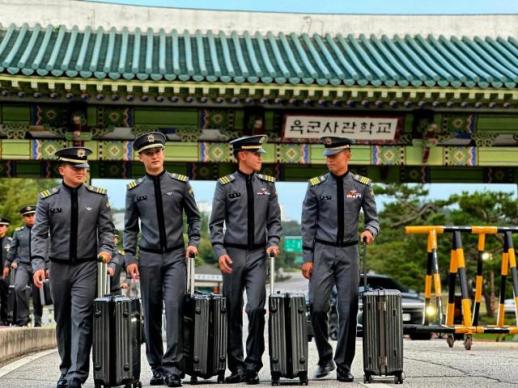 South Korea to establish unified military academy in Daejeon SEOUL, July 16 (AJP) - South Korea decided Thursday to establish a four-year Korea Armed Forces Academy at the Jaundae military complex in Daejeon by merging the Army, Navy and Air Force academies. Defense Minister Ahn Gyu-back announced the decision after a government-ruling Democratic Party meeting at the National Assembly in Seoul. “The new Korea Armed Forces Academy will be located at Jaundae in Daejeon,” Ahn said, adding that the government would build a high-tech smart campus near major universities and research institutes. Ahn described the plan as a fundamental overhaul of officer education rather than “a mechanical consolidation” of the three existing institutions. He said the current system must be redesigned as warfare expands beyond land, sea and air into space, cyberspace and the electromagnetic spectrum, with artificial intelligence and drones playing an increasingly important role. The new academy will seek to train officers capable of leading multidomain operations and the South Korea-U.S. combined defense system following Seoul’s planned recovery of wartime operational control, Ahn said. The government selected Daejeon because it is home to the Korea Advanced Institute of Science and Technology, the Agency for Defense Development and major national institutes specializing in aerospace, telecommunications, astronomy and nuclear technology. Cadets will spend all four years at the new academy in Jaundae, receiving common education during their first two years and specialized training for the Army, Navy or Air Force during their third and fourth years. The government also plans to raise the proportion of civilian professors from about 24 percent to more than 50 percent and provide them with working conditions comparable to those at national universities. Ahn said the existing academies educate about 2,900 cadets while employing roughly 3,000 support personnel, arguing that separate facilities and organizations had resulted in duplicated investment and inefficient use of resources. The ministry will establish a new bureau to oversee the reform and announce detailed plans, including admissions and curriculum, in October. The announcement immediately drew opposition from the alumni associations of the three academies. In a joint statement Thursday, the groups called the plan incoherent and warned that closing the existing academies would sever their identities, histories and traditions. They argued that cooperation among the services could be strengthened without abolishing the schools and said moving the Naval Academy inland and the Air Force Academy to a site without an airfield would weaken service-specific education. 2026-07-16 15:26:16
-
Suh Kang-il Questions Park Ji-sung and Lee Young-pyo's Expertise in Football Governance Amid ongoing controversy surrounding the election of the next president of the Korea Football Association and the appointment of the national team coach, an interview with Suh Kang-il, president of the Jeonbuk Special Self-Governing Province Football Association, has sparked backlash.In a KBS interview on July 16, Suh criticized Park Ji-sung and Lee Young-pyo, stating, "What do Park Ji-sung and Lee Young-pyo know to be part of the innovation committee? What do they know to speak so carelessly?"Suh continued, "They were national team players, but how much life experience do they have, how much do they know about the law, and how much social experience do they have to lead the innovation committee? Instead of just criticizing, they should run for president themselves."Regarding the election process for the Korea Football Association president, he remarked, "According to the current bylaws, a by-election must be held within 60 days. Why are we trying to change the bylaws for direct elections?"He added, "Without a president, the administration of the football association will be paralyzed. We have the Asian Games and A-matches to conduct; how can we appoint a coach without a president?"Suh also defended former Korea Football Association president Chung Mong-kyu, saying, "Everyone makes mistakes in life except for God. I don't think Chung Mong-kyu deserves this level of criticism. While people call it a '13-year reign,' I see it as a '13-year sacrifice.'"On the controversy surrounding the pardoning of those involved in match-fixing, he stated, "The intention at the time was to sometimes forgive and understand mistakes. However, it seems the timing was not right, and we may have rushed it a bit."Addressing the controversy over his use of business class during the 2022 Qatar World Cup, he explained, "I said I couldn't fly economy due to knee issues, and the association suggested upgrading to business class, which I paid for out of my own pocket."When asked about the possibility of running for the Korea Football Association presidency in the future, he said, "I will not comment on that, but I may consider it if someone without a commitment to reform emerges."Following the interview, various online communities began to circulate Suh's comments along with his background. According to the disclosed information, Suh worked at Hyundai Motor from 1987 to 2007 and has served as CEO of Sejin Industrial, an automotive parts manufacturer, since 2012. He has also held positions as vice president of the Jeonju Football Association, vice president of the Wanju County Sports Council, and senior vice president of the Jeonbuk Special Self-Governing Province Association for Families with Disabled Persons.Posts included comments like, "What kind of person is Suh Kang-il, a giant and hope in South Korean football? He claims to know more about football than Park Ji-sung and Lee Young-pyo, so his background must be impressive," along with shared ratings from Job Planet for Sejin Industrial, where Suh is CEO.The company received a rating of 1.8 out of 5, with reviews stating, "A garbage company with no processes," "A typical company where loud voices solve everything," "Forced to work until 7:30 PM every day and required to work on Sundays," and "No overtime pay or weekend pay," drawing attention.In response to the post, netizens commented, "Just by listening to him, it's clear how he runs things," "He seeks a position out of vanity," "What does he really know about football?" and "Thinking about how such people spread like cancer..." and "He reminds me of the previous badminton association president who came from a club background."Meanwhile, evaluations on corporate review sites are based on subjective opinions from anonymous users and should not be considered objectively verified facts.* This article has been translated by AI. 2026-07-16 15:24:00
-
Bank of Korea Raises Interest Rate Amid Economic Recovery and Inflation Pressures The Bank of Korea's Monetary Policy Committee raised the base interest rate from 2.50% to 2.75% on July 16, marking the first tightening in three and a half years. The decision comes as inflationary pressures are expected to persist longer than anticipated, alongside a clear recovery in the economy.During the monetary policy meeting, the committee decided to increase the base rate by 0.25 percentage points after holding it steady for 14 months. The shift to a tightening stance reflects ongoing inflationary pressures and a stronger-than-expected economic improvement.The committee stated, "As growth strengthens, driven by exports and investment, inflation rates are expected to exceed target levels for a considerable period, and risks to financial stability remain persistent. Therefore, a 0.25 percentage point increase in the base rate is deemed appropriate."Although international oil prices, which surged due to the Middle East conflict, have returned to pre-war levels, the elevated cost pressures are expected to last for an extended period. The committee noted, "While inflation rates may decline due to falling international oil prices, the impact of previously increased costs and exchange rates will persist, and demand-side pressures from income improvements will gradually expand, leading to sustained high inflation levels for some time."Consumer price inflation rose from 2.0% in January and February to 2.2% in March, 2.6% in April, and reached 3.1% in May and 3.2% in June. The living cost index also increased from 1.8% in February to 3.4% in June.Economic growth is also showing significant improvement. Thanks to strong semiconductor exports, the real GDP growth rate for this year is expected to be much better than last year's 1.0%. The real GDP growth rate for the first quarter of this year was recorded at 1.8%, the highest since the third quarter of 2020, when it was 2.3%. The nominal growth rate also reached 10.5%, the highest level since the first quarter of 1976.The Bank of Korea is likely to revise its growth forecast upward in next month's economic outlook. Bank Governor Shin Hyun-song stated at a press conference, "The previously raised annual growth rate of 2.6% for this year is too low, and there will be an opportunity for a significant upward adjustment in August." The government has also raised its annual GDP growth forecast to 3.0%.This interest rate hike indicates a shift in the Bank of Korea's policy focus from economic stimulus to inflation stabilization. As growth indicators improve more rapidly than expected, the burden of economic slowdown from rate hikes has diminished, while concerns about the secondary effects of rising international oil prices and core inflation pressures have increased.The committee noted, "While the consumer price inflation rate is expected to align with the May forecast of 2.7%, the core inflation rate is anticipated to slightly exceed the previous forecast of 2.4%. The timing and pace of further increases will be determined by a comprehensive assessment of inflationary pressures, economic improvement trends, and financial stability conditions."Governor Shin also mentioned, "As the domestic economy continues to improve, inflation is expected to exceed target levels for a considerable period. It is necessary to maintain the trend of increasing the base rate until we are confident that inflation rates stabilize around the target level." He added, "The extent of our response will depend on the data we receive going forward."This rate hike was largely anticipated by the market, shifting focus to the possibility of consecutive increases in August and the final level of the base rate. While the Bank of Korea has officially transitioned to a tightening stance, there is a prevailing sentiment that it may consider an additional increase in October, depending on future economic indicators.Kim Sung-soo, a researcher at Hanwha Investment & Securities, stated, "Inflation is expected to remain high for six months to a year, and growth rate forecasts will be adjusted upward. We maintain our outlook for additional increases in October this year and January next year."Choi Je-min, a researcher at Hyundai Motor Securities, noted, "Monetary Policy Committee members are cautious about growth and inflation upside risks, but they do not see an urgent need for consecutive increases. If there are no surprises in the indicators released before August, a hawkish hold in August and an increase in October are likely."* This article has been translated by AI. 2026-07-16 15:20:00
-
 CJ, Sajo raise food prices as post-election domino looms SEOUL, July 16 (AJP) - Two of South Korea's major food makers, CJ CheilJedang and Sajo Group, will raise prices on staple grocery items in the coming weeks, stoking fears of a fresh round of domino increases across an industry already straining under higher costs. CJ CheilJedang will lift prices on 27 products — including its flagship Hetbahn instant rice, dumplings and grilled fish — by an average of 8 percent at hypermarkets from July 30, with convenience stores following on Aug. 1. Increases range from 4 percent to 12 percent, with Hetbahn rising the most at 12 percent. The company attributed the move to persistent cost pressure from higher prices for raw materials and naphtha-based packaging. It excluded convenience-store staples favored by younger shoppers, such as Hetbahn Cupbahn and desserts, and pledged sweeping summer discounts from next month to ease the burden on consumers. Sajo Group will follow on Aug. 3, raising factory prices on canned goods, fermented pastes and cooking oils after concluding talks with hypermarket chains. Canned mackerel and saury will jump 20 percent and canned tuna 10 percent, while red-pepper paste, soybean paste and sesame and perilla oils will each climb 12 percent. Sajo had already raised prices on fish cakes and imitation crab by 6 to 7 percent on July 2. The two firms join a lengthening queue. Ottogi raised factory prices on 29 items from July 16, led by a 17 percent increase for pepper products, while Lotte Chilsung Beverage lifted prices on 44 products by an average of 5.3 percent from June 26 — its first adjustment in about two years. The wave has gathered pace since the June 3 local elections, as companies that had held back under the government's informal pressure to contain prices moved swiftly once the vote was over. The government expects further gains in food and dining prices in the second half, citing a stubbornly weak won, rising imported raw-material costs and mounting labor and logistics expenses — leaving households braced for a heavier grocery bill in the months ahead. 2026-07-16 15:19:56
-
Ministry of Agriculture to Accelerate Agricultural Innovation in Second Half of 2026 The Ministry of Agriculture, Food and Rural Affairs is focusing on generating tangible results that citizens can feel in their daily lives as it accelerates agricultural and rural innovation in the second half of 2026. The ministry plans to promote agricultural reforms, including the reform of agricultural cooperatives and comprehensive land surveys, while also supporting local-led growth through the expansion of basic income for rural areas and the development of specialized industries. On July 16, during a work report held at the Blue House, President Lee Jae-myung presided over the meeting where the ministry announced its key plans for the second half of the year. The six major initiatives driving agricultural and rural innovation include stabilizing the supply and demand of agricultural products, promoting artificial intelligence (AI) technology, strengthening national responsibility, boosting K-food exports, expanding renewable energy, and enhancing animal welfare. First, the ministry will focus on stabilizing the supply and demand of agricultural products. Starting in August, it will implement revised laws on grain and agricultural products to establish a proactive supply management system, utilizing advanced technologies such as agricultural satellites and AI to accurately predict and manage supply conditions. The ministry will also accelerate the dissemination of AI technology for farmers and rural residents. It aims to increase the area of smart agriculture from the current 20% to 35% by 2030. The number of smart agriculture hubs will grow from 10 to 23, and a new model for accessible smart farms will be developed and tested within the year. Mitigating management risks for farmers will also be a priority. The ministry plans to expand the number of items eligible for import insurance from 15 to 20 and will develop measures to stabilize prices. Support plans for rising costs of essential agricultural materials will be specified, and assistance for foreign seasonal workers will be expanded. To achieve its goal of $16 billion in K-food exports, the ministry will concentrate resources on strategic products and markets in the second half of the year. It will foster public-private partnerships for joint market entry by large and small businesses, implement 'buddy marketing' for products like ramen and kimchi, and enhance marketing efforts by supporting activities of K-food ambassadors such as Faker and Edward Lee. The ministry will also promote renewable energy models utilizing agricultural and rural resources. It plans to establish subordinate regulations for the recently enacted solar energy law for farming and expand leading models through pilot projects in the metropolitan area. The ministry will also broaden the model of solar income villages using reservoirs and preserved farmland. A comprehensive animal welfare system will be established, covering not only pets but also farm animals, service animals, and laboratory animals. The ministry plans to draft a basic animal welfare law and establish an animal welfare promotion agency by the end of the year, while also promoting the introduction of cooperative animal hospitals and expanding transparency in veterinary fees. The ministry will expedite reforms in agricultural cooperatives and comprehensive land surveys. The first reform plan for agricultural cooperatives will be swiftly processed through discussions in the National Assembly in the second half of the year, and a follow-up reform plan aimed at revitalizing economic activities and enhancing cooperative competitiveness will also be prepared for legislative action by the end of the year. In-depth land surveys will be conducted concurrently. Support for local-led growth utilizing rural resources will be strengthened. Basic income will be officially distributed starting next month to seven newly selected regions, including Hwacheon, Boeun, Jinan, Muju, Gurye, Boseong, and Cheongsong. The ministry plans to establish spatial plans for 139 rural cities and counties by the end of the year to promote the specialization of rural spaces. Minister of Agriculture, Food and Rural Affairs Song Mi-ryung stated, “In the first half of this year, we focused on restructuring agricultural policies to promote national tasks, and in the second half, we will do our utmost to deliver results that the public can feel.” * This article has been translated by AI. 2026-07-16 15:16:00