


Latest by
-
 Debate Over Real Estate Tax Reform Balances High-Value Homes and Resident Protection The upcoming reform of real estate taxes has brought to the forefront the need to balance the taxation of high-value single homes with the protection of actual residents. Critics argue that the current tax system has encouraged a preference for so-called 'one good home,' while cautioning that increasing tax burdens could shift the financial strain onto actual homeowners and the rental market.On July 16, the Ministry of Economy and Finance held a public discussion on real estate tax reform at the Bank Hall in Jung-gu, Seoul, led by Deputy Prime Minister and Minister of Economy Koo Yun-cheol. The meeting focused on the direction of reforms concerning the comprehensive real estate tax, capital gains tax, and long-term holding special deductions. The government plans to consolidate discussions across supply, finance, and tax sectors before a major forum led by the President on July 23 to discuss real estate policy.During the discussion, there was a consensus that the criteria for the comprehensive real estate tax should shift from the number of homes owned to the total asset value of the properties. This approach aims to establish a fairer tax burden based on the value of the homes rather than the quantity owned.Oh Jong-hyun, head of the Tax Research Division at the Korea Institute of Public Finance, stated, “All issues surrounding real estate taxation are concentrated on the high-value single home problem,” emphasizing the need to lower tax burdens for actual residents while adjusting tax criteria for non-residents. He suggested differentiating between homes for living and those for investment, proposing lower tax burdens for primary residences and higher burdens for non-residential properties. He also argued that tax criteria should focus on property value rather than the number of homes owned.Ham Young-jin, head of the Real Estate Research Lab at Woori Bank, noted that even with the same total assessed value, the tax burden can differ significantly based on the number of homes owned. He advocated for a tax system based on property value rather than quantity, and suggested that the long-term holding special deduction should be redesigned to focus on actual residency.The debate also extends to where the threshold for high-value single homes should be set. Professor Shim Chung-jin from Konkuk University proposed that high-value homes should be defined based on capital gains rather than sale prices, suggesting a threshold of 3 billion won (approximately $2.3 million) in capital gains.Calls for strengthening property taxes have also emerged. Nam Gi-eob, head of the Land + Freedom Research Institute, argued that the effective tax rate on property is currently one-third to one-fifth of that in major developed countries, asserting that raising it to developed country levels should not be considered punitive taxation. He suggested that not only the comprehensive real estate tax but also property taxes should be increased.Revisions to the long-term holding special deduction are also under scrutiny. The current system allows homeowners to deduct up to 80% of capital gains based on the duration of ownership and residency. Critics have pointed out that homeowners who do not reside in their properties can still receive up to a 40% deduction, which disproportionately benefits those holding high-value single homes.Chung Se-eun, a professor at Chungnam National University, commented on the need to reduce the special deduction, stating, “Housing prices have risen too much, so even if we pay a lot in capital gains tax, we are still making significant profits.” He argued for a stronger enforcement of capital gains taxation in line with the principle that taxes should be levied where income is generated.However, some experts caution that tightening tax regulations could lead to a slowdown in transactions and instability in the rental market. Seo Jin-hyung, a professor at Kwangwoon University, pointed out that maintaining long-term holding benefits for both residents and non-residents is essential for ensuring a stable supply of rental housing. He warned that drastically reducing the special deduction could diminish the incentive to sell homes, exacerbating the issue of housing inventory.The government's tax reform plan is expected to hinge on how to distinguish between 'speculative holdings' and 'actual resident holdings.' It aims to enhance the fairness of taxation on high-value single homes while also preventing a sudden increase in tax burdens for retirees and long-term residents.The Ministry of Economy and Finance plans to refine the tax reform proposal by the end of this month based on the feedback gathered during the discussion. A shift from a quantity-based tax system to one focused on value and actual residency is being seriously considered, with debates over the criteria for high-value homes and adjustments to the special deduction likely to continue until the final proposal is released. 2026-07-16 14:00:00
-
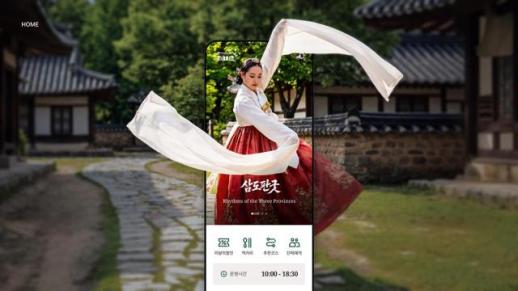 Korean Folk Village wins Red Dot award for improving visitor access to heritage SEOUL, July 16 (AJP) - Korean Folk Village, an open-air museum and cultural theme park on the outskirts of Seoul, has won this year's Red Dot Design Award for its mobile platform, it said on Thursday. Its platform was recognized for its digital services, which make exploring the heritage site more convenient and engaging for visitors. It received a Winner award in the Brands & Communication Design category for integrating various services into a single app including QR-code admission, GPS-based navigation, an online docent guide, recommended walking routes, 360-degree virtual reality content, and an online gift shop. The award was given in recognition of the village's efforts to expand access to traditional Korean cultural content through a user-centered digital platform that links visitors’ online and on-site experiences. Organized by Germany's Design Zentrum Nordrhein Westfalen, the Red Dot Design Award is regarded as one of the world's leading international design competitions, alongside Germany's iF Design Award and the U.S.-based International Design Excellence Awards (IDEA). Winners are selected each year by an international jury across product design, brand and communication design, and design concept categories. The winning project will be featured on the Red Dot website and in the Red Dot Design Yearbook. The award ceremony is scheduled for Nov. 6 at the Konzerthaus Berlin. Located in Yongin, Gyeonggi Province, about 40 kilometers south of Seoul, the village recreates everyday life during the country's ancient Joseon Dynasty through traditional homes, artisan workshops and live cultural performances. It has long served as a filming location for period dramas and has expanded in recent years with seasonal festivals and interactive programs aimed at domestic and international visitors. The village said it plans to further expand its digital services to make its traditional cultural offerings more accessible and interactive for visitors. 2026-07-16 13:57:49
-
LG Electronics Holds Expanded Management Meeting with 300 Executives to Review Second Half Strategy LG Electronics is holding an expanded management meeting with domestic and international executives to review its business strategy for the second half of the year and future growth initiatives.According to industry sources, the meeting, led by CEO Ryu Jae-cheol, is taking place at the company's domestic headquarters. Approximately 300 executives from the headquarters, business units, and overseas representatives are participating both in person and online.Each year, LG Electronics conducts two expanded management meetings, one in the first half and one in the second half, to share management issues and discuss mid- to long-term business strategies with its global leadership.This meeting will assess the company's record performance in the first half of the year amid external uncertainties such as high exchange rates, inflation, high interest rates, and geopolitical risks in the Middle East, while also discussing strategies for the second half.During the meeting, CEO Ryu will emphasize the themes of 'exposing problems' and 'executing to win,' sharing case studies from various departments. The aim is to publicly address issues within business sectors and share solutions and execution examples to enhance organizational competitiveness.Additionally, the meeting will address the mid- to long-term strategies and competitiveness enhancement plans for four key future growth areas that LG Electronics is nurturing: robotics, AI data center cooling solutions, smart factories, and AI home technologies.Industry analysts believe that the B2B sectors, including AI data centers, HVAC, and industrial robotics, are becoming core growth drivers for LG Electronics, leading to accelerated investments and organizational capability enhancements.Previously, at the regular shareholders' meeting, CEO Ryu expressed a commitment to continuous investment in the four future businesses, stating, "These are areas where new business opportunities are opening up due to the spread of AI, and where LG Electronics can leverage its existing business capabilities for synergy."* This article has been translated by AI. 2026-07-16 13:56:00
-
Medpacto Initiates Clinical Trials for Bone Disease Drug 'MP2021' in Australia Medpacto has begun clinical trials for its drug candidate 'MP2021' aimed at treating bone diseases and autoimmune disorders in Australia. The company aims to accelerate drug development by securing global clinical data.On July 16, Medpacto announced that it has submitted the clinical trial plan for MP2021 to the Human Research Ethics Committee (HREC) in Australia.MP2021 is a first-in-class drug candidate targeting the cell membrane protein 'TM4SF19,' which induces the formation of multinucleated osteoclasts that destroy bone. The clinical trials will focus on treating bone diseases such as rheumatoid arthritis, osteoporosis, and bone metastasis from cancer, as well as inflammatory autoimmune diseases.Medpacto confirmed that it has observed the anti-inflammatory effects of MP2021 and its ability to improve bone and cartilage tissue damage during preclinical stages. The company also stated that it has ensured safety through toxicity assessments conducted in Europe.Australia was selected as the site for the Phase 1 clinical trial to obtain clinical data that meets global standards and to recruit patients with rare bone-related diseases. Data from the Australian trials can be recognized by global regulatory agencies, including the U.S. Food and Drug Administration (FDA) and the European Medicines Agency (EMA).Preclinical research results for MP2021 in treating psoriasis were published in the international journal Inflammation Research in April. Alongside this clinical trial, Medpacto is also pursuing the development of new modalities targeting TM4SF19. In addition to the existing fusion protein formulation, the company is collaborating with a Japanese pharmaceutical firm to conduct preclinical research on antibody-drug conjugate (ADC) candidates.A Medpacto representative stated, "The application for the Phase 1 clinical trial in Australia signifies that our new pipeline has entered a full-fledged clinical stage. We aim to demonstrate our global market competitiveness through clinical trials and research on next-generation antibody therapies and ADC technology integration."* This article has been translated by AI. 2026-07-16 13:48:00
-
Hyundai Pharmaceutical Shares Rise for Three Consecutive Days Following President Yoon's Comments on Abortion Drug Hyundai Pharmaceutical has seen its shares rise for three consecutive trading days following comments made by President Yoon Suk Yeol regarding abortion medication (Mifepristone).As of 1:30 PM on July 16, Hyundai Pharmaceutical's stock was trading at 7,800 won, up 1,090 won (16.24%) from the previous trading day. The company recorded a maximum increase of 29.84% on July 14, followed by a 10.54% rise the day before, continuing to show double-digit growth today.The surge in stock price is attributed to President Yoon's remarks during a Cabinet meeting on July 14, where he emphasized the need for the institutionalization of abortion medication.President Yoon stated, "Women who realistically need this medication are experiencing issues while obtaining it through overseas purchases. It is not right to leave this situation unaddressed." He added, "If permitted, it would become a prescription medication, and a system involving doctors would be established," highlighting the necessity for government review.Hyundai Pharmaceutical applied for domestic approval of the abortion medication 'Mifejima' with the Ministry of Food and Drug Safety in 2021. Mifejima is a combination drug containing mifepristone and misoprostol, which is sold internationally under the brand name 'Mifepristone.'The Ministry is currently reviewing the application. However, despite the Constitutional Court's 2019 decision declaring the abortion law unconstitutional, subsequent legislation defining the scope and procedures for abortion has yet to be established, leaving the approval process pending.* This article has been translated by AI. 2026-07-16 13:48:00
-
Welcron Shares Rise on Collaboration with Indonesian Defense Firm for Armored Vehicle Kits Welcron's stock surged following news of its collaboration with Indonesia's state-owned defense company to supply protection kits for armored vehicles.As of 1:35 PM on July 16, Welcron shares were trading at 1,476 won, up 239 won (19.32%) from the previous trading day, according to the Korea Exchange.The increase in stock price is attributed to the signing of a memorandum of agreement (MOA) with the Indonesian defense firm Pindad for the supply of mine protection kits for wheeled armored vehicles.Welcron announced that it has established a cooperative framework for supplying protection kits for armored vehicles with Pindad, which is Indonesia's leading state-owned defense company involved in the development and production of military vehicles, armored vehicles, small arms, and ammunition.Welcron plans to leverage its independently developed armored vehicle protection technology for this collaboration. The company aims to expand its business from personal protection products, such as bulletproof vests and plates, into high-value defense sectors, including additional armor for armored vehicles and naval vessels.A Welcron representative stated, "We have established a cooperative framework with Pindad based on our independently developed armored vehicle protection technology, marking a significant achievement recognized by foreign defense companies for our technological capabilities and product competitiveness."Since 2018, Welcron's defense division has supplied personal protection bulletproof plates to the Defense Acquisition Program Administration and has delivered additional armor for wheeled armored vehicles, bulletproof plates for high-speed boats and landing craft, and bulletproof plates for small tactical vehicles to major domestic defense companies.* This article has been translated by AI. 2026-07-16 13:44:00
-
Global Opinions Shift: China Surpasses U.S. in Favorability Ratings Since Donald Trump took office again, global perceptions of the United States and China have reversed. While favorability toward the U.S. has sharply declined, China has recovered from its negative image during the COVID-19 pandemic and now surpasses the U.S.According to a survey released on July 15 by the Pew Research Center, in 25 out of 36 countries and regions surveyed, China's favorability ratings were statistically significantly higher than those of the U.S. The U.S. led in favorability only in six countries: South Korea, Japan, India, the Philippines, Poland, and Israel.The shift has become particularly evident in recent years. The median favorability rating for the U.S. among the G20 countries dropped from 58% in 2023 to 36% this year. In contrast, China's favorability rose from 32% to 46% during the same period.Ratings for the leaders of both countries have also flipped. Trust in Xi Jinping to 'do the right thing regarding international issues' stands at 31%, surpassing Trump's 21%. During the tenure of former President Joe Biden, trust in the U.S. president was significantly higher than in Xi.Notably, changes have been pronounced among traditional U.S. allies. In the United Kingdom, China's favorability reached 46%, exceeding the U.S. rating of 41%. Similar trends were observed in France, Germany, Canada, and Spain, where China outperformed the U.S. Analysts suggest that Trump's administration's tariff policies and pressure on allies under the 'America First' agenda contributed to the decline in trust toward the U.S.In Asia, where security tensions with China persist, the U.S. still maintains an advantage. In South Korea, favorability for the U.S. is 45%, compared to China's 28%. Japan shows a larger gap, with the U.S. at 50% and China at 11%. Favorability ratings for the U.S. also remain higher than those for China in India and the Philippines.Conversely, China enjoys high favorability ratings in Pakistan and several African nations. In Pakistan, favorability for China reaches 90%, while in Nigeria and Kenya, it exceeds 70%.This survey was conducted from February to May, involving 42,151 adults across 36 countries and regions.* This article has been translated by AI. 2026-07-16 13:28:00
-
Impact of Middle East War on Industries: Oil, Chemicals, and Employment Hit Hard The shock from the Middle East war has not broadly affected domestic industries, but it has significantly impacted the oil and chemical sectors as well as the employment market. The Bank of Korea reported that while major industries like semiconductors have managed to avoid production disruptions, employment recovery is expected to be slow, particularly in vulnerable sectors and small businesses.On July 16, the Bank of Korea released a report titled 'Issue Analysis: Economic and Employment Conditions After the Middle East War.'The oil and chemical industries have faced notable setbacks following the war. Disruptions in raw material supply have led to a significant decrease in production, and companies have prioritized domestic supply, resulting in reduced exports. The construction sector has also been affected, with some projects halted due to difficulties in obtaining building materials.In contrast, the semiconductor industry has continued to perform well without production disruptions, thanks to securing alternative sources for key raw materials and utilizing existing inventory. The steel and non-ferrous metal sectors have benefited from spillover effects due to production and export disruptions in the Middle East. Notably, the region accounts for about 8-9% of global aluminum production, and the resulting supply shortages have tightened global supply, creating export opportunities and increased profitability for domestic companies.The impact on the employment market has manifested more quickly than in the broader economy. The Bank of Korea noted that economic sentiment weakened in April, leading to a slowdown in employment in the domestic service sector. By May, rising cost pressures had shifted overall employment into a declining trend. The manufacturing, construction, and agriculture sectors have seen an expansion in job losses, while the growth in employment in the transportation sector has also significantly slowed. The analysis indicates that small businesses, which are particularly vulnerable to cost shocks, have experienced pronounced declines in employment.The Bank of Korea anticipates that industries affected by the Middle East war will gradually recover in the second half of the year as logistics and energy infrastructure normalize. Additionally, considering the trend of strengthening defense capabilities in various countries and the competitiveness of domestic companies, sectors such as construction, defense, and shipbuilding may encounter new market expansion opportunities.Employment is also expected to improve, supported by a reduction in geopolitical uncertainties and recovery in domestic demand driven by the semiconductor sector. However, the recovery pace is expected to be slow in vulnerable sectors like small businesses, which face ongoing challenges from poor market conditions and tight financial conditions.The Bank of Korea stated, 'If the situation in the Middle East stabilizes, major domestic industries are expected to gradually recover alongside a reduction in supply chain risks. However, if the situation prolongs, supply chain instability may deepen, spreading negative impacts beyond the oil and chemical sectors to other industries.' It added, 'Employment is likely to improve due to reduced geopolitical uncertainties and recovery in domestic demand, but if cost pressures continue in vulnerable sectors, the recovery may be constrained.'* This article has been translated by AI. 2026-07-16 13:24:00
-
KOSPI Drops Nearly 6% Amid Foreign and Institutional Selling The KOSPI index fell nearly 6% during trading on July 16, driven by weakened investor sentiment in the semiconductor sector and simultaneous selling by foreign and institutional investors. The KOSDAQ also continued its downward trend, dropping over 4%.According to the Korea Exchange, as of 1:07 PM, the KOSPI was down 433.52 points (5.95%) at 6,850.89. The index started the day at around 6,960 but expanded its losses, dipping below 6,800.In the securities market, individual investors were net buyers, purchasing 3.76 trillion won. In contrast, foreign and institutional investors sold off 1.78 trillion won and 2.15 trillion won, respectively, leading to the index's decline.Among the top market capitalization stocks, most were in the red, with the exception of Samsung Biologics (up 1.08%). Samsung Electronics (-7.96%), SK Hynix (-11.43%), SK Square (-10.49%), Samsung Electro-Mechanics (-8.21%), Hyundai Motor (-3.57%), LG Energy Solution (-0.45%), Samsung Life Insurance (-3.56%), and KB Financial (-0.61%) all saw declines.As the market's losses widened, a sell-side circuit breaker was triggered in the securities market. The Korea Exchange activated the sell-side circuit breaker at 9:10 AM after the KOSPI 200 futures price fell more than 5% from the reference price for over a minute, suspending the effectiveness of program trading sell orders for five minutes. This was the 19th activation of a sell-side circuit breaker this year (37th overall).At the same time, the KOSDAQ index was down 34.49 points (4.16%) at 794.94.In the KOSDAQ market, individual investors were net buyers, purchasing 395 billion won, while foreign and institutional investors sold off 330.4 billion won and 79.3 billion won, respectively.Among the top market capitalization stocks in the KOSDAQ, Alteogen (-3.12%), EcoPro BM (-6.87%), EcoPro (-7.52%), JUSUNG Engineering (-6.92%), Rainbow Robotics (-7.09%), Wonik IPS (-0.35%), Kolon TissueGene (-1.03%), PSK (-2.74%), and Rino Technology (-6.42%) all showed weakness.Jang Jin-hyuk, a senior researcher at Shinhan Investment Corp., stated, "The selling pressure has increased due to profit-taking following the previous day's surge and ongoing uncertainties surrounding the semiconductor industry. Stocks in the AI value chain, such as Samsung Electronics and SK Hynix, have been particularly affected. Last night, the Philadelphia Semiconductor Index fell over 2%, and Micron dropped 8%, adding to the negative sentiment in the domestic market."He added, "The controversy over the suspension of data center construction in New York, concerns over the listing of China's CXMT, and interpretations of ASML's earnings are all contributing to the weakened investment sentiment in semiconductors. While the impact of interest rate hikes is already priced into the market, volatility in semiconductor-related stocks is likely to continue for the time being."* This article has been translated by AI. 2026-07-16 13:24:00
-
Divorce Settlement: Will Taewon Choi's SK Holdings Shares Be Included? As the ruling on the high-profile asset division case between Taewon Choi, chairman of SK Group, and Noh So-young, director of Art Center Nabi, approaches on July 24 at the Seoul High Court, there is growing interest in whether Choi's stake in SK Holdings will be included in the asset division and, if so, the extent of its valuation. In particular, questions have arisen about the appropriateness of including the increase in stock value that occurred after their divorce.◆ Should an ex-spouse receive increased assets post-divorce?Reuters reported on July 10 that Choi is involved in a lawsuit concerning a potential asset division worth hundreds of millions of dollars, noting that the case could impact the governance structure of SK Group, the second-largest conglomerate in South Korea.With SK Hynix securing 40 trillion won in future investment funds through its listing on the U.S. stock market, concerns have emerged about the sustainability of corporate management, especially as Choi unveiled plans for expanding SK Group's future in artificial intelligence (AI) and semiconductor businesses.The backdrop includes a rapid increase in the stock price of SK Holdings over the past two years. Whether Choi's shares will be included in the division and the valuation date could significantly affect the governance of SK Group.Noh's side reportedly claims that the asset division should be based on the stock price as of June 26, the date the arguments concluded in the current retrial (81,500 won per share), which is 5.45 times higher than the price of 14,950 won per share that Choi's side argues should be used, based on the end of the second trial arguments on April 16, 2024.This raises the question of whether it is fair to award an ex-spouse the increase in asset value that occurred after their separation.Currently, SK Holdings' stock price is about three times higher than in 2024, following a surge driven by AI advancements and the booming demand for high-bandwidth memory (HBM) from SK Hynix. Choi has focused on driving AI growth across SK Group subsidiaries in recent years.Choi applied for divorce mediation in 2017, but it fell through, leading to no agreement. In 2019, Noh agreed to the divorce and filed a counterclaim for asset division, initiating the legal proceedings. The divorce was finalized by the Supreme Court in October last year, following a first trial in December 2022 and a second trial in May 2024. The asset division is currently under retrial at the Seoul High Court.According to previous Supreme Court rulings, the valuation date for asset division has typically been set at the conclusion of the second trial arguments to minimize fluctuations in asset value and ensure stability in rulings. In this case, since the divorce has been confirmed, the relevant date is April 16, 2024.◆ Choi claims marriage breakdown began in 2006; Noh states they separated in 2011Choi has consistently stated that his marriage to Noh effectively broke down in 2006, leading to their separation at the end of 2009 and his announcement of the decision to divorce to his family in 2011.The couple married in 1988, and as of the Supreme Court's ruling last year, their legal marriage lasted 37 years. However, based on Choi's previous statements, the period of marital breakdown extends to 19 years from 2006. They have been involved in legal proceedings since 2017.Regardless of the legal status of their divorce, both parties acknowledge that they have not lived together as a couple for about 15 years. Noh's side has stated that they have been living separately since 2009 and officially separated in 2011.This raises questions about whether the growth of SK Group's AI and semiconductor businesses, reflected in the stock prices of its subsidiaries, should be divided as assets with Noh, especially since their three children have pursued studies abroad since their teenage years, which differs from typical family dynamics.◆ U.S. and Japan also do not account for asset changes post-divorceLegally, many jurisdictions abroad do not include asset value changes after the breakdown of marriage in divorce settlements, even before the legal divorce is finalized.In the U.S., a 1986 ruling by the New York Court of Appeals established that increases in value post-separation, attributed to external factors like inflation or market trends, or due to one spouse's special skills, should not allow the other spouse to benefit without contribution.Similarly, Japanese courts view the dissolution of the marital economic community as beginning at the start of separation, meaning that if one spouse's abilities lead to an increase in asset value post-separation, the other cannot claim a share.A business insider remarked, "If SK Group's management had faltered in the past two years and SK Holdings' stock price had plummeted, one might question at what point Noh's side would have claimed asset division," adding that the outcome of this case is being closely watched for its potential impact on the broader business community.* This article has been translated by AI. 2026-07-16 13:04:00