


Latest by
-
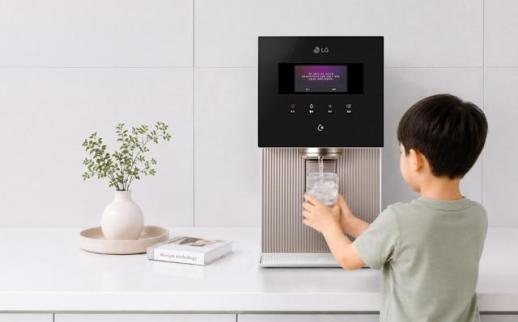 LG launches AI-enabled water purifier with voice controls SEOUL, July 16 (AJP) - LG Electronics on Thursday launched a new AI-powered water purifier featuring voice controls and personalized dispensing functions, expanding its lineup of connected home appliances as the company integrates artificial intelligence into everyday household products. The LG PuriCare AI Ice Water Purifier allows users to dispense purified water, cold water and ice using natural voice commands, while also serving as a smart home hub capable of controlling compatible LG appliances through the company's ThinQ platform. The product can also provide information such as weather updates, news and household appliance status. The purifier analyzes a user's water consumption over time to recommend frequently used temperature and volume settings through an AI-based personalized dispensing feature. It also includes preset modes for beverages and cooking tasks, automatically dispensing the appropriate amount and temperature of water for items such as coffee, tea, instant noodles and baby formula. LG said the product retains its existing hygiene features, including automatic sterilization of internal water lines and UV sterilization for the water and ice outlets. It also incorporates a cup-detection sensor to prevent accidental dispensing when no container is placed beneath the outlet and features a larger 6.8-inch display for appliance information and home monitoring. The launch comes as major home appliance makers increasingly embed generative AI and voice-based interfaces into connected devices, seeking to expand the role of household appliances beyond their core functions into broader smart home ecosystems. 2026-07-16 12:53:46
-
 Coupang Defends Lobbying Efforts in the U.S. as Legal Activity Coupang has responded to reports of its lobbying activities in the United States, asserting that these efforts are legal under the U.S. Constitution.In a statement released on July 16, Coupang expressed disappointment that it has been portrayed as the only company engaging in lobbying, noting that many multinational corporations participate in legal lobbying activities in the U.S.Coupang cited data from the lobbying tracking site OpenSecrets, which indicated that 15,768 organizations, including global companies, communicated with the U.S. government, the White House, and Congress, either directly or through lobbying firms last year. The company emphasized that it is one of many businesses and organizations operating within legal and established guidelines.Coupang also stated that its lobbying expenditures are relatively modest compared to other companies. In the first quarter, Coupang's lobbying spending was about $708,000, which is roughly one-tenth of the amounts spent by other tech firms and less than that of major South Korean conglomerates.The company clarified that its lobbying aims to enhance global exports and stimulate trade investments. Coupang highlighted its commitment to the U.S.-Korea economic partnership, having invested over 6 trillion won in Korea and established more than 100 logistics centers across 30 regions, creating over 90,000 jobs. It is focused on communication related to expanding global business exports, including its services like Taiwan's Rocket Delivery and luxury e-commerce platform Farfetch, which operates in 190 countries.Previously, on July 15, the U.S. Senate released data under the Lobbying Disclosure Act, revealing that Coupang paid $250,000 (approximately 370 million won) to the lobbying firm Ballard Partners in the second quarter.The lobbying targets included the White House, the U.S. President's office, the House of Representatives, and the Office of the U.S. Trade Representative (USTR). Brian Ballard, the head of Ballard Partners, is known for his close ties to President Donald Trump and has been expanding his influence in Washington, D.C., since Trump's re-election campaign. 2026-07-16 12:32:00
-
South Korea to Launch 'Everyone's AI' This Year, Aiming for AI Superpower Status The Ministry of Science and ICT is ramping up efforts to achieve superpower status in artificial intelligence (AI) in the second half of 2026. The ministry plans to promote three major projects: AI data centers, physical AI, and K-semiconductors, while also launching the 'Everyone's AI' service this year, allowing citizens to access domestic AI for free.During a pre-briefing ahead of a presidential report on July 15, Deputy Minister Ku Hyuk-chae stated, "The world is at a turning point where industrial and economic orders are changing," and added, "The Ministry will work to enhance economic vitality and open new futures through science and technology and AI in the second half of the year."Accordingly, the ministry's key tasks for the second half include establishing an AI-based society, solving national challenges through K-Moonshot initiatives, creating an R&D system that recognizes research failures as assets, building a growth ladder for science and AI talent, revitalizing local economies through regional AX, and striving to become one of the world's top five aerospace powers.First, the ministry plans to launch a universal AI chatbot service utilizing domestic AI models by the end of the year. The goal is to provide citizens with basic AI functionalities without cost or usage limitations. Deputy Minister Ku noted, "We plan to introduce four services in the second half of this year, including price comparisons for agricultural products, personalized export consultations, national heritage explanations, and responses to child sexual abuse crises on social media," and stated that the total will expand to ten services by next year.According to Gong Jin-ho, head of AI policy planning at the ministry, discussions with companies indicate that launching the service within the year is feasible. He added, "We will prepare to achieve our service goals by supporting the necessary resources during the development and operation processes."To bridge the AI usage gap, the ministry will also provide AI utilization training for a total of 5.14 million people by the end of the year.The ministry is also strengthening its Sovereign AI initiative. Through an independent AI foundation project, it aims to secure performance levels within the global top ten by the end of the year and achieve top-tier performance models by next year. Choi Dong-won, director of AI infrastructure policy, stated, "The development of foundation models is currently evaluated to be in the top three globally," but noted the challenge of keeping pace with the continuous emergence of global models.The K-Moonshot project, aimed at solving national challenges through science and technology, will also be accelerated. The ministry plans to set specific milestones for 12 challenges, including quantum computing and cybersecurity, and integrate AI into the research process to enhance scientific and technological advancement.To encourage researchers to embrace failure, the ministry will improve the entire research and development process. Deputy Minister Ku announced, "We will introduce a 'failure assetization system' within this month, allowing researchers who do not meet initial goals to receive follow-up support or opportunities for re-challenge if their research process and outcomes are excellent."He added, "Next year, we plan to establish a separate re-challenge track," but noted that further discussions are needed to determine which projects will be eligible and how to set support levels.The government will also introduce 'investment-type R&D' to invest in new technology areas that are difficult for the private sector to fund. This approach will support companies through both direct funding and equity investments, creating a virtuous cycle by recouping the increased value of successful companies' shares for reinvestment.Kim Joo-yeon, head of the ministry's science and technology innovation support team, stated, "If a company fails, the government will consider its investment as a loss," but added, "If the company succeeds, the government can recover profits based on the assessed value of the shares." She noted that specific plans will be finalized in the second half of the year for pilot projects.The ministry will also accelerate talent development and attraction. Deputy Minister Ku mentioned plans to increase the number of gifted schools affiliated with the Korea Institute of Science and Technology and to attract over 600 outstanding international talents to South Korea. As of the end of June, approximately 380 individuals have already been recruited. He added that the government will provide up to 300 million won for individual researchers and up to 3 billion won for institutional recruitment.Efforts will also be made to revitalize local economies based on AI. The ministry plans to strengthen the local R&D ecosystem by creating a dedicated basic research track for emerging local researchers and easing the R&D matching burden for local companies. Deputy Minister Ku stated, "We will establish regional AX hubs in four areas: Honam, Gyeongnam, Daegu-Gyeongbuk, and expand to three additional regions: Chungbuk, Gangwon, and Jeju," and noted that local autonomous R&D has increased threefold compared to the previous year.Concrete plans to elevate South Korea to one of the world's top five aerospace powers are also being developed. The ministry aims to successfully conduct the fifth launch of the Nuri rocket in the second half of the year and select a site for the construction of the second space center to enhance domestic launch infrastructure. Additionally, it plans to complete a Korean low-orbit satellite communication network by 2035 and launch a small lunar lander by 2030.* This article has been translated by AI. 2026-07-16 12:28:00
-
Media Commission Unveils 'Media Basic Society' Initiative for Second Half of 2026 The Broadcasting and Media Communications Commission (BMCC) has identified 'Media Basic Society' as a key initiative for the second half of 2026. The plan aims to ensure citizens' rights to media participation, access, and choice while enhancing age verification and parental control features to prevent excessive use of social media among youth. The commission is also working on establishing a transparency center to address disinformation and will soon decide on the additional designation of DC Inside as a major information and communication service provider. Furthermore, policies to prevent a repeat of the JTBC incident in the paid broadcasting sector will be announced later this year.During a briefing on presidential work held on July 15 at the Government Complex in Gwacheon, BMCC Chairperson Ko Min-soo stated, "We will adopt 'Media Basic Society' as the fundamental direction for policy implementation in the second half of the year, focusing on national tasks that enhance citizens' rights to media participation, access, and choice. We will prioritize expanding media education across different life stages, strengthening media access for people with disabilities, and protecting users in the age of AI while refining media-related laws and systems."Specifically, the initiative will include tailored media education reflecting the characteristics of different life stages and enhancing capabilities to respond to AI. The commission will support media program production and implement policies to block illegal and harmful information.In terms of access rights, the BMCC plans to strengthen media access for people with disabilities and establish a 'Media Inclusion Plan.' This will include measures to improve media accessibility during disasters by providing support for disaster broadcasting production.To ensure choice rights, the commission will create a regulatory framework to enhance transparency in AI-generated content and recommendation algorithms available online. It will also promote integrated media legislation.By the end of this month, the BMCC will finalize regulations to prevent youth overuse of social media. This will involve strengthening obligations for service providers to verify users' identities and ages, as well as mandating parental control features that allow parents to monitor their children's content usage and behavior. Features that encourage overuse, such as infinite scrolling and autoplay, will not be allowed without parental consent. Shin Seon-kyung, head of the BMCC's User Policy Division, added, "We will work to ensure that this is discussed in the National Assembly as soon as possible after the proposal is made by lawmakers."The BMCC is also accelerating the implementation of the revised Telecommunications Business Act to combat disinformation. Plans are in place to establish a transparency center to support fact-checking activities by major information and communication service providers, thereby increasing platform accountability. Chairperson Ko stated, "We will establish the transparency center to facilitate active fact-checking activities by major information and communication service providers."Shin Young-kyu, head of the BMCC's Broadcasting and Communication User Policy Bureau, noted, "We have currently submitted a budget of approximately 2.8 billion won for preliminary expenses. With this budget, we expect to establish and operate the transparency center." He further explained, "The primary responsibility for self-regulation lies with the service providers, and it is essential for domestic providers to make judgments based on their self-regulatory policies. If providers feel burdened by their own policy judgments, they can enter into agreements with fact-checking organizations for support."Regarding DC Inside, which has been designated as a major information and communication service provider, Shin stated, "We have requested clarification and received materials today. We will assess the content and volume of the submitted materials before making a decision." He added, "We will review it as quickly as possible and will make the results public once they are finalized." Previously, concerns were raised about how to notify authors of posts deleted due to disinformation reports when the authors' contact information is unknown.In response to the spread of AI, measures to prevent the distribution of illegal filming materials will be expanded from videos to images.The BMCC is also preparing regulatory improvements for the struggling paid broadcasting industry. Currently, a research group involving experts and service providers is gathering opinions, and policies related to the promotion of paid broadcasting are expected to be announced in the second half of the year.Follow-up measures regarding the abolition of the Device Distribution Act are also being initiated. The BMCC has prepared implementation plans through a preliminary consultative body and is in discussions at the commission level, with plans to specify related measures soon.Additionally, the BMCC plans to lay the groundwork for the future development of media in light of the 100th anniversary of broadcasting next year. Chairperson Ko mentioned, "We aim to share the future vision of domestic broadcasting and media and enhance our international standing through the '2027 Asia Media Summit (AMS)' and the 100th anniversary commemorative project."* This article has been translated by AI. 2026-07-16 12:28:00
-
Bank of Korea Governor: May Rate Freeze Not a Mistake Amid Middle East Uncertainty Bank of Korea Governor Shin Hyun-song stated on July 16 that the central bank could have raised interest rates in May but lacked sufficient data to assess the economic situation at that time.During a press conference following the Bank of Korea's decision to increase the base rate from 2.50% to 2.75%, Governor Shin addressed criticisms that the May rate freeze was a mistake. He explained, "Given the situation in the Middle East and other factors, there were uncertainties that were not clearly evident at the time. I believed it was prudent to wait and still hold that view."He added, "Since May, various data have indicated that our economy is much more robust, and the growth outlook has shifted positively. The growth forecast of 2.6% we provided earlier now seems too low based on current assessments."Governor Shin hinted at a significant upward revision of the growth forecast in the upcoming economic outlook report next month, stating, "I will have the opportunity to explain the substantial upward adjustments to the growth rate in the August revised economic outlook."* This article has been translated by AI. 2026-07-16 12:24:00
-
Korea Proposes Age Limit for Youth Social Media Use The Korea Communications Commission is moving forward with a phased regulatory approach to prevent excessive social media use among youth, including a proposed age limit of 14 for social media registration.Kim Jong-cheol, chairman of the commission, stated during a presidential briefing at the Blue House on July 16, "The issue of youth overuse of social media is serious. We are considering a phased regulation that restricts social media access for those under 14 and limits exposure to algorithms that encourage overuse for those aged 14 to 19."During the briefing, President Lee Jae-myung suggested that more sophisticated measures are needed rather than simply restricting youth access to social media.In response, Kim noted, "Our country has past experience with the game shutdown system, so we must approach this carefully. We will gather and consider opinions from both youth and experts to establish a system based on social consensus."* This article has been translated by AI. 2026-07-16 12:16:00
-
Bank of Korea Governor: GDP Gap May Turn Positive Sooner Than Expected Bank of Korea Governor Shin Hyun-song indicated on July 16 that the timeline for the GDP gap to turn positive could be moved up. He noted that improvements in trade conditions due to rising semiconductor prices are driving growth, and future monetary policy decisions will closely consider the sustainability of these prices.During a press conference following the Monetary Policy Committee meeting, Shin responded to a question about the timing of the GDP gap's positive transition, saying, "In the last press conference, I mentioned that I expected a positive transition around early next year, but given recent developments, that timeline may be moved up."However, he added, "The GDP gap must be calculated through models, and we have not yet completed the analysis. I will provide an explanation once the results are available." The GDP gap represents the difference between actual economic growth and potential growth.Shin cited the rise in semiconductor prices as a key factor behind this assessment. He explained, "While GDP grew by 3.8%, gross domestic income (GDI) increased by 13.1%. This difference is primarily due to the impact of rising semiconductor prices rather than export volumes."He emphasized the importance of how long this trend will last, stating, "As the artificial intelligence (AI) industry enters a new phase, semiconductors are becoming a core element in building an AI-based economy, rather than just a simple export item."Shin stressed the need to pay close attention to semiconductor prices, noting, "We must carefully monitor semiconductor prices, as they influence trade conditions and GDI, providing important insights for the long-term growth of the Korean economy and monetary policy decisions."However, he cautioned that some semiconductor price indices observed in the market differ from the products that domestic companies actually trade, adding, "Since a significant portion of semiconductors are traded through long-term contracts, it is necessary to comprehensively examine price trends." 2026-07-16 12:08:00
-
Young Couples Who Settle Outside the Capital Region Have Higher Birth and Homeownership Rates Young couples who settle outside the capital region have higher rates of childbirth and homeownership compared to those who remain in the capital. However, the trend of concentration in the capital region continues among young people after marriage.The National Data Agency released a comprehensive analysis on July 16, utilizing population dynamics panel statistics to examine changes in residence, employment, childbirth, and homeownership among young couples after marriage.The study focused on first-time married men aged 32 and women aged 31, comparing the rates of childbirth and homeownership based on whether they moved after marriage over a three-year period.The analysis found that those who did not change their residence after marriage had higher rates of childbirth and homeownership than those who did move. The cumulative childbirth rate over three years for non-movers was 69.3%, compared to 68.2% for movers.Regionally, the childbirth rate for young people who remained outside the capital was higher than for those in the capital. The cumulative childbirth rate for non-movers in non-capital areas was 73.2%, exceeding the 65.3% rate for non-movers in the capital by 7.9 percentage points.Homeownership rates followed a similar trend. Over three years, the homeownership rate for non-movers was 33.9%, compared to 27.5% for movers. Non-movers in non-capital areas had a homeownership rate of 37.5%, which was 7.2 percentage points higher than the 30.3% rate for non-movers in the capital.Among those who moved, those relocating to non-capital areas also had relatively higher rates of childbirth and homeownership. The childbirth rate for young people moving from the capital to non-capital areas was 70.5%, higher than the 66.8% rate for those moving from non-capital to the capital. The homeownership rates were 24.3% and 23.6%, respectively, with non-capital movers slightly ahead.Despite these trends, the concentration of young people in the capital region after marriage remains significant. The proportion of those living in the capital before marriage was 55.9%, which increased to 56.6% after marriage, a rise of 0.7 percentage points. Conversely, the proportion living outside the capital decreased from 44.1% to 43.4%.Approximately 60% of young people moved their residence after marriage. Among those who relocated, 57.1% crossed municipal boundaries, with 61.6% moving to the capital and 38.4% to non-capital areas. The influx to the capital was 6.7%, higher than the 5.5% of those leaving the capital for non-capital areas.In terms of employment, significant changes were noted in women's employment status after marriage. The proportion of women who were regular employees decreased from 79.9% before marriage to 65.6% after marriage, a drop of 14.3 percentage points. In contrast, men's employment increased slightly from 83.9% to 84.4% during the same period.Notably, the proportion of regular employees among women moving from the capital to non-capital areas saw the largest decline, dropping by 27.1 percentage points after marriage. The National Data Agency analyzed that the movement of young people is closely linked to their employment activities.The agency emphasized that this analysis is significant as it provides a comprehensive look at the relationship between regional mobility, settlement, employment, childbirth, and homeownership among young people. Based on these findings, the agency plans to provide microdata from the population dynamics panel statistics by the end of the year to support research on low birth rates and regional balanced development, and to analyze the processes of youth mobility and family formation in depth by linking new data on personal debt.* This article has been translated by AI. 2026-07-16 12:04:00
-
Buhyung Group Launches Campaign to Recognize UN Day as National Holiday The Korean Senior Citizens Association, the Korean Liberation Association, the Republic of Korea Constitutional Association, the Korean Veterans Association, the Korean Association for the United Nations, and Buhyung Group have launched a joint campaign to highlight the role of the United Nations (UN) in conjunction with Constitution Day, advocating for the designation of 'UN Day' (October 24) as a national holiday. On July 17, these organizations announced their campaign under the theme 'On Constitution Day, the UN was with the establishment of the Republic of Korea's Constitution.' This campaign aims to reflect on the role of the UN Temporary Commission on Korea (UNTCOK) in the establishment of South Korea's Constitution and government, as well as the significance of UN military participation during the Korean War. They noted that on May 10, 1948, the first democratic general election in South Korea was held with the support of UNTCOK, leading to the establishment of the Constitutional Assembly, which proclaimed the Constitution on July 17 of the same year. They emphasized that the establishment of the South Korean government on August 15 completed the constitutional order of a sovereign nation. Furthermore, they stated that the UN forces participated in the Korean War, which broke out two years after the establishment of the government in 1950, under a resolution from the UN Security Council, helping to protect the existence of South Korea. A total of 60 countries supported South Korea, with 16 providing combat support, 6 offering medical assistance, and 38 supplying materials and financial aid, resulting in approximately 1.98 million troops participating and over 40,000 casualties. Considering this historical context, the organizations stressed that Constitution Day should be a day to remember not only the enactment of the Constitution but also the role of the UN that made it possible. They argued that South Korea, being the only nation that established a government through democratic elections with UN support and defended its sovereignty through the sacrifices of UN forces, deserves national recognition. Additionally, they explained that South Korea designated October 24, the UN's founding day, as 'UN Day' and celebrated it as a public holiday from 1950 until it was removed from the holiday list in 1976 in protest against North Korea's membership in UN-affiliated organizations. Lee Joong-geun, chairman of Buhyung Group, stated, "Since Constitution Day commemorates the proclamation of the Constitution of the Republic of Korea, it is necessary to remember and honor the role of the UN as well. The proposal to designate 'UN Day' as a national holiday is to remember the sacrifices of the UN that dedicated themselves to the birth and preservation of South Korea and to pass on the values of historical facts and gratitude to future generations." He added, "Gratitude and respect for the UN will serve as a valuable diplomatic asset to strengthen friendships with the countries that helped us in the past and will be a diplomatic stepping stone for the future. We must recognize, respect, and be thankful to the UN." Meanwhile, Lee Joong-geun, who also serves as the president of the Korean Senior Citizens Association, is expanding a membership drive aiming to reach 8 million members by September.* This article has been translated by AI. 2026-07-16 12:04:00
-
New Library 'Seodamjae' Opens at Planning and Budget Ministry The Ministry of Planning and Budget has opened a new library, 'Seodamjae,' at the Government Sejong Complex, designed for employee relaxation and communication. The library aims to grow as a collaborative space that curates books in partnership with local bookstores and hosts cultural events featuring regional authors.On July 16, the ministry held an opening ceremony at the newly established Seodamjae on the sixth floor of Building 5 in the Government Sejong Complex, attended by Minister Park Hong-geun, representatives from local bookstores, regional authors, and employees.The name 'Seodamjae' was chosen through an internal contest, meaning 'a space where books (書) and stories (談) reside.' The ministry has transformed the traditional library model, moving away from a bookcase-centered design to a lounge-style space where employees can relax and engage with books.In line with the expansion of electronic book services, the library has reduced its shelving space while increasing areas for relaxation and conversation. The ministry plans to operate Seodamjae as an open cultural space that grows alongside the community, rather than just a place for borrowing books.During the first part of the opening ceremony, two local bookstores, 'Kkume Mun-go Second Story' and 'Bookstore Ait,' signed agreements with the ministry. This collaboration aims to support local small businesses and incorporate the unique book curation of local bookstores into the library's operations.As part of the agreement, a 'One-Shelf Bookstore Corner' will be established in Seodamjae. Local bookstores will propose monthly themes and provide book supplies along with recommended reading comments. This initiative seeks to move away from the uniform selection of bestsellers and large distribution networks, reflecting the tastes and insights of local bookstores.Books requested by employees will also be purchased through local bookstores. The ministry aims to broaden employees' reading experiences while continuing to expand collaboration with local bookstores.The second part of the event featured local author Kim Yi-seol, who conducted a book concert themed 'Reading Novels that Reflect on Life.' Following the lecture, a time for open dialogue with employees was arranged to share the comfort and reflection that books provide.The ministry plans to continue hosting small cultural events, such as book concerts with local authors. The goal is to make Seodamjae a welcoming space for employees and a cultural hub connected to the local community.In his speech, Minister Park stated, 'Local bookstores are the roots of the cultural ecosystem and a cultural hub for residents. I hope Seodamjae will embrace the cultural diversity that small local bookstores have preserved and establish itself as an open cultural space that connects people and the community through books.'* This article has been translated by AI. 2026-07-16 12:04:00