


Latest by
-
 To Gain Support, Loan Regulations Must Be Fair and Predictable Loan thresholds at banks are rising again. Several banks are reducing mortgage loan limits and blocking loan applications. After competing for loans in the first half of the year, banks are suddenly closing their doors in the second half as they reach their annual targets. This has disrupted the financial plans of actual buyers who have already signed purchase contracts and set payment schedules. The loan regulations themselves are not inherently wrong. With household debt increasing and mortgage loans supporting rising housing prices, financial authorities cannot remain passive. Allowing borrowers to take out as much money as they want is also not a responsible policy. The issue is not whether to tighten loans, but rather who’s loans are restricted, when, and how. The main criticism of the current overall management is its unpredictability. Banks lower interest rates and increase loans in the first half of the year, but as they approach their annual growth targets, they suddenly reduce limits and close application windows. When one bank imposes restrictions, demand shifts to another bank, which then follows suit in tightening its criteria. Sudden regulations for those who have already signed contracts are not merely changes in financial conditions. If the expected loan does not materialize, buyers risk losing their deposits or scrambling for high-interest funds. Even if overall targets are important, the public needs a level of predictability to plan their finances. Another problem is the inability to distinguish between genuine demand and speculative demand. Those with substantial cash can still purchase homes even if loan limits are reduced, but for those without assets, the moment loans are blocked, home purchases become difficult. The harsher the loan regulations, the more cash-rich individuals survive, while the middle class and younger generations are pushed out. Of course, it is not feasible to lend as much as desired solely because someone is a first-time homebuyer. Debt exceeding repayment capacity poses risks to borrowers, and indiscriminately increasing loans during a period of rising home prices can further fuel price increases. A more fundamental reason for the loss of support for loan regulations is the perception that the government is blocking loan applications while failing to control housing prices. If expectations for rising home prices persist, demand will not easily dissipate even if limits are reduced. When bank loans are restricted, funds shift to secondary financial institutions or family resources. Ultimately, only official loans decrease, widening the gap based on cash mobilization ability. Loans are just one of many tools to stabilize housing prices. Supply takes time, and tax reforms carry significant political burdens, so financial regulations should not be the only repeated measure. If housing prices continue to rise despite loan restrictions, public distrust in the policy will only grow. Ultimately, tax and financial regulations must be intricately designed together. First-time homebuyers and additional purchases by multiple homeowners should not be treated with the same criteria. Greater burdens should be placed on high-value homes and multiple property owners, while reasonable financial access opportunities must be guaranteed for long-term residents and first-time buyers. Excessively high transaction taxes can lock up housing inventory. The more real estate one owns, especially at high values, the more corresponding costs should be imposed through property taxes. Overall loan management should also move away from simply setting annual targets and abruptly applying brakes in the second half. Monthly and quarterly supply plans should be established, and transitional measures should be in place for borrowers who have already signed contracts. Genuine first-time homebuyers can be managed separately, while additional loans for high-value homes and multiple property owners can be more strictly limited. The public's backlash against loan regulations is not a demand for unlimited borrowing. It stems from a growing distrust that the government has failed to stabilize housing prices while banks, after encouraging loans in the first half, suddenly close their doors in the second half. For loan regulations to gain support, they must be fair and predictable. Above all, efforts to stabilize housing prices through supply and tax policies must accompany them. Proposals to increase money supply while ignoring household debt are irresponsible, but policies that only restrict loans while leaving housing prices unchecked cannot endure.* This article has been translated by AI. 2026-07-15 14:16:00
-
Expansion of Special Investigation Team in Jang Yoon-ki Case Amid Allegations of Police Misconduct The National Police Agency has elevated the existing special investigation team to a "special investigation unit" and significantly increased its personnel in response to allegations of inadequate investigation and collusion surrounding the case of Jang Yoon-ki, the perpetrator of a high school girl's murder. The appointment of a senior officer as the head of the unit and the expansion of the investigative team to 41 members reflect the agency's recognition of public outrage and the volatile nature of the situation. Following a raid on the offices of the Gwangju Police Chief and the Gwangsan Police Station on July 11, prosecutors have also begun concurrent compulsory investigations, now focusing on the alleged involvement of higher-ranking police officials. The expansion of the special investigation unit is rooted in suspicions of "systematic concealment and minimized investigation" by the police, which have eroded public trust. Initially, the Jang Yoon-ki case was nearly concluded as a simple murder. However, during the supplementary investigation by prosecutors, crucial evidence emerged, including a black box video hidden in the trunk of the perpetrator's vehicle and forensic results related to adult products, revealing that the crime was committed with the intent of sexual assault. Shockingly, despite field investigators raising concerns about the possibility of a sexual crime from the outset and recommending charges of "murder with intent to commit rape," these opinions were not reflected in the final investigation results. Therefore, the special investigation unit's top priority must be to clarify how the legitimate opinions of field investigators were disregarded and omitted during the referral process. Given that Jang Yoon-ki's father is an active police officer, there are reasonable suspicions that the investigative leadership may have been influenced by personal connections with the suspect's family or a desire to protect the organization, leading to a deliberate minimization of the case. The circumstances surrounding the failure to seize key evidence, such as the binding tools (cable ties), which were only recovered later by prosecutors from the suspect's father's home, along with the arrest of the lead investigator on charges of evidence destruction, suggest a potential cover-up beyond mere investigative negligence. This is why both the prosecution and police are conducting raids on the offices of senior officials to investigate any "improper involvement from above." This case is poised to become a litmus test for the ongoing debate over judicial reform in South Korea, transcending a simple criminal matter. There have been continuous calls from the political sphere to reduce or abolish the prosecution's supplementary investigation authority. However, without the thorough supplementary investigations and compulsory actions taken by the prosecution in this case, the brutal acts committed by Jang Yoon-ki with sexual intent and the police's destruction of evidence may have remained buried forever. The fact that the prosecution corrected the flawed investigation, which had spiraled into allegations of collusion among police leadership, underscores the necessity of maintaining the prosecution's supplementary investigation authority for the discovery of substantive truth and the protection of citizens' rights. As the police expand the special investigation unit and declare their commitment to "conduct a rigorous investigation regardless of rank or status," they must now prove this through action and results. If the investigation turns out to be merely a cover-up to protect their own, the police organization will face a severe crisis of trust. The special investigation unit and the prosecution must leave no stone unturned in clarifying the full extent of any "upper-level involvement" while addressing the grievances of the innocent victim and restoring judicial justice. * This article has been translated by AI. 2026-07-15 14:12:00
-
POSCO Announces Early Redemption of $360 Million in Foreign Currency Bonds POSCO has become the first domestic company to conduct an early redemption of foreign currency bonds through a debt tender offer, aiming to strengthen its financial stability.On July 15, POSCO announced that it utilized its cash reserves to early redeem a portion of foreign currency bonds issued in 2023. This early redemption is intended to reduce debt and interest costs, thereby enhancing financial health.The bonds in question are 5-year dollar bonds with a fixed interest rate of 5.75%, maturing in January 2028. The funds for the redemption were sourced from existing cash reserves, with no new borrowing involved.With this early redemption, POSCO will repay $360 million of the total $1 billion issued, leaving a remaining balance of $640 million. It is also expected to save approximately $31 million in interest costs that would have accrued until maturity.This transaction is particularly significant as it marks the first instance of a domestic company redeeming foreign currency bonds through a public tender offer. This method involves all bondholders and is characterized by greater transparency compared to private negotiations with individual investors.POSCO plans to manage its foreign debt structure more stably and enhance its financial soundness amid high external uncertainties.A POSCO official stated, "This early redemption is a measure to reduce financial costs and manage debt. We will continue to manage our foreign debt more stably to improve our financial health."* This article has been translated by AI. 2026-07-15 14:04:00
-
Housing Prices in Seoul Surge as National Market Continues to Rise The housing market in Seoul has seen a significant increase, contributing to a nationwide upward trend. Both sales and rental prices in the capital rose by over 1%, leading the national market.According to the Korea Real Estate Agency's "June 2026 National Housing Price Trend Survey," the comprehensive housing sales price across the country increased by 0.33% compared to the previous month, while rental prices rose by 0.38% and monthly rent prices also increased by 0.38%.The gap between the metropolitan area and provincial regions remains evident. In the metropolitan area, sales prices rose by 0.67%, rental prices by 0.71%, and monthly rents by 0.62%. In contrast, provincial areas saw minimal increases, with sales prices up by just 0.01%, rental prices by 0.08%, and monthly rents by 0.15%.Seoul's price increases significantly outpaced the national average. The comprehensive housing sales price in Seoul rose by 1.03%, while rental prices increased by 1.08% and monthly rents by 0.96%. Compared to May, the growth rates have expanded, with sales rising from 0.90% to 1.03%, rentals from 0.91% to 1.08%, and monthly rents from 0.81% to 0.96%.By housing type, the upward trend centered on apartments is now spreading to multi-family and single-family homes. Apartment sales prices in Seoul increased by 1.21%, marking the highest growth rate. Multi-family homes rose by 0.86%, and single-family homes increased by 0.49%, indicating continued growth in the non-apartment market. The Korea Real Estate Agency includes multi-family homes in its multi-family housing category and single-family homes in its multi-family housing count.The agency noted that while some outer areas and older complexes are experiencing a wait-and-see attitude, demand remains strong in preferred areas such as redevelopment zones, large complexes, and transit-accessible locations, leading to signed contracts. The rental market also continues to see demand in large complexes and transit-accessible areas with favorable living conditions.Regionally, in the Seoul sales market, Seongbuk-gu recorded the highest increase at 1.39%. This was followed by Gwangjin-gu and Guro-gu (each at 1.31%), Dongdaemun-gu (1.28%), Seongdong-gu (1.23%), Gangseo-gu (1.16%), Dobong-gu (1.15%), Songpa-gu (1.11%), Yeongdeungpo-gu (1.10%), and Gangdong-gu (1.06%). In the rental market, Seongdong-gu (2.08%) saw the largest increase, followed by Nowon-gu (1.78%), Dobong-gu (1.56%), Songpa-gu (1.53%), and Seongbuk-gu (1.50%).Conversely, provincial areas displayed notable disparities. The sales market in Ulsan (0.31%) and Jeonbuk (0.19%), Jeonnam (0.16%), and Chungbuk (0.10%) saw increases, while Gwangju (-0.31%), Sejong (-0.19%), and Jeju (-0.17%) experienced declines. The rental market also showed growth in Ulsan (0.45%), Sejong (0.31%), and Jeonbuk (0.21%), but Gwangju (-0.24%) and Jeju (-0.17%) continued to decline.* This article has been translated by AI. 2026-07-15 14:04:00
-
Seoul's Officetels Become Alternative Housing Amid Rising Prices As apartment prices and jeonse rates rise in Seoul, officetels are becoming a viable alternative housing option, leading to a continued upward trend in the city's officetel market. While sales prices saw only a slight increase, both jeonse and monthly rental prices experienced more significant gains. In contrast, local markets are still facing supply pressures, resulting in weak sales and jeonse prices.On July 15, the Korea Real Estate Agency released its '2026 Q2 Officetel Price Trend Survey.' According to the report, nationwide officetel sales prices fell by 0.30% compared to the previous quarter, while jeonse prices rose by 0.09% and monthly rents increased by 0.71%.In Seoul, all three categories—sales, jeonse, and monthly rent—saw increases, leading the national market. The sales price of officetels in Seoul rose by 0.24%, a slight increase from the previous quarter's 0.23%. Jeonse prices increased by 0.40%, up from 0.24% in the prior quarter, while monthly rents surged by 0.90%, compared to 0.75% previously.The Korea Real Estate Agency attributed the strength of the Seoul officetel market to growing demand as an alternative to apartments. The sales market remains robust, particularly in urban areas with excellent transportation links and near transit stations, while the jeonse market has seen increased demand for larger officetels. The monthly rental market continues to attract steady demand, especially in transit-accessible areas favored by students and professionals amid ongoing concerns about jeonse fraud.In the greater Seoul area, the decline in sales prices has lessened, and jeonse prices have turned upward, indicating signs of recovery. Sales prices in the metropolitan area fell by 0.19%, a smaller drop compared to the previous quarter's decline of 0.33%. Jeonse prices rose by 0.17%, reversing the previous quarter's decline of 0.05%. Monthly rents increased by 0.78%, up from 0.69% in the prior quarter.Conversely, local markets continue to struggle. Sales prices for officetels in regional areas dropped by 0.71%, a slight increase in the rate of decline from the previous quarter's 0.70%. Jeonse prices fell by 0.22%, although this was a smaller drop compared to the previous quarter's 0.26%. Monthly rents rose by 0.43%, but the increase was slower than the previous quarter's 0.54%.Regionally, the largest declines in sales prices were seen in Busan (-0.84%), Daegu (-0.70%), Gwangju (-0.55%), and Incheon and Sejong (-0.53%). In terms of jeonse prices, increases were noted in Seoul (0.40%), Daejeon (0.19%), Gyeonggi (0.07%), and Ulsan (0.04%). Monthly rent increases were highest in Seoul (0.90%), Sejong (0.88%), Gyeonggi (0.76%), and Daejeon (0.66%).The ratio of jeonse prices to sales prices averaged 86.04% nationwide, with the metropolitan area at 86.27% and Seoul at 84.50%. The conversion rate from jeonse to monthly rent was recorded at 6.62% nationwide and 6.06% in Seoul.* This article has been translated by AI. 2026-07-15 14:04:00
-
Pilot Program for Renewable Energy PPA Brokerage Platform Launches, Full Service in August The government is launching a pilot program for a brokerage platform that connects renewable energy producers with companies seeking power purchase agreements (PPAs). This initiative aims to promote renewable energy transactions and support companies in fulfilling their RE100 commitments while ensuring stable power sales for producers.On July 15, the Ministry of Climate Energy and Environment announced the start of the PPA brokerage platform pilot project at the L Tower in Seocho-gu, Seoul. The platform will allow renewable energy producers and electricity-using companies to register their desired contract volumes online and negotiate with potential partners. The government plans to conduct mock transactions by the end of this month, with a full service launch expected in early August.Finding suitable partners has been a significant barrier to PPA activation, as companies have struggled to identify appropriate producers, while producers have faced challenges in securing demand from companies.A PPA is a contract in which renewable energy producers supply electricity directly to companies without going through the power market. An expansion of PPAs is expected to support companies in meeting their RE100 commitments, provide renewable energy producers with a stable revenue base, and alleviate the burden of renewable portfolio standard (RPS) settlements.The number of direct PPA contracts has been steadily increasing, rising from 13 contracts in 2023 to 29 in 2024, and 79 in 2025. In just the first five months of this year, 118 contracts have already been signed.The pilot program includes participation from 43 companies and associations, including renewable energy producers, renewable electricity suppliers, and RE100 demand companies. Participants will register their electricity demand and supply volumes on the platform, and once connections are made, they will negotiate contracts confidentially.The government has also established incentives to encourage platform usage. Small-scale producers who sign contracts through the platform will receive support for meter installation costs, and RE100 demand companies will have their network usage fee support extended for up to four years. Additionally, the support ratio for guarantee insurance premiums for rooftop solar producers will be increased to a maximum of 50%.Shim Jin-soo, Director of Renewable Energy Policy at the Ministry, stated, "A survey of participating companies revealed that both demand and supply volumes are around 1 GW, indicating strong industry interest. We will actively incorporate feedback from the field to develop a platform that effectively promotes PPA activation."* This article has been translated by AI. 2026-07-15 14:04:00
-
Trump Resumes Maritime Blockade Against Iran on JCPOA Anniversary July 14, 2015, marked the day when the United States, the United Kingdom, France, Germany, China, Russia, and Iran signed the Joint Comprehensive Plan of Action (JCPOA), commonly known as the Iran nuclear deal. Under this agreement, Iran agreed to limit its nuclear weapons development and accept inspections by the International Atomic Energy Agency (IAEA) in exchange for the lifting of economic sanctions by the international community. This diplomatic achievement was seen as a significant step toward resolving the Iran nuclear issue through dialogue and negotiation, raising hopes for reduced tensions in the Middle East.However, these expectations did not last long. In 2018, during his first term, President Donald Trump announced the U.S. withdrawal from the JCPOA and reinstated sanctions against Iran, which in turn resumed its nuclear program. The hard-won trust between the two nations collapsed, setting the stage for potential conflict.On July 14, 2026, the 11th anniversary of the JCPOA, President Trump announced the resumption of a maritime blockade against Iran. A date that once symbolized negotiation and compromise has now transformed into one representing blockade, sanctions, and pressure. This shift illustrates the reality that diplomatic agreements are not permanent safeguards and can be overturned depending on political circumstances.This issue extends beyond the JCPOA. Since his re-election last year, President Trump has effectively undermined existing trade agreements, including free trade agreements (FTAs), by prioritizing a policy of reciprocal tariffs. He sends a message to the international community that any international agreement can be discarded if it does not align with U.S. interests. Major powers, including China and Russia, are increasingly showing a preference for their strategic interests over international norms.International politics has always operated on the logic of power. However, the current international order is exhibiting a different dynamic. In the past, power supported international norms; now, there is a growing trend where power seeks to replace norms altogether. Military force and economic sanctions are emerging as primary means of problem-solving, overshadowing international law and diplomatic agreements. The treaties and institutions built over decades are now easily shaken by changes in political leadership or domestic political shifts.These changes pose greater challenges for countries like South Korea, which are highly dependent on external relations. We have grown under the assumption that international norms will always function reliably. However, the existence of agreements and their actual enforcement are entirely different matters. As international norms become more unstable, the importance of national power to support them inevitably increases.Ultimately, what we can rely on is our own competitiveness. By strengthening the rule of law and democracy, we can enhance trust in South Korea while securing competitiveness in advanced industries such as semiconductors, artificial intelligence (AI), shipbuilding, defense, and biotechnology. Today, technological prowess extends beyond industrial competitiveness; it encompasses diplomatic strength and security. Countries with irreplaceable technologies in the global supply chain can secure a more significant voice in the international community.While agreements remain a crucial foundation of the international community, the era where peace and prosperity are guaranteed solely by agreements is fading. As the logic of power grows stronger, the trust of nations that uphold principles and their ability to defend themselves become increasingly vital. To survive in a changing world, we need unwavering national competitiveness rather than vague expectations of agreements.* This article has been translated by AI. 2026-07-15 14:00:00
-
Big Bang Confirms World Tour Title 'XX: Cosmos' as Goyang Tickets Sell Out 그룹 빅뱅의 고양 콘서트 추가 티켓이 매진됐다. 쿠팡플레이는 지난 13일 선예매, 14일 일반 예매를 통해 ‘쿠팡플레이와 함께하는 빅뱅 월드 투어 ‘엑스엑스 : 코스모스’ 인 고양(BIGBANG WORLD TOUR < XX : COSMOS > IN GOYANG)’ 추가 티켓 예매를 진행했다. 추가 티켓은 일반 예매 시작 7분 만에 전석 매진됐다. 이번 공연은 앞서 올해 국내 공연 최다 대기 인원인 21만명을 기록하며 예매 열기를 보인 바 있다. 월드투어 오프닝 공연에 대한 팬들의 관심이 이어지자 쿠팡플레이는 추가 티켓 오픈을 결정했다. 공연 공식 타이틀도 공개됐다. 공연명은 ‘쿠팡플레이와 함께하는 빅뱅 월드 투어 ‘엑스엑스 : 코스모스’ 인 고양’이다. 함께 공개된 포스터에는 깊은 우주 어딘가에서 포착한 미지의 신호를 연상시키는 이미지가 담겨 이번 투어의 콘셉트를 예고했다. 올해 데뷔 20주년을 맞은 빅뱅은 이번 공연을 통해 월드투어의 시작을 알린다. 특히 지드래곤, 태양, 대성이 함께하는 월드투어는 2017년 ‘라스트 댄스’ 투어 이후 9년 만이다. ‘쿠팡플레이와 함께하는 빅뱅 월드 투어 ‘엑스엑스 : 코스모스’ 인 고양’은 오는 8월 21일부터 23일까지 3일간 고양종합운동장에서 열린다. 쿠팡플레이는 추가 티켓 예매 이후에도 취소 좌석 시간차 오픈, 와우회원 계정 1개당 1대 디바이스 접속 허용, 공연 당일 유효 신분증 확인 후 입장 등 부정 거래 방지 정책을 시행한다. 부정 거래 정황 신고를 위한 전용 채널도 운영한다.* This article has been translated by AI. 2026-07-15 13:56:00
-
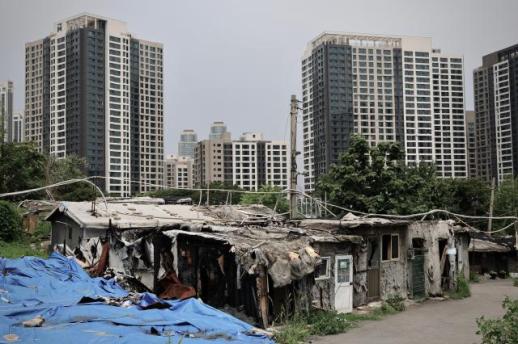 Seoul, one of Asia's richest cities, leaves one village behind SEOUL, July 15 (AJP) - The journey takes barely two minutes. Yangjae-daero, a six-lane boulevard cutting through southern Seoul, is little more than another busy artery carrying commuters toward Gangnam's gleaming office towers and luxury apartment complexes. Thousands cross it every day without giving the road a second thought. Yet few roads in South Korea separate two different economic realities more starkly. On one side stand apartment towers where homes now sell for more than 200 million won per 3.3 square meters, their values climbing alongside an artificial intelligence boom that has turned semiconductor companies into the country's most valuable businesses and is expected to propel South Korea's nominal economic growth to its strongest pace in three decades. Cross the road, however, and another Seoul emerges. The pavement gives way to dirt paths almost immediately. Wooden shacks patched together with corrugated iron, plywood and plastic sheeting line narrow alleyways barely wide enough for one person to pass. Coal briquettes remain stacked beside homes waiting for another winter. Rainwater has stained roofs covered by tarpaulins and old blankets. Hand-sized spiders spin webs across footpaths while mosquitoes rise from knee-high weeds left untended through the humid summer. This is Guryong Village. It is Seoul's last remaining shantytown, a settlement that was never intended to survive into the twenty-first century but now stands as perhaps the clearest physical reminder that South Korea's extraordinary economic ascent has never been experienced equally. The contrast is all the more striking because it exists not hundreds of kilometers from the capital but within Gangnam itself, the district synonymous with wealth, private education and some of Asia's most expensive real estate. From almost every point inside the village, residents can see the apartment towers that symbolize modern Seoul's prosperity. They are close enough to dominate the skyline, yet distant enough to feel like another country. What appears at first to be a simple story about poverty gradually becomes something more complicated after spending several days walking the settlement. The village does not resemble an abandoned place so much as one waiting to disappear. The first thing newcomers notice is not the housing but the suspicion. "Reporter?" The question comes before any greeting. When the answer is yes, conversations often end immediately. "We've seen many reporters," one elderly resident says with a dismissive wave. "Nothing changes." The skepticism is understandable. Residents have watched journalists arrive after fires, politicians before elections and redevelopment officials carrying new master plans. Television crews have repeatedly filmed what they describe as Seoul's last slum before leaving a few hours later. The village remains exactly where it was. Only after returning repeatedly do doors begin to open. Residents who initially refused interviews begin offering greetings. Someone points toward another alley worth seeing. Others quietly explain which homes were destroyed in the latest fire, which residents have moved into public housing and which houses now stand permanently empty. Walking through Guryong Village becomes less like touring a neighborhood than reading layers of Seoul's history. Boarded-up homes bear handwritten notices warning against trespassing after their occupants moved away or died. Children's bicycles lean against walls beneath weeds that have grown tall enough to swallow them. A rusted swing stands almost invisible under wild grass, its empty frame marking the place where children once gathered before their families gradually left in search of better schools, stable jobs and ordinary apartments elsewhere. Further uphill, the smell changes with every turn. Damp timber mixes with household refuse, stagnant summer water and the lingering scent of coal briquettes. Homes assembled from recycled wood, corrugated iron and plastic sheets appear to lean against one another for support. Electricity reaches most houses, but many still rely on improvised repairs accumulated over decades because redevelopment has remained perpetually just over the horizon. The January fire that swept through District 4 remains visible months later. More than 100 pyeong of ground is still covered by blue tarpaulins, while one half-burned house stands open to the weather. Inside, scorched books, blackened appliances and even an old cassette tape remain exactly where the flames left them. Residents speak about fires almost matter-of-factly. The houses are packed too closely together, the roads too narrow and the building materials too combustible for anyone to believe the next blaze can be entirely prevented. Each disaster briefly returns the village to the evening news. When public attention fades, the burned houses remain. 2026-07-15 13:54:46
-
Debate Over Lowering Age for Juvenile Offenders in South Korea During a Cabinet meeting on July 14, President Lee Jae-myung expressed concerns over a proposal to lower the age threshold for juvenile offenders to under 13 years old, stating it was "too weak" and urging for a broader reduction, noting that many countries set the age at 12. The President's push for a lower age for juvenile offenders signals a potential shift in discussions regarding youth criminal punishment.Under current law, a "juvenile offender" refers to individuals aged 10 to under 14 who commit illegal acts but are deemed incapable of criminal responsibility. These individuals can commit heinous crimes such as murder or rape without facing criminal penalties, instead receiving protective measures like community service or placement in juvenile facilities.However, recent reports of youth crime have undermined the intent of these laws. Incidents include students kidnapping and assaulting classmates while filming the acts on smartphones, as well as cases of infants being brutally abused or stolen vehicles being driven recklessly, resulting in tragic outcomes for innocent citizens.More concerning is the manipulation of their status as juvenile offenders, with some taunting police officers by saying, "You can't punish me anyway, so go ahead and hit me," showcasing a troubling blend of cunning and cruelty. This brutality is not merely anecdotal; it is supported by objective data. According to a report from the Ministry of Gender Equality and Family, the number of juvenile offenders apprehended by police reached 21,095 last year, a staggering increase from 9,606 in 2020, representing a 2.2-fold rise in just five years. Not only has simple theft increased, but violent crimes such as assault (up 2.8 times) and sexual offenses have also surged, indicating a critical escalation in the severity and sophistication of youth crime.Political leaders, many media outlets, and outraged civic groups are calling for a significant reduction in the age of criminal responsibility and stronger legal repercussions, arguing that the times have changed and a strong legal warning is necessary. However, it is essential to consider whether simply lowering the age is a panacea for youth crime. Human rights organizations, legal experts, and educators caution that lowering the age of criminal responsibility may not provide a fundamental solution. They warn of the risk that young offenders could become stigmatized, leading to a cycle of criminality as they connect with adult crime organizations and fall deeper into serious offenses.In reality, with the current infrastructure of juvenile detention and correctional facilities being severely inadequate, merely increasing the number of incarcerated youth could turn these facilities into "crime schools" where criminal skills are learned and shared, rather than places of rehabilitation. The argument that simply increasing punitive measures will eradicate youth delinquency cannot be dismissed lightly. Adolescence is a formative period where values are not yet established, and individuals are easily influenced by their environment. Therefore, reliance solely on punitive measures is insufficient. Strategies addressing youth crime must hold individuals accountable in a manner commensurate with their actions while also fostering their reintegration as healthy members of society through a well-designed support system. 2026-07-15 13:52:00