


Latest by
-
 Generation Z Embraces AI and Reading Over Gaming Generation Z is evolving from being 'digital natives' to 'AI natives.' An analysis of user data from three platform companies revealed that this generation is using AI flexibly and freely in their daily lives. AIGAWKS: AI Over Gaming... Generation Z Prefers 'Dedicated Platforms'Changes are first evident in smartphone usage. AIGAWKS analyzed nearly 20 years of mobile data to determine how Generation Z spends its time on various services. The report utilized a metric called 'Z Concentration,' which indicates the proportion of Generation Z users on specific apps compared to the overall population, to compare preferences across generations.The analysis showed a clear trend: Generation Z prefers 'dedicated platforms' with a higher number of peers over general-purpose platforms. The college student community Everytime reported that 97% of its users are from Generation Z, while the generative AI service Crack had 89%, and Discord recorded 86%. Naver's personal broadcasting platform Chijijik also showed that 71.4% of its users belong to Generation Z, indicating a Z Concentration of 3.5 times higher than other generations. In contrast, the app Carrot Market had a relatively higher proportion of users in their 30s and 40s, highlighting distinct generational usage patterns.Notably, there has been a shift in entertainment consumption. An analysis of data from June of last year to June of this year revealed a 6.3% decrease in mobile gaming usage, while interaction with AI services has rapidly increased. Users who previously spent leisure time on games or video content are now engaging with generative AI for conversations, image creation, and information exploration.Yoo Kyung-won, team leader at AIGAWKS, stated, "Generation Z tends to communicate and consume content in their own spaces rather than through universal services. They view AI not just as a search tool but as an interactive platform." Millie's Library: Reading Becomes 'Text Hip'... Recording as a New Reading HabitThe way books are read has also changed compared to previous generations. Millie's Library analyzed actual reading data from 10 million members over the past decade and found that for Generation Z, reading has expanded beyond the act of reading books to include recording and sharing personal tastes and experiences. Users have left a total of 440 million highlights.Lee Shin-hyung, team leader of the Unlimited Reading Team at Millie's Library, noted, "Generation Z tends to use reading records as a portfolio. In the past, they would write their thoughts in notebooks, but now they share highlights and one-line reviews, creating a culture that expresses their tastes and identities."The starting point for reading has also shifted from previous generations. Content that has gained attention through TV programs, movies, fandoms, and social media has become the gateway to reading. For instance, IVE's Jang Won-young mentioned that Buddhist-related content led to reading Hermann Hesse's 'Siddhartha,' and there is a trend of seeking out novels adapted into films or dramas. This so-called 'Text Hip' phenomenon is evolving into a new reading culture rather than just a passing trend.Millie's Library is reflecting these characteristics in its services. To lower the entry barrier for users who feel burdened by completing books, it offers summarized content, allowing users to transition to original texts when they express interest. Providing various reading environments, including smartphones, tablets, audiobooks, and AI voice (TTS), is also part of this approach.The team leader stated, "Summary content is not a substitute for completing books but rather an entry point to explore a wider range of books. For Generation Z, what matters is not finishing a book but consistently engaging with reading in a way that suits them."MindLogic: 'Not Just ChatGPT'... A Generation That Chooses AI Based on PurposeThe way generative AI is used is also changing. MindLogic analyzed that Generation Z is adopting a 'multi-AI' usage approach, selecting different AI models based on their purposes rather than relying on a single AI. The report explains that using ChatGPT for drafting, Claude for analyzing long documents, and Gemini for real-time searches is becoming a new habit.The depth of conversations with AI is also increasing. According to data released by MindLogic, the amount of information users input in a single conversation has increased 2.8 times over the past year. This indicates a shift from simply asking a question and receiving an answer to engaging in multiple exchanges to collaboratively produce results, with one in four conversations involving over ten questions and answers.The use of AI, which was previously text-focused, is rapidly expanding into image and document creation. Following the popularity of Studio Ghibli-style images, the use of image generation has increased by approximately 140 times, and there has been a significant rise in using AI for document and presentation (PPT) creation, as well as diagram production. About 66% of users are utilizing two or more functions, such as searching, document writing, and image generation.Kim Jin-wook, CEO of MindLogic, stated, "Generation Z is not a generation that uses just one AI; they choose the most suitable model based on their purpose. AI is becoming a collaborative partner that helps think and create results rather than just a tool for searching." He added, "In the future, the new digital competitiveness will depend more on how and which AI is chosen for different situations rather than on the quantity of AI usage." 2026-07-15 15:20:00
-
Former Justice Ministers and Prosecutors Call for Recognition of Supplementary Investigation Rights Ahead of the launch of the Public Prosecution Service and the Serious Crimes Investigation Agency on October 2, former justice ministers and prosecutors are advocating for the full recognition of prosecutors' supplementary investigation rights in response to proposed amendments to the criminal procedure law led by the Democratic Party.On July 15, the Prosecutors' Association, led by former Prosecutor General Han Sang-dae, issued a statement asserting, "It is legally inconsistent and potentially unconstitutional to deny investigative rights while recognizing prosecutors' rights to request warrants and prosecute." They expressed their dismay as the country approaches the Constitution Day, which commemorates constitutional amendments.They further stated, "The requests for warrants and prosecutions are the results of prosecutors' judgments and expressions of their belief in guilt," and criticized the notion of making decisions on cases with insufficient evidence as an unrealistic procedure.Regarding allegations of police cover-ups in the Jang Yoon-gi case, they questioned, "Who will address the damage caused by the police's biased investigations and cover-ups, given their exclusive investigative authority?"The association emphasized, "To demand decisions on prosecutions or warrant requests without adequate evidence is absurd," urging lawmakers to make wise decisions to prevent unjust infringements on citizens' rights.The Prosecutors' Association is a social group for retired prosecutors, with Han Sang-dae, who served as the Director of the Criminal Affairs Bureau and the Chief Prosecutor of the Seoul Central District Prosecutors' Office during the Lee Myung-bak administration, currently serving as its ninth president.* This article has been translated by AI. 2026-07-15 15:12:00
-
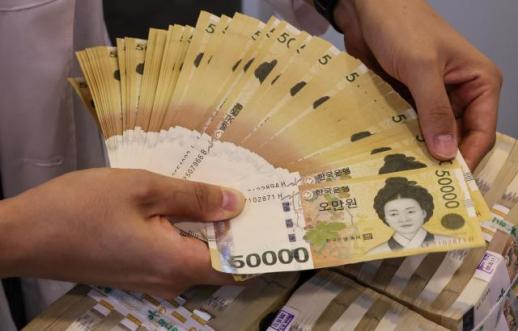 South Korea stays awash in cash, bolstering case for rate hike SEOUL, July 15 (AJP)-South Korea's financial system is becoming increasingly awash with cash, adding to the Bank of Korea's case for an interest-rate hike that could come as early as Thursday, as abundant liquidity continues to fuel red-hot asset markets from stocks to housing. Broad money, or M2, under the Bank of Korea's current definition averaged 4,184.4 trillion won ($2.81 trillion) in May, up 5.8 percent from a year earlier, slightly faster than April's 5.7 percent increase. On a seasonally adjusted basis, M2 expanded by 32.2 trillion won, or 0.8 percent, from the previous month, accelerating from a 0.6 percent rise in April. An alternative calculation under the central bank's previous methodology painted an even stronger picture of liquidity growth. Under the old definition, which included investment fund shares, M2 averaged 4,789.0 trillion won, up 11.7 percent from a year earlier and 2.2 percent from the previous month. Annual growth accelerated from 10.4 percent in April, extending a run of double-digit increases. The difference between the two measures largely reflected investment fund shares, which are excluded from the revised definition. Those holdings surged 61.7 percent from a year earlier, contributing 6.1 percentage points to the old M2's annual growth and underscoring how strongly money has flowed into investment products during this year's asset rally. The composition of money holdings also illustrated where liquidity is accumulating. Transferable savings deposits jumped by 24.3 trillion won in May after increasing by just 700 billion won in April as more funds migrated in highly liquid accounts to join the booming stock market. Money trusts with maturities of less than two years rose by 3.8 trillion won, reversing a 3.2 trillion-won decline a month earlier, as semiconductor companies increased trust deposits. By contrast, time deposits and installment savings with maturities of less than two years fell by 4.7 trillion won, mainly because households reduced their holdings. The divergence became even more apparent when viewed by sector. Nonfinancial corporations increased their M2 holdings by 30.1 trillion won from the previous month, while other financial institutions added 11.8 trillion won. Social security organizations, local governments and other public-sector entities increased holdings by another 3 trillion won. Households and nonprofit organizations, meanwhile, reduced their money balances by 19 trillion won, suggesting retail investors continued shifting cash into assets outside traditional bank deposits as stock and property markets gathered momentum. The central bank cautioned against interpreting the figures as a direct measure of household wealth or income, noting that money holdings are affected by borrowing, consumption, investment activity and shifts into nonmonetary financial assets. Other liquidity indicators pointed in the same direction. Narrow money, or M1, averaged 1,398.2 trillion won, rising 10 percent from a year earlier and 1.9 percent from the previous month. Liquidity at financial institutions, known as Lf, climbed 8 percent on year to 6,309.0 trillion won, while the broadest liquidity measure, L, increased 9.2 percent to 8,053.8 trillion won. The figures reinforce a dilemma facing policymakers ahead of Thursday's monetary policy meeting. While higher borrowing costs are intended to cool inflation and curb speculative demand in stocks and housing, the latest data suggest the financial system remains flush with liquidity, giving policymakers another reason to tighten policy even as higher interest rates risk weighing on an economy still heavily dependent on exports. 2026-07-15 15:10:49
-
Japan Pursues AI Sovereignty Amid U.S. Restrictions The Japanese government is taking steps to secure 'AI sovereignty' to ensure stable use of artificial intelligence (AI) without excessive reliance on specific countries or companies. This move comes after the U.S. government recently changed its policy, which halted Japan's plans for utilizing high-performance AI just ten days after they were announced, revealing the risks of depending on U.S. technology.According to Asahi Shimbun and Yomiuri Shimbun, the Japanese government approved a revision of its national AI policy, known as the 'AI Basic Plan,' during a cabinet meeting on July 14. This marks the first revision since the initial plan was established in December of the previous year. The rapid advancement of AI technology has raised concerns about cybersecurity and national security, prompting the government to add safety measures and enhance defensive capabilities to the existing focus on promoting use and regulatory adjustments.The newly emphasized concept in this plan is 'AI sovereignty.' Japan aims to establish a foundation for the stable use of necessary AI without over-reliance on specific countries or companies, while also enhancing its technological strengths in areas where it has an advantage to increase autonomy and negotiation power.This shift towards AI sovereignty was prompted by recent actions from the U.S. AI company Anthropic, which restricted access to its high-performance AI, Claude Mythos. Mythos is known for its ability to identify security vulnerabilities that humans might overlook, making it valuable for cybersecurity. However, Anthropic limited its general release due to concerns about potential misuse.On July 2, the Japanese government had anticipated that government agencies and major banks would be able to use Mythos after discussions with U.S. officials. However, just ten days later, the U.S. government reimposed restrictions on foreign access for export control reasons. This decision highlighted the risk that Japanese government and financial institutions might not be able to access the necessary AI technologies. Yutaka Matsuo, a professor at the University of Tokyo, remarked to Asahi Shimbun that this situation symbolizes the increasing importance of AI in international negotiations and national defense.However, Japan does not aim for complete domestic production of all AI technologies. The ruling Liberal Democratic Party emphasized in a proposal last May that it is neither realistic nor strategic to aim for the domestic production of general-purpose high-performance AI and AI semiconductors, where U.S. companies hold a dominant position. Instead, the focus of policy will be on securing alternative technologies and means in case access is restricted due to decisions made by specific countries or companies.Japan Bets on Vertical and Physical AIThe Japanese government has identified 'vertical AI,' specialized for specific industries, and 'physical AI,' which operates in the real world, such as robotics and autonomous vehicles, as key areas for competition. By leveraging industrial data accumulated in sectors like manufacturing, healthcare, and construction, along with its advanced robotics technology, Japan believes it can maintain competitiveness without directly competing with U.S. companies in general-purpose AI.The growth strategy announced by the government last month includes plans to invest 23.1 trillion yen (approximately $211.8 billion) in vertical AI and 10.5 trillion yen in physical AI by 2040. Last year, Japan's private investment in AI amounted to $1.11 billion, ranking 14th globally, which is less than one-200th of the U.S. investment of $285.9 billion.The government also plans to strengthen its cybersecurity framework. It will utilize high-performance AI to identify vulnerabilities in critical government information systems that are difficult for humans to detect, and it will expand the workforce and capabilities of the 'AI Safety Institute,' which assesses AI safety. Additionally, Japan will enhance cooperation with foreign government agencies and AI development companies to gain early access to the latest AI technologies.There is also a possibility of introducing penalties for AI operators. The current AI law allows the government to investigate and provide guidance to operators if citizens' rights are infringed due to AI misuse, but there is no basis for penalizing operators who do not cooperate with investigations. The revised basic plan states that to effectively respond to AI risks, related systems, including the AI law, will be 'actively and continuously reviewed.' Yomiuri Shimbun reported that this revision leaves room for strengthening regulations, including the establishment of penalties for non-compliant operators.* This article has been translated by AI. 2026-07-15 15:08:00
-
People Power Party Proposes Amendment to Retain Prosecutors' Investigative Authority 국민의힘이 15일 검찰의 보완수사권을 존치하는 내용의 형사소송법 개정안을 당론 발의했다. 아울러 중대범죄수사청(중수청)과 공소청 출범을 시행을 1년 연기하는 내용의 법안도 발의했다. 곽규택 법률자문위원장은 이날 국회 의안과에 '범죄 피해자 보호 3법 개정안'을 제출한 뒤 기자들과 만나 "국민의힘 국회의원 전원 명의로 범죄 피해자 보호 3법 개정안인 형사소송법·중수청법·공소청법 개정안을 당론 발의했다"고 밝혔다. 곽 위원장은 형사소송법 개정안과 관련해 "검사의 보완수사권은 존치하는 것으로 하고, 수사 범위를 경찰이 송치한 범죄와 고위공직자비리수사처에서 송부한 범죄, 공무원 관련 범죄로 명시하는 규정을 포함했다"고 설명했다. 이어 "경찰에서 독단적으로 사건을 종결하고 있는 부분에 대해 견제 장치가 필요하다는 의견이 있어 경찰에서 검찰로 송치해야 할 사건의 범위를 대폭 늘렸다"며 "송치된 사건에 대해 검사가 보완수사 요구뿐 아니라 직접 보완수사가 가능하도록 규정을 뒀다"고 말했다. 또한 중수청·공소청법과 관련해 "오는 10월 2일 시행 예정인 중수청·공소청법은 형사소송법 개정과 새로운 기관의 개청 준비가 미흡한 점을 고려해 1년 시행을 연기해 개청하는 것으로 했다"고 언급했다. 이와 함께 "이번 형사소송법 개정안에는 검사가 자의적으로 공소를 취소하거나 검사에 대해 부당한 공소취소 압력을 행사할 수 없도록 원천적으로 공소취소 권한과 관련 규정을 삭제하는 내용도 포함돼 있다"고 강조했다. 김승수 원내운영수석부대표는 이번 법안에 대해 "억울한 피해자가 나오지 않도록 하기 위한 최소한의 안전장치"라며 더불어민주당을 향해 "정략적인 생각에 앞서 국민을, 특히 사회적 약자를 우선한다면 국민의힘이 제출한 형사소송법 개정안에 적극 협조하라"고 촉구했다.* This article has been translated by AI. 2026-07-15 15:08:00
-
Universities to Expand Autonomy and Hire Non-Tenured Faculty in Advanced Fields Regulations that have constrained educational and research innovation at universities are set to be significantly relaxed. Notably, exceptional talents who have made outstanding achievements in advanced fields such as semiconductors and artificial intelligence (AI) will have the opportunity to continue mentoring students at national and public universities beyond the retirement age.On July 15, the Ministry of Education held the 26th University Regulation Rationalization Committee meeting in a conference room near Seoul Station, where they discussed three key regulatory improvements aimed at enhancing university autonomy and competitiveness.The main proposals presented at the committee included: 1) appointing non-tenured faculty at national and public universities for outstanding talents in advanced fields beyond retirement age, 2) expanding the scope of land and building leasing, and 3) exempting national university industry-academia cooperation foundations from bid deposits.The most notable aspect is the plan to relax the retirement age limit for non-tenured faculty at national and public universities, which is currently set at 65, specifically for exceptional talents in advanced fields and those who meet the academic achievement criteria established by university regulations. There has been a consistent call from the field for securing world-class faculty and researchers to strengthen the domestic education and research ecosystem, particularly for advanced technology research and future talent development.In response, the Ministry of Education plans to actively pursue amendments to the Higher Education Act, allowing national and public universities to appoint outstanding talents who meet the academic achievement criteria set by university regulations as non-tenured faculty for up to five years after retirement, with the consent of the university personnel committee.If this measure is implemented, it is expected that the expertise of scholars in advanced fields will be directly integrated into university research environments.Additionally, outdated regulations that limited universities' physical educational space will be lifted. Under the current University Establishment and Operation Regulations, universities can only lease land or buildings within 20 kilometers of their campus boundary and within the same basic local government (city, county, or district).However, this regulation has faced criticism for being overly rigid, considering actual traffic conditions and students' living areas. Therefore, the Ministry of Education plans to expand the leasing range to within 20 kilometers of the campus boundary but within the broader metropolitan area (city or province) to enhance the operational efficiency of university facilities.Furthermore, the contracting process for national university industry-academia cooperation foundations will also be simplified. Currently, under the National Contract Act, corporations that receive more than 50% of their funding from the state are exempt from bid deposits, but national university industry-academia cooperation foundations have been excluded from this exemption, facing burdensome deposit requirements and repetitive administrative tasks.The Ministry of Education plans to improve this situation by preparing measures to exempt industry-academia cooperation foundations from bid deposits and streamline the contracting process.Minister of Education Kim Kyo-jin stated, "The matters discussed today will be gradually improved through consultations with relevant ministries and legislative amendments. We will continue to actively reflect the voices from the university field to improve unreasonable regulations and support university autonomy and innovation."* This article has been translated by AI. 2026-07-15 15:08:00
-
Lotte Retail Group Provides Relief Supplies and Nutritional Support to 1,400 Vulnerable Residents Amid Heatwave Lotte's retail affiliates are collaborating with the Hope Bridge National Disaster Relief Association to support vulnerable populations during the ongoing heatwave.On July 15, Lotte announced that it will deliver relief supplies, including fans and essential food items, to approximately 600 low-income individuals and elderly residents living alone in goshiwons, or small boarding houses. Additionally, the company plans to provide nutritional meals for about 800 people in conjunction with the start of the summer heat.This initiative is based on a tripartite agreement signed in 2018 between Lotte's retail affiliates, the Ministry of the Interior and Safety, and Hope Bridge for a public-private partnership in disaster relief.From 2018 to 2022, Lotte's retail affiliates contributed a total of 3 billion won (approximately $2.5 million) over five years, providing relief supplies and psychological counseling through services like the Healing Bus during disasters such as wildfires and floods. Even after the agreement's conclusion, they continue to operate an emergency relief system.Lee Seong-hyun, head of communications at Lotte Department Store, stated, "We will care for our marginalized neighbors and realize shared values through cooperation among our retail affiliates."Meanwhile, on the same day, Lotte held its second-half VCM (formerly known as the executive meeting) at Lotte World Tower in Seoul, attended by Chairman Shin Dong-bin and representatives from various affiliates, to discuss management strategies.* This article has been translated by AI. 2026-07-15 15:04:00
-
Securities Stocks Rise Amid Market Surge Securities stocks are experiencing a strong rally, buoyed by significant gains in the KOSPI and KOSDAQ indices. The surge in the domestic stock market has led to increased expectations for trading volume.As of 2:34 PM on July 15, Samsung Securities was trading at 110,700 won, up 8,800 won (8.64%) from the previous trading day.At the same time, Korea Financial Group rose by 16,500 won (7.62%) to 233,000 won, while Kiwoom Securities increased by 22,000 won (7.14%) to 330,000 won.Mirae Asset Securities saw a rise of 2,750 won (7.10%) to 41,500 won, and NH Investment & Securities gained 1,050 won (3.52%) to reach 30,800 won, reflecting a broad upward trend among major securities stocks.This rally is interpreted as a result of improved investor sentiment in the domestic market, influenced by strong performance in the U.S. stock market. Overnight, the New York Stock Exchange rallied, driven by relief over the June Consumer Price Index (CPI), particularly in semiconductor stocks. Notable gains were seen in Nvidia (up 4.06%), Micron (up 4.92%), SanDisk (up 5.01%), and Intel (up 4.50%), while SK Hynix's American Depositary Receipts (ADRs) surged by 27.29%, boosting investor confidence in domestic semiconductor stocks.Consequently, Samsung Electronics and SK Hynix saw significant intraday increases, prompting a buying sidecar shortly after the market opened for both the KOSPI and KOSDAQ. Typically, when the stock market is strong, expectations for increased brokerage revenue due to rising trading volumes also grow, leading to a concurrent rise in securities stocks.* This article has been translated by AI. 2026-07-15 15:04:00
-
DDP Hosts Urban Summer Vacation with Music Festival In the heart of Seoul, an urban summer vacation featuring music and delicious food is set to take place.The Seoul Design Foundation announced that the 'DDP Vacation: DDP Music Festival' will be held at the Dongdaemun Design Plaza (DDP) from July 31 to August 2.This event, themed 'Summer Vacation at DDP,' is a summer festival where attendees can enjoy music, gourmet food, and relaxation. The evening program will run from 4 PM to 11 PM, allowing everyone to experience Seoul's summer nights.The festival will feature live stages, relaxation zones, and market areas. The live performances will take place from 9 PM to 11 PM, with the first day dedicated to 'Jazz Night,' the second to 'Classical Night,' and the third to 'Folk Night,' offering a different atmosphere each evening.In the relaxation zone, attendees can enjoy performances while lounging on bean bags. This area will be available for pre-registered guests, who will receive a vacation package for a special summer experience. Additionally, on-site participation will be available on a first-come, first-served basis.The market zone will offer a variety of food and refreshing drinks, including DDP beer, premium spirits, and pairing pies, as well as non-alcoholic options and potato chips in rose flavor. Twenty small businesses will also provide a range of snacks, such as ice cream, pesto, and chips, enhancing the festival atmosphere.Various spaces for relaxation and experiences will be available throughout the venue. The healing zone will feature over 500 Helinox camping chairs, reminiscent of the Louvre Pyramid Square in France, providing comfort to DDP visitors. A photo zone inspired by the beach will allow guests to capture summer memories.The festival will operate through pre-registration via Naver and on-site participation. Performance schedules and programs can be checked on the DDP website and official social media channels.The foundation has extended the operating hours of the 'DDP Vacation' to 11 PM as part of Seoul's initiative to boost the nighttime economy.Cha Kang-hee, the CEO, stated, 'This DDP Vacation is an urban summer festival where music, gourmet food, relaxation, and lifestyle are interconnected as a single experience. We aim to expand this into a nighttime cultural festival that encourages visitors to enjoy the DDP space and design content until late at night every year.'* This article has been translated by AI. 2026-07-15 14:56:00
-
Baemin Launches Discount Event Featuring Traditional Market Products Baemin, operated by Woowa Brothers, is hosting a discount event in collaboration with traditional markets.On July 15, Baemin announced that it is conducting a "National Special Price Traditional Market Exhibition" in partnership with the National Merchants Association to help expand online sales for traditional markets.This exhibition features a total of 36 products from participants including the Bucheon Jungdong Love Market Cooperative, the Chungnam branch of the National Merchants Association, and the Ulsan Suam Shopping Market. The traditional market exhibition is available on the Baemin app under "National Special Price." National Special Price is Baemin's commerce service where sellers deliver products via courier.The Bucheon Jungdong Love Market Cooperative is offering 18 products, including meal kits for tteokbokki, stir-fried pork, mackerel stew, and spicy fish soup, at discounts of up to 60%.The Chungnam branch of the National Merchants Association is selling four processed products made from local specialties, such as apple juice from Yesan and bellflower syrup from Nonsan, at discounts of up to 11%. The Ulsan Suam Shopping Market is offering 14 products, including puffed rice and nostalgic snacks.Baemin has been consistently collaborating with traditional markets and merchant associations. In a previous exhibition at the Bucheon Jungdong Love Market last December, sales increased by approximately 600% compared to the previous month, while an exhibition of Chungnam specialties in October recorded an average daily sales figure 29 times higher than usual.Last month, Baemin, in partnership with Home & Shopping, provided mobile gift certificates as prizes as part of a "Traditional Market Revitalization Project" at the Yeonggwang Terminal Market in Jeollanam-do.During the event, which runs until July 27, Baemin is offering coupons for discounts of 3,000 won on purchases over 10,000 won and 15,000 won on purchases over 25,000 won, available on a first-come, first-served basis.Kim Joong-hyun, head of the Sustainable Management Office at Woowa Brothers, stated, "We hope this opportunity allows customers to enjoy the warm foods of traditional markets comfortably at home while providing practical support to market merchants. We will continue to pursue various collaborations that benefit small business owners."* This article has been translated by AI. 2026-07-15 14:56:00