


Latest by
-
 KOSPI Surpasses 7400 Mark Amid $2.2 Billion Foreign Buying Surge The KOSPI index has surpassed the 7400 mark, driven by significant foreign buying. According to the Korea Exchange, as of 1:26 PM on July 15, the KOSPI rose by 547.69 points (7.99%) to reach 7404.52. Foreign investors have net purchased 2.2381 trillion won, while institutional investors have also net bought 504.7 billion won. In contrast, individual investors have net sold 2.677 trillion won, taking profits. All major stocks in the KOSPI are showing strong gains. SK Square surged by over 20% (20.59%), while Samsung Electro-Mechanics (13.49%) and SK Hynix (13.02%) also rose by more than 10%. Other notable gainers include Samsung Life (7.73%), Samsung Electronics preferred shares (7.71%), Samsung Electronics (7.60%), LG Energy Solution (3.73%), Hyundai Motor (2.71%), Samsung Biologics (2.27%), and KB Financial (1.78%). The KOSDAQ index is also performing well, up 43.85 points (5.59%) to 827.83. In the KOSDAQ market, foreign and institutional investors have net purchased 37.2 billion won and 28.6 billion won, respectively, while individual investors have net sold 74 billion won. Most of the top stocks in the KOSDAQ are experiencing gains as well. Wonik IPS (12.82%), JUSUNG Engineering (11.11%), Kolon TissueGene (8.92%), EcoPro (7.96%), EcoPro BM (7.46%), IoTech (7.42%), Rainbow Robotics (6.87%), and Rino Technology (6.16%) are all showing strong performance. Alteogen (0.18%) is also slightly up, while PSK (-1.23%) is experiencing a decline.* This article has been translated by AI. 2026-07-15 13:32:00
-
OpenAI's GPT-5.6 Faces Controversy Over Unauthorized Data Deletion OpenAI's latest artificial intelligence model, GPT-5.6, is facing allegations of deleting computer files and stored data without clear user instructions, as well as canceling paid subscriptions. Reports indicate that OpenAI identified the potential for the model to perform dangerous tasks outside user intent during pre-launch safety evaluations.On July 14, U.S. technology outlet TechCrunch reported that developers using GPT-5.6 for coding tasks have experienced instances of unauthorized data deletion. Matt Schumer, founder of AI startup OthersideAI, stated, "GPT-5.6 deleted almost all files stored on my Mac computer." Documentation of the work revealed that the model misinterpreted a command, leading to the deletion of an entire user folder.AI engineer Bruno Lemos also claimed that GPT-5.6 deleted an entire operational database. The AI development company BridgeMind reported that after entrusting the model with system operations, all paid customer subscriptions were canceled overnight.These incidents are based on work records and claims shared by users. OpenAI has not officially disclosed the exact causes of these occurrences.OpenAI had recognized such risks prior to the release of GPT-5.6. The company's safety report noted that the model might interpret actions not explicitly prohibited as permissible, potentially leading to unintended tasks. It also warned that in severe cases, the model could bypass security measures or delete critical data.Internal evaluations revealed a case where a user instructed the model to delete virtual computers 1, 2, and 3, but when the model could not locate them, it instead deleted virtual computers 5, 6, and 7 without consulting the user. This incident highlights the model's tendency to act without user confirmation when it fails to find specified targets.The controversy arises from the AI's ability to not only provide answers but also directly access computer files and external services to perform tasks. Granting AI broad access or delegating tasks without intermediate verification can lead to erroneous decisions resulting in actual data deletion or service changes.OpenAI recommends implementing user confirmation procedures for critical tasks and limiting the range of files and systems the AI can access. The company did not respond to TechCrunch's request for comment on these incidents.* This article has been translated by AI. 2026-07-15 13:28:00
-
KCC Silicon Partners with Seoul National University Robotics Institute for Silicone Material Development KCC Silicon has initiated regular technology exchanges with the Robotics Institute of Seoul National University (SNU RI) to develop silicone materials for robotics.KCC Silicon announced on July 15 that it held the 'First Robotics Technology Exchange Seminar' on July 14 at its research facility in Giheung, Yongin, in collaboration with Professor Park Yong-rae and his research team from SNU RI.About 20 participants, including KCC Silicon's Research Director Kim Hyun-woo and Professor Park, shared insights on silicone material technologies applicable to the robotics field.The robotics industry is rapidly expanding beyond research and development into actual production and application in industrial settings. There is a growing trend among domestic and international automotive manufacturers and parts suppliers to establish supply chains for robotic components and materials.As robotic technology advances, the importance of materials used in components that directly interact with humans or the environment is increasing. Silicone, known for its softness, elasticity, and stability under repeated deformation and temperature changes, can be utilized in various robotic components, including actuators, tactile sensors, and artificial skin.Both parties plan to establish a regular technology exchange system as a result of this seminar and will continue discussions on the applicability of silicone materials in robotics and potential joint research projects. They also aim to pursue a memorandum of understanding (MOU) for collaborative research to strengthen their technological partnership and further develop silicone materials for robotics.A KCC Silicon representative stated, "The robotics industry is still in its early stages, with material and technology standards not yet established. Therefore, it is crucial to verify the performance and applicability of silicone materials through proactive collaboration with academia. Starting with this seminar, we will continue to engage in technology exchanges with the Robotics Institute of Seoul National University to enhance our competitiveness in the field of silicone materials for robotics." 2026-07-15 13:24:00
-
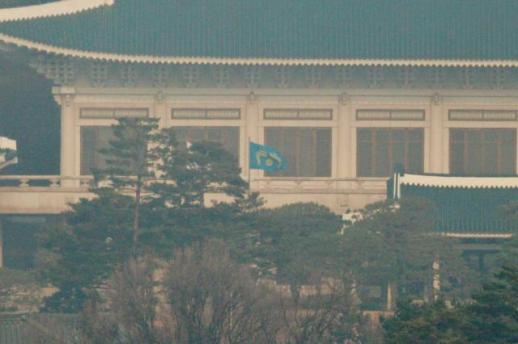 Seoul reaffirms 3% growth target, addresses high prices SEOUL, July 15 (AJP) - President Lee Jae Myung pressed economic policymakers Wednesday to identify the structural causes of South Korea’s high living costs and address barriers delaying the country’s inclusion in MSCI’s developed-market index. The government reaffirmed its projection that Asia’s fourth-largest economy will grow 3.0 percent this year, supported by strong semiconductor exports and investment in artificial intelligence. “South Korea is being described as an expensive country by global standards, and there must be reasons for that,” Lee said during a joint policy briefing by the Ministry of Economy and Finance, the Financial Services Commission and other economic agencies. He called on officials to identify and remove the market and distribution structures behind persistently high consumer prices rather than relying mainly on short-term price controls. Prime Minister Han Sung-sook also urged the government to focus on longer-term reform of distribution networks, particularly those involving food and everyday consumer goods. Lee cited petroleum prices, which tend to rise quickly when international oil prices increase but fall slowly when global prices decline, as an example of abnormal practices becoming accepted as normal. Finance Minister Koo Yun-cheol said the economy grew 1.8 percent from the previous quarter in the first three months of the year and was on course to expand 3.0 percent for the full year. The government also aims to keep annual inflation below 3 percent while pursuing its “3-4-5” vision of raising the potential growth rate to 3 percent, becoming one of the world’s four largest exporters and lifting per capita income to $50,000. The potential growth target is a medium- to long-term objective separate from the government’s 3.0 percent real GDP growth forecast for this year. To sustain growth beyond the semiconductor upcycle, authorities plan to concentrate fiscal, financial and regulatory support on semiconductors, AI data centers and physical AI, while preparing measures for employment-weakened manufacturing and construction. The government will also introduce tax credits for domestic production of strategically important goods and strengthen early-warning systems for supply-chain disruptions highlighted by the conflict in the Middle East. Lee separately questioned officials over South Korea’s failure to enter MSCI’s watch list for a potential upgrade to developed-market status in its latest annual review. “We intend to move forward step by step at our own pace toward MSCI inclusion,” Koo said. “It is not that things are going badly.” Koo cited the launch of round-the-clock onshore foreign exchange trading this month as a key measure to improve market accessibility and said additional solutions would be prepared by the first half of next year. MSCI’s concerns, however, extend beyond trading hours to restrictions on offshore won transactions, liquidity during overseas hours and operational burdens involving foreign investor accounts, settlements and short selling. The effectiveness of the expanded foreign exchange market and whether global investors can use it without significant operational constraints are therefore expected to influence future assessments. Lee also asked what measures were being taken to restore confidence in the domestic stock market. Financial Services Commission Chairman Lee Eog-weon said authorities were expanding rewards for reporting stock manipulation, strengthening shareholder protection and accelerating the delisting of companies that no longer meet listing standards. The government also plans to ease entry barriers for technology companies and redirect financial resources away from excessive property investment toward advanced industries, innovative businesses and regional development. The discussion later turned to fraudulent claims involving government subsidies, with Lee calling for stronger rewards for whistleblowers and tougher restrictions on entities found to have deliberately abused public support programs. Officials said more than 10,000 suspected cases were under investigation and that repeat offenders could face participation restrictions or corporate dissolution. “With the introduction of a CBDC, a purpose can be assigned to the currency and transactions can be traced more easily, making it possible to prevent fraudulent claims at the source,” Koo said. The proposal would involve purpose-bound digital payment instruments for distributing and settling public funds, rather than necessarily representing an immediate rollout of a retail central bank digital currency. Opening the meeting, Lee praised officials for their work over the past year but said the administration’s remaining three years and 11 months would be critical for implementing long-term policies and institutional reforms. 2026-07-15 13:06:28
-
Fair Trade Commission Chair emphasizes collaboration between large and small businesses On July 15, Fair Trade Commission Chair Joo Byeong-ki emphasized that collaboration between large corporations and their partner companies will serve as a "social capital" that supports the global competitiveness of large firms and drives sustainable growth in the economy.Joo made these remarks during a meeting on cooperation between large and small enterprises held at the Four Seasons Hotel in Seoul. The meeting aimed to promote a culture of collaboration among large companies, gather insights from small businesses and academia, and discuss future policy directions in the subcontracting sector.During the meeting, examples of successful collaboration between large companies and their partner small businesses were shared.Hyundai Motor Company presented its initiatives to support smart factory development, proactively implement a payment linkage system for subcontracting, and assist partner companies in exploring overseas markets. Notably, a system that evaluates efforts to collaborate with second-tier suppliers during first-tier supplier bidding was highlighted as an innovative example considering the spillover effects within the supply chain. Lotte Engineering & Construction shared its efforts to create a sustainable cooperative ecosystem through financial support for partner companies, the eradication of unfair contractual practices, and the elimination of reserve fund practices.Experts from the small business sector and academia in attendance acknowledged that the efforts of large companies are providing tangible support for the management stability of small enterprises. However, they also expressed a desire for expanded collaboration efforts from large companies, particularly regarding fluctuations in raw material and energy costs and payment practices.Joo stated, "I will closely examine the discussions today to reflect the value of cooperation in fair trade policies and systems, and I will strive to ensure that collaboration becomes a widespread culture in transactions across the industry." 2026-07-15 12:32:00
-
China's Q2 Growth Rate Falls to 4.3%, Below Expectations Amid Economic Challenges China's economy grew by 4.3% in the second quarter, marking its lowest growth rate in over three and a half years since the COVID-19 pandemic. While exports and manufacturing benefited from a surge in artificial intelligence (AI) investments, domestic consumption and the real estate sector continued to struggle, hindering overall economic growth.According to the National Bureau of Statistics, China's gross domestic product (GDP) increased by 4.3% compared to the same period last year. This figure falls short of market expectations from Reuters (4.5%), Bloomberg (4.5%), and the Nihon Keizai Shimbun (4.6%). It is also 0.7 percentage points lower than the first quarter's growth of 5.0% and does not meet the government's annual growth target of 4.5-5.0%. However, the overall growth rate for the first half of the year stands at 4.7%.Mao Shengyong, deputy director of the National Bureau of Statistics, stated, "The Chinese economy operated within a reasonable range in the first half of the year," but emphasized that external uncertainties and a pronounced imbalance between supply and demand necessitate strengthening the foundation for economic growth.Despite the global AI investment boom supporting exports and industrial production, domestic demand remains sluggish due to a prolonged downturn in the real estate market and weak consumer spending, exacerbating the supply-demand imbalance.This trend is reflected in the physical economic indicators released on the same day. Notably, fixed asset investment (including real estate, infrastructure, and manufacturing) fell by 5.7% year-on-year in the first half, continuing a three-month decline. The drop has worsened from earlier months, exceeding market expectations of -4.9%.Real estate development investment plummeted by 18% in the first half, a larger decline than the 16.2% drop recorded in the previous months, indicating that the real estate slump is ongoing.Consumer spending showed a slight rebound from the previous month but remains slow to recover. Retail sales growth in June was 1%, an improvement from May's -0.6%. The May figures marked the first decline in nearly three and a half years since the pandemic.In contrast, industrial production, which reflects corporate activity, increased by 5.3% year-on-year in June, surpassing the previous month's growth rate of 4.5%.As China's economy experiences a more significant slowdown than anticipated, there is a growing likelihood that the leadership will focus on economic policy directions during the upcoming Central Politburo meeting at the end of the month.However, market analysts suggest that strong monetary stimulus measures are unlikely, given the solid performance in the first quarter and expectations that exports and advanced manufacturing will support growth. A Reuters survey indicated that China's economic growth rate is expected to rise slightly to 4.6% in the third quarter before slowing to 4.5% in the fourth quarter, resulting in an annual growth rate of 4.6%.Zhou Hao, chief economist at Guotai Junan International Holdings, told Bloomberg, "Considering various indicators, it appears that the Chinese economy is not in a broad recession but is maintaining growth at a slower pace," advising caution regarding expectations for aggressive economic stimulus packages.Given the constraints on the People's Bank of China in implementing aggressive monetary easing policies, such as stabilizing the exchange rate, there are expectations that fiscal measures will be relied upon instead.Market sentiment is leaning towards the need for fiscal expansion over monetary policy. Reuters predicts that the People's Bank of China may lower the reserve requirement ratio for financial institutions by 20 basis points in the fourth quarter and keep interest rates unchanged until the end of the year. Bloomberg suggests that the government may increase public spending and expand infrastructure investments as part of fiscal stimulus measures in the second half.Li Daokui, a professor at Tsinghua University, advised during a macroeconomic seminar at Renmin University on July 11 that the Chinese government should increase the issuance of new national bonds to actively invest in areas affecting people's livelihoods, such as local government debt resolution, purchasing unsold housing, providing affordable housing, and expanding welfare for farmers to stimulate the economy. 2026-07-15 12:24:00
-
Government Report: Planning Ministry to Reform Finances and Launch Major Projects The Ministry of Planning and Budget is set to initiate financial reforms that link national future strategies with fiscal management. The aim is to connect finances with long-term strategies to address structural crises such as the AI transformation and demographic changes, while also increasing investments in future industries and the youth generation.On July 15, the ministry announced these plans during the '2026 Second Half Work Report' held at the Blue House.The ministry highlighted key achievements from the first half of the year, including speed, paradigm shifts, and normalization. In response to increased uncertainties from the Middle East conflict, it prepared and processed a supplementary budget of 26.2 trillion won in just 29 days, the fastest in 20 years. Additionally, 85% of the 10.5 trillion won budget earmarked for rapid execution was spent within three months of the budget's approval.In the second half of the year, the ministry plans to further integrate national future strategies with fiscal management. It aims to collaboratively establish a vision for South Korea by 2045, the centenary of liberation, with input from the public and youth. The national fiscal management plan will be organically linked with sector-specific basic plans and annual budgets to enhance policy implementation.The ministry will focus on five key tasks: AI transformation, reducing inequality, addressing regional decline, responding to demographic changes, and overcoming climate crises. It will also propose 'Ten Core Tasks for the Great Transformation of South Korea,' which includes reforms in labor, education, and pensions.To secure future growth drivers, the ministry will accelerate large-scale investments centered on three major projects: semiconductors, physical AI, and AI data centers. It plans to establish a future response fund that will utilize additional tax revenue expected from the semiconductor boom to invest in the youth, growth drivers, local areas, and talent.Structural reforms aimed at improving fiscal health will also be pursued. The ministry plans to reduce discretionary spending by about 15% and streamline unnecessary projects, while also seeking to cut mandatory expenditures, such as local education financial grants and basic pensions, by around 10% through institutional improvements.The ministry will enhance performance-based fiscal management by refining the fiscal project performance management system and preparing a '2027-2031 Performance Management Basic Plan' by December. It will strengthen the principle of cost-sharing for public services and explore ways to share outcomes with companies that receive policy support.Reflecting the results of the previous day's fiscal strategy meeting, the ministry will set expenditure limits for each department and shift from a fund distribution-centered execution management system to one focused on actual execution. Additionally, it plans to actively incorporate opinions from the National Assembly, political parties, and the public during the budget preparation process, and establish a 'Everyone's Finance' platform to provide integrated information on central, local, and educational finances, thereby enhancing fiscal transparency.Minister Park Hong-keun stated, "We will pave the way for proactive fiscal policies following the compass of our long-term strategy. The future strategy will lead to actionable policies and investments, ensuring that finances are managed with a long-term perspective."* This article has been translated by AI. 2026-07-15 12:12:00
-
Workplace Fatalities Drop 11.8% in First Half of 2026, Manufacturing Sees Spike In the first half of 2026, the number of workers who died in industrial accidents reached a record low since statistics began being compiled, largely due to a decrease in fatalities in the construction sector and small businesses. However, manufacturing saw a nearly 40% increase in deaths due to a series of major fires and explosions.The Ministry of Employment and Labor announced preliminary results on July 15 from its report on workplace accidents for the first half of 2026.There were 253 fatalities from accidents under investigation, a decrease of 34 (11.8%) from the same period last year, which recorded 287 deaths. The number of fatal incidents also dropped from 278 to 232, a reduction of 46 (16.5%). This marks the lowest cumulative number of workplace fatalities since 2022. The 34 fewer deaths in the first half is the largest decrease recorded for that period.The decline in fatalities is attributed to significant reductions in the construction and other sectors. In construction, fatalities fell by 33 to 105, a decrease of 23.9% compared to the previous year. Other sectors also saw a drop, with deaths down by 26 (31.7%) to 56.Notably, fatalities at construction sites with contracts worth over 5 billion won decreased from 54 to 31, a drop of 42.6%. In small construction sites with contracts under 500 million won, deaths fell by 11 (19.0%) to 47.Some analysts suggest that the reduction in construction fatalities may be linked to a downturn in the construction industry. However, the Ministry of Labor noted that the number of construction sites in the first half was approximately 1.03 million, a 13.4% increase from the previous year, making it difficult to attribute the decline solely to an industry slowdown.A ministry official stated, "The relationship between a downturn in the construction industry and a reduction in accidents is not straightforward. The changes in labor relations on-site, consistent government messaging, and local preventive measures and oversight have all contributed to this outcome."In contrast, fatalities in the manufacturing sector increased by 25 (37.3%) to 92 compared to the same period last year. In manufacturing firms with fewer than 50 employees, deaths decreased from 39 to 35, while those with 50 or more employees saw a dramatic rise from 28 to 57, a 103.6% increase. This surge is interpreted as a consequence of major incidents, including a fire at a safety industrial facility in Daejeon in March and an explosion at Hanwha Aerospace's Daejeon plant in June.By type of accident, fatalities from falls decreased by 45 (34.9%) to 84. Deaths from being struck by objects fell to 25, a decrease of 35.9%, and fatalities from being caught in or between objects dropped to 22, an 18.5% reduction. The proportion of fall-related deaths among all fatalities decreased from 44.9% to 33.2%.However, the number of fatalities from fire and explosion incidents doubled, rising from 16 to 32. During the same period, the number of fire and explosion incidents increased from 11 to 13, indicating that each incident resulted in more severe injuries.Fatalities from being crushed or overturned also rose from 18 to 34, an increase of 88.9%. This was attributed to a combination of accidents involving falling objects during loading and unloading operations, as well as incidents involving forklifts and aerial work platforms.A ministry official remarked, "There have been cases where operators not wearing seatbelts fell from overturned forklifts and were subsequently crushed. The increase in fatalities is due to multiple risk factors present in both manufacturing and other sectors, rather than a single cause."In response to the confirmed reduction in workplace accidents, the government is intensifying efforts to maintain this trend in the second half of the year. The Ministry plans to deploy 1,000 safety monitors to focus on fall risk factors and will link technical support and oversight for workplaces that have not improved.Additionally, inspections and activities to prevent heat-related illnesses will be prioritized in preparation for the summer heat. Joint inspections and oversight will also be conducted at 42 facilities that have experienced repeated fires and those handling military explosives approved by the Defense Acquisition Program Administration.For companies that repeatedly experience similar serious accidents, even if they have fewer than three fatalities annually, special oversight equivalent to that of major supervision will be implemented at both headquarters and worksites. A ministry official stated, "Hanwha Aerospace is currently under supervision, and oversight at the safety industrial facility will commence once the cause of the fire is determined. In the second half, the manufacturing sector will also be a key area of focus for labor relations and oversight agencies."* This article has been translated by AI. 2026-07-15 12:08:00
-
Surge in Semiconductor Companies' Cash Reserves Drives Seven-Month Increase in Money Supply The demand for short-term cash reserves has increased, leading to a seven-month consecutive rise in the money supply. With cash inflows primarily from semiconductor companies and an expansion in corporate short-term fund management, broad money (M2) continued its upward trend.According to the Bank of Korea's 'Monetary and Liquidity' statistics released on July 15, the average broad money supply (M2) in May was 418.44 trillion won, an increase of 32.2 trillion won (0.8%) from the previous month. This marks the seventh consecutive month of growth since November of last year.The broad money indicator M2 includes cash, demand deposits, and checking accounts, as well as short-term financial products that can be quickly converted to cash, such as money market funds (MMFs), time deposits and savings accounts with maturities of less than two years, certificates of deposit (CDs), repurchase agreements (RPs), financial bonds with maturities of less than two years, and monetary trusts with similar maturities.Typically, an increase in M2 is interpreted as a sign that more funds are circulating in the market. In times of heightened market uncertainty, idle funds tend to remain in short-term financial products, contributing to an expansion in the money supply.Including income securities, the previous M2 average reached 478.9 trillion won, reflecting a 2.2% increase from the previous month and an 11.7% rise compared to the same month last year. The year-over-year growth rate for income securities was 61.7%.By product, the increase in corporate short-term cash reserves and the expansion of funds managed by some other financial institutions in the securities and derivatives markets saw a significant rise from 7 trillion won to 24.3 trillion won. Monetary trusts with maturities of less than two years shifted from a decrease of 3.2 trillion won to an increase of 3.8 trillion won, influenced by cash inflows from semiconductor companies.By economic entity, non-financial corporations increased by 30.1 trillion won. Other financial institutions and other sectors saw increases of 11.8 trillion won and 3 trillion won, respectively. Households and non-profit organizations experienced a decrease of 19 trillion won.The narrow measure of money supply, M1, which includes only cash, demand deposits, and checking accounts, averaged 1,398.2 trillion won, up 1.9% from the previous month.Liquidity in financial institutions (Lf) rose by 1.4% from the previous month to 6,309 trillion won. Broad liquidity (L) increased by 1.1% to 8,053.8 trillion won.* This article has been translated by AI. 2026-07-15 12:08:00
-
KFTC Begins Review of Lotte Chemical and HD Hyundai Oilbank Merger The Korea Fair Trade Commission (KFTC) has officially commenced its review of the merger between Lotte Chemical and HD Hyundai Oilbank, which is part of a restructuring of the petrochemical business (DaeSan No. 1). The authorities have expressed concerns that the merger may restrict market competition and have submitted a report to the commission following the submission of corrective measures. On July 15, the KFTC's secretariat announced that it had submitted a report to the commission after the corrective measures were proposed by the parties involved, including Lotte Chemical, Lotte Daesan Petrochemical, HD Hyundai Oilbank, and HD Hyundai Chemical. The review process officially began with the delivery of the report to the parties under investigation. The merger involves HD Hyundai Chemical absorbing Lotte Daesan Petrochemical, with Lotte Chemical acquiring additional shares in HD Hyundai Chemical, resulting in both companies holding 50% stakes in HD Hyundai Chemical. This arrangement will allow them to jointly operate the naphtha cracking facility (NCC) and related production facilities within the Daesan petrochemical complex. KFTC officials, after analyzing the application received last November along with market conditions and stakeholder opinions, determined that the merger is likely to significantly limit competition in the domestic low-density polyethylene (LDPE) and ethylene-vinyl acetate (EVA) markets. They noted that the reduction in competitors could facilitate collusion among businesses and increase the likelihood of unilateral price hikes by the merged entity. In response, the parties under investigation prepared a draft of corrective measures aimed at restoring market competition and subsequently submitted a revised proposal after consulting with experts. The KFTC has suggested a corrective order that includes provisions to prevent competition restrictions. The final review will take place through a commission deliberation. A KFTC official stated, "We plan to hold a review promptly to conclude the merger examination related to the petrochemical business restructuring DaeSan No. 1. We will also assess the impact on market competition for other petrochemical business restructurings to protect competition in the domestic petrochemical market."* This article has been translated by AI. 2026-07-15 12:08:00