


Latest by
-
 SK On and Hyundai Begin Operations at Joint Battery Plant in Georgia SK On and Hyundai Motor Group's joint battery manufacturing venture has commenced initial production at its facility in Bartow County, Georgia, and has begun supplying batteries to Hyundai's local plant.According to the Atlanta Journal-Constitution (AJC) on July 14, the joint venture, named Hyundai SK Battery Manufacturing America (HSBMA), started its initial production last month.HSBMA announced that it is supplying batteries to Hyundai Motor Group's Meta Plant America (HMGMA) located in Savannah, Georgia.Hyundai Motor Group and SK On established HSBMA with a total investment of $5 billion (approximately 7.4 trillion won) in 2023. The factory, covering about 920,000 square feet, currently employs 3,500 workers. Once fully operational, it will have an annual production capacity of 35 gigawatt-hours (GWh), enough to supply batteries for approximately 300,000 electric vehicles.A spokesperson for HSBMA stated, "We are currently in the early stages of production and plan to gradually expand our operational scale."The state of Georgia provided a total of $641 million in tax incentives and grants to attract the HSBMA plant. Previously, Hyundai Motor Group announced in April 2023 that battery cells produced at HSBMA would be supplied to Hyundai Mobis, which will manufacture battery packs for electric vehicles produced in the U.S. under the Hyundai, Kia, and Genesis brands.In Georgia, SK On's local subsidiary, SK Battery America, is also producing batteries and related components for electric vehicles.A joint battery plant between Hyundai Motor Group and LG Energy Solution is also under construction near HMGMA. However, AJC reported that construction has been delayed due to a large-scale detention incident involving Korean workers by U.S. Immigration and Customs Enforcement (ICE) last year.AJC noted that the start of battery supply from HSBMA strengthens Georgia's electric vehicle production ecosystem and diversifies Hyundai Motor Group's battery supply chain.* This article has been translated by AI. 2026-07-15 08:12:00
-
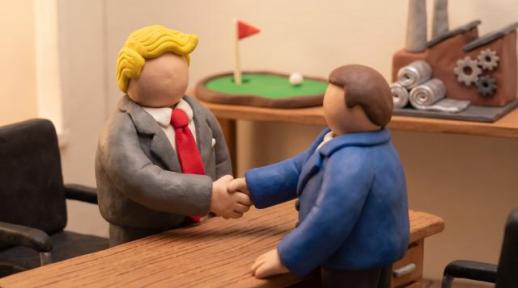 Trump got $2 million from Korean firm facing US trade probe SEOUL, July 15 (AJP) - The lead investor in a South Korean aluminum company contesting U.S. trade penalties paid $2 million last year to a holding company owned by President Donald Trump, according to a New York Times report that has renewed scrutiny of the president's foreign business dealings. The payment by Base Group, the parent of Korea Aluminium, surfaced for the first time in Trump's annual financial disclosure released in late June. The filing described it tersely as a "nonrefundable development fee" tied to a "letter of intent," offering no further detail. In statements to the Times, Base Group and the Trump family said the money related to an as-yet-unannounced golf course project in South Korea, and denied any link to the trade case. The Times said it found no evidence that Trump or his relatives had lobbied U.S. officials on the company's behalf. The disclosure lands at an awkward moment. Korea Aluminium has curbed shipments to the United States since the Commerce Department concluded in 2023 that a group of South Korean firms circumvented duties on Chinese-made aluminum by routing lightly processed metal through Korea. Base Group has courted the Trump family for nearly a decade, holding exclusive rights to sell Trump-branded wine in South Korea. In February, chairman Kim Sung-jip hosted Eric Trump in Seoul for meetings that drew executives from firms including SK Networks and Hana Bank. "Any suggestion that this transaction was driven by anything other than legitimate business considerations is pure fiction," Alan Garten, chief legal officer of the Trump Organization, said in a statement, adding that the payment had nothing to do with the trade dispute. The Base Group sum is a sliver of at least $125 million that Trump's holding company collected last year directly from foreign sources across more than a dozen countries. The White House and the Commerce Department both said the review of Korea Aluminium had not been swayed by political pressure, calling the agency's trade proceedings quasi-judicial and apolitical. A preliminary review released this month sided with U.S. producers and floated higher tariffs should the Korean firm ship Chinese-origin metal. 2026-07-15 08:04:33
-
Typhoon Bavi's Impact on Weather Patterns in Korea The movement of Typhoon Bavi (No. 9) has sparked interest online, particularly regarding changes in barometric pressure. A video shows the so-called "heat dome" that had enveloped the Korean Peninsula gradually being pushed away, leading to hopes that temperatures will ease compared to last week.According to the Korea Meteorological Administration (KMA) on July 14, Typhoon Bavi has significantly weakened as it passed through inland China. While the KMA assessed that the typhoon has dissipated into a tropical depression, meteorological authorities in Japan and China still consider it to be maintaining strength as it moves toward North Korea.Notably, the extensive rain clouds associated with the typhoon are affecting the Korean Peninsula, resulting in heavy rainfall in the Seoul metropolitan area and central regions. Some areas are experiencing downpours accompanied by strong winds and thunderstorms, prompting heavy rain warnings in certain locations.In this context, the barometric pressure video has gained attention online. Released on July 14, the video illustrates the northward-moving Typhoon Bavi alongside the North Pacific High, which had long covered the Korean Peninsula, being pushed northeast.Experts explain that as the typhoon moves, it can alter atmospheric flow and weaken high pressure, potentially leading to a decrease in temperatures as stagnant air begins to circulate. The KMA's forecast also indicates that this week will see slightly lower maximum temperatures compared to the previous week's heat wave. However, after the rain subsides, high humidity may keep the perceived temperature elevated.Online reactions include comments such as, "Is the heat dome finally being pushed away?" and "As long as it’s not hotter than last week, I can manage," along with hopes for refreshing rain to clear the hot air and calls for the typhoon to shake up the barometric pressure.However, due to the typhoon's influence, strong rain is expected to continue in the Seoul metropolitan area and Gangwon Province, raising concerns about river flooding and lowland inundation, particularly in the central northern regions near North Korea. Coastal areas may also experience strong winds and high waves, necessitating careful management of facilities and attention to safety incidents.The KMA urges the public to regularly check the latest weather advisories and to refrain from entering riverbanks, underground passages, and areas at risk of flooding during heavy rain.* This article has been translated by AI. 2026-07-15 08:04:00
-
Hanwha Investment Forecasts Record Growth for Coway's Rental Accounts, Maintains Target Price at 150,000 Won Hanwha Investment & Securities projected on July 15 that Coway will achieve record growth in rental accounts for the second quarter, maintaining its target price at 150,000 won and a 'buy' rating.Lee Jin-hyup, a researcher at Hanwha Investment & Securities, stated, "Coway's consolidated revenue for the second quarter is expected to reach 1.4221 trillion won, a 13% increase from the same period last year, while operating profit is projected to rise 8% to 262.3 billion won, aligning with market expectations." He added that the net increase in rental accounts is anticipated to reach 200,000, marking a 27% year-on-year increase and the highest quarterly performance to date.Lee noted that despite a decrease in accounts reaching ownership, rental sales have remained stable compared to the previous year, leading to a significant increase in net accounts. He explained that due to the nature of lease accounting, sales volume greatly impacts revenue growth, but actual cash flow is determined by the net increase in rental accounts and the total number of accounts. He also assessed that concerns over rising customer acquisition costs have not negatively affected profitability in this quarter, similar to the previous one.The overseas business is also expected to support performance improvements. The Malaysian subsidiary is projected to see revenue of 433.7 billion won and operating profit of 83.4 billion won in the second quarter, reflecting increases of 22% and 23%, respectively, compared to the same period last year, bolstered by strong sales of water purifiers and the successful introduction of new product lines such as mattresses and air conditioners. Thailand is also expected to add 30,000 to 40,000 accounts, achieving approximately 35% growth.Lee remarked, "Coway's differentiated competitiveness is evident in its ability to defend rental sales despite the decrease in accounts reaching ownership. While domestic growth has somewhat slowed, Malaysia and Thailand continue to grow at rates of over 20% and 30-40%, respectively, supporting overall company performance."He added, "In addition to solid fundamentals, the major shareholder Netmarble has recently announced plans to purchase an additional 50 billion won in shares, following a previous 40 billion won acquisition, indicating positive factors from a supply and demand perspective. This is part of a total plan to buy back 150 billion won worth of shares over the next year."* This article has been translated by AI. 2026-07-15 08:04:00
-
Fujifilm Korea Launches Fifth Short Film Production Workshop for Aspiring Filmmakers Fujifilm Electronic Imaging Korea is recruiting participants for its fifth 'Short Film Production Workshop' aimed at nurturing aspiring filmmakers.Fujifilm Korea announced on the 15th that it will accept applications for the workshop, co-hosted with Dankook University's Graduate School of Culture and Arts, until July 31.This workshop is a hands-on program open to anyone interested in film production, allowing participants to experience the entire filmmaking process—from planning and shooting to editing and screening—over six weeks.This year's program focuses on expressing personal perspectives and emotions through film, based on participants' everyday records such as diaries, notes, letters, and texts. Projects will center on the question of 'why this scene is being filmed,' rather than genre or format, and will include both individual and team projects.Classes will be held every Sunday from August 2 to September 6 at Fujifilm Korea's cultural space 'Particle' in Cheongdam-dong, Seoul. Participants will receive step-by-step training in shooting, sound recording, editing, scriptwriting, actual filming, and post-production, culminating in a screening of their completed works in the final week.The workshop will accept 15 participants, with a tuition fee of 500,000 won. Fujifilm Korea will provide all participants with free rental of the X-H2S camera and XF 18-120mm lens, and will offer additional production funding for two outstanding projects.Recently, camera manufacturers have been expanding their creative education and film production support programs beyond simple equipment sales, actively contributing to the development of the content ecosystem.The lectures will be led by Kim Woo-jae, a professor in the Film Department at Dankook University's Graduate School of Culture and Arts. Fujifilm Korea continues to support the cultivation of domestic film talent and the creative ecosystem through partnerships with institutions such as the Korean Academy of Film Arts (KAFA) and Seoul Institute of the Arts, as well as sponsorship of the Jeonju International Film Festival and provision of filming equipment. 2026-07-15 07:56:00
-
Advertising Scams Targeting Small Business Owners on the Rise We strive to go a step further. The investigative reporting team at Aju Economy, 'Balpum', consists of reporters in their 20s and 30s who engage directly with people to record their voices and experiences. We track all aspects of life, including economy, industry, politics, society, real estate, and culture. The issues have always been present but often remain hidden and unreported. 'Balpum' aims to uncover the unseen and amplify unheard voices through persistent inquiry. We will walk to places that readers cannot reach."Congratulations on your new registration. This is the Naver Place representative.""You have been selected for this quarter's government support project. We will promote you as a leading local business."These are common phrases heard multiple times a day by small business owners who have just opened their shops. This includes restaurants, cafes, hospitals, academies, and workshops. The calls come from numerous companies, with some owners receiving as many as ten to dozens of calls daily, disrupting their operations.Most of the callers are private advertising agencies. Some go beyond normal advertising practices, impersonating portals or government agencies while concealing costs to induce long-term contracts and credit card payments. The primary targets are newly registered stores on 'Naver Place'. New business owners, often anxious after opening, are likely to believe these calls are official notifications from credible institutions. One Minute After Registration: "Naver Official Agency"... Small Business Owners Get TrappedIm Da-eun, who runs a cafe in Gangdong-gu, Seoul, received such a call in March, just a minute after registering her cafe on Naver Place. The caller claimed to be from an 'official Naver agency' and offered to promote her cafe. Understanding the challenges of starting a new business, the caller emphasized the need for marketing and pressured her by asking, "Are you going to quit after just one year of running the cafe?" They spoke quickly, leaving little room for her to think.Caught off guard by the relentless calls, Im provided her credit card number. She later realized that the term 'payment' was never mentioned during the call. The agency said, "Just give us your card number, and we will check if you can get a limit approved." However, as soon as she provided the number, a payment of 2,376,000 won was processed under a three-year contract with 12-month installments. Im stated, "I felt it was strange that they were asking for personal information and clearly refused to proceed, but by then, the payment had already gone through. I didn’t even receive a detailed product description, and the contract was sent to me unilaterally via email only after the payment was completed."Im demanded a cancellation of the payment, stating that she received no services. However, the agency insisted on refunding only the amount minus a 20% cancellation fee. When she protested, saying there was no promotional activity, she managed to secure a full refund promise. Yet, the refund was delayed for nearly a month due to a supposed system issue. Later, they claimed an 'advertising setup fee' had arisen and refunded only the amount after deducting the 20% fee. When Im protested again, they offered to reduce the penalty to 10% in exchange for a settlement.After consulting with her credit card company and consumer dispute organizations, Im filed a complaint with the Financial Supervisory Service detailing the incident and its unfairness. Following the complaint, which was forwarded to the credit card company and the agency, she received a full refund on June 8. The problem is that cases like Im's, where a full refund is received, are rare. Many small business owners end up exhausted from prolonged disputes with advertising agencies and give up on refunds.In Ulsan, Kim Hee-eun (pseudonym), who runs a craft studio, ultimately gave up on recovering her losses. The agency had lured her into a contract by claiming that the government would subsidize 90% of the advertising costs. However, the promised marketing was not properly executed, and the installment period was billed differently than stated in the contract.When Kim requested to terminate the contract, the agency demanded additional payments. They pressured her to wait a year to avoid high cancellation fees, and when the time came, they offered to cancel all previous payments if she sent 870,000 won first.Hoping for a quick resolution, Kim transferred the money, but the agency then cut off contact. Victims have attempted to file collective lawsuits, but the financial and time burdens of pursuing claims for damages ranging from 1 to 2 million won often deter them. Many small business owners abandon their claims when the damages are similar to or less than the cost of legal action. Business Contracts Exclude Consumer Protection... 'Systemic Deficiencies' Worsen Victims' PlightWhile fraudulent online advertising practices are on the rise, the majority of victims are classified as 'businesses' rather than 'consumers' under the law. Although there are means to respond, such as canceling credit card payments, exercising installment dispute rights, and applying for dispute resolution, actual recovery of damages is rare.According to data submitted by the Korea Internet Advertising Foundation to the office of Kim Sang-hoon, a member of the National Assembly, reports of fraudulent advertising agency practices surged from 345 in 2025 to 1,357 in 2026, in collaboration with the Fair Trade Commission. Reports have been made regarding agencies promising excessive revenue increases or providing services that differ from the contract.However, when a victim requests cancellation of a credit card installment payment or exercises their rights, they often find it difficult to be recognized. The Financial Supervisory Service views the right to dispute installment transactions as fundamentally based on consumer transactions.If a business has contracted with an advertising agency for commercial purposes, it is hard to view the transaction as a consumer one. Credit card companies also find it challenging to cancel such payments unilaterally for this reason.Kim Won-seok, a lawyer at Law Firm Sha, stated, "Contracts for online advertising services are likely to be viewed as typical commercial transactions. Since the contract is for business promotion, it is difficult to recognize the same status as a consumer, and the application of the right to dispute installment transactions or the right to withdraw from the contract is likely to be denied."The Korea Consumer Agency also does not consider businesses using advertising services for promotion as typical consumers. Since the purpose of the contract is for business activities, it is challenging to apply consumer dispute resolution procedures directly, and there are limits to proactive mediation. While civil lawsuits or criminal complaints can be considered, victims often abandon their claims due to the costs of hiring a lawyer, the duration of the lawsuit, and the burden of proof, especially since it is difficult to objectively prove the effectiveness of advertising or the fulfillment of services.The dispute resolution system has also failed to provide substantial remedies. According to the '2025 Electronic Transaction Dispute Resolution Casebook', consultations regarding online advertising disputes decreased from 8,724 in 2023 to 4,983 in 2025. In contrast, the number of dispute resolution applications has remained around 1,500 annually.The issue is that the rate of applications leading to actual agreements or recovery of damages is low. More than double the number of cases that were dismissed or withdrawn compared to valid applications have been reported. Many business owners express grievances, but a significant number of cases do not reach formal resolution or end without an agreement.Additionally, since dispute resolution primarily serves to facilitate agreements between parties, if advertising agencies refuse to participate in the resolution process or reject settlement proposals, there is no way to enforce compliance. Ultimately, victims must resort to separate civil or criminal procedures, but the cycle of inaction continues due to the burdens of time and costs.Experts argue that the current system, which formally distinguishes between consumers and businesses, fails to protect small business owners and micro-enterprises effectively. There is a need for a separate mediation and arbitration mechanism that can quickly assess and enforce contract terminations, credit card payment disputes, and service non-fulfillment.Kim Sang-hoon stated, "Reports of fraudulent online advertising agency practices have surged nearly fourfold in a year, yet most victims are classified as 'businesses', leaving them in a consumer protection gap. It is urgent to establish a separate mediation and arbitration mechanism that can effectively assist small business owners."“As Soon as a Store is Registered, 30 to 40 Agencies Call Indiscriminately... Ruining the Entire Advertising Market”Criticism from within the advertising agency industry highlights that the sales structure of fraudulent companies is damaging the entire market. On June 8, the Aju Economy investigative team met with Lee Jin-woo, the head of the advertising agency 'Advertising White Paper', to discuss industry sales practices.Lee stated, "As soon as a small business owner opens their store, the sales begin. Once they register on Naver Place, agencies scrape the data, and as many as 30 to 40 companies call indiscriminately." He added, "Impersonating as 'Naver official agencies' or 'marketing teams' preys on the anxieties of middle-aged small business owners, leading them into long-term contracts."He also claimed that some agencies have personnel structures that make it difficult to conduct legitimate marketing. "Some agencies have 100 sales staff but only 2 or 3 actual advertising professionals. Instead of conducting marketing directly, they pass the work through a multi-level subcontracting structure and enforce long-term contracts of 12 months or more to secure operating funds, a practice he described as 'robbing Peter to pay Paul'."The information gap between small business owners, who often lack marketing knowledge, and these agencies is also exploited. For instance, they charge over 1 million won for unnecessary websites for regular restaurants or demand tens of thousands of won for low-quality short videos.The problem is that such sales practices also intimidate legitimate advertising agencies. Lee expressed, "Fraudulent sales have increased distrust in the entire advertising agency market. Employees fear that if they report these practices under their real names, large organizations could retaliate through blog attacks or manipulation of public opinion, potentially destroying their companies." Using 'Place' in Their Name and Impersonating Portal Representatives... Confusing Consumers and Evading SanctionsChoi Jin-hyuk, head of the Minseong Sangsaeng Research Institute, is assisting victims in drafting letters of complaint and lawsuits, known for his activities under the name 'Indomitable Driver'. He has been publicly disclosing the real names and sales tactics of advertising agencies on his blog.On June 10, Choi met with the Aju Economy investigative team at a studio in Gangnam, Seoul, and identified 'portal impersonation' and 'government agency impersonation' as key tactics used by some agencies.Agencies impersonating portals include terms like 'Place' or 'Map' in their corporate names. They introduce themselves as "Place representatives" over the phone, misleading victims into thinking they are employees of the portal company while claiming they mentioned their corporate name, thus evading initial sanctions from credit card companies or law enforcement.Impersonating government agencies or reputable associations is also a common tactic. According to Choi, the advertising agency 'B○ Holdings' communicates with small business owners using names that include 'Center' or 'Association' instead of their official name, claiming they will send a plaque for 'Korean Consumer Certification'. However, a letter from the Korean Consumer Evaluation, the official issuing body, stated that the agency's website content and plaque design mimicked their official products, demanding they cease such practices.Choi also pointed out that the low entry barriers in the advertising agency industry contribute to the proliferation of fraudulent companies. He noted, "Employees who learned sales methods from large companies often leave, claiming they can earn more by starting their own companies, creating a network of small agencies that can start operations with as little as 100,000 to 200,000 won."Choi criticized the complacency of law enforcement agencies, stating, "When a victim receives a partial refund, the police often treat the case lightly. The case involving the advertising agency 'W○ Commerce', which has 4,500 victims, has not progressed properly in the investigation." He argued that law enforcement approaches these cases more as civil contract disputes than as fraud allegations.Choi added, "While victims may find it difficult to be protected under consumer protection laws, excessive penalty clauses in contracts can be contested under the Act on the Regulation of Terms and Conditions. Article 8 of this law invalidates clauses that impose excessively burdensome liability on customers, meaning that penalty clauses charging tens of thousands of won per blog post upon contract termination are invalid." “If Costs Are Mentioned in the First Call, Contract Rates Drop... Deceptive Sales Thriving with Manuals”Concerns about the sales practices of some advertising agencies are not new. Even around 2020, when the review feature on Naver Place became fully active, store owners reported suffering from deceptive sales practices by advertising agencies. However, no measures have been established to prevent these recurring issues. Instead, the loopholes in the system have allowed these sales tactics to become more sophisticated.The Aju Economy investigative team applied for a job at an advertising agency last month, went through an interview, and participated in training for new employees. The agency's sales strategy was to claim 'full advertising cost support'. They explained that they would not charge a single won for advertising, citing success stories from Naver Place.However, they demanded about 2.9 million won annually under the guise of 'management fees' or 'solution costs', including value-added tax. Although they did not use the term 'advertising costs', it was effectively a paid contract worth hundreds of thousands of won. The agency provided detailed instructions on the content and timing of calls. The first call was to be completed within 50 seconds to one minute, and they were instructed not to mention costs during this call. An agency representative stated during training, "If we mention the 2.9 million won management fee in the first call, the contract success rate drops to about 30%." The goal of the first call was to send a proposal of 8 to 9 pages to the small business owner after piquing their interest with the promise of free support, then introduce costs through the proposal and follow-up calls to induce a contract.During the training, they also claimed that the marketing methods of competing advertising agencies were illegal. They asserted that some blog review products sold on expert intermediary platforms like 'Kmong' and 'Soomgo' rely on illegal packet programs using fake internet addresses (IP), which could lead to permanent deletion from the Naver system due to abuse.They promoted themselves as safe, using only 100% real-name verified accounts and blogs of a certain grade. However, the criteria for determining abusive elements by the Naver Smart Place customer center define abusive behavior not only as the use of illegal programs but also as accessing through multiple accounts, excessive false clicks induced by search advertising companies or applications. Regardless of whether accounts are verified under real names, artificially inflating reviews and views disrupts the portal ecosystem and violates regulations. “Be Wary of Claims of Official Agencies, Government Support, and Guaranteed Higher Exposure... Typical Warning Signs”As deceptive advertising agency practices increase, various guidelines for preventing victimization are being established. However, the fundamental systems to block fraudulent sales remain inadequate, and there is a growing call for legal mechanisms to effectively protect small businesses.Hwang Yong-sik, a professor at Sejong University’s Business Administration Department, emphasized, "To prevent victimization, businesses that use terms like 'Naver official agency', 'government support', or 'guaranteed higher exposure' should be viewed with suspicion, and facts should be verified first." He added, "Structures that pressure contracts over the phone, demand prepayments, and impose excessive penalties upon cancellation are typical warning signs. It is crucial to keep thorough evidence, including call recordings, text messages, contracts, and payment records, to aid in recovery of damages."The Fair Trade Commission is also taking action. In April, the Commission held a meeting to review investigations into illegal activities by online advertising agencies as part of a task force. The meeting examined actions that mislead businesses into contracts by implying government support, explaining payments as small monthly amounts while requiring upfront payments for several years, failing to fulfill promises of revenue increases or full refunds, and demanding excessive penalties for early termination. The Commission plans to refer 18 advertising agencies, which have received repeated complaints, to law enforcement for investigation.However, industry insiders and experts argue that mere post-factum investigations are insufficient to prevent victimization. There is currently no system in place to directly limit excessive penalty claims by advertising agencies. In 2021, Kim Young-seok, a member of the National Assembly, proposed an amendment to the Door-to-Door Sales Act to regulate the indiscriminate penalty demands of advertising agencies, but the bill was not adequately discussed and was discarded with the expiration of the National Assembly's term in May 2024. Since then, no follow-up measures have been taken to establish a system.Professor Hwang stated, "The fact that the Fair Trade Commission is referring cases of impersonating government support and demanding excessive penalties for investigation indicates that mere post-factum enforcement has its limits. This issue should not be dismissed as a mere contract dispute between individual businesses. It is time to establish legal mechanisms that effectively protect small business owners and micro-enterprises and to resume legislative discussions that have been stalled." 2026-07-15 07:56:00
-
U.S. Stocks Rise on Slower Inflation and Strong Bank Earnings; Nasdaq Up 0.9% The U.S. stock market rose, buoyed by unexpectedly slow inflation and strong earnings from major banks. Semiconductor stocks, which had plummeted the previous day, rebounded, lifting the tech-heavy Nasdaq index. However, IBM's more than 25% drop kept the Dow Jones Industrial Average relatively flat.On July 14, the Dow Jones Industrial Average closed up 10.02 points (0.02%) at 52,508.66. The S&P 500 index rose 28.55 points (0.38%) to finish at 7,543.89. The Nasdaq Composite index gained 233.83 points (0.90%), closing at 26,107.01.The U.S. Consumer Price Index (CPI) for June came in lower than market expectations, improving investor sentiment. According to the Labor Department, the June CPI fell 0.4% from the previous month, marking the largest decline since April 2020.Year-over-year inflation also decreased, dropping from 4.2% in May to 3.5%. The core CPI, excluding food and energy, remained steady from the previous month and rose 2.6% compared to the same month last year. Energy prices fell 5.7% over the month, contributing to the overall decline in prices.As inflation slowed, concerns about an early interest rate hike by the Federal Reserve eased. The futures market now reflects an 83.4% probability that the Fed will keep interest rates unchanged at its July meeting, a significant increase from the previous day's 58.3%.Kevin Warsh, the Fed Chair, made his first appearance before Congress since taking office, emphasizing the central bank's commitment to price stability. He stated, "We will not tolerate high inflation," and pledged to bring inflation down to the Fed's target of 2%.Major banks, which have begun reporting their second-quarter earnings, also supported the market's rise. Goldman Sachs surged 9% after reporting net income that exceeded market expectations, driven by significant increases in merger and acquisition and trading revenues.JPMorgan Chase recorded its highest-ever quarterly net income, rising 2.5%. Bank of America gained 1.9%. In contrast, Citigroup and Wells Fargo fell 5.3% and 2.7%, respectively, due to concerns over rising costs.Semiconductor stocks rebounded after a sharp decline the previous day. AMD rose over 3% following an upgrade from a brokerage firm. Micron and Intel also saw gains.However, IBM's stock plummeted 25.2% amid growing concerns about its future performance. Analysts predict that the company's growth may fall short of expectations as IT spending shifts from software to data center infrastructure.International oil prices increased due to concerns that tensions between the U.S. and Iran could disrupt oil supplies through the Strait of Hormuz. West Texas Intermediate (WTI) crude rose 1.5% to $79.34 per barrel, while Brent crude climbed 1.7% to $84.73.U.S. Treasury yields fell as inflation eased. The yield on the 10-year Treasury note dropped 2.06 basis points to 4.589%. The more sensitive two-year yield fell 6.75 basis points to 4.196%. The dollar index also decreased by 0.33% to 100.94.Market analysts caution that the easing inflation is heavily reliant on falling oil prices, suggesting it may be premature to celebrate. The recent rise in oil prices could impact future inflation indicators, making the situation in the Middle East a key variable for the stock market.* This article has been translated by AI. 2026-07-15 07:12:00
-
41% of KOSPI Margin Trading in Samsung, SK Hynix, and SK Square Raises Liquidation Fears ◆아주경제 주요뉴스▷코스피 '빚투' 41%가 삼전·닉스·스퀘어…강제청산 공포 커진다Samsung Electronics, SK Hynix, and SK Square account for 41.1% of the total margin trading balance on the KOSPI, amounting to 11.28 trillion won, raising concerns about potential forced liquidations with further declines. This month, major semiconductor and AI stocks have dropped nearly 20-30%, and the KOSPI has experienced three significant declines of around 8%, increasing losses for individual investors. The scale of forced liquidations this month has reached 452 billion won, averaging over 50 billion won per day, double the average for the first half of the year, with additional forced liquidation possibilities arising from the sharp drop on the 13th. Market analysts view the KOSPI's ability to hold the 6,500 level as a critical point for any potential rebound. On that day, foreign and institutional investors engaged in bargain buying, leading to a 0.73% rebound in the KOSPI, although volatility remains high.◆주요 리포트▷SK하이닉스 실적 전망 낮추는 증권가…미래證 "2분기 영업익 전망치 12%↓"- Mirae Asset Securities and Korea Investment & Securities have lowered their earnings estimates for SK Hynix for this year and next, reflecting a more realistic outlook on memory prices. - Due to an increase in the proportion of long-term supply contracts (LTA) and the impact of HBM sales structure, the second-quarter operating profit is expected to fall below market consensus. - However, this adjustment is attributed to changes in contract structures rather than a deterioration in market conditions, with assessments indicating that structural growth centered on HBM and supply shortages remain valid. - Securities firms maintain their target prices (Mirae Asset at 4.2 million won, Korea Investment at 3.8 million won) and investment recommendations, projecting continued mid- to long-term earnings growth.◆장 마감 후(14일) 주요공시▷ 케이엠제약, 10억원 제3자배정 유상증자▷ 뉴인텍, 30억원 제3자배정 유상증자▷ 한미반도체 2분기 영업이익 1303억원"◆펀드 동향(13일 기준, ETF 제외)국내주식형 -75억원해외주식형 -174억원◆오늘(수) 주요일정중국-GDP성장률(2Q), 산업생산(6월), 소매판매(6월), 고정자산투자(6월)미국-생산자물가지수(6월), 뉴욕연은지수(7월), 미 연준 베이지북* This article has been translated by AI. 2026-07-15 07:12:00
-
Lotte Foundation Chairperson Jang Hye-sun: Supporting Students in Need Reflects the Spirit of Shin Kyuk-ho "Helping those in difficult circumstances continue their education through scholarships is the essence of my grandfather's spirit," said Jang Hye-sun, chairperson of the Lotte Scholarship Foundation, during a press conference following the '2026 Shin Kyuk-ho Lotte Job Seeker Scholarship Ceremony' held on July 14 at the Lotte Retail Academy in Yeongdeungpo, Seoul. She emphasized that the foundation's scholarship program is deeply rooted in the philosophy of Shin Kyuk-ho, the late honorary chairman of the Lotte Group and her grandfather. On this day, 250 job seekers aspiring to enter the media and journalism fields gathered despite the challenging job market. Jang not only presented scholarships but also offered warm encouragement and practical advice to the youth. "Today's young people possess skills far superior to previous generations due to advancements in digital technology, including artificial intelligence. However, it is unfortunate that they are not achieving the results they desire due to the economic downturn," she said. "The pressure you face in carving out your own path is likely comparable to that of high school seniors preparing for college entrance exams." She added, "In a world where lifelong jobs are no longer guaranteed, I hope you will become resilient members of society who seize opportunities. The foundation supports your growth." The Shin Kyuk-ho Lotte Job Seeker Scholarship, which began in 2019, is now in its eighth year. To date, it has provided approximately 5.7 billion won to around 5,100 job seekers. This year, the foundation is offering 100,000 won each to 250 students and recent graduates from four-year universities nationwide who aspire to work in media and journalism, totaling 3.1 billion won in living expenses. The selection criteria are limited to socially disadvantaged groups, including multicultural families, North Korean defectors, and single-parent households. In addition to financial support, the foundation has actively incorporated feedback from previous participants to enhance the program. The curriculum has been significantly refined to include tailored workshops for various desired job roles, such as reporters, producers, announcers, and marketing professionals. Notably, alumni who successfully secured jobs in the field within the past year are serving as mentors, sharing insights on the latest hiring trends and practical know-how to maximize motivation. Voices from the scholarship recipients reflected the positive changes brought about by the foundation's support. Lee Jung-min, a fourth-year student on leave preparing for a career in journalism, shared, "Initially, I was preparing for a corporate job using my business major, but I realized I wanted to pursue my passion in media. Transitioning to a career in journalism came with its own challenges, particularly the lack of information." Lee added, "I had to increase my part-time work hours to cover living expenses, but thanks to the scholarship, I can now focus entirely on my job search and studies, which has been a relief. I aspire to become a journalist who contributes to creating responsible media." The Lotte Scholarship Foundation plans to continue improving its programs based on the feedback from scholarship recipients. Jang urged participants to provide feedback after the program, stating, "Thanks to last year's suggestions, we were able to make changes this year, and I hope to keep communicating with the scholars to create more beneficial educational opportunities." * This article has been translated by AI. 2026-07-15 07:08:00
-
Record Heat Waves Hit South Korea Amid Global Climate Crisis Record heat waves and large wildfires that have swept across Europe and the United States have now become a reality in South Korea. On July 12, the country issued its first-ever 'Extreme Heat Warning,' marking the onset of a new era of extreme summer conditions. Heat waves are no longer seasonal weather anomalies but have become a national disaster, posing new risks to energy, industry, and the economy.The Korea Meteorological Administration issued the first Extreme Heat Warning at 10 a.m. in Pohang and Gyeongsan, where the daily perceived temperature is expected to exceed 35 degrees Celsius for more than two days, with a perceived temperature of 38 degrees Celsius or a maximum temperature of 39 degrees Celsius expected to last for at least one day. This highest-level warning was introduced this year to address 'life-threatening extreme heat' that could not be adequately conveyed through existing heat advisories.In an interview with Aju Economy at the Ministry of Foreign Affairs, Climate Change Ambassador Kwon Jong-ho assessed that while the direction for the international community to combat extreme weather is clear, the political leadership needed to drive this effort is weakening."The direction of the international community is clear. We are moving towards reducing carbon and protecting the Earth. Therefore, it is right for our country to take the lead in technology and innovation."Ambassador Kwon noted that since the United States effectively withdrew from international climate negotiations, tensions between developed and developing countries have intensified."In the absence of the U.S., there is a vacuum in leadership to guide negotiations on the international stage. It would be beneficial if the European Union took a more leading role, but the EU is also facing economic challenges."He mentioned that he felt this shift firsthand at a recent meeting of the UN Framework Convention on Climate Change in Bonn, Germany."In the past, we could reach agreements on technical issues, but now, almost every issue leads to clashes between groups."UN climate negotiations require consensus from all parties. While the influence of the U.S. has diminished, developing countries, including China and Saudi Arabia, are participating in negotiations more actively and strategically than before."Developing countries are not what they used to be. Middle Eastern nations are showing negotiation power comparable to that of the EU."Developing countries emphasize the historical responsibility of developed nations for carbon emissions during industrialization and demand climate finance and technology transfer. However, developed countries are finding it difficult to promise the same level of support due to economic slowdowns and financial burdens."There is a huge gap between the carbon reductions needed to achieve the 1.5-degree target and the actual commitments made by countries."Ambassador Kwon also suggested that the ongoing conflicts in the Middle East could paradoxically accelerate the transition to renewable energy."This year's Middle East situation has made energy security a serious issue. Paradoxically, it has raised awareness about the need to reduce dependence on fossil fuels."For South Korea, which imports most of its energy, climate policy and energy security are essentially aligned."To achieve energy independence, we must ultimately emphasize renewable energy. Our direction must be towards an electrified society and the expansion of renewable energy."He expressed confidence that the government's goal of deploying 4.2 million electric vehicles and 300,000 hydrogen vehicles by 2030 is achievable."We have a competitive supply chain centered around Hyundai and Kia. The direction is correct, and compared to developed countries, our targets are not excessively high."Ambassador Kwon predicted that the key agenda for the next international climate negotiations will be 'electrification.'South Korea has been viewed as a country where climate action is challenging due to its high reliance on manufacturing and coal power. However, the recent coal phase-out policy has garnered international attention."South Korea is a manufacturing powerhouse, and few countries among manufacturing nations are as proactive in carbon reduction as we are. The announcement of our membership in the Powering Past Coal Alliance surprised the international community significantly."He emphasized that carbon reduction should be seen not as a cost but as a new growth driver."If the international community is moving towards reducing carbon, it is right for us to take the lead in technology and innovation."Climate policy is now intertwined with trade policy. The European Union has begun implementing the Carbon Border Adjustment Mechanism (CBAM) this year, and similar systems are being prepared in the UK and other countries.Ambassador Kwon expressed concern that applying different standards in each country could increase the burden on businesses."Companies are already making efforts to reduce carbon from an ESG perspective. However, if each country enforces different methods, it could hinder private climate action. It could become a 'stumbling block' rather than a 'building block.'"He proposed that future climate and trade norms should adhere to three principles: non-discrimination, consistency, and compatibility.The absence of the U.S. is also changing China's role. South Korea and China recently resumed their climate change cooperation joint committee for the first time in seven years."With the U.S. absent from negotiations, the competition between the U.S. and China is not the focus. There is significant room for cooperation with China in areas such as reduction, trade, and adaptation."South Korea's Environmental Integrity Group (EIG) plays a role in proposing compromises between developed and developing countries."South Korea must also propose more alternatives in the future."Ambassador Kwon stated that climate negotiations are ultimately a form of diplomacy."You must read the other party's red lines. You cannot reach an agreement by only asserting what you want."He shared a saying among diplomats."If you win a negotiation 100 to 0, you are a fool. You should win about 60 to 40 so that the other side can return to their country and explain the results."However, he expressed concern that the international community is increasingly leaning towards confrontation rather than compromise.Since becoming the climate envoy, he has been using public transportation instead of a personal vehicle."I practice BMW: Bus, Metro, Walk."As record heat waves in Europe and South Korea's first Extreme Heat Warning illustrate the climate crisis as a current disaster rather than a future warning, Ambassador Kwon reiterated the need for South Korea to lead industrial and energy transitions rather than waiting for international consensus."The direction the world is heading is clear. Therefore, South Korea must take the lead in technology and innovation."* This article has been translated by AI. 2026-07-15 07:04:00