


Latest by
-
 Uniqlo Expected to Overtake H&M as World's Second Largest Apparel Retailer Japanese company Fast Retailing, which operates the clothing brand Uniqlo, is projected to surpass Sweden's H&M to become the world's second-largest apparel manufacturer and retailer. With rapid growth in its overseas Uniqlo business, particularly in Europe and North America, annual sales are expected to approach 4 trillion yen (approximately $37.2 billion) for the first time. The strategy of enhancing quality and functionality while raising prices has led to improved profitability.The Nihon Keizai Shimbun (Nikkei) reported on July 10 that Fast Retailing has raised its sales forecast for the fiscal year 2026 (September 2025 to August 2026) by 70 billion yen to 3.97 trillion yen. This represents a 17% increase from the previous year and is about 8% higher than H&M's projected sales. The company also revised its net profit forecast upward by 20 billion yen to 500 billion yen, marking the third upward revision of its earnings outlook this fiscal year.Among manufacturers and retailers that handle everything from clothing design to production and sales, the world's largest is Spain's Inditex, which operates Zara. Fast Retailing has been in third place since surpassing American apparel company Gap in 2016, trailing H&M.From September of last year to May of this year, Fast Retailing's sales reached 3.065 trillion yen, a 17% increase compared to the same period last year. Quarterly sales have exceeded 1 trillion yen for three consecutive quarters, widening the gap with H&M, which has quarterly sales around 900 billion yen.The driving force behind this performance is the overseas Uniqlo business, which has seen sales grow by around 20% compared to the previous year. This growth rate is faster than H&M, which has experienced declining sales in local currencies, and Inditex, which has seen single-digit growth.Fast Retailing promotes Uniqlo's brand concept of 'LifeWear,' which emphasizes quality and functionality in everyday clothing. Unlike Zara and H&M, which focus on quickly adapting to fashion trends, Uniqlo's emphasis on durable, basic clothing is seen as a competitive advantage.Daijiro Murata, a senior analyst at JP Morgan Securities, stated, "It is difficult to find large competitors with a similar concept to Uniqlo globally. There is significant room for growth, as its market share in the European and American apparel markets is still below 1%."Uniqlo's strategy of opening large stores in key commercial areas of major cities in Europe and North America has also increased its visibility. As of the end of May, there were 95 stores in Europe and 120 in North America. Fast Retailing plans to open about 15 stores annually in Europe and 25 in North America going forward.The pricing strategy has also changed. While Uniqlo was previously associated with low-cost clothing, it has recently raised prices to match the value of its products while enhancing quality and functionality. In Europe and the U.S., the same products are sold at prices about twice as high as in Japan. The price range is lower than Zara but similar to or higher than H&M.For example, a women's short-sleeve T-shirt priced at 1,500 yen (approximately $13.90) in Japan is sold for 14.9 euros (about 2,700 yen) in Europe. Similarly, jeans that cost 4,990 yen in Japan are priced at 49.9 euros (about 9,200 yen) in Europe.By restructuring its pricing system and strengthening order management, Fast Retailing has reduced discount sales, thereby increasing profitability. The operating profit margin, which was 10% in the fiscal year 2015, is expected to reach 18% this fiscal year. In contrast, H&M's operating profit margin is around 7% to 9%. H&M has begun closing less profitable stores to improve management amid rising competition from low-cost online retailers like Shein and Temu.Expectations for Fast Retailing are high in the stock market as well. As of July 8, its price-to-earnings ratio (PER) was 56, significantly higher than Inditex's 25. Fast Retailing's market capitalization is approximately 27 trillion yen, narrowing the gap with Inditex's 31 trillion yen. Nikkei predicts that Fast Retailing could surpass Inditex in market capitalization depending on future performance.Dependence on Uniqlo and Yen Weakness Pose ChallengesHowever, Nikkei pointed out that the high dependence on Uniqlo is a challenge. Inditex not only has Zara but also other affiliated brands that generate a high profit margin of about 20%. In contrast, Fast Retailing's low-cost brand GU has not achieved an operating profit margin of 10% until the last fiscal year. Although there have been recent improvements, it has not yet established itself as a second growth pillar following Uniqlo. The global brand business, which operates mid-priced brands, also reported a loss in the last fiscal year.The depreciation of the yen is another burden for the Japanese business. As the proportion of products sourced from overseas increases, the cost of procurement rises as the yen's value falls. Takeshi Okazaki, Fast Retailing's Chief Financial Officer, stated, "We are continuing to hedge against currency fluctuations, but the situation is becoming more challenging. We will have no choice but to raise prices on some fall and winter products," estimating an average price increase of just under 4% across all products.Fast Retailing aims for long-term sales of 10 trillion yen. Sho Kawano, an investment research analyst at Goldman Sachs, commented, "Since Uniqlo's business focuses on basic clothing, it is unlikely to be a temporary trend. It has ample potential to become an industry leader in Europe and the U.S."* This article has been translated by AI. 2026-07-10 17:36:00
-
Woman Investigated for Blocking Access to Jamsil Vote Counting Center Police are investigating a woman accused of blocking access to the Jamsil vote counting center during a protest triggered by a shortage of ballots in the June 3 local elections.The Songpa Police Station in Seoul summoned the woman, in her 30s, as a suspect in an obstruction of duty case around 4 p.m. on July 10, approximately three weeks after launching the investigation on June 17. Authorities plan to confirm the circumstances surrounding her interference with the entry of sports organization officials.Before her appearance, she spoke to reporters outside the police station, stating, "I believe that the court or the election commission's decision on preserving evidence should take precedence. If verification proceeds without adhering to principles and procedures, how can it be persuasive regardless of the outcome?"She emphasized, "If it requires a cost to protect liberal democracy, I am willing to pay that cost."On June 16, she single-handedly blocked the entrance to the handball stadium for about two hours, where opposition lawmakers, including People Power Party leader Jang Dong-hyuk, were attempting to enter.Despite attempts by Jang and Yoo Seung-min, president of the Korean Sports Council, to persuade her, she refused to back down, insisting that the preservation procedures for the ballots and ballot boxes should take priority. Jang stated at the time, "If a citizen is blocking the door, I will respect that person's will," and withdrew.Some have referred to the woman as 'Oldark,' a portmanteau of 'Olympic Park' and 'Joan of Arc.' She also appeared at the National Assembly on July 2 when the special committee investigating the ballot shortage attempted to enter the handball stadium, blocking the entrance at Gate 2-1. At that time, committee members used the secured Gate 2-2, avoiding any physical confrontation with her.* This article has been translated by AI. 2026-07-10 17:28:00
-
South Korean Flag Illuminates New York Landmark to Celebrate SK Hynix's Nasdaq Listing SK Hynix's entry into the Nasdaq market was marked by a large South Korean flag illumination in the heart of Manhattan, New York.According to industry sources, on July 9, local time, a massive light display in the shape of the South Korean flag was activated atop JP Morgan's headquarters at 270 Park Avenue, which stands 423 meters tall, making it the sixth tallest landmark in New York.JP Morgan, along with Bank of America Securities, Citigroup, and Goldman Sachs, served as the underwriters for SK Hynix's American Depositary Receipt (ADR) listing.The offering saw significant interest, with demand exceeding the target amount by seven times during the investor demand forecast. It appears that JP Morgan decorated its headquarters with the South Korean flag lights to celebrate and welcome this achievement.SK Hynix officially listed its ADR on the Nasdaq at 9:15 a.m. local time on July 10 (10:15 p.m. in South Korea), starting conditional trading under the ticker symbol 'SKHYV.'Approximately 177.9 million shares, representing about 2.5% of the total issued shares, were newly issued at an offering price of $149 per share.* This article has been translated by AI. 2026-07-10 17:16:00
-
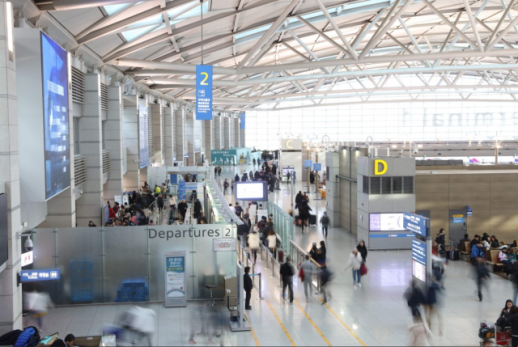 Korean LCCs face uneven summer recovery despite easing fuel costs SEOUL, July 10 (AJP) - Falling jet-fuel prices are beginning to ease travel costs for South Koreans, but the country's low-cost carriers are unlikely to enjoy an equally smooth recovery as a weak won, elevated operating costs and cautious capacity expansion continue to weigh on profitability during the peak summer vacation season. International fuel surcharges fell in July after benchmark jet-fuel prices retreated from highs reached during the recent Middle East conflict, raising hopes that airfares could ease further later this summer. For Korean Air, the July surcharge on international tickets was lowered to the 19th pricing tier from the 27th tier in June. The one-way surcharge on long-haul routes such as Incheon-New York fell to 344,000 won ($228) from 451,500 won a month earlier. Industry estimates suggest August surcharges could fall by another six pricing tiers if Singapore jet-fuel prices remain near recent levels. That relief, however, may come too late to meaningfully boost peak-season demand. A Korean Air official said the airline will announce its August fuel surcharge on July 16 after calculating the average jet-fuel price through July 15. Because many passengers traveling during the July-August vacation period have already purchased their tickets, any further reduction is expected to benefit travelers booking late-summer or autumn trips more than those flying during the busiest weeks. While fuel costs are easing, airlines remain cautious about restoring the international capacity they cut when oil prices surged and the won weakened sharply. According to publicly available industry tallies, South Korean low-cost carriers reduced more than 1,100 international round-trip flights following the Middle East conflict. Jeju Air cut 187 international round trips during May and June, Air Busan reduced 212, Eastar Jet 150 and Jin Air 176, with most reductions concentrated on medium-haul routes such as Guam and Vietnam's Phu Quoc. Those routes proved especially vulnerable because their longer flight times make airlines more exposed to fuel-price swings, while the won's prolonged weakness pushed up travel costs for Korean consumers visiting Southeast Asia. Rather than restoring every suspended route, airlines are selectively redeploying aircraft toward markets where demand is stronger and operating economics are more favorable. Eastar Jet plans to operate 110 irregular flights between July and October on three routes linking Incheon with Datong, Nantong and Ningbo, adding more than 20,000 seats to capture demand from Chinese travelers during the summer school holiday. Jeju Air is expanding flights to Japan, one of the strongest-performing outbound markets for Korean travelers. It will increase frequencies on its Incheon-Nagoya and Incheon-Matsuyama services to 21 weekly flights during July and August while adding flights on routes linking Incheon with Tokyo and Fukuoka as well as Busan with Osaka. Jin Air has launched a new Busan-Miyakojima service, while Air Busan has introduced new routes from Busan to Shizuoka and Takamatsu. The network changes highlight a broader industry strategy of prioritizing short-haul Northeast Asian destinations over longer Southeast Asian routes, where fuel costs and currency fluctuations continue to weigh more heavily on profitability. The timing is significant because summer remains the busiest period of the year for international travel. According to the Korea Tourism Organization, 4.86 million Koreans traveled abroad during July and August last year, accounting for about 16 percent of the year's 29.55 million outbound travelers. Inbound tourism is even more concentrated during the season. South Korea welcomed 3.55 million foreign visitors during July and August 2025, representing nearly 19 percent of the year's 18.94 million arrivals. Despite the seasonal demand, analysts say the second half of the year will depend less on passenger recovery than on whether airlines can restore profitability. Adding flights means higher spending on fuel, airport handling, crews and maintenance, while carriers continue to contend with a stubbornly weak won, elevated financing costs and balance sheets still recovering from earlier liquidity strains. Another risk is the return of fare wars. As airlines compete for recovering summer demand, promotional discounts could help fill seats but also erode yields. If aggressive fare competition overlaps with the costs of restoring suspended routes, rising passenger numbers may not translate into stronger earnings. "The recovery in travel demand is clearly encouraging, but profitability is a different story," an airline industry official said. "The challenge now is restoring capacity without sacrificing yields." The result is likely to be an uneven recovery across the industry. Carriers with dense networks to Japan and Northeast Asia appear better positioned to benefit from resilient short-haul demand, while airlines with heavier exposure to longer Southeast Asian routes may continue to face pressure even as jet-fuel prices retreat and international travel gradually recovers. 2026-07-10 17:09:46
-
IKEA Korea Responds to Controversy Over Alleged Retaliation Against Parental Leave Employees IKEA Korea has stated that allegations of disadvantaging employees who returned from parental leave are "unverified claims," while expressing its willingness to cooperate with the investigation by relevant authorities.In a statement on July 10, IKEA Korea expressed concern that "unverified claims are being reported as facts, leading to unnecessary misunderstandings and harm to both employees and the company." The company pledged to provide necessary materials and explanations to ensure that objective facts are confirmed during the investigation.IKEA Korea further emphasized that it ensures all coworkers can safely utilize their legally guaranteed rights related to pregnancy, childbirth, and parental leave. The company noted that out of approximately 2,000 employees in the past year, 118 utilized parental leave, and 110 of them (93%) returned to continue their careers.On the same day, President Yoon Suk Yeol shared reports on social media regarding allegations that IKEA Korea demoted an employee who returned from parental leave and pressured them to resign. He stated, "If the allegations are confirmed through a thorough investigation, we will take strict action in accordance with international standards."President Yoon also warned, "As South Korea strives to become a model society and government leading the world, we cannot tolerate such outdated management practices."* This article has been translated by AI. 2026-07-10 17:08:00
-
DS Asset Management Enters Active ETF Market with KOSDAQ Focus DS Asset Management is set to enter the ETF (Exchange-Traded Fund) market after 18 years since its establishment, launching its first product focused on KOSDAQ active ETFs. The firm aims to achieve alpha, or excess returns, by selecting undervalued companies in the KOSDAQ market, leveraging its experience in early-stage investments in unlisted firms.During a press conference held at the Korea Exchange in Yeouido on July 10, CEO Kim Sung-hoon expressed his commitment, stating, "We will mobilize all our in-house capabilities to ensure that DS Asset Management's active ETF can establish itself in the market."DS Asset Management plans to identify key leading stocks for concentrated investment and adjust its portfolio flexibly in response to industry changes. Approximately 20 fund managers will conduct research while managing and analyzing companies.The company intends to overcome the limitations of existing passive ETFs through its active ETF strategy. Kim explained, "If assets are allocated based on market capitalization regardless of a company's fundamentals, changes in corporate value may not be adequately reflected in the portfolio."To achieve this, the firm will focus on discovering stocks not included in the representative KOSDAQ index. According to the anticipated portfolio, companies with a market capitalization of less than 1 trillion won are expected to make up over 60% of the holdings. Jeong Seong-in, head of the ETF team at DS Asset Management, noted, "The KOSDAQ 150 index can only cover about 60% of the total market capitalization, and we aim to find alpha within the remaining 40% that the representative index does not capture."DS Asset Management highlighted its experience in investing in unlisted companies as a key strength. The firm analyzes the potential for listing and growth of companies at the unlisted stage and continues to invest post-listing, reflecting changes in the industry and corporate value. The company cited successful investments in biotech firms that achieved listing and technology exports.To manage the correlation of its active ETF, DS Asset Management has established an internal management system. The active ETF will track a benchmark index by 70% while allowing for autonomous stock selection within a 30% range. The firm plans to monitor the correlation with the benchmark index daily and manage the high volatility and liquidity of the KOSDAQ market.The 'DS KOSDAQ Active ETF' is scheduled to be listed on the securities market on July 14, with an expected size of approximately 21 billion won and a total fee of 1.0% per year.As of the end of June 2026, DS Asset Management manages approximately 5.5 trillion won in net assets, with private equity and public fund sizes at about 2.7 trillion won and 470 billion won, respectively. The launch of this ETF marks an expansion of the firm's business into the ETF market.* This article has been translated by AI. 2026-07-10 17:04:00
-
 Gov't pledges emergency aid for regions hit by torrential rains SEOUL, July 10 (AJP) - About 2.1 billion South Korean won (about US$1.4 million) in emergency disaster relief funds will be provided to regions affected by torrential rain earlier this week, the Ministry of the Interior and Safety said on Friday. According to the ministry, six regions affected by heavy downpours that began Wednesday are eligible for the support including Daejeon, Sejong, Gyeonggi Province, North Chungcheong Province, South Chungcheong Province and North Gyeongsang Province. The funds will be used for emergency repairs to damaged facilities and assistance for displaced households to help them recover quickly. Minister Yun Ho-jung urged local governments and related agencies to "make every effort" to carry out emergency repairs and minimize inconvenience for residents, adding that the government "will spare no effort" in providing necessary support for a swift recovery. With the monsoon season arriving later than usual this year, he also urged the public to check weather updates frequently and follow safety guidelines. 2026-07-10 17:03:14
-
 Korea's rate hike to 2.75% in July seen unanimous in AJP poll SEOUL, July 10 (AJP) - The Bank of Korea is expected to resume monetary tightening next week with its first interest-rate increase in three and a half years, according to an AJP survey of economists, with an overwhelming majority also expecting another rate hike before the end of the year. All 10 economists surveyed by AJP forecast the Monetary Policy Board will raise the benchmark interest rate by 25 basis points to 2.75 percent from 2.50 percent at its July 16 meeting, marking the central bank's first rate increase since January 2023. Consensus begins to fade only after next week's meeting. Nine respondents expect the policy rate to reach 3.00 percent by the end of 2026, while two also see another increase to 3.25 percent in the first quarter of next year. Kang In-soo, professor of economics at Sookmyung Women's University, is the lone respondent expecting the rate to remain at 2.75 percent through year-end. Although respondents differed on how far rates will ultimately rise, they broadly agreed on the reasons behind next week's expected increase. Persistent inflation above the Bank of Korea's target, a stronger growth outlook driven by the semiconductor boom, continued weakness in the won, accelerating house prices in the Seoul metropolitan area and faster household-credit growth were repeatedly cited as justification for resuming monetary tightening. Several economists also said the central bank had already prepared markets for a rate increase through recent policy communications, including its May meeting, inflation assessment and anniversary remarks. Cho Yong-gu of Shinyoung Securities expects inflation to remain above 3 percent through August despite falling oil prices, arguing that easing supply-side pressures alone would not remove concerns over underlying demand-driven inflation. He also expects the Bank of Korea to pause in August before delivering another 25-basis-point increase in October, bringing the benchmark rate to 3.00 percent. The survey suggests markets are preparing not merely for a single adjustment but for the Bank of Korea's first sustained tightening cycle since 2022. Yoon Yeo-sam of Meritz Securities also expects the benchmark rate to reach 3.00 percent by December before rising to 3.25 percent during the first quarter of 2027. He believes further tightening would help contain inflation while supporting exchange-rate and broader financial stability, although he sees limited justification for rates rising as high as 3.50 percent given weak employment and pressure on small businesses and the self-employed. Kim Jung-sik, professor emeritus at Yonsei University, likewise expects two increases this year, citing stronger inflation, improved economic growth, buoyant asset markets and the need to limit capital outflows and further depreciation of the won. Kang remains the most cautious respondent. While agreeing that renewed housing-price gains and household borrowing warrant a July increase, he expects the move to mark the end of the tightening cycle this year, arguing that weak domestic demand outside the semiconductor sector and continued pressure on retailers, restaurants and other service businesses leave little room for substantially higher borrowing costs. The BOK's previous tightening cycle ran from August 2021 to January 2023, lifting the benchmark rate by a cumulative 3.00 percentage points from 0.50 percent to 3.50 percent over roughly 17 months. The January 2023 increase marked the final move in that cycle. After holding the rate at 3.50 percent for about 21 months, the central bank began easing in October 2024 and lowered the rate by a cumulative 1.00 percentage point to 2.50 percent by May 2025 over roughly eight months. It has since kept the rate unchanged at 2.50 percent, including at its latest meeting on May 28. The divergence widens beyond 3.00 percent. Cho and Yoon both see 3.25 percent as the most likely terminal rate during the first quarter of next year, although Cho also sees a scenario in which rates eventually rise to 3.50 percent should growth accelerate further or financial-stability risks intensify. The survey therefore points to broad agreement on the July decision but much greater uncertainty over how far the tightening cycle ultimately extends. Whether the Bank of Korea continues raising rates beyond this year is likely to depend on whether Korea's semiconductor-led expansion can continue to offset weak domestic demand while preventing inflation, household debt and currency pressures from becoming more entrenched. 2026-07-10 16:59:12
-
Korean Content Agency Head Holds Meeting on K-Game Industry The Korean Content Agency (KCA) held a meeting on July 9, led by new head Kim Yoon-ji, at the Global Game Hub Center to explore ways to enhance the competitiveness of small game companies.Representatives from various game-related associations, including the Korea Game Industry Association, Korea Mobile Game Association, Korea Game Developers Association, Korea Artificial Intelligence Game Association, and the Game Culture Foundation, attended the meeting to discuss production support, overseas expansion, residency support, and investment connections.Baek Soo-jung, CEO of Roadcomplet, stated, "Having joined in 2009 as part of Game Venture 4.0, we were able to grow our company and receive the 'Export Tower of 50 Million Dollars' award thanks to systematic support. We need support that allows small teams to develop intensively and try various approaches."The KCA plans to improve its support system by incorporating feedback from the game industry to ensure the sustainable growth of K-game content and the expansion of K-culture.After the meeting, Kim visited the Global Game Hub Center's virtual reality (VR) and mobile testbed facilities, engaging with representatives from resident companies to hear their support needs.Kim Young-woong, CEO of Super Rabbit Games, remarked, "Small and startup game companies often struggle with securing investment or funding despite having the necessary technology and content competitiveness. We hope for expanded policy financing support, such as investment and loans, to allow companies to focus on stable development."Kim also met with trainees from the Game Talent Center. Starting this year, the KCA has been operating a 'field-based youth internship program in the game sector' to connect industry and education for workforce development.Kim Yoon-ji emphasized, "This meeting confirmed the need to diversify support methods beyond just production assistance. We will continue to strengthen the foundation for the growth of the game industry and maintain communication with the field."This meeting marks the beginning of Kim's focus on field-centered initiatives. Upon taking office last month, she identified enhancing the value of content intellectual property (IP), strengthening export competitiveness, responding to technological changes such as artificial intelligence (AI), and supporting the growth of creators and companies as key tasks, promising ongoing communication with the industry.* This article has been translated by AI. 2026-07-10 16:56:00
-
President Lee Visits Lee Tae-jun Memorial in Mongolia President Lee Jae-myung visited the Lee Tae-jun Memorial and Park in Ulaanbaatar, Mongolia, on July 10, where he paid his respects at the tomb of independence activist Lee Tae-jun and toured the memorial. This marks the first visit by a South Korean president to the Lee Tae-jun Memorial since former President Lee Myung-bak in August 2011. According to a written briefing by Chief Spokesperson Kang Yu-jeong, the memorial was established to honor Lee Tae-jun (1990, Order of Merit for National Foundation) for his contributions to Korea's independence movement and the development of modern medicine in Mongolia. Accompanying President Lee were Foreign Minister Park Jin, Minister of Veterans Affairs Kwon Oh-eul, and about 20 others, including Jo Yoon-kyung, president of the Korean Association in Mongolia. From the Mongolian side, attendees included Foreign Minister Batmunkh Batjcek, Minister of Environment and Climate Change Chend Sandakher, Mongolian Ambassador to South Korea Sukhe Bold, and Deputy Director of the Ministry of Foreign Affairs of Mongolia, Kansu Damdin. After laying a floral tribute at Lee Tae-jun's tomb, President Lee moved to the memorial. At the entrance of the exhibition hall, he learned about the meaning of the proverb “Сэтгэл байвал арга олдоно,” which translates to “Where there is a will, there is a way.” This was linked to Lee Tae-jun's commitment to the independence movement and his activities in Mongolia. President Lee nodded in understanding as he viewed the bust of Lee Tae-jun and the second-floor exhibition detailing his life. While examining photographs, President Lee expressed interest in Lee Tae-jun's admiration for independence activist Ahn Chang-ho and noted that he was the cousin of Kim Kyu-sik. President Lee also checked medical textbooks used by Lee Tae-jun during his studies at Severance Medical School, confirming their authenticity. He took a keen interest in an article from the Independence Newspaper that reported Lee Tae-jun's donation of 10 won to the provisional government for the independence movement, asking, “Was it acceptable to disclose the donor's name in the newspaper?” Regarding the use of the pseudonym “Lee Dae-am” for the donor, he remarked, “It seems they used a pseudonym to avoid exposure.” After touring the exhibition, President Lee wrote in the guestbook, “I will carry on the noble spirit of independence activist Lee Tae-jun into a golden era for Korea and Mongolia.” As Lee Tae-jun's remains have not yet been found, a memorial site has been established. According to the travelogue “Journey to the Mongolian Desert” by Yoo Won-hyung, the area near the Zaisan Memorial is believed to be where his body was buried shortly after his death. President Lee suggested visiting the Zaisan Memorial right away. The Zaisan Memorial, located at the foot of Zaisan Mountain, is thought to be the burial site of Lee Tae-jun, who died in 1921, and is a popular destination for both Mongolian citizens and foreign tourists in Ulaanbaatar. After climbing the 400 steps to the Zaisan Memorial, President Lee inquired about the differences between forested areas and developed regions in Ulaanbaatar. The Mongolian ambassador to South Korea and the South Korean ambassador to Mongolia explained that many people still live in traditional gers at the foot of the mountain. President Lee expressed interest in the progress of plans to build a second capital in Mongolia, which is modeled after Sejong City. He also showed curiosity when informed that the river flowing in front of the memorial leads to Lake Baikal, saying, “So it connects to Baikal.” At the Zaisan Memorial, President Lee was greeted by South Korean tourists who excitedly requested selfies and commemorative photos with him. Chief Spokesperson Kang reported that tourists waiting until the end of the Ulaanbaatar city tour also asked President Lee for photos, and he engaged with them, taking pictures together. * This article has been translated by AI. 2026-07-10 16:56:00