


Latest by
-
 Hanwha Ocean Sells $2 Billion in Currency Futures After Canadian Submarine Setback Hanwha Ocean, which faced a setback in the Canadian submarine project, sold approximately $2 billion (about 3 trillion won) in the won-dollar currency futures market on July 10, according to a source cited by Reuters.Following this news, the won strengthened, causing the won-dollar exchange rate to drop to 1500.0 won.Reuters noted that Hanwha Ocean's dollar sale coincided with efforts by South Korea's foreign exchange authorities to prevent the won from weakening, as well as expectations of reduced foreign selling in the domestic stock market and anticipated inflows of foreign capital due to SK Hynix's issuance of American Depositary Receipts (ADRs). This dollar sale occurred amid signs that the recent strength of the dollar and weakness of the won may be stabilizing.On the previous day, SK Hynix announced that it had set the public offering price for its ADRs at $149, issuing a total of 177.9 million shares to raise $26.57 billion, or about 40 trillion won. This surpasses Alibaba's $25 billion, making it the largest IPO by a foreign company in the U.S. Additionally, Moon Ji-sung, the Deputy Minister of International Economic Affairs at the Ministry of Economy and Finance, stated in a call with Yonhap Infomax that the current exchange rate remains misaligned with fundamentals. He suggested that supply and demand in the second half of the year would gradually reflect fundamentals, indicating a potential decline in the won-dollar exchange rate.Meanwhile, Hanwha Ocean lost out to Germany's ThyssenKrupp Marine Systems (TKMS) in the announcement of the preferred bidder for the Canadian Submarine Project (CPSP), which is valued at up to 60 trillion won, on July 6 (local time). 2026-07-10 16:28:00
-
Government Provides $1.8 Million in Emergency Aid for Heavy Rain Damage The government is providing 2.1 billion won (approximately $1.8 million) in emergency aid to local governments affected by heavy rain.The funds will be prioritized for rapid emergency recovery and relief for disaster victims to prevent further damage and facilitate the early normalization of affected areas.The Ministry of Interior and Safety announced on July 10 that it will urgently support six regions, including Daejeon, Sejong, Gyeonggi Province, North Chungcheong, South Chungcheong, and North Gyeongsang, which have suffered damage from heavy rain that began on July 8.This support was decided to ensure swift emergency recovery in the affected areas. The allocated special grant will primarily be used for emergency repairs of damaged facilities and relief for disaster victims to prevent secondary damage.Local governments plan to utilize the 'pre-budget execution' system under Article 45 of the Local Finance Act to quickly implement recovery budgets.Yoon Ho-jung, Minister of Interior and Safety, stated, "Local governments and related agencies should make every effort to minimize inconvenience for residents in affected areas during emergency recovery," adding, "The government will also spare no necessary support to ensure rapid recovery from this heavy rain damage."He further urged the public to regularly check weather information and adhere to safety guidelines, especially since the monsoon season is not yet over.* This article has been translated by AI. 2026-07-10 16:28:00
-
Samsung SDI Dominates AI-Driven ESS Bidding Process The recent bidding for the 'Next-Generation AI Distribution Network' has revealed that the highest number of selected bidders opted for Samsung SDI battery cells.On July 10, the Ministry of Climate, Energy, and Environment announced the results of the 'AI-Driven ESS Construction Support Project,' which included nine successful bidders: VPP Lab, LG Energy Solution, KEPCO KDN, SK Eteronics, HD Hyundai Electric, GridWiz, Korea East-West Power, and Hyundai Engineering & Construction.The 'AI-Driven ESS Construction Support Project' aims to install energy storage systems (ESS) on power lines transmitting electricity generated from renewable sources, utilizing AI for efficient operation.Among the nine selected bidders, six chose Samsung SDI battery cells, while one and two bidders opted for LG Energy Solution and SK On battery cells, respectively.In terms of capacity, bidders using Samsung SDI accounted for 66% of the total bid volume, while those using LG Energy Solution and SK On battery cells represented approximately 22% and 12%, respectively.Samsung SDI plans to supply its integrated ESS solution, the 'SBB (Samsung Battery Box) 1.5,' for this project.The SBB 1.5 is an all-in-one product housed in a 20-foot container, featuring high-nickel NCA prismatic battery cells, modules, racks, and safety devices. It is designed for immediate use upon connection to the power grid.Notably, the product's reliance on prismatic battery cells enhances its performance and safety, giving it a competitive edge.This next-generation AI distribution network project is viewed as a 'preliminary battle' ahead of the government's third ESS central contract market bidding scheduled for September, drawing significant industry attention.An industry insider stated, "Samsung SDI's success in securing over half of the volume in the previous two government ESS bids likely influenced this outcome as well."* This article has been translated by AI. 2026-07-10 16:24:00
-
 SK hynix's record Nasdaq debut lifts everything in Seoul except SK hynix SEOUL, July 10 (AJP) - South Korean stocks surged on Friday after SK hynix priced the largest United States listing ever by a foreign company, but the company that supplied the spark closed lower while the rest of the market rallied around it. The main index in Seoul added 184.03 points to 7,475.94, up 2.5 percent. The close understates the session. The KOSPI jumped more than 5 percent past the 7,700 line at midday, forcing the Korea Exchange to halt program buy orders for the 34th sidecar of the year, before giving back more than half the gain as investors sold SK hynix into its own celebration. The chipmaker confirmed a 149-dollar price for its American Depositary Receipts (ADR), roughly 2.9 percent above Thursday's Seoul close, a rare premium to the home-market price in a U.S. flotation. The deal raises $26.5 billion, about 40 trillion won, topping Alibaba's 2014 record for a foreign listing and trailing only SpaceX among U.S. offerings of any nationality. Conditional trading begins in New York on Friday under the ticker SKHYV, with regular trading from Monday under SKHY. The premium cut both ways at home. Traders read the New York price as a near-term ceiling for the Seoul shares, since each ADR converts to one-tenth of a common share and any gap invites arbitrage selling. SK hynix fell 0.3 percent to 2,180,000 won (about $1,450). Samsung Electronics rose 2.5 percent to 285,000 won (about $190), extending the divergence between the two chipmakers that has defined the market this month. The rally was broad beneath the top two. Gainers outnumbered decliners 802 to 92 on the main board as institutions bought a net 1.1 trillion won. Individuals sold 772.8 billion won and foreign investors sold 322.6 billion won, returning to the sell side after two sessions of net buying earlier in the week. The KOSDAQ ran harder than the main board, climbing 43.43 points, or 5.5 percent, to 837.43 and triggering its own buy-side sidecar, the 19th on the junior market this year. The chip trade carried across the region. The Nikkei 225 rose 1.2 percent to 68,557.73 in Tokyo, where SoftBank Group jumped 10.7 percent while memory maker Kioxia slipped 1.1 percent. The composite index in Shanghai traded modestly lower through the afternoon, out of step with the rally elsewhere. The won traded at 1,503.60 per dollar, marginally stronger than Thursday. The real verdict lands Monday, when regular ADR trading opens. Brokerages have lifted their targets on hopes the New York listing re-rates the Seoul shares the way it once did for TSMC, but skeptics counter that a depositary receipt changes where a stock trades, not what it is worth, and Friday's fade suggests the market has not decided which side it believes. 2026-07-10 16:18:49
-
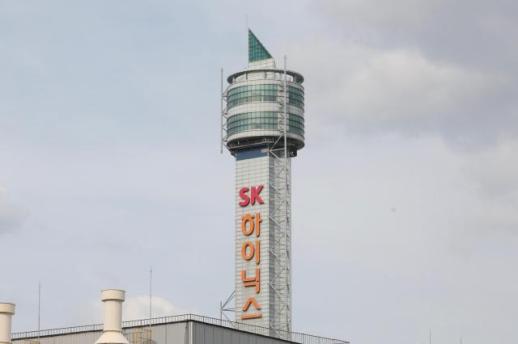 SK hynix ADR: An epic Korea Inc. drama from penny stock to blockbuster SEOUL, July 10 (AJP) - Few Korean stocks have rewarded investors—or punished them—as dramatically as SK hynix. The memory chipmaker, whose Nasdaq American depositary receipts became the largest U.S. equity offering ever by a foreign issuer this week, once traded at just 135 won, making it one of the cheapest technology shares on the Korea Exchange and a dismal reminder of Korea Inc.'s collapse in the aftermath of the Asian financial crisis. Its fortunes have ridden the semiconductor industry's roller-coaster boom-and-bust cycle ever since. Originally founded as Hyundai Electronics, the company entered the memory-chip business in 1983 and listed on the Korea Stock Exchange in December 1996 at 20,000 won per share. The stock briefly climbed to 49,600 won before the Asian financial crisis upended the country's corporate landscape and the global chip industry. A government-led restructuring forced Hyundai Electronics to acquire LG Semicon in 1999. The deal created a larger national memory champion but also saddled the company with heavy debt just as global DRAM prices collapsed. The breakup of Hyundai Group following the financial crisis added to the strain, pushing the chipmaker into a severe liquidity crunch. Renamed Hynix Semiconductor in 2001, the company entered creditor-led restructuring as mounting losses and debt pushed it toward collapse. By 2003, its shares had plunged to 135 won. Foreign and institutional investors largely abandoned the stock, leaving it dominated by short-term retail traders willing to gamble on its survival. The recovery was anything but immediate. Hynix returned to profitability in 2003 and exited creditor management in 2005, but another memory downturn and the 2008 global financial crisis dragged its shares back toward 5,000 won. The repeated reversals reinforced the market's view of memory chips as one of the technology industry's most punishingly cyclical businesses. The decisive turning point came in 2012, when SK Telecom acquired control of Hynix for about 3.4 trillion won, ending more than a decade of financial uncertainty and giving the company the resources to pursue long-term technological investments. The company was subsequently renamed SK hynix. The acquisition gave the chipmaker not only capital but also the patience to invest through another uncertain phase of the memory cycle. SK hynix poured money into advanced memory technologies, including high-bandwidth memory, years before artificial intelligence created explosive demand for the product. The company developed the world's first HBM in 2013, when the technology had few obvious commercial applications. Demand remained limited for years, but SK hynix continued investing while rivals treated the product as a niche segment. That persistence eventually reshaped the company. As Nvidia's AI accelerators became the backbone of generative artificial intelligence, HBM emerged as one of the world's most strategically important semiconductor products. SK hynix's early lead allowed it to become the dominant supplier just as AI infrastructure spending began to surge. Investors rewarded that technological advantage with one of the sharpest re-ratings ever seen in South Korea's stock market. SK hynix shares climbed from around 250,000 won in July 2025 to nearly 3 million won less than a year later, briefly making the company South Korea's most valuable listed corporation. Even after retreating to 2.186 million won as of Thursday, the stock remained almost tenfold higher than a year earlier, ranking it among the world's best-performing large-cap semiconductor shares. The rally unfolded in several waves. The shares spent much of the second half of 2025 below 500,000 won before breaking above 1 million won in April 2026. They crossed 2 million won the following month and approached the 3 million-won mark in June as optimism over record earnings, expanding AI infrastructure investment and the Nasdaq ADR offering intensified. The rise was not merely a surge in price. It also marked a fundamental reassessment of what kind of company SK hynix had become. According to KRX Data Marketplace, its price-to-earnings (PER) ratio climbed from 10.34 times on July 10, 2025, to a peak of 47.05 times in late June 2026 before easing to 35.81 times. The dramatic expansion reflected investors' growing willingness to value SK hynix less like a conventional memory producer and more like an essential supplier to the global AI industry. Foreign investors remained central to the rally. They owned approximately 50.01 percent of SK hynix shares as of July 10, according to Korea Exchange data. Although foreign ownership had declined from a peak of 56.25 percent in September 2025 as investors locked in gains, overseas shareholders still controlled about half of the company. Institutional participation also expanded through semiconductor-focused funds and single-stock leveraged exchange-traded funds, drawing a wider range of investors into a stock that had once been treated largely as a speculative turnaround bet. This week's Nasdaq ADR debut marked another milestone rather than the beginning of the transformation. For many investors, the listing represented the culmination of a comeback that began more than two decades ago, when Hynix was fighting simply to survive. The ADRs were priced at $149 each, raising approximately $26.5 billion in the largest U.S. equity offering ever by a foreign issuer. Each ADR represents one-tenth of a common share, with the offer priced at a slight premium to the company's Seoul-listed stock. The blockbuster deal offered a stark contrast to the company's darkest period. A chipmaker once reduced to a 135-won penny stock had returned to global capital markets as the world's leading AI memory supplier and the issuer of Wall Street's largest-ever foreign share sale. Whether the current AI boom proves to be another turn in the semiconductor cycle or the beginning of a structural shift remains one of the market's biggest debates. But few companies have traveled farther than SK hynix. Its journey from a debt-ridden casualty of Korea Inc.'s post-crisis collapse to one of the world's most valuable AI chipmakers has already secured its place as one of the most extraordinary corporate turnarounds in South Korean capital-market history. 2026-07-10 16:12:14
-
Lee Jun-seok: 'I Had No Knowledge of Jeong Yi-han's Staged Attack' Lee Jun-seok, the leader of the Reform Party, stated that he was "completely unaware" of the staged attack involving Jeong Yi-han, a former candidate for mayor of Busan, which has sparked controversy during the June 3 local elections. In response to independent lawmaker Han Dong-hoon's demand for clarity on when he became aware of the incident, Lee remarked, "I hope he doesn't look at it with a cynical perspective." Speaking to reporters at the National Assembly on July 10, Lee acknowledged that while some politicians may raise suspicions, it is unlikely that Jeong would have informed them, adding, "The police did not officially notify us either," and emphasized, "I was not aware of it, and I did not recognize it." When asked if he noticed anything unusual around mid-May, when Jeong reportedly admitted to the staged attack, Lee explained, "He was one of eight regional leaders, and since I wasn't particularly involved or focused on any specific area, I did not have individual insights." Regarding the ongoing internal investigation within the party, Lee noted, "Since Jeong has resigned, our authority is limited," and added, "Even up to the day of the search and seizure, people from the Busan camp were unaware of what was happening, so I asked them, but it was not a situation where I could get answers." He further stated, "As we were nominating candidates in the triple digits, it is inevitable that some unusual cases arise," and emphasized, "We will strengthen post-nomination management to prevent such incidents from happening again." In response to Han Dong-hoon's request for the Reform Party to clarify when they became aware of the staged attack, Lee remarked, "Everyone knows how he handled the allegations related to himself, but the Reform Party has not added any comments," and added, "I know what his original profession is, but I hope he doesn't look at it with a cynical perspective." Earlier, Han stated on Facebook that Jeong received more votes due to sympathy for the staged attack than he would have otherwise, claiming that Busan citizens were deceived and had their voting rights taken away. He pointed out that if it had been known before the election that the attack was staged, far fewer citizens would have voted for Jeong, potentially altering the outcome of the mayoral election. He insisted that both the police and the Reform Party must clarify when they became aware of the staged attack and take responsibility if they knew before the election, as it infringed upon the voting rights of Busan citizens.* This article has been translated by AI. 2026-07-10 16:12:00
-
 SK hynix ADR: From rescued chipmaker to Wall Street's hottest foreign listing SEOUL, July 10 (AJP) - SK hynix has gone from one of South Korea's biggest corporate rescues to Wall Street's biggest foreign share sale, raising a record $26.5 billion on Nasdaq just 14 years after SK Group acquired the struggling memory maker for roughly $3 billion. The blockbuster listing underscores how the artificial intelligence boom has transformed the once-troubled chipmaker into one of the world's most valuable semiconductor companies. The company has priced its landmark U.S. share offering at $149 per American depositary share, floating 177.9 million ADSs representing 17.79 million newly issued common shares on Friday. Each ADS represents one-tenth of an SK hynix common share traded in Seoul. The deal surpasses the roughly $25 billion raised by Alibaba Group in 2014, making it the largest U.S. equity offering by a foreign company and the biggest ADR issuance on record. Perhaps more striking than its size is its pricing. The $149 offer represents a 2.7 percent premium to the average closing price of SK hynix shares over the previous three trading sessions — an unusual outcome for a large equity offering, which is typically sold at a discount to attract investors. The premium suggests global investors were willing to pay extra for dollar-denominated exposure to the world's dominant supplier of AI memory chips. Bank of America, Citigroup, Goldman Sachs and JPMorgan acted as lead underwriters. From bailout to AI powerhouse The turnaround began with one strategic decision: an early bet on high-bandwidth memory (HBM) years before artificial intelligence turned the technology into one of the semiconductor industry's most coveted products. In 2012, SK Group acquired then-struggling Hynix Semiconductor for roughly 3.4 trillion won, rescuing what had become one of South Korea's biggest corporate casualties after years of debt restructurings following the Asian financial crisis. Fourteen years later, the company has raised nearly eight times the value of that rescue in a single U.S. share sale. At Thursday's close, SK hynix was valued at 156.6 trillion won, making SK Square's roughly 20 percent stake worth about 32 trillion won. The remarkable transformation from Samsung Electronics' longtime shadow to the world's HBM leader has been driven largely by that early technological gamble. HBM stacks multiple DRAM chips vertically to dramatically increase bandwidth while reducing power consumption, making it indispensable for graphics processors and AI accelerators. SK hynix now commands 56.4 percent of the global HBM market by revenue, according to IDC data cited in its U.S. regulatory filing, ahead of domestic rival Samsung Electronics and U.S.-based Micron Technology. Its early commitment to HBM forged an exceptionally close partnership with Nvidia, whose graphics processors dominate AI computing. During a visit to South Korea last month, Nvidia Chief Executive Jensen Huang described SK hynix's HBM as "the best" and said the company would remain Nvidia's largest memory supplier while AI-memory shortages could persist for years. The company's shares have surged about 680 percent over the past year, despite falling roughly 25 percent during the previous two weeks amid concerns that AI-related stocks had become overheated. The stock rebounded 5.3 percent Thursday to close at 2.186 million won. Narrowing the Korea discount The ADR listing is about far more than raising capital. It is also an attempt to narrow the valuation gap that has long separated SK hynix from U.S.-listed semiconductor companies despite its technological leadership. Ahead of the offering, SK hynix traded at roughly 5.5 times estimated earnings over the next 12 months, compared with about 6.7 times for Micron, according to LSEG data cited by Reuters. The valuation gap has persisted even as SK hynix overtook rivals in HBM and secured a stronger position in Nvidia's AI supply chain. Chief Executive Kwak Noh-jung has said the Nasdaq listing would diversify the company's shareholder base and allow its market value to better reflect its growing importance in the global AI ecosystem. "The ADR listing reflects SK hynix's strategy to raise capital from global investors by leveraging its international recognition and competitiveness, rather than relying solely on the domestic market," said Kang So-hyun, a research fellow at the Korea Capital Market Institute. She added that dual listings could improve price discovery by allowing information to be reflected more efficiently between U.S. and Korean markets. Still, the company is unlikely to fully escape the so-called Korea discount as long as its primary listing remains on the Korea Exchange, where valuations continue to be weighed down by longstanding concerns over corporate governance and shareholder returns. Financing the AI expansion The proceeds will help finance one of the industry's most ambitious capacity expansion programs as AI demand continues to outpace memory supply. "The long-term outlook is positive because the listing will expand SK hynix's funding capacity at a time when the company needs to invest heavily across multiple areas," said Ahn Ki-hyun, executive director of the Korea Semiconductor Industry Association. Major projects include the company's first fabrication plant at the Yongin Semiconductor Cluster, the P&T7 advanced packaging complex in Cheongju and purchases of extreme ultraviolet lithography equipment. The broader investment plan includes approximately 31 trillion won for the Yongin fab, 19 trillion won for the Cheongju packaging facility and nearly 12 trillion won for EUV equipment through 2027. The company is also building a roughly $4 billion advanced packaging and research facility in West Lafayette, Indiana, backed by up to $458 million under the U.S. CHIPS Act. Separately, SK Group Chairman Chey Tae-won last week unveiled plans to invest 400 trillion won to build two semiconductor fabrication plants in southwestern Honam as part of a broader regional semiconductor initiative. Record profits, familiar risks The offering follows one of the strongest earnings booms in memory industry history. First-quarter revenue nearly tripled from a year earlier while operating profit increased more than fivefold as HBM and server DRAM sales surged. Artificial intelligence has fundamentally changed the economics of memory chips, transforming what was once among the semiconductor industry's most cyclical and commoditized businesses into one of the biggest constraints on global AI computing capacity. Yet investors remain mindful that memory has historically been defined by boom-and-bust cycles. Periods of soaring prices have repeatedly encouraged aggressive capacity expansion, only to be followed by oversupply, collapsing prices and shrinking profits. Whether the current AI supercycle proves more durable will depend on sustained investment by hyperscale cloud operators, disciplined industry capacity additions and how quickly Samsung Electronics and Micron can expand their own HBM production. The new shares will dilute existing shareholders by about 2.4 percent. Friday's debut will provide the first real test of Wall Street's appetite. If the ADSs sustain a premium to the $149 offer price, SK hynix will have strengthened its case that investors increasingly view it as a global AI infrastructure company rather than a traditional memory manufacturer. A weak debut, however, would suggest that even the AI boom cannot completely erase investor concerns over lofty valuations and the semiconductor industry's notoriously cyclical nature. 2026-07-10 16:08:02
-
Jang Yu-bin Dominates KPGA Tour Titles in 2026 Midseason Review The first half of the 2026 Korea Professional Golf (KPGA) Tour concluded with intense competition. A total of 10 tournaments were held, starting with the 21st DB Insurance Promi Open and ending with the KPGA Gunsan CC Open on June 28, showcasing a variety of records that captivated golf fans.The standout performer of the season's first half was undoubtedly Jang Yu-bin. After securing his first victory of the season at the KPGA Classic with IMBITA, held in a modified Stableford format, he followed up with a win at the Hana Bank Invitational, becoming the only player with multiple victories in the first half.Jang Yu-bin participated in 10 tournaments this season, achieving two wins and finishing in the top five three times, successfully making the cut in nine events. He currently holds the top position in the Genesis points ranking (3,603.70 points), prize money ranking (586,692,297 won), and average birdie rate (23.2026%), dominating all major titles. He leads second-place Song Min-hyuk (2,643.24 points) by 960.46 points.Jang first reached the top of the Genesis points ranking in May 2024 at the SK Telecom Open and maintained that position for 10 consecutive tournaments, earning the award. He is now aiming to reclaim the title this year. He stated through the KPGA, "I feel like I'm getting closer to my goals. My main objectives this year are to win the Genesis Award and to pass the Korn Ferry Tour Q School. I plan to focus on physical training during the preparation period for the second half and address areas where I need improvement to play more consistently."Having already accumulated over 580 million won in prize money in the first half, Jang is also eyeing to break his own record for the most prize money in a single season, set in 2024 at 1.129 billion won. With approximately 14.9 billion won in total prize money remaining for the second half, the potential for achieving this record is very high.The Genesis points standings at the end of the first half were fiercely competitive. Jang Yu-bin and Song Min-hyuk occupied the first and second spots, respectively, while Moon Do-yeob (2,518.86 points) ranked third. Rookie Wang Jeong-hoon, who finished in the top 10 four times in seven tournaments, was fourth (2,463.20 points), followed by Shin Sang-hoon in fifth (2,416.94 points). Moon Dong-hyun (2,403.00 points) was sixth, Kim Sung-hyun (2,187.00 points) seventh, and Choi Chan (2,116.67 points) eighth. Jeong Han-mil, who earned his first victory at the KPGA Gunsan CC Open, ranked ninth (2,092.83 points), while Jeong Chan-min rounded out the top ten in tenth place (2,071.33 points).Several players demonstrated remarkable consistency throughout the first half. Shin Sang-hoon, returning from military service, participated in all 10 tournaments, achieving the remarkable feat of making the cut in every event. Kim Sung-hyun competed in seven tournaments, finishing in the top 10 five times, including a solo second-place finish, leading the 'TOP 10 Finish' category.Another notable aspect of the first half of the season was the emergence of new champions. A total of nine winners were crowned across the 10 tournaments, with five players celebrating their first KPGA Tour victories: Choi Chan, Song Min-hyuk, Oh Seung-taek, Moon Dong-hyun, and Jeong Han-mil. Notably, Moon Dong-hyun made history by winning the 69th KPGA Championship with A-ONE CC at just 20 years and 2 months old, becoming the youngest champion in the tournament's history.Record-breaking performances by established players also drew attention. Lee Sang-yeop, the winner of the opening tournament, set a new record for the lowest total score in the event's history with a final tally of 23-under-par 265. Yang Ji-ho achieved a 'wire-to-wire' victory at the 68th Korean Open, leading from the first round to the final round, marking the only such win in the first half. Moon Do-yeob secured his second consecutive tour victory at the KPGA Gyeongbuk Open. In the only playoff of the season, Song Min-hyuk triumphed over Jo Min-kyu to lift the trophy at the 45th GS Caltex Maekyung Open.Throughout the first half, there were five recorded hole-in-ones. The first hole-in-one of the season was made by Kim Yeon-seop on the fourth hole during the second round of the opening tournament. At the 2026 Woori Financial Championship, both Park Jun-hong and Hwang Jung-gon achieved hole-in-ones, while An Ji-min recorded his first hole-in-one in an official tournament at the KPGA Founders Cup. Lastly, Lee Sang-hee continued the trend by making a hole-in-one at the Hana Bank Invitational for the second consecutive year. The record for the most hole-in-ones in a single season is 20, set in 2017.The youngest player to compete in the first half was amateur Cheon Ji-yul, who participated in the 2026 Woori Financial Championship at the age of 14 years, 9 months, and 6 days. The oldest competitor was Park No-seok, who played in the 69th KPGA Championship at 59 years, 4 months, and 26 days old.The longest course in the KPGA Tour's history was the Gunsan CC Tournament Course at the KPGA Gunsan CC Open, measuring 7,640 yards. The tournament with the highest cut-off score was the KPGA Founders Cup (3-over-par 147; 61 players advanced), while the lowest cut-off score was at the opening tournament, the 21st DB Insurance Promi Open (2-under-par 142; 62 players advanced).After a fiercely contested first half, the KPGA Tour will take a brief break before resuming its schedule on August 20 with the Dong-A Membership Group Open at Solago CC in Taean, Chungnam.* This article has been translated by AI. 2026-07-10 16:08:00
-
Homeplus Faces Employment and Supply Chain Crisis with 33.3 Billion Won in Unpaid Wages The impact of Homeplus's bankruptcy proceedings is becoming evident, with a government survey revealing that 33.3 billion won in wages went unpaid in June.The Ministry of Economy and Finance held a task force meeting on July 10, led by First Vice Minister Lee Hyung-il, to assess the situation of affected workers and partner companies.Representatives from the Ministry of Employment and Labor, the Ministry of SMEs and Startups, the Ministry of Trade, Industry and Energy, the Office for Government Policy Coordination, the Financial Services Commission, and the Financial Supervisory Service attended the meeting.From July 3 to 9, the Ministry of Labor's one-stop consultation center and local employment offices received a total of 692 inquiries related to the situation. During these consultations, the government provided information on support measures for wage arrears, livelihood assistance, and employment support.Following an investigation by the Ministry of Labor's dedicated task force, it was confirmed that 33.3 billion won in wages were unpaid by Homeplus in June. The government plans to closely monitor for any additional unpaid wages.Workers affected by wage arrears can receive up to 21 million won in advance payments for unpaid wages. The government has committed to enhancing its response to ensure these payments are made swiftly.For workers in urgent need of financial support, the government will offer low-interest loans of up to 10 million won at an annual rate of 1.5%, within the limits of the unpaid amounts. Since the start of the bankruptcy proceedings, 8,758 loans totaling 39.7 billion won have been provided for living expenses related to unpaid wages as of July 7.The Small Enterprise and Market Service's one-stop consultation center reported receiving 45 inquiries regarding business difficulties from July 3 to 8. The government is providing emergency management stabilization funds to small businesses, including Homeplus's partner companies, since the start of the bankruptcy proceedings. As of July 7, 175 cases have received a total of 6.3 billion won in support.Partner companies of Homeplus will benefit from preferential interest rates and increased loan limits. The government announced on July 10 that it will begin accepting applications for this support starting July 15.The Korea Credit Guarantee Fund has added small and medium-sized enterprises that have suffered direct and indirect damage due to the bankruptcy proceedings to its special guarantee support program, aiming to lower the barriers for partner companies to access guarantees.The financial sector is also taking steps to alleviate the funding difficulties faced by partner companies. During a meeting on July 6, major banks, including Kookmin, Shinhan, Hana, Woori, NongHyup, and Industrial Bank of Korea, agreed to continue providing financial support, including additional repayment deferrals and maturity extensions for loans to Homeplus's partner companies.As of July 3, the banks have implemented repayment deferrals and maturity extensions for 7,588 cases, totaling 5.1 trillion won. Partner companies in need of new funding can receive emergency working capital loans of up to 500 million won, along with preferential interest rates.The government will continue to monitor the situation to prevent the Homeplus crisis from escalating into broader livelihood insecurity for workers and a chain funding crisis for partner companies. Additional support measures will be considered if necessary.* This article has been translated by AI. 2026-07-10 16:08:00
-
SK Hynix Lists ADRs, Impact on Dollar Supply and Exchange Rate Under Scrutiny SK Hynix's American Depositary Receipts (ADRs) have been listed, drawing attention to their potential impact on the foreign exchange market. There is speculation about whether the influx of dollars will stabilize the won-dollar exchange rate.On July 10, the exchange rate of the Korean won against the U.S. dollar was reported at 1,501.4 won, down 4.7 won from the previous trading session, as of 3:30 PM in the Seoul foreign exchange market. The rate had dropped to the 1,490 won range on July 8 but fluctuated in the 1,510 won range before gradually declining throughout the day.The recent drop in the won-dollar exchange rate, which had previously threatened to reach 1,560 won, is partly attributed to expectations of increased dollar supply following the listing of SK Hynix ADRs. The ADRs began trading on the Nasdaq Global Select Market on July 10 (local time), with SK Hynix raising a total of $26.57 billion (approximately 40 trillion won).While there are hopes for a significant influx of dollars, analysts suggest that the expectations surrounding the ADR listing have already been largely priced into the foreign exchange market. On July 8, the won-dollar exchange rate plummeted to 1,498.5 won, dipping below 1,500 won for the first time since late May, driven by foreign selling of ADR-related futures and net foreign purchases of stocks.On July 9, the exchange rate rebounded to the 1,500 won range due to bargain hunting following the previous day's drop and geopolitical uncertainties surrounding the Strait of Hormuz. On the day of the ADR listing, the exchange rate remained in the 1,510 won range without further declines.This year, foreign investors have sold approximately $90 billion worth of domestic stocks, which has heightened expectations for the ADR. Although the size of the ADR is insufficient to offset all foreign capital outflows, it is expected to alleviate some pressure on dollar supply.Market analysts note that since much of the ADR anticipation has already been factored in, future exchange rate movements will still depend on U.S. monetary policy, global dollar trends, and foreign investment patterns. With the recent easing of foreign rebalancing efforts and the added factor of significant dollar supply, there are projections that the exchange rate may decline in the second half of the year.The Bank of Korea also anticipates a reduction in the scale of foreign net selling in the domestic stock market as the year progresses. Bank of Korea Governor Shin Hyun-song stated the previous day, "Considering the large current account surplus, there is a significant possibility that the won will strengthen."Park Sang-hyun, a researcher at iM Securities, commented, "The nature of foreign net selling in the third quarter is expected to stabilize somewhat, contributing to alleviating dollar supply concerns. Subsequently, the exchange rate will fluctuate in line with economic fundamentals." He added, "Given the visibility of disinflation and the expected resolution of uncertainties surrounding Federal Reserve policy, the exchange rate is projected to fall to the mid-to-late 1,400 won range in the third quarter."* This article has been translated by AI. 2026-07-10 16:04:00