


Latest by
-
 Busan Port Authority Secures Logistics Hub in Vietnam's Haiphong, Set to Open Next Year The Busan Port Authority (BPA) is establishing a new logistics hub in Vietnam's rapidly growing northern logistics market. Following expansions into the Netherlands, Spain, Indonesia, and the United States, the BPA aims to enhance support for domestic small and medium-sized enterprises in their import and export logistics.On July 10, BPA announced it has signed a joint investment agreement with its local subsidiary, Dongbang Vina, to jointly operate the Haiphong Logistics Center.This initiative is part of the government's 'Global Logistics Supply Chain Hub Strategy' established last December, aimed at securing logistics infrastructure in promising countries like Vietnam.The Haiphong Logistics Center will be built on a 17,183 square meter site within the Deep C Industrial Zone, with a total floor area of 10,310 square meters. After obtaining construction permits in September, construction is expected to begin, with the center slated to open in the first half of next year and operate until 2056.The Deep C Industrial Zone in Haiphong is the largest industrial complex in northern Vietnam, housing around 160 global companies, including approximately 26 South Korean firms such as LG Electronics.The logistics center will be located about 15 kilometers from Haiphong Port, the largest port in northern Vietnam, and is well-connected to highways leading to Hanoi and the Chinese border, providing favorable conditions for logistics operations.BPA plans to use the Haiphong Logistics Center to support the import and export logistics of domestic small and medium-sized enterprises operating in Vietnam, while also expanding Busan Port's global logistics network.Previously, BPA secured logistics centers in Rotterdam, Netherlands, and Barcelona, Spain, in 2022, and in Probolinggo, Indonesia, and Los Angeles, United States, in 2024. With the addition of the Vietnam project, the overseas logistics network connecting Europe, Southeast Asia, and North America will be further strengthened.Song Sang-geun, President of the Busan Port Authority, stated, “In line with the government's strategy to secure global logistics supply chain hubs, we will steadily build an overseas logistics network that can robustly support the international expansion of our small and medium-sized enterprises.”* This article has been translated by AI. 2026-07-10 16:04:00
-
 Samsung SDI cells win two-thirds of Korea's first AI-powered grid ESS project SEOUL, July 10 (AJP) - Batteries made by Samsung SDI have been selected for the majority of South Korea's first government-backed program to build artificial-intelligence-powered energy storage systems along regional distribution lines. Six of the nine operators chosen for the Ministry of Climate, Energy and Environment's 2026 AI-based ESS deployment project will use Samsung SDI cells, industry sources said Friday. One operator opted for LG Energy Solution cells and two turned to SK On. Measured by capacity, consortia paired with Samsung SDI captured about 66 percent of the awarded volume. Those aligned with LG Energy Solution and SK On accounted for 22 percent and 12 percent, respectively. The project installs storage systems on lines carrying renewable power and leans on AI to run them efficiently, easing chronic grid congestion in the sun-drenched southwestern provinces where solar output has outstripped existing capacity. Samsung SDI plans to supply its all-in-one "SBB 1.5" solution, a 20-foot container packing high-nickel NCA prismatic cells, modules, racks and safety gear that plugs straight into the grid. LG Energy Solution, though supplying fewer cells, emerged as a marquee operator, teaming with Shinhan Asset Management to graduate from battery vendor to virtual power plant player. The company locked in the maximum allotment available to a single operator—seven distribution lines totaling 140 megawatt-hours—and said its AI forecasting and VPP platform would newly connect 40 megawatts of stranded solar capacity, absorbing an extra 52.4 gigawatt-hours of renewable power a year. 2026-07-10 16:00:38
-
KOSPI and KOSDAQ Surge on Institutional Buying Strong performance in U.S. semiconductor stocks and expectations for SK Hynix's American Depositary Receipts (ADRs) boosted investor sentiment in South Korea's stock market. With significant net buying from institutions, both the KOSPI and KOSDAQ closed higher, triggering a buying sidecar in both markets.On July 10, the Korea Exchange reported that the KOSPI closed at 7,475.94, up 184.03 points (2.52%) from the previous trading day. The index opened at 7,552.49, rising by 260.58 points (3.57%) at one point during the session.As buying pressure intensified, a program buying halt (buying sidecar) was activated in the securities market at 12:54 PM. This mechanism temporarily suspends the effectiveness of program buy orders for five minutes if the KOSPI 200 futures rise by more than 5% for one minute compared to the previous trading day.This was the 17th activation of the buying sidecar this year, bringing the total number of activations, including selling sidecars, to 34.In the securities market, institutions led the index's rise with a net purchase of 1.1319 trillion won. In contrast, individual and foreign investors sold off 772.9 billion won and 330 billion won, respectively, to realize profits.Lee Kyung-min, a researcher at Daishin Securities, stated, "The domestic stock market showed strong performance due to positive news related to semiconductors, recovering investor sentiment. SK Hynix is set to list on the Nasdaq tonight at an offering price of $149, expected to raise around 40 trillion won. The solid investment demand confirmed supports semiconductor investment sentiment and exerts upward pressure on the stock market."Most of the large-cap stocks closed higher, including Samsung Electronics (up 2.70%), SK Hynix (up 0.27%), SK Square (up 5.35%), Samsung Electro-Mechanics (up 6.16%), Hyundai Motor (up 2.58%), LG Energy Solution (up 3.99%), Samsung Life Insurance (up 3.99%), KB Financial (up 8.17%), and Samsung Biologics (up 5.58%).The KOSDAQ index closed at 837.43, up 43.43 points (5.47%) from the previous trading day, having started at 807.00 and expanded its gains.A buying sidecar was also activated in the KOSDAQ market at 1:08 PM, marking the 12th activation of the buying sidecar this year, and the 19th when including selling sidecars. This mechanism is triggered when the KOSDAQ 150 futures rise by more than 6% and the KOSDAQ 150 index increases by over 3% for one minute.In the KOSDAQ market, institutions recorded a net purchase of 582.5 billion won, while individual and foreign investors sold off 424.6 billion won and 159.8 billion won, respectively.Among large-cap stocks, Alteogen (up 8.50%), EcoPro BM (up 9.42%), EcoPro (up 7.93%), JUSUNG Engineering (up 8.35%), Rainbow Robotics (up 5.57%), Kolon TissueGene (up 3.55%), Wonik IPS (up 18.11%), Rino Technology (up 8.14%), and PSK (up 25.62%) showed upward trends. In contrast, HLB fell by 29.89%, reflecting a contrasting trend.* This article has been translated by AI. 2026-07-10 16:00:00
-
U.S. and Iran Seek Dialogue After Mutual Attacks Amid Tensions The United States and Iran are seeking dialogue after exchanging attacks over two days. President Donald Trump declared that the "Memorandum of Understanding (MOU) and ceasefire are over." However, the White House stated that "practical discussions with Iran are ongoing." Middle Eastern countries are also mediating to prevent further clashes and facilitate follow-up talks.On July 9, according to Axios and Reuters, a senior U.S. official said, "The U.S. is still pursuing a diplomatic resolution, and practical discussions are continuing." This statement followed a meeting where Trump discussed the situation with national security advisors.Despite Trump's remarks, the White House has not officially confirmed the termination of the MOU. However, it emphasized that Iran must adhere to its commitments to continue dialogue.The U.S. official noted, "The MOU is an agreement based on mutual compliance," adding that Iran's actions constitute an unacceptable violation of the agreement. While strongly criticizing Iran's attacks on commercial vessels, the U.S. has left the door open for a diplomatic resolution.U.S. and Iran Exchange Attacks, Maintain Readiness for Further StrikesThe recent clashes began with attacks on commercial vessels in the Hormuz Strait. The U.S. attributed the first attack to Iran and launched airstrikes in response. Iran claimed to have retaliated by targeting U.S. military facilities in Bahrain and Kuwait.Subsequently, the U.S. conducted airstrikes on Iranian military facilities, targeting approximately 90 sites, including air defense systems and missile storage facilities.Iran also launched a second counterattack, claiming to have targeted Patriot missile systems in Kuwait, early warning facilities in Qatar, and U.S. fuel storage sites in Bahrain. It also asserted that it fired ballistic missiles at a U.S. base in Jordan.After both sides exchanged attacks, no new strikes have been confirmed. Local reports indicated an explosion in southern Iran, but U.S. officials stated, "The U.S. did not conduct follow-up airstrikes."While the U.S. maintains readiness for additional strikes, it is currently prioritizing diplomacy. According to CNN, a U.S. official stated, "Backchannel diplomacy is underway to de-escalate tensions." The U.S. has opted to pause attacks for a period after airstrikes to allow time for negotiations.At the same time, military pressure has not been lifted. The U.S. is using its list of potential targets as leverage in negotiations. Officials indicated that while they were prepared for airstrikes if necessary on the night of July 9, they are currently prioritizing diplomatic solutions. The USS Abraham Lincoln, a nuclear-powered aircraft carrier deployed in the Arabian Sea, has also prepared its aircraft for potential deployment, leaving open the possibility of resuming attacks depending on the situation.Mediating Countries Push for Follow-Up Talks, Control of Hormuz Remains Key IssueQatar and Pakistan are leading mediation efforts to ease tensions. Turkey, Egypt, Saudi Arabia, and Oman have also urged both sides to exercise restraint. These countries are working to schedule the next meeting between the two sides' negotiating teams after preventing further hostilities.However, a new ceasefire has not been established, nor have measures under the MOU been reinstated. Currently, both sides are in the process of negotiating conditions to lower military tensions and resume dialogue.The primary point of contention remains the Hormuz Strait. The MOU includes provisions for keeping the strait open for 60 days without tolls. However, both sides are at odds over who will manage vessel traffic.Iran argues that the MOU does not eliminate its authority over the strait. The Iranian Revolutionary Guard stated, "The number of vessels passing through the strait under our supervision has recovered to about 50% of pre-war levels in the past two weeks."The U.S. counters that Iran has no authority to control the strait. The U.S. stated, "Since May, we have facilitated the passage of over 800 commercial vessels and 380 million barrels of oil," denying Iran's claims of control.Mediating countries aim to halt hostilities and revive nuclear negotiations. However, they must first resolve the management of traffic in the Hormuz Strait and accountability for MOU violations. If the differences between the two sides are not narrowed, hostilities could resume even if practical discussions continue.The U.S. is pursuing a diplomatic resolution while keeping the option of additional airstrikes as leverage. Iran also has reasons to return to negotiations but shows no willingness to concede control over the Hormuz Strait. The outcome of follow-up discussions will determine whether both sides can halt armed conflict and revive a ceasefire.* This article has been translated by AI. 2026-07-10 15:56:00
-
SK Hynix Set to List on Nasdaq, Aiming to Outpace Micron SK Hynix is on the verge of listing on the Nasdaq, drawing attention in the global semiconductor market. The approximately 40 trillion won ($26.57 billion) raised from the IPO will be fully invested in enhancing domestic and international production capabilities and advanced manufacturing facilities. The company aims to solidify its dominance in the global DRAM market while fending off competition from Micron.According to industry sources and foreign media, SK Hynix will officially list its American Depositary Receipts (ADR) on the Nasdaq at 9:15 a.m. local time (10:15 p.m. in South Korea) on July 10, under the ticker symbol 'SKHYV'.To commemorate the listing, SK Group Chairman Chey Tae-won will participate in a bell-ringing ceremony at the Nasdaq MarketSite in Times Square, alongside SK Hynix CEO Kwak Noh-jung and other executives. This event is expected to mark a historic moment that could shift the 'Korea Discount' that has long plagued the Korean stock market and address the significant undervaluation compared to Micron.On this day, SK Hynix will issue approximately 177.9 million ADRs, representing about 2.5% of its total shares, with a final offering price set at $149 per share, 2.9% higher than the previous closing price on the domestic market. This achievement marks the first instance of a major U.S. IPO being priced at a premium above existing share prices. The offering attracted over $200 billion (approximately 300 trillion won) in subscription orders, more than seven times the available shares.The total funds raised amount to $26.57 billion, making it the largest IPO by a foreign company in U.S. history, surpassing Alibaba's $25 billion in 2014, and the second-largest deal ever on the U.S. stock market. Reports suggest that SK Hynix's distorted corporate value, which has been 20-40% lower than Micron despite its superior market share and profits, is expected to realign with this direct market entry.The 40 trillion won in capital will not only improve the company's financial structure but will also be entirely allocated to expanding memory production capacity and enhancing manufacturing processes. SK Hynix announced plans to focus the IPO proceeds on constructing the first phase of its semiconductor cluster in Yongin, building the 'P&T7' packaging plant in Cheongju, and acquiring production machinery.Notably, the company plans to allocate 12 trillion won for the introduction of extreme ultraviolet (EUV) lithography equipment by the end of next year, aiming to enhance cost competitiveness and yield rates. This strategy is designed to secure a qualitative edge in AI-customized chip production, rather than merely expanding its physical footprint.The global memory market competition is intensifying. On the previous day, Micron unexpectedly announced a massive investment plan to increase its domestic fab investments to $250 billion (approximately 375 trillion won) by 2035, aligning with the Trump administration's focus on domestic semiconductor production.U.S. Secretary of Commerce Gina Raimondo attended the concrete pouring ceremony for Micron's semiconductor plant, stating, "Micron is leading the way in investments, and competitors will feel jealous and ultimately have to follow suit," putting pressure on Samsung Electronics and SK Hynix to expand memory production in the U.S.Kim Dae-jong, a professor of business administration at Sejong University, remarked, "Micron's sudden large-scale investment and the U.S. government's pressure paradoxically indicate the significant impact of SK Hynix's Nasdaq entry on the U.S. market. This listing will be a decisive opportunity to elevate the value of K-semiconductors, which have been trapped in the Korea Discount, to global standards."* This article has been translated by AI. 2026-07-10 15:56:00
-
Former Lawmaker Chae Yi-bae Appointed Chief of the Prime Minister's Office Chae Yi-bae, a former lawmaker and head of the Gyeonggi Job Foundation, is set to be appointed as the Chief of the Prime Minister's Office (a vice-ministerial position) on July 11, according to the Prime Minister's Office on July 10. Chae has served as the secretary of the Economic Democracy Committee at the Citizens' Coalition for Economic Justice, a research fellow at the Good Corporate Governance Institute, and a researcher at the Economic Reform Institute. He has also held positions as a special advisor on fair economy to the Prime Minister and as the chair of the Fair Market Committee for the Democratic Party's 20th presidential election campaign, demonstrating his commitment to fostering a fair competitive environment and sustainable economic growth to alleviate polarization. With his extensive experience and expertise, Chae is expected to assist Prime Minister Han Seong-sook, who has emphasized growth for all citizens, in supporting the recovery of the economy and the transition to AX·GX, ultimately contributing to tangible government achievements for the public. Chae graduated from Korea University with a degree in public administration after attending Incheon Gyesan High School and completed a master's program in commercial law at Korea University's Graduate School of Law.* This article has been translated by AI. 2026-07-10 15:52:00
-
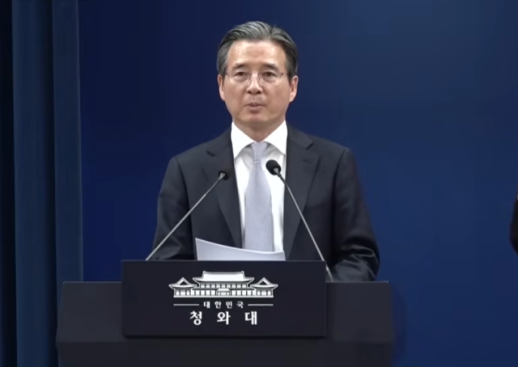 South Korea to reassess single-stock leveraged ETFs amid volatility concerns SEOUL, July 10 (AJP) - South Korea's newly-introduced single-stock leveraged exchange-traded funds (ETFs) are under scrutiny after those linked to the country’s largest two chipmakers suffered heavy losses, raising concerns about market volatility and investor protection. In a press briefing at Cheong Wa Dae on Friday, chief presidential secretary for policy Kim Yong-beom said that the government has been holding regular meetings with the country's top financial policymakers including officials from the Ministry of Finance and Economy, the Financial Services Commission, the Bank of Korea and the Financial Supervisory Service, to come up with measures. "We are continuously monitoring market conditions while considering whether any adjustments are needed," Kim told reporters, referring to the side effects of such ETF products since their market debut on May 27. "We will closely examine its impact on the market and whether any changes or measures are needed to protect investors," he added. His comments came amid growing debate over whether these products are amplifying volatility in South Korea's stock market, which has seen sharp ups and downs over the past year, driven largely by an unprecedented semiconductor rally. Unlike conventional ETFs that track a basket of stocks or a market index, single-stock leveraged ETFs seek to deliver twice the daily return of a single stock. In South Korea, these products are concentrated almost entirely on Samsung Electronics and SK hynix, allowing investors to amplify gains when share prices rise but magnifying losses when they decline. They faced growing scrutiny after sharp swings in the shares of the two chip giants resulted in steep losses for many retail investors. Calls for tighter oversight have also emerged from political circles, with lawmaker Ahn Cheol-soo of the main opposition People Power Party (PPP) urging earlier this week that the products be delisted, saying they had turned the country's stock market into a "casino" and describing them as a "policy failure." 2026-07-10 15:49:37
-
OK Financial Group Selected as Preferred Bidder for Yebyeol Insurance Sale OK Financial Group has been selected as the preferred bidder for the public sale of Yebyeol Insurance. Once the sale process is completed, it is expected to accelerate the management normalization efforts of Yebyeol Insurance.The Korea Deposit Insurance Corporation announced on July 10 that OK Financial Group was chosen as the preferred bidder following the bidding results for the public sale of Yebyeol Insurance, which closed on June 30.Yebyeol Insurance was established as a bridge insurance company after acquiring the insurance contracts of MG Insurance, which was designated as a troubled financial institution by the Financial Services Commission in 2022. The company has attempted several public sales in the past, but all efforts were unsuccessful, making this sale process effectively the last chance.In this bidding process, the Korea Deposit Insurance Corporation received final acquisition proposals from four companies, including OK Financial Group, Korea Investment Holdings, Heungkuk Fire & Marine Insurance, and JC Flower. Following this, a preliminary review of the acquisition requirements, evaluation of requested financial support, and assessment of contract execution capabilities were conducted.According to financial industry sources, OK Financial Group's financial stability and detailed management normalization roadmap were highly regarded.OK Financial Group is recognized for its risk management capabilities, having successfully acquired Yejoo and Yena Savings Bank, which were managed by the Korea Deposit Insurance Corporation in 2014, and transforming it into the current OK Savings Bank, now ranked second in the industry.Additionally, during the past acquisitions of savings banks and Korea Citi Capital (now OK Capital), the group diligently fulfilled the eligibility review procedures for major shareholders as required by relevant laws.The Korea Deposit Insurance Corporation will grant an exclusive negotiation period to the preferred bidder and proceed with subsequent steps, including sale negotiations and the signing of a stock purchase agreement (SPA).Once the acquisition is finalized, OK Financial Group is expected to evolve into a comprehensive financial group with a core portfolio encompassing three sectors: savings banks, capital, and non-life insurance, by adding Yebyeol Insurance to its existing OK Savings Bank and OK Capital.An official from OK Financial Group stated, "Beyond simple business expansion, we will fulfill our responsibilities as a financial institution for the public by ensuring the safety of assets for 1.22 million policyholders and contributing to the normalization of troubled financial institutions."The Korea Deposit Insurance Corporation expressed its commitment to completing the sale process as quickly as possible to protect policyholders and facilitate the normalization of Yebyeol Insurance. 2026-07-10 15:48:00
-
AI Procurement Strategy Aims to Boost South Korea's AI Industry Without customers, even the best technology cannot grow. Startups in emerging industries like AI and robotics often struggle to enter the market due to a lack of delivery records. When the government becomes the first customer by purchasing innovative products, public institutions can verify their performance, allowing companies to use this as a stepping stone to enter the private and global markets. At the center of this initiative is Baek Seung-bo, the head of the Public Procurement Service. He is transforming public procurement from a simple purchasing administration into a national growth strategy that creates an initial market for the AI industry. The question is clear: Can South Korea cultivate global AI companies through public procurement? What startups need most is not funding, talent, or technology, but customers. No matter how good a product is, a company cannot grow without buyers. This is especially true for new technologies and products like AI and robotics, which find it difficult to prove their performance and safety in the market. The government and public institutions require delivery records, and large corporations are hesitant to purchase unverified products. This creates a paradox where innovative companies cannot generate sales without a track record, yet they cannot establish a track record without sales. This is where Baek Seung-bo's focus lies. The government must become the first customer by purchasing products, thus supporting innovative companies. When the Public Procurement Service identifies promising AI products for pilot purchases, public institutions can use them in the field, allowing companies to verify performance, address issues, and secure delivery records. Government purchases do not end with buying a single product; they play a crucial role in confirming the technology's potential and building market trust. Public procurement should no longer be seen merely as an administrative process for buying goods cheaply, but as a national growth strategy that fosters new industries and nurtures innovative companies. South Korea's public procurement market exceeds 200 trillion won annually, encompassing central government, local governments, and public institutions. How this immense purchasing power is utilized will shape the future of the industry. Traditionally, public procurement has prioritized price and stability, viewing the purchase of already verified products as the safest choice. However, if the government only buys verified products, innovative companies will struggle to enter the public market. Innovative products cannot be perfect from the start; they must undergo a process of use and improvement in the field to reach higher levels of completion. Baek Seung-bo believes that new procurement policies are necessary for new technologies. The core of Baek Seung-bo's strategic public procurement emphasizes using public procurement as an industrial policy rather than merely a purchasing administration. The government's substantial purchasing power should create an initial market for the AI industry and serve as a catalyst for company growth. R&D support alone cannot complete an industry. Developed technologies must become products, and those products must be used in real markets for the industry to grow. The final piece of the AI industrial policy puzzle is the market, and the Public Procurement Service is the agency that can open that market first. AI products must be evaluated based on their data utilization capabilities, learning potential, continuous performance improvement, and scalability. Evaluating them using the same criteria as traditional goods makes it difficult to accurately assess their technological innovation. This is why the Public Procurement Service is establishing a separate evaluation track for AI products. By identifying companies with strong technologies, the government can purchase their products, and public institutions can use them to verify performance and address issues. Once the effectiveness of a product is confirmed, purchases can be expanded to other public institutions. Creating this growth ladder significantly increases the survival chances of AI startups, and companies with established delivery records can gain the trust of private enterprises and financial institutions. Until now, AI policy has focused on R&D and funding support. Now, a policy is needed where the government and public institutions purchase developed products. The paradigm of AI industry nurturing policy must expand from support to procurement, moving beyond just providing development funds to creating markets for products. AI is ushering in a physical AI era, integrating into robotics, automobiles, factories, and agricultural machinery. For South Korea, a manufacturing powerhouse, there is a significant opportunity to leverage its strengths in manufacturing and hardware capabilities in the software-centric AI competition. However, new technologies require validation to enter the market. Autonomous equipment, service robots, smart safety devices, and AI medical devices must be tested in real-world settings such as roads, hospitals, factories, and public facilities to properly verify their performance and safety. The government and public institutions can become the world's largest AI validation market. Local governments can test AI traffic systems, public hospitals can validate AI medical devices, fire departments can assess AI safety equipment, and rural areas can trial autonomous agricultural machinery. Through public procurement, South Korea can transform into a vast physical AI testbed. The best way to grow the AI industry is not merely to showcase technology but to use it, identify problems, and improve it, and the Public Procurement Service must create that pathway. The ultimate goal of South Korean AI companies is not the domestic market but the global market. Overseas customers place significant importance on which institutions have used the products and what results have been achieved. The purchasing records of government and public institutions can become a powerful asset of trust. The role of public procurement should not end with product purchases; it must connect the growth ladder from public institution purchases to the private market and from the domestic market to the global market. The accumulated validation data and delivery records in the domestic market should support public procurement abroad and exports, creating a structure where the experience of public institutions serves as a guarantee for companies' overseas expansion. The Public Procurement Service must support AI companies while also utilizing AI within its own administrative functions. By analyzing vast amounts of contract, price, and bidding data, it can propose appropriate prices, predict price fluctuations and supply conditions by item, and provide tailored procurement information to companies. Establishing an AI consulting service to guide complex procurement procedures will lower the barriers to entry into the public market. Baek Seung-bo emphasizes that the AI era demands a paradigm shift in public procurement, advocating for a transition from a digital procurement service to an AI procurement service. By delegating repetitive tasks and data analysis to AI, procurement officials can focus more on supporting companies, policy decisions, and solving on-site issues. AI is not meant to replace officials but to assist them in making more accurate and faster judgments. Analyzing extensive bidding and contract data can help identify unusual transactions and collusion more quickly. AI can detect patterns that are difficult for humans to find, such as repeated wins by specific companies or excessive contracts compared to market prices. Transitioning from post-investigation to pre-detection can also help prevent procurement corruption. However, AI should not make all decisions; it should remain in a supportive role, assisting officials in identifying anomalies. There is a risk that normal companies could be suspected due to incorrect data, so final verification and accountability must rest with humans. Addressing the concentration of the AI industry in the metropolitan area is another challenge. Regional companies often struggle not due to a lack of technology but because they lack opportunities to validate their products. The Public Procurement Service can support regional AI, robotics, hydrogen energy, and smart agriculture companies in entering the public market, and if local public institutions and governments use regional innovative products first, companies can gain validation opportunities and delivery records nearby. As companies grow, good jobs are created, allowing young people to stay in the region, and an innovative ecosystem can emerge connecting local universities, research institutions, companies, and public institutions. Public procurement can thus be linked to regional balanced development. South Korea's industrial policy has long been centered on R&D funding, policy loans, and startup grants. While these are necessary policies, what is more important to companies is having customers that generate sales. The government's role in the AI era must also expand from being a funding provider to a purchasing entity. When the government becomes the first customer and verifies performance, companies can use this as a stepping stone to enter the private market and eventually the global market. This is the most significant meaning of the AI innovative procurement that Baek Seung-bo is promoting. While subsidies are temporary, customers and markets continuously foster company growth. The focus of AI industrial policy must also shift from supporting technology development to demand policies that purchase and utilize technology. The competition in the AI industry is as much about the speed of development as it is about the speed of validation and market entry. South Korea possesses a world-class digital infrastructure, a strong manufacturing base, and excellent talent, along with a public procurement market exceeding 200 trillion won. By utilizing the government, local governments, and public institutions as validation sites for new AI technologies, South Korea can become a vast AI testbed. As companies develop technology, the government purchases it, public institutions use it, and companies improve their products with real-world data, validated products can then spread to the private and global markets. If an ecosystem is created where the government is the first customer, public institutions serve as validation sites, and private companies are the dissemination agents, the likelihood of South Korea producing world-class AI companies will increase significantly. Baek Seung-bo's task is not merely to ensure the government purchases the necessary items but to cultivate South Korea's future industries through public procurement. The establishment of an AI-specific innovative product track, pilot purchases, the development of physical AI, the discovery of regional innovative companies, and the transformation of procurement administration into a growth ladder for the AI industry all point toward a single goal. When the government becomes the first customer and public institutions validate products, companies can then enter the private and global markets. Transitioning from a government that provides subsidies to one that purchases products, and from a government that supports companies to one that creates markets, is essential. The government should be the first to purchase products from companies with good technology, public institutions should become vast testbeds, and validated AI products should enter the global market. This is the starting point of the AI procurement revolution that Baek Seung-bo must lead. Baek Seung-bo is an expert in procurement administration. He has served as the Director of the New Technology Service Bureau at the Public Procurement Service, the head of the Seoul Regional Public Procurement Service, and the Deputy Commissioner of the Public Procurement Service before being appointed as the first Commissioner of the Public Procurement Service under the Lee Jae-myung government in August 2025. He has contributed to designing the next-generation national procurement system incorporating new technologies like AI and facilitating the entry of startup and venture companies into the public market. Since taking office, he has been promoting AI innovative procurement by expanding the evaluation track for AI products and pilot purchases, utilizing public institutions as validation sites to help innovative companies secure initial markets and delivery records.* This article has been translated by AI. 2026-07-10 15:48:00
-
 Teen's killing tests South Korea's family exemption law SEOUL, July 10 (AJP) - A serving police officer destroyed evidence in his own son's murder case, and under South Korean law he cannot be prosecuted for it. That fact, uncovered during the investigation into the killing of a high school girl in the southern city of Gwangju in May, has pushed South Korea into a national debate over a decades-old provision of its Criminal Act that shields relatives from punishment when they hide offenders or destroy evidence on their behalf. Prosecutors say Jang Yun-gi, 23, attacked the student after stalking her with the intent to abduct and sexually assault her. While Jang was in custody, investigators found that items prosecutors considered important to proving a sexual motive, including life-like sex dolls and mobile phones, had disappeared from his residence. Prosecutors later determined that Jang's father, a police officer, had discarded the dolls and burned the phones. Ordinarily, destroying evidence in another person's criminal case is punishable by up to five years in prison or a fine. But Articles 151 and 155 of the Criminal Act carve out an exception: when a relative or cohabiting family member commits those acts for the benefit of the suspect, the person is not punished. The father is therefore unlikely to face criminal charges. The National Police Agency has said disciplinary measures remain possible if misconduct is confirmed, a distinction that has only intensified criticism that the law is out of step with the seriousness of the case. The exemption rests on an old legal judgment that the state should hesitate before forcing family members to betray one another. It is the same impulse at the heart of "Mother," Bong Joon-ho's 2009 thriller about a mother who buries the truth of her son's crime; the cover-up horrifies because it feels emotionally comprehensible. Critics say the Jang case shows what happens when the law gives that impulse automatic protection: a legal safe harbor for evidence destruction in a murder case, exploited by a man sworn to uphold the law. Other legal systems draw the line differently. Japan's Penal Code allows courts to exempt relatives rather than requiring it, giving judges room to weigh the gravity of the crime. Germany exempts relatives but separately punishes public officials who obstruct prosecution in the course of their duties, with no family exception. For critics of South Korea's law, that is the point: family loyalty may explain a parent's impulse, but it should not excuse a police officer's misuse of access and authority. Defenders of the exemption warn that abolishing it entirely would create hard cases, forcing parents and spouses to help prosecute people they love. But even lawmakers sympathetic to that view see the current rule as untenable. Rep. Min Hong-chul, a four-term Democratic Party lawmaker and former chief justice of the High Military Court, predicted a revision restricting the exemption would pass the National Assembly, saying the case had caused "such a major social impact." "This case has exposed a blind spot in the family-member exemption system," Min said. "There were likely many undisclosed cases in which the exemption applied to serious crimes such as murder, rape and robbery." Rep. Yoo Sang-bum, a two-term People Power Party lawmaker and former chief prosecutor, said abolishing all family exemptions would go too far, but that the exemption should be removed for people in investigative and inspection authorities. "The harm is too great to recognize the family-member exemption even for crimes committed by those responsible for uncovering the truth," Yoo said. Neither party has yet moved beyond early discussions. "I understand that the party leadership and floor leadership are discussing the family-member exemption issue, but there has not yet been any concrete discussion at a general meeting of lawmakers," said a two-term Democratic Party lawmaker. "This is a matter for the floor leadership, so we do not yet know the details. It will probably be discussed at Monday's general meeting of lawmakers," said a two-term People Power Party lawmaker. 2026-07-10 15:41:09