


Latest by
-
 Minimum Wage Gap Narrows to 690 Won in Ongoing Labor Negotiations The gap between labor and management regarding next year's minimum wage has narrowed to 690 won amid ongoing debates.On July 9, the Minimum Wage Commission held its 13th plenary meeting at the Government Sejong Center to discuss the minimum wage for the upcoming year. During the meeting, both sides presented their ninth revision proposals after submitting the seventh and eighth revisions.The labor sector proposed a minimum wage of 11,220 won, which is 780 won lower than their initial demand, while the management sector suggested 10,530 won, an increase of 210 won from their original request. Both figures represent increases of 8.7% and 2.0%, respectively, compared to this year's minimum wage. The gap in the ninth revision is 690 won, down 40 won from the previous eighth revision gap of 730 won.As the two sides continued discussions to further narrow the gap, they concluded the meeting. If the pace of narrowing the gap slows, there is a high possibility that public interest representatives will propose a 'facilitation period' in the next meeting. This would involve setting upper and lower limits to encourage agreement or voting within that range.Public interest representatives are emphasizing the importance of reaching a consensus. Sung Jae-min, deputy director of the Korea Labor Institute and secretary of the public interest representatives, stated, "The discussion on minimum wage illustrates the social dialogue process of harmonizing differing interests and values. I urge both labor and management to show a proactive attitude by taking a step closer to each other."* This article has been translated by AI. 2026-07-09 18:36:00
-
South Korea and Mongolia Set $1 Billion Trade Goal by 2030 Government officials announced on July 9 that South Korea and Mongolia will work together to achieve a trade volume of $1 billion by 2030. During a summit with Mongolian President Ukhnaagiin Khurelsukh, South Korean President Lee Jae-myung agreed to expand economic, trade, and investment cooperation, enhance collaboration in supply chains and key minerals, and reached a principled agreement on a Comprehensive Economic Partnership Agreement (CEPA). In a joint press conference held at the government office in Ulaanbaatar, President Lee stated, "Mongolia is a key partner in our pragmatic diplomacy centered on national interests, and South Korea is Mongolia's most trusted strategic cooperation partner." He added that the summit confirmed a shared vision for opening a golden era in Korea-Mongolia relations and adopted a joint declaration outlining the direction for the development of bilateral ties. This marks the first state visit by a South Korean president to Mongolia in 15 years. The two countries also agreed to broaden mutually beneficial and sustainable cooperation in various fields, including AI and digital transformation, advanced science and technology, logistics and infrastructure, agriculture and livestock, health and medical care, and development cooperation. President Lee emphasized that health and medical cooperation is an area where citizens of both countries can directly feel the benefits, committing to contribute to improving the health and quality of life of the Mongolian people through related initiatives, including the construction of a second national cancer center. Cultural and human exchanges, which form the foundation of friendly relations, will also be expanded. The two leaders agreed to promote exchanges among citizens in various fields, including tourism, education, employment, and cultural exchanges, and to work together to enhance mutual understanding and benefits based on a 'roadmap for enhancing human exchanges.' Additionally, they agreed to expand cooperation to pass on their shared historical ties and experiences to future generations. President Lee noted, "By honoring and inheriting the historical assets of friendship between our countries, including the late Lee Tae-jun, who dedicated himself to the advancement of modern medicine in Mongolia, we will further solidify the friendship and trust between our peoples." The two leaders also concurred on the importance of enhancing cooperation for stability and development in the Northeast Asian region. They plan to expand collaboration in international organizations and multilateral forums, including closely working together in the election processes of international bodies such as the International Court of Justice (ICJ). On this day, the two governments signed over 20 memorandums of understanding (MOUs) covering areas such as distribution logistics, the construction of Mongolia's second national cancer center, and mutual recognition and exchange of driving licenses for short-term visitors.* This article has been translated by AI. 2026-07-09 18:24:00
-
President Lee Calls for a 'Golden Era' in South Korea-Mongolia Relations President Lee Jae-myung held a summit with Mongolian President Ukhnaagiin Khurelsukh, announcing plans to deepen the strategic partnership between the two countries. The leaders agreed to strengthen political trust and expand practical cooperation in areas such as economy, development, and healthcare.During the summit held on July 9 at the government office in Ulaanbaatar, President Lee expressed hope that the meeting would mark a new beginning for bilateral relations and usher in a 'golden era' for South Korea-Mongolia ties. He stated, "Based on the friendship between our two countries, we will solidify political trust and further develop our strategic partnership."Regarding economic cooperation, President Lee referenced the recently reached preliminary agreement on the Comprehensive Economic Partnership Agreement (CEPA). He emphasized, "We will expand mutually beneficial cooperation in various fields, including the economy, development, and healthcare, based on the CEPA." The South Korea-Mongolia CEPA negotiations began in December 2023 but were temporarily suspended in November 2024 due to circumstances on the Mongolian side.The CEPA encompasses trade in goods and services, investment, and overall economic cooperation, similar to a free trade agreement (FTA), facilitating trade liberalization and broader economic exchanges.On diplomatic and security issues, President Lee remarked, "In an era of increasing uncertainty in international affairs, our two countries must closely cooperate for regional and global peace and development." He added that maintaining peace and stability on the Korean Peninsula and in Northeast Asia would be a 'common interest' for both nations.President Lee affirmed, "The South Korean government will continue to strive for sustainable peace on the Korean Peninsula through dialogue and cooperation." He also expressed gratitude for Mongolia's constructive role and support in advancing peace on the Korean Peninsula, stating, "I look forward to continued collaboration to enhance peace and cooperation on the Korean Peninsula."President Khurelsukh described South Korea as Mongolia's 'third neighbor' and an important strategic partner. The 'third neighbor' policy aims to reduce dependence on China and Russia while expanding cooperation with democratic nations.President Khurelsukh responded that he believes this state visit by President Lee will open a golden era in bilateral relations.He emphasized, "This visit will significantly contribute to strengthening political trust and increasing practical economic cooperation with South Korea."Before the summit, the presidential couple attended an official welcome ceremony at Sukhbaatar Square in Ulaanbaatar.On that day, President Lee appeared in a black suit with a sky-blue tie, while First Lady Kim Hye-kyung wore a matching sky-blue two-piece outfit, drawing attention. Upon arrival, the couple exchanged warm greetings with President Khurelsukh and his wife.During the welcome ceremony, President Lee received a bouquet from children dressed in traditional Mongolian attire. As the national anthems of both countries were played, the Mongolian side honored the visiting dignitary with a 21-gun salute, a mark of respect for the highest state officials.President Lee was reviewed by the Mongolian military honor guard and marched past a cheering crowd that called out the names of the presidential couple. Large portraits of President Lee and First Lady Kim, alongside a massive South Korean flag, were displayed on the walls of buildings surrounding the welcome area.* This article has been translated by AI. 2026-07-09 18:20:00
-
Weather Forecast: Heavy Rain Expected in Seoul and Gangwon Tomorrow 금요일인 10일은 전국이 대체로 흐린 가운데 수도권과 강원도를 중심으로 많은 비가 내리겠다. 비가 그친 뒤에는 낮 기온이 다시 오르면서 무더운 날씨를 보일 전망이다.9일 기상청에 따르면 10일 전국 대부분 지역에 비가 내리겠으며, 특히 수도권과 강원도를 중심으로 돌풍과 천둥·번개를 동반한 매우 강한 비가 쏟아질 것으로 예상된다. 수도권은 오전까지, 강원은 오후까지 강한 비가 이어진 뒤 차차 그치겠다.예상 강수량은 △서울·인천·경기 30~80㎜(최대 120㎜ 이상) △경기남부내륙 5~40㎜ △서해5도 20~60㎜ △강원내륙·산지 50~100㎜(최대 150㎜ 이상) △강원동해안 5~50㎜ △대전·세종·충남, 충북 5~40㎜ △제주산지 5~40㎜ △제주(산지 제외) 5㎜ 미만이다.오후부터는 경기동부와 강원내륙·산지, 충청권, 전북북부내륙을 중심으로 소나기가 내리는 곳이 있겠다. 기상청은 비가 내리는 지역에서는 돌풍과 천둥·번개를 동반한 강한 비가 예상되는 만큼 시설물 관리와 안전사고에 각별히 유의해 달라고 당부했다.아침 최저기온은 22~25도, 낮 최고기온은 28~32도로 예보됐다.주요 도시별 예상 최저기온은 △서울 23도 △인천 24도 △춘천 22도 △강릉 24도 △대전 23도 △대구 24도 △전주 24도 △광주 24도 △부산 23도 △제주 25도다.낮 최고기온은 △서울 29도 △인천 29도 △춘천 28도 △강릉 31도 △대전 31도 △대구 32도 △전주 32도 △광주 32도 △부산 30도 △제주 31도로 예상된다.미세먼지 농도는 전국이 '좋음' 수준을 보이겠다.* This article has been translated by AI. 2026-07-09 18:20:00
-
Election Commission Failed to Document Operations During Local Elections The National Election Commission (NEC), criticized for its poor management of the election situation room during the June 3 local elections, has revealed that it did not create a single situation log since the room's establishment. Lawmakers are pointing out that the absence of even basic documentation indicates that the recent ballot shortage was a 'forewarned disaster.'According to a report by Aju Economy on July 9, the NEC has not documented any situation logs since opening the election situation room on February 27 for the June 3 elections. The NEC explained in materials submitted to the office of lawmaker Jeong Chun-sang of the Justice Reform Party that it did not create separate situation logs and therefore could not provide them.The NEC received a budget of 101.75 million won for the establishment of the election situation room. Despite receiving over 100 million won, the commission failed to maintain proper documentation. Notably, the lack of logs hindered the NEC's ability to grasp the situation effectively after the ballot shortage occurred, leading to confusion.The National Assembly's special committee investigating the ballot shortage and other violations of citizens' voting rights raised concerns about the NEC's inadequate operation of the situation room during a field investigation conducted on July 7 at the NEC's headquarters in Gwacheon. It was reported that the NEC only recognized the ballot shortage approximately 50 minutes after receiving its first complaint call.In light of this revelation, lawmakers have expressed disbelief. Jeong, a member of the special committee, stated, "It is reasonable to say that the election situation room existed only on paper. I do not understand where the 100 million won budget was spent." He further criticized, "The reporting and command system did not function, and how can a situation room that does not even create logs be considered a situation room? In such a system, the ballot shortage was a forewarned disaster."In response, the NEC maintains that creating situation logs is not mandatory. An NEC official stated in a phone interview with Aju Economy, "We did not create situation logs," but added, "This does not constitute a procedural violation." When questioned about whether the lack of logs contributed to the difficulties in understanding the situation after the ballot shortage, the official acknowledged that while logs could have been helpful for post-event verification, it is questionable whether they were necessary for proactive measures.* This article has been translated by AI. 2026-07-09 18:16:00
-
Concerns Grow Over Semiconductor Peak Despite Samsung Electronics' Strong Earnings Samsung Electronics has reported earnings that exceeded market expectations, yet concerns about a potential peak-out in the semiconductor sector persist, particularly among financial analysts. However, industry experts believe that the favorable supply-demand environment for memory chips is unlikely to be disrupted in the short term, as significant increases in memory production from new fabs will not materialize until after 2028.According to reports from foreign media and industry sources on July 9, analysts at the U.S. Treasury have recently drafted an internal report warning of the potential overheating of AI data centers based on the profitability of big tech investments. The report, addressed to Treasury Secretary Scott Vessen, indicates that if the monetization of AI infrastructure investments falls short of expectations, it could lead to a broader shock across the semiconductor, cloud, and power industries, potentially more severe than the dot-com bubble.On July 6, Morgan Stanley also cautioned that if the slowdown in investments from hyperscalers becomes a reality, it could dampen the upward earnings estimates for memory companies. Morgan Stanley noted, "The current upward revision in memory sector earnings has reached historical highs, suggesting that short-term momentum is likely entering a phase of consolidation."Morgan Stanley had previously raised concerns about a so-called 'semiconductor winter' in 2021, predicting a downturn and earning a reputation as the 'grim reaper' of the market. In 2024, the firm slashed its target price for SK Hynix due to an oversupply of high-bandwidth memory (HBM), triggering a significant drop in stock prices.Despite these warnings, the semiconductor industry has drawn a line, stating that a decline in investment sentiment in the capital markets does not necessarily indicate an immediate drop in demand. Samsung's monthly DRAM wafer production capacity of 650,000 to 700,000 units far surpasses its competitors, but it struggles to meet the explosive demand for HBM and high-capacity DRAM for servers. SK Hynix is also focusing on ramping up its new Cheongju M15X fab, but is finding it challenging to keep up with the influx of customer orders.As chronic shortages persist, global tech giants like NVIDIA, Microsoft, Google, and Apple are expanding partnerships with the two major memory companies in South Korea to enhance the processing speeds of their proprietary AI chips through next-generation HBM and server product supply agreements.Most analysts believe that concerns about an imminent oversupply are unfounded, considering the timelines for the completion of new production lines and equipment installation announced by Samsung and SK Hynix. Samsung's fourth plant (P4) at the Pyeongtaek campus is not expected to begin operations until at least the first half of next year. Similarly, SK Hynix's first fab at the Yongin semiconductor cluster is slated to start operations by the end of next year. Given the lead time required for cleanroom construction and yield stabilization, meaningful levels of actual supply are not anticipated until after 2028.Notably, starting with the sixth generation of HBM (HBM4), advanced foundry processes and complex packaging technologies will be introduced, significantly increasing the difficulty of mass production. Consequently, even with the same wafer input, the actual yield of chips will likely be considerably lower than that of conventional DRAM. While capital investments may increase nominal production capacity, the actual supply of advanced memory will be difficult to ramp up quickly.Lee Jong-hwan, a professor at Sangmyung University’s Department of System Semiconductor Engineering, stated, "While there may be short-term fluctuations due to macroeconomic indicators or psychological factors, the core issues in the AI memory market are technological bottlenecks and physical supply limitations. The market influence of Korean companies with advanced process technology and production capabilities will remain strong for the foreseeable future."* This article has been translated by AI. 2026-07-09 18:04:00
-
Startup Platform Faces Crisis After Major Data Breach The government’s ambitious startup audition platform, 'Everyone's Startup,' is facing a crisis following a significant data breach. Personal information, including email addresses and summaries of key ideas from 5,000 first-round winners, has been leaked, raising concerns. A meeting held on July 8 by the Ministry of SMEs and Startups highlighted the issues plaguing the project.During the meeting with first-round winners from the Chungcheong region, attendees expressed concerns not only about security systems but also about the lack of attention to on-the-ground voices during the business planning phase. Young entrepreneurs criticized the platform's operational shortcomings and the inability of administrative efforts to bridge the existing capability gaps. There were also complaints about the persistent network divide between regions and Seoul, which became evident during the audition process.A more significant issue lies in the project’s design. Participants pointed out that the structure, which pits inexperienced aspiring entrepreneurs against those with prior business experience in the same track, contradicts the original intent of discovering and nurturing new talent. The 2 million won ($1,500) startup activity fund provided to first-round winners was also criticized for being ineffective due to rigid spending restrictions.Despite these criticisms, the first-round winners voiced their concerns passionately, reflecting their high expectations for the program. The Ministry of SMEs and Startups announced on June 15 that the first cohort of 5,000 winners faced a competitive ratio of 12.6 to 1, representing promising candidates in South Korea's startup ecosystem. These winners receive a package of support, including the 2 million won activity fund and mentoring from professional institutions, with the potential for over 1 billion won ($750,000) in commercialization funds for the final winner after subsequent rounds of survival assessments. For young entrepreneurs, this represents a significant opportunity, making them more sensitive to any shortcomings.This initiative is not merely a one-time event; it is a key project of the current government and one of the major achievements of Prime Minister Han Seung-soo during his tenure as Minister of SMEs and Startups. The revelation of fundamental security management and communication flaws in such a large-scale national project is shocking. The fact that the startup ideas, which young people have worked tirelessly on, were exposed due to mismanagement calls for deep reflection and acknowledgment of the seriousness of the situation by the government.As of last month, the number of reported data breaches received by the Startup Promotion Agency's support center has been on the rise, with 54 cases recorded as of June 25. It is no longer acceptable to merely repeat discussions about reform plans while delaying solutions. The achievements made during Han's tenure as Minister of SMEs and Startups must not be tarnished by inadequate post-management.The government must actively cooperate to ensure a swift police investigation and present a flawless plan to the public based on the findings. Without practical relief measures for the affected young entrepreneurs, it will be impossible to conclude this project successfully.The indefinitely postponed second project will also depend entirely on how responsibly this situation is managed. Young people's challenges and dreams should not be treated as free experiments to showcase the results of government priority projects. The Ministry of SMEs and Startups, which claims to be a leader in the startup ecosystem, is urged to reflect sincerely and develop prompt measures.* This article has been translated by AI. 2026-07-09 18:04:00
-
 Koreans don't fight summer. They accessorize it SEOUL, July 9 (AJP) — When Europe melts, people flock to rivers, lakes and public fountains. When South Korea swelters, shoppers head to Olive Young and Daiso. To withstand increasingly early, longer and more punishing summers, Europeans seek out whatever water they can find. Koreans, long accustomed to humid East Asian heat, have developed another survival strategy: buying a growing arsenal of cooling products that seems to evolve every summer. Cooling patches. Frozen neck wraps. Sun powders. Cooling shampoos. Ice sleeves. Chilled sanitary pads. Portable fans. Ice cups. Heat-blocking clothing. What began as practical gadgets has become summer fashion — and increasingly, an industry of its own. The transformation has been gradual. Seoul National University's annual Trend Korea series described 2024 as the year record-breaking heat became impossible to ignore. By the following edition, "climate sensitivity" had emerged as one of the defining consumer keywords for 2025, reflecting a shift from viewing extreme weather as a distant environmental concern to treating it as part of everyday life. This year's edition goes a step further, arguing that Korea has entered a "survival economy," where climate itself increasingly shapes what consumers buy. Retailers have embraced the language. CJ Olive Young now markets its seasonal campaign under the slogan "Survival Beauty." During Olive Young's late-May sales event, searches for sun powder — a cooling setting powder designed to reduce shine and leave a refreshing finish — jumped 284 percent from a year earlier, according to the retailer. Searches for body odor products rose 98 percent, while searches related to scalp odor climbed more than 80 percent. On social media, posts featuring "summer survival kits" and "heatwave must-haves" have attracted millions of views. The trend is spreading well beyond beauty. Budget retailer Daiso quickly sold out of its 3,000-won reusable ice neck cooling band after launching it for the summer season. Sales of cooling innerwear doubled from a year earlier in May, prompting the chain to expand its cooling lineup from 70 to 90 products. It has also launched a dedicated "Summer Essentials" campaign featuring cooling bedding, cooling sprays and portable fans, underscoring how heat-relief products have become everyday household necessities rather than seasonal novelties. The trend is also exposing a generational divide in how Koreans cope with the heat. Kim Eun-seo, 23, from Ilsan, said she walked into Olive Young simply to escape the rain but ended up browsing cooling products for her boyfriend, who gets hot more easily than she does. She used to carry a handheld fan throughout college. Today she buys most cooling products online, with a reusable cooling neck wrap topping her list. "It works really well in the heat, and it's inexpensive if you buy it online," she said. Kim Seon-chang, 63, from Seoul's Yangjae neighborhood, has taken the opposite approach. Rather than relying on rechargeable gadgets, he still carries a traditional folding fan. "There's a reason our ancestors used fans," he said. "It doesn't need charging, it doesn't make noise, and as long as I keep moving my arm, it keeps me cool." The popularity of such products reflects more than rising temperatures. Korea's summers are among the most humid in the developed world. Relative humidity typically ranges between 78 percent and 84 percent during the season, according to the Korea Meteorological Administration, and often approaches 88 percent in July. Combined with temperatures above 30 degrees Celsius, the humidity regularly pushes the country's discomfort index above 80 — a level at which most people experience significant discomfort. Because sweat evaporates more slowly in humid air, many of the season's best-selling products are designed less to lower body temperature directly than to reduce stickiness and help the body cool itself more efficiently. The health impact is already becoming visible. As of June 18, about 300 people had visited emergency rooms nationwide for heat-related illnesses over the previous month, up from 192 during the same period last year, according to the Korea Disease Control and Prevention Agency. Last summer was also Korea's hottest since nationwide records began in 1973. The national average temperature reached 25.7 degrees Celsius, while the average nighttime low climbed to a record 21.9 degrees, leaving many residents with little relief even after sunset. Europe is now confronting many of the same challenges, but the response has been markedly different. Across much of the continent, households still rely primarily on passive cooling by closing shutters during the day and ventilating homes at night. According to the International Energy Agency, household air-conditioner ownership averages around 20 percent across Europe, although rates vary widely, from 56 percent in Italy and 41 percent in Spain to 25 percent in France, 5 percent in the United Kingdom and just 3 percent in Germany. In Korean households, the rate is 98 percent of Korean households. Even with cooling available in almost every home, consumers continue spending on an expanding range of products designed to make daily life outdoors more bearable. What distinguishes Korea is not simply the demand for cooling products but the breadth of categories they now occupy. Heat-relief products increasingly blur the lines between beauty, fashion, healthcare and personal care, extending from cooling shampoos and sun powders to frozen neck wraps, cooling innerwear and wearable accessories. The result is a consumer market that has adapted to climate change with remarkable speed. For Europeans, surviving another scorching summer may still mean searching for shade or jumping into the nearest river. For Koreans, it increasingly means stopping by the cosmetics aisle first. 2026-07-09 18:02:53
-
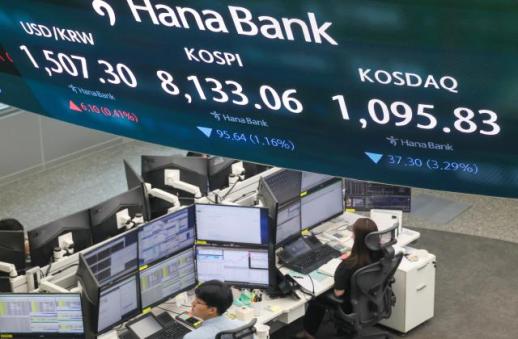 KOSPI paradox – few winners among retail investors SEOUL, July 09 (AJP) — "I demand a refund," wailed a day trader on social media after SK hynix shares plunged from their near 3 million won peak in June. Memes of disbelief, despair and fury quickly spread across Korean investing forums. The complaint captured the contradiction of this year's Korean stock market. The benchmark KOSPI nearly doubled through June to become one of the world's best-performing equity markets, yet a large majority of retail investors are losing money. Trading data from a major domestic brokerage showed that an average 73.5 percent of investors in the 50 most-purchased Korean stocks remained underwater at the end of June, meaning they bought shares above current prices. In half of those stocks, more than 80 percent of investors were sitting on losses. The average return of the 50 stocks still reached 20.5 percent, but that figure masked an exceptionally narrow rally. The five best-performing stocks gained an average of 198 percent, suggesting that a handful of AI beneficiaries generated most of the market's advance while the majority delivered mediocre or negative returns. Nowhere was that concentration more evident than in semiconductors. According to Korea Exchange data, Samsung Electronics and SK hynix ranked as the two most-bought stocks by retail investors this year through July 8, attracting net purchases of roughly 51.9 trillion won and 48.3 trillion won, respectively. As semiconductor shares kept climbing, latecomers increasingly piled into the market through single-stock leveraged ETFs in an attempt to catch up. Many instead bought near the top. Shinhan Securities data illustrate the paradox. Despite SK hynix rising roughly tenfold from last summer, half of them or 45.7 percent of its shareholders were still losing money as of Thursday afternoon because many entered only after the rally had become widely celebrated. The average investor still showed a healthy 76.8 percent gain thanks to earlier buyers, but the headline return concealed the large number of recent entrants now sitting in the red. Samsung Electronics investors fared somewhat better. Average returns stood at 72.2 percent, while about 63 percent of investors remained profitable. Analysts said the pattern reflects a familiar retail tendency to chase momentum after prices have already risen sharply, leaving investors exposed when sentiment reverses. Overseas bet proved smarter. Among the 50 most-purchased foreign stocks, only 44.2 percent of investors were underwater on average during the first half, while average returns reached 44.7 percent — more than twice the comparable figure for Korean shares. The difference reflected a broader AI rally in the United States, where gains spread across chipmakers, software companies, cloud providers and infrastructure firms. Korea's advance, by contrast, rested overwhelmingly on its two semiconductor champions. That dependence made the market especially vulnerable once doubts emerged over whether the AI memory boom had peaked. Foreign investors have since sold roughly 40 trillion won worth of KOSPI shares over 13 consecutive sessions, concentrating their selling on semiconductor heavyweights after several global investment banks questioned the durability of the memory-chip supercycle. Retail investors who had amplified their exposure through leveraged ETFs found the reversal even more painful. According to Korea Exchange data, the KODEX Samsung Electronics Single Stock Leveraged ETF surged from its listing price of 20,000 won on May 27 to an intraday high of 31,325 won before tumbling to 15,535 won on Thursday, about 22 percent below its debut price. The KODEX SK hynix Single Stock Leveraged ETF followed a similar pattern. It climbed from 20,000 won to as high as 44,000 won before falling back to around 21,400 won, wiping out more than half of its peak value. Because such products are designed to deliver multiples of daily returns rather than long-term performance, volatility itself steadily erodes returns, making them particularly punishing during sharp reversals. Investor frustration has become increasingly visible online. "It's only a matter of time before it converges to zero," one user wrote on the Naver Finance message board for the Samsung Electronics leveraged ETF. Another posted: "Don't expect Samsung Electronics to rise if everyone's buying leveraged ETFs. Know what you're buying." 2026-07-09 18:00:38
-
College Students Achieve 150% Returns, Outperforming KOSPI There are many skilled investors who generate returns several times their initial investments through their unique strategies. Age or gender does not matter on the path to becoming a successful investor. interviewed these investment experts. The first two experts we met are college students. Kim Jae-min, 25, president of the finance investment club Wyvern at Kookmin University, and Jang Yi-cheol, 26, president of the investment club Postrade at Hankuk University of Foreign Studies, shared their investment secrets. Profiles of College Student Investors Jae-min developed an interest in stock investment during high school, starting with seed money of 1 million won, which he saved from his New Year’s gift money. After accumulating his military salary, he grew his initial investment to 20 million won and began serious investing. His early successful picks included Hyundai Motor and KT&G. Jae-min stated, "By consistently buying more shares of these two stocks over 6 to 7 years, I achieved a return of 120% to 150%." Since last year, he has adjusted his portfolio to focus on AI infrastructure, capitalizing on the sector's growth. He identified bottlenecks in semiconductors, power, optical communication, substrates, and capacitors as opportunities for stock price increases during the expansion of AI data centers. His judgment proved correct. The AI infrastructure stock he focused on was Samsung Electro-Mechanics. Jae-min noted, "I believe Samsung Electro-Mechanics is the only company that holds both PCBs and MLCCs in the AI infrastructure space," adding, "I bought shares in the 500,000 won range and sold them in portions around 1 million and 1.7 million won, achieving a final return of about 160%." He also earned approximately 70% from a leveraged product, LITX, from the optical communication company Lumentum in the U.S. Currently, Jae-min's managed funds amount to 90 million won (based on evaluation). At one point in the first half of this year, his returns reached 140%, and he is now recording about 90% returns across domestic and international stocks. His current portfolio consists of Samsung Electronics (15%), LS Electric (15%), U.S. fuel cell company Bloom Energy (20%), and a U.S. semiconductor triple-leveraged ETF (SOXL, 20%), with the remaining 30% held in cash. Another college investment expert, Yi-cheol, began investing after joining his university's investment club. Starting with 10 million won in pocket money, he grew his seed money to 40 million won through military savings and part-time work. Yi-cheol's current managed funds are approximately 70 million won (based on evaluation), with an investment return of about 40% this year. His key investment success was with Hanmi Semiconductor. Yi-cheol explained, "I tried buying hot stocks and popular picks, but my biggest win was buying Hanmi Semiconductor at around 4,000 won and selling it for a 250% return." He has also invested in GNC Energy, Cosmax, and APR, achieving double-digit returns. Yi-cheol's current portfolio is heavily weighted towards SK Hynix, which comprises about 59.87 million won, or 84.3% of his total investment. He also holds Samsung Electronics (8.0%), Silicon2 (4.1%), and Pemtec Korea (3.6%). However, recent adjustments in the semiconductor sector have negatively impacted his returns, with SK Hynix down 3.16%, Samsung Electronics down 17.75%, Silicon2 down 14.01%, and Pemtec Korea down 2.46%. Investment Strategies for 2026 Jae-min and Yi-cheol, as club presidents, monitor market trends and discuss investment options with their club members. This year, both clubs have adopted similar investment strategies, focusing on stable returns from market leaders like SK Hynix and Samsung Electronics. Kookmin University's Wyvern operates a portfolio centered on SK Square and Samsung Electronics, actively adjusting stock weights based on market conditions through a rebalancing strategy. They aim to capitalize on large-cap stocks benefiting from the AI boom while identifying undervalued stocks for additional gains. Their efforts have paid off. SK Square has surpassed a 100% return, and recently added Samsung Electronics is recording about a 10% return. Other successful investments include YesT (40%), Samhwa Aluminum (70%), and Pino (40%). However, not all investments have been successful; they incurred a loss of about 35% on Daesung I-Tech, which they had expected to benefit from defense spending. Hankuk University’s Postrade has also recorded good returns from investments in Samsung Electronics and SK Hynix. However, their strategy of uncovering undervalued companies has not yielded the expected results. Yi-cheol explained that they invested in stocks like Silicon2, Comtech Korea, and Cosmax, which they believed were undervalued, but these stocks subsequently declined, leading to poor returns. Yi-cheol remarked, "I learned that even if a stock is deemed undervalued, if the market does not recognize its value immediately, the stock price can continue to fall. Ultimately, selecting good companies and timing the market's attention are two different challenges." Mid-Year Picks: SK Square vs. SK Hynix As July begins, the stock market is experiencing increased volatility. What stocks are college experts focusing on for the second half of the year? Jae-min and Wyvern have chosen SK Square. As the largest shareholder with a 20.5% stake in SK Hynix, SK Square's stock has surged as the value of its SK Hynix shares has been reassessed in the market. Wyvern believes that SK Square can benefit from both the rise of SK Hynix and a reduction in holding company discounts. Jae-min stated, "Currently, the market reflects only about half of the value of SK Hynix's shares in SK Square's corporate value," adding, "Despite being the largest shareholder of SK Hynix, recent stock adjustments have expanded the holding company discount to about 45%." He continued, "If SK Hynix's ADR listing materializes, the holding company discount could decrease, making SK Square an attractive investment due to the potential for both SK Hynix's stock price increase and discount reduction." In contrast, Yi-cheol and Postrade have a different perspective. They believe that if SK Square's investment appeal ultimately derives from SK Hynix, it would be more rational to buy SK Hynix directly. Yi-cheol stated, "For SK Square to rise, SK Hynix must also increase. Therefore, it makes more sense to hold SK Hynix directly rather than going through the holding company." He added, "I expect SK Hynix to generate significant net profits next year, and its current valuation is still reasonable." ETF Investment Approaches: Growth vs. Market Trends The investment strategies of the two clubs also diverged in their approach to ETFs. Postrade recommends actively using ETFs when the growth potential of an industry is clear. They explain that when the direction of a specific industry is evident but it is difficult to determine which company will benefit the most, ETFs can be more efficient than individual stocks. For example, if the growth potential of the power equipment industry is high but there is uncertainty about which area—such as high-voltage transformers, distribution equipment, or power infrastructure solutions—will benefit the most, investing in related ETFs can capture the overall industry rise. Wyvern, on the other hand, uses ETFs as a means to bet on the overall market. Instead of selecting individual stocks, they invest in KOSPI 200 leveraged or KOSDAQ 150 leveraged ETFs to capitalize on market rebounds. Jae-min stated, "When I believe there is a buying opportunity at the market's low, I respond aggressively using leveraged products."* This article has been translated by AI. 2026-07-09 18:00:00